




א׳ אב ה׳תשפ״ו | July 15, 2026
Can We Finally Break the Sheitel Pricing System?
“The price of a sheitel has risen far faster than the cost of actually making one. The hair hasn’t gotten dramatically more expensive. The labor hasn’t either. What has grown is everything in between, layer after layer of hands each taking a piece.”
By Rochel Jacobs
Every frum woman knows the sticker shock. A good sheitel runs several thousand dollars, often much more, and a recent viral story out of Israel reported a woman paying $16,000 for one. Somewhere along the way, sheitels quietly became one of the highest recurring costs of frum life, right alongside tuition and simchas. Between upkeep, restyling, and replacement every few years, it never really ends.
I started asking why, and the answer bothered me enough that I wanted to do something about it.
Here’s the uncomfortable part: the price of a sheitel has risen far faster than the cost of actually making one. The hair hasn’t gotten dramatically more expensive. The labor hasn’t either. What has grown is everything in between, layer after layer of hands each taking a piece, and a final markup that has expanded well past anything the product itself justifies. Most people assume the number on the tag reflects the hair on the head. It doesn’t. A large share of it pays for opacity, and opacity is exactly what keeps prices where they are. When nobody can see what anything actually costs, nobody can push back.
We need to adapt the Warby Parker model.
Before Warby Parker, the glasses market was dominated by high markups, limited choice, and prices customers were expected to accept without understanding. Warby Parker went directly to manufacturers, sold stylish frames at fixed, transparent prices, and separated real value from industry mystique. It proved that a premium product could cost far less once the unnecessary layers were removed.
We can do the same for sheitels. Work directly with the factories that already produce quality hair. Build the certification process in-house, so every unit is vetted, documented, and approved before it is ever offered. And sell as close to actual cost as the operation allows, with prices public and fixed. No haggling, no private deals, no mystery.
Using this model, a premium sheitel made with raw European hair, hand-tied multidirectional lace top, which is sold for $4,000–6,000 can be sold for $2,500 – and less over time.
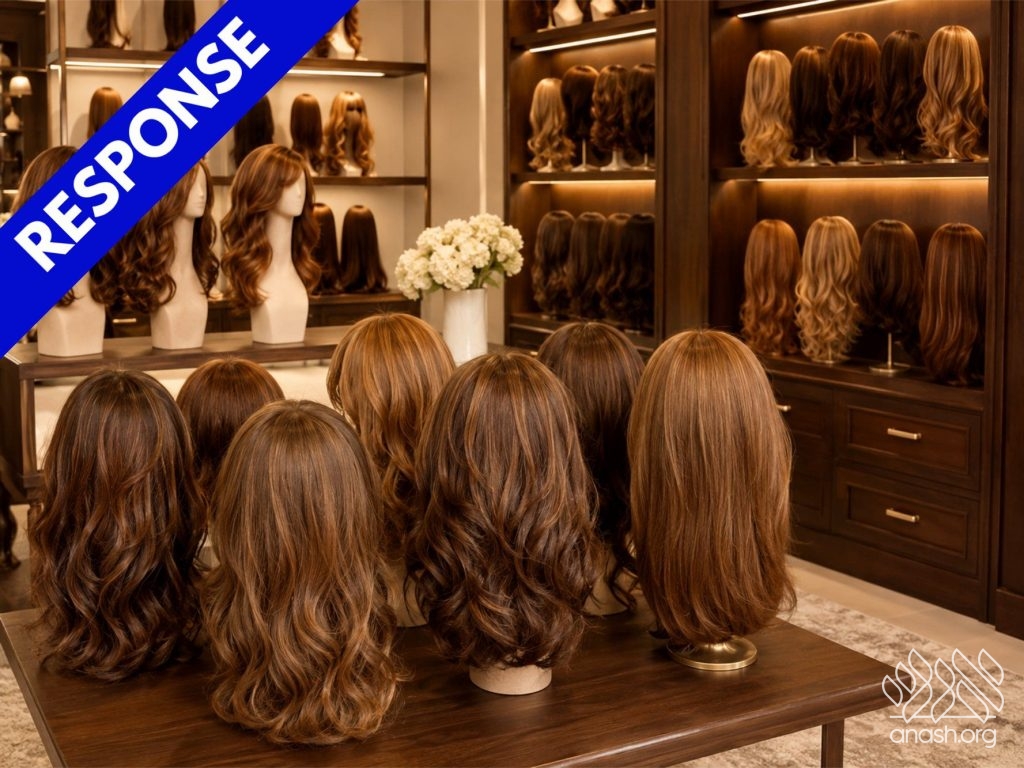
And, just as important, we can do it beautifully. Not a discount table or a gemach sale. A simple, gorgeous showroom that sells the sheitel itself and nothing else.
The store sells the wig, while a trusted, published list of vetted cutters handles the styling for their own fee, paid directly to them. For the first time, a woman would know exactly what the hair costs and exactly what the cut costs – two numbers this industry has tangled together for far too long.
Taking it further, the structure should be a nonprofit. Every dollar left over after expenses has only two destinations: it lowers the price for the next woman buying a sheitel, or it goes into a gemach for women who genuinely can’t afford one at all. There is no owner’s draw and no hidden markup quietly built into the tag. The people doing the actual work earn a fair, documented salary, and that’s it.
I believe the community would stand behind this. This is the kind of project generous donors want to fund: not a handout, but a repair of a broken market that affects every frum family. A few mission-aligned givers could seed the inventory and the gemach, and from there, the model sustains itself.
The gemach would operate with dignity. Assistance would be application-based and handled discreetly, so a woman can receive help without feeling exposed simply because she needs it.
When I first started talking about this, a few people asked a fair question: why would anyone trust a new, unconventional source for something so personal and so expensive? My answer is that trust has to be earned before a single sale happens, not after. Every sheitel is certified as to its source and fully documented before it is ever offered, without exception, with the paperwork available for anyone to see. In a market where that kind of transparency isn’t the norm, it becomes the single biggest reason to try something new.
I don’t think this fixes everything. But I do think it’s worth testing whether a mission-driven alternative, done at a genuinely high standard, can hold its own against the way things have always been done. If a woman walks into that showroom, tries one on, loves it, and someone later asks her where she got it, that alone tells us something.
And if it works, even a little, the same idea could stretch well beyond sheitels.
I’ve put together a full presentation laying out the concept, the pricing model, and a phased roadmap for how something like this could get off the ground. I’m sharing the idea because I’d love to see it built, whether by me or by someone better positioned to run with it. If this speaks to you, if you’d want to be part of starting it, or if you see a reason the structure wouldn’t work, I genuinely want to hear it. Tell me what I’m missing.
Do you think such a sheitel model could work? I’d love to hear your thoughts in the comments.
Want to hear more and get involved? Email [email protected]
 COMMENTS


Great point except this already exsists. Freeda has a whole line of cheaper wigs as does Gali etc. The issue that is the most frustrating is the sheker and misinformation. Yes. Misinformation. We live in a entitled world. Gone are people who spend within their means. Tution food etc we dont hsve other options. Thats fair to say we must act and adjust prices. Same for weddings. Please dont compare when u have high quality choices and insist on something that u cant afford. Sorry not the same category. Should we close down all high end buissness because there an expensive option? Dont understand. You are making your own problems. Its pure entitlement. Not that there are no options. I want that and cant afford it.Therefore you owe it to me to give it to me cheaper.
I know nothing about the sheitel business but I happen to be in a business which also sells a product mandated by שולחן ערוך in which people on the outside think the product should be far less expensive and that I’m making obscene money. I will tell you what I tell them: If you think it is possible to sell this product for less and still be profitable then go ahead and do it, you’ll make a lot of money.
If you think there’s so much margin in the business and that you can deliver better value then you definitely should get in and bring down prices. You’ll make money and help your fellow Jews keep halacha.
But the fact that there are so many people in the business competing with each other and prices still are what they are probably means that a moisad trying to sell for cheaper will fail if only because of the operational costs.
If you think you can break the market while still being viable and profitable, bring together investors, show them a business plan and give it your best shot.
As a sheitel consumer myself, I sincerely wish you much success.
SheebaWigs was tired of people selling wigs for so much, they decided 6 years ago to make the wigs themselves. No in between and they sell Wigs for $2200 to $2500 and it’s gorgeous virgin hair.
Hi!
I can’t remember the exact name if the FB group it’s something like this.. The sweet lady out of London does a fabulous job at selling sheitels from the maker. This is a chessed and yes she charges a bit. It’s not her full time job. I have gotten two sheitels from her and am incredibly happy. Some of my friends have had them cut and colored. At her price,it’s worth it.
Would love her contact
please share contact info
if you have successfully ordered a wig from China, please share the name of the vendor and tips for successful ordering here
I’m on the Facebook group and it’s a major gamble. I see so many people on the group trying to sell their wigs that they bought. There are those that are very happy with them but most people I see are not. It is very cheap so if you have a few extra hundred dollars and are willing to deal with trying to sell it if it doesn’t look good on you, it’s a great option. There are no returns or exchanges or credit and you can’t try it on unless you go to the lady in London’s house. Just putting it out there