




ה׳ אב ה׳תשפ״ו | July 19, 2026
As Texas Embraces Bible Study, the Rebbe’s Warning Plays Out
More than five million Texas public school students will be required to read Bible under a new statewide curriculum. While efforts to bring G-d back into public education may appear positive and much-needed, the Rebbe warned that bringing Bible into public schools could have unintended consequences.
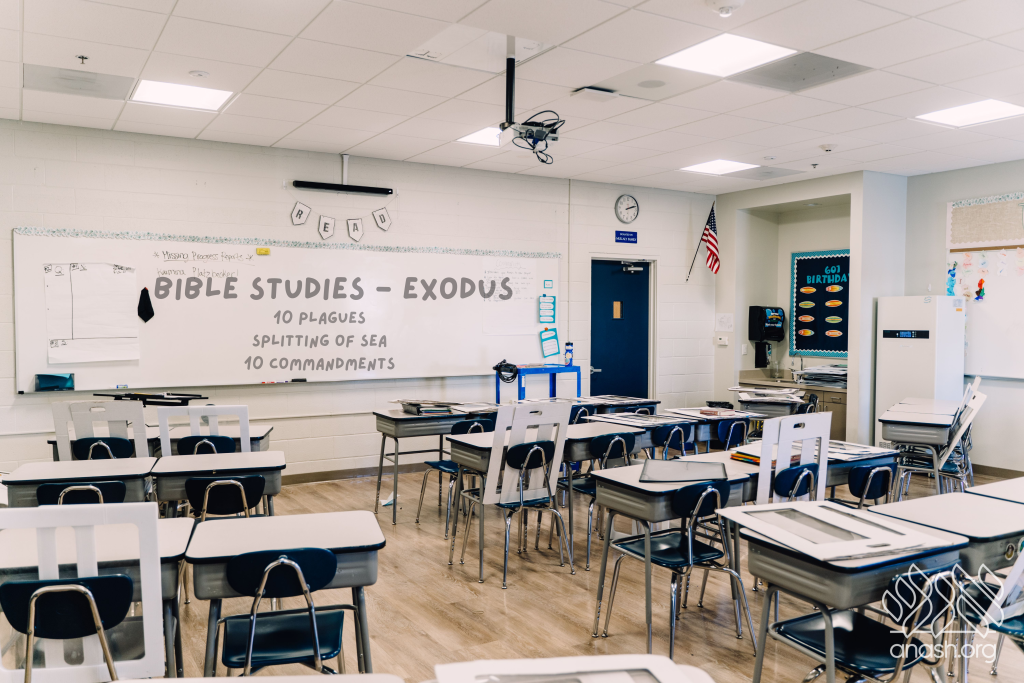
Under a new statewide curriculum approved by the Texas State Board of Education, Texas public school students will be required to read selections from the Bible in school.
While efforts to bring G-d and Biblical values back into public schools may appear to be a positive and much-needed development, the Rebbe explained that making the Bible part of the curriculum could have unintended and far-reaching consequences.
The required reading list, approved Friday by a 9-5 vote, will affect more than five million public school students and is expected to begin taking effect during the 2030-31 school year. Unlike the recent law requiring displays of the Ten Commandments in Texas classrooms, this new measure places portions of the Bible directly into the public school curriculum.
“We are bringing the Bible back into schools this week for the first time in 60 years,” Brandon Hall, a Republican member of the State Board of Education, said during the debate.
The reading list begins in the early grades and continues through high school. First graders are assigned the story of Noach. Second graders study Dovid and Golyas. Third graders read about Daniel in the lion’s den. Fifth graders learn about Moshe at the burning bush and Krias Yam Suf.
In seventh grade, students are assigned Tehillim 23 together with George Washington’s letter to the Hebrew Congregation in Newport. In eighth grade, students study Koheles 3 and Eichah 3, with Eichah appearing alongside Holocaust-related readings. High school students are assigned selected passages from Iyov and the story of Adam and Chava in Bereishis.
Julie Pickren, another Republican member of the board, said the readings are intended to give students “important insight into the moral and philosophical traditions that have shaped Western civilization.”
While many people understandably welcome efforts to restore G-d and moral values to public education, the Rebbe explained that Bible study in public schools carries consequences that are often overlooked. Once the Bible becomes part of the classroom curriculum, there is no principled way to limit it to the Jewish Bible alone. Other religious groups will naturally insist that their own sacred texts be included as well.
The Rebbe explained that this is not a hypothetical concern but an inevitable outcome.
“Bible reading in the public schools be resolutely opposed for various reasons,” the Rebbe wrote in a letter dated 26 Nissan 5724, including “the obvious reason that the reading of the Koran and the New Testament will arouse dissension and strife.”
Instead, the Rebbe consistently advocated for a short, strictly non-denominational prayer at the beginning of the school day, one that acknowledges the Creator without teaching from or favoring any particular religion.
In a letter on non-denominational prayer in public schools, the Rebbe wrote that “a very great number of children of the Public Schools and their parents, Jewish and gentile,” may go “many days, weeks and months” without giving thought to G-d.
In the 5724 letter, the Rebbe wrote that children must be taught that the world “is not a jungle” but has “a Creator and Master of the Universe,” while also stressing that public school prayer must remain strictly non-denominational.
This was not merely a compromise or second-best solution. Rather, this was the preferred approach, and as the Rebbe explained, a non-denominational prayer was both more appropriate and more strategically sound than introducing Bible study into the classroom.
The Rebbe had warned that rejecting this neutral proposal would not preserve the status quo but create the conditions for something problematic. If all religious expression in public schools were opposed, the Rebbe wrote, the result would be “not only more ill will and bitterness, but also self-defeating,” potentially allowing “the most powerful religious denomination, or lobby” to gain disproportionate influence over public education.
Texas is not the only state moving in this direction. Similar efforts to introduce Bible reading into public school curricula are already underway in states such as Alabama and Florida.
 COMMENTS


This situation didn’t happen overnight. Is there any effort among shulchim to combat this threat?
*among Chasidim!
See the website momentofsilence.info developed by Rabbi Abraham Frank responding to the Rebbe as per this article. Technically it is a moment (minute) of silent reflection wherein students are free with their own thoughts as they wish, which can include their own type of connecting to Higher Power or G-d as each individual understands G-d. It has amazing advantages physiologically/behaviorally for and they continue to practice it and share it with others.
All these states had a moment of silence and they felt it was insufficient since they wanted a mention of G-d.
The Rebbe wrote in a letter from 1964:
“The vehement opposition to any kind of prayer and to the mention of G‑d’s Name in the public schools, which, in my opinion, is unjustified and ill-conceived, and which has placed the proponents of this view in league with the atheistic and anti-religious elements in this country, has inevitably called forth a correspondingly strong counter-reaction. As a result, we are now faced with a concerted effort to introduce a constitutional amendment which would permit sectarian prayers and Bible readings in the public schools.
“I am convinced that had there been taken more practical position in the first place, it would have been possible to bring about a peaceful solution of the controversy on the basis of a non-denominational prayer which would have been acceptable to everybody (except a few fanatical anti-religionists), since such a prayer would be voluntary, and any conscientious objector would be excused from participating in it.”