




י׳ מרחשון ה׳תשפ״ז | October 21, 2026
Amid Destructive Riots, Paris Shluchim Stand by Community
As France is still reeling after a weekend of anti-government demonstrations devolved into some of the country’s most destructive riots in decades, shluchim are supporting their communities during this difficuly time.
When Rabbi Meir Shlomo Lubecki walked out of his Chabad center, Beth Loubavitch Paris 3, on Saturday night, the streets of central Paris looked like a war zone.
“You’ve never seen anything like this,” said Lubecki, who directs Chabad of the 3rd Arrondissement, a short walk from Place de la République. “Everything on the ground was torched: cars, shops, bicycles.”
France is still reeling after a weekend of anti-government demonstrations devolved into some of the country’s most destructive riots in decades. More than half a million people joined some 110 marches across the country on Saturday, according to the Interior Ministry.
Protests that began weeks ago with high school students swelled to include unions and others angry over the cost of living, before opportunistic rioters vandalized roughly 1,500 shops. The government estimates that at least 3,000 businesses nationwide were pillaged.
Nearly 2,400 people were arrested, and localized curfews are being extended into Tuesday night.
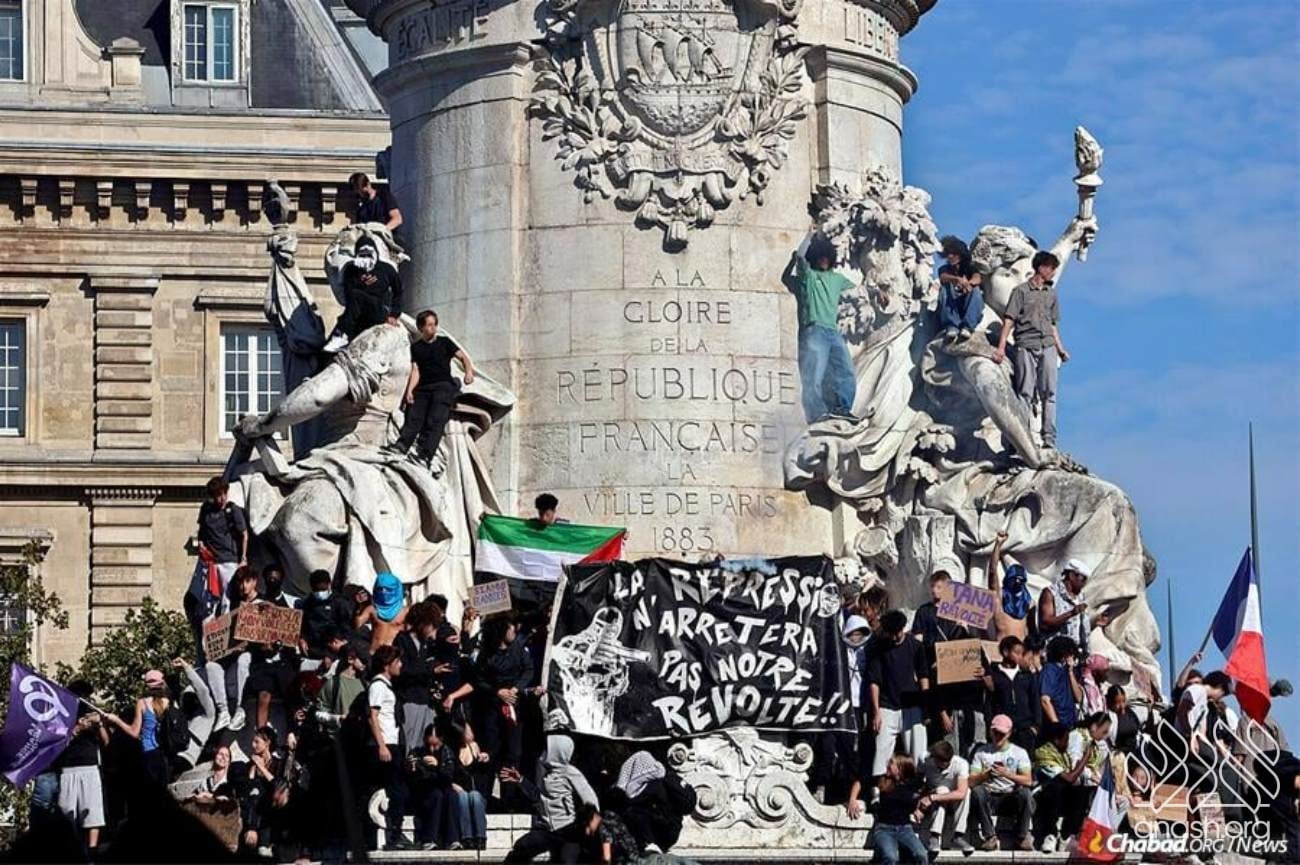
In Paris, much of the violence converged on Place de la République, near which several Chabad emissaries live, pray and serve the local Jewish community.
The Saturday demonstration had been planned for two weeks, and as Shabbat approached, warnings circulated through the Jewish community. Lubecki checked with his contacts, was told things would likely be fine, and kept his schedule, including a women’s class set for 6 p.m.
Shabbat morning began quietly, and the minyan gathered as usual. Then, around noon, during Kiddush, members of the Jewish community’s volunteer security service arrived with news. The march wasn’t scheduled to begin until 2 p.m., but by 12:30, things were already heating up at République.
“He told everyone to leave,” Lubecki recalled. “Everyone had to go straight home immediately.”
Lubecki, his wife Chaya and their children remained and ate their Shabbat meal at the Chabad House. When they stepped outside around 3 p.m., they quickly turned back and locked the doors.
No women came for the class that evening. But eight men made their way in for Minchah services.
Rabbi Moyche (or Moshe) Cohen, who has directed Beth Loubavitch Paris 11 – Republique in the area with his wife Tzipora since 2010, has grown used to demonstrations on his doorstep.
Since Oct. 7, he said, nearly every protest in Paris gathers at République, often with flags of Hamas and other terror groups. But they typically stay away from harassing or confronting Jews overtly.
This Shabbat, though, the energy was different.
The morning at shul was calm. By the time the Cohens came home at 2 p.m., protesters were everywhere, even their own street. That crowd, Cohen said, was loud but not especially violent. When he headed back to shul at 6, the scene had changed. The afternoon marchers had gone home, and new groups from outside the area had replaced them.
“They organized themselves in groups of 10, with Molotov cocktails,” he said. “Baruch Hashem, they were busy with the police and nothing happened to us.”
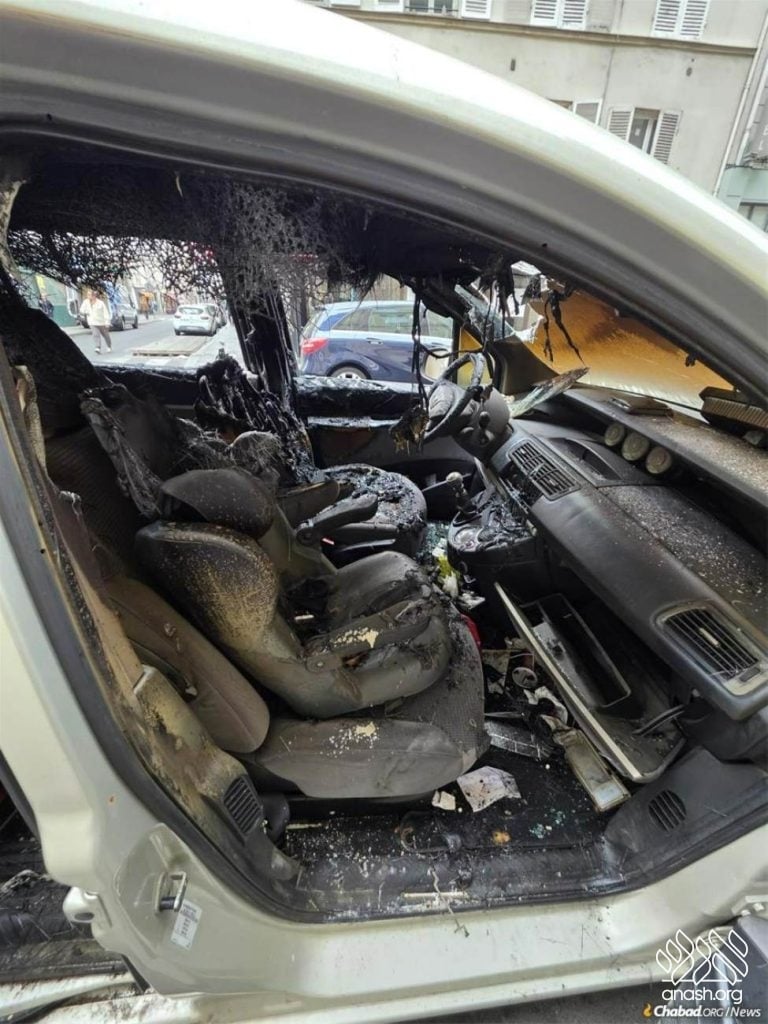
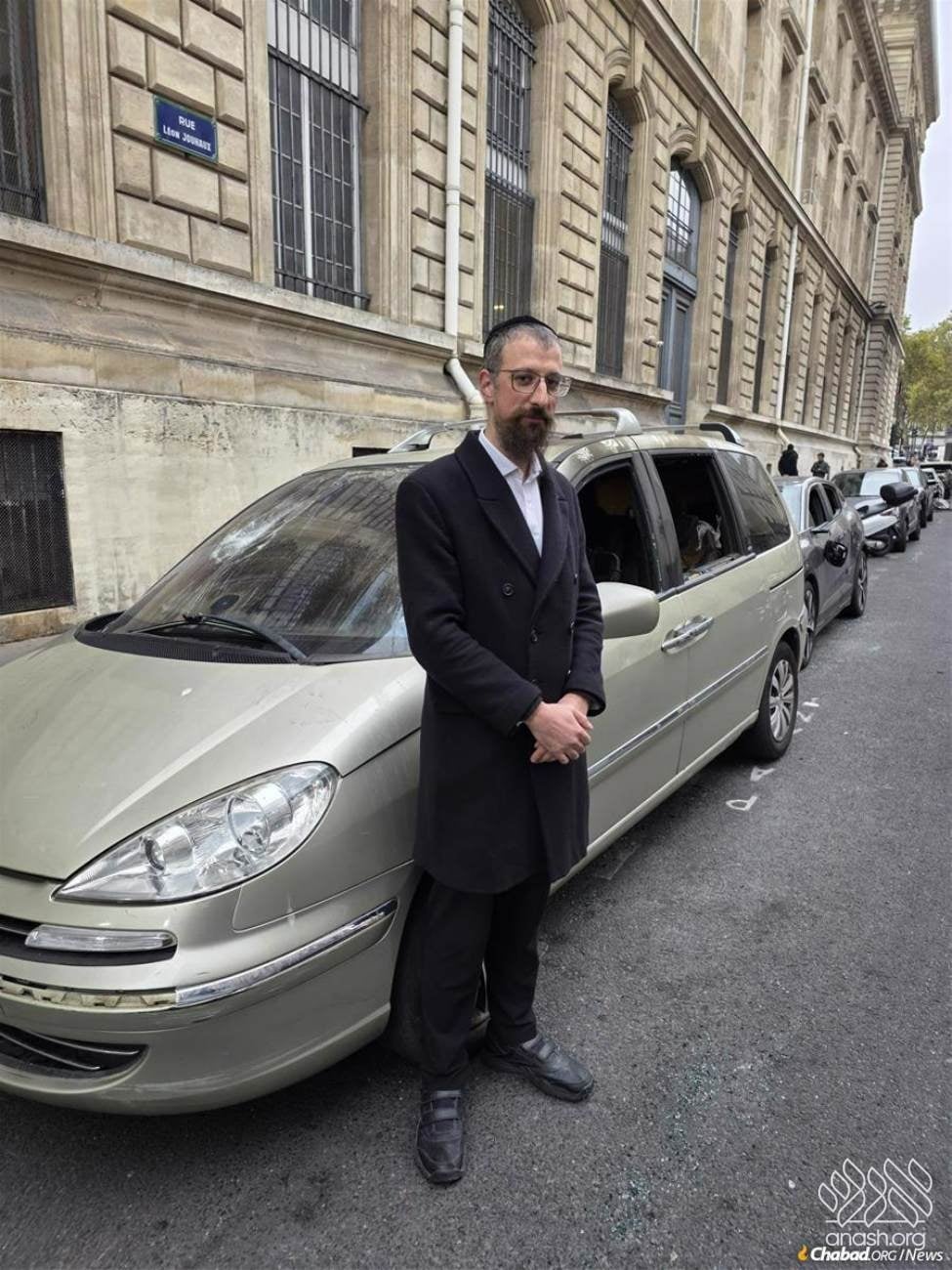
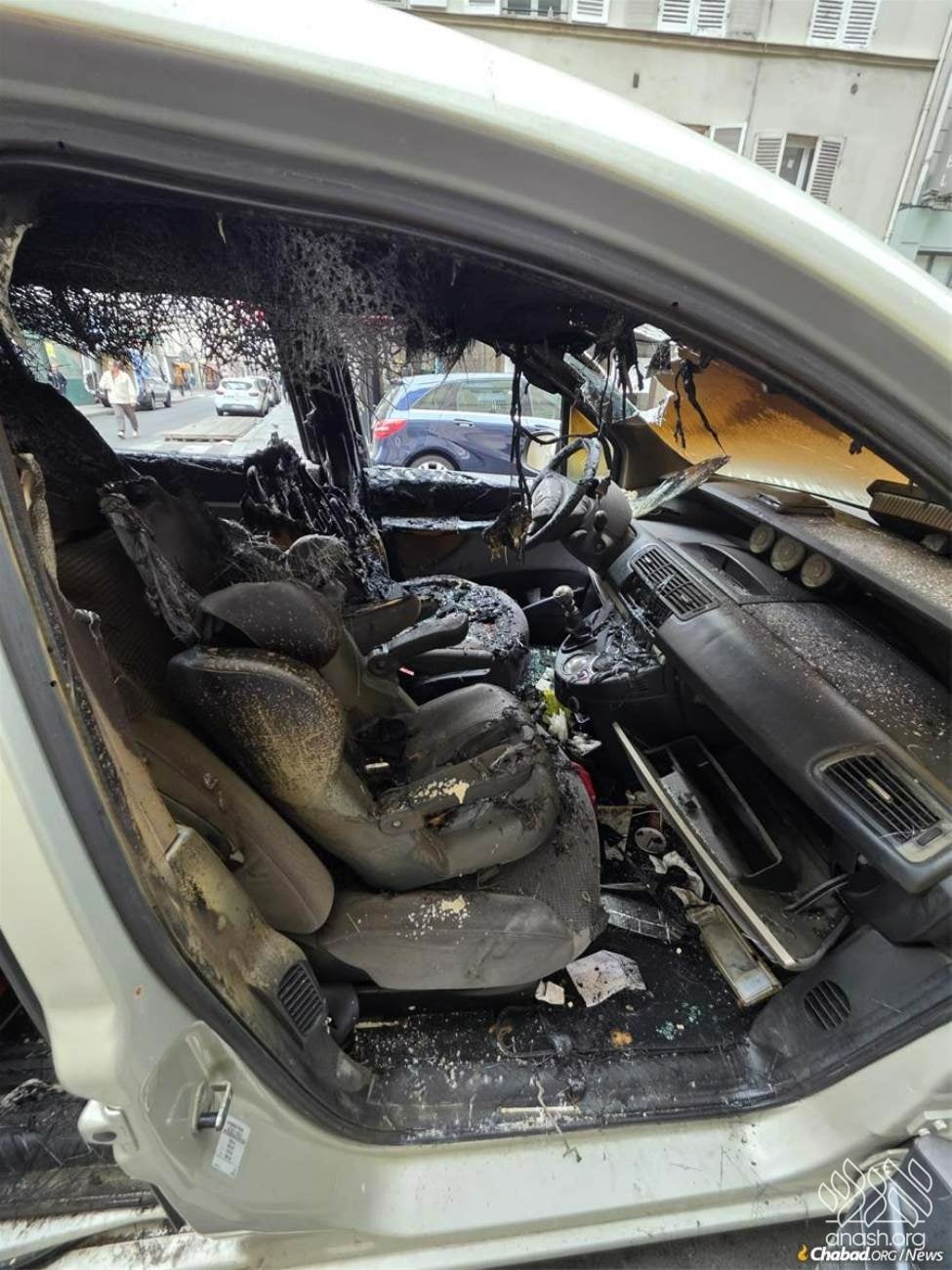
Around them, there were fires and smashed storefronts; stolen bicycles were piled up and set ablaze. After Havdalah, Cohen found that the windows of his car had been smashed, and the vehicle had been burned on the inside, totally destroying it. Security footage showed that it had been torched during Shabbat, along with every other car on the street.
As soon as Shabbat ended, the Lubecki family got in and drove toward their home, in a calmer part of the city. Phone calls poured in—“Don’t go out, it’s dangerous!”—but they were already on the road.
“We ran every single red light. Everyone was running red lights because stopping the car was too dangerous,” he said. Masked young men and women surrounded the streets. Once they reached their own neighborhood, “it was like a whole different world. People were walking around, shopping. It was as if we had moved to another country.”
The next morning, Lubecki returned to the Chabad House through streets of charred wreckage. Inside, the minyan met, and children arrived for Talmud Torah.
“A regular Sunday morning,” he said, “as if there had been a war the night before, and we just resumed.”
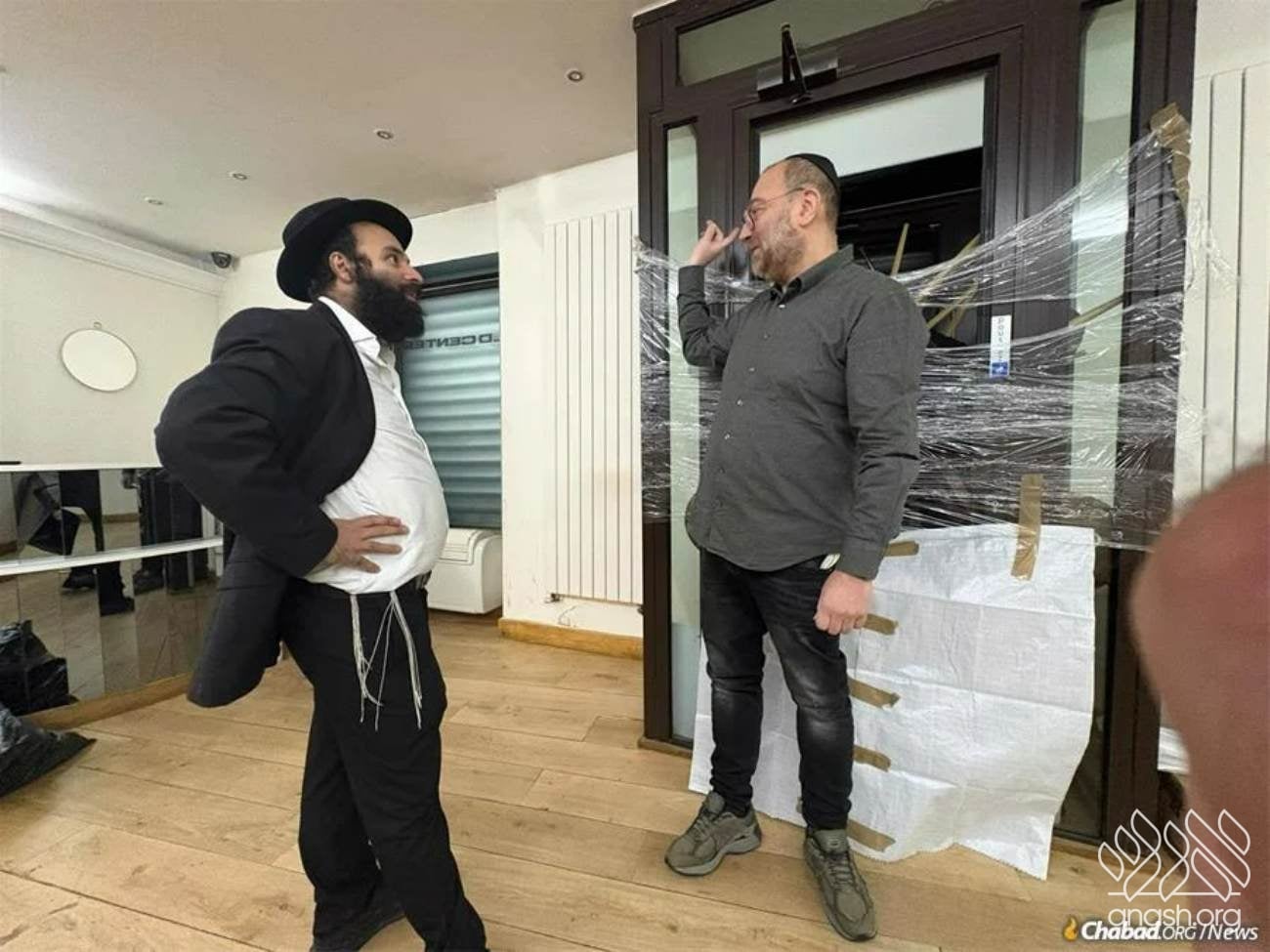
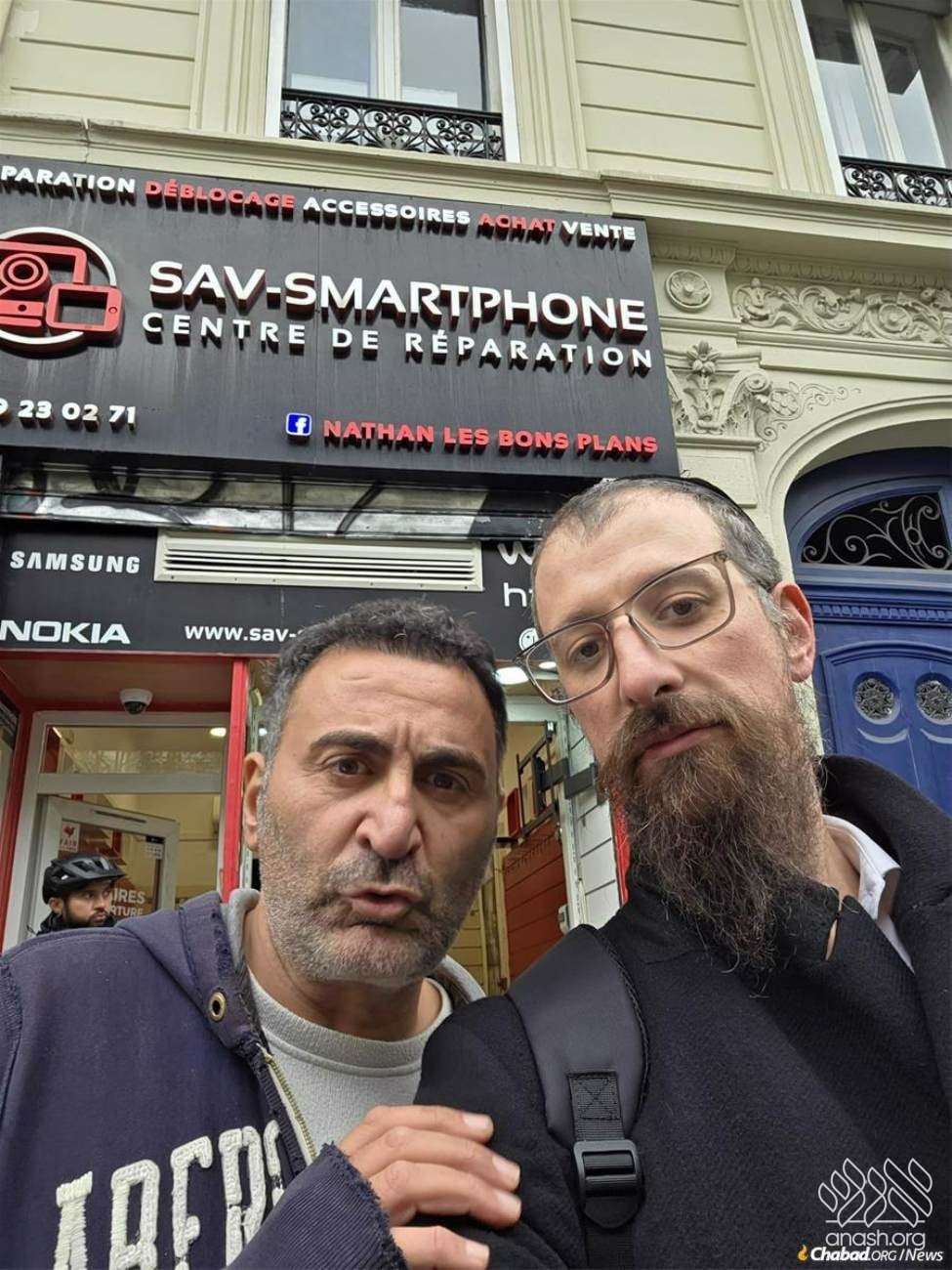
On Sunday, Cohen began calling Jewish-owned stores in the area. One owner told him the rioters had broken in and taken everything. Lubecki, too, has been fielding calls from shop owners whose businesses were burned; one sent him photos of the damage, noting that his store had held precious letters and telegrams he had received from the Rebbe.
Both rabbis have been visiting affected business owners, and Cohen is organizing help to cover losses that insurance will not.
Cohen is careful not to overstate the danger to Jews specifically. Some in his community, he said, are frightened by reports that Jews were singled out—something he did not see.
“It wasn’t about the Jews,” he said. “They were chasing what they wanted: shoes, phones, glasses. Jewish and non-Jewish businesses alike were hit.”
Instead, he has been distributing mezuzahs and encouraging community members to have their mezuzahs checked.
“That’s how we have to think,” Cohen said. “Not to be afraid of the protestors or wait for the government to do something. Our mission is to teach people to believe, and to show them G-d’s hand, even when it’s painful.”
As France braces for possible further demonstrations this coming weekend, the Chabad emissaries of central Paris say they aren’t going anywhere.
“Whatever our people need, we are here,” said Cohen. “It’s hashgachah pratit that we’re here, and we will continue to proudly do the Rebbe’s work.”
To support the Cohens in their work, click here.
 COMMENTS


We appreciate your feedback. If you have any additional information to contribute to this article, it will be added below.