




י״ב תשרי ה׳תשפ״ז | September 23, 2026
250 Years Later, Remembering the Alter Rebbe’s Chavrusa
Yud Beis Tishrei marks the 250th yahrtzeit of Reb Avraham HaMalach, the son of the Maggid of Mezritch and the chavrusa of the Alter Rebbe. Known simply as “the Malach,” he was renowned in his own lifetime for a level of holiness that seemed to defy the limits of the physical world.
Yud Beis Tishrei marks the 250th yahrtzeit of Reb Avraham HaMalach, the son of the Maggid of Mezritch and the chavrusa of the Alter Rebbe. Known simply as “the Malach,” he was renowned in his own lifetime for a level of holiness that seemed to defy the limits of the physical world.
R’ Avraham was born in Mezritch in 5500 (1740) to the Maggid of Mezritch. The Maggid and his wife had been childless for many years. After the Baal Shem Tov met the Maggid, he promised him a son so pure that people would hardly believe he was human. That son was R’ Avraham.
From his youngest years, R’ Avraham lived on a plane far removed from the physical. He would spend entire days wrapped in his tallis and tefillin, engrossed in learning Torah and barely eating or sleeping. His father sent him to learn nigleh with his talmid, the Alter Rebbe, who was then a young man, while R’ Avraham taught the Alter Rebbe Chassidus in return.
The two would learn together for hours each day, and the Alter Rebbe would move the clock back to gain more time learning Chassidus with R’ Avraham.
The bond between them left a lasting mark on the Alter Rebbe. Once, after immersing himself in a deep concept in Chassidus, R’ Avraham came upon the Alter Rebbe eating a buttered bagel. Surprised that anyone could turn to physical pleasure right after such elevated learning, R’ Avraham asked him about it. The Alter Rebbe explained that he had felt himself reaching klos hanefesh, the soul’s departure from the body, and ate because he had to bring himself back down into the world.
The Rebbe later explained that this exchange captured the difference between the two of them. R’ Avraham’s whole being was oriented toward heaven, while the Alter Rebbe’s mission was to draw Elokus down into this world.
As the Alter Rebbe was preparing to head home from Mezritch, R’ Avraham accompanied him to the wagon and called out to the driver, “Whip the horses until they stop being horses” (or, according to another version, “until they recognize that they are horses”). Hearing this, the Alter Rebbe understood it as a message in avodas Hashem, and he chose to extend his stay in Mezritch to internalize the lesson.
The Rebbe later explained that until a person reaches the level of actually transforming his negative traits (is’hapcha), he must at minimum keep them under control (iskafya), since he cannot afford to wait.
Every Pesach, R’ Avraham baked shmurah matzah for his father, who trusted only him. One year, he sent his father three matzos with one of the Maggid’s students, a doctor named Gordia, who couldn’t resist keeping one of the holy matzos for himself and swapping in one of his own.
At the Seder, after tasting just a bite, Dr. Gordia felt his body burning and cried out for the Maggid. The Maggid later said that anyone else would not have survived the intensity of the kedushah baked into that matzah, and he survived only because he was the Maggid’s personal physician.
R’ Avraham’s holiness left an impression on everyone who encountered him. Tzaddikim who came to see him would sometimes flee in awe before even greeting him.
At a bris where R’ Avraham served as sandek, most of the crowd that had gathered to catch a glimpse of him scattered the moment he walked in, and Reb Nachum of Chernobyl, who was performing the bris, was so overcome that he momentarily forgot whether he had said the bracha.
Once, visiting his father-in-law’s town, R’ Avraham stood staring silently at a mountain while the whole town waited for him to say something. A young man, unimpressed by the display, finally blurted out, “Why are you staring at that mountain? It’s just a clump of earth.”
“That’s what amazes me,” R’ Avraham responded. “How could a simple clump of earth become haughty enough to grow into a tall mountain?”
R’ Avraham did not succeed his father and instead settled in Fastov, near Kiev, living largely in isolation. He explained that he could not lead a generation because his own level was too far removed for people to relate to.
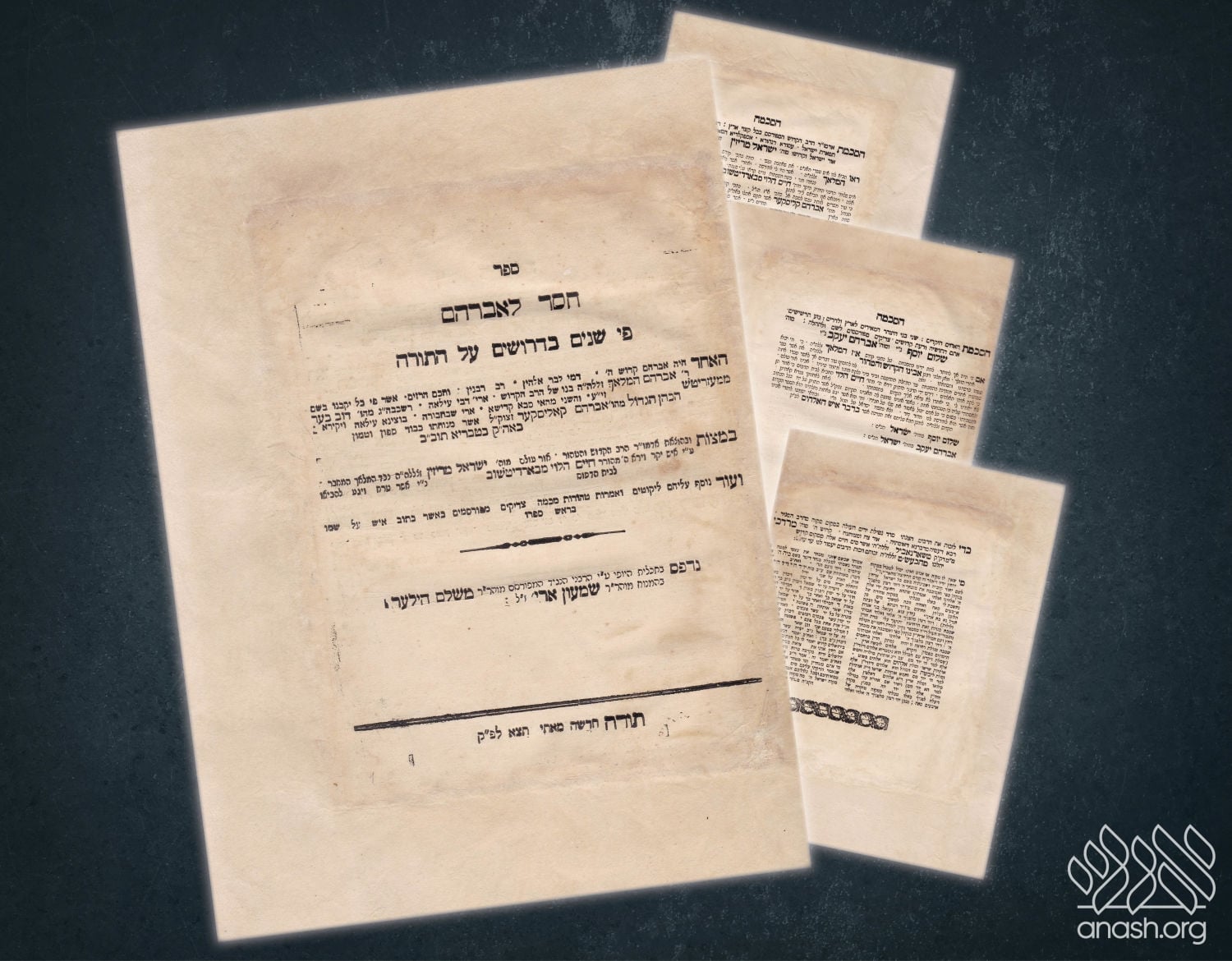
His teachings, later published as Chessed L’Avraham, focused on stripping away the physical and reaching the deepest levels of bittul, and he was known to caution strongly against teaching Kabbalah in oversimplified terms to those not ready for it.
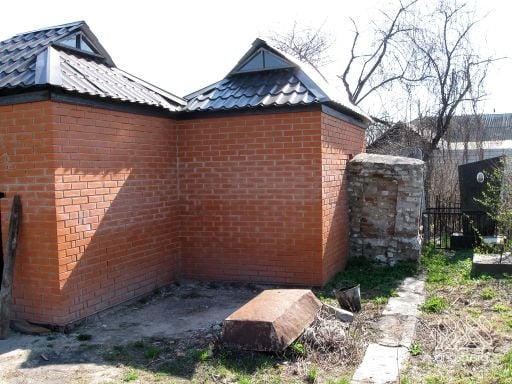
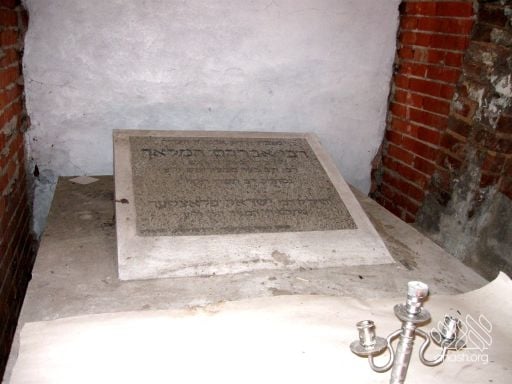
R’ Avraham passed away on the 12th of Tishrei, 1776, at the young age of 36, and is buried in Fastov, where his kever is maintained to this day. He was succeeded by his son, Reb Sholom Shachna, and was the grandfather of the tzaddik Reb Yisrael of Ruzhin.
 COMMENTS


The Hayom Yom of 29 Adar II says: הקב”ה ברא את העולם וכל הדברים הגשמיים מאין ליש, און אידען דארפען מאכען מיש לאין, פון די גשמיות מאכען רוחניות. This seems to be based on the first torah in Chesed L’Avraham (also printed at the begining of Pri Ha’aretz of the Hordoker) “כי הנה ידוע שהשי”ת האציל העולמות וברא יש מאין ועיקר היה כדי שהצדיק יעשה מי”ש אי”ן ויכניע כל המדות להשי”ת”.