



כ״ד אב ה׳תשפ״ו | August 7, 2026
The Unassuming Giant: Reb Avrum Hersh Cohen
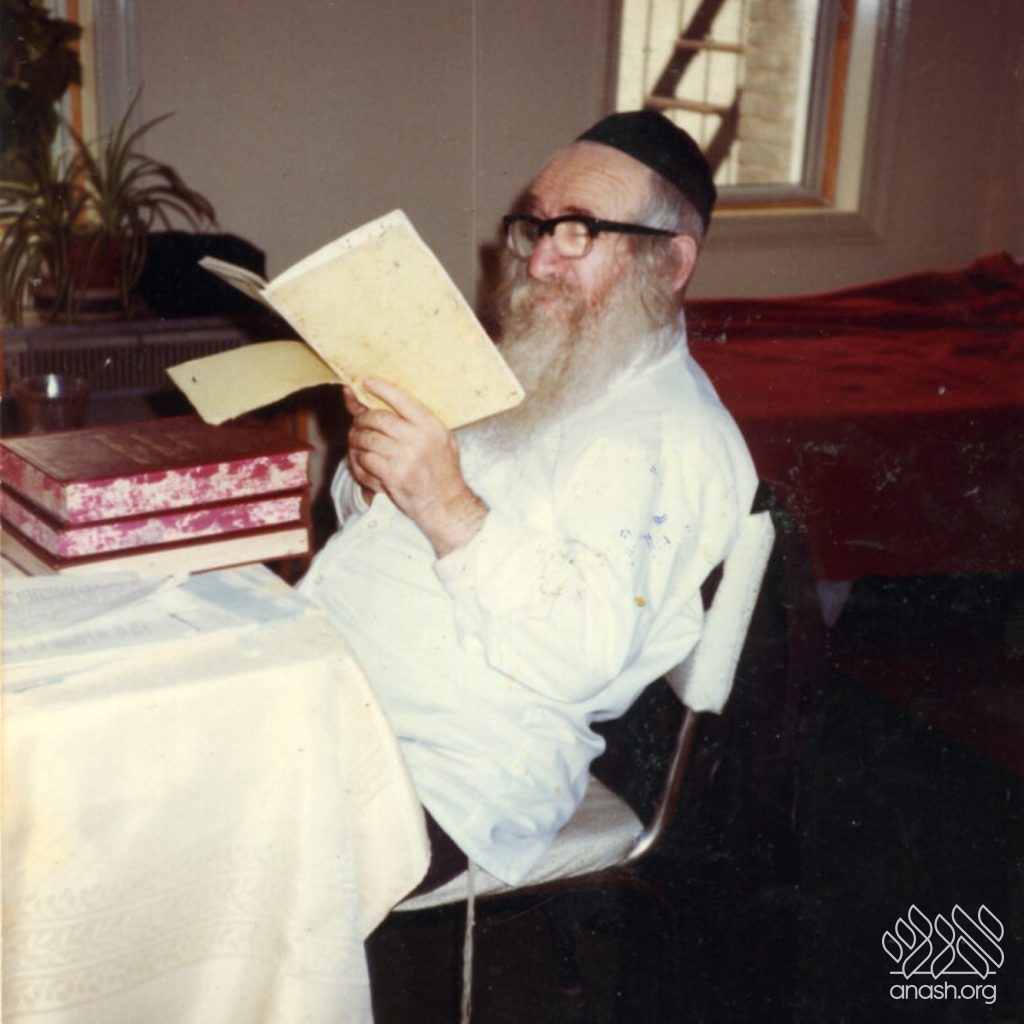
24 Av is the yahrzeit of the gaon and chassid Reb Avrum Hersh Cohen, who was known for his dedication to the study of Torah and his hiskashrus to the Rebbe.
By Hershel Rosenbluh
24 Av marks the 31st yahrzeit of the gaon and chossid Reb Avrum Hersh Cohen, whose extraordinary dedication to Torah, Chassidus, and hiskashrus to the Rebbe left a lasting impression on generations of Anash.
Born in Lodz, Poland, in 5676 (1916), Reb Avrum Hersh immigrated to Eretz Yisroel at the age of twenty. There he became close to Chabad under the guidance of the renowned mashpia Reb Alter Simchovitch. For many years he taught in the mosdos of Toldos Aharon, where he introduced countless talmidim to the light of Chassidus. He was also entrusted with learning Chassidus with many of Yerushalayim’s well-known kano’im.
In 5724 (1964), he was appointed Rosh Kollel of the newly established kollel in Kfar Chabad.
Rabbi Yosef Hartman recalled the first day Reb Avrum Hersh arrived. The yungeleit quickly realized that the physically small, unassuming man was, in fact, a giant in Torah. Whether Gemara, Rishonim, Acharonim, Shulchan Aruch, or the later poskim, there was virtually no area of Torah in which he was not completely at home.
Just as the bochurim had viewed Reb Shlomo Chaim Kesselman as a spiritual father during their years in yeshivah, Reb Avrum Hersh assumed that role in the kollel. Every yungerman knew he could turn to him with any question or personal matter. He took a sincere interest in each individual, encouraging them to maximize their years in kollel through diligent learning and involvement in the Rebbe’s mivtzoim.
Five years later, in 5729 (1969), the Rebbe appointed Reb Avrum Hersh as mashgiach of the newly established kollel in Nachlas Har Chabad.
Traveling there from Kfar Chabad was far from convenient. Transportation was infrequent, often requiring long waits for a bus or taxi. Yet neither the summer heat nor the winter rain ever discouraged him. Week after week, he faithfully made the trip to deliver shiurim, guide the yungeleit, and answer their questions.
His hiskashrus to the Rebbe was reflected in every aspect of his life. When the Rebbe launched Mivtza Tefillin, Reb Avrum Hersh was among the first to throw himself into the campaign. Anyone visiting the Kosel on a Friday afternoon could hardly miss the sight of the distinguished Yerushalmi Yid, already dressed in his Shabbos clothing, warmly approaching soldiers and visitors with the opportunity to put on tefillin. His genuine smile and obvious concern for every fellow Jew made him difficult to refuse.
Although he supported a large family on the modest salary of a Rosh Kollel, he carefully saved throughout the year so he could spend Tishrei with the Rebbe. Those privileged to spend Tishrei in 770 still remember the unforgettable sight of Reb Avrum Hersh.
Rabbi Hartman also recalled a number of the special hanhagos that characterized his daily avodah:
- He wore several pairs of tefillin, including both gasos and dakos, since the Rebbe wore dakos, whereas most Anash wore only gasos.
- On Chanukah, he would stand ready to light the menorah at the exact moment of shkiah. As soon as the clock reached sunset, he would immediately recite the brachos and light. Rabbi Hartman adopted this practice himself and continues it to this day.
- On Tisha B’Av, when tefillin are not worn during Shacharis, he would put them on immediately at chatzos and recite Shema then. “Tefillin is such a precious mitzvah,” he would say. “How can one wait until late in the afternoon to put them on?”
- Every morning, he rose early, immersed in the mikvah, and davened vasikin whenever a minyan was available. He davened slowly and deliberately and was especially careful never to interrupt with conversation while wearing tefillin.
- When eating rice without washing for bread, he would recite three separate brachos, Mezonos, Ha’adamah, and Shehakol, intending with each to satisfy all halachic opinions. Although many rabbonim disagreed with this practice, he believed it reflected the Alter Rebbe’s opinion and conducted himself accordingly.
“Fifty years have passed,” Rabbi Hartman wrote, “yet his warm smile and pleasant demeanor remain vividly engraved in my memory. To this day, I continue to observe many of the hanhagos and chumros that I learned from him.”
Reb Avrum Hersh passed away on 24 Av, 5755, and was laid to rest in Yerushalayim on Har Hamenuchos.
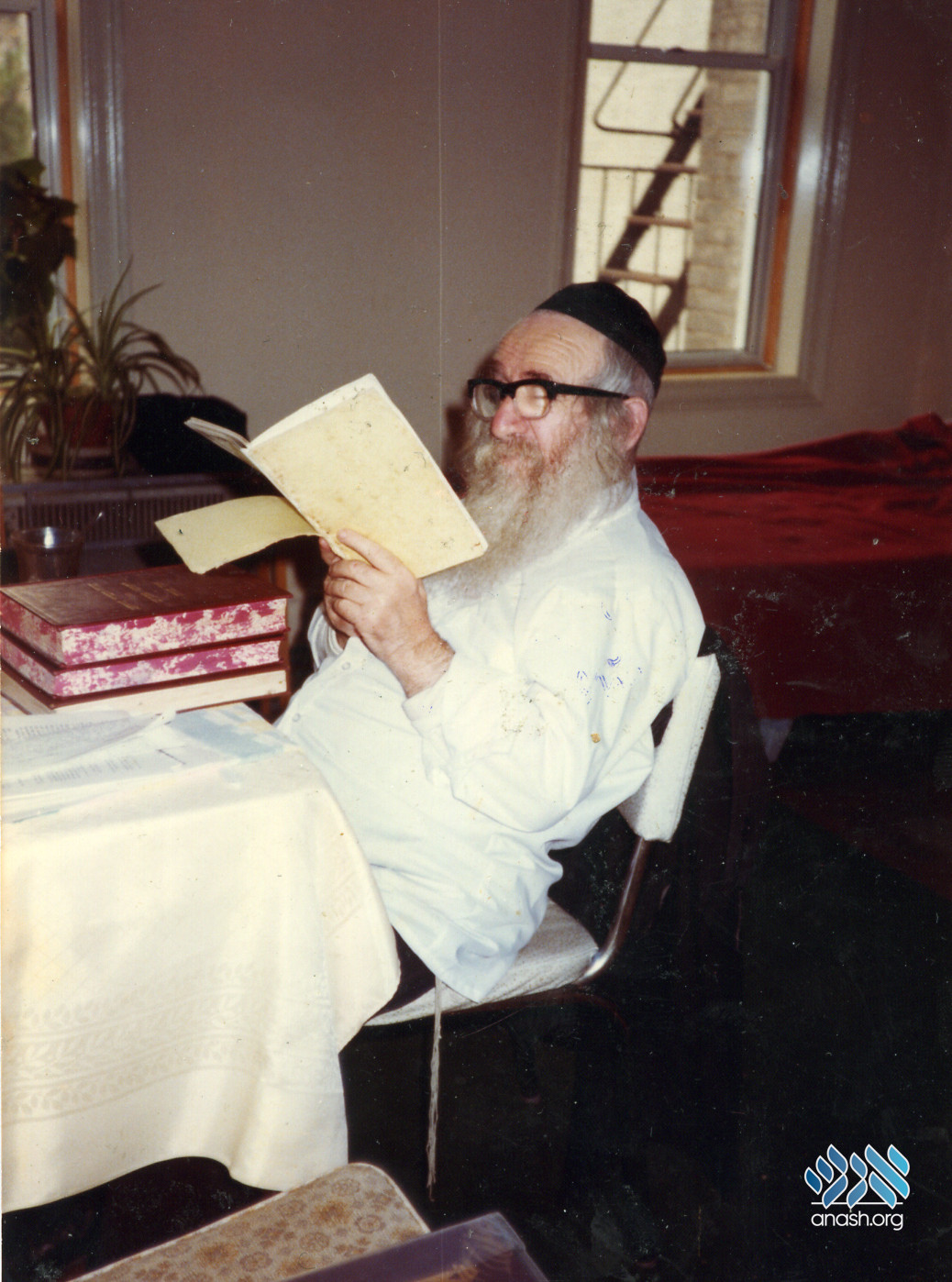
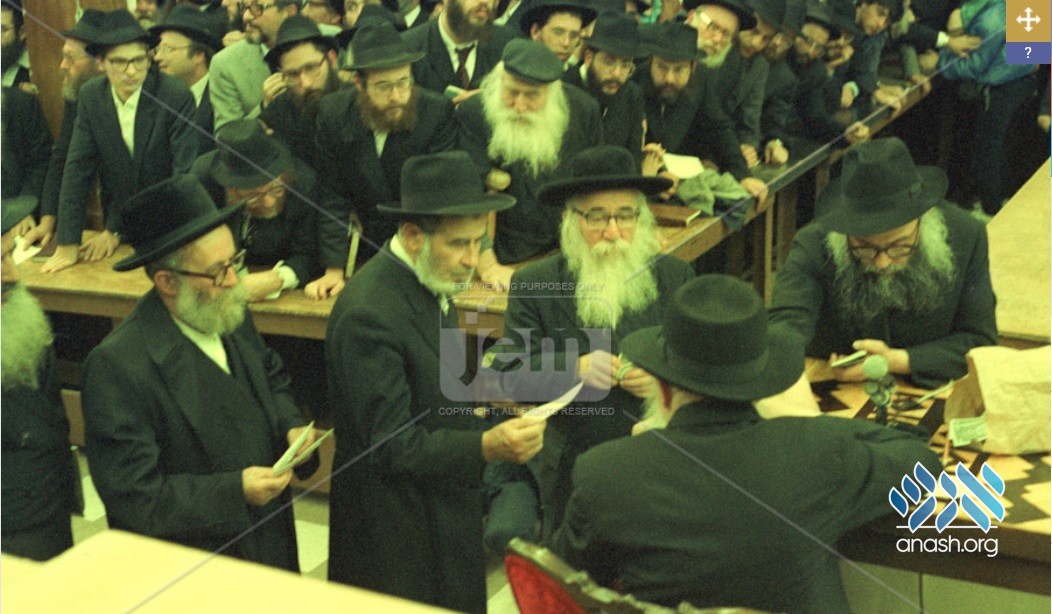
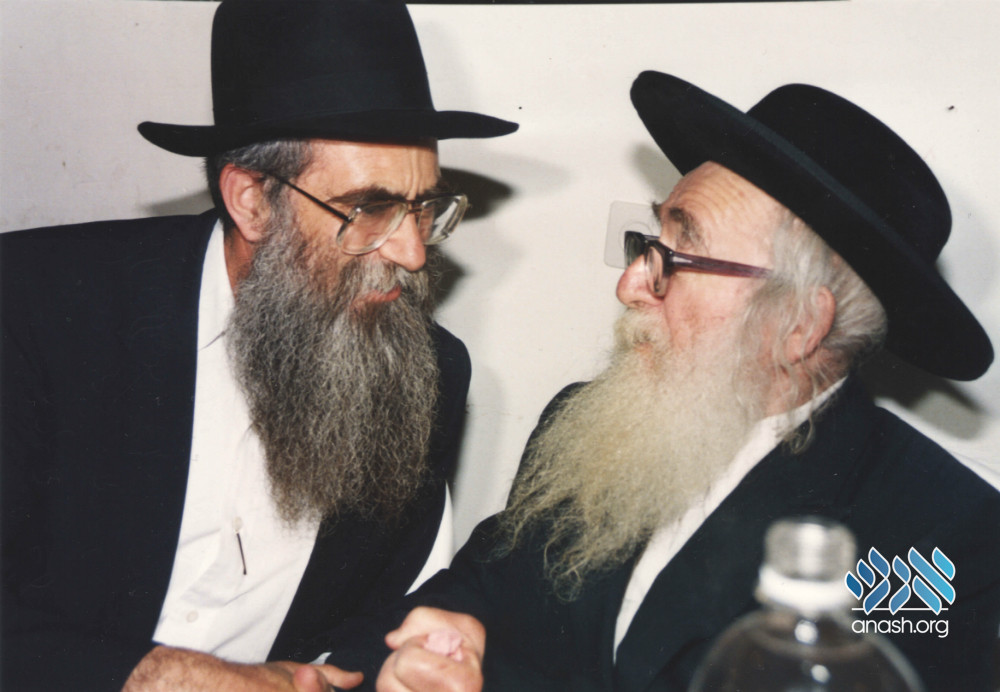
With Rabbi Yosef Hartman
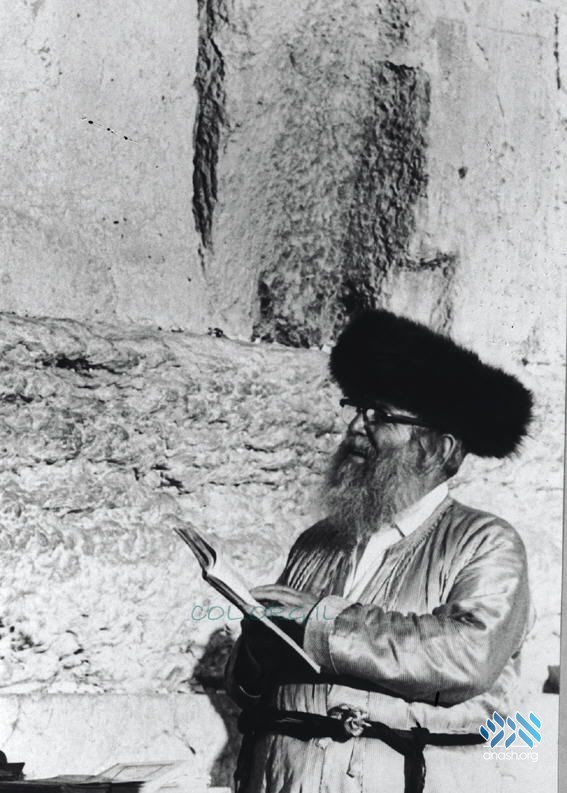
At the Kosel HaMa'arovi dressed in his Shabbos finery.
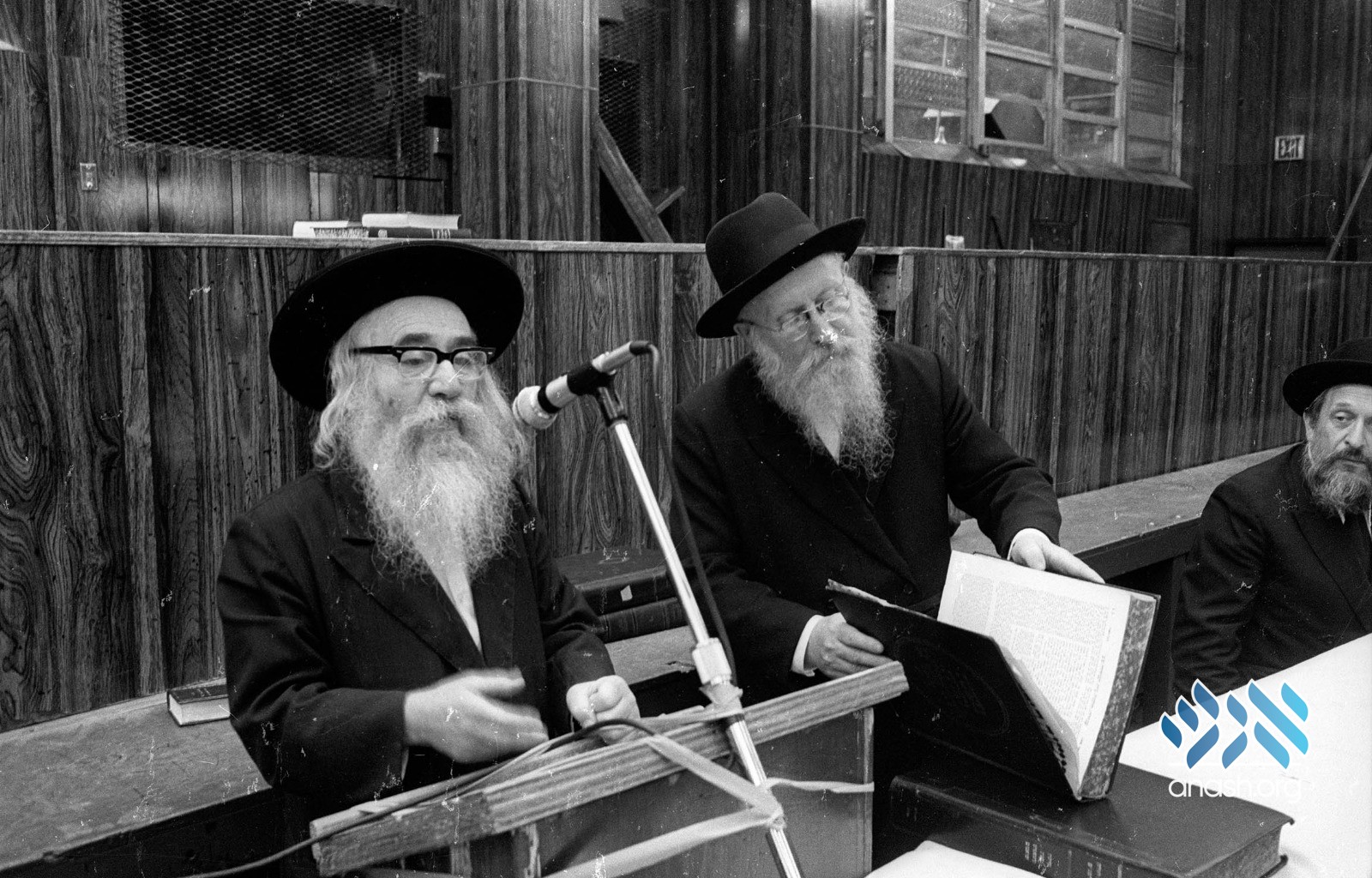
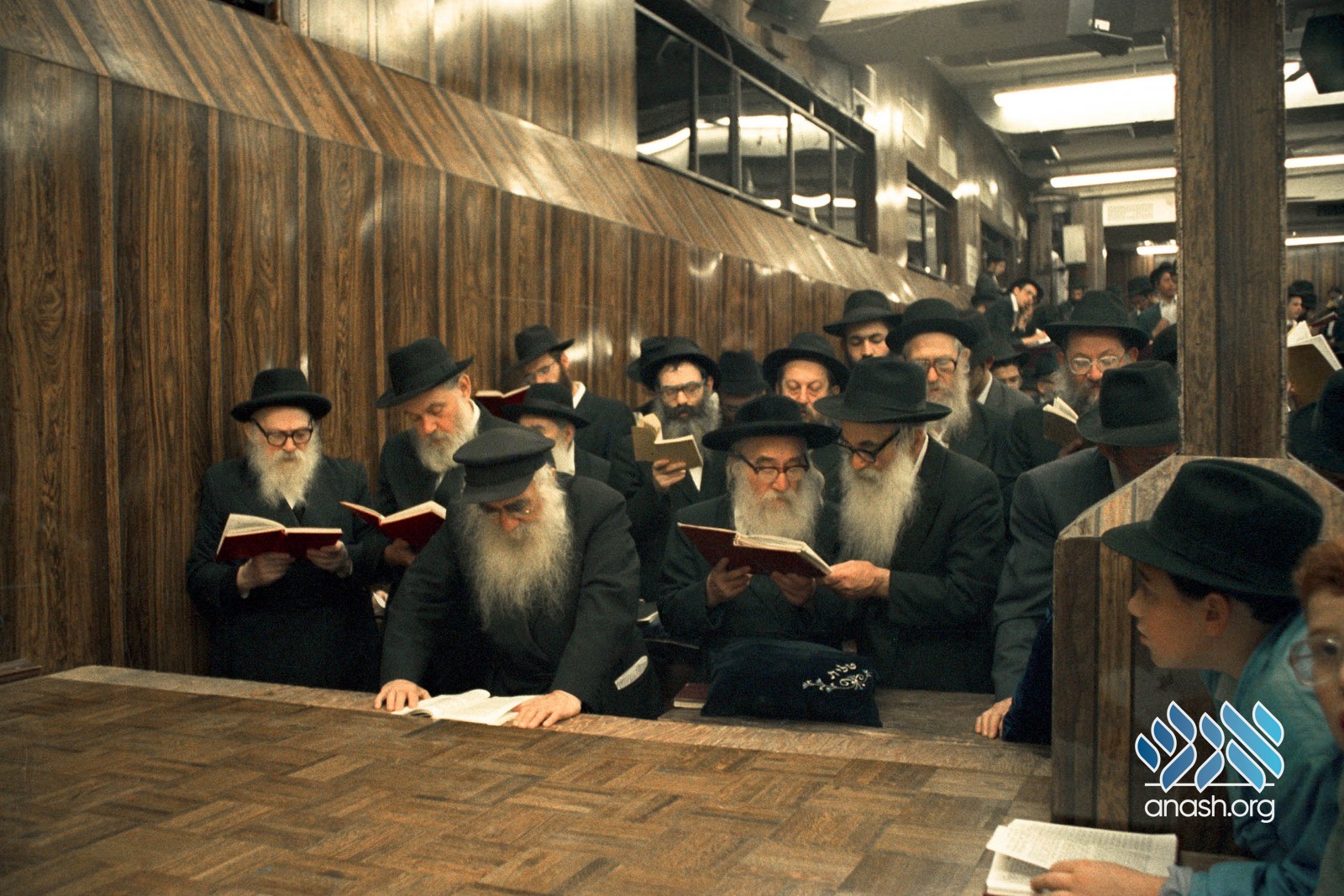
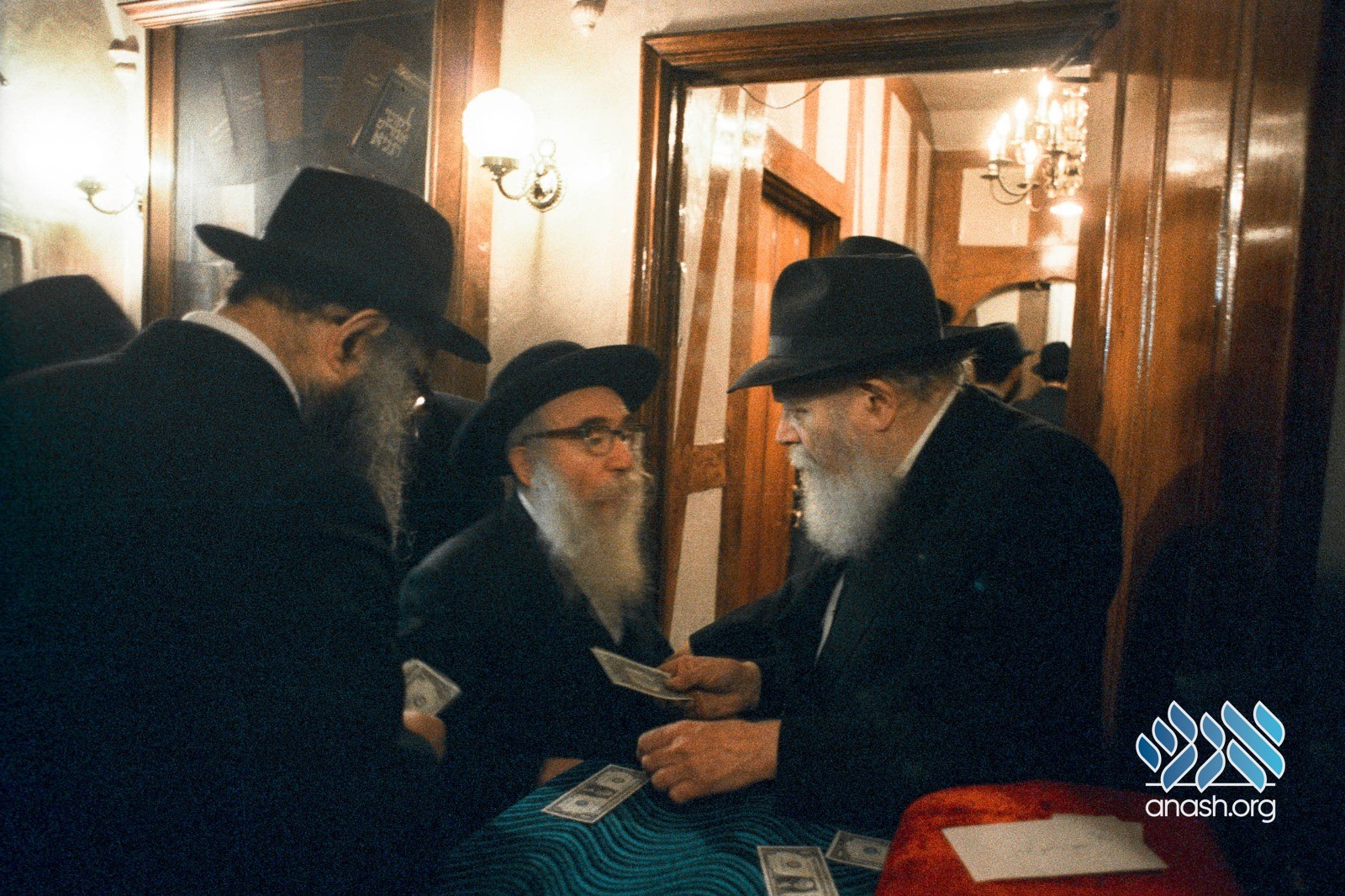
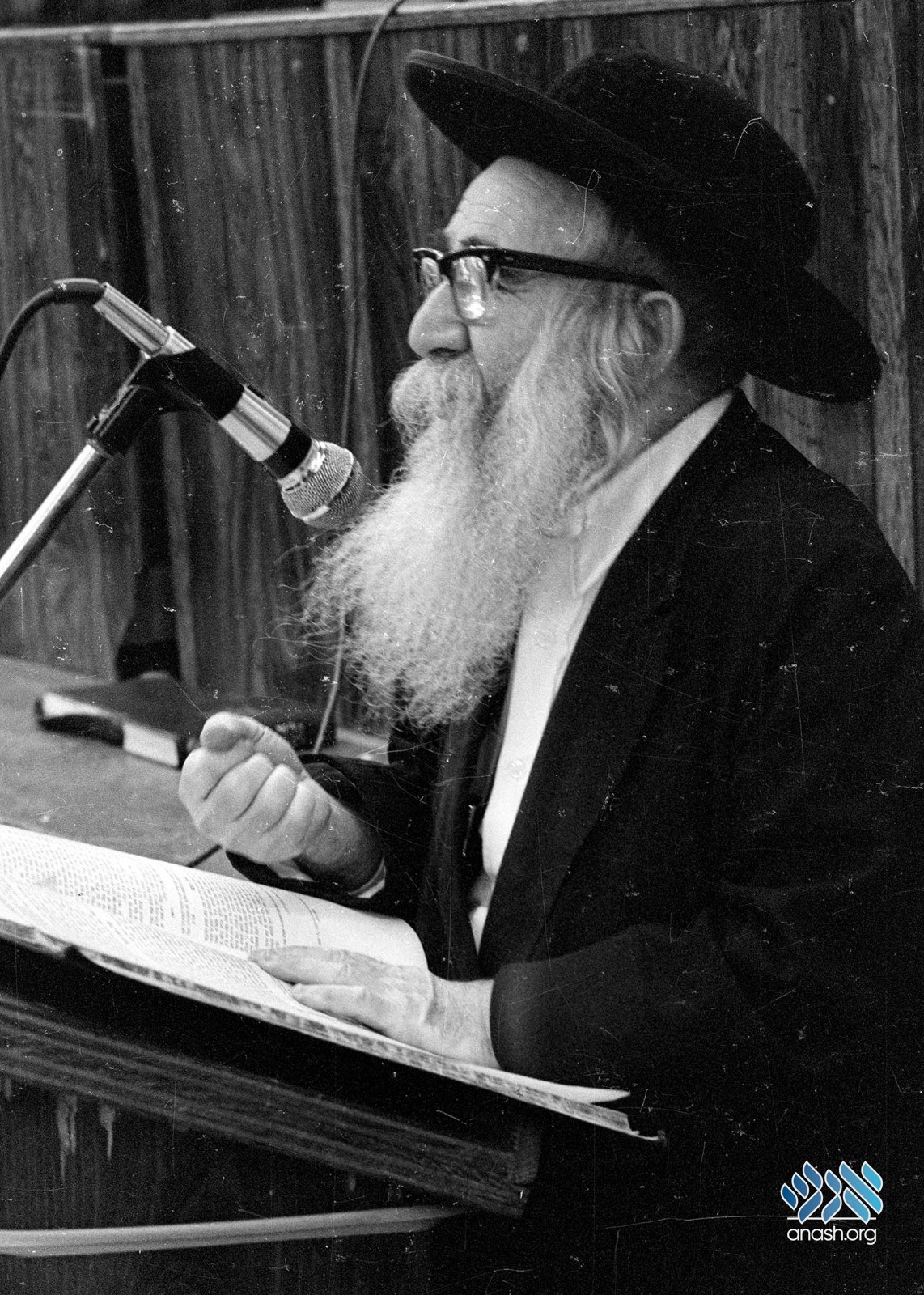
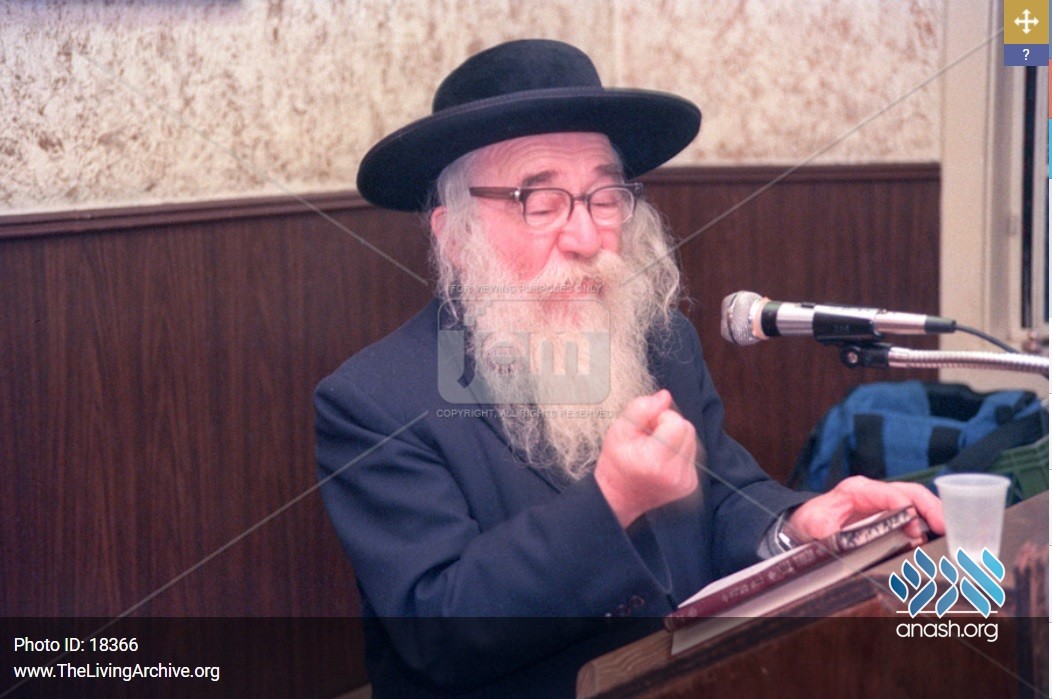
Speaking at Kinus Torah in 770.
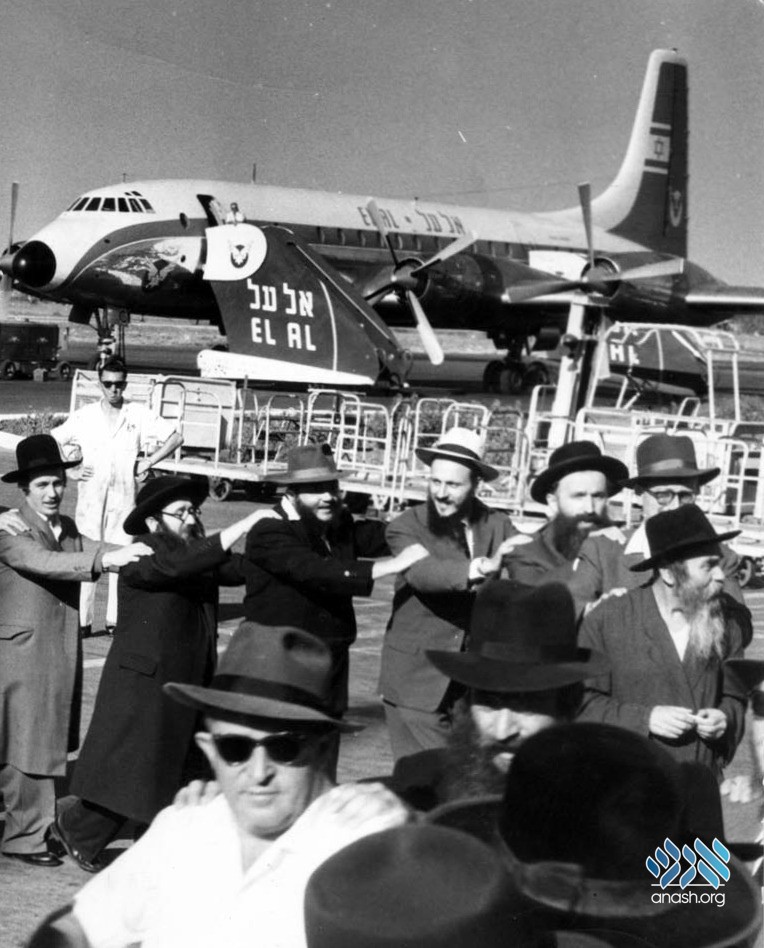
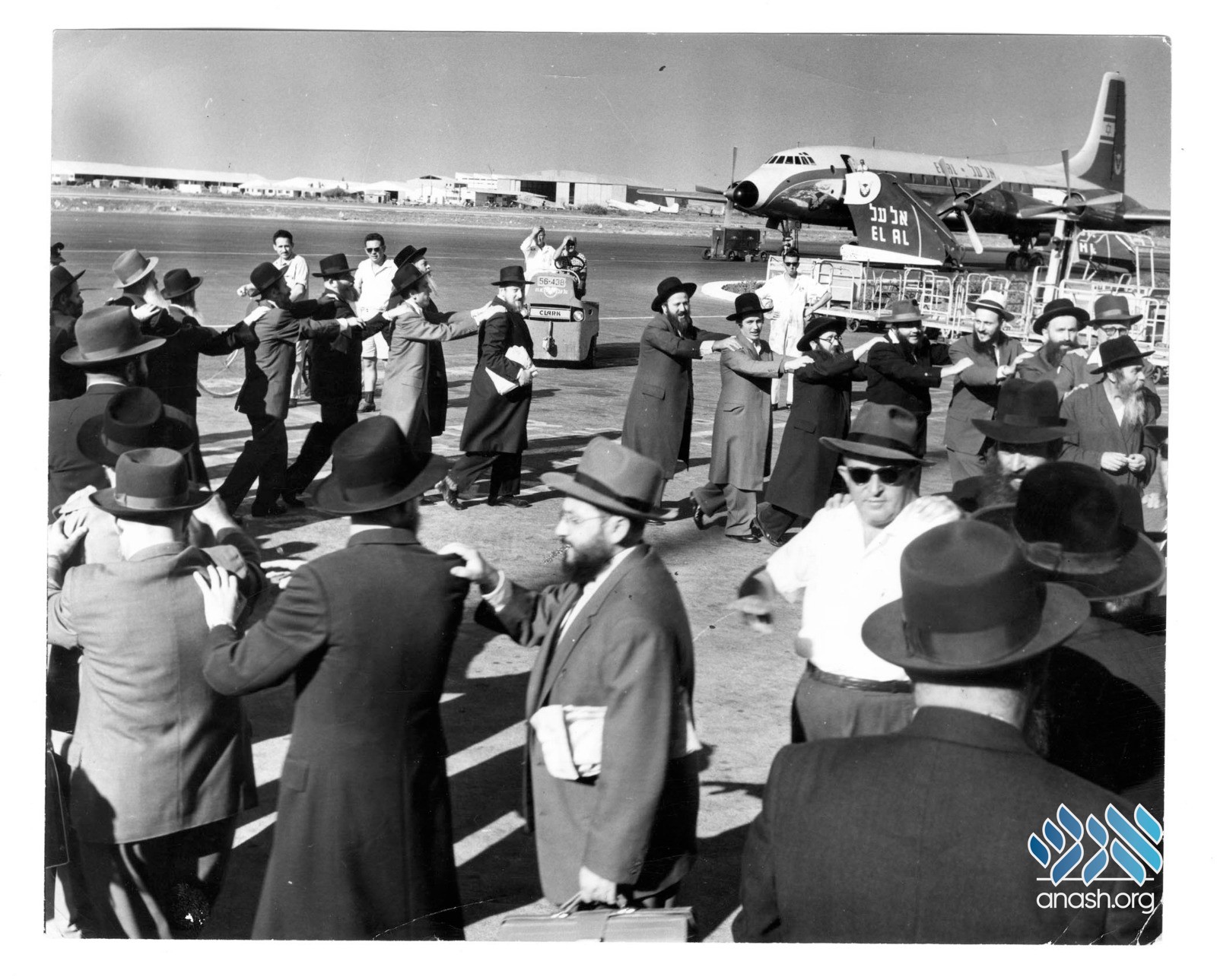
Dancing (2nd left) before his trip to the Rebbe on the charter flight, 5721/1961.
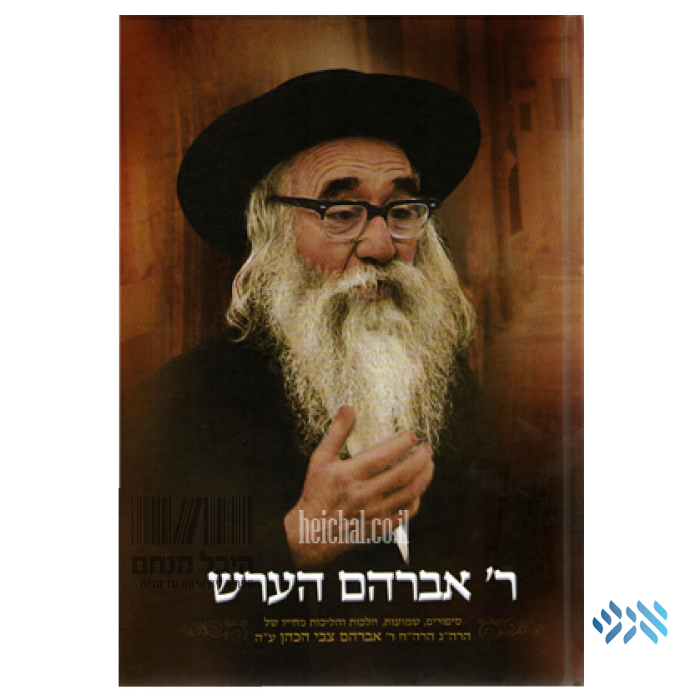
The biography.
 COMMENTS


Interesting. There is no opinion, which says that rice is Shehakol. There’s an opinion that it’s mezonos and there is another opinion that says that it’s Ha’adama. Because we’re not sure which one of these two opinions is correct we say shehakol. But if you made mezonos on a cookie, and you made a ha’adama on a carrot, you can eat the rice without saying any Bracha since you certainly said one of the two possible correct Brachas on the rice. So I’m not sure why he said Shekakol on a third item. Very strange.
What’s the bracha on דוחן שנתמעך בבישול?