



י״ג אב ה׳תשפ״ו | July 27, 2026
The Sefer That Cracked the Code of Rashi
“Some of us who seek to appreciate a Rashi have observed that the standard miforshim, while providing nice insight, can leave more to be desired. This is where Klalei Rashi can help. After some content rewiring and internalizing, I have found the thought method to actually and finally crack the code.”
By Levi M.
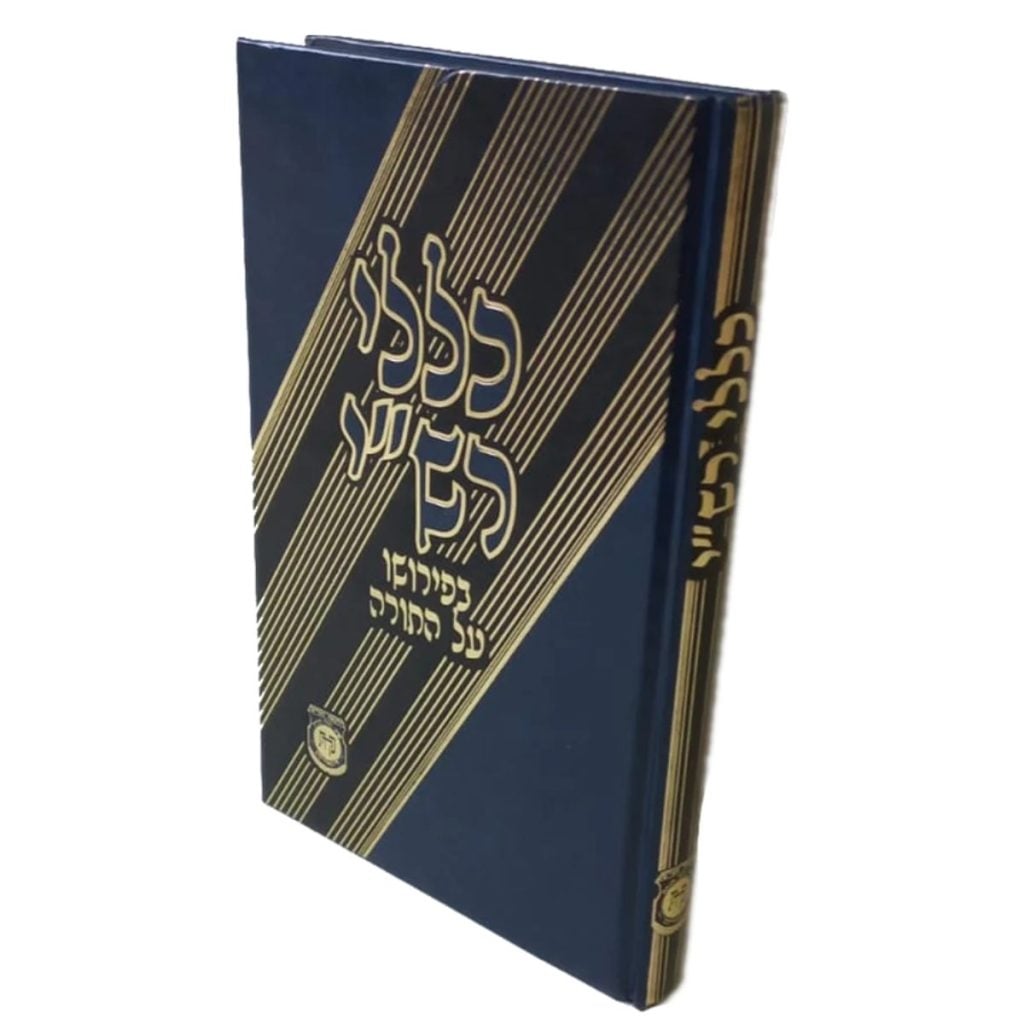
Much has been said about the talented literary work of Rabbi Tuvia Blau. I thought to share a bit about his remarkable seifer Klalei Rashi and explore how it can be useful to others as it has been for me.
As we know, the Sefer is a compilation of Rashi study patterns as understood by the rebbe over the years. And to some extent, like many compilations, the work can be thought of as taking on, by Rabbi Blau, an originality of its own (“Likutei” Amarim comes to mind).
Klalei Rashi is highly overlooked. It’s likely relegated to the back-most shelves in the bookstores, if not long out of print. After asking around, I managed to obtain a copy, and it opened my understanding of Rashi to a whole new level.
Some of us who seek to truly appreciate a Rashi have observed that the standard miforshim, while providing nice insight, can leave more to be desired. While the sub-specialty bookshelf discussions have certainly and steadily improved over the centuries, still, even the best compilers (even Sapirstein’s footnotes) often leave those looking deeper simply unconvinced.
This is where Klalei Rashi can help. The book is not an easy sofa read, but after some content rewiring and internalizing, I have found the thought method to actually and finally crack the code. You’d think rules are too robotic, but the solutions it opens are quite intuitive and illuminating.
Part 1: Rule Number One
The first exemplary principle I think students should start with is the דבר אחר rule: the 2nd pirush is suggested because we can always identify a particular difficulty with the 1st pirush. But the 2nd is less likely, so is therefore deferred.
This simple rule with a bit of thoughtful trial and error has for me convincingly solved every instance of a דבר אחר in Rashi on Chumash. For example, I tried applying it to the Chumash of Sunday of Voeschanon and came up with the following solution.
In his 1st pirush, Rashi writes ואתחנן means he wanted his request for entry to be granted gratis, and then offers a 2nd pirush that the word is just as good as its peer synonyms for prayer.
Of course no one gets it. Everybody knows the translation, so what is Rashi adding?
But applying the דבר אחר rule:
It’s natural for the reader to wonder, “היתכן Hashem didn’t answer a prayer?”Rashi therefore explains that tzadikim ask Hashem to answer them not based on their merits and good deeds, but rather as an outright gift.” This means the prayer wasn’t from the depth of his soul (“מבקשין”), hence no answer.
The reader hears, and asks, “but still”, entering the land was something Moshe very strongly wanted. He certainly asked with all his heart.
So therefore Rashi offers the second possibility that in fact he did pray with all his soul (חינון carrying the same weight as other synonyms for strong prayer such as תחינה, זעקה etc, which are deeper thanבקשה בלבד). As he said איני מניחך. Just this offering is last since the original question remains: how can it be He wouldn’t answer
(Though it can be suggested that his desire to enter the land despite immense but still not as urgent and bending as his other prayers, such as when his people were in danger in Chumash Shmos)
Problem solved.
Part 2: The Three Aspects of “Pshat”
Now that we’ve dived ahead and mastered Klal number one, even by day number one, we can step back and acquaint ourselves with some of the usual, general יסודות. We will present 3 of them here.
A- The bird’s eye surmised from all the rules is a pshat mind consisting of 2 layers. Whereas other pshatists such as Rashbam see in 2D, Rashi’s mind seems to operate from a 3rd dimension. There is a deep side, a continuous background conversation guiding the topics he selects to address and shaping the fore string of his visible words.
This is why many ponder the popular “what’s bothering Rashi,” whereas the literalist camp will always counter-claim that since he did not state his intentions openly, then clearly he didn’t have any underlying intentions while writing his pirush.
The difference between the schools is that some of us have an ability to see between and beyond the lines while others simply can’t. For those who can, Klalei Rashi provides a convincing framework and language for that subterranean dialog. Though not crucial to understand the straightforward commentary, the “what” Rashi is saying, it provides the “why” behind it.
B. The meaning of the word פשט, when Rashi maintains that that word guides the scope of his pirush, asks for elaboration because it’s not exactly as “simple” as many understand.
The conversation Rashi is having with the reader, in the background, must be reasonable. Or to be more precise: natural. It’s not that he is addressing only what’s “simple”, but rather questions that form “naturally” in the conversation. Without respect to the level of education of the reader. (In our above example, asking why HaShem sometimes does not answer a prayer, upon learning that Moshe pleaded to no avail, is a very natural point raised, irrespective of education level)
C – Lastly, since we are at the meaning of the word פשט, we could clear up one more fundamental before diving into the depths of the klalim. There is another aspect to the word.
From the beginning, 9 centuries ago, everybody rushed to object to Rashi’s stated “פשט” insistence because he absolutely does bring מדרש אגדה. Sure, we’ve been provided the answer that it’s just those אגדות which are “מיישב” the text. This needs elaboration, so we will provide an example:
Rashi in Chumash Shmos brings the medrash we’ve all heard at some point that the giant mother frog rose from the Nile; as much as the Mitzrim batoned it, all it responded was to sprout – perhaps from its mouth? – streams of baby frogs. Many question how this can be “pshat”? The answer is Rashi meant something else when he said it was close to pshat. In this case, he meant that the midrashic tale actually fit the grammar of the Chumash better than the “apparent” pshat. This is because the Chumash wrote ותעל הצפרדע in singular form, not plural. Therefore, writing that a single frog rose (as opposed to a swarm) is indeed the most literal and therefore most accurate translation.
Part 3 – Nail it: How to Narrow Down Among Solutions
Now that we probe Rashi’s unspoken realm, behind the curtain, the stage is open to more than just one suggestible background dialog. Since – אין דעותיהם שוות – different people, given the wide variation of mind types, expectantly propose differing solutions to explain an underlying intention of Rashi (with the Rebbe’s sichos, we sometimes find a later-year sicha explains the same Rashi differently than he explained in earlier years).
Two guidelines can help to narrow the options:
First, keep it simple. The most convincing of multiple possibilities will always involve the logic that can be said is most reasonable. As above, more accurately: most natural.
Second, the convincing solution will always bring an appreciation for Rashi’s choice of word(s) he used for what would have otherwise seemed less central to the point he is making.
Take the above example in today’s chumash:
Rashi uses the word להם, that צדיקים מבקשים להם – apparently this word is not necessary at all to understand Rashi’s point. But with our proposition, in which the reader objects that Moshe’s desire for the land was strong, the word להם now is appropriate: for it brings out the contrast between the other tzadikim whose desire was less – להם – to them but not to Moshe (who, unlike them, his desire was in fact strong). The word להם seems less central at first, but our solution allows it to offer itself as helpful to the overall understanding.
Similarly, and as an even clearer example, Rashi uses the word מבקשין in his first pirush, which at first does not have deeper meaning. But in light of our solution, we now can see that the word was actually chosen carefully: “request” presents itself as “weak” in contrast to the stronger forms of prayer brought out in the second pirush.
Since we have two peripheral words that have been illuminated by our suggestion, we can determine that this solution is the convincing one.
May we apply the Sichos beyond repeating. May Rashi illuminate and unify our minds and hearts.
 COMMENTS


Where can we purchase this Sefer?