



כ׳ אלול ה׳תשפ״ו | September 2, 2026
The Rebbe’s Behind-the-Scenes Liaison to the Gedolim
In a rare interview, Rabbi Avraham Shmuel Levine discusses his decades as a behind the scenes contact between the Rebbe and some of the leading Torah figures of the previous generation, including Harav Moshe Feinstein, Harav Yosef Eliyahu Henkin, and Harav Yosef Dov Soloveitchik, leading to Harav Gedalia Schorr dubbing him ‘the CIA of Lubavitch’.
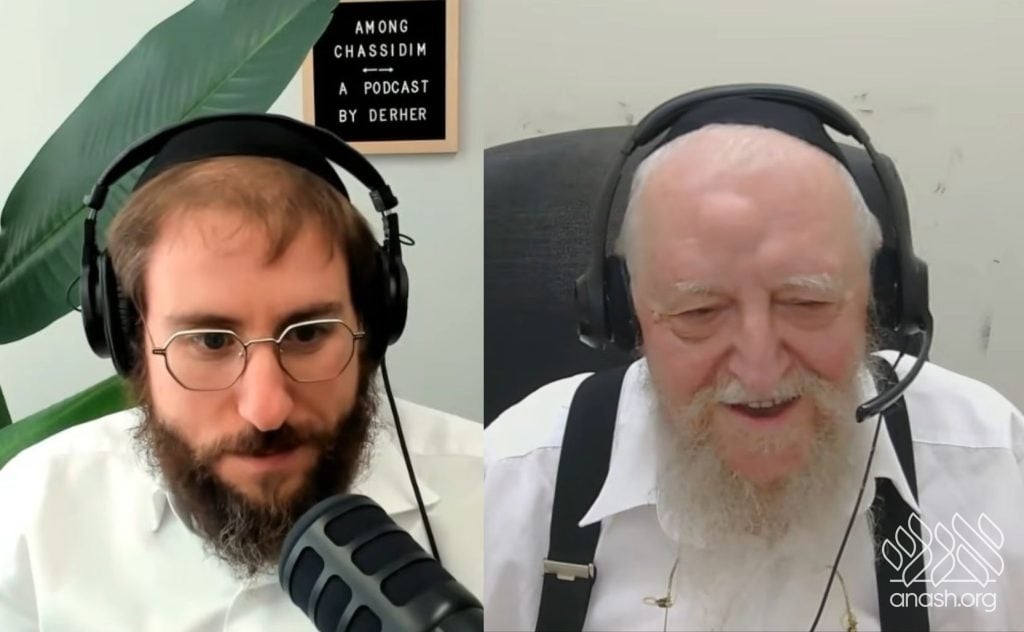
In a recent podcast interview, Rabbi Avraham Shmuel Levine shares fascinating stories and memories spanning his family’s Litvishe roots, his years learning in Kfar Chabad, and decades spent as a quiet liaison between the Rebbe and some of the most prominent non-Lubavitch rabbonim of the era.
Rabbi Levine’s grandfather served as a non-chassidic rav near Yekaterinoslav and had a personal relationship with the Rebbe’s father, Harav Levi Yitzchak. He was later imprisoned for continuing to teach Torah under Soviet rule and died in prison after his legs had to be amputated. “As long as people want to learn, I cannot forfeit my duty to teach them Torah,” he told the officials who came for him.
Rabbi Levine’s father later escaped Russia through the famous wave of forged passports, enduring torture by the NKVD along the way, and Rabbi Levine himself was born in a displaced persons camp in Austria before the family settled in Louisville, Kentucky, and then New York.
His first encounter with the Rebbe came at a farbrengen when he was just eleven years old.
“I didn’t understand anything, but I still remember the Rebbe’s voice,” he recalls. “It had a very emotional effect on me.”
After finishing yeshiva in 1965, Rabbi Levine went to learn in Kfar Chabad, where he grew close with the famed mashpia Reb Shlomo Chaim Kesselman. In one yechidus with the Rebbe before leaving, the Rebbe asked him to write monthly.
“I want to make a deal with you,” the Rebbe told him. “Write to me every month, and I don’t mean you should write to me about your davening, tell me what you’re learning.” He wrote faithfully and received a reply every single time.
Upon returning to America, Rabbi Levine, still a bochur, unexpectedly found himself working at Ezras Torah, the tzedakah organization founded by leading posek, Harav Yosef Eliyahu Henkin, where he processed requests for assistance from around the world. He grew close with Rabbi Henkin himself, learning with him for hours each morning and serving as his eyes for correspondence.
It was through this relationship that Rabbi Levine became quietly involved in some of the most sensitive matters of the day, regularly calling in reports to Rabbi Chodakov with the Rebbe listening in on the line.
The first time the Rebbe asked Rabbi Chodakov to relay a question to him directly over the phone, Rabbi Levine froze.
“It was like an electric shock when I heard the Rebbe’s voice. I lost my speech, I was overwhelmed.”
He couldn’t answer, and the Rebbe gently let it go, saying they’d speak about it another time. Rabbi Levine says he trained himself after that to treat himself as if he had no independent identity on those calls, which is what let him function normally in later conversations.
One such matter was the Mihu Yehudi law. At the Rebbe’s urging, Rabbi Levine drafted letters on Harav Henkin’s behalf pressing the National Religious Party to leave the Israeli government over its failure to amend the law. When Harav Henkin later raised objections, the exchanges went back and forth three times through Rabbi Levine, with the Rebbe responding point by point, including addressing the “dominant figure” in the government whose family ties made amending the law unlikely.
After Harav Henkin’s passing, Rabbi Levine became secretary of Agudas Harabbanim under Harav Simcha Elberg, a position that put him at the center of the organization’s dealings with the country’s leading rabbonim, including Harav Moshe Feinstein, Harav Gedalia Schorr, and Harav Yosef Dov Soloveitchik.
Rabbi Levine also related many of the fascinating back-and-forths between the Rebbe and various Gedolim, including the Rebbe’s involvement in editing letters and other communications. On one occasion, the Rebbe asked him to remove a signature from a letter before it was sent.
He also shared the Rebbe’s reaction after one of the major Litvishe Gedolim became furious with thim over a particular letter.
Rabbi Levine developed a particularly warm relationship with Rabbi Moshe Feinstein, who was mesader kiddushin at his wedding and had an impromptu yechidus with the Rebbe during that visit.
Rabbi Levine arranged for the wedding to take place at 770, specifically so that Reb Moshe, would end up nearby.
“I didn’t tell anybody. I just told him there’s going to be a wedding in Crown Heights, that’s it.”
Reb Moshe came, had no idea he’d be steps from the Rebbe’s shul, and ended up in conversation near the window. Someone then asked him, “Would you want to go in to the Rebbe to say hello?” He answered, “Of course, of course,” and he ended up speaking to the Rebbe for 45 minutes.
At Rabbi Levine’s request, both Reb Moshe and Reb Gedalia Schorr wrote letters of support for the annual Lag Baomer parades held at 770.
After the Rebbe’s heart attack in 1978, Rabbi Levine quietly arranged for a letter of support from Rav Moshe, who added several lines in his own handwriting endorsing the Rebbe’s mivtzoim. Rabbi Levine then raced through a snowstorm to deliver it, arriving at 770 just as the Rebbe was leaving davening, and handed it over in person.
Rabbi Levine also shared a fascinating report of Rav Soloveitchik’s reaction after his visit to the Rebbe on Yud Shevat 5740. Harav Elberg had asked to join the phone call regarding a kashrus issue, but they first discussed his visit to 770. Rav Soloveitchik was effusive in his praise of what he saw and of the Rebbe’s command of Shas and Midrashim.
For the farbrengen of Yud Shevat 5740, Rav Soloveitchik attended the Rebbe’s farbrengen. The following morning, Rabbi Elberg called him and, with Rabbi Levine listening on another extension, asked him about the farbrengen.
“What an impression it made,” Rav Soloveitchik said, overcome with emotion. “I had a sofek to make the bracha of Chacham Horozim (said on seeing an exceptionally great talmid chochom).”
“What can I tell you?” he continued. “It was something special. He quotes Tanya by heart, and he repeats Gemara fluently. I noticed that he was saying a passage by heart and at one point he made a small mistake. A few seconds later, he caught himself and corrected it. It was really something!”
When Rabbi Elberg remarked that perhaps his going personally to visit the Rebbe had somewhat diminished his own stature, Rav Soloveitchik immediately pushed back. “What are you talking about? Who are you even comparing me to? How can you compare me to him?”
At one point, Rabbi Levine was sent, expenses covered, to a rabbinical convention. When he went to give sholom aleichem to Harav Gedalia Schorr, Harav Schorr turned to a colleague and remarked, “You know who this is? This is the CIA of Lubavitch.”
Among Chassidim is a podcast by Derher, hosted by Rabbi Yossi Kamman, director of A Chassidisher Derher. The podcast captures the vibrancy of dor hashvi’i through immersive, in-depth conversations. To view all episodes, visit here.
VIDEO:

 COMMENTS


Dear Rabbi Kaman,
I would like to suggest having Rabbi Chaim Moshe Bergstein from Detroit on your program. He was a close Talmid of Reb Shlomo Chaim Kesselman and would make a wonderful guest.
Thank you for your time and consideration.
CIA , acroynm probably stands for Chabad In Action 🙂
Great article ,
Thank you
Kasiva VChaisma Tova