




כ״ז אלול ה׳תשפ״ו | September 9, 2026
The Rebbe Shaped My Life in Yeshivah and Chinuch
In a video interview, Rabbi Nochem Kaplan shares memories of growing up in the small Lubavitch community around 770, the Rebbe’s guidance to decline a teaching offer, the directive to share nigleh at his l’chaim, and his decades of shlichus in chinuch in Virginia, Lakewood, Philadelphia, and New York.
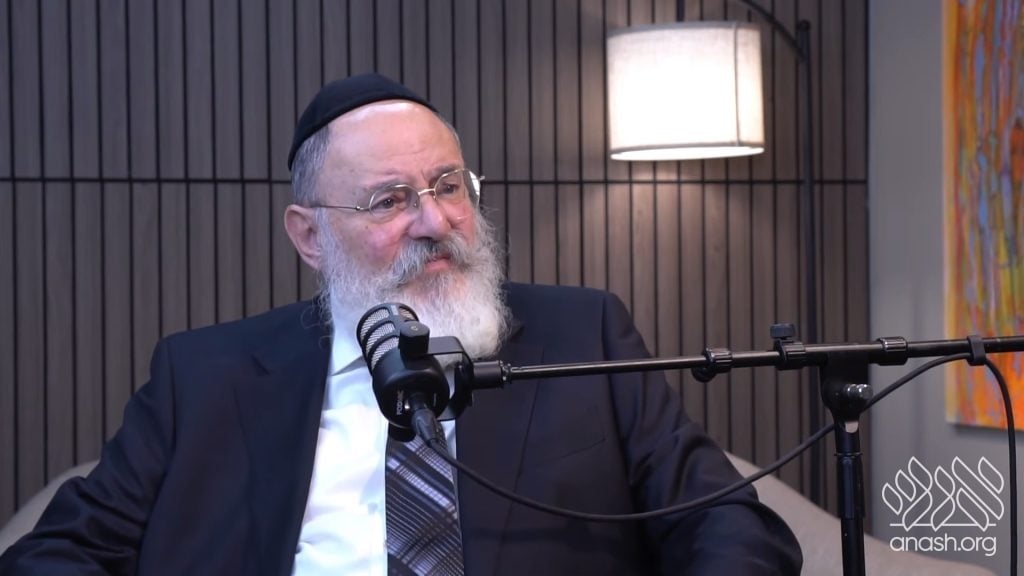
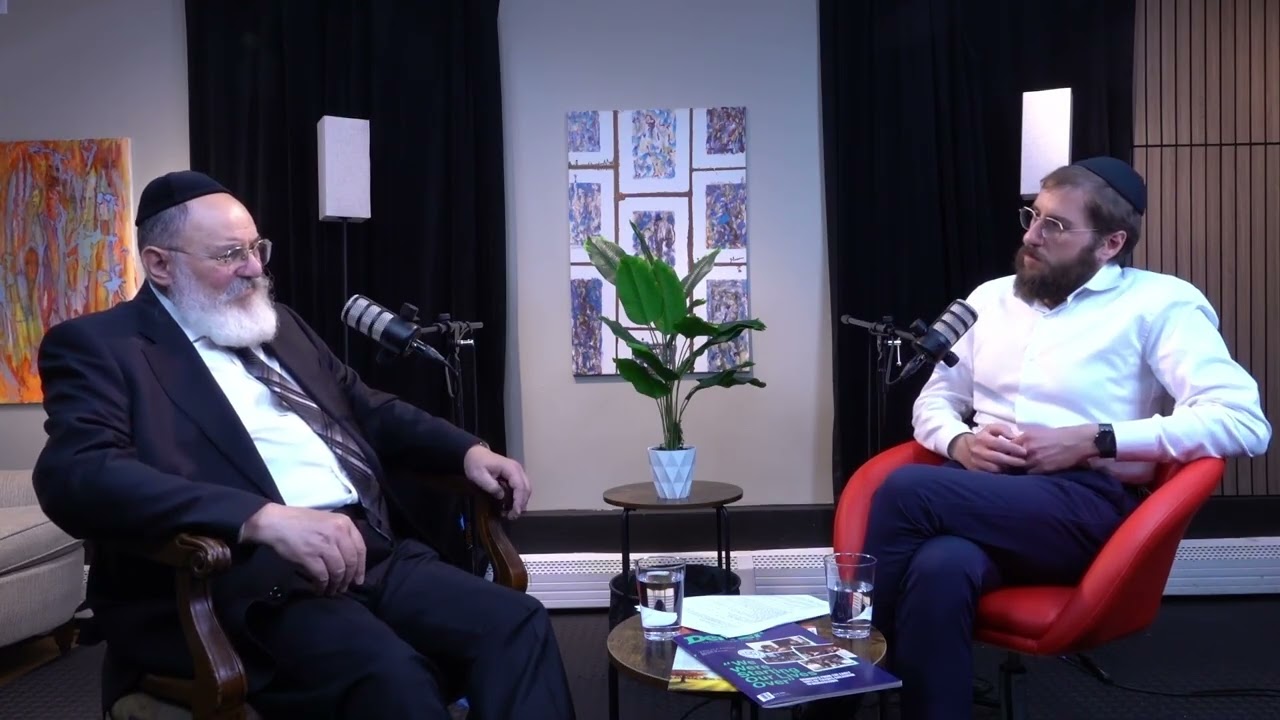
In a podcast interview, Rabbi Nochem Kaplan shares fascinating stories and memories spanning his family’s roots as Chassidim going back to the Alter Rebbe, his childhood in the Soviet Union and the DP camps of postwar Germany, his years growing up around 770 in the 1950s and 60s, and his life’s work in chinuch.
Rabbi Kaplan’s family were Chassidim going back to the times of the Alter Rebbe on his mother’s side, while his father came from a Litvishe background before connecting to Lubavitch. Born in the Soviet Union, the family escaped Russia and spent time in the DP camps in Germany, where they were close with Rebbetzin Chana, before eventually settling in England and later moving to New York.
Rabbi Kaplan shares memories of the Frierdiker Rebbe’s histalkus and the early years of the Rebbe’s nesius, as well as his own formative years growing up around 770 in the small Lubavitch community of the 1950s and ’60s. He describes the great Chassidim and mashpi’im who influenced him during his years learning in Kfar Chabad and 770.
The Shabbos after his Bar Mitzvah, he was walking down the street when he met Rebbetzin Chana, whom he had come to know well. He would often visit her home, and whenever they met in the street, she would greet him warmly.
That Shabbos, on Kingston Avenue between President and Union, he wished her a good Shabbos and then told her that he had celebrated his Bar Mitzvah the day before. She was delighted to hear the news and showered him with brachos.
“Do you remember when I used to chase you around when you were a one-year-old?” she asked.
Of course, he did not remember. So she explained.
“Your mother would let you play outside, and you would run around. You had a little hat on, but you would keep taking it off,” she told him. “I would chase after you to put it back on, because I had heard from my husband [Harav Levi Yitzchak], that a child should not be outside without a kisui rosh.”
On Shavuos 5727, the Rebbe spoke sharply about the yeshivah in Newark, which had closed for the summer.
A short while later, Rabbi Kaplan was sitting in zal learning when Rabbi Mordechai Mentlik came over to him. “The hanhalah has decided that you should gather ten bochurim and go learn in Newark,” he told him.
“I tried to get out of it,” Rabbi Kaplan recalls. “I told him I already had a chavrusa lined up and was set to leave on Merkos Shlichus.” Finding a chavrusa who could drive was itself a whole undertaking, since almost nobody at 770 owned a car or a license in those years, and he had specifically arranged for an older bochur, a couple of years his senior, to travel with him.
A short while later, Rabbi Mentlik returned to tell him that Reb Shmuel Levitin was calling him. “Now that’s trouble,” Kaplan says. Reb Shmuel was no stranger to Kaplan’s family; he had known his grandfather well from Russia, and he knew his father from the underground yeshivos there too, which gave his words extra weight.
Reb Shmuel sat him down and began telling him a story. Right before the outbreak of the First World War, Reb Shmuel had been told by the Rebbe Rashab to become a rov in Georgia, something virtually unheard of at the time. But, of course, he followed the Rebbe’s directive without question.
About ten years later, he received a telegram instructing him to move his family to Nevel to run the yeshivah. Nevel was considered one of the most dangerous places imaginable, under the watchful eye of the KGB, but he went. Sure enough, he was eventually exiled to Siberia, where he spent three years.
After he was released, the Frierdiker Rebbe told him to apply for an exit visa from Russia, something virtually unheard of and extremely dangerous. Nevertheless, he did so and, miraculously, received the visa. He was then told to go to America, which presented its own set of challenges, but once again, he followed through.
“And that’s why I’m here,” Reb Shmuel concluded. “And you? What is being asked of you? To go to Newark for a few weeks?”
Needless to say, Rabbi Kaplan agreed. On the spot, Reb Shmuel got up and knocked on the Rebbe’s door, with Kaplan watching. He told the Rebbe that Kaplan had agreed to go and would arrange a group of bochurim to travel to Newark.
In the end, Rabbi Kaplan managed to round up eight or nine bochurim, and the group reopened the Yeshiva in Newark.
He also recounts a fascinating instruction he received from the Rebbe to share a topic in Nigleh by his l’chaim. Later, at a yechidus with his kallah, when the Rebbe asked him if he had done it, he replied that he had started but had been interrupted. “Such a batlan?” the Rebbe responded with a smile.
After his wedding, he received a message from Rabbi Chodakov that the Rebbe said he owed Him something in Nigleh. The Rebbe instructed him to make it up during his Sheva Brachos, in addition to the maamar Chassidus said at each of the Sheva Brachos, and Rabbi Kaplan spent that entire day preparing so he would have something substantial in Nigleh to say.
After he got married, Rabbi Yisroel Jacobson approached him with an offer. Instead of finishing his own learning of Yoreh Deah at seven each day in kollel, he could finish at six and use the extra hour to teach what he had learned that day to the bochurim at Hadar HaTorah. In return, he would earn a few dollars, on top of the $72 a month kollel stipend avreichim were paid at the time.
Rabbi Kaplan assumed it was a win-win situation. He would still be learning, and now he would have the opportunity to review what he had learned by teaching it to students who needed his help. He would even earn a few extra dollars on top of the meager kollel stipend. He wrote to the Rebbe to ask about the idea.
The surprising answer left no room for negotiation: “It is nothing more than the advice of the yetzer hara. You have to sit and learn with hasmadah and shekida and nothing else.”
“Rabbi Jacobson was incredulous when he heard the response, since it wasn’t as though I was being asked to take an outside job”, Rabbi Kaplan recalls, “but the Rebbe’s message was unambiguous: an yungerman’s job is to sit and learn, nothing else.”
Following the Rebbe’s direction, Rabbi Kaplan went on to devote his life to chinuch, teaching in communities including Virginia, Lakewood, Philadelphia, and New York, including a close relationship with Rav Schneur and Rav Meir Kotler AH in Lakewood.
He also recounts painting a portrait of the Rebbe Rashab, drawing on input from Reb Avrohom Mayorer and Reb Mendel Futerfas and ultimately the Rebbetzin, and the Rebbe’s satisfaction with the finished piece.
Among Chassidim is a podcast by Derher, hosted by Rabbi Yossi Kamman, director of A Chassidisher Derher. The podcast captures the vibrancy of dor hashvi’i through immersive, in-depth conversations. To view all episodes, visit here.
Spotify: https://tinyurl.com/AC64SP
Apple Podcasts: https://tinyurl.com/AC64AP
Google Drive: https://tinyurl.com/AC64GD
 COMMENTS


We appreciate your feedback. If you have any additional information to contribute to this article, it will be added below.