




כ״ג מרחשון ה׳תשפ״ז | November 3, 2026
The Hungarian Journalist with a Unique Shlichus from the Rebbe
23 Cheshvan marks the yahrtzeit of Reb Chaim Yehuda Paldi, who passed away in 5743 (1982). A former Pressburger Yeshiva talmid, he dedicated his writing abilities to fighting the Mihu Yehudi decree and disputing the claim that the founding of the State of Israel marked the beginning of the Geulah.
By Hershel Rosenbluh
23 Cheshvan marks the yahrtzeit of Reb Chaim Yehuda Paldi, who passed away in 5743 (1982). A former Pressburger Yeshiva talmid, he dedicated his writing abilities to fighting the Mihu Yehudi decree and disputing the claim that the founding of the State of Israel marked the beginning of the Geulah.
Born in Erlau, Hungary, around 5668 (1908) as Chaim Yehuda Feldman, Reb Chaim Yehuda was a talmid of the famed Pressburger Yeshiva, then headed by Harav Akiva Sofer, who passed away in 5720 (1959). In his youth, he became involved with the Zionist movement and went up to Eretz Yisroel, where he began writing in Hungarian for newspapers there.
In the 1960s, R’ Chaim Yehuda was involved in a motor vehicle accident and needed treatment in the United States. He had seen the work of Lubavitch in Eretz Yisroel following the Six-Day War, when they cared for the orphans of soldiers who had fallen during the war, and was deeply moved by their efforts.
He got in touch with Lubavitch and spent Tishrei 5728 (1967) with the Rebbe.
In later years, he would stay with the family of Reb Shia Korf, AH.
R’ Chaim Yehuda went into yechidus with the Rebbe, where he told the Rebbe about his writing career. The Rebbe gave him a shlichus to use his writing abilities to educate people that the idea that the founding of the State of Israel marked the “beginning of the redemption,” etc., was contrary to the teachings of the Torah.
He then proceeded to write tens of articles in Israeli newspapers and received much encouragement from the Rebbe in his work.
One example of the Rebbe’s encouragement came during the War of Attrition between Israel and Egypt, which took place from Adar 5729 to Av 5730. The Rebbe thanked him for his writings during the war, noting that the Israeli government’s conduct in this manner only brought more casualties.
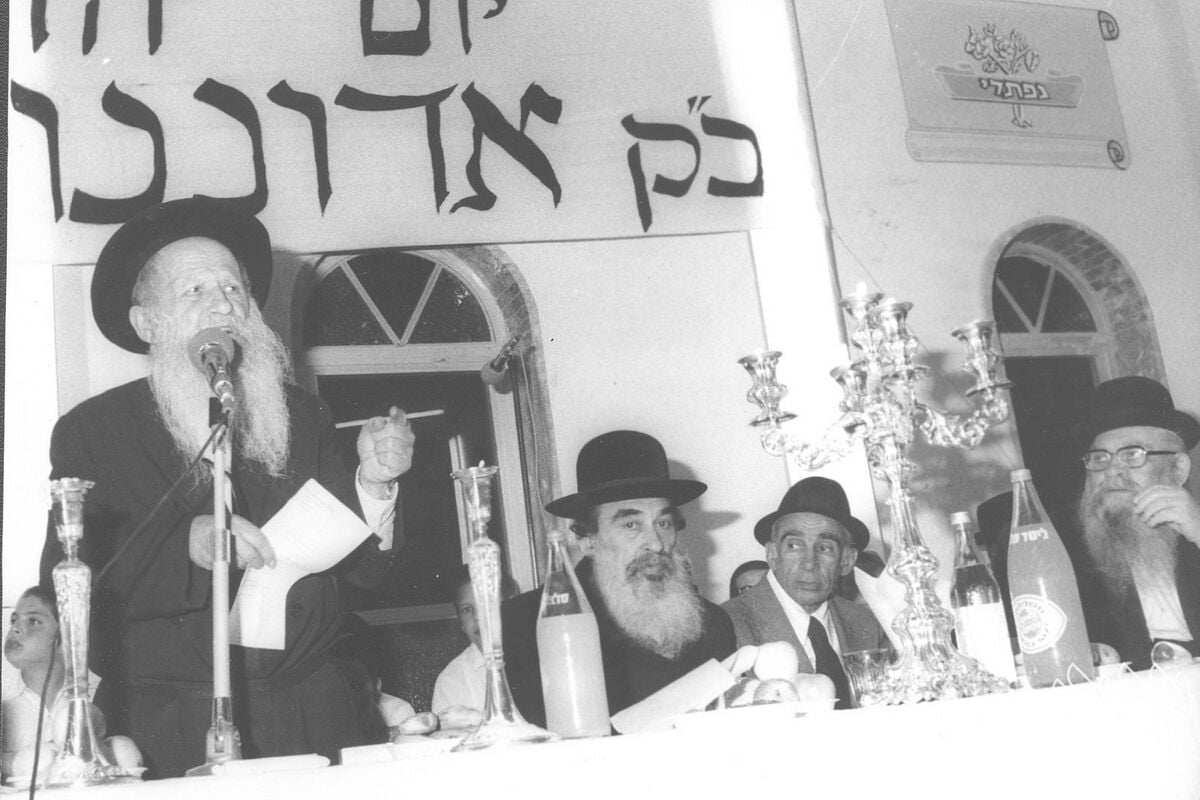
In 5730 (1970), after the Mihu Yehudi decree was passed in Eretz Yisroel, Rav Paldi organized the Vaad L’ma’an Shleimus Ha’am, together with Mr. Tzvi Nedivi, Rabbi Shmuel Cheifer, Rav Nochum Trebnik, and Rabbi Yitzchok Yehuda Holtzman.
The group’s mission was to organize public opinion and try to get the Knesset to change the law that allowed non-frum conversions to be recognized in Eretz Yisroel.
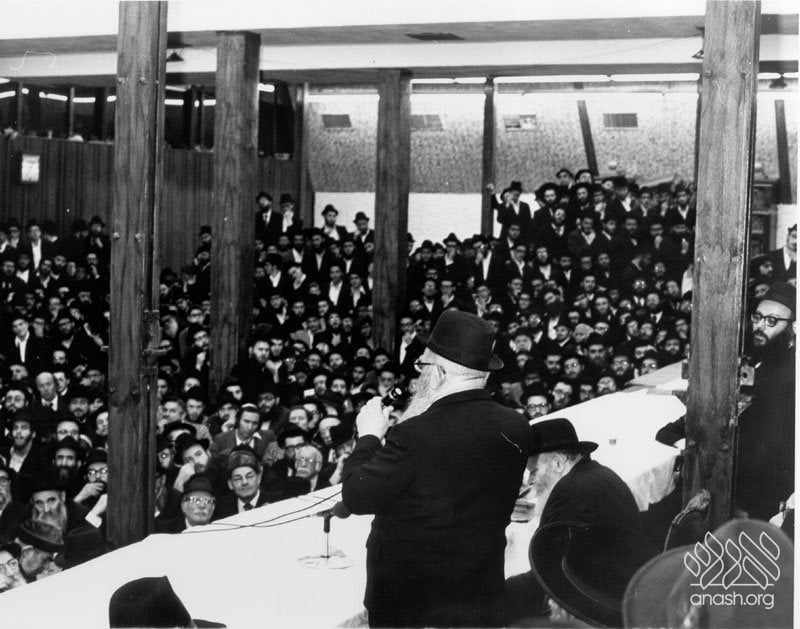
A highlight of his activism came at the farbrengen of Yud-Tes Kislev 5737 (1976), when the Rebbe called Reb Paldi up to speak to the assembled crowd about his work on Mihu Yehudi.
The Rebbe introduced Reb Chaim Yehuda as a yid who was moser nefesh to change this strange law, which for some reason was entitled “Mihu Yehudi.”
The Rebbe explained that since “Mitzvah Bo Yoser MiB’shlucho” means that a mitzvah should be performed by the person commanded to do it, even though having a shliach do it would suffice, Reb Chaim Yehuda himself should speak to the crowd, since he did such great work in this field.
It was not easy for Reb Chaim Yehuda to speak in front of the Rebbe, and he was quite emotional as he spoke. When he finished, the Rebbe commented that Reb Chaim was ah greener, someone unfamiliar with the ways of America, and that he had not stressed the importance of the money needed to run the organization!
The Rebbe went on to say that, of course, everyone present would do what they could to help this worthy cause. The next day, Reb Chaim Yehuda received two checks as contributions to his work, one from the Rebbe and one from the Rebbetzin.
In 5738 (1978), he founded and published the Shleimut magazine, which gathered and compiled articles about Shleimus Ha’am from other publications. He continued this work until his passing in 5743 (1982), never living to see the decree abolished.
Reb Chaim Yehuda was buried on Har Hazeisim. For many years, a delegation of his fellow members of the Vaad would visit his resting place on his yahrtzeit and say Kaddish.


gathering organized by the Vaad L'ma'an Shleimus Ha'am

cover of Shleimut magazine published by Reb Chaim Yehuda.
 COMMENTS


We appreciate your feedback. If you have any additional information to contribute to this article, it will be added below.