




כ׳ תשרי ה׳תשפ״ז | October 1, 2026
The Day I Was Asked to Leave 770
Rabbi Hershel Zaklos thought he had finally achieved his dream of learning in 770, but after just one day, he was summoned to the Rebbe and told to leave, with a lesson on what it meant to be close to the Rebbe.
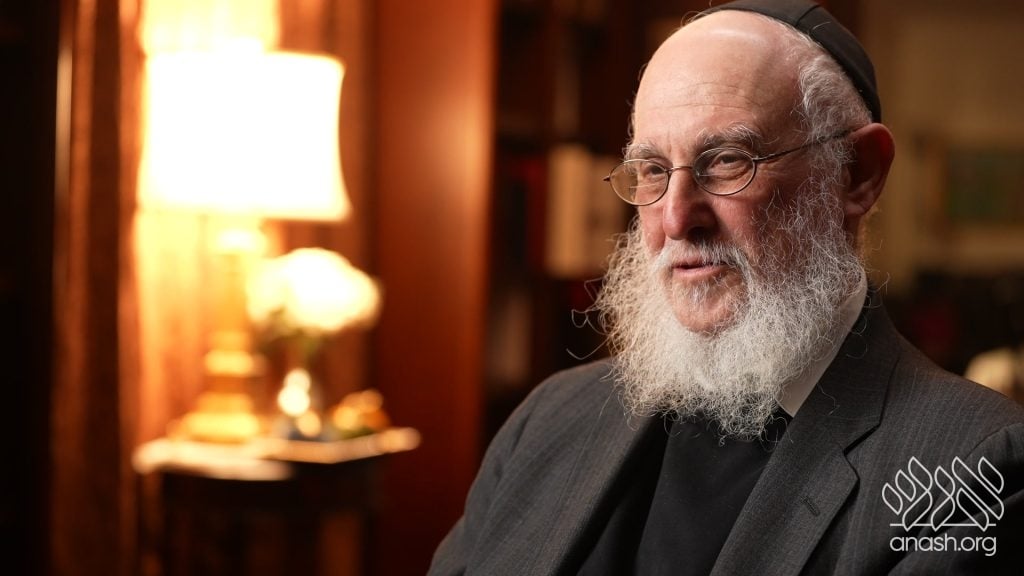
A Montreal native, Rabbi Hershel Zaklos is a long-time teacher at the Lubavitch Cheder of Detroit. He was interviewed in March of 2025.
My grandfather, Rabbi Yerucham Fishel Avrutick, was an authentic Chabad chasid. He had a long beard and was a devoted disciple of the Previous Lubavitcher Rebbe. When I was growing up in 1950s Montreal, I used to spend time in his house on Shabbat until he passed away. My parents wanted me to be a good Jew, so they sent me to the Chabad school, although they weren’t quite chasidim themselves. And so the sense of warmth I felt towards Judaism came from my teachers, from the environment of that school – and from my grandfather.
After finishing high school, in 1961, a friend of mine named Yitzchok Mann suggested that we go work as counselors in a Chabad summer camp in the United States, but my parents didn’t let me. I was supposed to go to university the next year, and they thought that I should be getting ready. Still, we decided to go anyway, and I was already at the camp when I wrote a letter telling my parents where I was. They were upset, of course, but it seems they had also found out that I hadn’t done so well with my matriculation exams, and I wouldn’t be able to go to university yet anyway – so they didn’t make too much of a fuss.
After camp, the same friend had the idea that we go to New York to spend the Tishrei holidays with the Rebbe, and then to study in a Chabad yeshivah in Newark, New Jersey. We would learn Torah throughout the week, and every Shabbat, or at least whenever the Rebbe held a farbrengen, we would take the bus to 770.
My parents weren’t too pleased about my decision to go to yeshivah, and they made that clear in their letters to me: “What’s going to become of you if you don’t go to university?”
Despite his concerns about me, my father did have a lot of respect for the Rebbe, and so before I went to Newark, and then again later that year, he had an audience with the Rebbe and aired his complaints. I don’t know what was said, but there weren’t quite as many complaints after that.
At the end of that academic year, I had a private audience with the Rebbe as well. He asked me what tractate of Talmud I had been studying, as well as about my study of Chasidus.
He then asked whether I had a study partner, or chavrusa. I told him that I had been learning Tractate Sukkah with my friend, Yitzchok Mann.
“And who is your chavruta for Chasidus?”
“I don’t have one,” I replied.
The Rebbe concluded the audience with some blessings for my upcoming birthday, but I understood that he wanted me to study Chasidus with a chavrusa. The next day, I went around 770 asking who would learn with me, and I ended up learning with a young man named Yecheskel Lebovic. We studied a series of maamorim from the Frierdiker Rebbe about the Tishrei holidays, and they were eye-opening. They explained how Rosh Hashanah is not just about G-d judging the world, or about repenting for particular wrongdoings, but it is a day for accepting G-d as king. It was all a revelation to me, and that year I had a Rosh Hashanah like I’d never had before – thanks to my new study partner.
During that period, the Rebbe also wrote a letter to my mother, addressing some of her and my father’s anxieties about me being in yeshivah instead of college. After first blessing them to have “true Jewish nachas” from their son, he wrote: “G-d, who takes care of everyone, will surely watch over him too … with everything he needs now, as well as in the future.” Thank G-d, I’ve been able to make ends meet for all the years since.
Eventually, in 1963, my parents insisted that I come home. So, I began studying in the Chabad yeshivah back in Montreal, which had just built a new building. After a while, I also began taking night classes at university, while still keeping regular yeshivah hours.
But in 1969, when I was already an older student, a group of us decided that the time had come for us to transfer from Montreal to the yeshivah in 770 so we could be near the Rebbe.
We came for the Tishrei holidays, as we did every year, but this time, after Simchas Torah, we remained in 770. I can still picture the scene: That morning, I had sat down to study near the front of the shul. My friends and I wanted to start off on the right foot – it was a new semester in a new yeshivah – so we began to study seriously and diligently. But at about 3:30 PM, somebody came over to us with a message: “The Rebbe is calling you for an audience.”
Everyone in our group from Montreal went to immerse in the mikveh and changed into Shabbos clothes, as was customary when preparing to have a yechidus with the Rebbe.
It turned out that a group of boys from the yeshivah in Paris had also decided to stay on in 770 and, as we later learned, the faculties of the yeshivos in both places had complained to the Rebbe: “With the older students running off to 770,” they each said, “the backbone of our yeshivah is gone!” And so the Rebbe delivered an entire talk, during that audience, to the students who had come from Montreal and Paris.
He began by citing an allegory brought in chasidic teachings of “a king who wanted his son to fully develop all his potential. So, the king sent the prince to a place far from his royal palace” — a place where the people are uncivilized, and where the culture is radically different from the ways of the king’s palace. Despite such extremely difficult circumstances, the prince nevertheless overcame the challenge and continued to behave as a prince should. “Only through that was all his potential realized into actuality, and his abilities were utilized to completion.”
This is why the soul is sent down into this world, said the Rebbe, and this is why the Jewish people were sent into exile – and this is also why “particular individuals are tasked with a descent to a specific place.” In all of these cases, the intent is not the descent itself, but the opposite: “They are given the ability and the privilege to rise to a higher level… by fulfilling, in that distant place, the mission that was placed upon them.”
In support of this idea, the Rebbe cited the example of the Talmudic sage Rav, who left Eretz Yisroel for Bavel. Through his efforts, the state of Torah study there was elevated over that of Eretz Yisroel.
“For the students studying in yeshivos located outside of New York,” the Rebbe went on, the request that they stay there should not be seen as a “punishment, G-d forbid, nor a distancing, G-d forbid, but rather the opposite.” That is, we were being asked to go back to Montreal because we had the ability to “make the world a dwelling place for the divine” from there, and that through our work there, we would ultimately be elevated ourselves.
Finally, the Rebbe concluded with his blessings for the year ahead, and in particular that we carry out the task he was asking of us with joy, succeeding in our Torah studies, energizing our respective yeshivos, and uplifting the younger students there.
And that is the story of the only day I spent as a yeshivah student in 770.
 COMMENTS


We appreciate your feedback. If you have any additional information to contribute to this article, it will be added below.