




י״ז אלול ה׳תשפ״ו | August 30, 2026
Nepal Shliach Joins Search After Flood Wipes Out Villages
A massive flood has devastated northern Nepal near the Tibetan border, wiping out villages, roads and power stations. Kathmandu shliach Rabbi Chezki Lifshitz is assisting in search for a missing Israeli and helping relief missions for devastated communities.
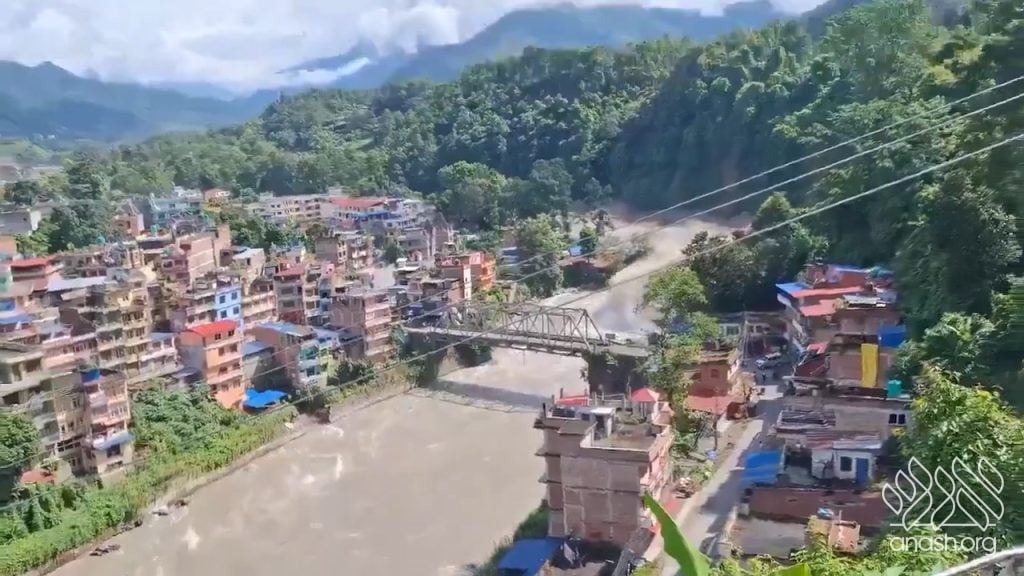
Entire villages, roads and bridges have disappeared after a massive flood tore through northern Nepal, leaving large areas cut off and destroying infrastructure on a scale that Rabbi Chezki Lifshitz, the longtime shliach in Kathmandu, described as worse than what he witnessed during Nepal’s devastating 2015 earthquake.
The disaster began after ice, mud and debris blocked a river in the Tibetan border region, effectively creating a natural dam. When the blockage gave way, an enormous torrent rushed downstream into Nepal, sweeping through communities for dozens of kilometers and destroying roads that normally connect Kathmandu with the northern border.
“Villages disappeared. Roads disappeared. Bridges disappeared. Twelve hydroelectric power stations disappeared,” Rabbi Lifshitz related in one interview, comparing what had taken place to “a small-scale mabul.”
Homes and entire settlements were swept away, electricity and communications collapsed across large stretches of the region, and places ordinarily reachable by road were left accessible only by air. “The river took everything,” Rabbi Lifshitz described, including people together with their homes.
For Rabbi Lifshitz, who has served on shlichus in Kathmandu since 2000, the comparison to the 2015 earthquake is especially striking. Chabad of Nepal became a major center of assistance following that disaster, helping stranded Israelis and others with food, shelter, information and rescue efforts. Having witnessed that destruction firsthand, he described what is now emerging from northern Nepal as even more severe in the areas hit by the flood.
“This is a blow to the entire country,” he related. Almost everyone he meets knows somebody caught in the affected region, while thousands have been left isolated by destroyed roads and downed communications.
Among those still unaccounted for is an Israeli man in his 60s who had been traveling in the border region with an organized group returning from Mount Kailash. Contact with the group was reportedly made only about ten minutes before the flood struck, and the Israeli is believed to have been at or near the Nepal-Tibet border crossing when the waters swept through.
No contact has since been established with him or with a group of roughly 70 travelers who were in the area. Rabbi Lifshitz and Chabad of Nepal have been involved in efforts to determine his whereabouts and assist those working on the search. Several other Israeli backpackers also temporarily lost contact, though those cases were considered less concerning because they were believed to have been traveling outside the main flood zone.
As rescue teams struggle to reach isolated communities, Chabad of Nepal has begun organizing relief efforts, preparing food, medicine and equipment and working toward sending professional assistance into areas as they become accessible. With roads destroyed and communications down, Rabbi Lifshitz described the assistance reaching the disaster zone so far as only “a drop in the ocean.”
Yet amid the enormous devastation, the timing may have prevented an even greater tragedy for the many Israelis who regularly travel through Nepal. The country is still in its monsoon season, before the main trekking period when large numbers of Israeli backpackers arrive around Tishrei.
“If this had happened another two or three weeks from now, there would have been hundreds of Israelis there,” Rabbi Lifshitz noted.
 COMMENTS


We appreciate your feedback. If you have any additional information to contribute to this article, it will be added below.