



י״ב מרחשון ה׳תשפ״ז | October 22, 2026
As Israel Heads to Elections, Parties Court Chabad Voters
As millions prepare to head to the polls in one of Israel’s most consequential and divisive elections, parties are aggressively targeting Chabad voters through videos, flyers, promises, songs and jingles, all claiming to be most faithful to the standards the Rebbe demanded: Shleimus haTorah, shleimus ha’am, and shleimus ha’aretz.

In several days, millions will head to the polls in what is shaping up to be one of the most consequential and divisive elections in Israel’s history. At a time when Israeli society appears more divided than ever, the election is expected to bring a host of major issues to the forefront, with competing parties offering sharply different visions for the country’s future.
Among the issues dominating the campaign are the draft of yeshiva bochurim into the IDF, the ongoing war with Hamas and Hezbollah, the security challenges on Israel’s other fronts, and the question of how the country should respond to the horrific massacre of Simchas Torah and the war that followed.
Among the hundreds of thousands of Israelis heading to the ballot box will be tens of thousands of Lubavitcher chassidim. Following the Rebbe’s repeated directives to participate in elections, Chabad chassidim will once again be making their voices heard.
But which party will receive their votes?
The question has become a significant focus of the election campaign. Nearly every frum and right-wing party seeking to attract voters has made a concerted effort to appeal to the Chabad community. With tens of thousands of potential voters, Chabad represents a meaningful constituency, and political parties are well aware of the importance of winning its support.
Unlike some other frum communities, where established communal leadership directs voters toward a particular party, Chabad specifically remains unaffiliated with any particular party, creating an opening for parties across the religious and right-wing political spectrum to make their case directly to Chabad chassidim.
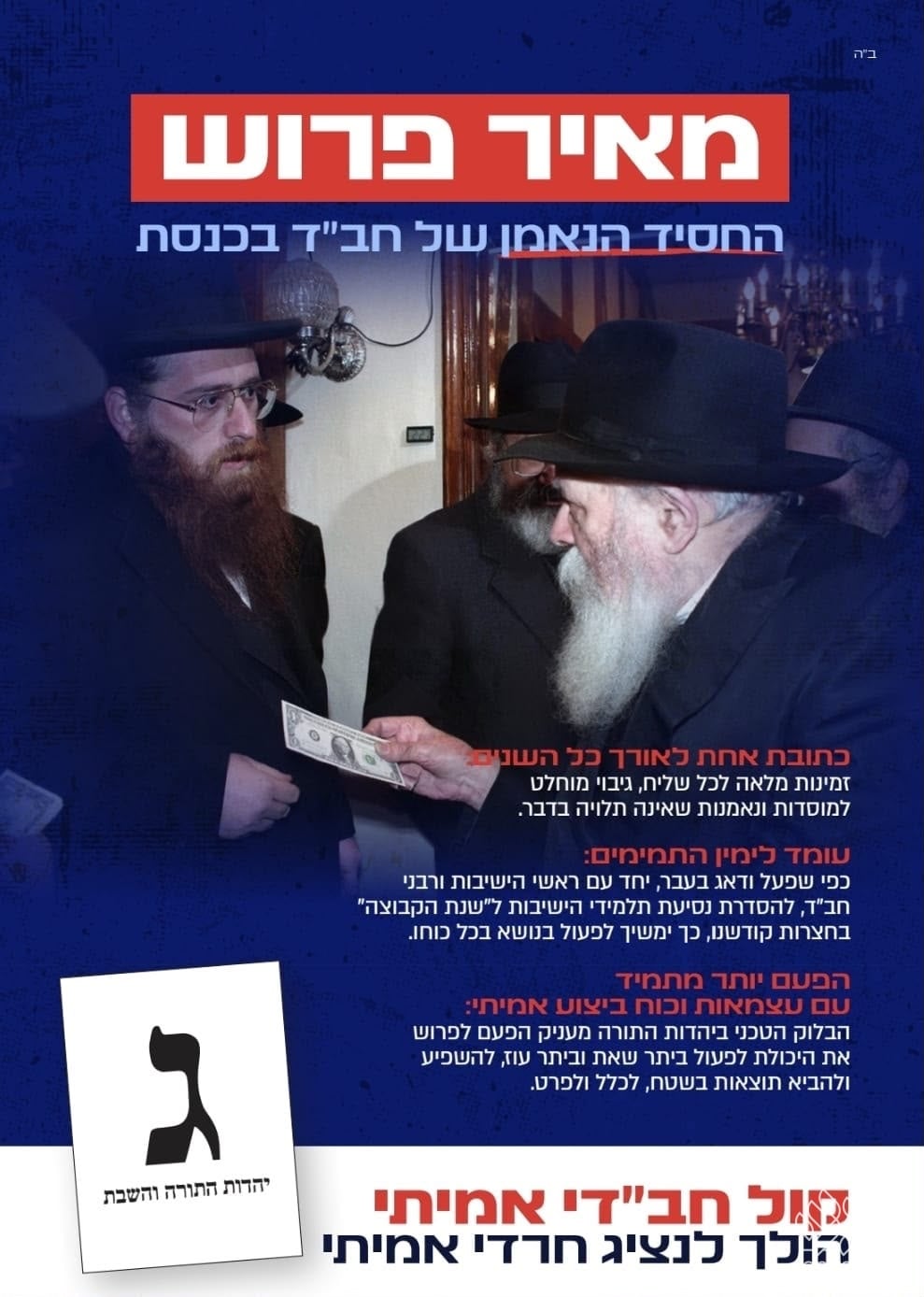
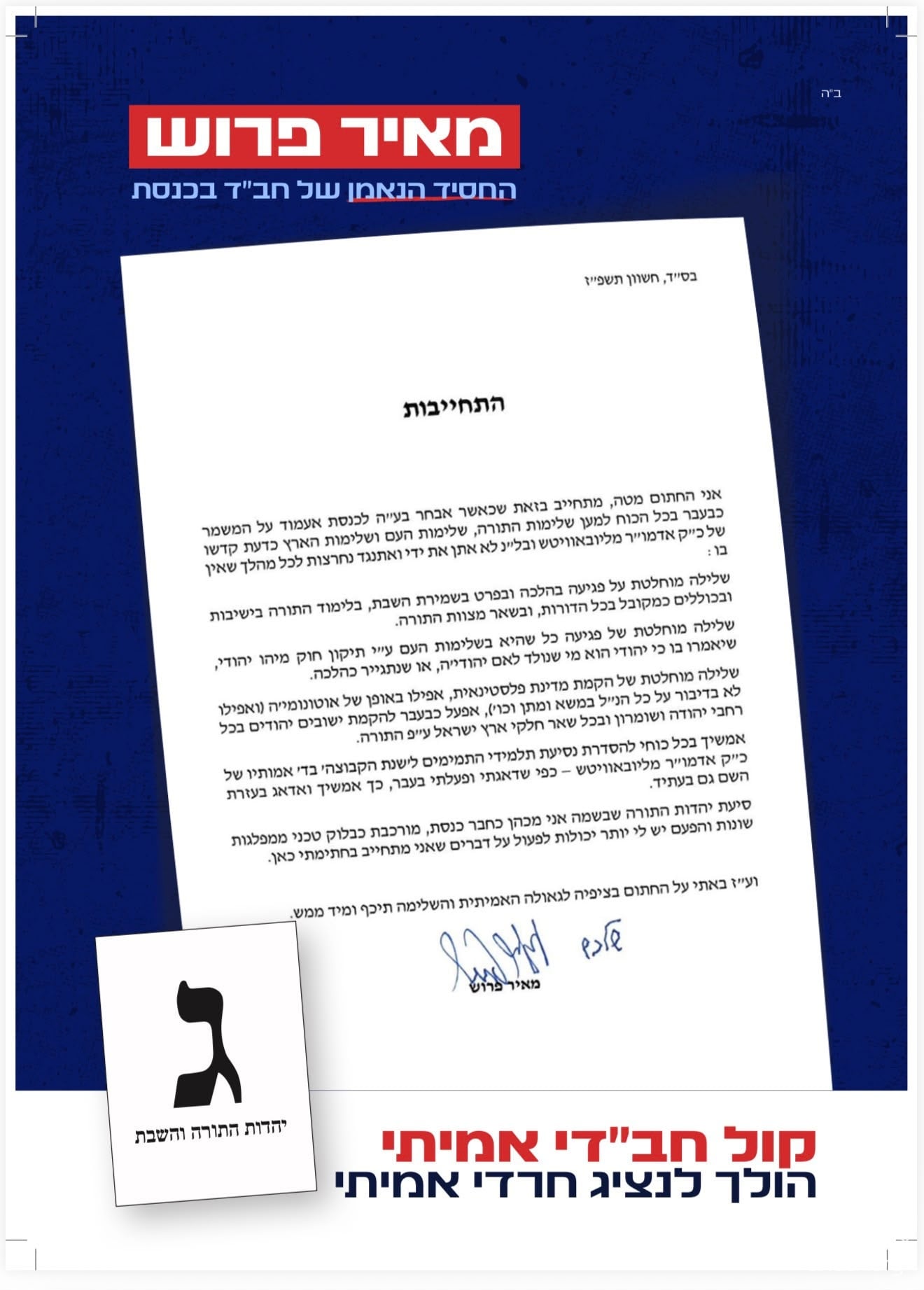
In the weeks leading up to the election, parties have increasingly targeted the Chabad audience with direct messaging. Videos, flyers, social media posts, photo ops with Lubavitch rabbonim, and promises addressing issues of particular concern to Lubavitchers have all become part of the effort to secure their support.
For Anash in Eretz Yisroel, many of these issues are of critical importance. At the top of the list for Chabad chassidim is not how much the Chabad community will benefit, but what these parties will do for the three shleimus’n the Rebbe spoke of: Shleimus haTorah, shleimus ha’am, and shleimus ha’aretz.
Shleimus ha’aretz is among the most pressing concerns in today’s climate, particularly for chassidim of the Rebbe, who have watched with deep concern as misguided, and at times disastrous, decisions have been made regarding the security of Yidden and the future of Eretz Yisroel.
Shleimus haTorah – which the Rebbe raised regarding the state’s Shabbos observance and treatment of rabbonim – and shleimus ha’am – listing Jews as only those who are Jewish according to halacha – are two other central issues that the Rebbe spoke about consistently and that matter deeply to Lubavitcher chassidim.
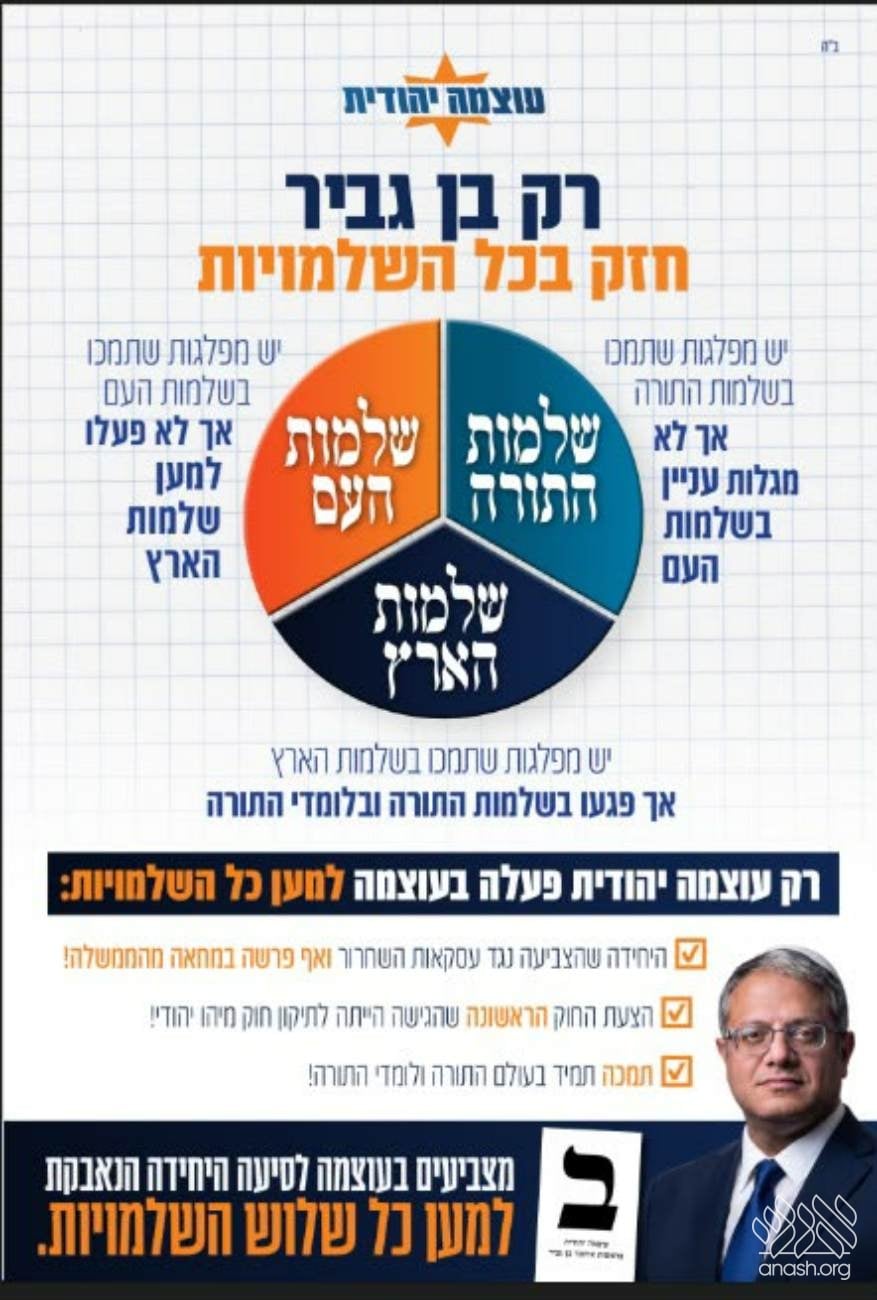
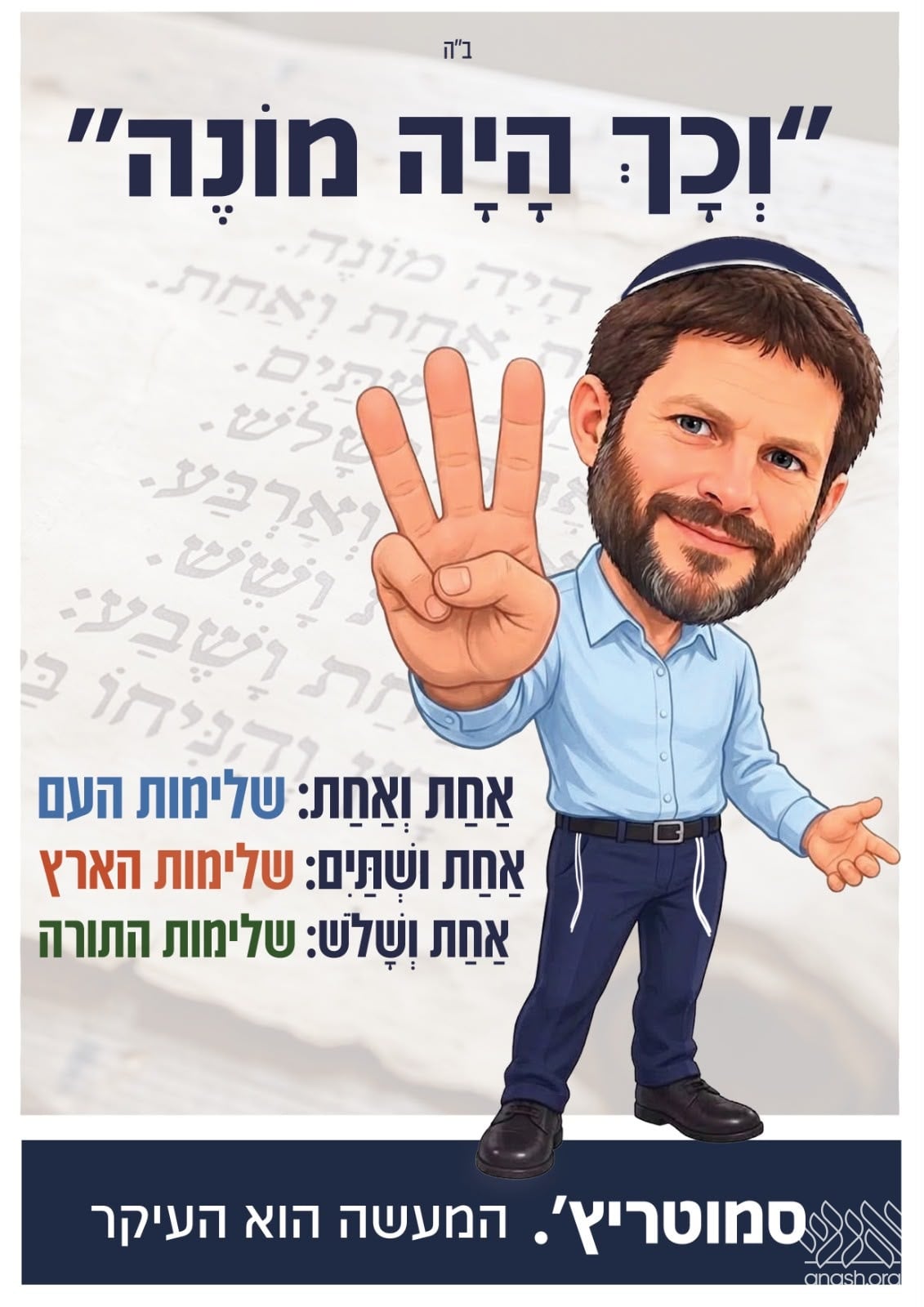
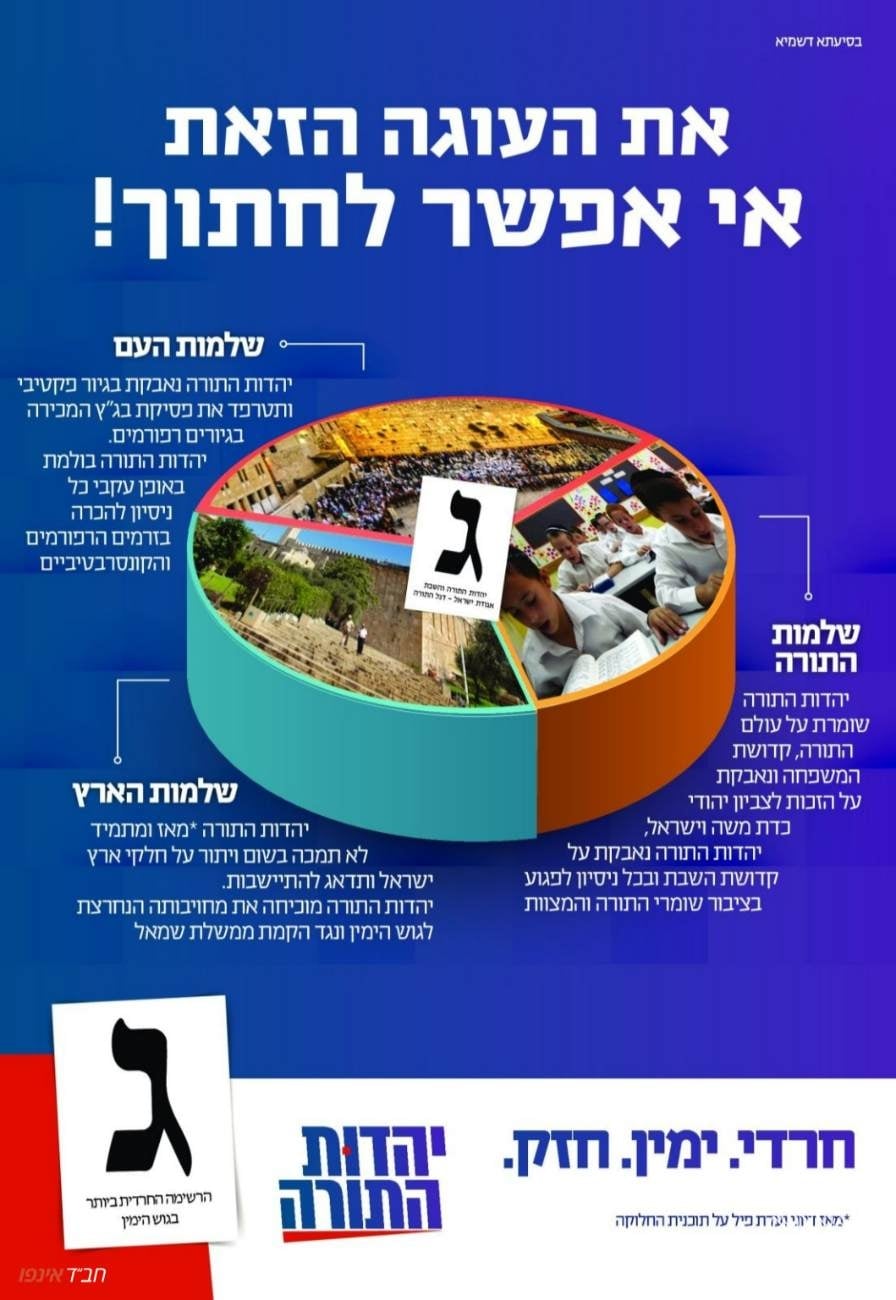
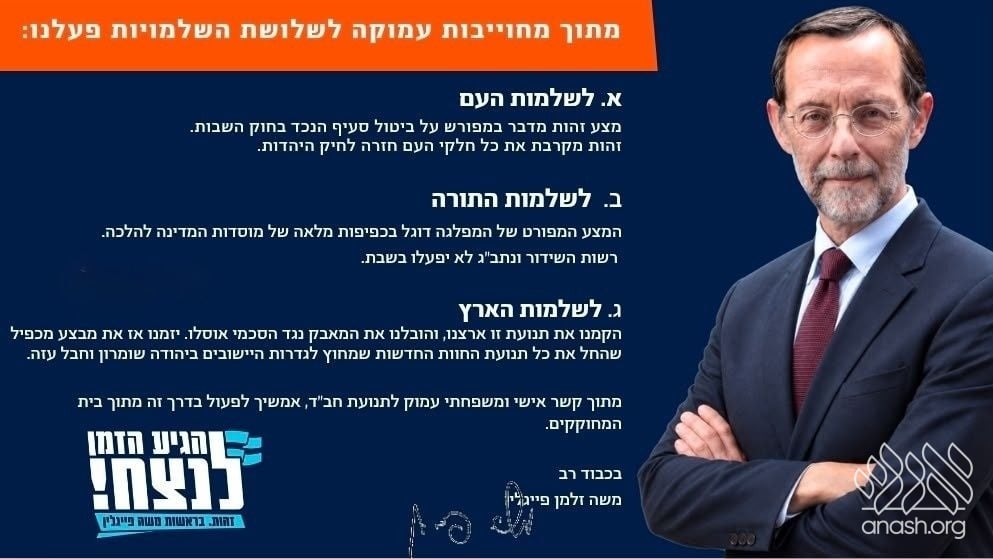
Nearly all the parties seeking the Chabad vote have picked up on these concerns. As in previous elections, they have issued statements and promises declaring themselves the only party that will remain faithful to all three shleimus’n, each attempting to demonstrate how its record proves its commitment.
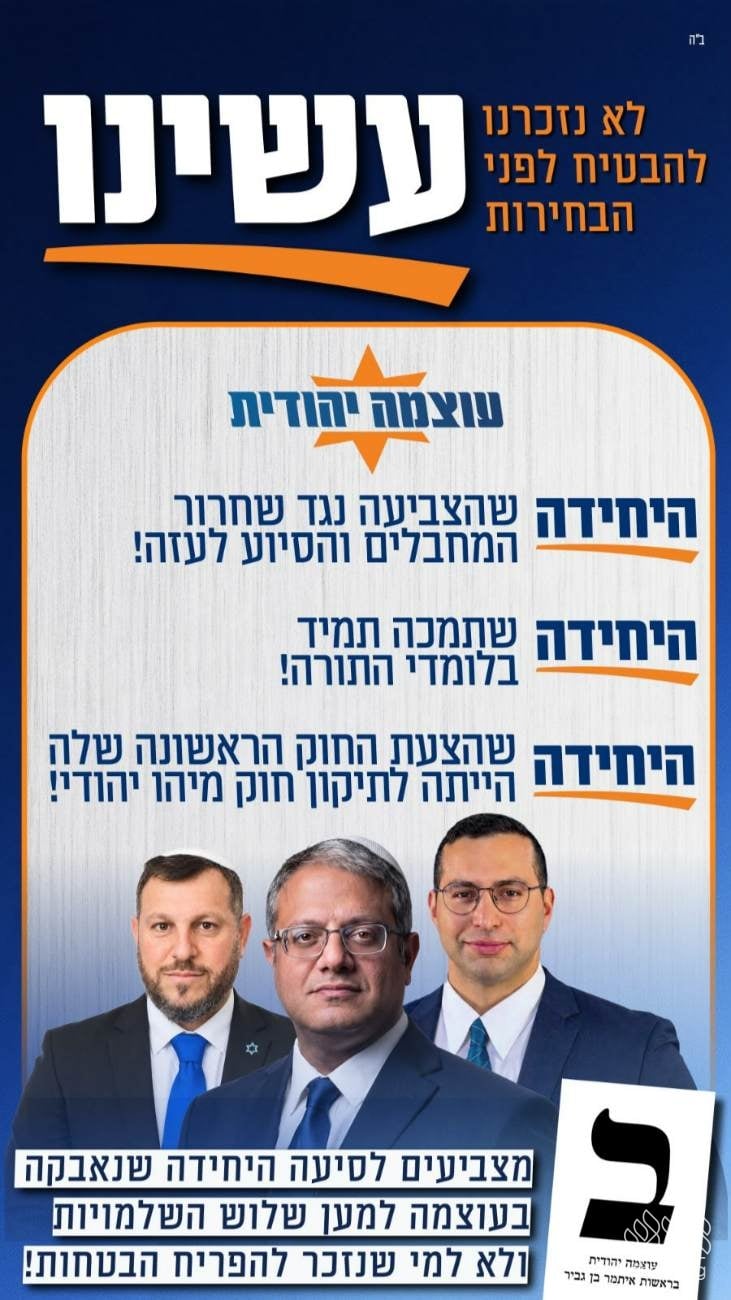
“The only connection between shleimus ha’aretz, shleimus ha’am and shleimus haTorah is found in Otzma Yehudit,” the Otzma Yehudit party wrote in an article published on one Chabad website. “In contrast to the hesitation of Religious Zionism and the political compromises of United Torah Judaism, Otzma Yehudit, led by Itamar Ben Gvir, is the only faction that follows a straight, determined and genuine path.”
Meanwhile, the Religious Zionism party, led by Betzalel Smotrich, has issued its own pledge, promising to “safeguard shleimus ha’aretz, shleimus haTorah and shleimus ha’am without compromise, as we have done until now,” describing itself as the only party that has backed up its commitments “with action rather than words.”
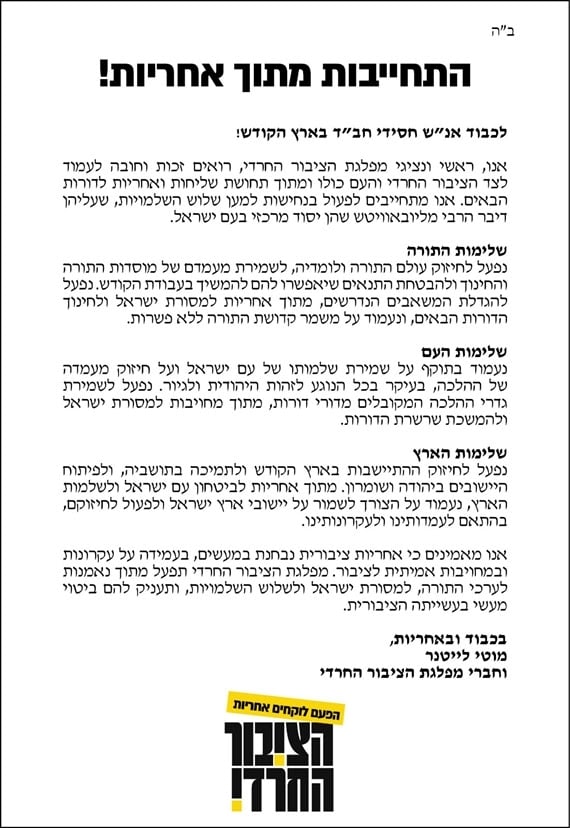
Similar messages have also come from Shas and United Torah Judaism, as well as the Noam party, headed by Avi Maoz, and the Tzibor HaChareidi party, headed by Motty Leitner.
Some parties have taken the Rebbe’s directive to Lubavitchers to vote for “the most frum party” and made it a central part of their campaigns. Some have even turned the phrase into songs and jingles, attempting to present their party as the one that best fits the description.
Others have focused on demonstrating their connections to the Chabad community, highlighting party members’ respect for Chabad, their admiration for the Rebbe, their support for shluchim, and their relationships with Lubavitch rabbonim.
It is not the place here to examine each party’s record in detail, but what is of critical importance to recognize is that these promises and pledges are nothing more than campaign promises, which should not carry much weight. A look at the parties’ actual records over the past three years, particularly since the war began, offers a much clearer picture of where they have stood on many of the critical issues.
Some parties that claim to be the most frum and completely aligned with the Rebbe’s values have done very little when it came time to make critical decisions. Some voted for, or abstained rather than vote against, the disastrous hostage deals that released thousands of terrorists with blood on their hands. Some did little to strengthen the ‘hityashvut‘ and establish new yishuvim, while others turned a blind eye, or worse, when it came to the draft of yeshiva bochurim into the army.
These are only a few examples. All one needs to do is look at the record and see where each party actually stood, rather than relying on empty promises.
Friendship with Chabad is certainly welcome. Expressions of support for Lubavitch initiatives, public displays of admiration for the Rebbe, and warm relationships with Lubavitchers are all great. But ultimately, it comes down to actions. Anash should not be swayed by campaign slogans, which party had the best Yiddish or Lubavitch-sounding slogan, or which displayed the largest photograph of the Rebbe.
There is another important point to keep in mind. The Rebbe consistently emphasized that Chabad is not affiliated with any political party and should remain independent. Extreme caution must be taken with attempts to portray Chabad, or any segment of its leadership, as endorsing a particular party.
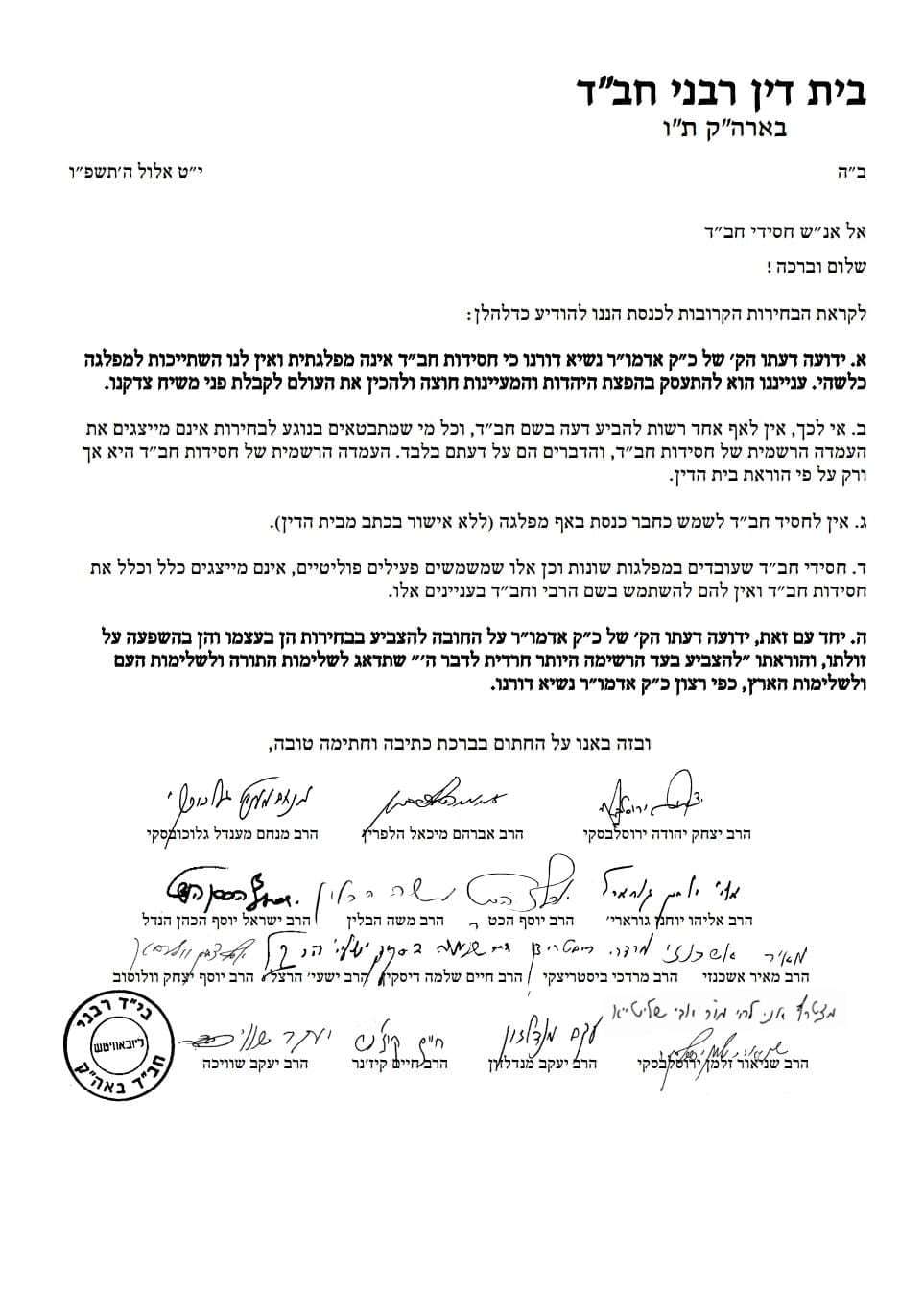
The Beis Din Rabbonei Chabad has also issued a public statement to that effect, reiterating that Chabad is apolitical and that no one can claim to represent Chabad in political matters.
“There is no permission for anyone to express any opinion, and anything they express in connection with elections does not represent the official policy of Chabad,” they wrote.
When election day arrives, the question is not who made the most promises, sang the best song, or displayed the warmest connection to Chabad. It is who has demonstrated through their actions that they stand by the principles they now claim to uphold.
VIDEOS









 COMMENTS


We appreciate your feedback. If you have any additional information to contribute to this article, it will be added below.