



י״א מרחשון ה׳תשפ״ז | October 22, 2026
The Rebbe Maharash’s Eldest Son Who Burned His Writings
Today, 11 Cheshvan, marks the yahrtzeit of the RaZA, Reb Schneur Zalman Aron Schneersohn, eldest son of the Rebbe Maharash. He was a great talmid chochom who wrote many chiddushei Torah, though he burned his writings and asked that the ashes be buried alongside him.
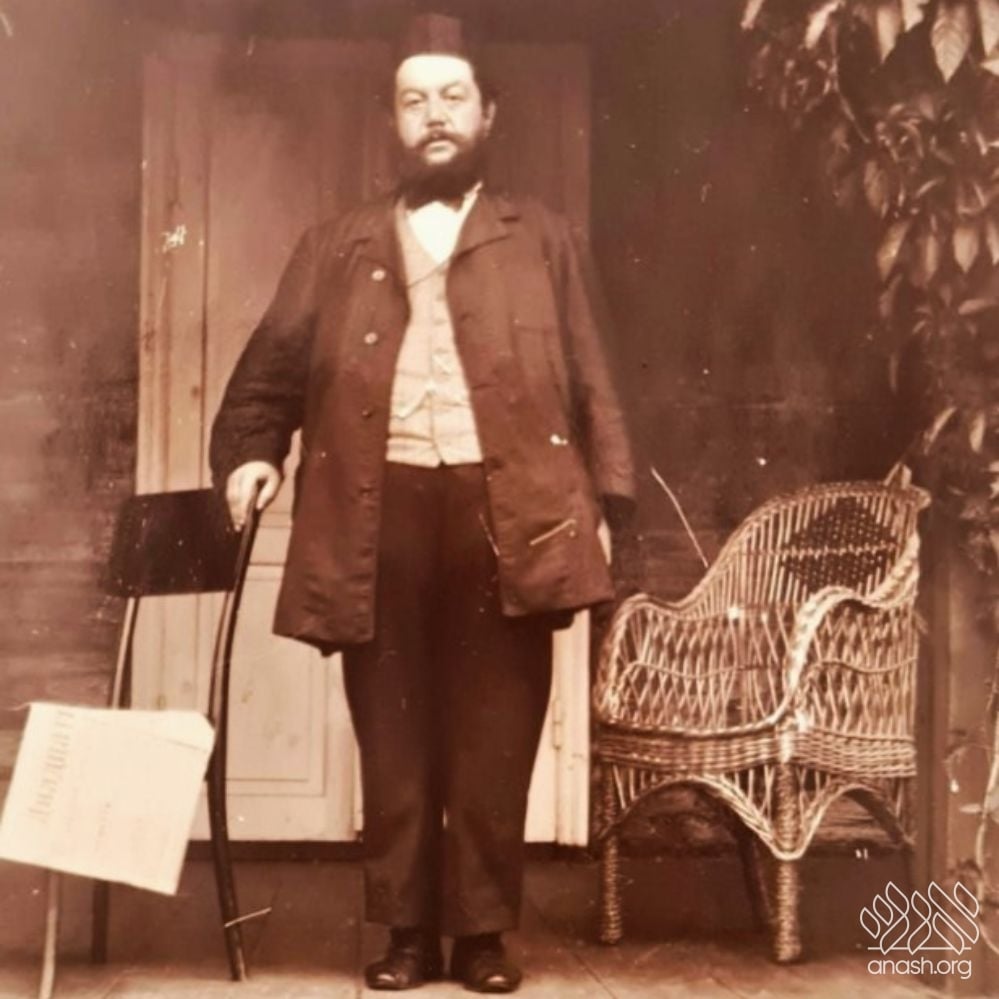
Today, 11 Cheshvan, marks the yahrtzeit of the RaZA, Reb Schneur Zalman Aron Schneersohn, eldest son of the Rebbe Maharash. He was a great talmid chochom who wrote many chiddushei Torah, though he burned his writings and asked that the ashes be buried alongside him.
Born on 19 Tammuz 5618 (1858), he was named after the Alter Rebbe, as well as his zeide Reb Aron Aleksandrov of Shklov, father of Rebbetzin Rivka and son-in-law of the Mitteler Rebbe.
The Tzemach Tzedek had a custom of giving his einiklach an acronym for their names at their brisim. He nicknamed him RaZ”A, and Chassidim subsequently referred to him by that name.
When Reb Zalman Aron was three years old, the Tzemach Tzedek suggested to his son, Harav Yisroel Noach, that he take Reb Zalman Aron as a son-in-law. Reb Yisroel Noach was a great gaon who organized his father’s halachic responsa.
When Reb Yisroel Noach asked his father, “How do we know if the child will grow up to be a talmid chochom?” the Tzemach Tzedek responded, “He’ll be as much as you are, and maybe even greater.”
As a child, Reb Zalman Aron would spend time playing with his younger brother, the Rebbe Rashab. Chassidic tradition preserves several stories about their interactions and the lessons in avodas Hashem that can be learned from them.
His father, the Rebbe Maharash, said of him, “He has a very sharp mind, and can think two separate thoughts at once.”
The Frierdiker Rebbe once mentioned at a farbrengen that the RaZA was also a great baal midos tovos. Despite the difficulties in his life, he was always seen with a smile. He cared deeply about others and would be pained to hear about their problems, doing whatever he could to help alleviate their suffering.
In Cheshvan 5634 (1873), he married Shterna, daughter of Harav Yisroel Noach. The wedding took place in Lubavitch.
After the passing of the Rebbe Maharash, the RaZA declined to accept the leadership of Chassidim, choosing instead to engage in business and help others. The Rebbe Rashab refused to accept the nesius of Chassidim as long as his older brother lived in Lubavitch. This continued until 5654 (1894), when the RaZA moved to the nearby city of Vitebsk.
In Vitebsk, he spent much time learning Chassidus with his brother-in-law, Reb Moshe Horenstein.
He passed away on 11 Cheshvan 5669 (1908) and was buried in Vitebsk.
His daughter Dina Schneersohn passed away as a child. His second daughter was Mrs. Sarah Wolfson.
Despite his best efforts to destroy all his Torah writings, several ma’amorim that he recited have survived. Among them is one he said on Shabbos Parshas Bechukosai 5643 (1883), shortly after the passing of his father, the Rebbe Maharash.
In 5712, the Rebbe said that the Frierdiker Rebbe had wanted to publish the Chassidus said and written by the RaZA. The Rebbe continued, “Surely the time to print them will come.” Based on that sicha, Kehos published the ma’amar with the dibbur hamaschil Vayesharenah Haparos from 5643 (1883).

 COMMENTS


We appreciate your feedback. If you have any additional information to contribute to this article, it will be added below.