



כ״ה תמוז ה׳תשפ״ו | July 10, 2026
After Years, ‘Di Chassidishe Parsha’ Returns With Never-Before-Done Maamorim
After a hiatus of several years, Di Chassidishe Parsha by Rabbi Levi Gelb is back, bringing new unpublished maamorim from the weekly Torah Ohr and Likkutei Torah with a running explanation, making the deep concepts easy to understand for anyone.
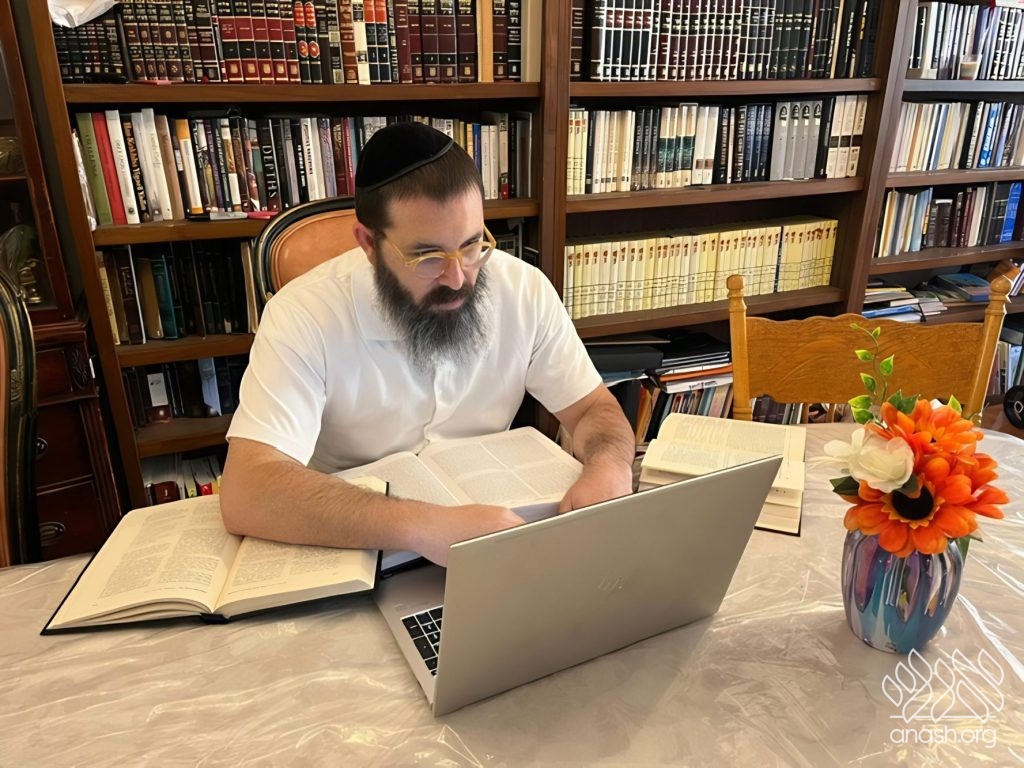
After many years, the beloved weekly publication Di Chassidishe Parsha is back, bringing new unpublished maamorim from the weekly Torah Ohr and Likkutei Torah with a running explanation, making the deep concepts easy to understand for anyone.
The project began over 15 years ago when Rabbi Levi Gelb of Phoenix, Arizona, the mind behind the project, was learning the maamorim on his own, as the Rebbe requested.
As he learned each week through Torah Ohr and Likkutei Torah, he began jotting notes in the margins of his seforim: personal insights, markers for navigating the flow of a maamar, and references to how the later Rebbeim addressed the same maamorim. With each new cycle of learning, the notes deepened.
At some point, the margins weren’t enough. The notes moved to a more organized format, and Rabbi Gelb began sharing them with a few close friends. Then he printed them for his shul. From there, he emailed them to a small list. The response was immediate and enthusiastic, and Di Chassidishe Parsha was born.
The publication grew steadily into something far larger than its humble origins. At its peak, thousands of readers around the world were receiving it weekly: shluchim using it to prepare shiurim, mashpiim, teachers, and bochurim in yeshivos across Los Angeles, Montreal, Toronto, and Melbourne. It was printed in Crown Heights, Boro Park, Monsey, Morristown, Montreal, and throughout Eretz Yisrael, finding its way into Lubavitch, Chassidish, and Litvish shuls alike.
That project eventually culminated in a published five-volume set, Torah Ohr Hamevuar and Likkutei Torah Hamevuar, bringing the Alter Rebbe’s maamorim to a new generation of learners in a clear, accessible format.
Now, after many years and much accomplished, and with a readership that never lost its appetite, Rabbi Gelb felt the pull to return, and he quietly got back to work.
“The Rebbe told us that the kavana pnimis of every shlichus is to spread Chassidus,” he tells Anash.org. “There are many more maamorim waiting to be explained and made accessible to the public. We need to make them available to the public.”
Each weekly maamar follows a careful format. The original text is presented in the Alter Rebbe’s own words, unaltered and clearly highlighted. Alongside it runs a flowing explanation in lashon kodesh, unpacking abstract concepts in clear and accessible language.
Each section also includes a concise summary and footnotes going deeper into sources and precise wording, and the booklet closes with practical guidance for avodas Hashem in the mind and heart.
Those interested in receiving the weekly maamar can reach out to Rabbi Gelb directly at 310-662-3437 to be added to his WhatsApp status.
Rabbi Gelb’s podcast on Chassidus, “Spreading authentic chassidus to the whole world in a way that is understood even to the intellect of the animalistic human soul (nefesh ha’bahamis)” – is available on Apple, Spotify, and more.
Click here to download the most recent maamar.
Click here for all recent maamorim.
LEARN
 COMMENTS


We appreciate your feedback. If you have any additional information to contribute to this article, it will be added below.