




כ״ח תמוז ה׳תשפ״ו | July 13, 2026
After Decades of Touting Small Families, Society Admits It Was Wrong
For decades, the world viewed smaller families as the ideal, believing fewer children meant more attention and resources. A recent New York Times opinion piece highlights what the Rebbe repeatedly said decades ago – that large families help shape children into healthier, happier, stronger, and more well-rounded adults.
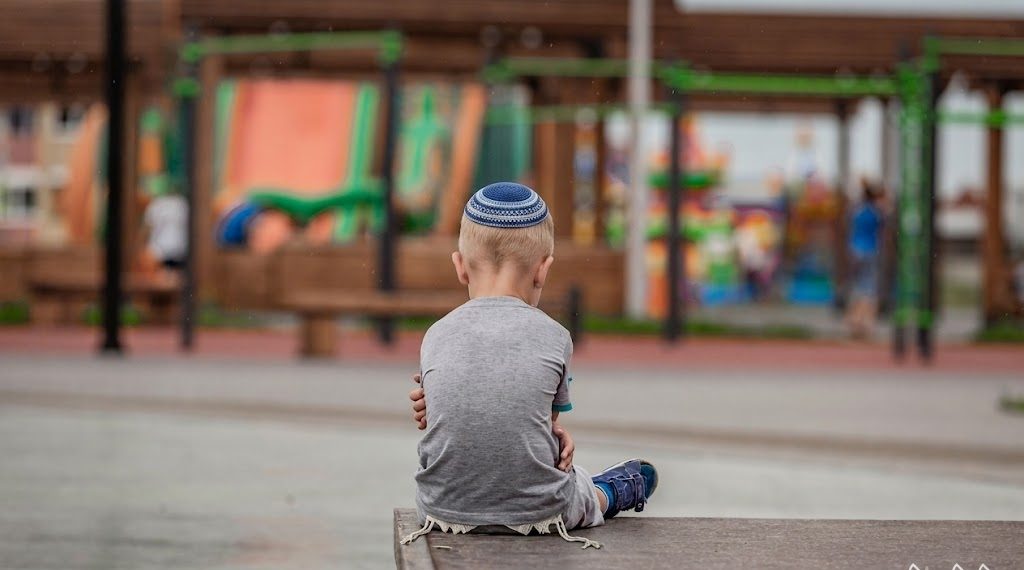
For years, the world at large viewed smaller families as a positive development. Over the past 50 years, the number of American mothers with only one child has nearly doubled, while large families have become increasingly less common. The idea was that fewer children meant more attention and resources invested into each child.
The Rebbe strongly opposed this approach and frequently addressed the claims that smaller families were better for children and parents.
Recently, some in the secular world have also begun to recognize that not only is this thinking flawed, but the opposite may be true. Children raised in larger families are often more likely to grow into healthier, happier, and more well-rounded adults.
“We have a word for children without parents: orphaned. We have a word for those who lose a spouse: widowed. But there is no single word in English for growing up without siblings,” writes American economist, social philosopher, author, and mother of eight Catherine Ruth Pakaluk in a recent New York Times opinion piece.
“Some of the most important things children receive cannot be provided by parents alone. They come from siblings,” she continues.
After years of interviewing parents from a variety of religious backgrounds, Pakaluk explains that one idea came up repeatedly: raising children with strong character can actually be easier in a large family than in a small one. In large families, children naturally develop important life skills by sharing space, resolving conflicts, helping younger siblings, and taking responsibility.
Unlike families with one or two children, where many of these experiences must be created intentionally, in large families, traits like patience, kindness, sacrifice, and cooperation are learned through daily life.
Older siblings often gain a sense of purpose and maturity by caring for younger ones, and many parents described how the arrival of a new sibling brought positive changes, giving older children responsibility, connection, and the opportunity to care for someone else. Large families also create a culture of teamwork, where children naturally learn to support one another through challenges.
In today’s society of increasing loneliness, isolation, and a loss of community, large families can provide a built-in network of relationships, support, and connection.
Although these ideas may be considered a novelty in today’s society, the Rebbe addressed these very issues decades ago and repeatedly rejected the notion that smaller families were better or that having fewer children would allow parents to provide more individual attention.
At the farbrengen of 1 Shevat 5741, the Rebbe explained that, aside from the faith in Hashem Who chose to give the parents another child, the reality is also very different than portrayed. When comparing families who have many children and those who choose to have few, one sees that the shalom bayis in families who don’t engage in family planning is often better. The children grow up in healthy, calm settings, instead of homes filled with tensions and disharmony, which inevitably affect the children.
Parents who interfere with Hashem’s plans, the Rebbe noted in a sicha to Nshei Chabad on 17 Sivan 5740, “are busy with psychotherapy; they are busy running to doctors to heal their nerves; running to doctors who will advise them on how the couple should get along; running to doctors who give them all kinds of hormones and pills that will change the normal order of things in the Jewish Family life.”
“The hardest years of parenting,” Pakaluk notes in her piece, “are often when children are very young, and the rewards of a larger family may only become clear later. More people are not a burden on a family. Sometimes they are the very thing that strengthens it.”
 COMMENTS


We appreciate your feedback. If you have any additional information to contribute to this article, it will be added below.