




כ״ט תמוז ה׳תשפ״ו | July 14, 2026
A Summer Wake-Up Call About Mashke Culture
“For many years, I was one of those people on the inside. I spent summers in camps, in yeshivas kayitz, around farbrengens, and in the very environments where these things happen. And the truth is, I was part of it.”
By a past staff member
For many years, I was one of those people on the inside. I spent summers in camps, in yeshivas kayitz, around farbrengens, and in the very environments where these things happen.
And the truth is, I was part of it. I saw it happening. I was around it. And I did not do enough to stop it.
Unfortunately, by the time I fully realized how far things had gone, there was no way to turn back the clock. But it is never too late to try to share a message with others, in the hope that others can learn from what we failed to recognize earlier.
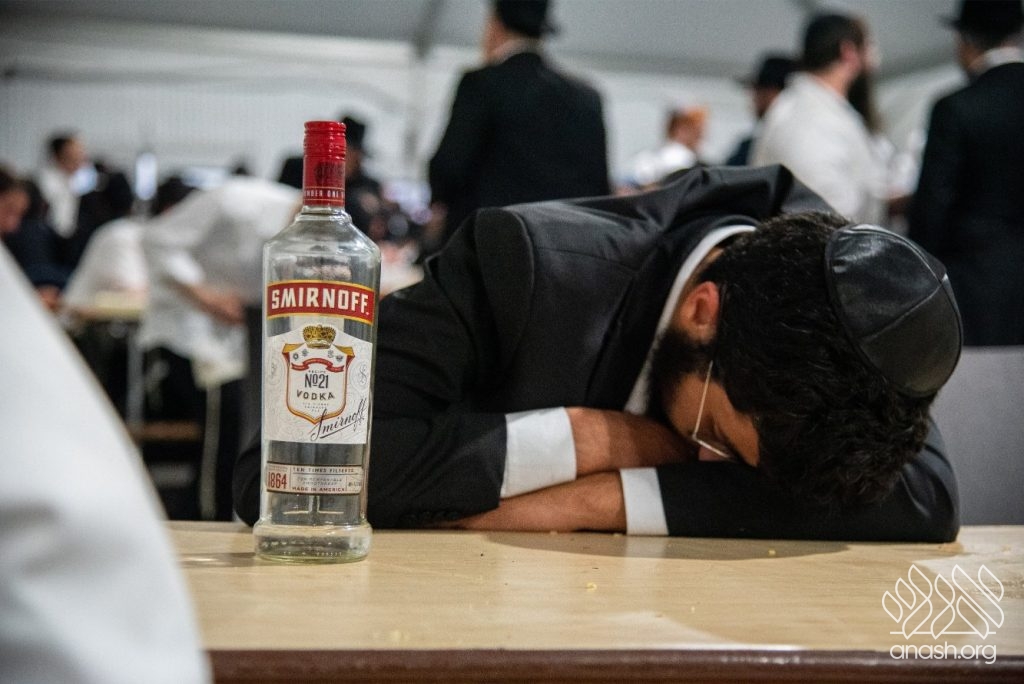
Every year around this time, as yeshiva kayitz and camp season ramps up, the same scenes repeat themselves in bunks and dorms across the board. Sometimes it happens at a farbrengen. Sometimes during a camp play, in a “bar scene.” Sometimes on Erev Shabbos in a staff bunkhouse. Sometimes on an ordinary Thursday night.
One l’chaim turns into another, then another, and before long, bochurim who can barely grow a beard are stumbling back to their beds, while those responsible either do not notice or choose not to get involved.
Somewhere along the way, drinking became confused with being chassidish.
There is no need to repeat everything the Rebbe said about mashke. The Rebbe was unambiguous, placing strict limits on how much mashke should be taken at a farbrengen. It is hard to believe there is a bochur who hasn’t heard the Rebbe’s clear words on the subject.
But perhaps what’s been lost is not the information itself, but the seriousness of the message. A few l’chaims, in the proper setting and with the proper intent, can accomplish far more than a bottle being passed around until nobody remembers what the farbrengen was even about.
The problem is that somehow this message got lost. Or worse, it has been explained away. Ask around and you will hear the excuses: “It’s a farbrengen.” “I took breaks in between.” “That’s what bochurim did when I was in mesivta.” “A little mashke helps staff open up and connect better with the campers.”
When these explanations become a standard, we have a serious problem. Farbrengens, simchas, or random nights in the dorm become excuses to drink without limits, while using chassidish language to make it sound acceptable.
In recent years, there have been far too many cases of young bochurim who were seriously hurt after drinking far more than their bodies could handle. These happened among our own bochurim, young men who saw others drinking recklessly and calling it chassidish.
A sixteen- or seventeen-year-old bochur does not always have the experience or judgment to know where his limit is. And by the time those around him realize something is wrong, the situation can already become dangerous. Mashpiim, hanhalah, camp directors, head staff, and older bochurim all carry a responsibility.
The question should be simple to answer: Are we making sure that every bochur comes home safely to his parents at the end of the summer?
Most people who pouring mashke at these farbrengens aren’t trying to do harm. They’re not trying to ignore the Rebbe’s words or endanger a bochur ch”v. They have a genuine desire to create warmth and a chassidishe atmosphere. But good intentions don’t change the results.
It’s time for camps and yeshivos to look carefully at their own bunks and dorms. Are the limits the Rebbe spoke about actually being followed, or are they ignored because enforcing them feels less exciting? Are mashpiim present and paying attention at these farbrengens, or are bochurim left to manage things themselves once the older staff go to sleep? Are we teaching bochurim what a true Chassidishe farbrengen looks like, or are we accidentally teaching them that the amount someone drinks determines the level of their chassidishkeit?
We owe it to our bochurim to get this right.
 COMMENTS


Erev shabbos in camps have turned staff bunkhouses into full blown bars, while campers sit in shul for mincha and kabolas shabbos wondering where their counselor is.
The entire camp experience as we know it needs a heavy overhaul.
Don’t overhaul camp. Send our kids back to cheder and have gan yisroel for ckids etc, the way the Rebbe wants.
A lot of times, especially in yeshivos kayitz, its actually the mashpiim that think that they can reach out to a bochur during a farbrengen and get him drunk in order to ‘really’ get to know him…
When will mashpiim stop being the bad exapmle?
I think its also the hanhala that can do it sometimes. You can see it in many yeshivos (I don’t want to name them here…)
Right! It’s all too common in certain summer programs, for those achroi for safeguarding staff and bochurim under them, to be PART of the ISSUE themselves! Yihyi ratzon they have a refuah shlema from their addiction.
I find that so many people are just unaware of what the Rebbe said about this. Please continue teaching and posting on this such important topic. ( as chassidim say; perhaps the only לא תעשה of the Rebbe). We , as parents, should also support the hanholos and Mashpiam as well, in keeping to the גזירה and ח״ו the terrible effect when not kept with the complete קבלת עול.
My son’s have attended tzeirei almost since it opened. The program is run by real mechanchim who have kids if their own and have real chassidishe values. I believe that this model will eventually be adopted by all camps.
So what is the solution for this alcohol problem? Listen I know very well what It means to drink as a bochur, PAIN!
But it just keeps coming around ..
could not have said this better myself, we can decide that lubavitch does cheder the whole year, the way the Rebbe wanted, camp only came out of a void of order, yes there are mailois, but there and many chesroinois, and the mailois can be replicated and amplified in a classroom, by a trained mechanech, not a young bachur can mistakenly traumatize a child easily, when he should just be sitting in yeshiva, learning Torah, through the summer, perhaps the way the Rebbe wants, and it avoids the extra expense for the parents, look at the Toronto community for example, they do an extra month of cheder I believe, and only one month of camp, it can be change can happen, and the Oimek of a Bachur Amerikai’ee doesnt have to be camp anymore, keep Gan Yisroel for not frum kids.
farbrengen…mashke ….l’chaims…
“Addiction rituals” often feel automatic, but they aren’t random.
They develop over time as the brain links certain places, emotions, objects, and routines with substance use.
[CHABA”D- Chochmah (wisdom), Binah (understanding), and Da’as (knowledge)]
Recognize the ritual identifying repeated sequence of actions
Understanding these patterns can be a powerful step toward change
Mindfulness helps slow the space between urge and action