




ז׳ אלול ה׳תשפ״ו | August 20, 2026
A Home-Cooked L’chaim and a Wedding on Paper Plates
Mrs. Mariashi Groner recalls how the Rebbe’s call for simpler l’chaims shaped her own engagement, and how her father carried the same message into her wedding with simple invitations, paper plates, and plenty of joy.
Mrs. Mariashi Groner is the long-time head of the Charlotte Jewish Day School. She and her husband, Rabbi Yossi Groner, have served as the Rebbe’s emissaries to North Carolina since 1980. She was interviewed in February 2015.
When a young Chabad couple was thinking of getting married in the 1970s, they were able to receive the Rebbe’s guidance all the way through. If we were dating, we could write to the Rebbe to ask whether he thought we should continue; before agreeing to get married, announcing the engagement, and picking a date, we would write to the Rebbe to receive his blessing. We were very lucky.
When my husband Rabbi Yossi Groner and I got engaged, towards the end of 1978, we received an additional piece of advice from the Rebbe. Traditionally, a small engagement party — called a vort or a l’chaim — is held after the announcement, but in those days, they had begun to get out of control. Instead of just being an occasion to formalize the engagement and wish everyone mazel tov, these vorts had become semi-weddings, with people spending a lot of money on the food and fancy decor.
The Rebbe understood that the trend towards bigger engagement parties within the community was about “keeping up with the Joneses.” Each person wanted their vort to be nicer than the other one, which is not a very good reason to make a celebration, and it encouraged people to spend more money than they should. He was not happy with this situation, as he soon made clear.
My future father-in-law, Rabbi Leibel Groner, served as one of the Rebbe’s secretaries, and, before he announced our engagement party in Crown Heights, he asked the Rebbe for a blessing that the vort be held in a manner befitting the occasion. In reply, the Rebbe lamented the social pressure that people in the community were experiencing “to waste money just to outdo their neighbor.” The Rebbe observed: “The emptier the neighbor, the deeper the temptation some people feel to show that they are just as empty — if not more so. They take on ever-deeper debt, filling that emptiness with empty extravagances.” In other words, a proper celebration of our engagement would mean going against the grain.
My in-laws understood this as a directive from the Rebbe to set an example for others in the community to take the vort down a few notches and not to overspend. As well-known members of the community, they still had to invite a lot of people, but the party was held in a Young Israel synagogue rather than a hall, and it was quite simple. There were no flowers and no caterer; my mother-in-law decided to cook everything by herself at home. In time, the message went out to others, and for a while people took things back to the old ways, making their engagement celebrations in private homes.
I think nowadays the pendulum has begun to swing back again, and so the Rebbe’s answer still rings true today.
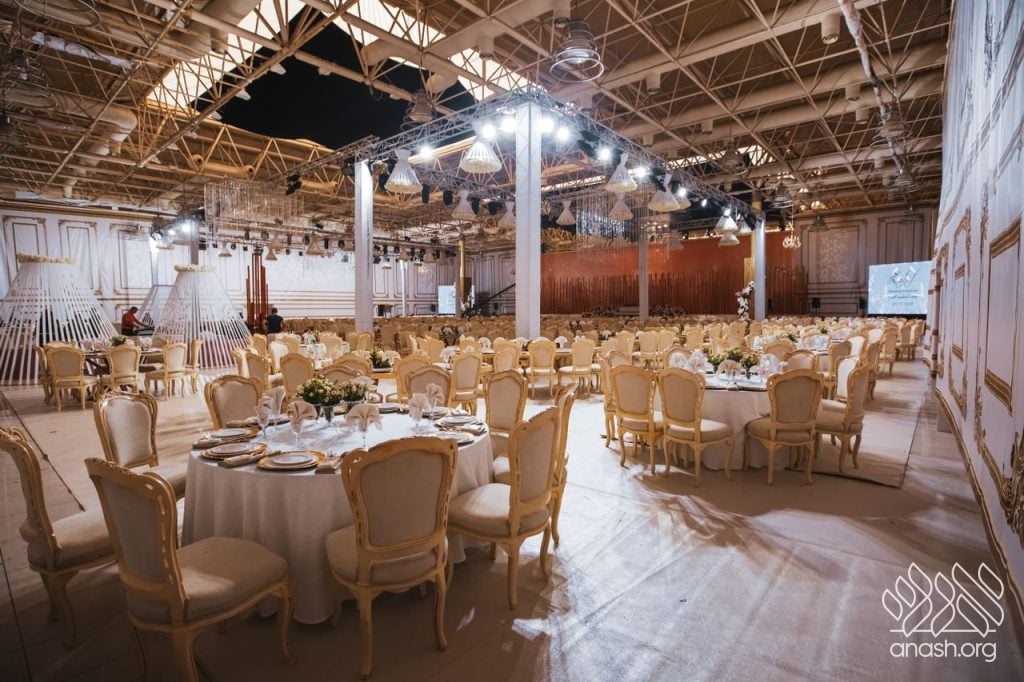
For the wedding, my father, Rabbi Berel Shemtov, felt it was important to set a similar example by showing people that we could have a happy, traditional Russian chasidic wedding, rather than following the standards that everybody else had set. At first, I wasn’t too happy about having cheaper invitations or eating on paper plates. What bride would be excited about that? At the same time, to appease me, on the night before the wedding, my father went with my brothers to set every place setting and chair, to make sure that the room looked as good as it could, and the care he showed then made an impression on me. And in the end, it was a very lively, beautiful wedding.
The next year, in 1980, my husband and I moved out to North Carolina, to serve as Chabad emissaries — shluchim.
Now, as many shluchim will tell you, there are many difficulties that come with this job. Whether it’s the challenges of raising children far away from the support of your family and community, or the financial challenges in fundraising for your activities, it doesn’t matter what it is, but sometimes you just feel like it’s all closing in on you. Typically, when I felt like that way, the main person I would turn to was the Rebbe.
And so, ten years into our shlichus, in a moment of sheer frustration and despair, I wrote a letter to the Rebbe. It was Elul time, when the new school year was starting. After describing some of the challenges we were facing, I wanted to give the most honest account of how I felt. I ended my letter by saying, “I feel like I’m one big mess.”
The Rebbe replied with a brief note. On the letter I had sent to him, he wrote: “You have succeeded (together with your husband) in your holy work, entirely beyond all expectations, and you call this a —” the Rebbe then completed the sentence by drawing an arrow to the word I had written: “—‘mess’?!”
The month of Elul is famously depicted in a chasidic allegory as a time in which “the King is in the field,” meaning that G-d is more accessible in Elul than at any other time in the year. The period leading up to the High Holidays is a uniquely auspicious time, with wonderful spiritual opportunities. And so the Rebbe concluded: “However, the King is in the field. May you be inscribed and sealed for a good year, and may you always have good news to report.”
One interesting thing about this answer was the way the Rebbe added that parenthetical reference to my husband. I had written the letter on my own, without including Yossi, because I was being quite forthright, and he would not have written to the Rebbe that way. And yet, in my state of despair, it seemed that the Rebbe was trying to remind me: You have a husband, lady, so please remember that you are doing this together.
More than that, I took the Rebbe’s response as reminding me to stop focusing on the clouds so much, and to see the sun a little more. Of course, I could still pray to G-d and ask for help, but I also really needed to appreciate what we had already accomplished, to notice all of the good things that were happening, and to recognize that we were doing good work. I got the message loud and clear. I have learned these words from the Rebbe by heart, and over the decades, it is something that I tell myself over and over again.
 COMMENTS


What an inspiring message.