




ב׳ מרחשון ה׳תשפ״ז | October 13, 2026
The Gerrer Askan’s Lifetime of Encounters With the Rebbe
In a podcast interview, Rabbi Elimelech Neiman of Boro Park, a renowned askan who was involved in many Jewish causes throughout the 1980s and ’90s, shares memories of his frequent, warm encounters with the Rebbe.
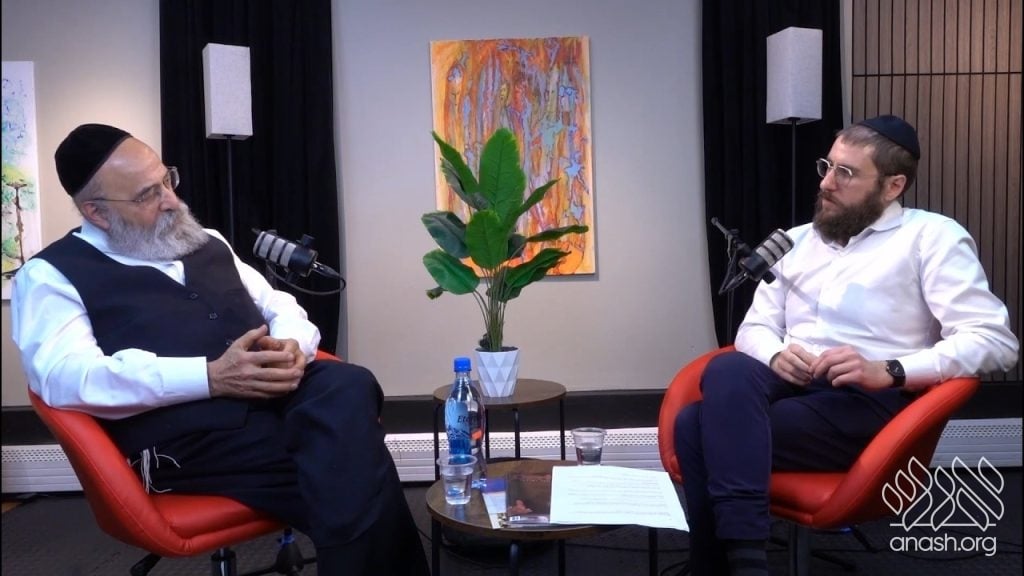
In a podcast interview, Rabbi Elimelech Neiman of Boro Park, a renowned askan who was involved in many Jewish causes throughout the 1980s and ’90s, shares memories of his frequent, warm encounters with the Rebbe.
Whether at kos shel bracha, dollars, or lekach, the Rebbe would often stop to speak with him, particularly to ask about the Gerrer Rebbe’s wellbeing, what was happening in Ger, and various matters of askanus.
Rabbi Neiman, who was born in Williamsburg, began coming to the Rebbe after he got married. He recalls that the Rebbe would stop to speak with him, and that the conversations grew steadily from there. The turning point was a favor Rabbi Yossel Rosenfeld of Oholei Torah asked of him, and a question about how to proceed that was brought to the Rebbe, whose answer gave him real responsibility.
His ties to Ger go back generations, and he often accompanied the Gerrer Rebbe when he visited the Rebbe.
He recalls one visit when a nephew of the Gerrer Rebbe came along. Twenty years earlier, the nephew had written the Rebbe a seven-page letter and had signed it with his last name, Alter, spelled with a tof, as opposed to a tes, as many other family members wrote it.
When he was introduced, the Rebbe asked whether he was the one who had written Alter with a tof… The nephew later told Rabbi Neiman that it felt as if he had written the letter ten minutes earlier, despite the more than two decades that had passed.
Rabbi Neiman also describes an encounter he had outside the Rebbe’s room, when the Rebbe motioned for him to follow him into Gan Eden Hatachton and proceeded to give him a shlichus mitzvah to give tzedakah in Eretz Yisroel.
“I need to give you a yasher koach,” the Rebbe told him. “You are enabling me to make you a shliach mitzvah to give tzedakah in Eretz Yisroel, which helps bring Moshiach. And you know what they say about me, that I’m crazy about Moshiach.”
Rabbi Neiman, overcome with emotion, responded that he wished more people wanted Moshiach as much as the Rebbe did, and that the Rebbe should lead us to Moshiach speedily. The Rebbe, in turn, responded loudly, “Amen, mamash, mamash, just as you say.”
He recalls how closely the Rebbe followed what was happening with him. He had arranged for the mayor of Bnei Brak, Moshe Edelstein, to meet with the Rebbe during dollars, but shortly before the meeting, Rabbi Neiman came down with a high fever and arranged for someone else to accompany the mayor.
After dollars, before going out to the Ohel, the Rebbe asked Rabbi Leibel Groner why Rabbi Neiman had not been there and asked him to find out how he was feeling. The same thing happened on Monday and again on Tuesday. On Wednesday morning, Neiman, who was already feeling uneasy, called on his own to say he was feeling better.
“The Rebbe told me more than once that I could talk about my private things too, and that he would listen to me,” he says, recalling how he spent much of his time talking about askanus and public matters.
“I had such a magnet that pulled me to come to 770, to the Rebbe,” he says.
One striking story that he shared took place after Gimmel Tammuz. He was in Boro Park when two Lubavitcher brothers approached him, asking him to share a story about the Rebbe.
He shared with them how, after one of his daughters was born, he came to a farbrengen. At the end of the farbrengen, the Rebbe called him over and asked how his youngest daughter, his “muzinik,” was doing and how the mother was, and gave him a bracha. Some time later, when he came to receive lekach with his four children, the Rebbe wished him besuros tovos. When he asked for a bracha to have more children, the Rebbe answered that it was included in his wish for besuros tovos. His wife was, in fact, already expecting.
One of the Lubavitcher brothers began to cry and shared that, after five years without children, he and his wife had just come from the Ohel, where they had told the Rebbe that she was expecting and asked for a bracha. Rabbi Neiman was the first person they had spoken to afterward.
Rabbi Neiman says that people urged him to write a book, but he says he deliberately does not discuss most of what the Rebbe told him, as they involve private matters.
He recalls bringing New York City councilman Noach Dear to the Rebbe to discuss a proposed city law about inappropriate marriages. During the conversation, the Rebbe sent Rabbi Neiman twice to tell the mazkirus that he was holding the councilman longer.
He also recalls the tumultuous times when the Gerrer Rebbe asked him to speak to the Rebbe following an Israeli election, when a coalition with Peres was under discussion.
The interview ends with the story of a friend of his from South America who fell into conversation with a stranger in an elevator. The stranger asked whether there was a mikvah in his city and how they managed without one. Decades later, the man, now with a beard, passed the Rebbe during dollars, and the Rebbe asked whether there was a mikvah in his town.
It took him some time to realize that the stranger had been the Rebbe, who had recognized and remembered him. But even more than that, he came to understand the Rebbe’s concern for every Yid.
“This was a person who was concerned for every corner of the world, every city, every state, every person,” Rabbi Neiman says.
Asked what the connection means to him today, he answers simply, “I miss him every day, to say it in one word.”
Among Chassidim is a podcast by Derher, hosted by Rabbi Yossi Kamman, director of A Chassidisher Derher. The podcast captures the vibrancy of Dor Hashvi’i through immersive, in-depth conversations. To view all episodes, visit the Among Chassidim YouTube channel.
VIDEO:

 COMMENTS


We appreciate your feedback. If you have any additional information to contribute to this article, it will be added below.