




י״ב אב ה׳תשפ״ו | July 26, 2026
Can Chabad Become the New Leader of American Jewry?
“A recent Jerusalem Post opinion article titled ‘Can Chabad Become the New Leader of American Jewry After Institutional Decline?’, raises an important question. But from a Chabad perspective, it begins with a misconception about what the Rebbe actually built.”
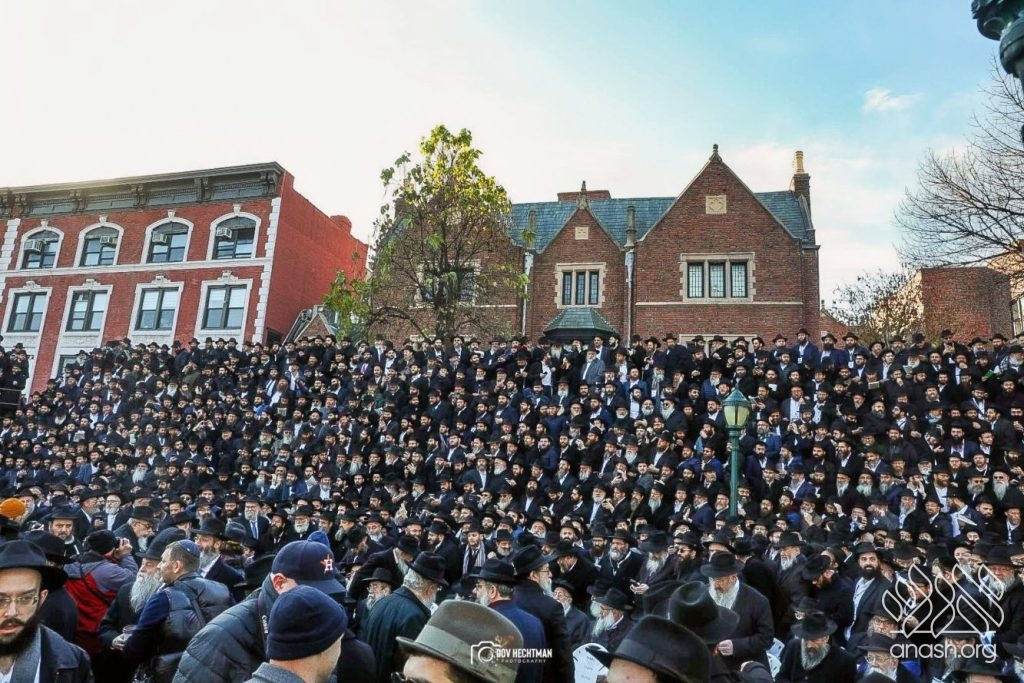
By Rabbi Anchelle Perl – Chabad of Mineola, Long Island
A recent Jerusalem Post opinion article by Lev Stesin, titled “Can Chabad Become the New Leader of American Jewry After Institutional Decline?”, raises an important question.
As traditional Jewish organizations struggle with declining influence and American Jewry faces unprecedented challenges, the author suggests that Chabad may be the only movement with the infrastructure to assume communal leadership.
It is an important discussion.
But from a Chabad perspective, it begins with a misconception about what the Rebbe, Rabbi Menachem M. Schneerson, of righteous memory, actually built.
The Rebbe did not create another Jewish organization seeking power, political influence, or institutional control. He created something far more enduring: an army of selfless shluchim dedicated to serving every Jew, regardless of background, affiliation, or level of observance.
The Rebbe never instructed his emissaries to become rulers of the Jewish community.
He instructed us to become its servants.
Every Chabad shliach leaves home not to build an empire, but to build another Jew. Our success is not measured by budgets, buildings, or political influence. It is measured by the number of lives touched, families strengthened, children educated, lonely people comforted, and mitzvot inspired.
The article asks whether Chabad should become “the address” for American Jewry.
The Rebbe would likely ask a different question:
“How can every Jew become an address for another Jew?”
The article also suggests that Chabad should become less of a Chassidic movement, tone down its religious passion, soften its commitment to Torah, and function more like a secular umbrella organization.
Respectfully, that misunderstands the source of Chabad’s success.
The Rebbe never believed Judaism grows stronger by becoming less Jewish. He believed people respond to authenticity. Chabad welcomes every Jew exactly as they are, with unconditional love and respect, while remaining unwavering in its commitment to Torah and mitzvot. Love without judgment does not require Judaism without standards.
The suggestion that the growing number of Chabad Houses represents unhealthy competition also misses the Rebbe’s vision.
The Rebbe compared Judaism to light.
No one complains there are too many streetlights.
When darkness increases, we add more light.
Each Chabad House exists because every community, every neighborhood, every campus, and every individual deserves personal attention. One rabbi cannot possibly know every student, visit every patient, comfort every mourner, teach every child, or inspire every searching soul. More shluchim simply mean more opportunities to care.
The article also questions whether shlichus has become a business.
Anyone who has spent even a day with a shliach knows otherwise.
There are far easier ways to earn a living than relocating thousands of miles from family, raising every dollar independently, answering emergency phone calls at midnight, visiting hospitals, prisons and nursing homes, teaching children, comforting grieving families, opening one’s home every Shabbat, and carrying responsibility for an entire community twenty-four hours a day.
A shliach is not sent to collect donors.
A shliach is sent to collect souls.
Most importantly, the article assumes that leadership means becoming the next central institution of American Jewry.
The Rebbe taught something different.
Real leadership is not exercised from the top down.
It grows from the ground up.
It begins with one mitzvah.
One act of kindness.
One conversation.
One Shabbat candle.
One pair of tefillin.
One child learning Aleph-Beis.
One person discovering that they are loved by Hashem and by their fellow Jews.
If Chabad has become increasingly visible in Jewish life, it is not because it sought power.
It is because thousands of shluchim quietly chose service over status.
The Rebbe’s greatest innovation was not organizational—it was transformational. He inspired thousands of young couples to dedicate their lives to Jews they had never met, simply because every Jew possesses an infinite soul.
So, can Chabad become the new leader of American Jewry?
Perhaps that is the wrong question.
The better question is whether all of us—rabbis, lay leaders, institutions, and individuals alike—can embrace the Rebbe’s timeless vision of unconditional Ahavat Yisrael, unwavering commitment to Torah, and personal responsibility for every Jew.
The Rebbe did not seek to build the largest Jewish organization.
He sought to awaken the largest Jewish heart.
That remains the mission of every Chabad shliach today.
 COMMENTS


Very well written!
Can this be sent to Jerusalem post, and other secular websites
Nice point, but by not doing basic editing to (or prompting for) your AI-produced article, you just drain your readers.
Everyone knows how much AI loves the “not this/but that” structure. Look how many times this article has it.
The slop has to stop.
1. The Rebbe did not create.. He created something far more enduring
2. The Rebbe never instructed… He instructed us
3. Every Chabad shliach leaves home not to build an empire, but to build another Jew.
4. Our success is not measured by… It is measured by..
5. The Rebbe never believed… He believed people respond…
6. A shliach is not sent to collect donors. A shliach is sent to collect souls.
7. Real leadership is not exercised from the top down. It grows from the ground up.
8. If Chabad has become increasingly visible in Jewish life, it is not because it sought power.
It is because thousands of shluchim quietly chose service over status.
9. The Rebbe’s greatest innovation was not organizational—it was transformational.
10. The Rebbe did not seek to build the largest Jewish organization. He sought to awaken the largest Jewish heart.
Besides the clearly AI-produced article, its sentiment itself is frustratingly sunshine and rainbows about the reality about how shluchim are living. Maybe I am far too pessimistic, but my observation of many shluchim (obviously depends on place and circumstances) is that Shlichus, for many people, has become detached from my ideal selflessness of once upon a time, where the shluchim went out to a far off place and sacrificed every comfort out there in order to do the Rebbe’s shlichus. Nowadays, it’s a very comfortable life, that requires maintaining good connections with baale batim and fundraising in general in exchange for comfortable living that allows one to focus on their family, taka do peulos of hafatza. However the big change is the tangible lack of being giving to, “How can every Jew become an address for another Jew?”, and rather keeping their comfortable lifestyle. I had a friend doing Aleph this summer, and over and over again he reached out to shluchim (so not to drain Aleph’s budget, but also poshut to spend time around a shliach, etc.) and over and over he kept getting no response, or that the shliach was out on vacation. I understand a person needs time away from the intense work but come on…
In response to “hmm”:
One thing people lose sight of, is that they think being frum, or going on shlichus, HAS to be uncomfortable, spoiler alert, it doesn’t.
Just for example, for some reason rabbanim in new york, are against fake pig and whatever, yet, as it states in the gemara “for every forbidden thing, there is an equivalent that is permitted” being frum does not mean depriving one’s self of the world