




ט״ז אייר ה׳תשפ״ו | May 3, 2026
Israel to Invest $118 Billion to Develop Own Fighter Jets
Israel approved a deal for advanced fighter jet squadrons from the U.S., while pledging $118 Billion to develop and manufacture its own aircraft and weapons systems, to reduce dependence on foreign suppliers. Decades earlier, the Rebbe urged Israel to reduce reliance on foreign military support.
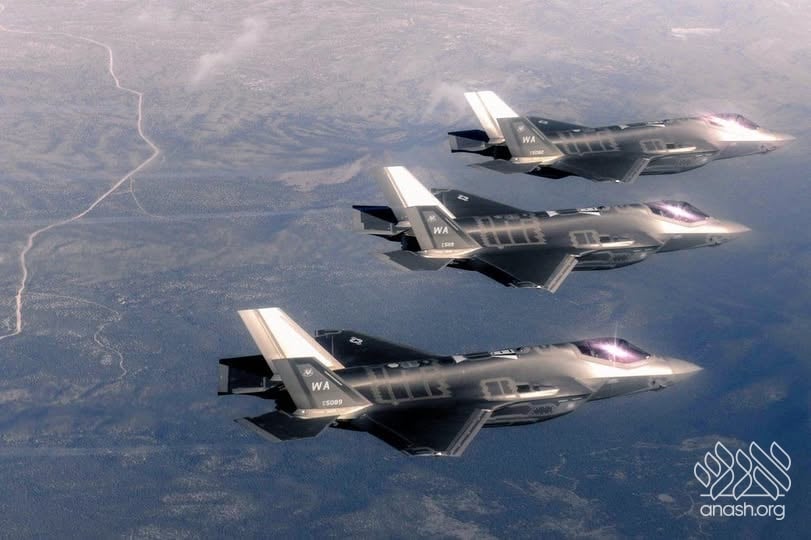
On Sunday, Israel approved a multi-billion-dollar deal to acquire two combat squadrons of fighter jets from the United States, among the most advanced military aircraft in the world. At the same time, the government pledged to invest hundreds of billions of shekels into developing and manufacturing original aircraft and weapons systems in Israel, with the goal of reducing dependence on foreign suppliers.
“The acquisitions are designed to give the IDF a lasting qualitative edge and ensure Israel’s air superiority for decades to come,” Defense Minister Yisroel Katz said in a statement.
Prime Minister Binyamin Netanyahu said the deal would strengthen Israel’s “overwhelming air superiority,” while outlining a broader vision of long-term independence in defense production.
“Our pilots can reach anywhere in the skies of Iran and are ready to do so, if needed,” Netanyahu said.
“Over the next decade, we will add 350 billion shekels ($118 billion) to the defense budget in order to manufacture such weaponry in Israel and not be dependent on foreign suppliers,” he added.
“At the same time, we will develop ‘blue-and-white’ groundbreaking aircraft. This will change the entire picture,” he said, using a term for domestically produced Israeli technology.
As previously reported by Anash.org, Netanyahu has for some time signaled a shift toward reshaping Israel’s defense policy. Last year, he said Israel is moving toward “much greater independence” and expects to present a plan to reduce reliance on U.S. funding, including the roughly $4 billion in annual security aid that has long been a cornerstone of U.S.–Israel ties.
Several months ago, he also announced plans to invest over $100 billion in Israel’s domestic arms industry over the coming decade, aiming to expand independent production of munitions and advanced military systems.
“We want to reduce our dependence on all players, including friends,” Netanyahu said at the time.
Notably, Sunday appears to be the first time Netanyahu has explicitly emphasized developing Israeli-made fighter aircraft themselves, not just weapons systems, a shift highlighted by the current war with Iran and the central role of airpower in recent large-scale operations.
Decades before today’s leaders began voicing concerns, the Rebbe was already calling for Israel to wean itself off American military support. While Israel presents itself as a sovereign state, the Rebbe warned that its deep dependence on the United States – especially for weapons and strategic backing – left it functioning like a client state, compromising its long-term security.
At a farbrengen on Chanukah in 5730 (1970), the Rebbe said real independence means not relying on any one country, no matter how friendly. The Rebbe urged Israel to cultivate relationships with other nations that share its values and to avoid becoming overly dependent on American support.
The Rebbe placed particular focus on military self-reliance, consistently urging Israel to strengthen its domestic defense industry and diversify its sources of weaponry. Relying solely on U.S. arms, he warned, would leave Israel vulnerable to political pressure, such as when American administrations condition aid on policy concessions or restrict how certain weapons can be used. A diversified defense posture, the Rebbe argued, would not only enhance Israel’s resilience but also strengthen its negotiating position with the United States.
One notable example was the Lavi fighter jet project of the 1980s – a cutting-edge Israeli aircraft that could have positioned Israel as a global defense innovator. Despite its technical success, the Lavi was scrapped under intense U.S. pressure, largely due to fears it would compete with American jets in the international market. The Rebbe saw this as a historic mistake: the project represented a real opportunity for Israel to free itself from dependence on foreign weaponry.
Now that Israel is beginning to publicly question its dependence on the U.S., the Rebbe’s message remains more relevant than ever. The only real way to secure Israel’s future is through self-reliance and a broad, independent strategy – not by leaning on any outside power. Until that goal is fully achieved, Israel must take a firm, principled stand on its security needs, regardless of U.S. or other external pressure. An unshakable commitment is the only way to deter pressure and protect Israel’s security.
VIDEO
 COMMENTS


I have always believed, and for a very long time, that Israel’s dependence on certain American military weapons systems should be kept very limited. As was mentioned in this post, that dependence restricts Israel in many defense-related decisions and therefore affects its ability to maintain its security in the future.
Furthermore, at some point, due to political pressure and changes in presidential administrations, the United States may reduce or significantly limit its military aid to Israel. That is why it is more necessary than ever for Israel to have its own domestic production, including aircraft manufacturing. And considering Israel’s technological advances, its planes would certainly be among the best in the world.