



כ״ח אלול ה׳תשפ״ו | September 10, 2026
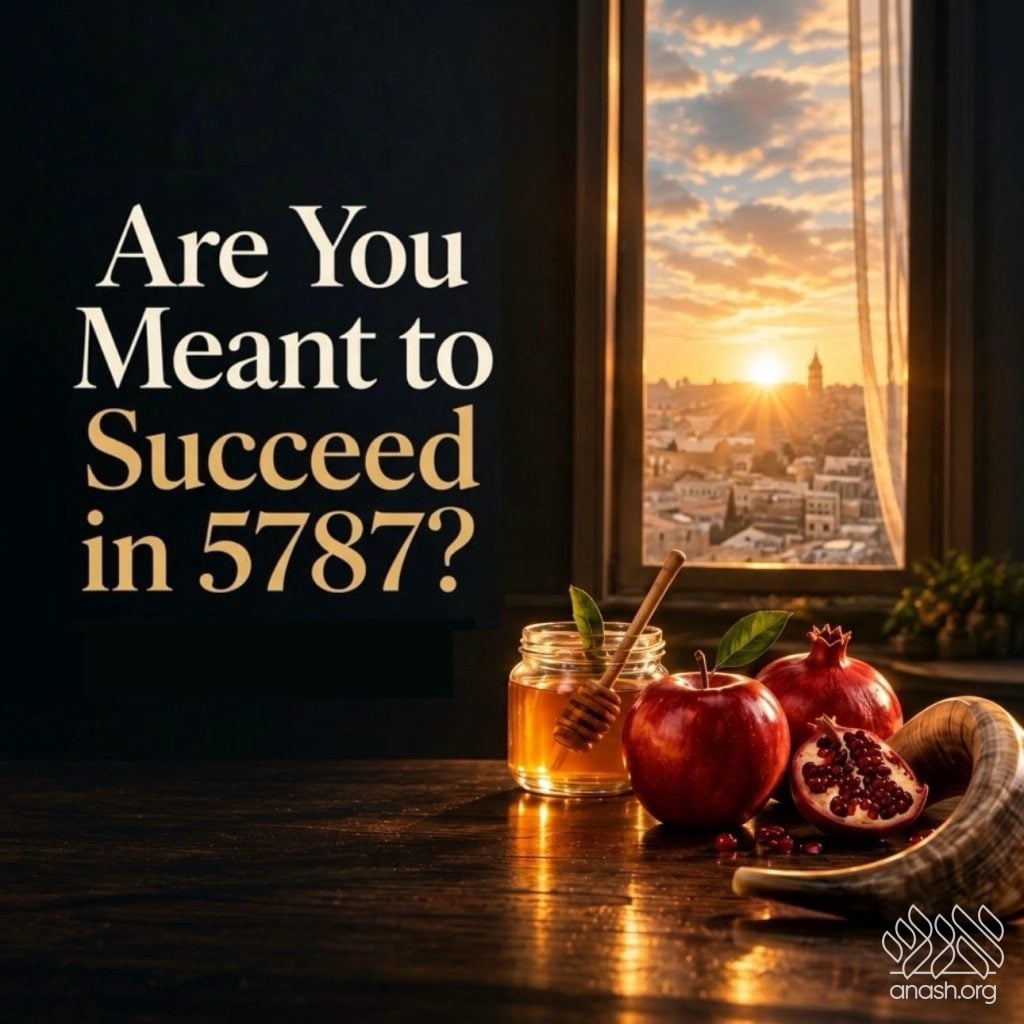
Are You Meant to Succeed in 5787?
“In recent years, I’ve found that my Rosh Hashanah davening comes alive much more when I stop and ask myself: what would a truly good and sweet year actually look like for me?”
By Aryeh Gurewitz
We will soon stand before Hashem on Rosh Hashanah and ask Him for a shanah tovah umesukah – a year full of revealed goodness.
In recent years, I’ve found that my Rosh Hashanah davening comes alive much more when I stop and ask myself: what would a truly good and sweet year actually look like for me?
What kind of growth do I hope to see in my avodas Hashem and my shlichus in the world? What do I want my most important relationships to look like? What obstacles do I hope my children overcome? What level of parnassah do I need to make all of this possible?
If we take the time to consider these questions and actually picture the answers in our minds, an exciting vision starts to take shape. All too often, though, it’s hard to fully generate that mental image. Alternatively, we may be able to envision it, but our minds then fill with doubt.
“Can I really have that? Is that really what Hashem wants for me?”
It’s a vital question.
Do we strongly believe that Hashem’s desire is to give us a truly sweet year, or is it possible that we’ve quietly assumed that we can’t really have it all?
Sometimes the knowledge that life will always have challenges – and, perhaps, our appreciation of the value of mesiras nefesh and nisyonos – leave us hesitant to even fully feel the desire and hope for success.
Trust me, I know that hesitation very well.
But it’s important to remember that deep commitment to Torah and a successful life in this world need not be a contradiction.
Consider the Hayom Yom of 27 Tishrei:
“Torah and mitzvos encompass a person’s life from the moment he emerges from his mother’s womb until his final day. They place him in a position of light, with a healthy mind, refined character, and upright conduct—not only between man and Hashem, but also between man and his fellow. For one who conducts himself according to Torah and the directives of Chazal lives a happy life, materially and spiritually.”
The Frierdiker Rebbe is assuring us that a life of Torah and mitzvos is also a life of happiness, spirituality, and good relationships.
Of course, that doesn’t mean there won’t be obstacles along the way.
In Basi LeGani 5710, the Frierdiker Rebbe makes a point about the battle between the Nefesh HaBahamis and the Nefesh Elokis that I find powerful to contemplate – that Hashem’s ultimate intention is for the Nefesh Elokis to win. When the lower parts of ourselves take over, that is the opposite of His true plan. It’s not really how our lives are meant to go.
And here’s where it gets really interesting.
Which areas of our lives do you think are included in the neshoma’s intended victory?
If you ask me, it’s not only the obviously holy parts of our lives, like our davening and learning.
It’s every part of our lives, including emotional well-being, marriage, parnassah, and parenting.
In each of these areas of life, Torah assigns us a role to fulfill, and then assures us that when we faithfully fulfill that role, we can expect to see success.
Consider the following sources to support this.
Regarding our happiness in life, Tanya and other sources teach us how our emotions are shaped by our minds – a simple fact, but one of vital significance – and that through deep, focused contemplation, we can learn to cleanse our hearts of sadness and worry (Tanya, chapters 6 and 26; Iggeres HaKodesh 11 and 15). The Rebbe adds an abundance of explanation and advice on these topics as well.
In marriage, the Rambam gives husband and wife concrete guidance from Chazal on how to treat each other, concluding with a promise that following these ways will make our marriages “pleasant and praiseworthy” (Hilchos Ishus 15:19–20).
When it comes to chinuch, the Rebbe teaches that we can educate even young children in such a way that yearning for Hashem becomes real to them, like it was for the Rebbe Rashab (Likkutei Sichos, vol. 15, Vayeira–Chof Marcheshvan).
Concerning parnassah, which facilitates all of the above, the Rebbe assures us that Hashem is certainly blessing every Jew with wealth. When that wealth is not yet visible materially, that doesn’t mean it isn’t there waiting for us. It just means that it’s our job to reveal it through our avodah (Terumah 5752, ois 11).
Now, this does not give us control over Hashem’s timetable or guarantee that our first attempt will work. But it does tell us that success is waiting, proper effort makes a difference, and there are authentic Torah paths to real results.
What emerges from this way of thinking is that success in the areas of well-being, relationships, and parnassah are not just personal wishes we human beings tend to have, nor are they side points that are separate from our “real” avodas Hashem. Rather, they are essential parts of the mission and the intended victory.
So, are you meant to succeed in 5787?
To my mind, the answer is a clear yes. We are definitely meant to succeed, this year and every year. Hashem has revealed His vision for our lives, taught us Torah paths to reach it, and instilled within us everything we need to get the job done.
Now it’s up to us to embrace the process, follow the path, exert the effort, and claim that success – not only because we want it, but because it’s part of our mission from Hashem.
May we all be written and sealed for a good and sweet year in the fullest measure — a year of chaim me’usharim begeshem uveruach, and a year in which we finally get to experience the ultimate harmony between ruchnius and gashmius, with the coming of Moshiach.
Aryeh Gurewitz is the Director of Curriculum and Student Progress at Tomchei Temimim Ocean Parkway, and the founder of Ashirus Coaching and Consulting. His passion is helping frum men thrive in every area of life based on authentic Torah guidance. Find out more at ashiruscoaching.com.
 COMMENTS


and this article should be hanging on our walls in tge days leading up to rosh hashana
this is definetly eye opening
Good stuff. Amazing stuff. Keep writing – we want more.
This is so good, thank you! So many suffer financially just from a lack of guidance, which directly impacts marriage and chinuch. Yet it remains a taboo topic full of shame. Please keep writing!
Aryeh is an old friend. As I never fail to tell him, he is meant to be sharing Torah thoughts. Hopefully he’s just getting started