




י״ב אדר ה׳תשפ״ו | March 1, 2026
When the Rebbe Hinted at the Fall of Iran’s ‘Hameini’
As many across the world celebrate the death of Iran’s Supreme Leader, Ali Hosseini Khamenei, it is interesting to recall what the Rebbe said about him and his regime.

As many across the world celebrate the death of Iran’s Supreme Leader, Ali Hosseini Khamenei, it is interesting to recall what the Rebbe said about him and his regime.
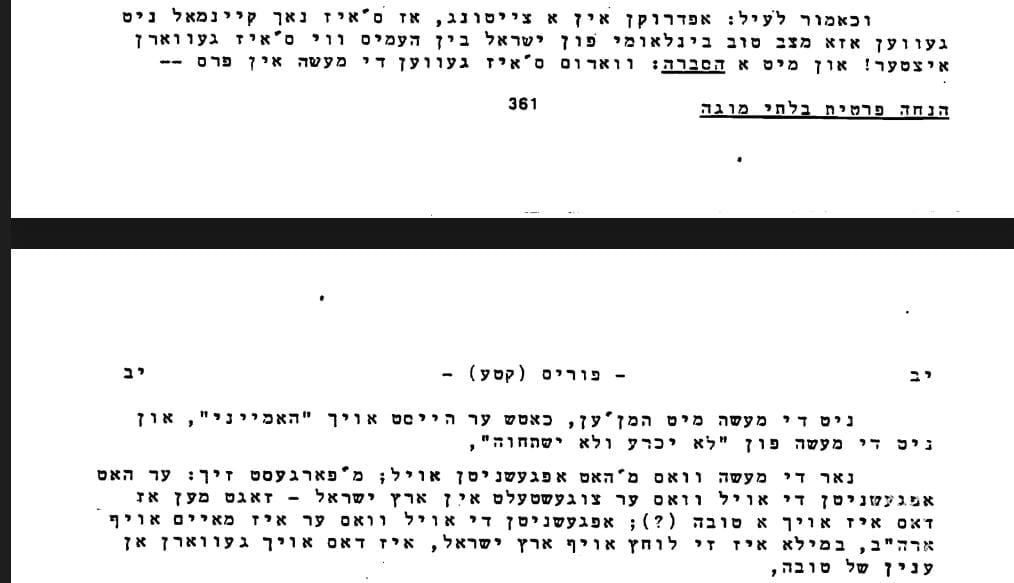
Notably, during the farbregen of Purim 5740 (1980), the Rebbe referred to Iran’s leader as “Hameini,” contrasting him to Haman, and the importance of Jewish pride not to bow to him.
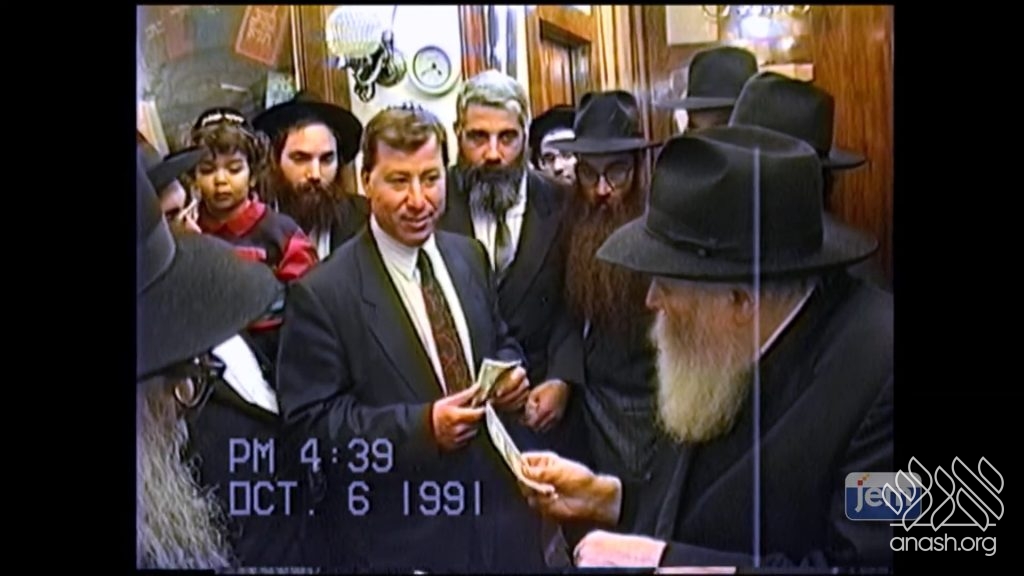
On Sunday after Shabbos Bereishis 5752 (1991), Mr. Ron Nachman, Mayor of Ariel, Eretz Yisroel, came by the Rebbe for a bracha. After thanking the Rebbe for the blessings he received for the flourishing town of Ariel, where he served as mayor, Nachman asked the Rebbe’s advice on how to present the loan guarantee for Israel that he was working on to the American media.
The Rebbe told him, “As I have said several times, Israel’s welfare is in the best interest of the United States, because Israel is the front line there against the Arabs, and the Arabs are against the United States; they want the United States to fail, and for Iran and similar nations to succeed.”
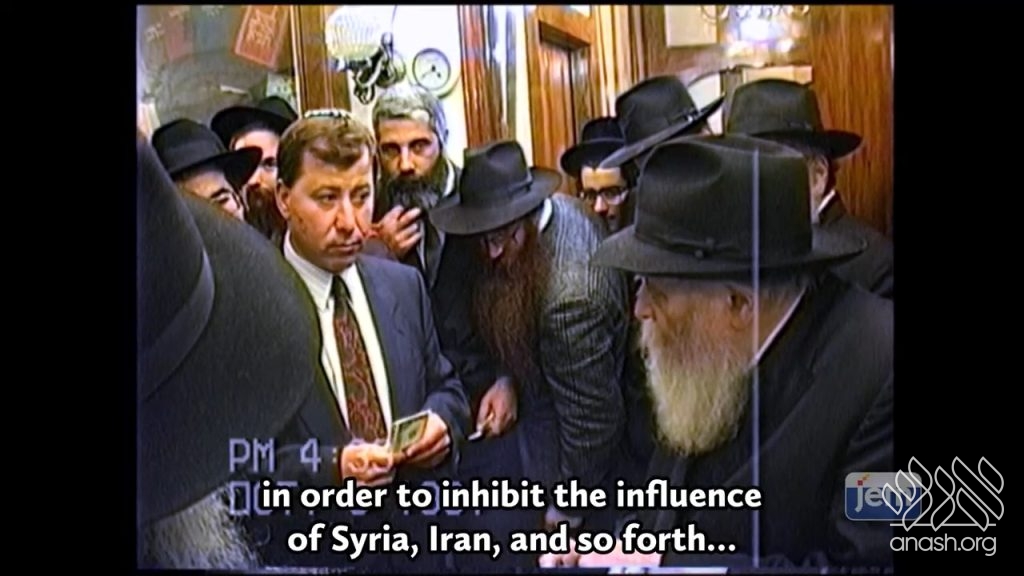
The Rebbe continued, making specific reference to the Iranian regime:
“Outside issues have come into play, and you must be able to respond to those issues. It is easy to clarify this by looking at the speeches of the United States presidents, the way they spoke half a year ago, a year ago, and more, that it is imperative – for the good of the entire world including the United States – that there be a strong Israel in order to inhibit the influence of Syria, Iran, and so forth… For they are against the US no less than they are against Israel – and perhaps even more so.”
But a most fascinating discovery is this:
Deep into the Purim farbrengen of 5713 (1953), at around 4:00 a.m., the Rebbe’s face grew very solemn, and he told the following story:
After the revolution that ousted the Czar of Russia, the Rebbe Rashab instructed the Chassidim to partake in the government elections. Following his Rebbe’s heed, one of the Chassidim, though fully immersed in Torah with no interest in world news nor knowledge of the political situation around him, went to the polling station to cast his vote.
Obviously, as before doing any other action mandated by the Rebbe, he first went to the mikveh and put on his gartel. After following his friends’ instructions on the procedure of voting, the Chossid saw that nearby there was a group of people excitedly cheering “Hoorah!” Assuming this was part of the process, he joined them in their cheers, “Hoo-rah! Hoo-rah! Hoo-rah!” (In Hebrew “הוא-רע—he is bad…”)
As the Rebbe described the Chossid’s actions, there was a big smile on his face, holding both hands together in a triangle position mimicking the cheer. The Rebbe then turned to his right side and said over the whole story, then to his left and repeated it a third time, each time using the hand motions of the cheers.
Realizing that something deeper than what meets the eye was going on, everyone at the farbrengen stood up and shouted “Hoo-rah! Hoorah! Hoo-rah!”
The Rebbe’s face suddenly took on a serious look as he leaned on his arm for a few seconds, and he immediately started saying a maamar starting with the words “Al Kein Kar’u.” This was the first time in the Rebbe’s nesius that he said two maamarim in one farbrengen, and it took everyone by great surprise.
One week later, the results were clear. The Soviet media announced that the brutal dictator Josef Stalin, who was then plotting the infamous Doctors’ Plot and a mass deportation of Russian Jews, had died suddenly on Purim.
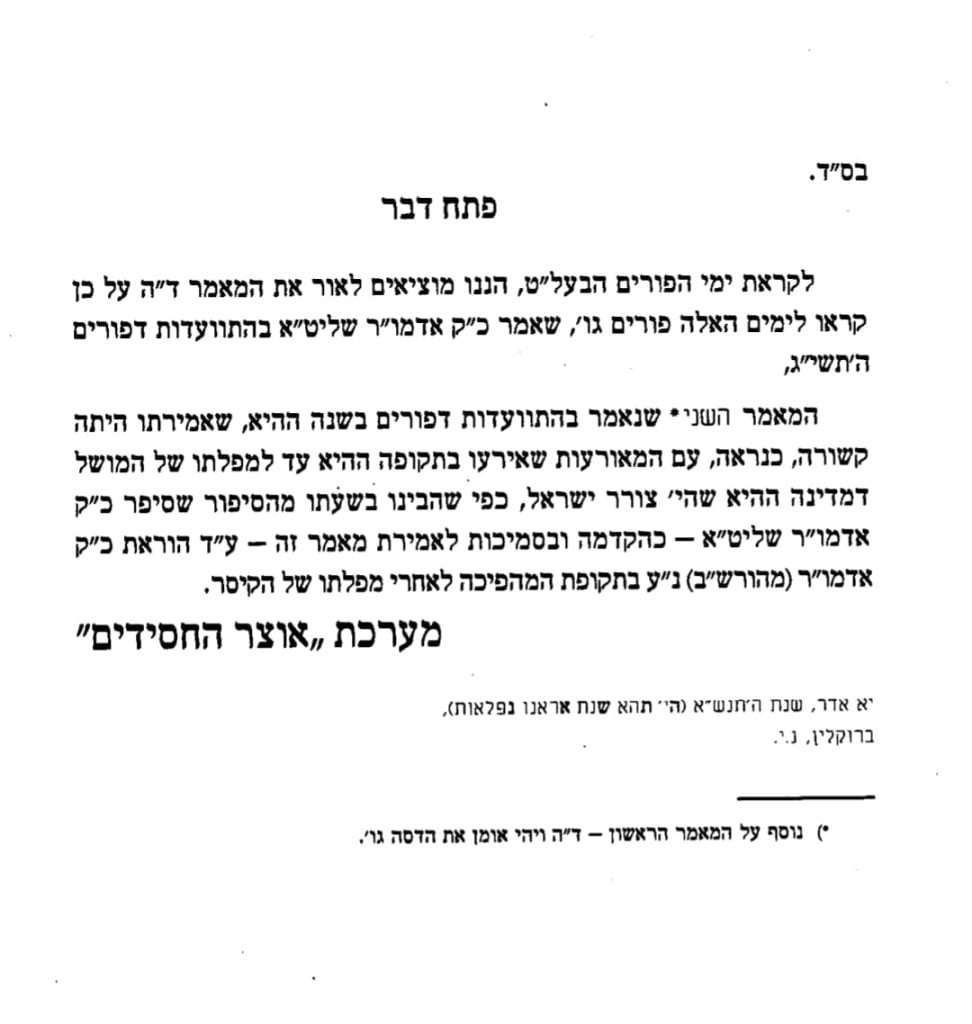
Decades later, in 5751, the Rebbe published that very maamar in an edited version. The date chosen by the Rebbe in the foreword: Yud-Alef Adar.
This year, on Yud-Alef Adar, the world once again witnessed the downfall of a dictator who wished to harm the Jewish people.
May we merit the complete geulah soon!
VIDEO

The Rebbe on the Iranian Revolution:

 COMMENTS


In 5740 the rebbe is NOT referring to khamenei, but to the previous leader, khomeini
is the sicha in 5740 referring to him or khomeini, the previous supreme leader