




כ״ג אב ה׳תשפ״ה | August 16, 2025
‘If You Had Put Him Under a Bench, He Would Remain Silent!’
One of the greatest talmidim of the Mezritcher Maggid, Reb Elimelech of Lyzhensk became in charge of spreading Chassidus in Poland. When a certain rov spitefully placed Reb Elimelech’s sefer under a bench, the Alter Rebbe assured him that he hadn’t offended Reb Elimelech.
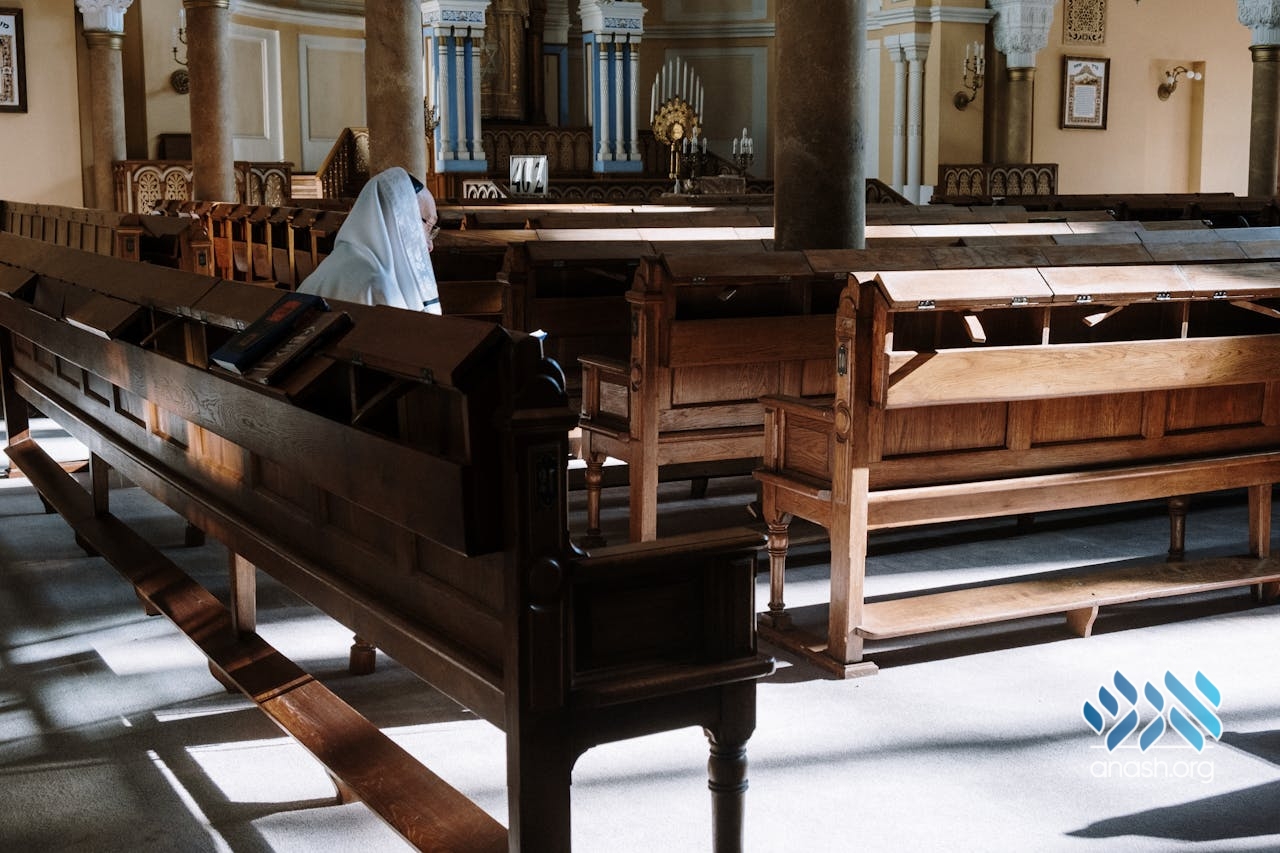
One of the greatest talmidim of the Mezritcher Maggid, Reb Elimelech became in charge of spreading Chassidus in Poland. When a certain rov spitefully placed Reb Elimelech’s sefer under a bench, the Alter Rebbe assured him that he hadn’t offended Reb Elimelech.
Reb Elimelech was one of the greatest talmidim of the Mezritcher Maggid, and after the Maggid’s histalkus, he became responsible for the dissemination of Chassidus in Poland. He was a brother of the famous Reb Zusha of Anipoli, and together they were known as “the holy brothers”.
Reb Elimelech was one of the greatest Rebbes of his time, and many of his disciples became Rebbes in their own right, his primary successor being the Chozeh of Lublin. His teachings were printed in the sefer Noam Elimelech. He passed away in Lizhensk on 21 Adar תקמ”ז (1787).
*
In a village near Tarnow in Galicia, there lived a simple Yid called Reb Eliezer Lipa. He couldn’t study Torah and didn’t even know the meaning of the davening or Tehillim, but he was a sincere person who always davened with a minyan, made a point of never missing an Amen, and he would follow Krias HaTorah from a Chumash. He never conversed about worldly matters in the shul, and he would honor talmidei chachomim and bnei Torah.
He managed to make a decent living as a water-carrier, since he had four well-to-do merchants who were steady customers and paid him well.
One day, the Baal Shem Tov arrived in Tarnow. At that time, before he had revealed himself to the world, he appeared to be an ordinary traveler. He would befriend the simple folk and tell them stories from the Aggada, and he would describe to them the great pleasure that HaShem derives from the sincere Tehillim of a simple Yid.
Reb Eliezer Lipa was once leading his wagon through the center of town, when he spotted his fellow water-carrier Reb Zalman Dov and other friends, listening to a poor traveler. Reb Eliezer Lipa went over to join them. The Baal Shem Tov was telling the following story from the Midrash.
“There was once a wealthy man who was taking a fattened ox to the Beis HaMikdash for a korbon. It was a massive beast, and when it decided, for reasons of its own, to stop still in its tracks, nobody could move it. A poor man was on his way home with a bunch of greens in his hand. Noticing the scene, he held out his greens for the animal to nibble, while he drew it to its destination. That night the owner of the ox had a dream in which he heard a voice saying, ‘The korbon of the poor man is greater than yours.’
The Baal Shem Tov explained, “What HaShem desires is a person’s heart. The wealthy man was so joyful that he made a huge feast for his family and friends and he distributed gifts to the kohanim. He felt very proud of his great mitzva. The poor man, on the other hand, felt broken by his poverty. He thought: What worth is my bunch of greens in comparison to the fatted animal of the wealthy man?
“However,” concluded the Baal Shem Tov, “the One Above derives more pleasure from the poor man’s greens than from the rich man’s ox.”
The Baal Shem Tov went on to explain to his unsophisticated listeners that whatever mitzva a Yid does is measured by its intention. A small act done for HaShem’s sake, with joy and purity of heart, is very precious to the Creator. HaShem prides himself with it before the malochim and says, ‘Look at the good deed that my son or daughter has done!’ and showers the Yid with brachos.”
Reb Eliezer Lipa continued on, but his mind knew no rest. How he longed to be able to do a mitzva like the poor man in the story, with pure intention and a heart overflowing with joy. He shared with his wife what he had heard from the traveling guest, and told her how every mitzva they performed was like a korbon.
Weeks passed and still Reb Eliezer Lipa knew no peace. One day, as he delivered water to a wealthy customer, an idea fell into his head. He was excited. His four wealthy customers provided him with half of his livelihood, since they paid him far more than the going rate for a barrel of water. On the other hand, his friend Reb Zalman Dov supplied the town’s four shuls, which paid him half-price for their water. “I can exchange four of my customers for four of his,” thought Reb Eliezer Lipa. “Four wealthy homes for four shuls.” He shared the idea with his wife, and she immediately agreed.
Reb Zalman Dov accepted the offer, and the two switched without anyone noticing a difference. There were days when Reb Eliezer Lipa’s wife went to the river to participate in the mitzva of drawing the water for the shuls. As they hauled the water, they would concentrate on the mitzva of preparing water for their fellow townsmen to wash their hands with before davening.
They were blessed with two sons, who did not succeed in learning. The parents would often recite Tehillim together in tears, with Reb Eliezer Lipa reading word for word and his wife repeating each word after him. Every Friday, she would distribute two challos to the poor, and light two candles so that their two sons should shine in Torah. At times, they also fasted and distributed the value of their meals to tzedaka in the merit of their sons.
A short time after they began supplying the water for the shul, word reached them that their sons began to succeed in their studies. Eventually, they both grew up to be the great tzaddikim – Reb Elimelech of Lyzhensk and Reb Zusya of Anipoli.
*
The Alter Rebbe once met with a rov who was an opponent of Chassidus. The rov asked the Alter Rebbe, “I have a sefer called Noam Elimelech which as I have discovered, has been written by a chossid, a disciple of the Maggid of Mezritch, and I put the sefer under the bench. Can you tell me something worthy about its author?”
The Alter Rebbe replied, “Even if you would put the tzaddik of Lizhensk himself under your bench, he would remain silent and not say a word. Such was his humility!”
*
The brothers Reb Elimelech and Reb Zusha took upon themselves to go into golus (self-inflicted exile), and so they wandered from village to village, dressed in simple rags, with no one knowing who they were. During the course of their travels, whenever they would come to the town of Ludmir, they would stay by a certain Reb Aharon, who was a great man but lived quite poorly.
Years later, when Reb Elimelech and Reb Zushe had become well known, they once again traveled to Ludmir. This time, however, they did not travel on foot, but with a horse and buggy and an entourage of chassidim.
When they reached a village near Ludmir, one of the wealthy men in town came out to greet them and invite them to stay with him for the course of their visit. The brothers suggested that he return to Ludmir and they would arrive on their own.
When they arrived, they headed to the home of the poor Reb Aharon. When the wealthy man heard about it, he came running and complained, “Why did you not accept my offer?” To which one of the brothers replied, “We are the same people as before, and we don’t want to change our lodgings. The only difference between then and now is the horse and buggy. If that’s what inspired you to invite us, take the horse and buggy and let them stay with you…”
*
Reb Elimelech of Lyzhansk would often undertake harsh siggufim as a kapara, such as rolling in the snow without warm clothes. On one such night, Reb Elimelech did not notice a nail sticking out of a board that was covered in snow. As he rolled over it, it pierced his hand.
When he arrived home, his relatives excitedly gave their advice on how to stop the bleeding. Reb Elimelech’s daughter, overhearing snippets of the lively conversation, thought they were discussing a hole in the wall, and called out, “What’s the big deal? Take some straw and stuff it up!” Hearing this, everyone laughed, and suddenly Reb Elimelech stopped bleeding. With this distraction taken care of, he returned to his avoda.
He later explained that an unfavorable decree had been issued Above, but through the simcha his daughter had caused, simcha was aroused Above, and this nullified the decree.
For sources, visit TheWeeklyFarbrengen.com
 COMMENTS



We appreciate your feedback. If you have any additional information to contribute to this article, it will be added below.