From Chevron to the Outback: A Chasid’s Wild Australian Journey
After relating the stories of the first Chabad visitors to Australia, From the Margins of Chabad History now tells the fascinating and colorful story of R. Yosef Chaim Meizlish, the first Chabad chasid to settle in Australia.
In the first article of this series, we told the stories of the first Chabad visitors to Australia—shadarim from Eretz Yisrael who visited between 1856 and 1878. Now we will tell the fascinating and colorful story of R. Yosef Chaim Meizlish, the first Chabad chasid to settle in Australia. A future installment will tell the stories of additional early Chabad chasidim in Australia.
R. Yosef Chaim didn’t leave a lasting legacy for Chabad in Australia. We also don’t know precisely what role his Chabad identity played in his life. But he was a person born into a prestigious Chabad family who strived valiantly to maintain authentic frum Yiddishkeit under very difficult circumstances, and his story deserves to be remembered.
With Australian Jewry, and the Chabad community in particular, still reeling from the Bondi Chanukah terrorist attack, we hope they will find this exploration of the deep Chabad roots in Australia and the mesiras nefesh of those who planted them meaningful.
To tell the remarkable story of Yosef Chaim Meizlish’s life, we will stitch together archival records, newspaper reports, and family documents. The Meizlish family documents included in this article were graciously supplied by Lainey Melnick, a descendant of Yosef Chaim’s brother Yaakov, who collected them from Yosef Chaim’s descendants. We thank her for her generous assistance.
Our journey will also give us fascinating perspectives on pertinent questions: Should news reports about a hero who risked his life to save others highlight his race and religion? Should heroes be given monetary reward for their actions, or just honored with a medal? All this and more, From the Margins of Chabad History.
Chevron: Early Life
The Montefiore Census of 5626 (1866). R. Shmuel Pesach Meizlish is listed towards the bottom of the page, with his wife Cherna and children Yosef, Yaakov, and Yocheved.
Yosef Chaim Meizlish was born in Chevron in Elul of 5619 (August-September, 1859), to a storied Chabad family. Harav Moshe Meizlish was a leader of the community in Vilna who became a devoted chasid of the Alter Rebbe. A successful businessman with a broad education and many talents, he famously served as a spy for the Russian Czar against Napoleon during the French invasion of Russia in 5572 (1812).
A few years after the histlakus of the Alter Rebbe, in c. 5578 (1818), R. Moshe moved to Eretz Yisrael, accompanied by two of his sons, Tzvi Hirsh and Mordechai. He lived for a few years in Tzfas and moved to Chevron in 5683 (1823), where he lived until his passing in 5609 (1849) at the ripe old age of 90.
The Montefiore Census of 5635 (1875). Yosef Chaim Meizlish is on the last line shown, underneath his father.
R. Tzvi Hirsh Meizlish had a son, R. Shmuel Pesach (born 5586-1826), who served as the shamash of the small Chabad shul in Chevron. Our Yosef Chaim was the oldest son of R. Shmuel Pesach.
As we will see, Yosef Chaim inherited much of his famous ancestor’s bravery, talents, and resourcefulness.
All we know of Yosef Chaim’s early life in Chevron is what we can deduce from a handful of documents mentioning his name. In 5635 (1875), the Montefiore Census records Yosef Chaim as 18 years old and married to Devorah. He is listed as a businessman, and his financial status is classified as “poor.”
Yosef Chaim Meizlish’s signature on the takanos of the Chevra Kadish in Chevron, 1 Adar 5639 (1879), towards the bottom of the second column.
We don’t know what happened to Devorah, but in 1877, Yosef Chaim married Sarah Chanah Rosenzweig, a 16-year-old girl from northern Eretz Yisrael. An Ottoman travel document shows Yosef Chaim traveling for business to France, England, and Algeria in 1879 (5640), and we know he was back in Chevron in 5641 (1881), when his signature appears in the pinkas of the local Chevra Kadisha.
Melbourne
In 1882 (5642), Yosef Chaim and his wife left Eretz Yisrael to settle in Australia. We don’t have any specific information about their decision to move, but the financial state of the Yishuv in Chevron was dire, and many Jews were leaving Eretz Yisrael in this period in search of a better livelihood.
The Meizlish family lived in Melbourne, Victoria, for a few years, staying at the home of Woolf Davis at 100 Swanston Street. It seems logical to assume that Yosef Chaim was also working for him at this time.
R. Klonymus Zev (Woolf) Davis, flanked by his sons Abraham (l) and David (r).
R. Klonymus Zev (Woolf) Davis (1828-1902) was the pillar of authentic, fully observant Yiddishkeit in Melbourne since his arrival from England in 1858. A wealthy businessman and ben Torah, R. Woolf devoted his efforts and money to build Yiddishkeit, serving as president of the East Melbourne shul and establishing the first proper mikvah in the city. He later broke away from the East Melbourne shul and established the Woolf Davis Chevra, a private heimishe-style shul in his home.
R. Woolf was also a generous supporter of the Yishuv in Eretz Yisrael, standing in close contact with the rov of Yerushalayim, Harav Shmuel Salant, who held him in high esteem.
The first mention of Yosef Meizlish, styled in Australia as Joseph Hyman Myslis, comes from an 1885 sale of esrogim he arranged in Melbourne. The local Jewish Herald newspaper (September 4, 1885) reported:
Swanston Street, Melbourne, 1880
A consignment of Esrogim, grown in the Holy Land, has been forwarded by Rabbi Gedaliah, of Jerusalem, to Mr. Mysles of this city for sale amongst the Jews. The fruit, to judge from a sample shown to us, is of very fine quality, and we can recommend the same for use during the ensuing Succoth. Mr. W. Davis, of 100 Swanston-street, has kindly undertaken the sale of the Esrogim, and will be pleased to show specimens of it to intending purchasers on calling at his office. When we mention that the proceeds of the sale are to go towards providing a dowry for Rabbi Gedaliah’s daughter, we feel sure that it will not be long before the whole consignment is disposed of.
“Rabbi Gedaliah” mentioned here is R. Gedaliah Tzvi Josephson, a longtime acquaintance of Myslis from Chevron. Most of the Ashkenazi residents of Chevron were Chabad chasidim, but R. Gedaliah was part of the small minority that were not.
R. Gedaliah Tzvi Josephson, pictured in Ballarat, Australia.
Born in Warsaw in 5600 (1840), he arrived in Eretz Yisrael as a boy in 5611 (1851). He lived among the Chabad chasidim of Chevron, and married Sima Leah, a daughter of the Chabad shadar R. Shneur Zalman Mendelowitz (see Toldos Chabad Be’eretz Hakodesh, p. 113-114). Growing up in the same small Chevron community, Myslis would have known R. Gedaliah well.
R. Gedaliah had visited Australia earlier in 1880, collecting funds for Kollel Varsha, and he later returned in 1888 for a second fundraising tour.
Interestingly, in 1883, Yosef Chaim was back in the Middle East, selling goods at the British army bases in Egypt. Presumably he also used the opportunity to visit his family in Eretz Yisrael.
Regional Victoria
In 1886, we find Joseph Myslis’s name mentioned as a watchmaker and storekeeper in Drysdale, a rural township near Geelong, Victoria, located on the Bellarine Peninsula.
The Geelong Synagogue was opened in 1861. Sold in 1984, it is now an office building.
During this period, Myslis volunteered to serve in the Melbourne Garrison Artillery, a reserves-based force guarding Port Phillip Bay, the maritime gateway to Melbourne. The Jewish Herald newspaper reported proudly (April 10, 1891):
Those who hold that our co-religionists in Palestine are an inert and inactive race will be perhaps astonished to learn that Mr. J. H. Myslis, who arrived from Jerusalem some few years ago, is now an artilleryman in one of the forts on Port Phillip Bay.
Artillerymen at Fort Queenscliff, the headquarters for Victoria’s coastal defense.
During this time, Joseph’s younger brother Yaakov followed him to settle in Australia. Arriving in 1887 with his wife Chavah and young children Sarah and Binyamin, Yaakov worked as a bookbinder in Melbourne for a few years before moving with his family yet again to S. Paul, Minnesota.
It isn’t clear how long Joseph Myslis lived in Drysdale, but ahead of Pesach in 1891, we find him selling kosher lePesach wine and alcohol in Melbourne (Jewish Herald, April 10, 1891):
Yaakov (1860-1915) and Chavah Myslis with their children, Sarah and Binyamin. This picture appears to have been taken in approximately 1886 in Eretz Yisrael. (Courtesy of Lainey Melnick).
Those of our brethren who do not care to be deprived of their accustomed “jorum,” even during the Passover, may gratify their desires without infringing on the law, as a consignment of Kosher spirits and wine has been received from Palestine, and is being disposed of by Mr. Walker, Russell-st., under instructions from Mr. J. H. Myslis.
Later in 1891, we find Myslis living in Sorrento, a town on the Mornington Peninsula, in Victoria, where he owned a store.
Two years later, he made headlines for an act of extraordinary bravery. On Thursday night, October 5, 1893, a fire broke out at Cousins’s general store in Sorrento. Joseph Myslis ran into the flames and saved the five children trapped inside, suffering life-threatening injuries in the process.
This remarkable act of heroism was widely reported in the Australian press. The Sydney Morning Herald (October 11, 1893) reported on the story, emphasizing the fact that Myslis was a foreigner with no relationship to the children. The writer argues that for such a hero, a medal of recognition is not enough, and he should have his financial needs taken care of for the rest of his life.
Yaakov Myslis and his family, Melbourne, c. 1890. (Courtesy of Lainey Melnick).
Seldom has a story of truer heroism in private life been told than that of the foreigner now in the Melbourne Hospital, dying, it is feared, from the result of his efforts in saving children from a burning house. Two he had carried through the flames, but three others were cut off and could only be approached through a window too small for a man to pass. Nothing daunted, Myslis smashed down the brickwork around the window, and in doing so was struck down by the wall falling on him from above. With a broken jaw, dazed with the blow on his head, and bleeding from face and neck he forced his way into the flames, carried off the three children to safety, and was then borne away to the hospital.
No tie of relationship or even nationality appears to have inspired the noble fellow, who was moved to risk, and it is to be feared, sacrifice his life by the sight of helpless children in danger. One feels inclined to protest against relentless fate that would snatch such a man from life.
But assuming that he may recover, society does not recognise its obligations if a man who has put forth such an effort for his fellows should ever be allowed to struggle again. It is all very well for people to load him with their praises, and perhaps be satisfied that the right thing has been done when he is presented with such a testimonial as a gold medal from the Royal Humane Society.
Sorrento, 1880
But when we see the payments that are made, and legitimately made, for services rendered in a usual and orderly way to the public, it does seem an iron dealing when a heroic service like this, when a work sufficient for a lifetime, is crowded into the limits of a few terrible moments, that the constituted representatives of society, and guardians of its interests, should have only idle praises for payment.
A man that has done as Myslis has done should never want again. Possibly, he does not require help. But, if he does, it should be recognised that in the concentrated service of an hour, a man acting as he has done has established a claim that society should never ignore.
A horse-drawn tram in Sorrento, 1890
While this article praised the foreigner Myslis effusively, one key detail was missing—his Jewish identity. A few days later (October 14, 1893), a reader wrote to the newspaper complaining about this, noting that when people commit a crime, their nationality and religion are always specified, yet when they do something heroic, their origins are obscured. In this case in particular, the writer argues, Myslis’s heroism was motivated by his Orthodox Jewish beliefs.
HEROISM. TO THE EDITOR OF THE HERALD.
Sir,—Kindly allow me to supplement the interesting paragraph in today’s “Evening News” regarding the heroic action of the man Myslis at the disastrous Sorrento fire. We frequently find that the nationality and creed of certain persons are carefully noted, especially when they are apparently guilty of wrongdoing. This course should ever be deprecated in all cases.
The paragraph, however, to which I refer speaks in terms of high commendation of the “foreigner,” who, inspired by “no tie of relationship, or even nationality,” dauntlessly imperilled his life to rescue five children. To this I would add that the poor man, Josef Myslis, is a native of Jerusalem, and is an orthodox follower of that Faith which, with the Pentateuch, has given to all the old lesson, “Thou shalt love thy neighbour as thyself.”
Melbourne’s Table Talk magazine (November 10, 1893) also published a letter complaining about this omission from the reports. The writer, a Jew, complained that the media just doesn’t like Jewish heroes.
This from a Hebrew correspondent. Josef Myslis, who rescued five children recently from a fire in Sorrento, and who, as a result of his brave and heroic act, now lies in a critical condition in the Melbourne Hospital, is a Jew. There is a probability that if Myslis had broken into a store or sweated a sovereign his nationality would have been duly chronicled, and the usual ignominy cast upon the nation for the foibles of the individual sinner.
To be a Jew and a hero is apparently an unknown quality in the eyes of the ordinary journalist, who has forgotten Judas Maccabeus of old and his valiant sons, and Massena, Soult, and a host of warrior heroes of later days, and the thousands of heroes, both French and German, whose blood was bravely spilt for fatherland in 1870–71, and the tens of thousands of martyr heroes at this moment in Russia, the brave victims of a monarch whose very existence is a base libel on the goodly name of Christian.
The story of the Jewish hero in Australia made waves internationally, with the story picked up by newspapers in Germany, France, and other countries.
Searching for Gold
No one answered the Sydney Morning Herald’s call to take care of Joseph Myslis’s financial needs for the rest of his life. In 1894, he embarked yet again on a long journey to a distant land in search of better fortune.
Western Australia is the largest of all the Australian states, so big you can fit California and three Texases inside it—and still have room left over for New York State. But in 1890, it was as desolate as it was vast. Home to the Great Australian Desert, second only to the Sahara Desert in size, it was the least populated Australian colony, with only 50,000 residents.
Then came the gold rush. In 1892, gold was discovered at Coolgardie, and a year later at Kalgoorlie. Tens of thousands of people from across Australia and the world flocked to Western Australia in search of their fortune, with the population of the colony almost quadrupling itself in just a decade.
Coolgardie in the 1890s
In 1894, Joseph Myslis joined the prospectors and headed out to the Western Australian desert to dig for gold. Leon Samson, a friend of Myslis from Queenscliff, near Sorrento, later gave a report to the local Geelong Advertiser newspaper (March 11, 1895) about his and Myslis’s journey.
The glowing accounts received from time to time regarding the attractiveness of the Coolgardie goldfields are said by Mr Leon Samson, proprietor of the Bijou refreshment rooms at Queenscliff, to be too highly colored, and very misleading. After a sojourn of five months in the Western Australia auriferous country, Mr Samson has returned to the ‘Cliff with an opinion of the Cinderella colony which is not at all favorable.
In September last he left Victoria, taking with him a couple of horses, a quantity of chaff and butter, and a plentiful supply of general provisions, which he profitably disposed of at Fremantle, and next proceeded to Coolgardie, where he established a store and lost money.
Joseph Myslis’s mining license (courtesy of Lainey Melnick)
Leaving Coolgardie he next visited Hannan’s goldfield, 30 miles away, his goods being carted there at a cost of £10 per ton, but as there was no prospects of profitable storekeeping, the goods were sold by auction, the auctioneer receiving 10 per cent. commission.
With his mate, Mr Mysles, of Sorrento, and several other persons, Mr Samson formed a prospecting party and visited the White Feather, and the Ninety Mile rushes, “fossicking” being carried on between these places but without “payable gold” results.
A return to Coolgardie revealed a bad state of things, typhoid fever having broken out, and claiming a daily death roll of 13. Under the circumstances Mr Samson struck for home, glad to escape from disease, starvation and other hardships.
Hundreds of persons, according to the returned visitor, are starving and dying in and about Coolgardie, and about whom nothing is known.
Miners digging at Golden Mile, 1895
The Western Australian Government comes in for condemnation for allowing the publication in the newspapers of glowing and untruthful reports regarding rich gold discoveries.
The reports of claims yielding 5oz of gold to the ton are said to be exaggerated, the average yield being only 3oz to the ton, and that quantity of the precious metal only pays for the heavy expenditure in rescuing the mineral from the earth.
It is estimated that 50,000 persons have been attracted to the Western Australia goldfields during the past two years, and they have “dropped” in the colony about £1,000,000; few persons have made money at the Coolgardie fields, and those who have been able to get back have returned poorer but wiser men.
Joseph Myslis was far from the only Jew to arrive in Western Australia. From a tiny community of 130 in 1891, the Jewish population in the colony grew tenfold to 1300 within a decade. Dozens of these fortune seekers came all the way from Eretz Yisrael.
Joseph and Sarah Myslis with their children in Melbourne, c. 1895. Note Joseph’s large black yarmulke. (Courtesy of Lainey Melnick).
Many of these Jews settled in the port city of Fremantle and the nearby capital city of Perth, where congregations were formed in 1888 and 1892, respectively. With no professional rabbi residing yet in the colony, Joseph Myslis conducted the tefilos for the Perth Hebrew Congregation for Rosh Hashanah of 5655 (1894). An advertisement in The West Australian newspaper announced (September 27, 1984):
NOTICE TO JEWISH RESIDENTS OF W.A.
THE JEWISH NEW YEAR, 5655 A.M., begins on Sunday evening, 30th September instant, and services will be held during the ensuing holidays at the Perth Club, Howick-street, opposite the Masonic Hall. Service conducted by Mr. J. H. Myslis. Applications for seats and other information, please apply to the Hon. Sec., P.H.C., P. Seeligson, Barrack-street, Perth. Service commences at 7 p.m., Sunday, 30th September.
As Jews have done for generations, Joseph Myslis recorded his family’s births and deaths in the flyleaves of his seforim. Here is a page from his volume of his Tanach. Note how he refers to himself as “Yosef Chaim Meizlish Chevroni.”
Myslis originally came to Western Australia on his own, while his family remained in Victoria. Despite the hardships and failures he endured on the goldfields—a later report says he lost £300 pounds prospecting—by 1895 Myslis decided to settle in the booming mining town of Coolgardie, now the third-largest city in the state, with 15,000 residents.
He travelled back to Sorrento and brought his wife, Sarah Hannah, and five children over to Coolgardie: Pearl (1882-1962), Samson (Shimshon; 1886-1936), Miriam (1890-1967), Moss (Moshe; 1891-1970), and Henry (Shmuel Tzvi; 1893-1971).
Yiddishkeit on the Western Australian Goldfields
Coolgardie was a tough place. The city’s population was young, transient, and disproportionately male, with many people competing over very little money. Camels were the primary method of transportation in the vast arid desert. Sanitary conditions were terrible, and disease was rife. In 1898, the Myslis’s lost their own newborn daughter, Freidl (Phoebe), to typhus.
Coolgardie streetscape, 1894. This picture is believed to show Ford Street, where the Myslis family lived.
The local Coolgardie Pioneer newspaper published a pithy description of the city written by a visitor from Glasgow, Scotland (April 24, 1895):
A patch of desert, with a blistering sun, rain as scarce as in the nitrate country, a mixed population of assorted tastes and patterns, a woeful absence of sanitation. Condensed water, tinned meats, dust storms and chaos. Days in the blistering sun, and evenings in the bars, and when the thick yellow blaze of the kerosene lamp goes out, the night shuts down on a scene of collective desolation and individual misery. The ends of the earth have tipped their ne’er-do-wells into the huge refuse box that a big goldfield invariably furnishes.
During their initial period in Coolgardie, Joseph and Sarah Myslis operated a store. This picture shows Joseph (center) and Sarah in their store in a tent in Coolgardie, c. 1896. (Courtesy of Lainey Melnick).
The 55 Jews living in Coolgardie (40 of them males) organized themselves into a community, and the Yamim Noraim tefilos conducted by Joseph Myslis attracted a crowd of 100 people, including Jews working on remote goldfields in the area. A few months after the Yamim Noraim of 5656 (1895), a report appeared in the distant San Francisco-based Emanu-El newspaper (December 13, 1895):
A correspondent writes from Coolgardie, Western Australia;
A temporary synagogue was arranged for the Jewish Festivals by the Coolgardie Jewish residents. A congregation was formed, and Mr. L. Levinson (son of Mr. F. Levinson, of Newcastle-on-Tyne), was elected President; Mr. Fein, Treasurer; and Mr. Jonas, Secretary.
A Sepher Torah was procured from Melbourne, which is upwards of 3,000 miles distant, and Mr. Myslis, who officiated as Chazan, came a distance of several hundred miles. Dr. Simon is among our coreligionists, and one of the largest buyers of mining properties. Mr. Levinson, who is one of the pioneers of the gold fields of Coolgardie, and has a high standing and a first-class knowledge of the field, will likely visit England shortly on mining business, but as things are booming here at present it is difficult for him to leave.
In November of 1896, the Jews of Coolgardie built a shul, the first shul to be built in all of Western Australia. A history of the Coolgardie Jewish community describes the shul and Joseph Myslis’s role (Australian Jewish Historical Society 2:6 [1946]):
The Coolgardie Shul opened in 1896 and operated until 1905.
Myslis, who was Secretary of the congregation from March to July, 1896, was . . . a large, burly man of strong physique and character. . . . It was Myslis who acted as reader for the Holy Day services in the new Synagogue in 1896.
Despite the distance from the larger and better organised communities, there was no departure from the rules of strictest orthodoxy—no one who married out of his faith was permitted to be called to the Reading of the Law, and the whole service was carried out in the traditional manner. Pride of place was accorded to four bearded miners who had straggled in from some distant diggings.
A report in the Coolgardie Miner on the Yamim Noraim of 5662 (1901) also highlights Joseph Myslis’s role as chazan, and gave a cute explanation of the two-day observance of Rosh Hashanah (September 16, 1901):
Jewish New Year. The Jewish New Year was commemorated by the members of the Jewish persuasion in Coolgardie on Saturday and yesterday. Their shops were closed from sunset on Friday till sunset last evening. Mr. J. H. Myslis, assisted by Mr. Mendelawitz, conducted services at the Synagogue on Saturday and yesterday.
The Jews in Coolgardie kept up the two days, as their Church is divided on the question as to which was the correct day. The members of what is known as the Reformed Church only recognise one day. The Day of Atonement is from next Sunday night till the following Monday night, and, as is the custom, will be recognised by a rigid fast of 26 hours’ duration.
Bayley Street, Coolgardie
Joseph Myslis wasn’t just the chazan of the shul. With no professional rabbi in town, he filled all of the religious functions for the Jews of Coolgardie, conducting brissim and funerals. The Coolgardie Miner reported on the first bris ever held in town (May 5, 1896):
The first ceremony of circumcision in Coolgardie was performed by the Rabbi (Mr. J. H. Myslis) on Sunday last, the child being the son of Mr. B. Fein, of the Prince of Wales Bar, in Bayley-street. There was a fairly large gathering, including the Mayor (Mr. A. W. Macdonald) and the ex-Mayor (Mr. James Shaw), to partake of Mr. and Mrs. Fein’s hospitality, which was of a liberal character.
The newspaper also reported on Jewish funerals, such as this one from May 22, 1897:
The death took place, at the St. John of God Hospital, early yesterday morning, of Alfred Lipman, aged 27, a brother of the licensee of the Grand Hotel. The cause of death was fever, with which the deceased had been laid up for about three months. His funeral, which took place in the afternoon, was very largely attended, the cortege numbering fourteen vehicles and two horsemen. Mr. Myslis officiated at the grave, and read the funeral service according to Jewish rites.
Ahead of Pesach of 1896, Joseph Myslis arranged for the delivery of matzos for the community (Coolgardie Miner, March 10, 1896):
Great credit is due to J. H. Myslis for being the first to import a shipment of motzas (unleavened bread) for the Hebrew congregation, which will be distributed at cost price to the members, who, we trust, will thoroughly enjoy their festival.
Some 30 miles away from Coolgardie lies another mining town with a confusingly similar name—Kalgoorlie. Here too, a Jewish community began to form in 1896, and here too, they relied on Joseph Myslis for essential religious services.
Hannan Street, Kalgoorlie, c. 1901
The Kalgoorlie Miner reported on the first bris ever conducted in the town, including the speech given by the “acting-rabbi” and mohel, Joseph Myslis (July 5, 1897):
A Hebraic Rite.
Sunday was a red-letter day in the history of the Hebrew residents of Kalgoorlie, for in the afternoon the ceremony of circumcision was performed on the first Hebrew male child born in Kalgoorlie. The parents of the child are Mr. Isidore and Mrs. Christina Davis, and the ceremony was performed at their residence in Hannan-street by Mr. J. H. Myslis, who came from Coolgardie for the purpose.
Shortly after noon a large number of representative townspeople, included amongst whom were the Mayor (Mr. Harold G. Parsons, M.L.C.), Cr. Coombe, the Postmaster (Mr. Leach), and Messrs. S. Saunders, W. T. Linton, Mendelssohn, Morris (3), H. Roberts, John Marshall, Fuller, Marks, P. S. Hocking, Gaze, S. Lobascher, Jackson (2), Jerger, T. Richardson, and many others, assembled at Mr. Davis’ premises to do honor to the occasion.
The baby should have been circumcised according to the Jewish religion at the age of eight days, but owing to the difficulty of procuring an acting-Rabbi it had to be performed yesterday, when the youngster had been 11 days in this world.
Kalgoorlie, 1898
After the conclusion of the ceremony, at which the child was named David William Davis, Mr. S. Saunders and Miss Davis, acting as godfather and godmother respectively, an adjournment was made to another room, where the tables were covered with attractive viands and edibles. The Mayor occupied the seat of honor, with the acting-Rabbi as his supporter, and a long and entertaining toast list was gone through.
Mr. Myslis proposed the health of the newly-born, referring to the importance of the occasion. Circumcision was practised at a very early era, for we are told that it was performed by the Egyptians nearly 5000 years ago, who circumcised boys between the age of 6 and 14, though it is not certain whether it was extended to all males, or confined to the priestly caste; be that as it may, if our readers of a Scriptural turn will refer to their Bibles they will find reference to it at a very early stage, for the 10th verse of the 17th chapter of the book of Genesis says:—”This is my covenant, which ye shall keep between me and you and thy seed after this: Every male child among you shall be circumcised.” It was not surprising, therefore, that it is regarded by Hebraic brethren as the most important function of their religion, the “sign of blood,” in the words of the acting-Rabbi. The toast was supported by Mr. Parsons in a few well-chosen remarks.
Mr. S. Saunders proposed the health of “The Chairman,” and in doing so spoke of the necessity for the Hebraic fraternity securing a block from the Government on which to erect a synagogue. In responding, His Worship said that he was sure they would not have the least difficulty in procuring such a site, and also apologised for having to vacate the chair at such an early stage. Cr. Coombe was called on to occupy the chair.
The Kalgoorlie shul
Then followed the toast of “The Press,” by Mr. W. T. Linton, responded to by Mr. P. S. Hocking; “The Town and Trade of Kalgoorlie,” proposed by Mr. L. Marks, and responded to by Mr. Fred Morris; “The Ladies,” proposed by Mr. Gaze, and responded to by Mr. Mendelssohn; “The Visitors,” proposed by Mr. Fuller, and responded to by Mr. Glance; “The Godfather, Mr. S. Saunders,” proposed by Mr. Marks, and responded to by the gentleman who occupies that responsible position; “The health of the acting-Rabbi,” proposed by Mr. Marshall, and responded to by Mr. Myslis. Many other toasts were also honored.
In 1902, the Kalgoorlie Hebrew congregation built a shul, which continued to function for a few decades.
Bailiff of Coolgardie
After operating a store in a humble tent for a year or so, Joseph Myslis got a new job in Coolgardie, serving as the bailiff of the Coolgardie local court and as a District Constable with the local police force. In the rapidly growing and often lawless town, Myslis had a difficult job to carry out, serving summonses and orders and executing arrest and confiscation warrants.
The grand Coolgardie Warden’s Court was built in 1898, and Bailiff Myslis was appointed to serve as the caretaker for the building, receiving a home for his family on the premises. This appointment was not without controversy.
The Coolgardie Warden’s Court
The Coolgardie Miner published a series of articles attacking the selection of Myslis, arguing that government jobs should only be given to people of British and Australian origin, not foreigners like Myslis. No explicit mention is made of Myslis’s Jewish identity, but one wonders whether antisemitism may have been a factor here as well, in addition to general racism against foreigners.
Other newspapers, including The Goldfields Morning Chronicle, published articles defending Myslis as a loyal naturalized citizen who had served four and a half years in the Melbourne garrison artillery, a veteran of the goldfields, and a competent and respected Bailiff. This newspaper also revealed the true reason behind the attacks of the Coolgardie Miner: Myslis’s involvement in a court case against them.
A fly leaf of Joseph Myslis’s Tanach, recording his residence in Coolgardie.(Courtesy of Lainey Melnick)
Over the course of Joseph Myslis’s career in Coolgardie law enforcement, the local newspapers reported on many physical confrontations Myslis had with violent people resisting arrest or seizure of their property. This was not a job for the faint-hearted, and Joseph Myslis was clearly not of a faint heart, always running towards danger and never away from it.
In 1900, Myslis made the news again when he volunteered to join a “bushmen’s contingent” to fight alongside the British in the Second Boer War in South Africa (January 29, 1900):
BUSHMEN’S CONTINGENT. WESTERN AUSTRALIAN INTENTIONS. PERTH, January 28.
Last week Mr. J. H. Myslis, the bailiff of the Coolgardie courts, offered his services as a gunner to the military authorities in Perth, with the object of joining the Bushmen’s Contingent for South Africa should Western Australia decide to send a unit. On Saturday last Mr. Myslis received from the Commandant’s office, in reply to his offer, a letter which read as follows:—“I beg to inform you that nothing is known in this office of the intention of raising a Bushmen’s contingent for South Africa.”
By the turn of the century, the gold deposits in Coolgardie started running dry, and the town entered a decline as rapid as its growth. Within a few years, Coolgardie was a ghost town, and it remains a small town of a few hundred people today, many of whom make their living from the tourism industry, celebrating its once-booming past.
By 1899, the community was in steep debt and at risk of losing its shul building. They managed to hold on for another few years, but in 1905, the first shul building opened in Western Australia became the first to close its doors.
Perth
Supreme Court of Western Australia
In 1903, Joseph Myslis also decided to leave Coolgardie for Perth, the capital city of the colony. He was able to make a smooth job transfer and take the position of caretaker at the newly constructed Western Australia Supreme Court building in Perth. He also served as a Sheriff’s Officer in the court, and the family received living quarters on the court grounds.
The Fremantle Synagogue operated between 1902 and 1908. A restaurant now operates on the premises.
FREMANTLE. The Services on Rosh Hoshana and Yom Kippur were well attended. On Rosh Hoshana Mr. B. Sharp read Shachris and the Torah, and Mr. S. Miller read Musaf and sounded the Shofar. On Yom Kippur Mr. Miller read Kol Nidri, Musaf and Neelah. Mr. J. H. Myslis, late Hon. Reader of the Coolgardie Synagogue, read the early Shachris and Mincha. Mr. B. Sharp read Shachris and the Torah. Mr. Miller delivered sermons on the first day Rosh Hoshana and on Kol Nidri in a manner which reflected great credit to him.
In Perth, Myslis joined the Perth Hebrew Congregation, where he had conducted tefilos a few years earlier. By now, the congregation had a large shul building and a professional rabbi, Reverend David Isaac Freedman.
Reverend David Isaac Freedman (1874-1939)
In 1905, Reverend Freedman was absent for a few months, visiting his homeland of England. During the reverend’s absence, Myslis stepped up to serve as chazan and mohel for the congregation (Jewish Herald, March 24, 1905).
This congregation is specially fortunate in having amongst its members many gentlemen who are capable of performing the various duties attached to our creed. The usual Sabbath services are being conducted by Messrs. Lipshutz, Benjamin Sharp, and J. H. Myslis. The latter has a very pleasant voice, and in the early days of the goldfields on several occasions conducted the services, both in Coolgardie and Kalgoorlie. Mr. Myslis is also an efficient Mohel, and is now acting in that capacity when the occasion arises. Recently he has performed the circumcision on the infant sons of Mr. A. Lennenberg and Mr. M. Cherbian in a thoroughly competent manner.
In the same year, the Myslis family celebrated the wedding of their oldest daughter Pearl to Charles Rich.
Joseph took on a leading role in the Perth Jewish community. One of the positions he held was on the local shechitah board, overseeing the production of kosher meat.
A certificate presented to Joseph Myslis by the Perth Hebrew Congregation thanking him for his assistance during Reverend Freedman’s absence in 1905. (Courtesy of Lainey Melnick).
The Perth Jewish community was plunged into controversy in 1907 over a case of geirus. Reverend Freedman had performed a conversion for a local man who wanted to marry a Jewish woman. The more traditional element in the shul protested that the conversion had been conducted in violation of halachah, and against the instructions of the Chief Rabbi of the British Empire, whose authority extended over Australia.
The members of the traditionalist faction were primarily immigrants from Eretz Yisrael, who had grown up in a strong frum environment and received a sound Jewish education. The reverend and the more liberal faction supporting him represented the more modern, Anglicized camp.
Leading the traditionalist faction were Morris Ferstat and Joseph Myslis. Born in the Mogilov district in Russia, Morris Ferstat’s family immigrated to Eretz Yisrael when he was a child, but the large family ended up settling in Perth in the 1890s. The Ferstats may well have also been of Chabad origin, as Mogilov was a bastion of Chabad chasidus.
The traditionalist faction sent a sheilah to Harav Chaim Ozer Grodzinski, the world-famous Av Beis Din of Vilna, asking for his halachic ruling on the saga. R. Chaim Ozer’s teshuvah, published in Achiezer 3:27, confirmed that the conversion was done improperly. At the beginning of his response, R. Chaim Ozer expresses his joy that even in such a small and distant community, there are Jews standing up to protect the purity of yuchasin.
I was happy to see the letter from the leaders of the Jewish community in the city of Pest [Perth], for it shows that the Jewish people are not orphaned even at the far edge of the exile, in distant Australia, devoid of any large Jewish settlement.
Here, too there are upright individuals who faithfully guard the observance of our religion and care for Yiddishkeit, investigating and seeking guidance on fundamental issues of conversion, upon which the purity of Jewish family and lineage depend. I hereby proceed to fulfill your request and respond, in accordance with Torah, to your questions.
The Perth Hebrew Congregation on Brisbane Street, Perth, 1906.
Unsuccessful in their campaign against the conversion, the traditionalist faction broke away and established the Perth Jewish Association, operating a more heimish, Yiddish-speaking shul on Palmerston St., known locally as “the little shul.” The breakaway minyan flourished for a while before going into decline and rejoining the Perth Hebrew Congregation in 1973.
Passing
On 4 Nissan 5617 (1917), Sarah Hannah Myslis passed away. Perth’s Daily News newspaper published an obituary for her (April 3, 1917):
THE LATE MRS. S. H. MYSLIS.
The funeral of the late Mrs. Sarah Hannah Myslis, late wife of Mr. Joseph H. Myslis, of the Supreme Court, took place on Wednesday afternoon, and was largely attended. The deceased, aged 56 years, was born in Galilee, Palestine, resided a few years in Victoria, and for the past 19 years in this State. Her husband and grown-up family of two daughters and three sons, survive her.
The cortege moved from her late residence, Supreme Court, and proceeded by road to the Jewish portion of the Karrakatta Cemetery. The chief mourners were: — Mr. J. H. Myslis (husband), Mrs. C. Rich (daughter), Messrs. S., M., and H. J. Myslis (sons), Mr. H. Rich (son-in-law), Mrs. S. Myslis (daughter-in-law), J. P., E. D., and H. Rich (grand-children), Mr. and Mrs. G. Schenberg.
Less than three months after his wife’s death, Joseph Myslis died suddenly of heart failure. Perth’s Daily News eulogized him as a respected public servant, devoted Jew, and the father of a large military family (July 7, 1917).
THE LATE MR. J. H. MYSLIS.
The very many friends of Mr. J. H. Myslis will regret to learn of his sudden death at the comparatively early age of 57 years.
The late Mr. Myslis was a well-known figure at the Old Camp, Coolgardie, in the roaring days, being caretaker of the Warden’s Court there, and Sheriff’s officer for many years, until he was transferred to Perth to the position of caretaker of the Supreme Court, and subsequently Sheriff’s officer, which he occupied until the time of his death.
Besides being a staunch adherent to the Jewish Synagogue and community, his kindly nature interested itself in all poor Jewish newcomers, and quietly, and without ostentation, he assisted many new arrivals of his faith with money and advice.
Joseph Myslis, pictured in 1917, shortly before his death. (Courtesy of Lainey Melnick).
Universally respected in his official and private life, he also took a great interest in recruiting matters. All his sons are actively employed in military or munition duties at the present time, and he personally endeavored to obtain some position of military utility, but his age precluded the authorities from accepting his proffered services.
His wife pre-deceased him barely three months ago, leaving him with a family of five, three sons and two daughters, who are all grown up. The eldest son, Samson, is assistant engineer of one of the large munition works in England; the second son, Moss, is in a Railway Corps in France; and the youngest, Harry, has been at the front since the outbreak of the war. The last-named enlisted in one of the first contingents that left this State, served from the landing to the evacuation at Gallipoli, then in Mesopotamia, Egypt, and France, was wounded, and now occupies a prominent position in a military clerical department in England. Both daughters are married, the eldest, Mrs. Charles Rich, the wife of Mr. Charles Rich, a well-known figure in the mallet bark industry, now residing at York; and Mrs. Ernie Babchuck, of Los Angeles, California, United States of America.
The funeral took place on June 22, the remains of the deceased being followed by a large number of official and personal friends, evidencing the esteem and respect in which the deceased was held. The last rites were performed by the Rev. Lichowsky at the Jewish portion of the Karrakatta Cemetery.
Some descendants of the Myslis family continued to be involved in the Australian Jewish community in future generations, but the story of this brave pioneer from the Chabad community of Chevron, the pillar of authentic Yiddishkeit in all of the stations of his adventurous and colorful life, has been largely forgotten. How surprised and delighted he would be to see Chabad flourishing in Perth, Melbourne, and all over Australia today.
In the preparation of this series, we were greatly assisted by an article written by the Australian Lubavitcher genealogist R. Shmuel Gorr, “Holy Land Lubavitchers in Nineteenth Century Australia,” published in Chabad Houses of Australia’s The Chabad Magazine, vol. 1, no. 2 (February 1988).
To view all installments of From the Margins of Chabad History, click here.
For additional exclusive content, follow the column on X: x.com/ChabadMargins
COMMENTS
We appreciate your feedback. If you have any additional information to contribute to this article, it will be added below.
Thank you for your inspiring and beautifully detailed story of my great grandfather’s life of survival and service to the Jewish and secular communities . The contextual explanation at every stage is valuable in understanding the values of the times. I will share this with Joseph’s many descendants , many of whom followed his lead in their own lives of service to community.
From Chevron to the Outback: A Chasid’s Wild Australian Journey
After relating the stories of the first Chabad visitors to Australia, From the Margins of Chabad History now tells the fascinating and colorful story of R. Yosef Chaim Meizlish, the first Chabad chasid to settle in Australia.
By Anash
Introduction
In the first article of this series, we told the stories of the first Chabad visitors to Australia—shadarim from Eretz Yisrael who visited between 1856 and 1878. Now we will tell the fascinating and colorful story of R. Yosef Chaim Meizlish, the first Chabad chasid to settle in Australia. A future installment will tell the stories of additional early Chabad chasidim in Australia.
R. Yosef Chaim didn’t leave a lasting legacy for Chabad in Australia. We also don’t know precisely what role his Chabad identity played in his life. But he was a person born into a prestigious Chabad family who strived valiantly to maintain authentic frum Yiddishkeit under very difficult circumstances, and his story deserves to be remembered.
With Australian Jewry, and the Chabad community in particular, still reeling from the Bondi Chanukah terrorist attack, we hope they will find this exploration of the deep Chabad roots in Australia and the mesiras nefesh of those who planted them meaningful.
To tell the remarkable story of Yosef Chaim Meizlish’s life, we will stitch together archival records, newspaper reports, and family documents. The Meizlish family documents included in this article were graciously supplied by Lainey Melnick, a descendant of Yosef Chaim’s brother Yaakov, who collected them from Yosef Chaim’s descendants. We thank her for her generous assistance.
Our journey will also give us fascinating perspectives on pertinent questions: Should news reports about a hero who risked his life to save others highlight his race and religion? Should heroes be given monetary reward for their actions, or just honored with a medal? All this and more, From the Margins of Chabad History.
Chevron: Early Life
The Montefiore Census of 5626 (1866). R. Shmuel Pesach Meizlish is listed towards the bottom of the page, with his wife Cherna and children Yosef, Yaakov, and Yocheved.
Yosef Chaim Meizlish was born in Chevron in Elul of 5619 (August-September, 1859), to a storied Chabad family. Harav Moshe Meizlish was a leader of the community in Vilna who became a devoted chasid of the Alter Rebbe. A successful businessman with a broad education and many talents, he famously served as a spy for the Russian Czar against Napoleon during the French invasion of Russia in 5572 (1812).
A few years after the histlakus of the Alter Rebbe, in c. 5578 (1818), R. Moshe moved to Eretz Yisrael, accompanied by two of his sons, Tzvi Hirsh and Mordechai. He lived for a few years in Tzfas and moved to Chevron in 5683 (1823), where he lived until his passing in 5609 (1849) at the ripe old age of 90.
The Montefiore Census of 5635 (1875). Yosef Chaim Meizlish is on the last line shown, underneath his father.
R. Tzvi Hirsh Meizlish had a son, R. Shmuel Pesach (born 5586-1826), who served as the shamash of the small Chabad shul in Chevron. Our Yosef Chaim was the oldest son of R. Shmuel Pesach.
As we will see, Yosef Chaim inherited much of his famous ancestor’s bravery, talents, and resourcefulness.
All we know of Yosef Chaim’s early life in Chevron is what we can deduce from a handful of documents mentioning his name. In 5635 (1875), the Montefiore Census records Yosef Chaim as 18 years old and married to Devorah. He is listed as a businessman, and his financial status is classified as “poor.”
Yosef Chaim Meizlish’s signature on the takanos of the Chevra Kadish in Chevron, 1 Adar 5639 (1879), towards the bottom of the second column.
We don’t know what happened to Devorah, but in 1877, Yosef Chaim married Sarah Chanah Rosenzweig, a 16-year-old girl from northern Eretz Yisrael. An Ottoman travel document shows Yosef Chaim traveling for business to France, England, and Algeria in 1879 (5640), and we know he was back in Chevron in 5641 (1881), when his signature appears in the pinkas of the local Chevra Kadisha.
Melbourne
In 1882 (5642), Yosef Chaim and his wife left Eretz Yisrael to settle in Australia. We don’t have any specific information about their decision to move, but the financial state of the Yishuv in Chevron was dire, and many Jews were leaving Eretz Yisrael in this period in search of a better livelihood.
The Meizlish family lived in Melbourne, Victoria, for a few years, staying at the home of Woolf Davis at 100 Swanston Street. It seems logical to assume that Yosef Chaim was also working for him at this time.
R. Klonymus Zev (Woolf) Davis, flanked by his sons Abraham (l) and David (r).
R. Klonymus Zev (Woolf) Davis (1828-1902) was the pillar of authentic, fully observant Yiddishkeit in Melbourne since his arrival from England in 1858. A wealthy businessman and ben Torah, R. Woolf devoted his efforts and money to build Yiddishkeit, serving as president of the East Melbourne shul and establishing the first proper mikvah in the city. He later broke away from the East Melbourne shul and established the Woolf Davis Chevra, a private heimishe-style shul in his home.
R. Woolf was also a generous supporter of the Yishuv in Eretz Yisrael, standing in close contact with the rov of Yerushalayim, Harav Shmuel Salant, who held him in high esteem.
The first mention of Yosef Meizlish, styled in Australia as Joseph Hyman Myslis, comes from an 1885 sale of esrogim he arranged in Melbourne. The local Jewish Herald newspaper (September 4, 1885) reported:
Swanston Street, Melbourne, 1880
A consignment of Esrogim, grown in the Holy Land, has been forwarded by Rabbi Gedaliah, of Jerusalem, to Mr. Mysles of this city for sale amongst the Jews. The fruit, to judge from a sample shown to us, is of very fine quality, and we can recommend the same for use during the ensuing Succoth. Mr. W. Davis, of 100 Swanston-street, has kindly undertaken the sale of the Esrogim, and will be pleased to show specimens of it to intending purchasers on calling at his office. When we mention that the proceeds of the sale are to go towards providing a dowry for Rabbi Gedaliah’s daughter, we feel sure that it will not be long before the whole consignment is disposed of.
“Rabbi Gedaliah” mentioned here is R. Gedaliah Tzvi Josephson, a longtime acquaintance of Myslis from Chevron. Most of the Ashkenazi residents of Chevron were Chabad chasidim, but R. Gedaliah was part of the small minority that were not.
R. Gedaliah Tzvi Josephson, pictured in Ballarat, Australia.
Born in Warsaw in 5600 (1840), he arrived in Eretz Yisrael as a boy in 5611 (1851). He lived among the Chabad chasidim of Chevron, and married Sima Leah, a daughter of the Chabad shadar R. Shneur Zalman Mendelowitz (see Toldos Chabad Be’eretz Hakodesh, p. 113-114). Growing up in the same small Chevron community, Myslis would have known R. Gedaliah well.
R. Gedaliah had visited Australia earlier in 1880, collecting funds for Kollel Varsha, and he later returned in 1888 for a second fundraising tour.
Interestingly, in 1883, Yosef Chaim was back in the Middle East, selling goods at the British army bases in Egypt. Presumably he also used the opportunity to visit his family in Eretz Yisrael.
Regional Victoria
In 1886, we find Joseph Myslis’s name mentioned as a watchmaker and storekeeper in Drysdale, a rural township near Geelong, Victoria, located on the Bellarine Peninsula.
The Geelong Synagogue was opened in 1861. Sold in 1984, it is now an office building.
During this period, Myslis volunteered to serve in the Melbourne Garrison Artillery, a reserves-based force guarding Port Phillip Bay, the maritime gateway to Melbourne. The Jewish Herald newspaper reported proudly (April 10, 1891):
Those who hold that our co-religionists in Palestine are an inert and inactive race will be perhaps astonished to learn that Mr. J. H. Myslis, who arrived from Jerusalem some few years ago, is now an artilleryman in one of the forts on Port Phillip Bay.
Artillerymen at Fort Queenscliff, the headquarters for Victoria’s coastal defense.
During this time, Joseph’s younger brother Yaakov followed him to settle in Australia. Arriving in 1887 with his wife Chavah and young children Sarah and Binyamin, Yaakov worked as a bookbinder in Melbourne for a few years before moving with his family yet again to S. Paul, Minnesota.
It isn’t clear how long Joseph Myslis lived in Drysdale, but ahead of Pesach in 1891, we find him selling kosher lePesach wine and alcohol in Melbourne (Jewish Herald, April 10, 1891):
Yaakov (1860-1915) and Chavah Myslis with their children, Sarah and Binyamin. This picture appears to have been taken in approximately 1886 in Eretz Yisrael. (Courtesy of Lainey Melnick).
Those of our brethren who do not care to be deprived of their accustomed “jorum,” even during the Passover, may gratify their desires without infringing on the law, as a consignment of Kosher spirits and wine has been received from Palestine, and is being disposed of by Mr. Walker, Russell-st., under instructions from Mr. J. H. Myslis.
Later in 1891, we find Myslis living in Sorrento, a town on the Mornington Peninsula, in Victoria, where he owned a store.
Two years later, he made headlines for an act of extraordinary bravery. On Thursday night, October 5, 1893, a fire broke out at Cousins’s general store in Sorrento. Joseph Myslis ran into the flames and saved the five children trapped inside, suffering life-threatening injuries in the process.
This remarkable act of heroism was widely reported in the Australian press. The Sydney Morning Herald (October 11, 1893) reported on the story, emphasizing the fact that Myslis was a foreigner with no relationship to the children. The writer argues that for such a hero, a medal of recognition is not enough, and he should have his financial needs taken care of for the rest of his life.
Yaakov Myslis and his family, Melbourne, c. 1890. (Courtesy of Lainey Melnick).
Seldom has a story of truer heroism in private life been told than that of the foreigner now in the Melbourne Hospital, dying, it is feared, from the result of his efforts in saving children from a burning house. Two he had carried through the flames, but three others were cut off and could only be approached through a window too small for a man to pass. Nothing daunted, Myslis smashed down the brickwork around the window, and in doing so was struck down by the wall falling on him from above. With a broken jaw, dazed with the blow on his head, and bleeding from face and neck he forced his way into the flames, carried off the three children to safety, and was then borne away to the hospital.
No tie of relationship or even nationality appears to have inspired the noble fellow, who was moved to risk, and it is to be feared, sacrifice his life by the sight of helpless children in danger. One feels inclined to protest against relentless fate that would snatch such a man from life.
But assuming that he may recover, society does not recognise its obligations if a man who has put forth such an effort for his fellows should ever be allowed to struggle again. It is all very well for people to load him with their praises, and perhaps be satisfied that the right thing has been done when he is presented with such a testimonial as a gold medal from the Royal Humane Society.
Sorrento, 1880
But when we see the payments that are made, and legitimately made, for services rendered in a usual and orderly way to the public, it does seem an iron dealing when a heroic service like this, when a work sufficient for a lifetime, is crowded into the limits of a few terrible moments, that the constituted representatives of society, and guardians of its interests, should have only idle praises for payment.
A man that has done as Myslis has done should never want again. Possibly, he does not require help. But, if he does, it should be recognised that in the concentrated service of an hour, a man acting as he has done has established a claim that society should never ignore.
A horse-drawn tram in Sorrento, 1890
While this article praised the foreigner Myslis effusively, one key detail was missing—his Jewish identity. A few days later (October 14, 1893), a reader wrote to the newspaper complaining about this, noting that when people commit a crime, their nationality and religion are always specified, yet when they do something heroic, their origins are obscured. In this case in particular, the writer argues, Myslis’s heroism was motivated by his Orthodox Jewish beliefs.
HEROISM. TO THE EDITOR OF THE HERALD.
Sir,—Kindly allow me to supplement the interesting paragraph in today’s “Evening News” regarding the heroic action of the man Myslis at the disastrous Sorrento fire. We frequently find that the nationality and creed of certain persons are carefully noted, especially when they are apparently guilty of wrongdoing. This course should ever be deprecated in all cases.
The paragraph, however, to which I refer speaks in terms of high commendation of the “foreigner,” who, inspired by “no tie of relationship, or even nationality,” dauntlessly imperilled his life to rescue five children. To this I would add that the poor man, Josef Myslis, is a native of Jerusalem, and is an orthodox follower of that Faith which, with the Pentateuch, has given to all the old lesson, “Thou shalt love thy neighbour as thyself.”
Melbourne’s Table Talk magazine (November 10, 1893) also published a letter complaining about this omission from the reports. The writer, a Jew, complained that the media just doesn’t like Jewish heroes.
This from a Hebrew correspondent. Josef Myslis, who rescued five children recently from a fire in Sorrento, and who, as a result of his brave and heroic act, now lies in a critical condition in the Melbourne Hospital, is a Jew. There is a probability that if Myslis had broken into a store or sweated a sovereign his nationality would have been duly chronicled, and the usual ignominy cast upon the nation for the foibles of the individual sinner.
To be a Jew and a hero is apparently an unknown quality in the eyes of the ordinary journalist, who has forgotten Judas Maccabeus of old and his valiant sons, and Massena, Soult, and a host of warrior heroes of later days, and the thousands of heroes, both French and German, whose blood was bravely spilt for fatherland in 1870–71, and the tens of thousands of martyr heroes at this moment in Russia, the brave victims of a monarch whose very existence is a base libel on the goodly name of Christian.
The story of the Jewish hero in Australia made waves internationally, with the story picked up by newspapers in Germany, France, and other countries.
Searching for Gold
No one answered the Sydney Morning Herald’s call to take care of Joseph Myslis’s financial needs for the rest of his life. In 1894, he embarked yet again on a long journey to a distant land in search of better fortune.
Western Australia is the largest of all the Australian states, so big you can fit California and three Texases inside it—and still have room left over for New York State. But in 1890, it was as desolate as it was vast. Home to the Great Australian Desert, second only to the Sahara Desert in size, it was the least populated Australian colony, with only 50,000 residents.
Then came the gold rush. In 1892, gold was discovered at Coolgardie, and a year later at Kalgoorlie. Tens of thousands of people from across Australia and the world flocked to Western Australia in search of their fortune, with the population of the colony almost quadrupling itself in just a decade.
Coolgardie in the 1890s
In 1894, Joseph Myslis joined the prospectors and headed out to the Western Australian desert to dig for gold. Leon Samson, a friend of Myslis from Queenscliff, near Sorrento, later gave a report to the local Geelong Advertiser newspaper (March 11, 1895) about his and Myslis’s journey.
The glowing accounts received from time to time regarding the attractiveness of the Coolgardie goldfields are said by Mr Leon Samson, proprietor of the Bijou refreshment rooms at Queenscliff, to be too highly colored, and very misleading. After a sojourn of five months in the Western Australia auriferous country, Mr Samson has returned to the ‘Cliff with an opinion of the Cinderella colony which is not at all favorable.
In September last he left Victoria, taking with him a couple of horses, a quantity of chaff and butter, and a plentiful supply of general provisions, which he profitably disposed of at Fremantle, and next proceeded to Coolgardie, where he established a store and lost money.
Joseph Myslis’s mining license (courtesy of Lainey Melnick)
Leaving Coolgardie he next visited Hannan’s goldfield, 30 miles away, his goods being carted there at a cost of £10 per ton, but as there was no prospects of profitable storekeeping, the goods were sold by auction, the auctioneer receiving 10 per cent. commission.
With his mate, Mr Mysles, of Sorrento, and several other persons, Mr Samson formed a prospecting party and visited the White Feather, and the Ninety Mile rushes, “fossicking” being carried on between these places but without “payable gold” results.
A return to Coolgardie revealed a bad state of things, typhoid fever having broken out, and claiming a daily death roll of 13. Under the circumstances Mr Samson struck for home, glad to escape from disease, starvation and other hardships.
Hundreds of persons, according to the returned visitor, are starving and dying in and about Coolgardie, and about whom nothing is known.
Miners digging at Golden Mile, 1895
The Western Australian Government comes in for condemnation for allowing the publication in the newspapers of glowing and untruthful reports regarding rich gold discoveries.
The reports of claims yielding 5oz of gold to the ton are said to be exaggerated, the average yield being only 3oz to the ton, and that quantity of the precious metal only pays for the heavy expenditure in rescuing the mineral from the earth.
It is estimated that 50,000 persons have been attracted to the Western Australia goldfields during the past two years, and they have “dropped” in the colony about £1,000,000; few persons have made money at the Coolgardie fields, and those who have been able to get back have returned poorer but wiser men.
Joseph Myslis was far from the only Jew to arrive in Western Australia. From a tiny community of 130 in 1891, the Jewish population in the colony grew tenfold to 1300 within a decade. Dozens of these fortune seekers came all the way from Eretz Yisrael.
Joseph and Sarah Myslis with their children in Melbourne, c. 1895. Note Joseph’s large black yarmulke. (Courtesy of Lainey Melnick).
Many of these Jews settled in the port city of Fremantle and the nearby capital city of Perth, where congregations were formed in 1888 and 1892, respectively. With no professional rabbi residing yet in the colony, Joseph Myslis conducted the tefilos for the Perth Hebrew Congregation for Rosh Hashanah of 5655 (1894). An advertisement in The West Australian newspaper announced (September 27, 1984):
NOTICE TO JEWISH RESIDENTS OF W.A.
THE JEWISH NEW YEAR, 5655 A.M., begins on Sunday evening, 30th September instant, and services will be held during the ensuing holidays at the Perth Club, Howick-street, opposite the Masonic Hall. Service conducted by Mr. J. H. Myslis. Applications for seats and other information, please apply to the Hon. Sec., P.H.C., P. Seeligson, Barrack-street, Perth. Service commences at 7 p.m., Sunday, 30th September.
As Jews have done for generations, Joseph Myslis recorded his family’s births and deaths in the flyleaves of his seforim. Here is a page from his volume of his Tanach. Note how he refers to himself as “Yosef Chaim Meizlish Chevroni.”
Myslis originally came to Western Australia on his own, while his family remained in Victoria. Despite the hardships and failures he endured on the goldfields—a later report says he lost £300 pounds prospecting—by 1895 Myslis decided to settle in the booming mining town of Coolgardie, now the third-largest city in the state, with 15,000 residents.
He travelled back to Sorrento and brought his wife, Sarah Hannah, and five children over to Coolgardie: Pearl (1882-1962), Samson (Shimshon; 1886-1936), Miriam (1890-1967), Moss (Moshe; 1891-1970), and Henry (Shmuel Tzvi; 1893-1971).
Yiddishkeit on the Western Australian Goldfields
Coolgardie was a tough place. The city’s population was young, transient, and disproportionately male, with many people competing over very little money. Camels were the primary method of transportation in the vast arid desert. Sanitary conditions were terrible, and disease was rife. In 1898, the Myslis’s lost their own newborn daughter, Freidl (Phoebe), to typhus.
Coolgardie streetscape, 1894. This picture is believed to show Ford Street, where the Myslis family lived.
The local Coolgardie Pioneer newspaper published a pithy description of the city written by a visitor from Glasgow, Scotland (April 24, 1895):
A patch of desert, with a blistering sun, rain as scarce as in the nitrate country, a mixed population of assorted tastes and patterns, a woeful absence of sanitation. Condensed water, tinned meats, dust storms and chaos. Days in the blistering sun, and evenings in the bars, and when the thick yellow blaze of the kerosene lamp goes out, the night shuts down on a scene of collective desolation and individual misery. The ends of the earth have tipped their ne’er-do-wells into the huge refuse box that a big goldfield invariably furnishes.
During their initial period in Coolgardie, Joseph and Sarah Myslis operated a store. This picture shows Joseph (center) and Sarah in their store in a tent in Coolgardie, c. 1896. (Courtesy of Lainey Melnick).
The 55 Jews living in Coolgardie (40 of them males) organized themselves into a community, and the Yamim Noraim tefilos conducted by Joseph Myslis attracted a crowd of 100 people, including Jews working on remote goldfields in the area. A few months after the Yamim Noraim of 5656 (1895), a report appeared in the distant San Francisco-based Emanu-El newspaper (December 13, 1895):
A correspondent writes from Coolgardie, Western Australia;
A temporary synagogue was arranged for the Jewish Festivals by the Coolgardie Jewish residents. A congregation was formed, and Mr. L. Levinson (son of Mr. F. Levinson, of Newcastle-on-Tyne), was elected President; Mr. Fein, Treasurer; and Mr. Jonas, Secretary.
A Sepher Torah was procured from Melbourne, which is upwards of 3,000 miles distant, and Mr. Myslis, who officiated as Chazan, came a distance of several hundred miles. Dr. Simon is among our coreligionists, and one of the largest buyers of mining properties. Mr. Levinson, who is one of the pioneers of the gold fields of Coolgardie, and has a high standing and a first-class knowledge of the field, will likely visit England shortly on mining business, but as things are booming here at present it is difficult for him to leave.
In November of 1896, the Jews of Coolgardie built a shul, the first shul to be built in all of Western Australia. A history of the Coolgardie Jewish community describes the shul and Joseph Myslis’s role (Australian Jewish Historical Society 2:6 [1946]):
The Coolgardie Shul opened in 1896 and operated until 1905.
Myslis, who was Secretary of the congregation from March to July, 1896, was . . . a large, burly man of strong physique and character. . . . It was Myslis who acted as reader for the Holy Day services in the new Synagogue in 1896.
Despite the distance from the larger and better organised communities, there was no departure from the rules of strictest orthodoxy—no one who married out of his faith was permitted to be called to the Reading of the Law, and the whole service was carried out in the traditional manner. Pride of place was accorded to four bearded miners who had straggled in from some distant diggings.
A report in the Coolgardie Miner on the Yamim Noraim of 5662 (1901) also highlights Joseph Myslis’s role as chazan, and gave a cute explanation of the two-day observance of Rosh Hashanah (September 16, 1901):
Jewish New Year. The Jewish New Year was commemorated by the members of the Jewish persuasion in Coolgardie on Saturday and yesterday. Their shops were closed from sunset on Friday till sunset last evening. Mr. J. H. Myslis, assisted by Mr. Mendelawitz, conducted services at the Synagogue on Saturday and yesterday.
The Jews in Coolgardie kept up the two days, as their Church is divided on the question as to which was the correct day. The members of what is known as the Reformed Church only recognise one day. The Day of Atonement is from next Sunday night till the following Monday night, and, as is the custom, will be recognised by a rigid fast of 26 hours’ duration.
Bayley Street, Coolgardie
Joseph Myslis wasn’t just the chazan of the shul. With no professional rabbi in town, he filled all of the religious functions for the Jews of Coolgardie, conducting brissim and funerals. The Coolgardie Miner reported on the first bris ever held in town (May 5, 1896):
The first ceremony of circumcision in Coolgardie was performed by the Rabbi (Mr. J. H. Myslis) on Sunday last, the child being the son of Mr. B. Fein, of the Prince of Wales Bar, in Bayley-street. There was a fairly large gathering, including the Mayor (Mr. A. W. Macdonald) and the ex-Mayor (Mr. James Shaw), to partake of Mr. and Mrs. Fein’s hospitality, which was of a liberal character.
The newspaper also reported on Jewish funerals, such as this one from May 22, 1897:
The death took place, at the St. John of God Hospital, early yesterday morning, of Alfred Lipman, aged 27, a brother of the licensee of the Grand Hotel. The cause of death was fever, with which the deceased had been laid up for about three months. His funeral, which took place in the afternoon, was very largely attended, the cortege numbering fourteen vehicles and two horsemen. Mr. Myslis officiated at the grave, and read the funeral service according to Jewish rites.
Ahead of Pesach of 1896, Joseph Myslis arranged for the delivery of matzos for the community (Coolgardie Miner, March 10, 1896):
Great credit is due to J. H. Myslis for being the first to import a shipment of motzas (unleavened bread) for the Hebrew congregation, which will be distributed at cost price to the members, who, we trust, will thoroughly enjoy their festival.
Some 30 miles away from Coolgardie lies another mining town with a confusingly similar name—Kalgoorlie. Here too, a Jewish community began to form in 1896, and here too, they relied on Joseph Myslis for essential religious services.
Hannan Street, Kalgoorlie, c. 1901
The Kalgoorlie Miner reported on the first bris ever conducted in the town, including the speech given by the “acting-rabbi” and mohel, Joseph Myslis (July 5, 1897):
A Hebraic Rite.
Sunday was a red-letter day in the history of the Hebrew residents of Kalgoorlie, for in the afternoon the ceremony of circumcision was performed on the first Hebrew male child born in Kalgoorlie. The parents of the child are Mr. Isidore and Mrs. Christina Davis, and the ceremony was performed at their residence in Hannan-street by Mr. J. H. Myslis, who came from Coolgardie for the purpose.
Shortly after noon a large number of representative townspeople, included amongst whom were the Mayor (Mr. Harold G. Parsons, M.L.C.), Cr. Coombe, the Postmaster (Mr. Leach), and Messrs. S. Saunders, W. T. Linton, Mendelssohn, Morris (3), H. Roberts, John Marshall, Fuller, Marks, P. S. Hocking, Gaze, S. Lobascher, Jackson (2), Jerger, T. Richardson, and many others, assembled at Mr. Davis’ premises to do honor to the occasion.
The baby should have been circumcised according to the Jewish religion at the age of eight days, but owing to the difficulty of procuring an acting-Rabbi it had to be performed yesterday, when the youngster had been 11 days in this world.
Kalgoorlie, 1898
After the conclusion of the ceremony, at which the child was named David William Davis, Mr. S. Saunders and Miss Davis, acting as godfather and godmother respectively, an adjournment was made to another room, where the tables were covered with attractive viands and edibles. The Mayor occupied the seat of honor, with the acting-Rabbi as his supporter, and a long and entertaining toast list was gone through.
Mr. Myslis proposed the health of the newly-born, referring to the importance of the occasion. Circumcision was practised at a very early era, for we are told that it was performed by the Egyptians nearly 5000 years ago, who circumcised boys between the age of 6 and 14, though it is not certain whether it was extended to all males, or confined to the priestly caste; be that as it may, if our readers of a Scriptural turn will refer to their Bibles they will find reference to it at a very early stage, for the 10th verse of the 17th chapter of the book of Genesis says:—”This is my covenant, which ye shall keep between me and you and thy seed after this: Every male child among you shall be circumcised.” It was not surprising, therefore, that it is regarded by Hebraic brethren as the most important function of their religion, the “sign of blood,” in the words of the acting-Rabbi. The toast was supported by Mr. Parsons in a few well-chosen remarks.
Mr. S. Saunders proposed the health of “The Chairman,” and in doing so spoke of the necessity for the Hebraic fraternity securing a block from the Government on which to erect a synagogue. In responding, His Worship said that he was sure they would not have the least difficulty in procuring such a site, and also apologised for having to vacate the chair at such an early stage. Cr. Coombe was called on to occupy the chair.
The Kalgoorlie shul
Then followed the toast of “The Press,” by Mr. W. T. Linton, responded to by Mr. P. S. Hocking; “The Town and Trade of Kalgoorlie,” proposed by Mr. L. Marks, and responded to by Mr. Fred Morris; “The Ladies,” proposed by Mr. Gaze, and responded to by Mr. Mendelssohn; “The Visitors,” proposed by Mr. Fuller, and responded to by Mr. Glance; “The Godfather, Mr. S. Saunders,” proposed by Mr. Marks, and responded to by the gentleman who occupies that responsible position; “The health of the acting-Rabbi,” proposed by Mr. Marshall, and responded to by Mr. Myslis. Many other toasts were also honored.
In 1902, the Kalgoorlie Hebrew congregation built a shul, which continued to function for a few decades.
Bailiff of Coolgardie
After operating a store in a humble tent for a year or so, Joseph Myslis got a new job in Coolgardie, serving as the bailiff of the Coolgardie local court and as a District Constable with the local police force. In the rapidly growing and often lawless town, Myslis had a difficult job to carry out, serving summonses and orders and executing arrest and confiscation warrants.
The grand Coolgardie Warden’s Court was built in 1898, and Bailiff Myslis was appointed to serve as the caretaker for the building, receiving a home for his family on the premises. This appointment was not without controversy.
The Coolgardie Warden’s Court
The Coolgardie Miner published a series of articles attacking the selection of Myslis, arguing that government jobs should only be given to people of British and Australian origin, not foreigners like Myslis. No explicit mention is made of Myslis’s Jewish identity, but one wonders whether antisemitism may have been a factor here as well, in addition to general racism against foreigners.
Other newspapers, including The Goldfields Morning Chronicle, published articles defending Myslis as a loyal naturalized citizen who had served four and a half years in the Melbourne garrison artillery, a veteran of the goldfields, and a competent and respected Bailiff. This newspaper also revealed the true reason behind the attacks of the Coolgardie Miner: Myslis’s involvement in a court case against them.
A fly leaf of Joseph Myslis’s Tanach, recording his residence in Coolgardie.(Courtesy of Lainey Melnick)
Over the course of Joseph Myslis’s career in Coolgardie law enforcement, the local newspapers reported on many physical confrontations Myslis had with violent people resisting arrest or seizure of their property. This was not a job for the faint-hearted, and Joseph Myslis was clearly not of a faint heart, always running towards danger and never away from it.
In 1900, Myslis made the news again when he volunteered to join a “bushmen’s contingent” to fight alongside the British in the Second Boer War in South Africa (January 29, 1900):
BUSHMEN’S CONTINGENT. WESTERN AUSTRALIAN INTENTIONS. PERTH, January 28.
Last week Mr. J. H. Myslis, the bailiff of the Coolgardie courts, offered his services as a gunner to the military authorities in Perth, with the object of joining the Bushmen’s Contingent for South Africa should Western Australia decide to send a unit. On Saturday last Mr. Myslis received from the Commandant’s office, in reply to his offer, a letter which read as follows:—“I beg to inform you that nothing is known in this office of the intention of raising a Bushmen’s contingent for South Africa.”
By the turn of the century, the gold deposits in Coolgardie started running dry, and the town entered a decline as rapid as its growth. Within a few years, Coolgardie was a ghost town, and it remains a small town of a few hundred people today, many of whom make their living from the tourism industry, celebrating its once-booming past.
By 1899, the community was in steep debt and at risk of losing its shul building. They managed to hold on for another few years, but in 1905, the first shul building opened in Western Australia became the first to close its doors.
Perth
Supreme Court of Western Australia
In 1903, Joseph Myslis also decided to leave Coolgardie for Perth, the capital city of the colony. He was able to make a smooth job transfer and take the position of caretaker at the newly constructed Western Australia Supreme Court building in Perth. He also served as a Sheriff’s Officer in the court, and the family received living quarters on the court grounds.
The Fremantle Synagogue operated between 1902 and 1908. A restaurant now operates on the premises.
FREMANTLE. The Services on Rosh Hoshana and Yom Kippur were well attended. On Rosh Hoshana Mr. B. Sharp read Shachris and the Torah, and Mr. S. Miller read Musaf and sounded the Shofar. On Yom Kippur Mr. Miller read Kol Nidri, Musaf and Neelah. Mr. J. H. Myslis, late Hon. Reader of the Coolgardie Synagogue, read the early Shachris and Mincha. Mr. B. Sharp read Shachris and the Torah. Mr. Miller delivered sermons on the first day Rosh Hoshana and on Kol Nidri in a manner which reflected great credit to him.
In Perth, Myslis joined the Perth Hebrew Congregation, where he had conducted tefilos a few years earlier. By now, the congregation had a large shul building and a professional rabbi, Reverend David Isaac Freedman.
Reverend David Isaac Freedman (1874-1939)
In 1905, Reverend Freedman was absent for a few months, visiting his homeland of England. During the reverend’s absence, Myslis stepped up to serve as chazan and mohel for the congregation (Jewish Herald, March 24, 1905).
This congregation is specially fortunate in having amongst its members many gentlemen who are capable of performing the various duties attached to our creed. The usual Sabbath services are being conducted by Messrs. Lipshutz, Benjamin Sharp, and J. H. Myslis. The latter has a very pleasant voice, and in the early days of the goldfields on several occasions conducted the services, both in Coolgardie and Kalgoorlie. Mr. Myslis is also an efficient Mohel, and is now acting in that capacity when the occasion arises. Recently he has performed the circumcision on the infant sons of Mr. A. Lennenberg and Mr. M. Cherbian in a thoroughly competent manner.
In the same year, the Myslis family celebrated the wedding of their oldest daughter Pearl to Charles Rich.
Joseph took on a leading role in the Perth Jewish community. One of the positions he held was on the local shechitah board, overseeing the production of kosher meat.
A certificate presented to Joseph Myslis by the Perth Hebrew Congregation thanking him for his assistance during Reverend Freedman’s absence in 1905. (Courtesy of Lainey Melnick).
The Perth Jewish community was plunged into controversy in 1907 over a case of geirus. Reverend Freedman had performed a conversion for a local man who wanted to marry a Jewish woman. The more traditional element in the shul protested that the conversion had been conducted in violation of halachah, and against the instructions of the Chief Rabbi of the British Empire, whose authority extended over Australia.
The members of the traditionalist faction were primarily immigrants from Eretz Yisrael, who had grown up in a strong frum environment and received a sound Jewish education. The reverend and the more liberal faction supporting him represented the more modern, Anglicized camp.
Leading the traditionalist faction were Morris Ferstat and Joseph Myslis. Born in the Mogilov district in Russia, Morris Ferstat’s family immigrated to Eretz Yisrael when he was a child, but the large family ended up settling in Perth in the 1890s. The Ferstats may well have also been of Chabad origin, as Mogilov was a bastion of Chabad chasidus.
The traditionalist faction sent a sheilah to Harav Chaim Ozer Grodzinski, the world-famous Av Beis Din of Vilna, asking for his halachic ruling on the saga. R. Chaim Ozer’s teshuvah, published in Achiezer 3:27, confirmed that the conversion was done improperly. At the beginning of his response, R. Chaim Ozer expresses his joy that even in such a small and distant community, there are Jews standing up to protect the purity of yuchasin.
I was happy to see the letter from the leaders of the Jewish community in the city of Pest [Perth], for it shows that the Jewish people are not orphaned even at the far edge of the exile, in distant Australia, devoid of any large Jewish settlement.
Here, too there are upright individuals who faithfully guard the observance of our religion and care for Yiddishkeit, investigating and seeking guidance on fundamental issues of conversion, upon which the purity of Jewish family and lineage depend. I hereby proceed to fulfill your request and respond, in accordance with Torah, to your questions.
The Perth Hebrew Congregation on Brisbane Street, Perth, 1906.
Unsuccessful in their campaign against the conversion, the traditionalist faction broke away and established the Perth Jewish Association, operating a more heimish, Yiddish-speaking shul on Palmerston St., known locally as “the little shul.” The breakaway minyan flourished for a while before going into decline and rejoining the Perth Hebrew Congregation in 1973.
Passing
On 4 Nissan 5617 (1917), Sarah Hannah Myslis passed away. Perth’s Daily News newspaper published an obituary for her (April 3, 1917):
THE LATE MRS. S. H. MYSLIS.
The funeral of the late Mrs. Sarah Hannah Myslis, late wife of Mr. Joseph H. Myslis, of the Supreme Court, took place on Wednesday afternoon, and was largely attended. The deceased, aged 56 years, was born in Galilee, Palestine, resided a few years in Victoria, and for the past 19 years in this State. Her husband and grown-up family of two daughters and three sons, survive her.
The cortege moved from her late residence, Supreme Court, and proceeded by road to the Jewish portion of the Karrakatta Cemetery. The chief mourners were: — Mr. J. H. Myslis (husband), Mrs. C. Rich (daughter), Messrs. S., M., and H. J. Myslis (sons), Mr. H. Rich (son-in-law), Mrs. S. Myslis (daughter-in-law), J. P., E. D., and H. Rich (grand-children), Mr. and Mrs. G. Schenberg.
Less than three months after his wife’s death, Joseph Myslis died suddenly of heart failure. Perth’s Daily News eulogized him as a respected public servant, devoted Jew, and the father of a large military family (July 7, 1917).
THE LATE MR. J. H. MYSLIS.
The very many friends of Mr. J. H. Myslis will regret to learn of his sudden death at the comparatively early age of 57 years.
The late Mr. Myslis was a well-known figure at the Old Camp, Coolgardie, in the roaring days, being caretaker of the Warden’s Court there, and Sheriff’s officer for many years, until he was transferred to Perth to the position of caretaker of the Supreme Court, and subsequently Sheriff’s officer, which he occupied until the time of his death.
Besides being a staunch adherent to the Jewish Synagogue and community, his kindly nature interested itself in all poor Jewish newcomers, and quietly, and without ostentation, he assisted many new arrivals of his faith with money and advice.
Joseph Myslis, pictured in 1917, shortly before his death. (Courtesy of Lainey Melnick).
Universally respected in his official and private life, he also took a great interest in recruiting matters. All his sons are actively employed in military or munition duties at the present time, and he personally endeavored to obtain some position of military utility, but his age precluded the authorities from accepting his proffered services.
His wife pre-deceased him barely three months ago, leaving him with a family of five, three sons and two daughters, who are all grown up. The eldest son, Samson, is assistant engineer of one of the large munition works in England; the second son, Moss, is in a Railway Corps in France; and the youngest, Harry, has been at the front since the outbreak of the war. The last-named enlisted in one of the first contingents that left this State, served from the landing to the evacuation at Gallipoli, then in Mesopotamia, Egypt, and France, was wounded, and now occupies a prominent position in a military clerical department in England. Both daughters are married, the eldest, Mrs. Charles Rich, the wife of Mr. Charles Rich, a well-known figure in the mallet bark industry, now residing at York; and Mrs. Ernie Babchuck, of Los Angeles, California, United States of America.
The funeral took place on June 22, the remains of the deceased being followed by a large number of official and personal friends, evidencing the esteem and respect in which the deceased was held. The last rites were performed by the Rev. Lichowsky at the Jewish portion of the Karrakatta Cemetery.
Some descendants of the Myslis family continued to be involved in the Australian Jewish community in future generations, but the story of this brave pioneer from the Chabad community of Chevron, the pillar of authentic Yiddishkeit in all of the stations of his adventurous and colorful life, has been largely forgotten. How surprised and delighted he would be to see Chabad flourishing in Perth, Melbourne, and all over Australia today.
In the preparation of this series, we were greatly assisted by an article written by the Australian Lubavitcher genealogist R. Shmuel Gorr, “Holy Land Lubavitchers in Nineteenth Century Australia,” published in Chabad Houses of Australia’s The Chabad Magazine, vol. 1, no. 2 (February 1988).
To view all installments of From the Margins of Chabad History, click here.
For additional exclusive content, follow the column on X: x.com/ChabadMargins




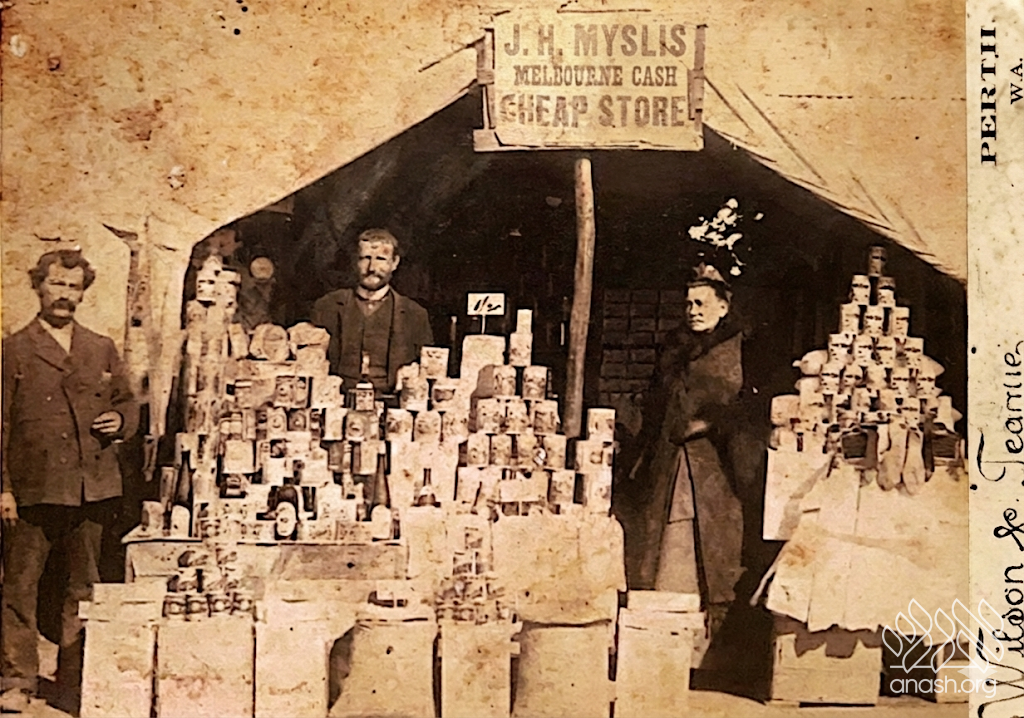


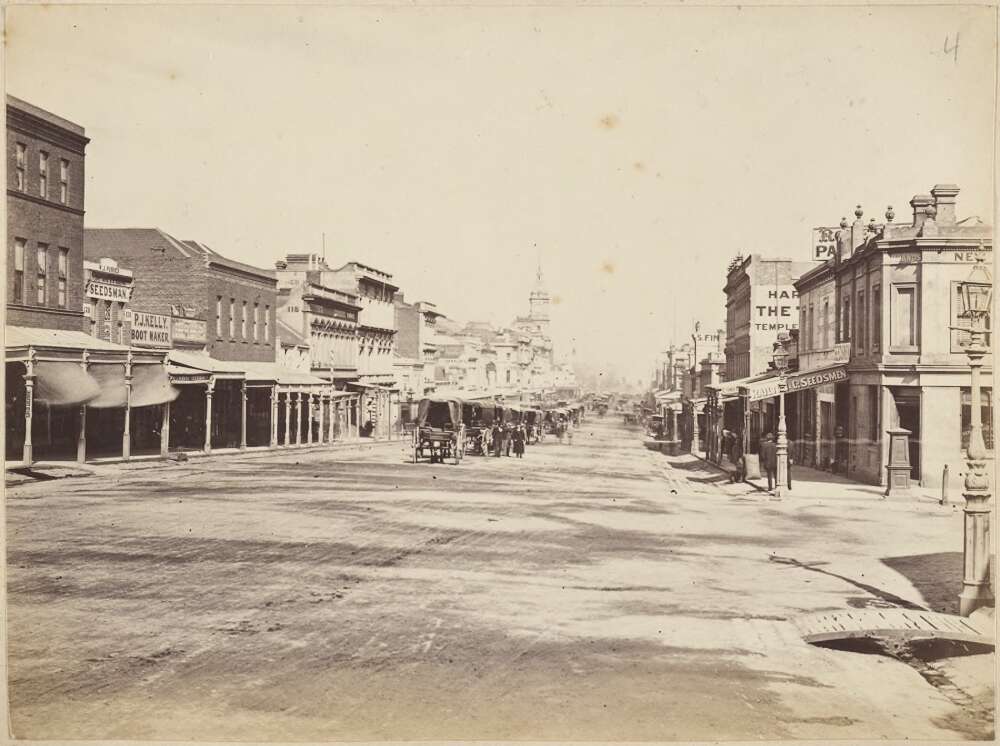


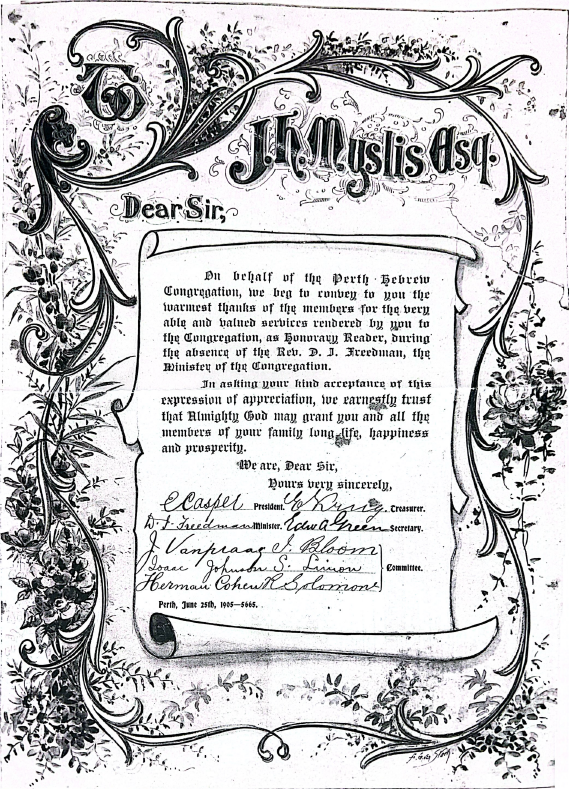


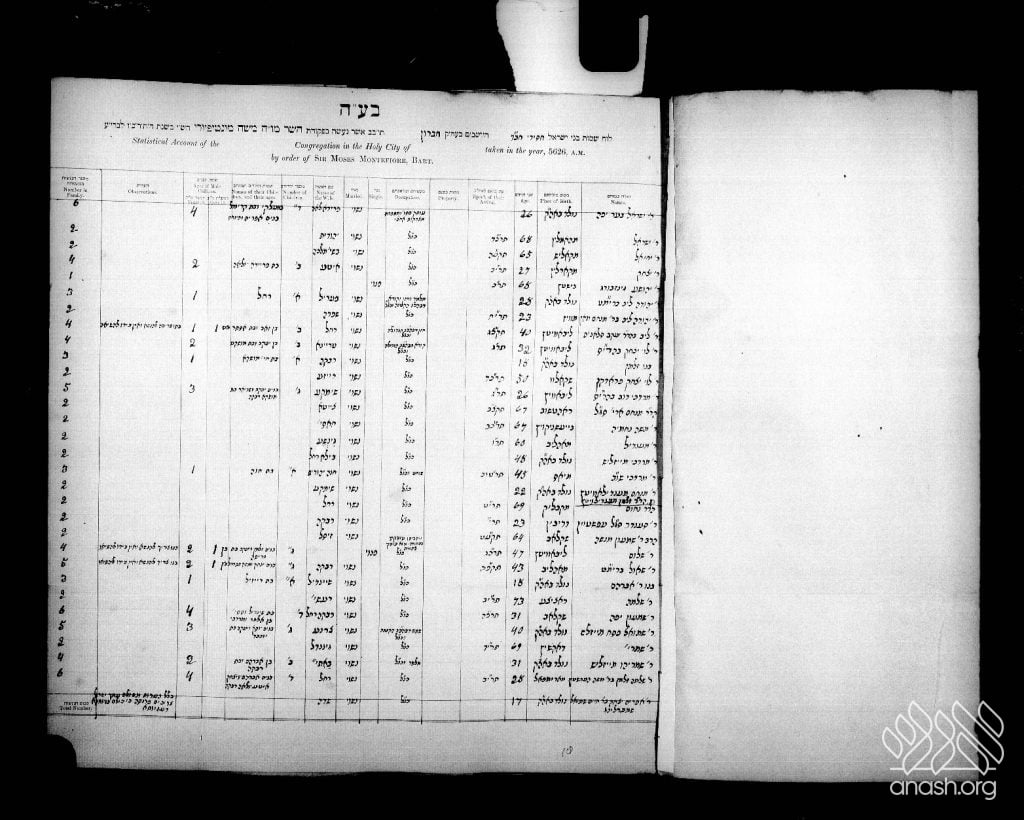
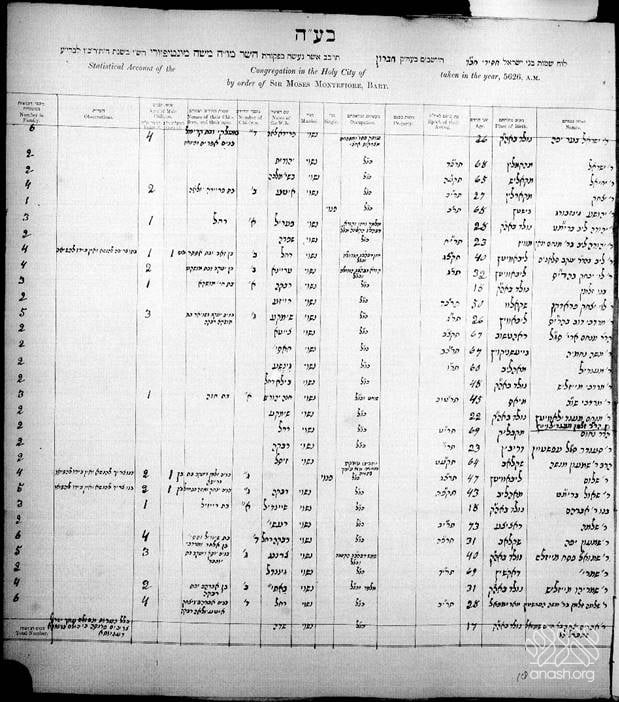
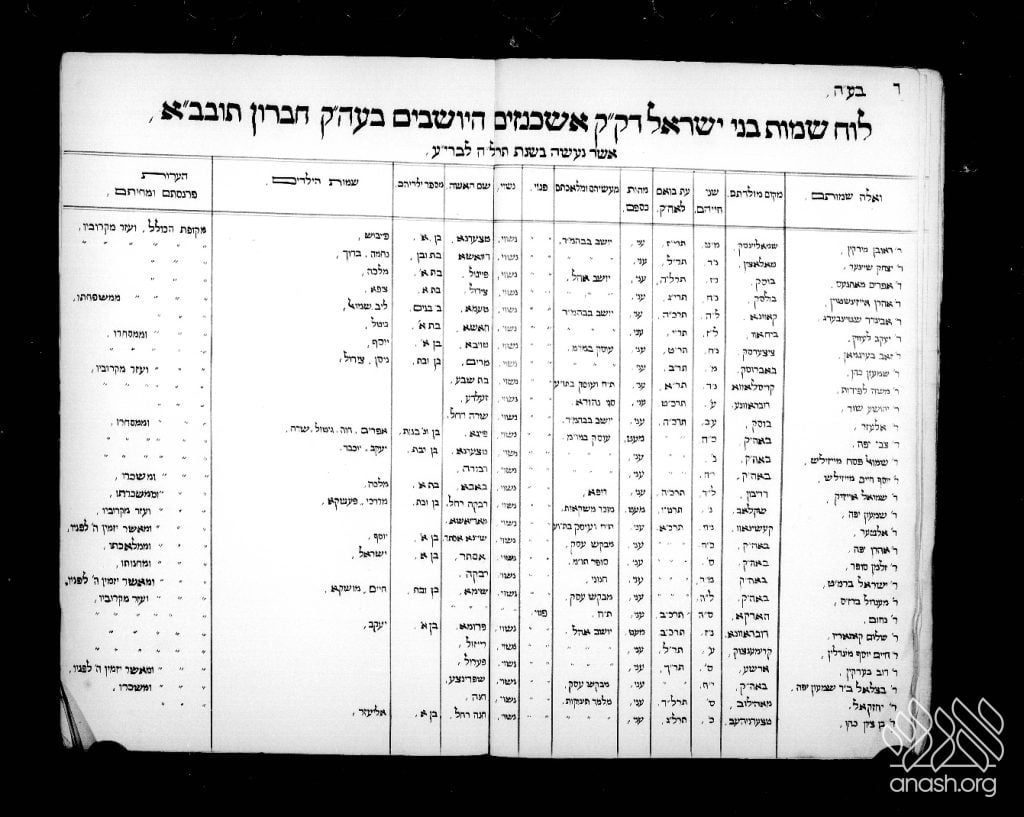
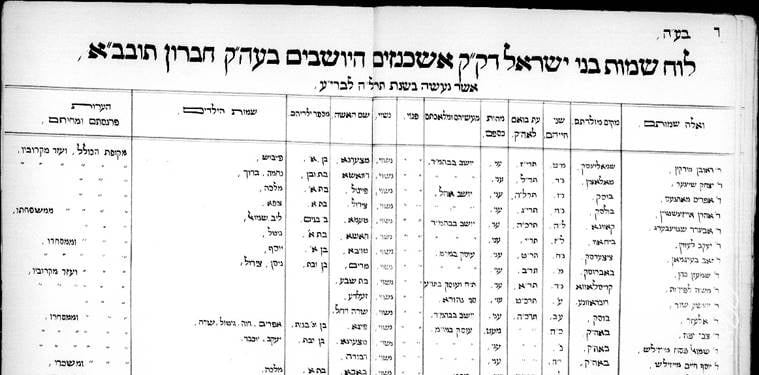
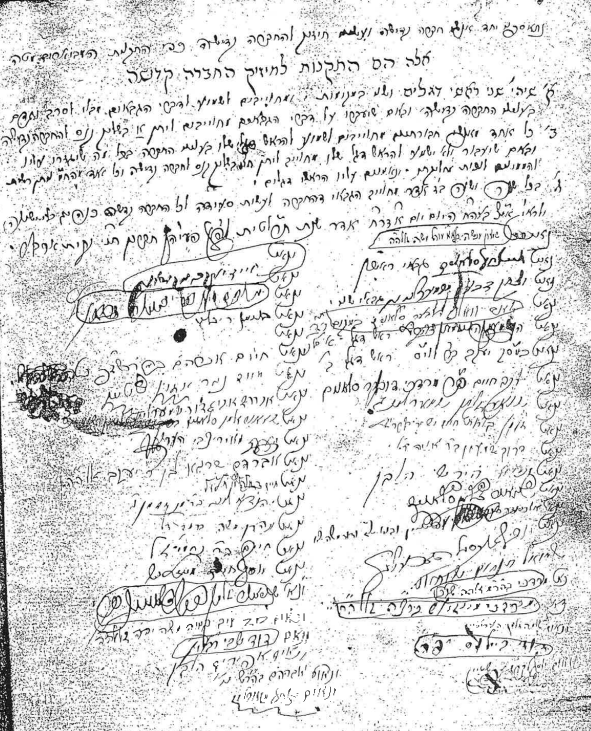
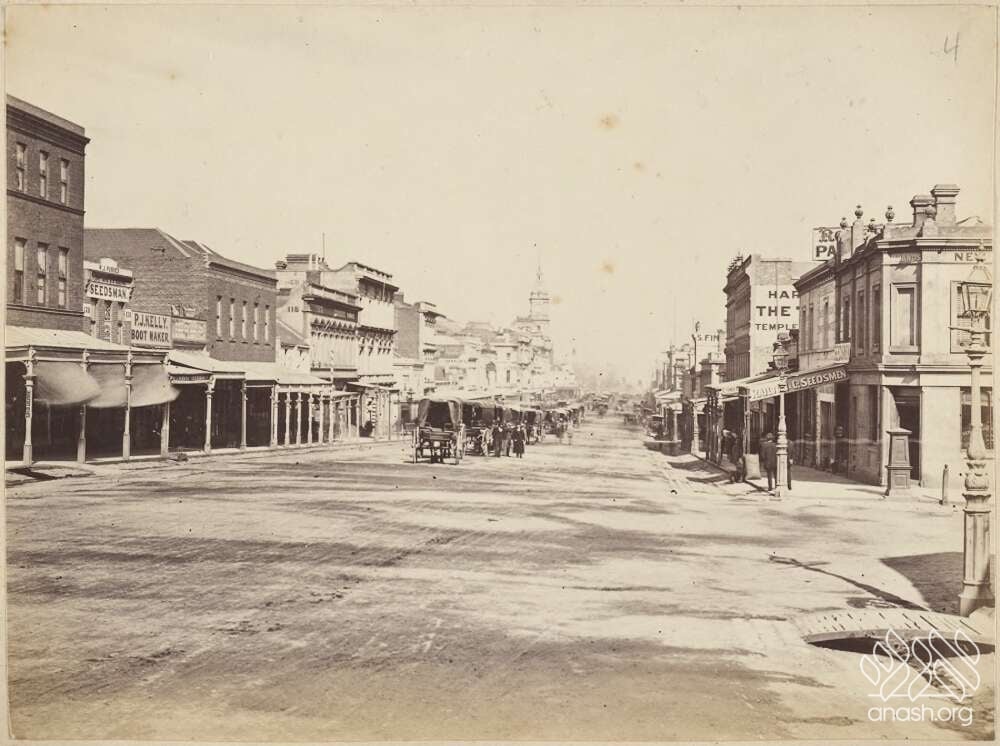
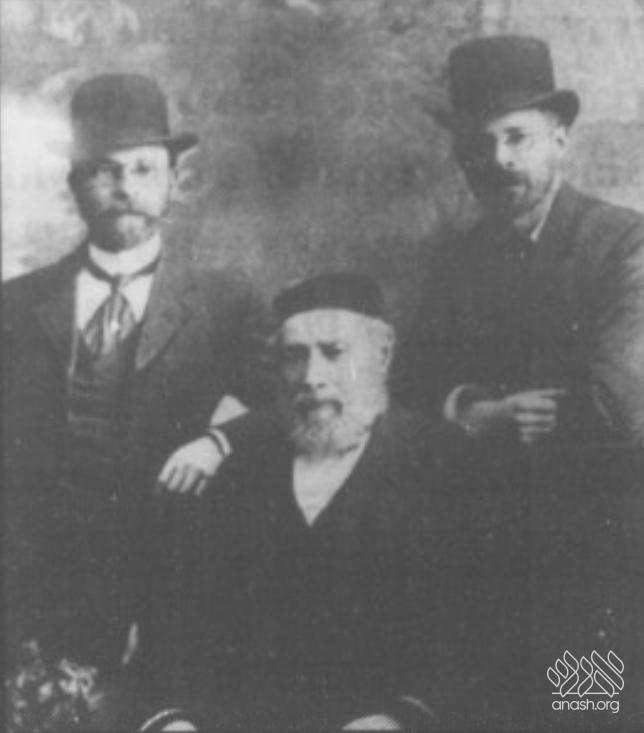
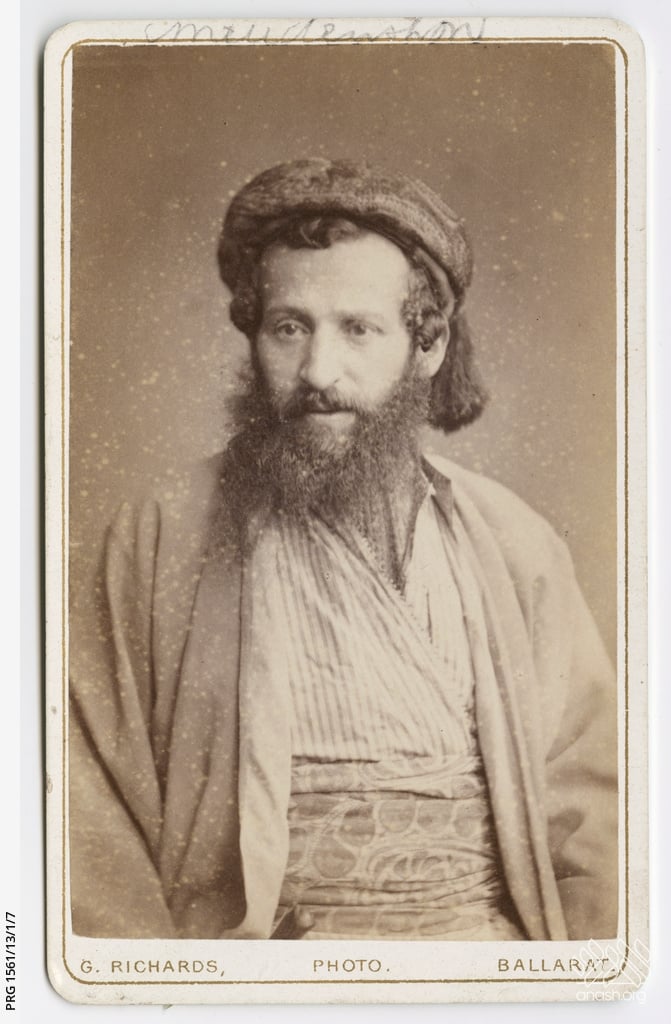
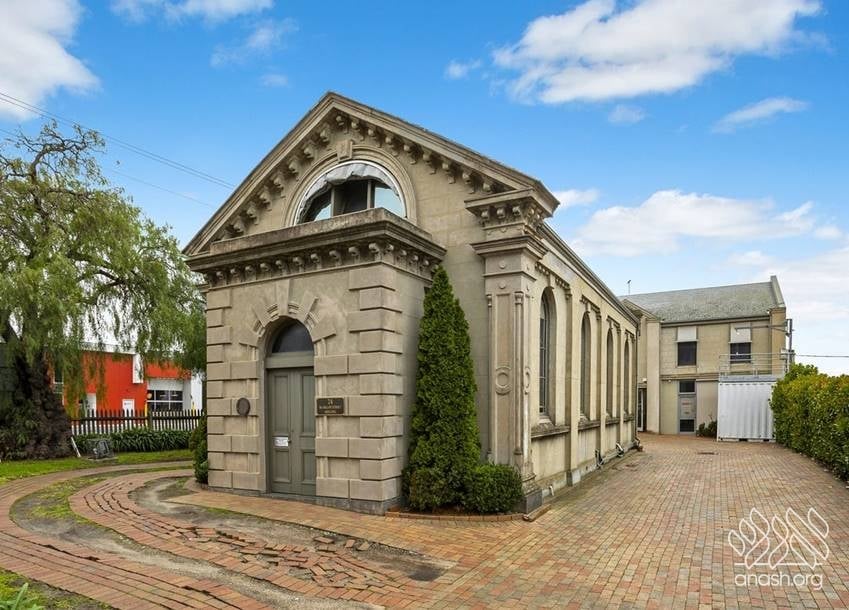
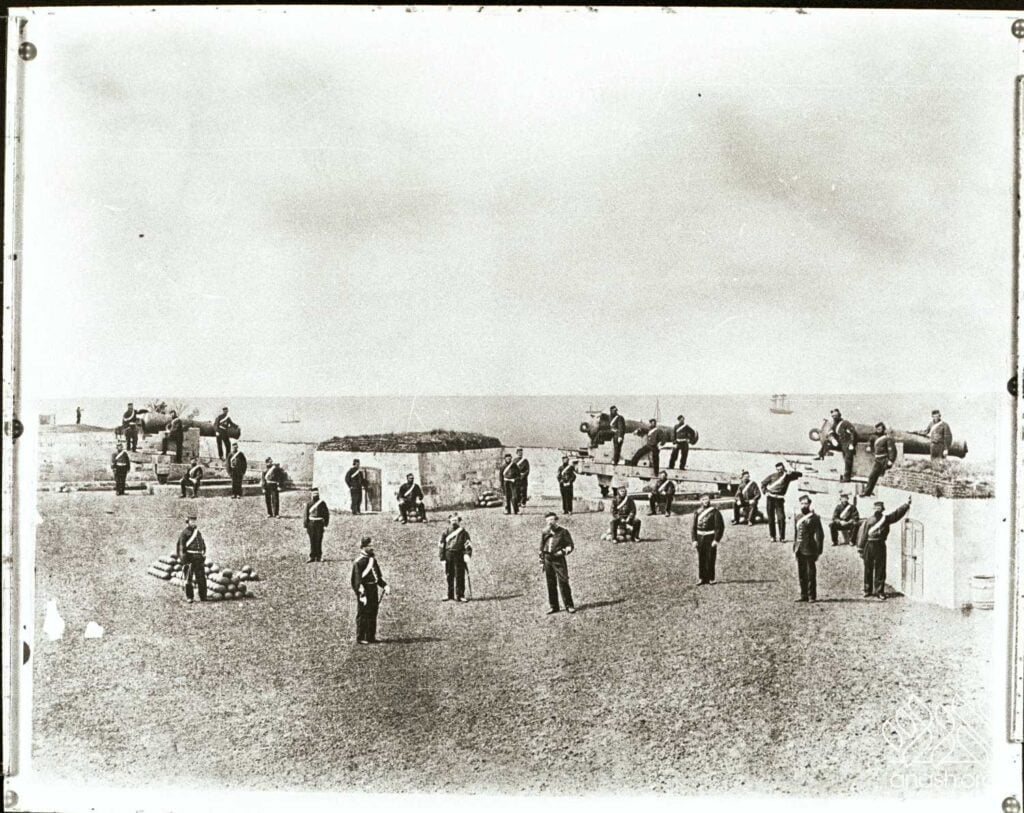
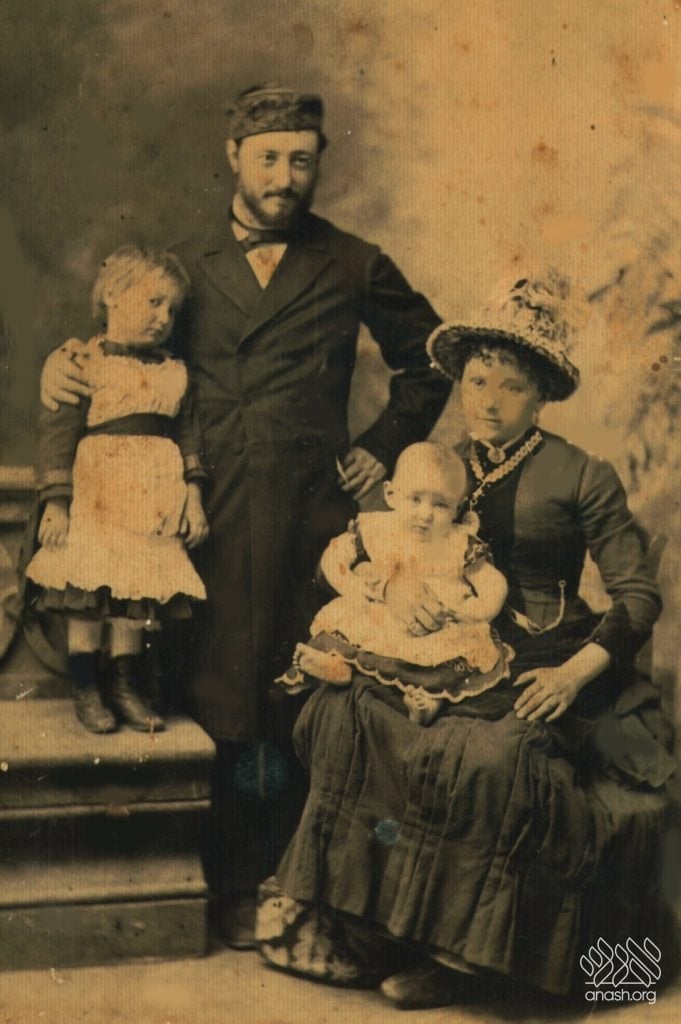
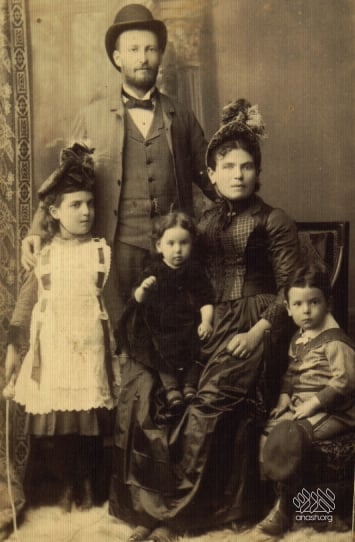
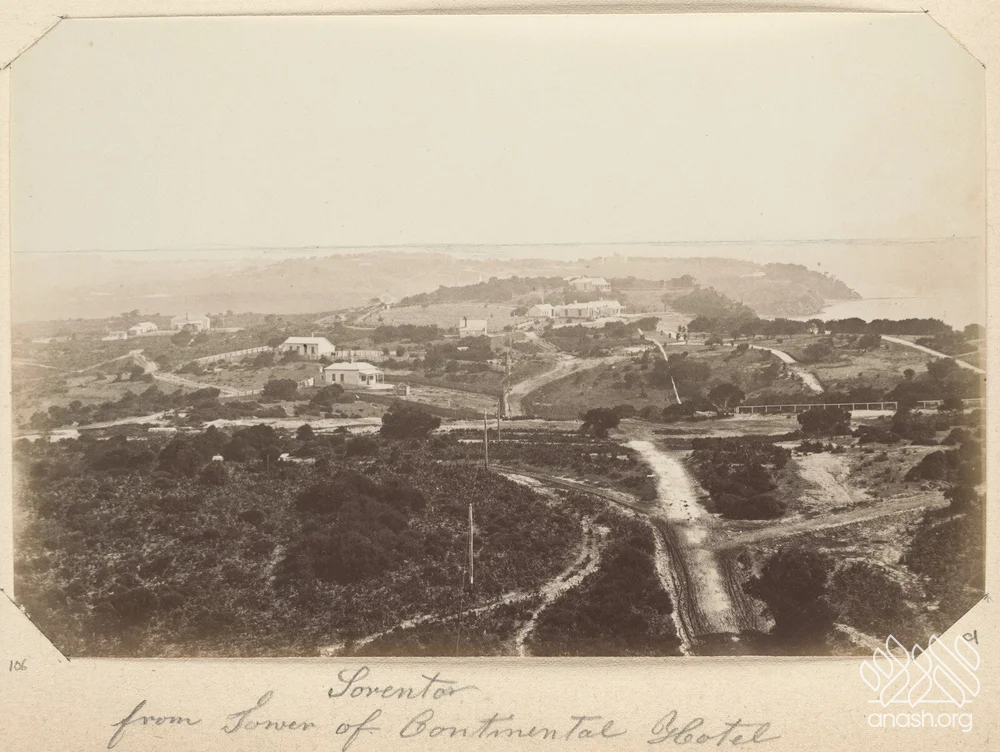
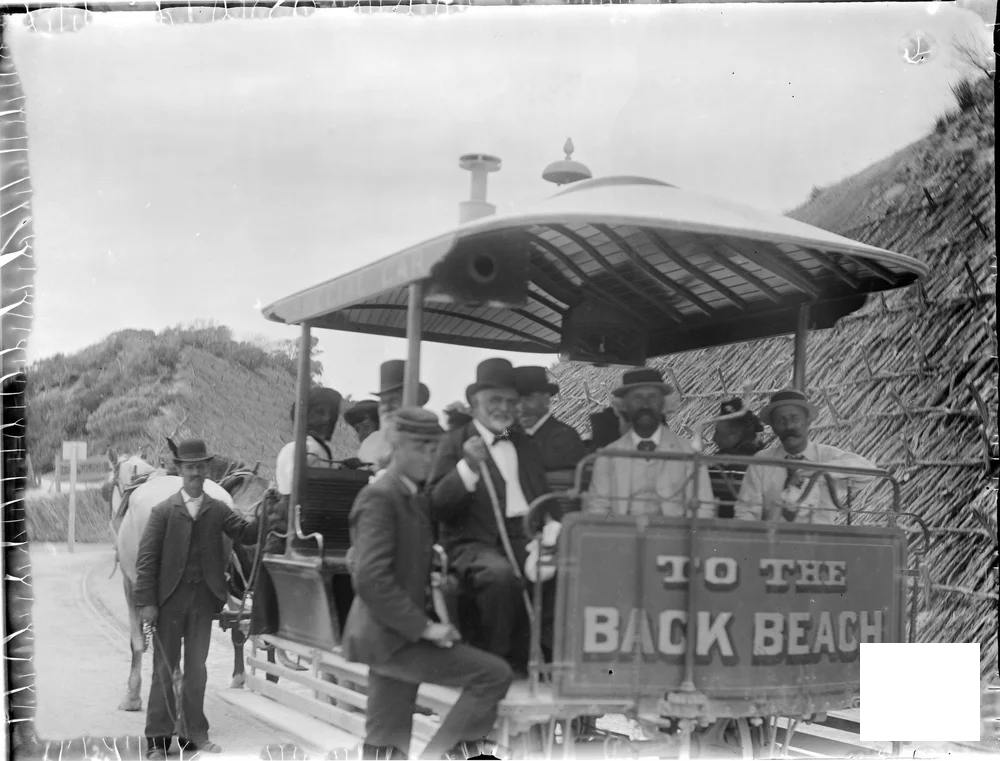
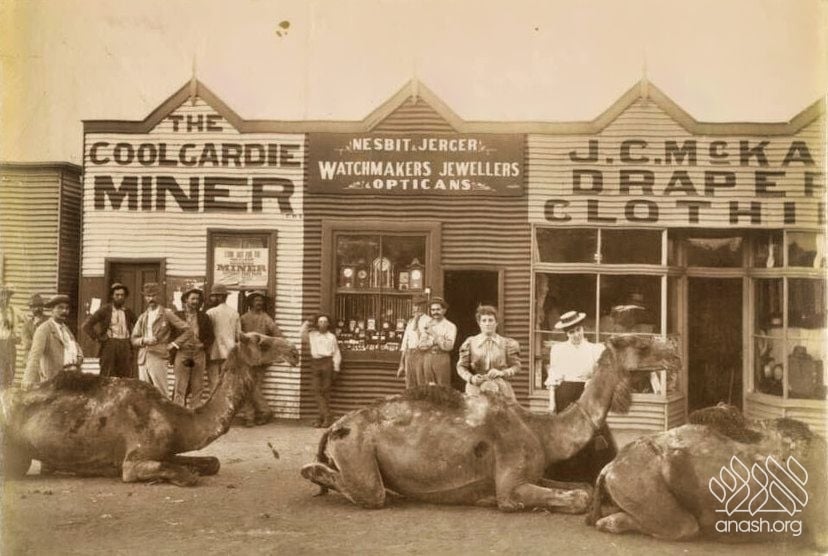
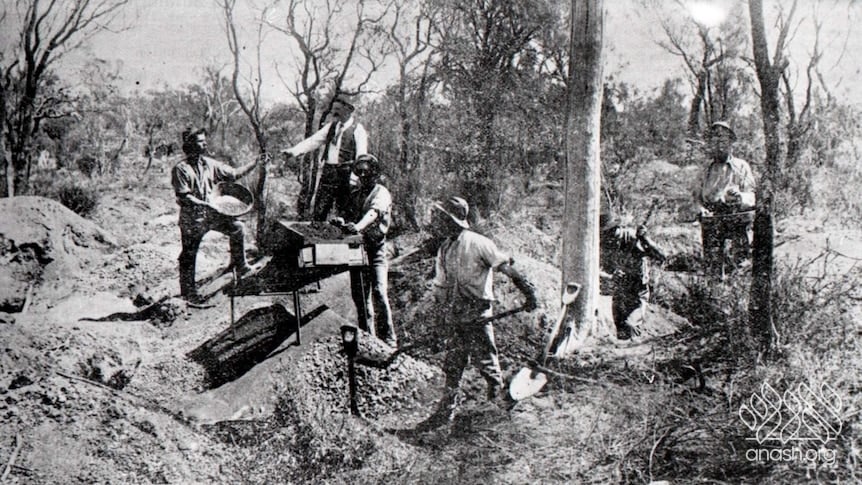
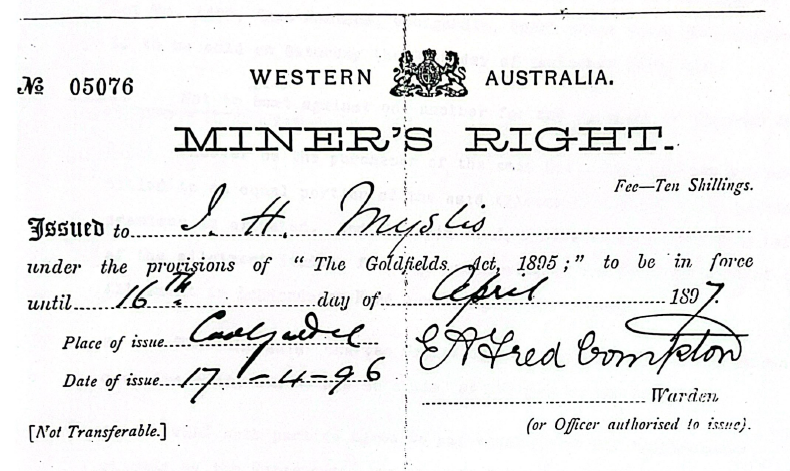
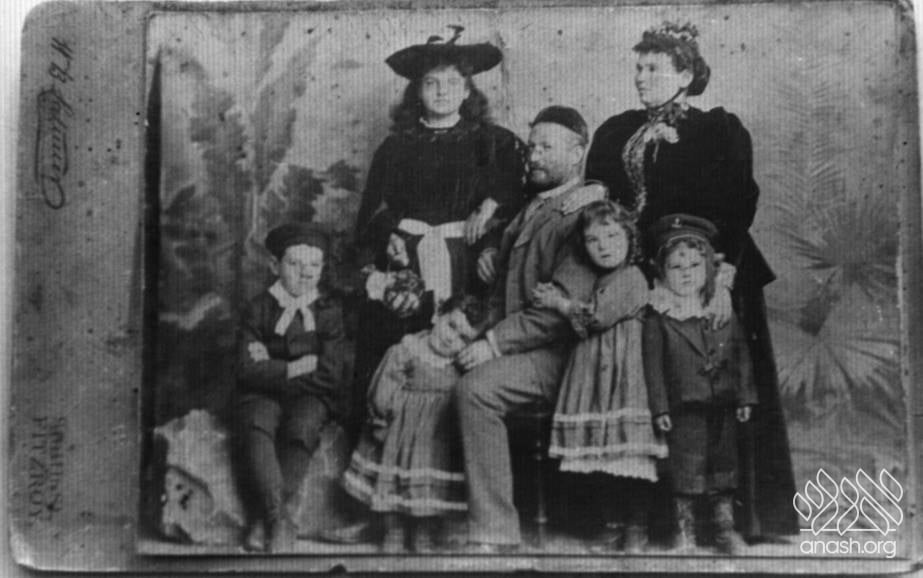
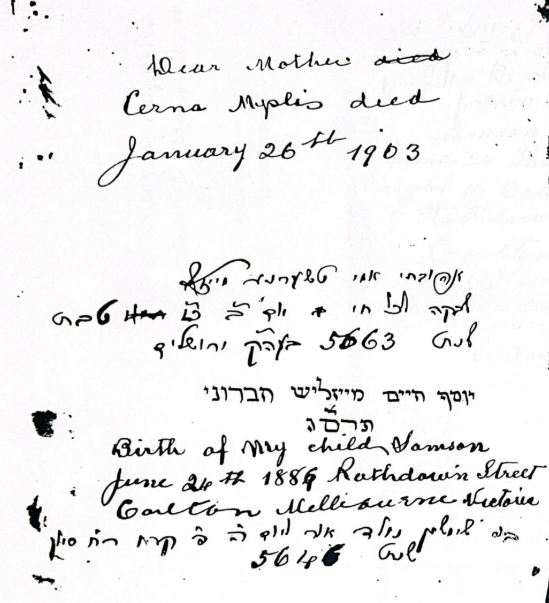
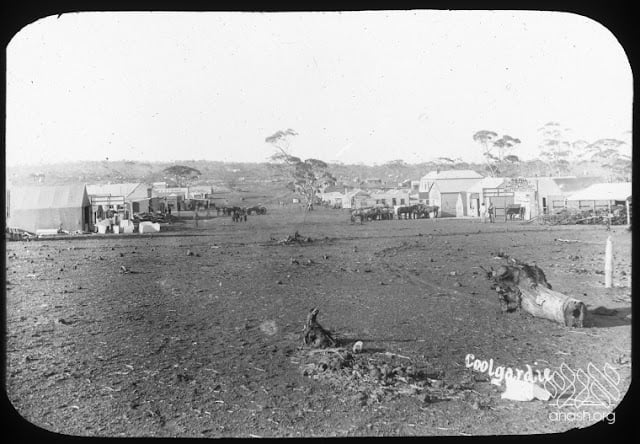
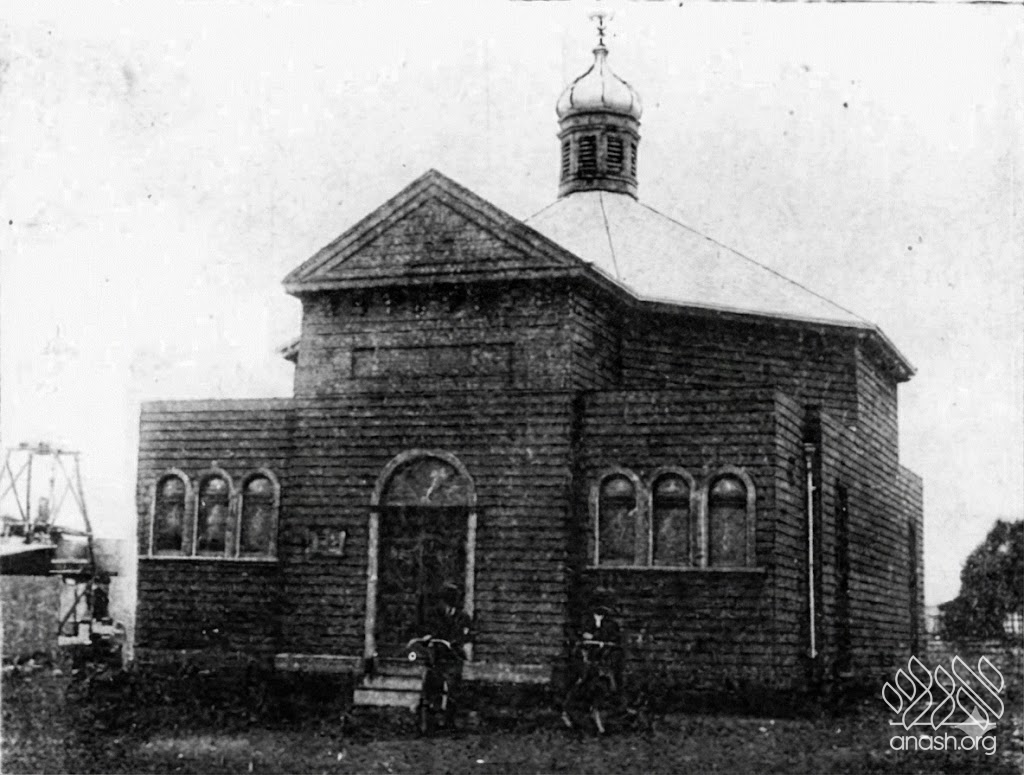
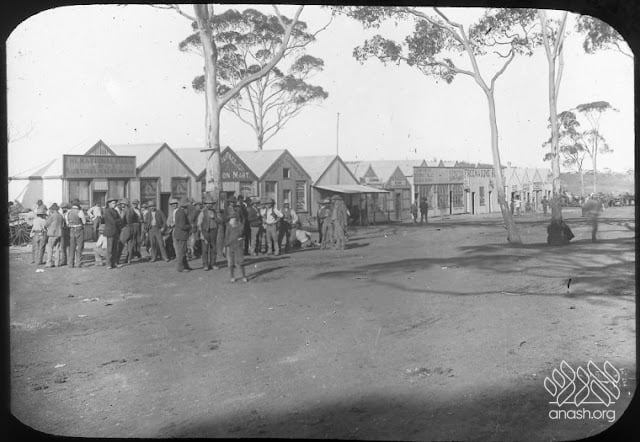
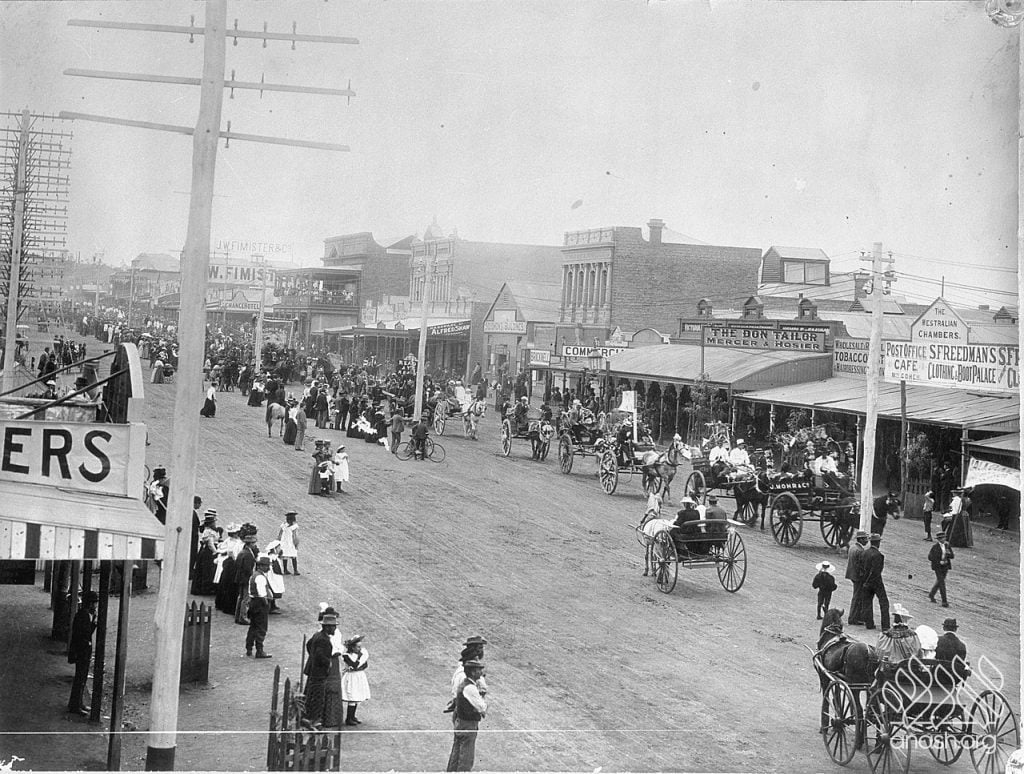
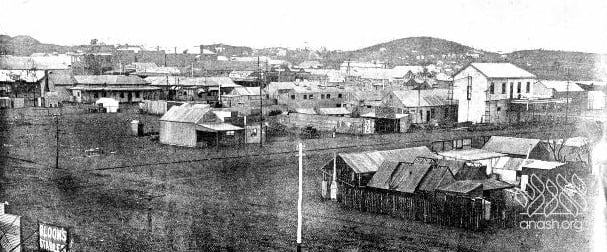
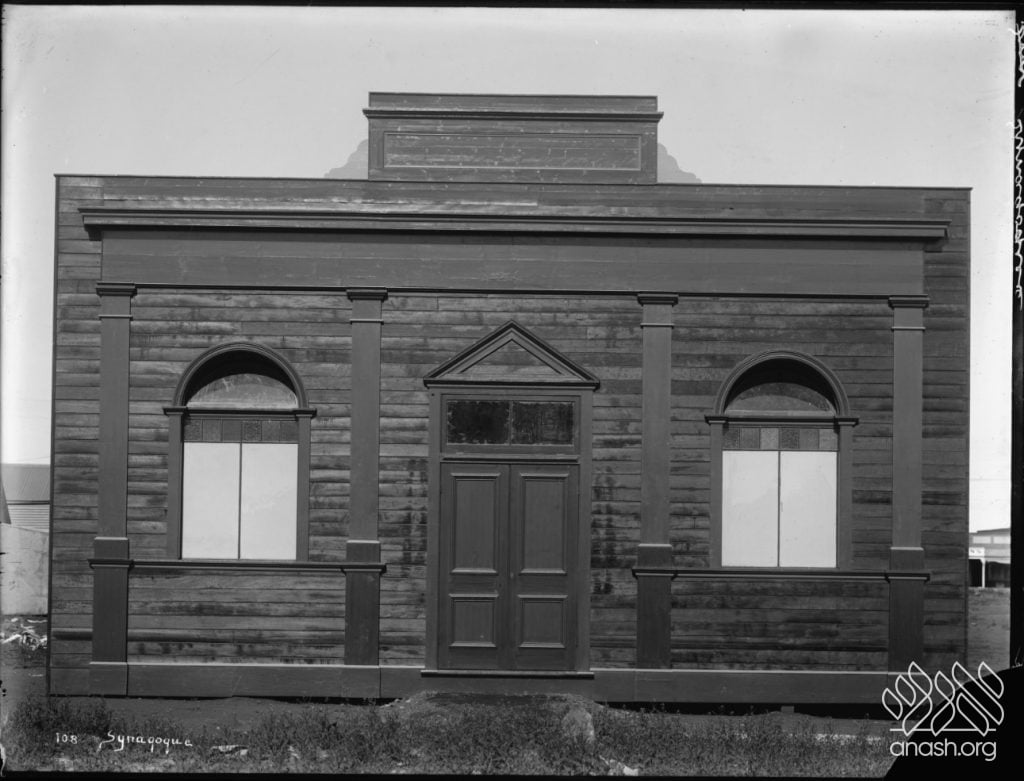
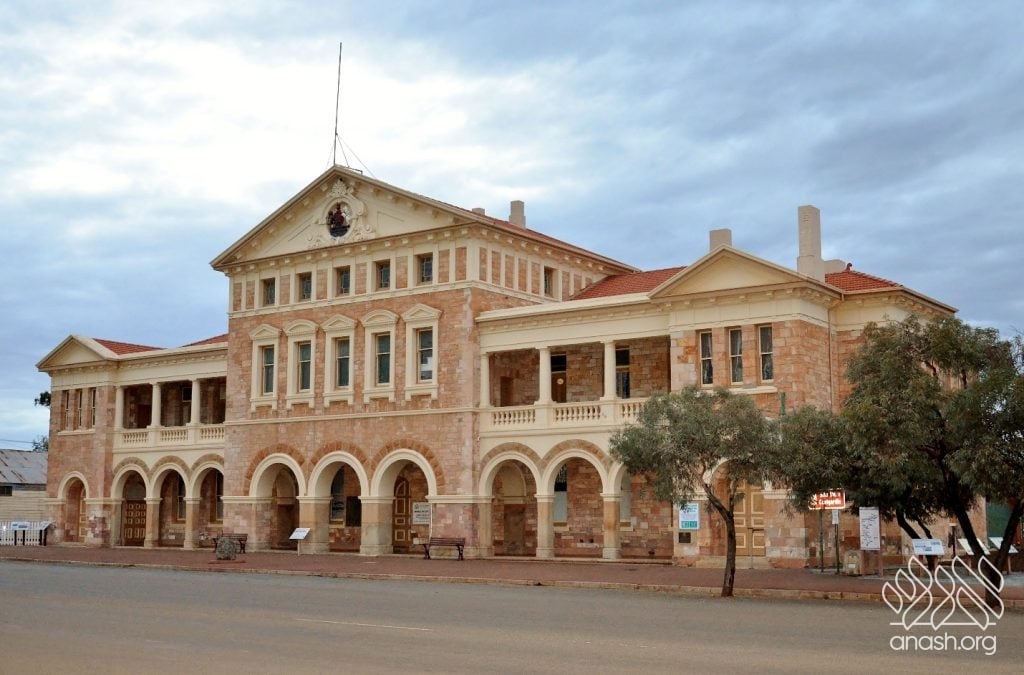
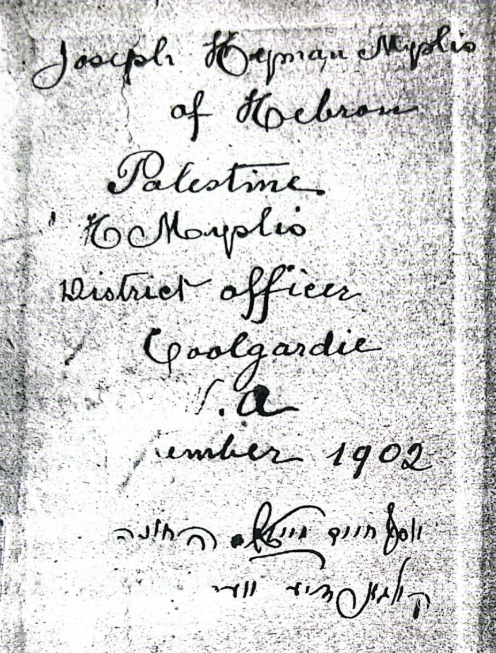
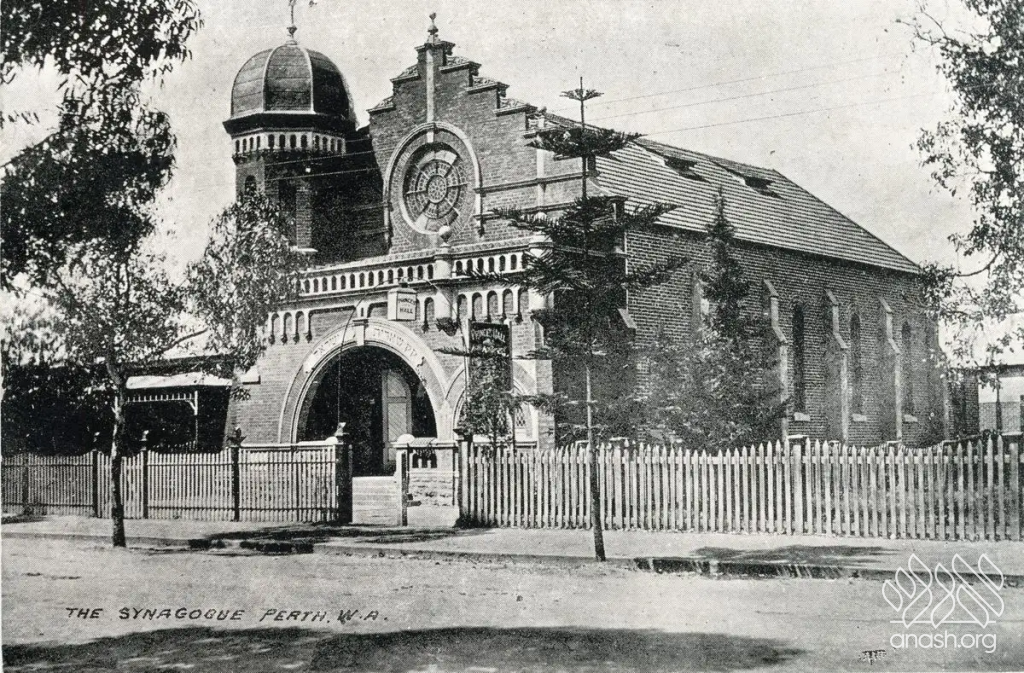
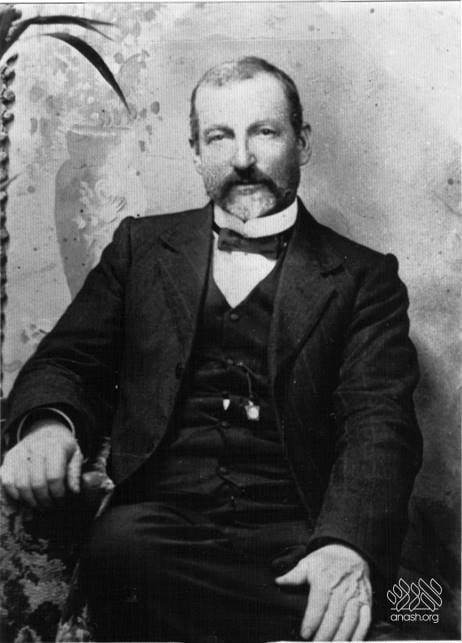
 COMMENTS
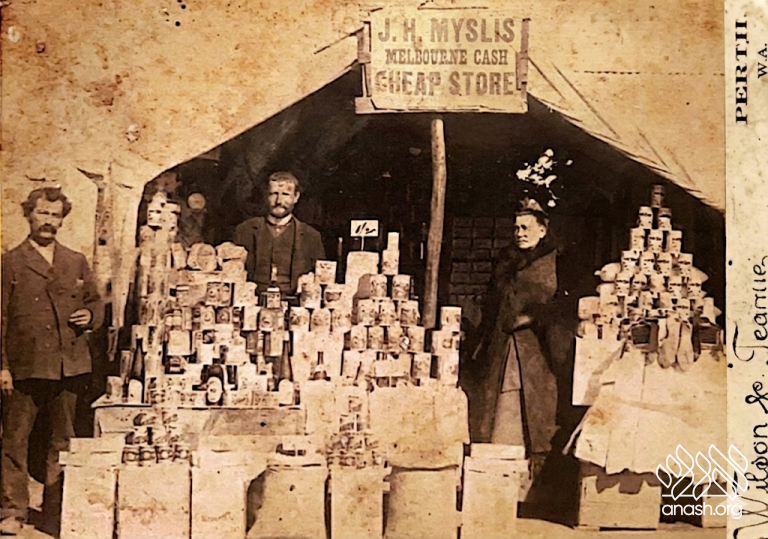


Thank you Anash for this great read.
Thank you so much for such a detailed history of our family. Beautiful!
Thank you for your inspiring and beautifully detailed story of my great grandfather’s life of survival and service to the Jewish and secular communities . The contextual explanation at every stage is valuable in understanding the values of the times. I will share this with Joseph’s many descendants , many of whom followed his lead in their own lives of service to community.
This is such a great read! phenomenal! keep them coming!