




י״א אב ה׳תשפ״ה | August 4, 2025
Wisdom, Greatness, and Holiness: Unique Stories of the Rebbetzin
A fascinating new collection of stories that offer new insights into Rebbetzin Chaya Mushka’s unique and remarkable personality – her holiness, wisdom, sharpness, noble character traits, deep devotion to the Rebbe, Chassidus, and Chassidim, her humility and simplicity, motherly care for the chassidim, and the miracles she performed.
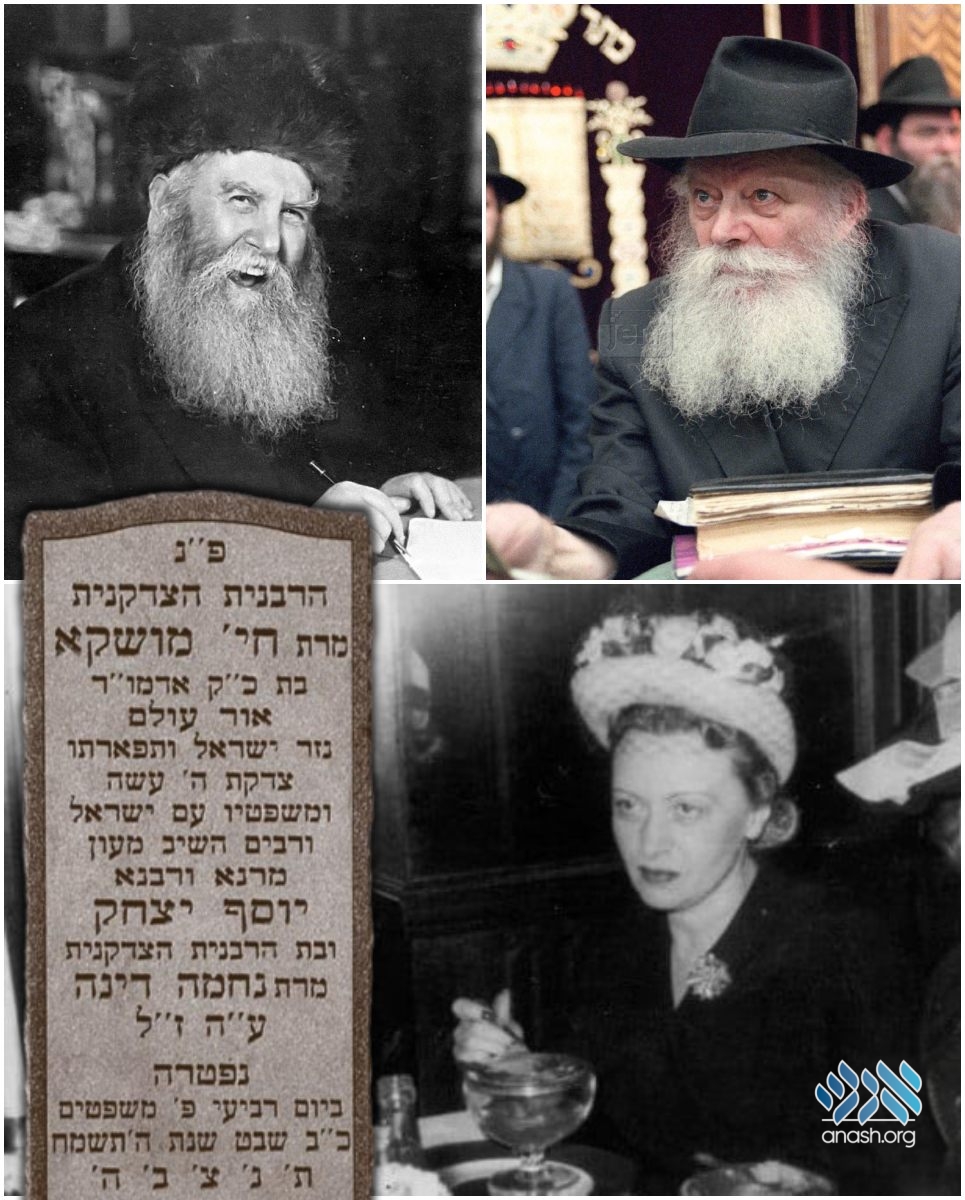
A fascinating new collection of stories that offer new insights into Rebbetzin Chaya Mushka’s unique and remarkable personality – her holiness, wisdom, sharpness, noble character traits, deep devotion to the Rebbe, Chassidus, and Chassidim, her humility and simplicity, motherly care for the chassidim, and the miracles she performed.
By Rabbi Yosef Greenberg – Anchorage, Alaska
The following collection of not-so-famous stories about the Rebbetzin and her unique and remarkable personality was compiled in connection with 98 years since the geulah of the Frierdiker Rebbe on Yud Beis Tammuz 5687.
Part 1
Her Pivotal Role in the Story of Yud Beis Tammuz
The Rebbetzin, Chaya Mushka, played a significant role in the Frierdiker Rebbe’s redemption of 12 Tammuz.
In a letter to the Rebbe dated 23 Cheshvan 5709 (1948), the Chossid Rabbi Zalman Duchman, wrote that when it was decreed that the Frierdiker Rebbe must go into exile for three years in the city of Kostroma – under extremely difficult Mesirus Nefesh conditions – and he needed to choose which of his daughters would accompany him, the Frierdiker Rebbe said that the eldest daughter was too sharp and loud, the youngest daughter was too quiet and shy, but the middle daughter – Rebbetzin Chaya Mushka – was “very good” and most fit to accompany him and assist him in those dire circumstances, especially under the watchful eyes of the secret police (NKVD).
In the Shalsheles Hayachas, edited by the Rebbe and printed at the beginning of Hayom Yom, it is written that Rebbetzin Chaya Mushka was the one who conveyed the news of the redemption by telephone from Kostroma to the her father’s home in Leningrad.
In her testimony during the Seforim Trial, the Rebbetzin recounted that the only time she said the words “without publicity” was when she delivered the message about the redemption, with the instruction that it be “without publicity” so as not to endanger her father’s life, the previous Rebbe. Indeed, all the Chassidim adhered to this, and, as Rabbi Zalman Duchman wrote in his letter, one of the elder Chassidim danced barefoot because there was a strict instruction that the event be “without publicity.”
Interesting to note, in a letter from the Rebbe from 12 Iyar 5708 (1948) to Rabbi Minkowitz, the Rebbe also mentioned this unique “without publicity” instruction. In the letter, the Rebbe writes to him, “I hope you still remember when we were together in the year 5687 (1927) at the farbrengen “without publicity” in the corridor in Machovaya” (=street address of the previous Rebbe’s house).
A Life of True Mesirus Nefesh
In that same testimony during the Seforim Trial, the Rebbetzin explained that the unique mission of her father, the Rebbe Rayatz, was actual mesirus nefesh to maintain yiddishkeit in Russia, especially by disseminating seforim for children in the underground chederim so they could learn Torah despite the terrible persecution. In fact, like her father, mesirus nefesh is the trait that also characterizes the Rebbetzin personality and life. A story is told during the famine years in Russia, under the Communists, that the Rebbetzin would secretly go every night to leave a sack of bread near an underground yeshiva building so the students would not go hungry and could continue learning Torah secretly.
On the first yahrtzeit of Rebbetzin Chaya Mushka, 22 Shevat 5749, the Rebbe spoke about her and said that throughout her life, her service of Hashem was with true self-sacrifice. In the talk, the Rebbe related that when the Rebbetzin was very young, her teacher wanted to avoid sharing with her any scary stories of self-sacrifice in order to not traumatize her. But her father, the Frierdiker Rebbe, said the opposite. He told her teacher that a Jewish child should begin their education precisely with stories of self-sacrifice, as this is what Jewish children truly connect with.
The Rebbe concluded that indeed the Rebbetzin’s upbringing by her father was strongly infused with the values of mesirus nefesh, and throughout her entire life, not only that her service to Hashem was in the most perfect way possible, even moreso, she excelled in her service to Hashem with absolute mesirus nefesh!
Throughout her life, the Rebbetzin dedicated herself with self-sacrifice to her grandfather, the Rebbe Rashab, with whom she was very close; to her father, the Frierdiker Rebbe, who held her in great esteem; and later to her husband, the Rebbe. (When the Rebbe Rashab was very sick, before he passed away, he tried to keep it a secret from the entire family, and only shared his medical condition with the Rebbetzin, who nursed him until his situation deteriorated to a point that he was not able to hide it any longer).
Her dedication and self-sacrifice for the Rebbe are also illustrated in several letters she wrote before and after her wedding to her childhood friend, Mrs. Necha Rivkin. In a letter before the wedding, she writes about her excitement about her upcoming wedding, how happy she is that her last name will remain “Schneerson”, and that she will be moving with the Rebbe to Berlin, as in Riga, she feels as if she is almost disconnected from life. (The Rebbetzin writes in previous letters to her friend that she found Riga to be a backward, unappealing, and unfriendly city, and how much she would love to go back to Russia and be with the Chassidim there, despite the hardship. Berlin was at the time one of the most sophisticated cities in Europe.)
On the other hand, in a letter to her friend dated the 5th of Shevat, 5689, (1/16/1929), she expressed that she was very heartbroken from the fact that she was leaving her parents’ home in Riga, Latvia, to move with the Rebbe to Berlin. She wrote that her father, the previous Rebbe, had just moved to Riga and had not yet established his headquarters there. The family was very lonely, the house was quiet, empty, and sad, and she was heartbroken to leave her parents behind, but she could not do anything about it, as it was totally not up to her.
The Rebbetzin made the sacrifice to follow the Rebbe and was a full partner in his decision to move to Berlin, to continue his studies in Torah and the sciences, in preparation for his mission as the Rebbe of the Dor Hash’vi, which would have to combat the notion and establish that science cannot be a threat and contradiction to Torah.
Her mesirus nefesh for the Rebbe and all the Chassidim continued throughout the Rebbe’s entire nesius. One of many stories that illustrate her great dedication:
The Bostoner Rebbe, Rabbi Moshe Halevi Horowitz, lived in Crown Heights for many years (before moving to Borough Park) at 1310 President Street. In 5716 (1956), the Rebbe moved to 1304 President Street, right next door to the Bostoner Rebbe’s house.
The Bostoner Rebbe’s house had a small beis medrash, as was common among many rabbonim and rebbes in the U.S. The Bostoner Rebbe’s son-in-law related that on Shabbos and Yomim Tovim, the Rebbetzin requested the beis medrash window be open so she could hear the davening and Krias Hatorah.
Rabbi Meir Harlig confirmed this and added that when the Rebbe still lived on New York Avenue, after davening on Rosh Hashana, he would return home and blow the shofar for the Rebbetzin. But after they moved to President Street, near that beis medrash, the Rebbe stopped blowing the shofar for her because she could hear it from the beis medrash window. When the Bostoner Rebbe moved away from Crown Heights, one of the Chassidim would blow the shofar in the Rebbe’s house for the Rebbetzin.
Mesirus Nefesh and Protection of the Rebbe
The Bostoner Rebbe’s son-in-law recounted a story that was always told in the Bostoner Rebbe’s household about the Rebbetzin:
Once, when the Rebbetzin returned home, a thief tried to rob her. The Rebbetzin screamed, and the Horowitz family immediately came outside. At that moment, the Rebbe, who was home, opened the door to see what was happening. But as soon as the Rebbetzin saw the Rebbe, she seemed to forget she was in the middle of being robbed and firmly told the Rebbe that under no circumstances should he come out to help her – and requested that he immediately go inside the house!
In the Bostoner Rebbe’s family, this story was always told as an illustration of the greatness and righteousness of the Rebbetzin, who refused to have her great husband, the Rebbe, lower himself to deal with an assailant, despite the danger she was in!
The Rebbes’ Esteem for the Rebbetzin
The enormous esteem the Frierdiker Rebbe had for his daughter, the Rebbetzin, can be learned from his famous letter to the Rebbe on 5 Elul 5689 (during their first year of marriage), in which he wrote, “Look carefully at the fine pearl that Hashem has given you, and may Hashem grant you wisdom, understanding, and knowledge to truly comprehend this matter.”
On 26 Tevet 5690, the Frierdiker Rebbe asked the Rebbe: “And regarding the fine pearl gift, do you yet know my intention, or have you already grasped my riddle?” On 18 Shevat 5690, the Rebbe replied: “I have not yet understood the nature and essence of the fine pearl.”
On the Rebbetzin’s birthday, 25 Adar 5690, the Frierdiker Rebbe answered: “The fine pearl Hashem has given you is your honored wife, may she live – and this is what I meant in my letters – that she will be endowed with the wisdom of a woman who builds her home upon the foundations of holiness, and that your home should be open wide to all the good with which our holy ancestors blessed us.”
In 1924, the Rebbe Rayatz prepared to leave Leningrad to spend some time in the town of Luga. Before his departure, he appointed Rebbetzin Chaya Moshka with a power of attorney to receive money and mail on his behalf. The urgency for this came as a result of the fact that the Rebbe Rayatz was responsible for financing dozens of religious institutions throughout Russia, led by the network of ‘Tomchei Temimim’ yeshivots that operated underground from the terror of the communist regime. This complex operation, which required receiving huge sums of money and distributing them, had to be carried out by an authoritative, first-rate trained person as well as a trustworthy, clever, and critical thinker. It was the Rebbetzin Chaya Moshka who was chosen to be in charge of her father’s, the Rebbe Rayatz, important treasury.
It is no wonder the trust and the great esteem that her father had for her, as Rabbi Zalman Guraria, who was very close to the previous Rebbe’s family, said about the Rebbetzin, that she inherited her father’s “Mochin” (intelligence) and piercing eyes and that she was on the holy level of a “Rebbe” in her own rights.
The tremendous respect the three Rebbeim, the Rebbe Rashab, the Frierdiker Rebbe, and the Rebbe, had for the Rebbetzin is evident from the fact that all three Rebbes discussed something she said at age five. It was on the occasion of the Seventh Day of Pesach when the Rebbe Rashab overheard how she argued with her older sister, saying that the Yom Tov of Shvi’i Shel Pesach is different from all other Yomim Tovim, proof being that the bracha of Shehecheyanu is not recited then. All three Rebbeim shared this story at their farbrengens.
The Rebbe Rashab hinted that he instituted the Chabad custom of drinking four cups of wine at Seudas Moshiach as a result of this episode. The Rebbe explained her words on three different occasions, clarifying that the well-known answer of the Tzemach Tzedek to a different question asked by the Rebbe Rashab – that Shvi’i Shel Pesach is a Yom Tov celebrated on the future coming of Moshiach – is in fact also the explanation that answers the Rebbetzin’s deep question. On one occasion, the Rebbe said that the Rebbeim would mention the question every Shvi’i Shel Pesach to remind themselves of the pain of golus and the yearning for geulah. The only source found for this custom are these words that the Rebbetzin said when she was five years old!
The Rebbe’s great appreciation for the Rebbetzin’s customs was expressed in a farbrengen in 5739 (1979), when the Rebbe spoke about the Rema’s mention of a minhag to draw water from the well on Motzei Shabbos, because Miriam’s well returns on Motzei Shabbos and whoever encounters water from Miriam’s well is immediately healed of all ailments. The Rema writes that this custom is not practiced. However, the Magen Avraham quotes the Rema but implies that there is room for the custom.
The Rebbe concluded that he never saw this minhag practiced “by my ‘akeres habayis’, nor by my mother-in-law, nor by my mother-in-law’s mother-in-law,” and therefore the Rebbe made no ruling on the matter as a result of the Rebbetzin’s minhag.
Halachic Knowledge and Meticulousness
The Shlucha Mrs. Vivi Deren, related that she heard from her grandfather, the well-known chossid Rabbi Shlomo Aharon Kazarnovsky, that the Rebbetzin was well-versed in the Shulchan Aruch of the Alter Rebbe. (It should be noted that when Rebbetzin Chana moved into her home on Kingston Avenue, the Rebbe told her that if she ever had a halachic question in the kitchen, she should ask “by Shlomo Aharon” – the above-mentioned Rabbi Kazarnovsky).
It’s worth noting what the Rebbe said at a farbrengen in 5750, that there were righteous women in all generations who were knowledgeable and learned in Torah Sheba’al Peh, and concluded: “And in this spirit, the Frierdiker Rebbe behaved regarding the education of his daughters.”
The Unique Tznius of the Rebbetzin
It is known that our Rebbetzin was meticulous in all matters of halacha and especially in matters of modesty.
When the Rebbe and Rebbetzin lived in Paris, a chossid visited the Rebbe’s home during the day when the Rebbe was not there. The Rebbetzin opened the door wide, and since it was cold outside, all the cold air came in. When he inquired why she did not close the door, she answered, “Did you forget about ‘yichud’?”
In 5707 (1947), when the Rebbe traveled to France to greet his mother, Rebbetzin Chana who just arrived from Russia, he stayed in Paris for about three months to arrange his mother’s visa to the U.S. During that time, Mrs. Teibel Lipsker, the wife of Reb Yankel Lipsker, prepared the Rebbe’s meals and Reb Yankel used to bring the meals to the Rebbe. Once, in a conversation the Rebbe had with Reb Yankel regarding the state of Yiddishkeit in Paris in general and Anash in particular, the Rebbe told him that it would be worthwhile for him to buy a nice sheitel for his wife, Mrs. Lipsker, to show women who were embarrassed to cover their hair in a modern country like France that it’s possible to wear a beautiful sheitel and still properly cover one’s hair.
The Rebbe gave him the address of a sheitel shop in Paris and said, “The place where my wife, the Rebbetzin, used to go” – meaning the shop where the Rebbetzin bought her sheitels during the years the Rebbe and Rebbetzin lived in Paris in the 1930s.
The Rebbe added that although it’s an upscale store and the wigs there are very expensive, it is well worth it because the sheitels are exceptionally beautiful. This, the Rebbe said, would have an impact on Jewish women in France – and even on some of the women of Anash – for whom wearing a scarf had become a difficult challenge upon moving to a modern country like France. Certainly, they would be happy to wear a beautiful wig.
Reb Yankel Lipsker recounts that he followed the Rebbe’s instructions and that his wife went ahead bought a sheitel in that shop. He added that the sheitel was so beautiful, and since Anash were not used to this, some criticized him, thinking his wife was going out without a head covering, r”l. His wife would then show other women that it was indeed a wig, and she encouraged them to buy a similar one for themselves. (As told by his grandson, Rabbi Mendel Lipsker from California.)
(Incidentally, it’s worth adding that two chassidim from France, Rabbi Daniel Sander and Rabbi Massoud Ben Shushan, had similar questions about wearing a yarmulka at their workplaces, like banks, etc. The Rebbe answered Rabbi Massoud: “Regarding wearing a kippah (the Rebbe said ‘kippah’ in French), you should know that in the time of Louis XIV (King of France) people wore foreign wigs on their heads, so choose a foreign wig that matches your hair color,” and wear that instead of a kippah. To Rabbi Daniel Sander, the Rebbe advised he should purchase a wig and even recommended a store in Paris. Told by Rabbi Shmuel Lubetsky.)
After they immigrated to the United States, the Lipsker family was close to the Rebbetzin and merited to visit her home. Rabbi Mendel Lipsker relates that when he was 11 years old, he once went to the Rebbe’s house to bring something for the Rebbetzin with his sister. They knocked, but she didn’t answer. Suddenly, they heard the window open and saw the Rebbetzin in a way they had never seen her before. She was wearing a headscarf that covered her entire forehead up to her eyes. The Rebbetzin apologized, saying she was not dressed to receive visitors, and asked them to return in about an hour. When they returned, the Rebbetzin was dressed with her wig as was her custom.
Mrs. Zissi Klein merited to be the hairdresser for Rebbetzin Chana (the Rebbe’s mother), Rebbetzin Nechama Dina (the Rebbetzin’s mother), and Rebbetzin Chaya Mushka in the 1940s. Mrs. Klein described the luxurious custom-made wigs of that era, sewn hair by hair, which today would cost ten thousand dollars or more. Her granddaughter, Mrs. Chani Friedman, recounted that when she got a custom wig for her wedding, Mrs. Klein laughed and remarked on how different it was from the earlier custom-made wigs, describing the meticulous hair-by-hair sewing that looked identical to the person’s natural hair. Mrs. Klein also related that some of the Rebbetzins often wore an additional covering on top of the shaitel, such as a hat or a headscarf, a minhag unique to the Rebbe’s household (as seen in photos of Rebbetzin Chana and Rebbetzin Chaya Mushka).
In later years, Mrs. Freida Kugel had the merit to be the Rebbetzin’s wig stylist for many years. Every few years, she would come to the Rebbe’s home on President Street to prepare a new wig for the Rebbetzin. She related that the wigs the Rebbetzin ordered were very high-quality (usually in gray or blonde shades).
In an interview with the N’shei Chabad Newsletter (February 2002), she said that the Rebbetzin used the same style of wig from 5727 (1967) until her passing on 22 Shevat 5748 (1988). Mrs. Kugel mentioned that the Rebbetzin had a very high hairline – what she called in Yiddish a hecher shtern, and that on women with such a high forehead, a wig sits very naturally and looks almost exactly like real hair.
One year, she asked the Rebbetzin for permission to bring an assistant with her to the Rebbe’s home to help style the wig, and the Rebbetzin agreed. From then on, every time she came, she would call beforehand to ask permission to bring her assistant.
One time, in the early 1980s, she arrived at the Rebbe’s home with her assistant without prior permission. She immediately noticed a look of disapproval on the Rebbetzin’s face, and it was the last time she was invited to the Rebbe’s home. From then on, the Rebbetzin sent her wigs to Mrs. Kugel’s salon for washing and styling, usually through one of the Rebbe’s household aides or sometimes through one of the secretaries.
There was once a humorous incident when the Rebbetzin gave one of the secretaries two bags: one with food for the Rebbe, and the other containing a wig for Mrs. Kugel. The secretary mistakenly switched the bags and delivered the food to the wig stylist instead. When he returned to 770 and was about to bring the “food” to the Rebbe, he realized it was a sheitel – and rushed back to Mrs. Kugel to apologize for the mistake.
It is amusing to see the two letters the Rebbetzin’s sisters sent to their childhood friend, Mrs. Necha Rivkin, before the Rebbetzin’s wedding. One sister wrote to Mrs. Rivkin that it seemed the Rebbetzin would wear a shaitel because their father, the Rebbe, was so righteous and strictly religious. The other sister wrote that it seemed the Rebbetzin would wear a sheitel because her future husband, the Rebbe, was so righteous and strictly religious. (It also shows how her own sisters held her in such high regard, that they wouldn’t even approach and ask her directly).
The Rebbe Quotes the Rebbetzin’s Minhag on Sheitel
Rabbi Tuvia Bloi relates the following story that he heard from his mentor Rabbi Uriel Tzimmer:
Rabbi Zimmer before he became a Chabad chossid he was part of the Mea Shearim community, and his wife used to wear a head scarf, as is customary in those circles. When they moved to New York and became Chabad chassidim, they lived in Williamsburg. One Yom Kippur, his wife was davening in a Yekkishe shul where everyone was wearing a sheitel, and she was the only one wearing a head scarf.
Everyone was staring at her, and she felt very uncomfortable. When she came home, she told her husband, Reb Uriel, that she would like to change from her custom all the years in Yerushalayim of wearing a head scarf and start wearing a sheitel as the custom is in Chabad circles. Her husband responded to her that to make such a drastic change after all these years, she must ask the Rebbe’s permission, and only then can she make that change.
They wrote to the Rebbe the question, and they received the next morning a phone call from the Rebbe’s chief secretary, Rabbi Chodakov, that the Rebbe would like to respond to this question face to face and not in writing. Rabbi Chodakov added that although during the month of Tishrei, due to the many guests who come to see the Rebbe, there is no yechidus for locals, however, due to the importance of this issue, the Rebbe made an exception and he will see them on Chol Hamoed Sukkos.
When they came to see the Rebbe, the Rebbe said to them that since she had the custom to wear a head scarf and she is wearing it in the ideal way where every hair is always covered, therefore she should not change to a sheitel and continue wearing a head scarf.
The Rebbe added that for two reasons, he wanted to give them the answer in person and not in writing:
Firstly, because he knew that this was a sensitive issue to her and that she had a lot of anguish and distress and therefore he wanted to personally present the answer and give her his blessing. Particularly since they are in need of a great blessing in their family for children, long life, and sustenance, based on the Zohar that when one is very careful with covering the hair, it brings great blessings to the home and the family, she should continue wearing a head scarf.
Secondly, the Rebbe said that he didn’t want to give this answer in writing since his wife, the Rebbetzin, and his mother-in-law, the Previous Rebbe’s Rebbetzin, follow the minhag to wear a sheitel, so he didn’t want to write a letter that would contradict their minhag.
It’s interesting to note that in a talk to Rabbi Moshe Chaim Sapochinski on Rosh Chodesh Elul 1954, the Rebbe spoke about the importance of women wearing a sheitel. In that talk, the Rebbe mentioned that in today’s day of age, you could buy a wig of any hair color and it could look even more beautiful than a person’s own natural hair. The Rebbe added that when the previous Rebbe’s mother, Rebbetzin Stern Sarah, the wife of the Rebbe Rashab, started to wear a wig for the first time, it was then a new thing in those days, and people spoke about her, since the custom of wearing a wig was not yet instituted and accepted.
Crying by an open Aron Hakodesh for her Father and the Chassidim
Rabbi Shalom Dober Hacohen Eichhorn was merited to be a Meshanesh B’Kodesh in the Frierdiker Rebbe’s home from 1945 until he got married in 1950, and he was very close to the Rebbe’s family. He also merited to be one of the few people present at the moment of the histalkus of the Previous Rebbe on the 10th of Shevat 1950.
In his position as a Meshanesh in the house and in order to be available at any given time if the previous Rebbe needed his help, Rabbi Eichhorn used to sleep in 770, in the office of the yeshiva on the first floor. One of his jobs was to lock the front door of 770 every night before he went to sleep.
One night, during the time that the previous Rebbe was very sick and none of the Chassidim were allowed to come visit him, he woke up in the middle of the night to the sound of footsteps of someone coming down the stairs from the upstairs on the second floor where the previous Rebbe’s home was, and coming down to the Shul that was on the first floor, which was pitch dark and no one was there.
He got dressed immediately and walked out of his room to peek into the synagogue to see who was there. To his shock and surprise, he saw it was Rebbetzin Chaya Mushka standing by the open Aron Kodesh and crying bitterly to Hashem, saying, “the Chassidim are coming to see my father, and they can’t see him” because he is sick. She was davening that her father should have a speedy recovery and the Chassidim should be able to see him again.
After the passing of the Rebbetzin, on the 22nd of Shevat 1988, Rabbi Eichhorn put the story in writing and presented it to the Rebbe in a condolences letter.
This story reminds us of a very similar and identical story that happened with Rebbetzin’s grandmother, Rebbetzin Stern Sarah, the wife of the Rebbe Rashab. In a letter penned by Rabbi Eliyahu Chaim Althouse about the arrest of the previous Rebbe in 1927 in Communist Russia, he shares the story of the first scene that he saw when he went to the previous Rebbe’s house right after they took the Rebbe to jail. He walked into the house and found Rebbetzin Stern Sarah standing on a bench by an open Aron Kodesh “body bent and half of her body is deep in the ark, screaming from the depth of her heart… Riboinoi Shel Oilom… it is for your Torah and your worship that my only and beloved son was kidnapped and taken to jail…help me Hashem, and save him from the hands of the murderers… may Hashem be with him, like he was with his Holy Fathers… and for sure, Hashem, you will not abandon me…”
Sensitivity and Selfless Care for the Rebbe’s Health
Rabbi Yitzchak Wolf relates in the name of Rabbi Meir Plotkin that on the night of Shemini Atzeres 5738 (1977), when the Rebbe suffered a severe heart attack during Hakafos, Rabbi Berel Yunik went to the Rebbe’s home to inform the Rebbetzin.
The Rebbetzin immediately came to 770, signaled for everyone to step aside, and approached Rabbi Zalman Gourary to discuss the medical situation. Rabbi Zalman asked about the Rebbe’s schedule that day. The Rebbetzin answered that the Rebbe ate something in the morning, stood all day by the Sukkah distributing lekach after Shacharis, and just before Mincha returned home to eat something.
When she wanted to prepare his meal for Hoshanah Rabbah, the Rebbe responded that it was late and the car was waiting, so he had to go immediately to Mincha. Thus, the Rebbe did not eat a single full meal the entire day. Rabbi Zalman responded in astonishment, “How did you let him leave the house without eating the meal?” The Rebbetzin replied: “Since the 10th of Shevat (the day the Rebbe accepted the Nesius, except for ‘Di Tateh’ – my father – no one has an ‘opinion’ on him!”
Regarding the same day on Hoshanah Rabbah 5738, Rabbi Mendel Notik recounts that the Rebbetzin suddenly asked him whether, when the Rashag dances with the Rebbe at the Hakafos, he carries a small Sefer Torah. He answered yes. Then she asked casually whether there was also a small Sefer Torah for the Rebbe to dance with and he replied that this was the case for years already. But the Rebbetzin was not satisfied and asked him to remind Rabbi Groner to make sure the Rebbe dances with a small Sefer Torah.
Rabbi Yitzchok Wolf also relates in the name of his father that in the early years (approximately 1956 or 1957), he once traveled from Montreal to the Rebbe for Tishrei. As was customary, after Simchas Torah, the Rebbe would receive all the guests for yechidus over the course of several nights.
On the second night of yechidus after Simchas Torah, he was standing in the hallway near Gan Eden HaTachton, waiting for his turn to enter. Suddenly, the Rebbetzin came down from the second floor and said: “He hasn’t slept in an entire week” (the Rebbe stayed up all the nights of Sukkos), “what do you want from him? Leave him be.” And everyone there left immediately.
(Apparently, this was a one-time incident when the Rebbe wasn’t feeling well that year, and only the Rebbetzin was aware of it. In all other years, the Rebbe continued receiving guests for yechidus for six or seven nights after Simchas Torah, from 8 PM until 5 AM, until every guest had the opportunity to enter.)
Guidance and Rebuke
Rabbi Yehuda Gurevitz relates that until 5731 (1971), the Rebbe and Rebbetzin conducted the Seder upstairs on the second floor of 770.
On Pesach 5728 (or 5729), there was terrible crowding, with bachurim entering the Seder without permission, pushing, climbing through windows, and causing disorder. The Rebbetzin approached the bachurim and reproved them saying, “They talk bittul, bittul, but when it comes to themselves, nothing.” (= They learn in Chassidus and talk a lot about bittul, but in actual practice, it is not seen that the learning had any effect as everyone is only thinking about themselves and not about the Rebbe and his house.)
(It’s worth noting that this style of rebuke from the Rebbetzin is very similar to the style of rebuke from the Rebbe in his famous letter from the 15th of Menachem Av 5711, where the Rebbe reproved a bachur who had a medical problem, writing, “You learn, you learn – but when it comes to actual practice, where is the bitachon?”)
Rabbi Noach Holtzman relates that during a visit to the Rebbetzin with his brother Rabbi Yitzchak Holtzman (in 5742 or 5743), his brother expressed happiness that summer was coming, and they would be counselors in the camps and refresh and relax. The Rebbetzin responded, “Even during the rest of the year, you don’t learn that hard,” meaning she did not see the need to refresh so much. (And it is worth noting the Rebbe’s well-known approach against summer break in yeshivas, unless it is for holy work of educating Jewish children in summer camps or spreading yiddishkeit on Merkos Shlichus, but not for vacation.)
Sensitivity to Holiness and Minhogim
The renowned chazzan, Reb Moshe Teleshevsky, related that after the farbrengen of Yud Alef Nissan 5732 (1972), the Rebbetzin asked for the recording of the niggun “Becha Hashem Chasisi” that had been sung during the farbrengen, saying: “I heard that it was a most exceptional niggun…”
(This is noteworthy in light of the Rebbe’s well-known words at that very farbrengen: after the niggun had been sung for a long time with great intensity and chayus, the Rebbe said that he had wanted to launch a new campaign, but was waiting for an “awakening” from the crowd – a revealed awakening. And now, after the niggun had been sung with such strong enthusiasm, the Rebbe began to speak about establishing seventy new institutions in connection with his seventieth birthday!)
Rabbi Leibel Turk related that when he was a bachur, he and several bachurim were asked to help build the Rebbe’s sukkah at 770 and place the sechach. While they were placing the roofing from a ladder outside, the Rebbetzin came out with a broom, entered the sukkah, and wherever she saw gaps, she told them to add more sechach, saying, “My husband likes a lot of sechach.”
The Suitcase that Changed a Life
Rabbi Hirschel Friedman recounts the following story: His great-aunt, Mrs. Leah (Elizabeth) Yehilovitch had the privilege of working in the Rebbe and Rebbetzin’s home, leading to a close relationship between them. The Rebbetzin showed great empathy for Leah, who had lost her entire family in the Holocaust (just as the Rebbetzin herself had lost her sister, Rebbetzin Sheina, HY”D, in the Holocaust).
In 1987, when travel to the Soviet Union became somewhat less complicated, Leah strongly desired to visit her family in Gomel (or Homel in Yiddish), Russia, having not seen her parents and grandparents for decades. When Leah told the Rebbetzin about her plan, the Rebbetzin suggested she bring Jewish books with her to Russia. Leah was naturally very apprehensive, as bringing Jewish books was still somewhat dangerous. However, the Rebbetzin explained that since her husband, the Rebbe, always tried to send Jewish literature to Jews in Russia, often not through entirely legal channels, this was an excellent opportunity. Leah, as a legal tourist, could take whatever she wanted and give to her family.
As a thirteen-year-old boy in the Soviet Union, Rabbi Friedman was incredibly excited and eagerly awaited his great-aunt’s visit from America. In his mind, he imagined she would bring American sneakers or jeans, making him the coolest kid in school. On the day she arrived at the airport, he saw her emerge with suitcase after suitcase, certain they were filled with gifts for him that would make him the center of attention among his friends.
When they arrived at his grandparents’ house, she indeed gave him a large suitcase she had brought for him. With great excitement, he opened it and was surprised to find dozens of holy books. There was a Tehillas Hashem Siddur and a Pesach Haggadah in Russian, as well as many booklets and magazines on Kashrut, Mezuzahs, and other Jewish topics published by F.R.E.E.
These books captivated his interest, and he quickly forgot about the jeans and sneakers. Despite growing up in a communist country where practicing yiddishkeit was dangerous, his family was very traditional. His grandfather had Siddurim and other Jewish books at home, but all of them were in Hebrew, so he couldn’t understand them. Now, he had a Siddur and other Jewish books with Russian translations and instructions, which allowed him to appreciate the meaning of the words he recited and illuminated many areas of yiddishkeit for him. This had a tremendous impact on him, as he essentially underwent a “self-education” in yiddishkeit, because nothing else was accessible. With his new Siddur, he read all the notes very seriously, learning which parts of the prayer to stand for and where it was permissible to sit, meticulously following the instructions. Over time, he learned and became quite proficient in all matters of yiddishkeit.
Indeed, as a result of this suitcase of books that the Rebbetzin persuaded his great-aunt to bring him, when he and his family left Russia and arrived in New York two years later, in 1989, he wished to study in Yeshiva. Because of the books he had in Russia, he was not at a significantly lower level than his age group at Lubavitch Yeshiva on Ocean Parkway, and he was able to adapt well to the Yeshiva. At that point, he met the Okonov brothers, who helped him and his family very much, and he became a Chossid.
The Rebbetzin reached out to him from a distance of ten thousand miles, and the rest is history! This story highlights the Rebbetzin’s long vision, which ignited the Jewish spark of a young boy in Russia who became a Chossid about two years after her passing.
The Rebbe’s Great Esteem for the Rebbetzin
Our Rebbe held our Rebbetzin in unusually great esteem, as also illustrated by the fact that after she passed away, he spoke of her in the same way he spoke of her father, the previous Rebbe. The Rebbe said about the Rebbetzin, what it’s written, “the righteous are called alive even after their passing” and that she continues to extend her holy blessings to all of us. The Rebbe also quoted the famous saying that was said about Rebbetzin Devorah Leah, the Alter Rebbe’s daughter, which illustrated her special connection to her father as his spiritual inheritor.
Her esteem in the Rebbe’s eyes went as far as when the Rebbe established a special fund in her name, Keren Hachomesh, an acronym of her name: HaRabbonis Chaya Mushka Schneerson. The Rebbe mentioned that her last name, Schneerson, stands for “the son of Schneer,” who was a “new soul,” and just like a child who inherits his parents’ traits and characters, so too the Rebbetzin inherited the holiness of the Alter Rebbe!
In the last Yahrzeit 22nd of Shevat 1992, the Rebbe said that the Day of the 22nd of Shevat is a “Day of Blessing” for all of the Jewish people, especially when one conducts themselves according to the Rebbetzin’s instructions and in her spirit, we receive from her endless blessings both physical and spiritual, and such powerful blessing that every blessing brings about another blessing in an infinite way.
As we are now celebrating 98 years since the Yom Tov of Redemption of the Rebbe Rayatz, and we remember the great role of the Rebbetzin in this redemption through her great self-sacrifice for her father, the previous Rebbe, it is a special time to visit the Rebbetzin’s Ohel and ask that the Rebbetzin should pray for the entire generation, that we should all be blessed and married to see the complete redemption with the coming of Moshiach speedily in our days!
(Coming soon in Part 2, we will elaborate with Hashem’s help on additional stories of the Rebbetzin’s greatness, her wisdom, her knowledge of Torah, her holiness, and the Berachos she gave and the Mofsim that she performed.)
 COMMENTS


Thank you for sharing!
״Rabbi Leibel Turk related that when he was a bachur, he and several bachurim were asked to help build the Rebbe’s sukkah at 770״
(I am his grandson) there is a recording of him saying this story and it was in the Rebbe’s house on president not outside 770. the Rebbetzin was not in 770 then.