



ט״ז אלול ה׳תשפ״ה | September 8, 2025
White House Files Document Rebbe’s Efforts to Preserve Uman
Fascinating new documents from the Jimmy Carter Presidential Library shed light on the behind-the-scenes efforts – led by the Rebbe together with leading rabbonim, U.S. officials, and Jewish activists – that ultimately preserved the resting place of Reb Nachman of Breslov in Uman, Ukraine.
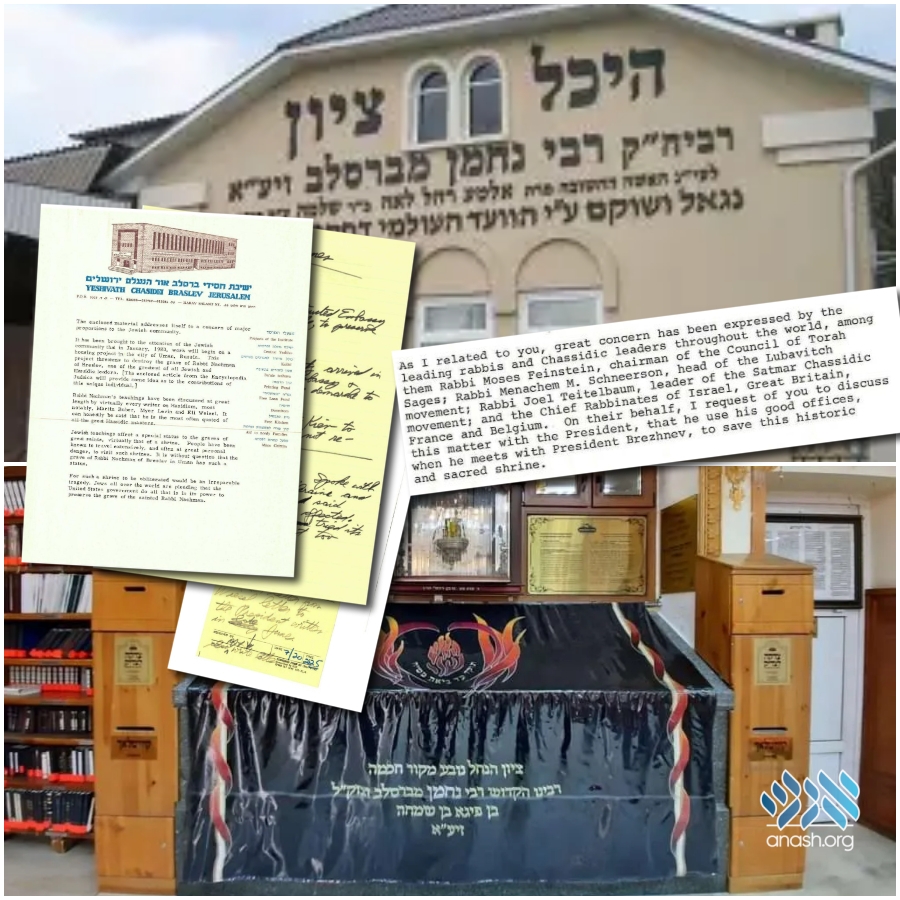
Fascinating new documents from the Jimmy Carter Presidential Library shed light on the behind-the-scenes efforts – led by the Rebbe together with leading rabbonim, U.S. officials, and Jewish activists – that ultimately preserved the resting place of Reb Nachman of Breslov in Uman, Ukraine.
By Anash.org reporter
Fascinating new documents from the Jimmy Carter Presidential Library shed light on the behind-the-scenes efforts that ultimately preserved the resting place of Reb Nachman of Breslov in Uman, Ukraine. The papers, part of the archive of White House Counsel Robert Lipshutz, show how leading rabbonim, U.S. officials, and Jewish activists worked together to prevent the Soviet Union from destroying the site.
In the late 1970s, Soviet authorities announced plans to demolish several blocks in Uman, including the small courtyard where Reb Nachman was buried in 1810. Local residents were told their homes would be razed for apartment construction, putting the tziyun itself at risk.
Alarmed, Reb Michel Dorfman of Breslov traveled abroad with letters addressed to leading rabbonim and U.S. officials. Among the letters was one for the Rebbe, which he personally delivered during kos shel bracha at the end of the Shavuos farbrengen of 5739 (1979). Senior Breslov lecturer Rabbi Nasan Maimon, who accompanied him, later recalled in an interview with JEM’s My Encounter project:
“There were so many people going by that when it was our turn there wasn’t time to speak. But the Rebbe had good eyes, and he could tell that when Reb Michel handed him the letter, it was important. He took it, put it aside. Sure enough, two or three days later, we got a message from the Rebbe: ‘The person you need to be in touch with is Rabbi Pinchas Teitz. He’s the one who can help you.’”
The Carter Library papers show how pivotal that advice proved to be. Rabbi Pinchas Teitz of Elizabeth, NJ, had a longstanding personal connection to President Carter. Years earlier, when most Jewish leaders dismissed Carter as an unlikely presidential contender, Teitz had reached out at the Rebbe’s encouragement – even hosting Carter in his community.
That visit led to a warm note from Carter, delivered through his counsel Robert Lipshutz, assuring Teitz: “Should you ever need to call on us, the White House door will be open to you.”
Rabbi Teitz explained to Rabbi dorfman and Rabbi Maimon: “I’ve had this letter for several years already, and I never had a reason to use it. But maybe this was all for Reb Nachman – it could be that now is the time to take the President up on his offer.”
Together with Rabbi Aryeh Kaplan, they prepared a petition and sent it through Lipshutz directly to President Carter’s desk.
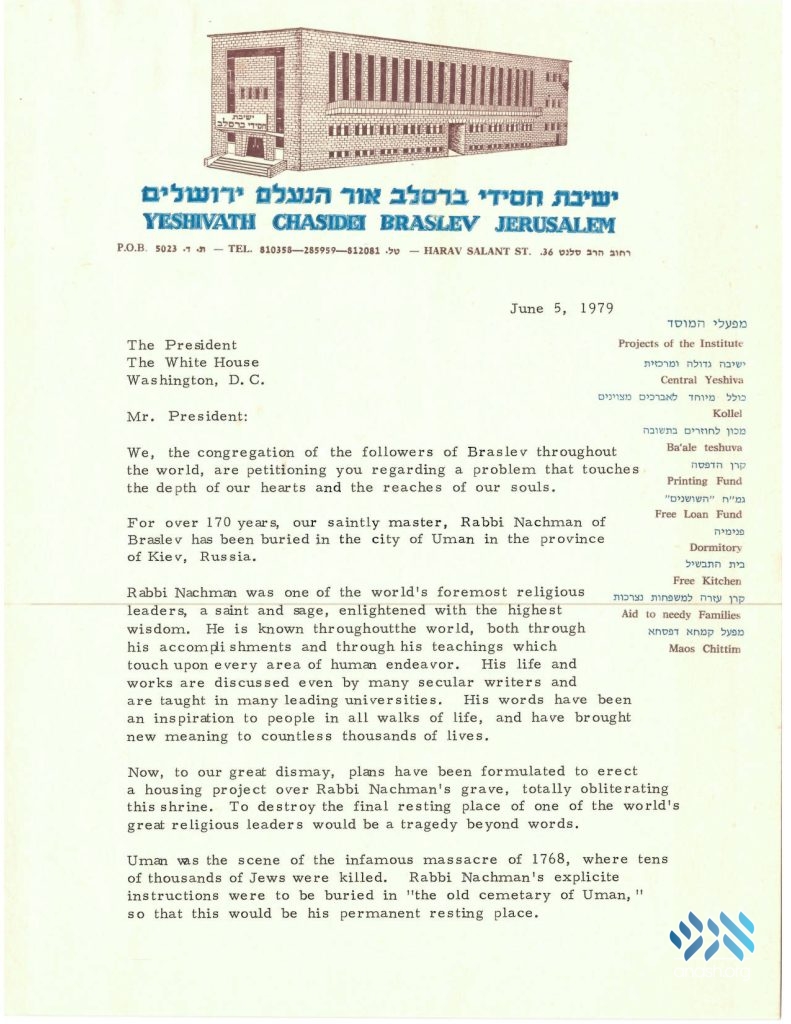
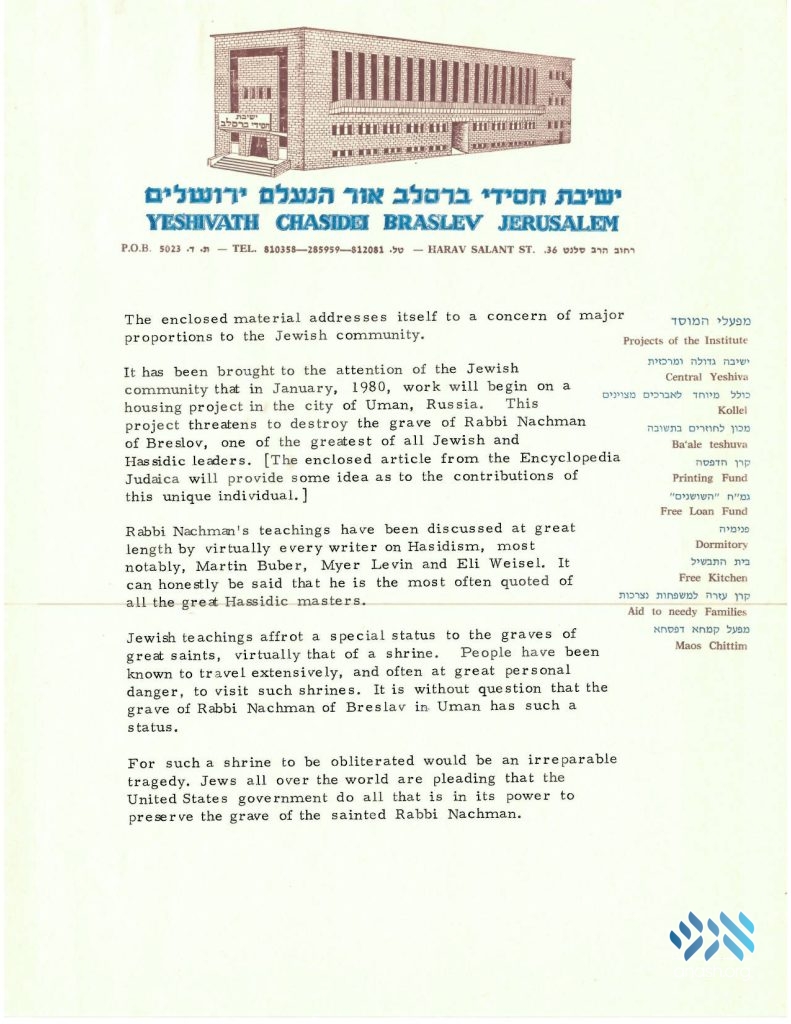
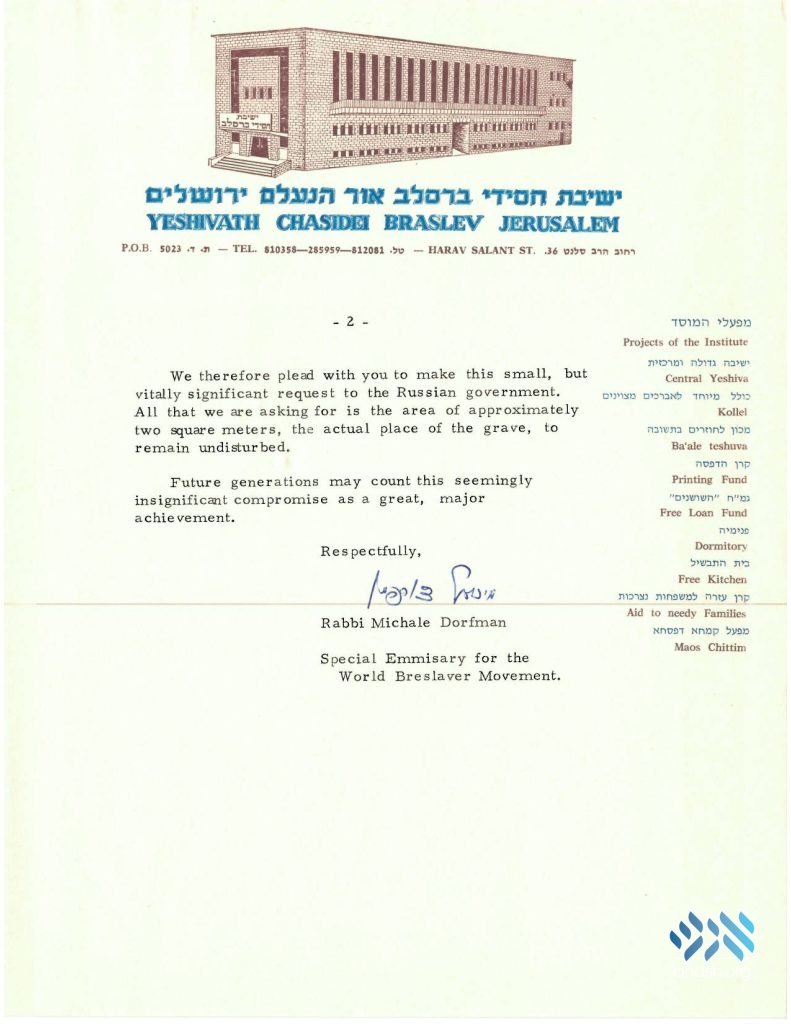
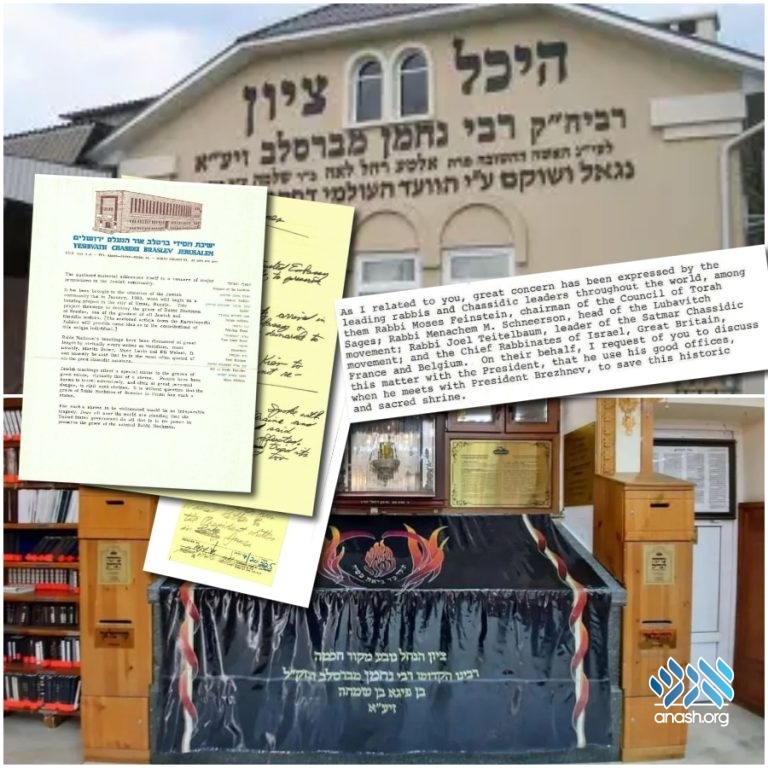
Throughout the archive, newly uncovered documents shed light on the coordinated effort to preserve Reb Nachman’s gravesite. One letter, signed by Rabbi Dorfman on Breslov letterhead, pleads:
“All that we are asking for is the area of approximately two square meters, the actual place of the grave, to remain undisturbed.”
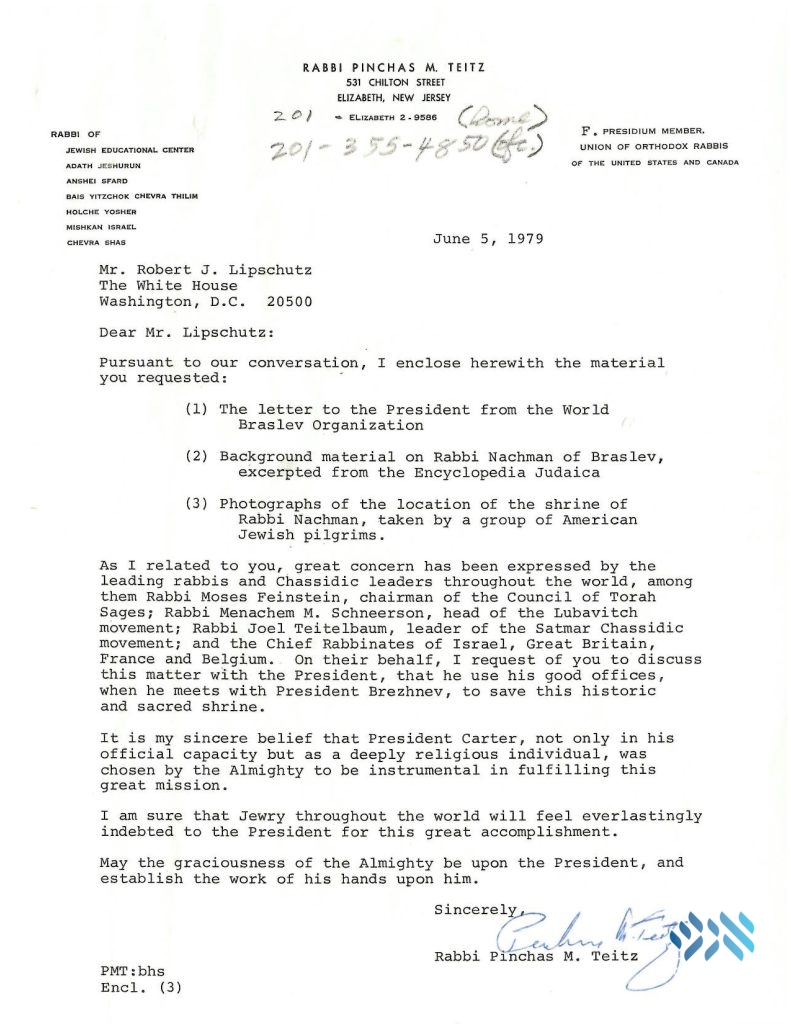
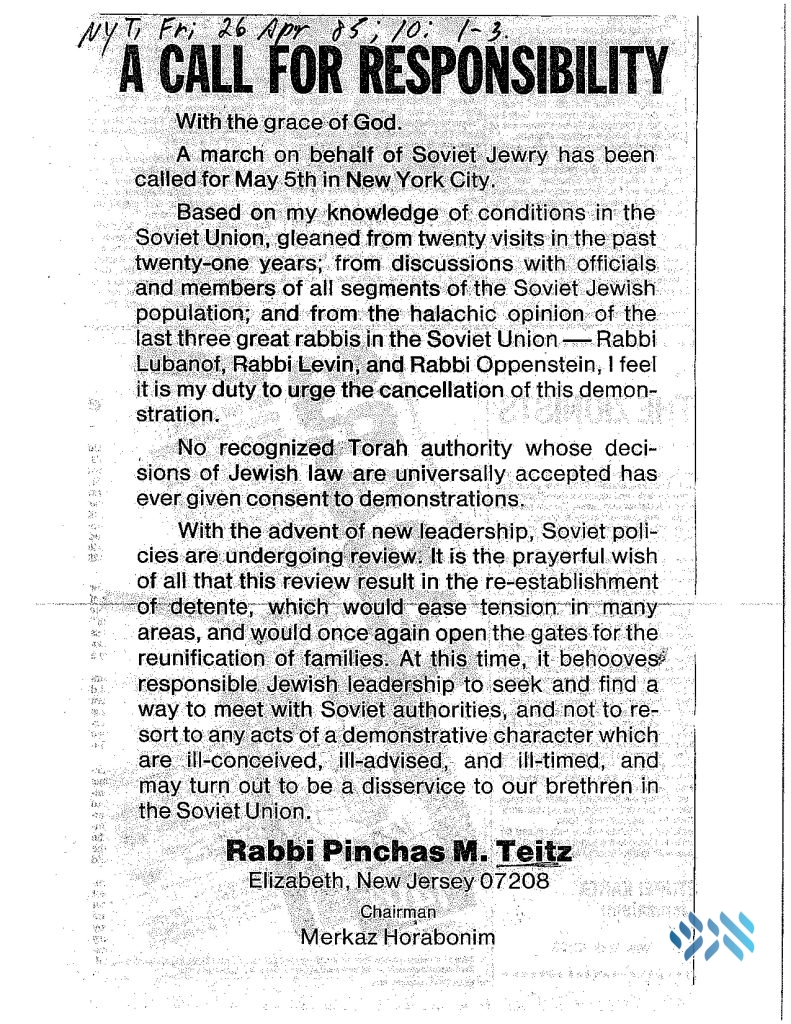
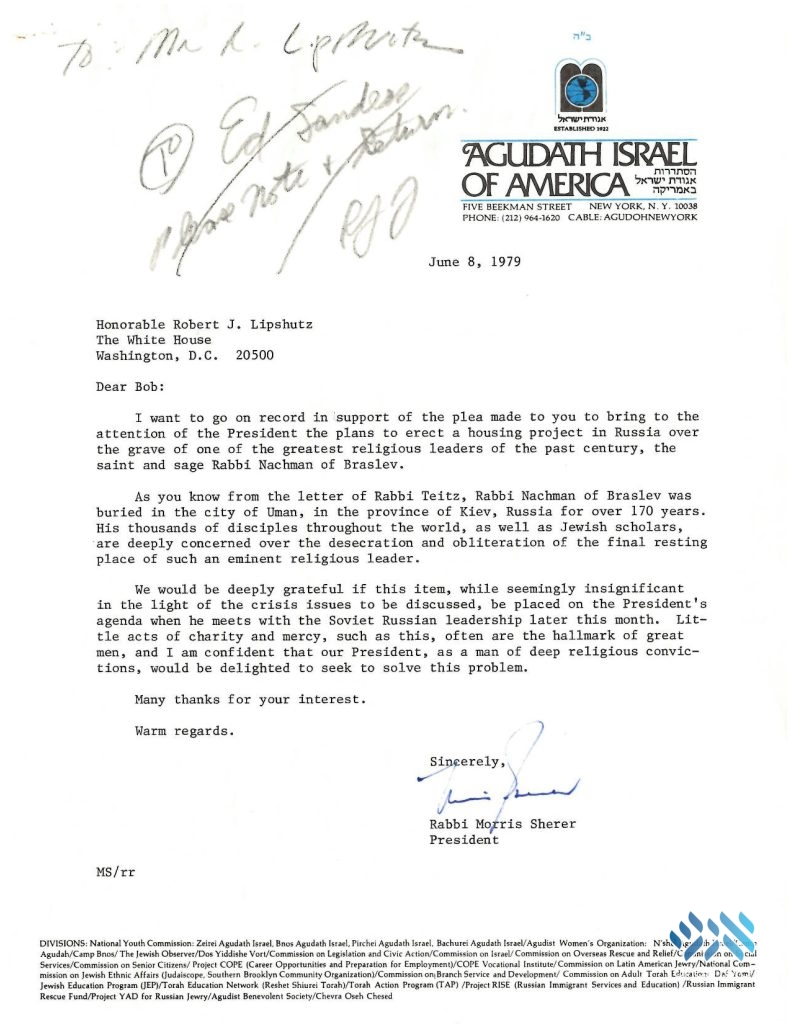
Alongside Reb Michel Dorfman and the World Breslov Organization, Agudath Israel of America also petitioned the White House to ensure the site’s protection. Another letter, signed by Rabbi Teitz to Robert Lipshutz, emphasizes the concern of the Rebbe and other leading rabbinic figures:
“Great concern has been expressed by the leading rabbis and Chassidic leaders throughout the world, among them… Rabbi Menachem M. Schneerson, head of the Lubavitch movement;… On their behalf, I request of you to discuss this matter with the President, that he use his good offices, when he meets with President Brezhnev, to save this historic and sacred shrine.”
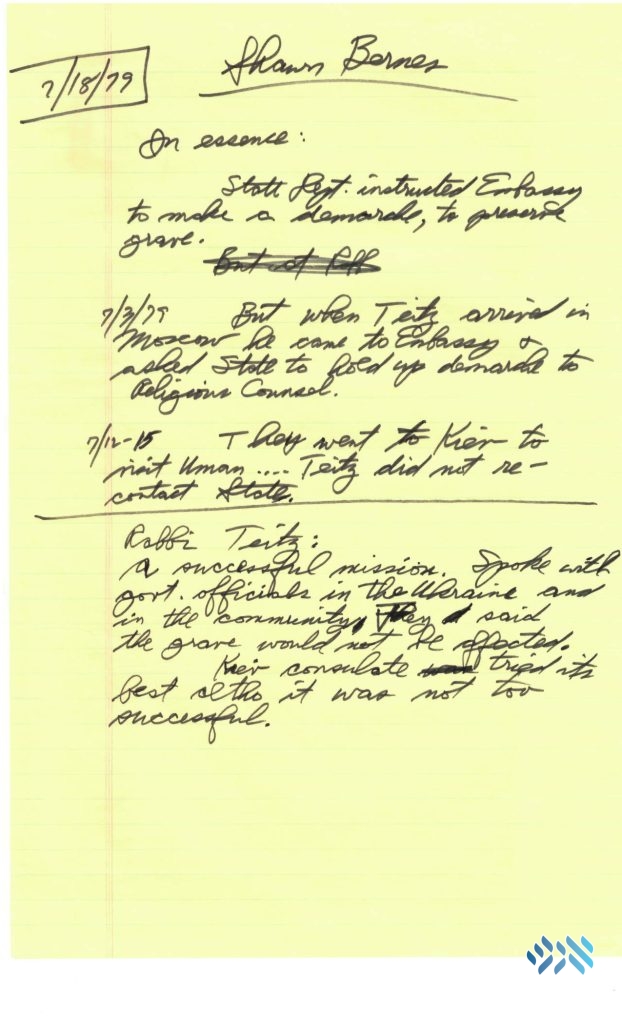
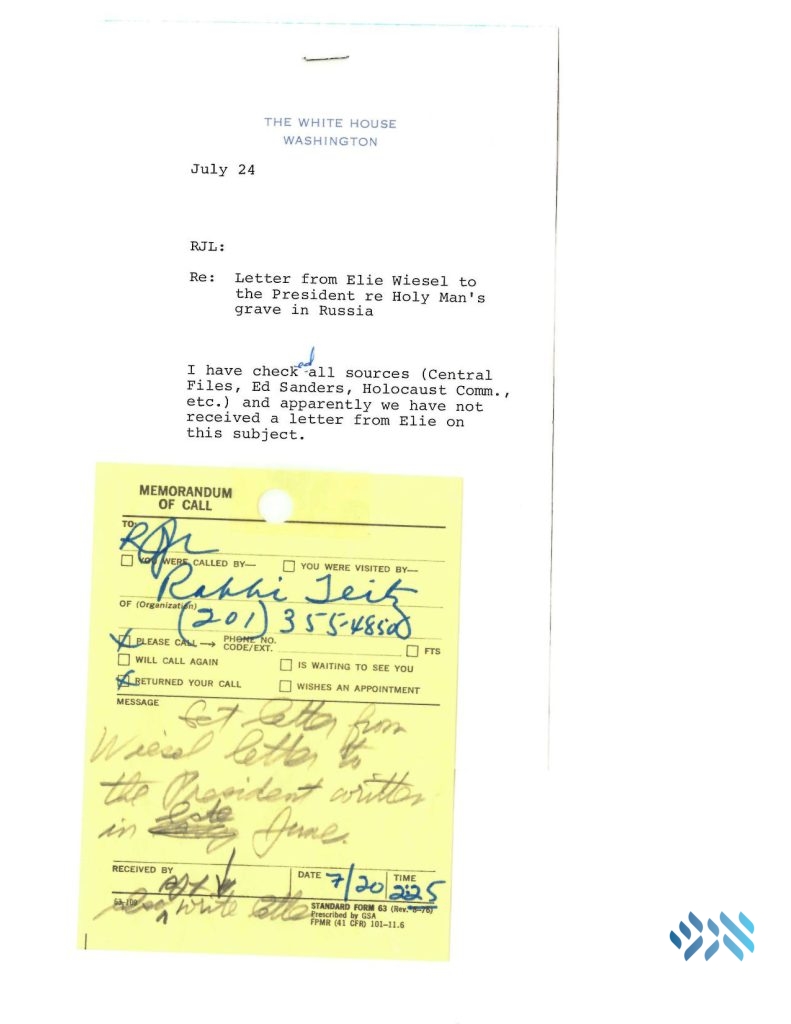
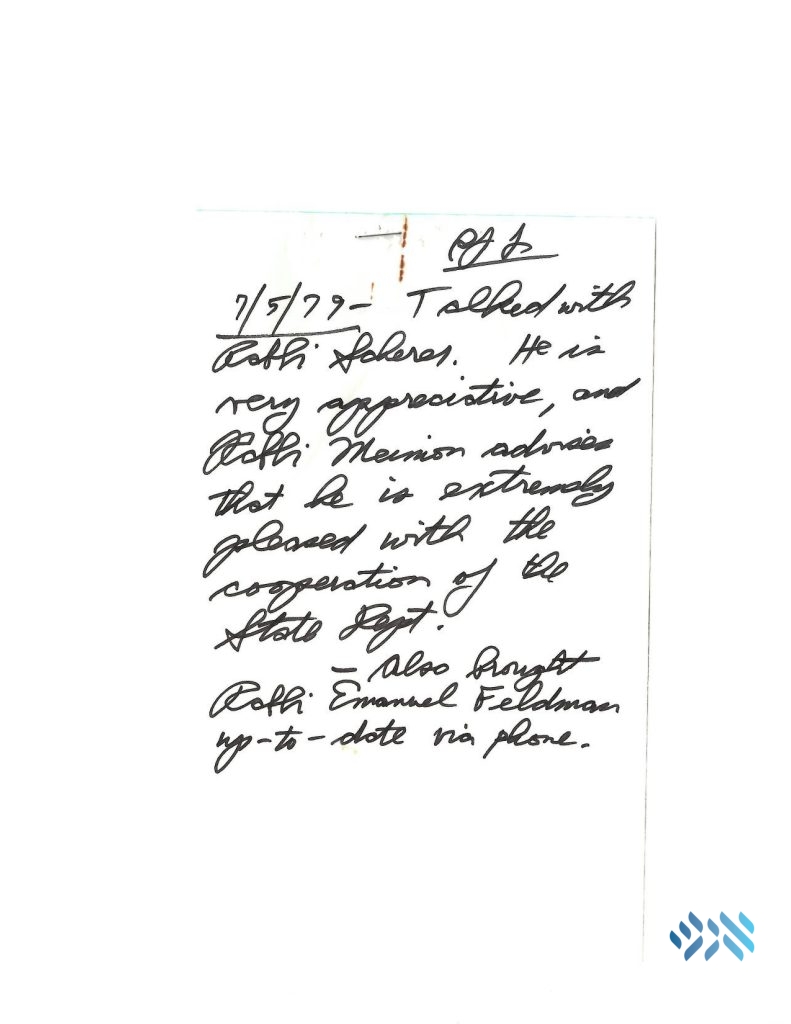
The documents show that the White House treated the request seriously. The State Department instructed the U.S. Embassy in Moscow to press Soviet officials, and a July 1979 log entry records:
“Rabbi Teitz: A successful mission… officials in the Ukraine and the community said the grave would not be affected.”
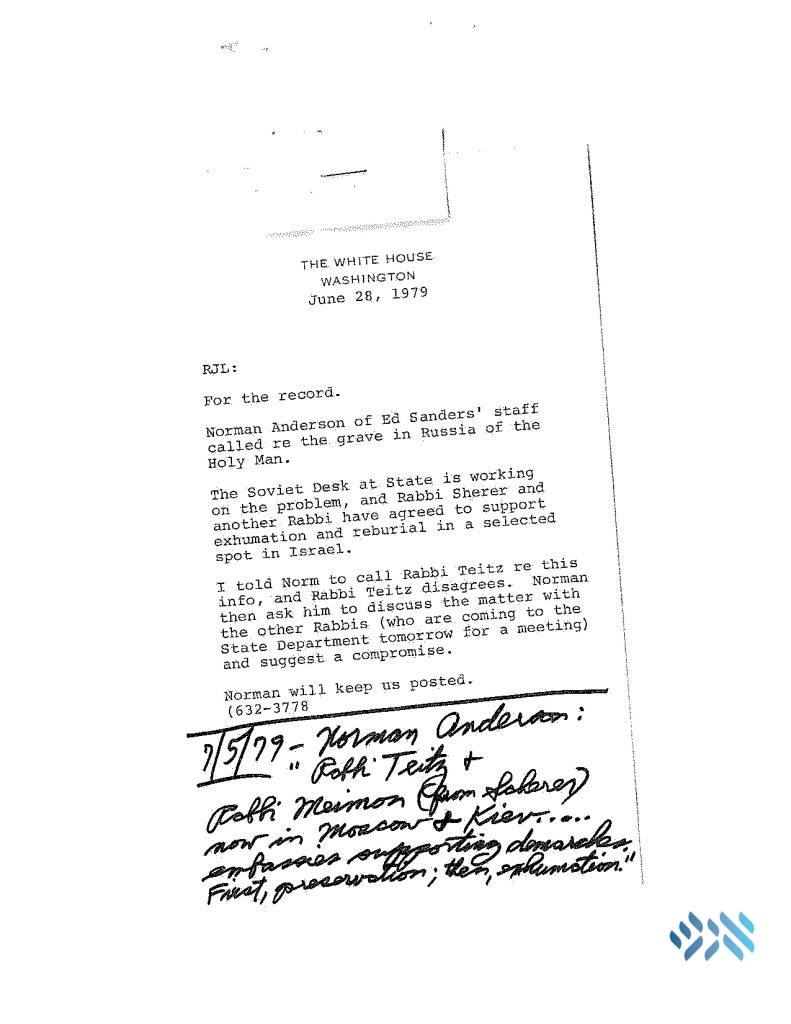
The archive also reveals that at one stage, some suggested exhuming Reb Nachman’s remains and relocating them to Israel, but Rabbi Teitz firmly opposed the idea, insisting the kever remain in Uman – a stance that ultimately prevailed.
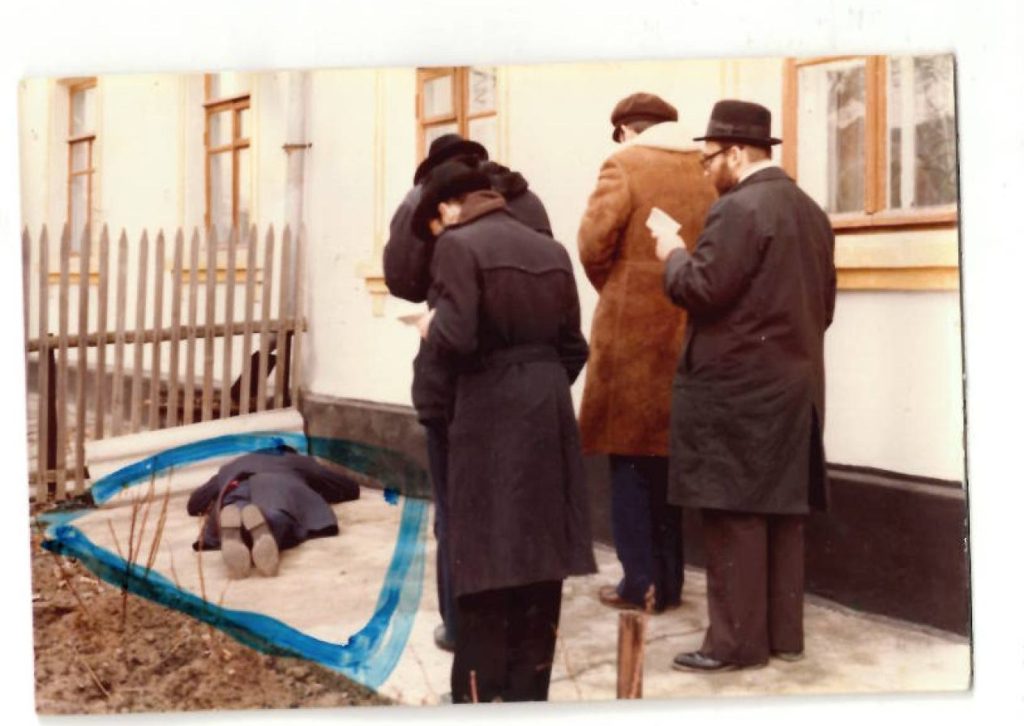
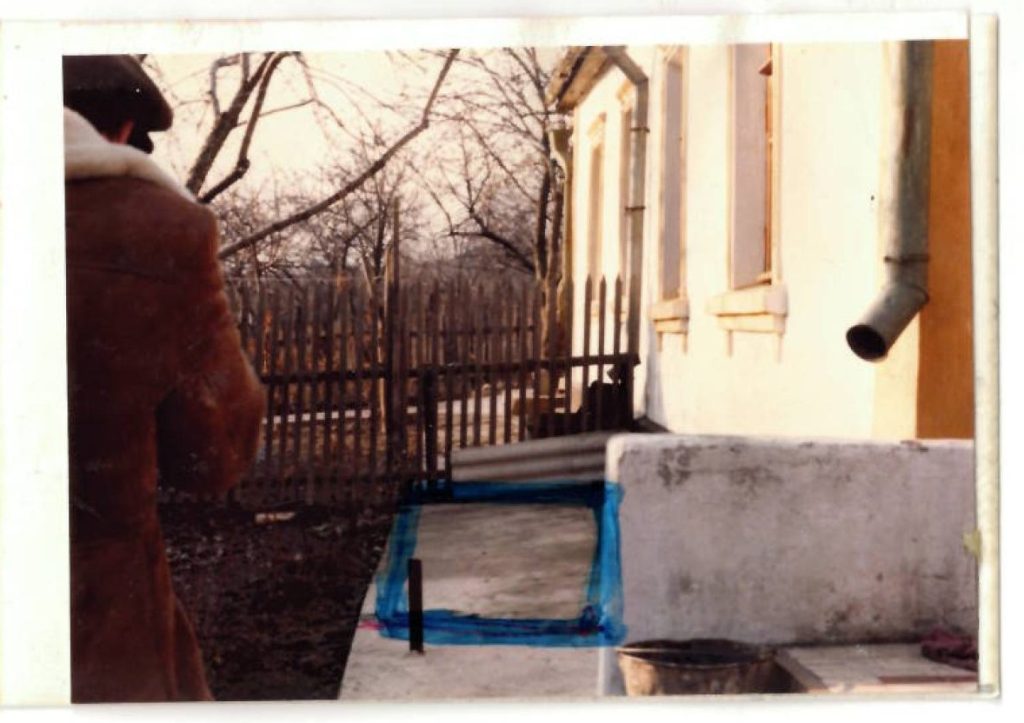
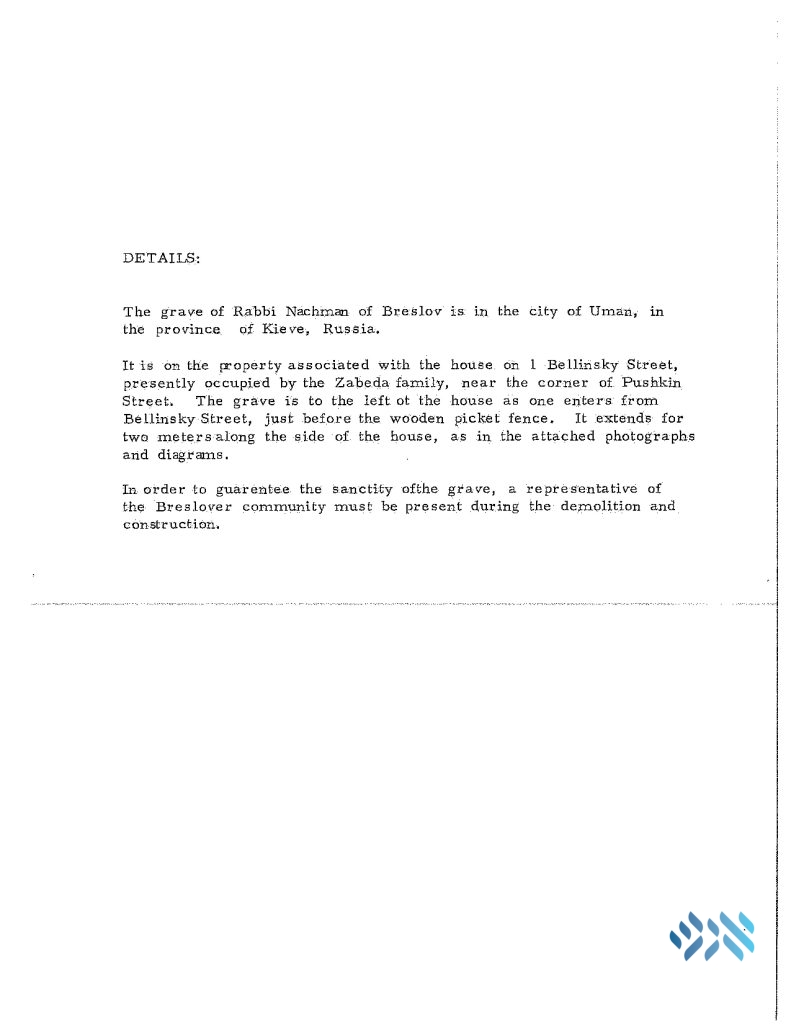
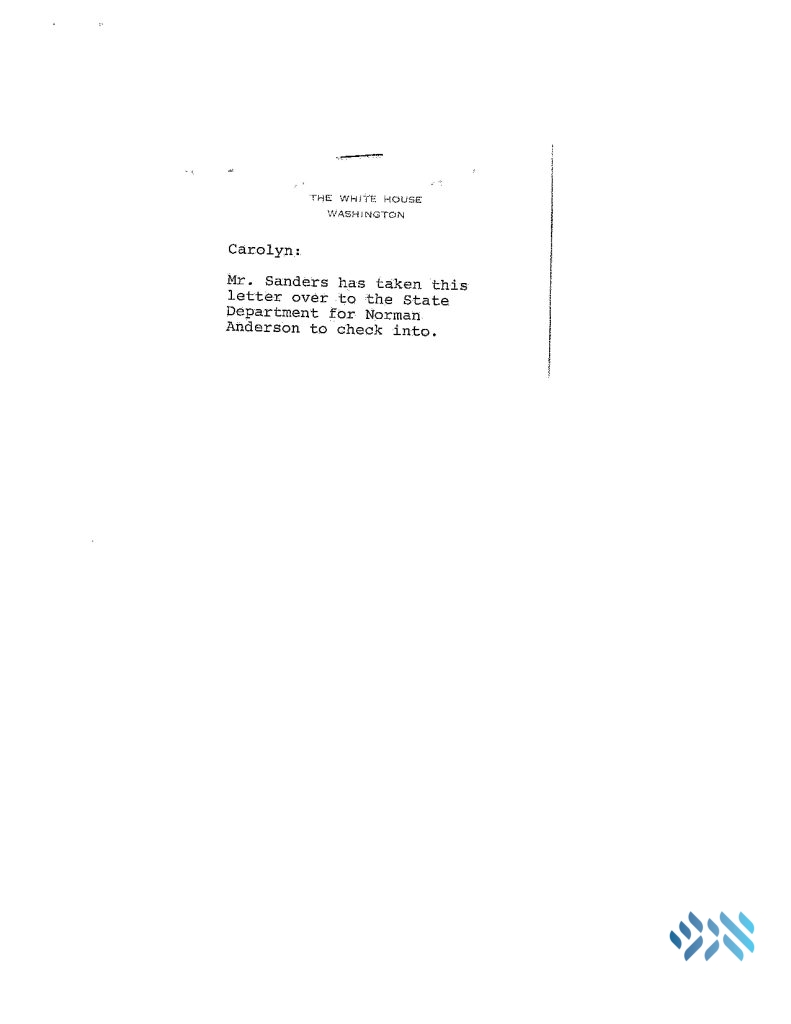
Additional documents include internal U.S. government memos instructing the Embassy to lodge a demarche, photographs of the gravesite and surrounding property, and White House routing notes documenting how the matter was tracked, escalated, and coordinated among American and rabbinic leaders.
Taken together, the newly uncovered White House papers document the extraordinary chain of advocacy that led, in the middle of the Cold War, to the President of the United States raising the protection of a Chassidic Rebbe’s kever with the Soviet leadership. The Kremlin ultimately backed down, beginning with Reb Michel Dorfman’s urgent letter, the Rebbe’s guidance directing Rabbi Teitz, and the diplomatic efforts that followed.
Thanks to Isaac Hussny Tuachi for sharing the documents with us.
 COMMENTS


I am not a Breslover.But I think that a tzadik one of the big Chassidic Rebbes- Rabbi Nachman should be written Rabbi and not Reb… Especially when you mentioned other people with the “Rabbi” title.
Thank you!
The term Rabbi shows a certain detachment from the person we are speaking about, “Reb” however, is a term of closeness.
As in Reb Leib Sarah’s, Reb Meir of Premishlan, Reb Zushe of Anipoli…
The others that are called “Rabbi”…
Why should he be referred to differently then other tzadikim of his times?
Like his uncle Reb Boruch of Mezibuz or Reb Levi Yitzchak of Barditchev.. or even the famous Reb Elimelech of Lizensk…
(You don’t have to please anyone.. this is a anash website…)