




כ״ג אדר ה׳תשפ״ו | March 12, 2026
Watch: The Library at 770 You Never Saw
A newly released video features chief librarian Rabbi Shalom Ber Levine walking viewers through the hidden rooms of the Chabad library beside 770, tracing its full history from its rescue during the Holocaust through decades of expansion into a massive complex of buildings and underground storage halls.
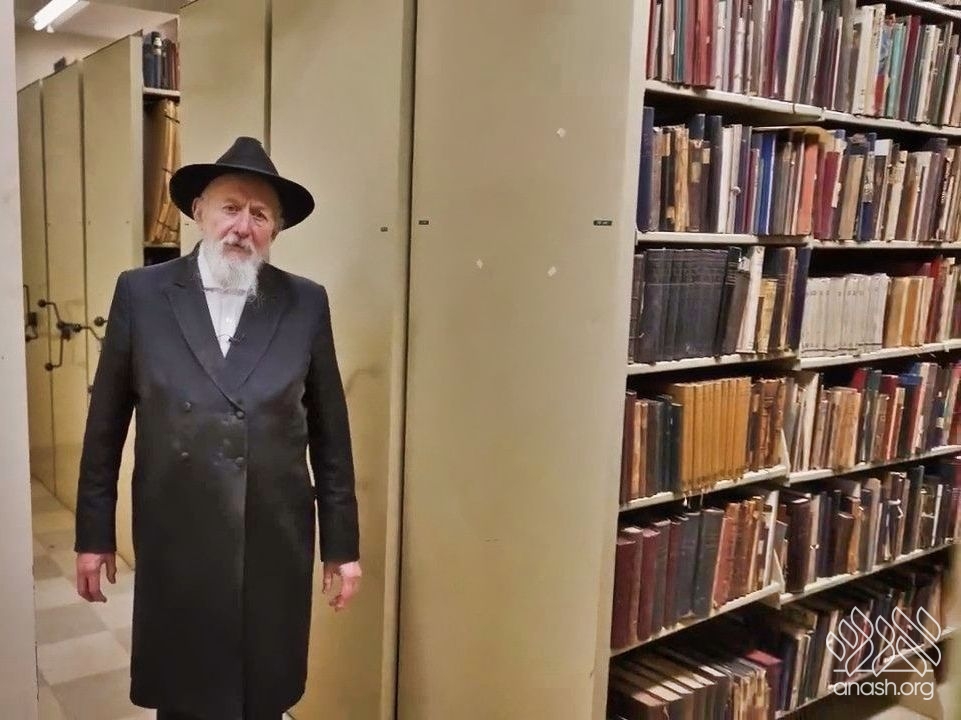
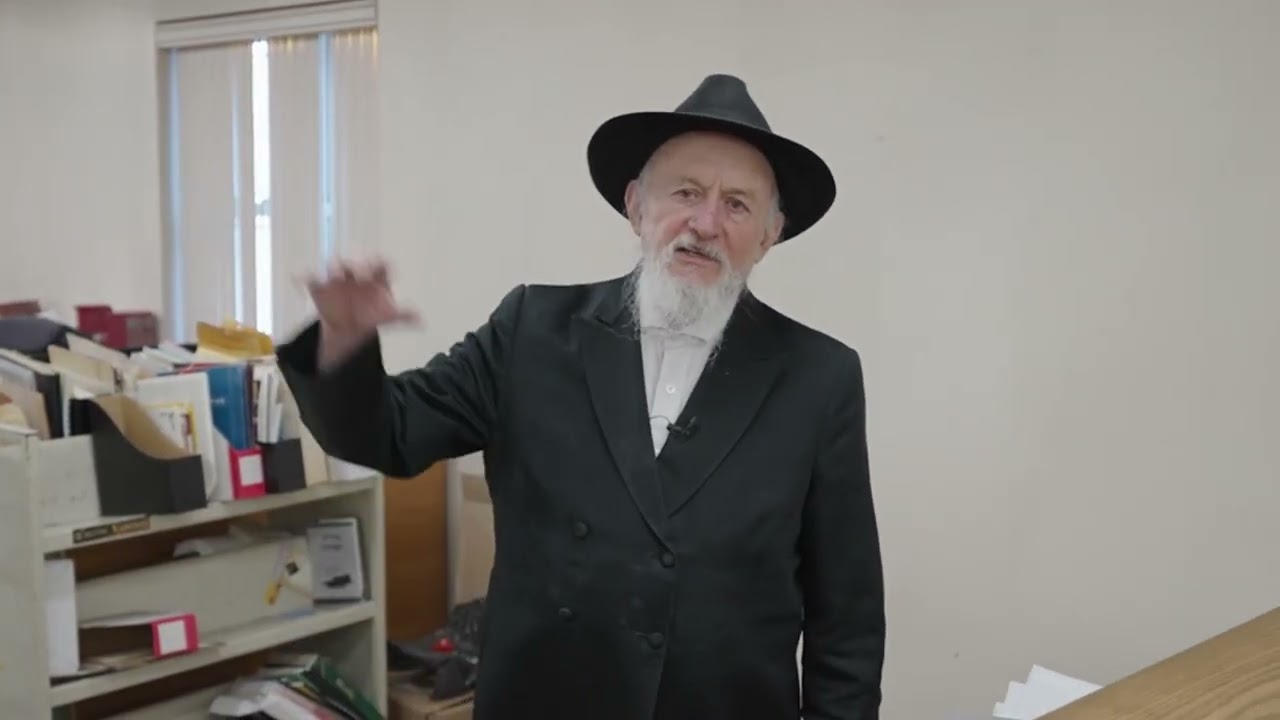
A newly released video featuring chief librarian Rabbi Shalom Ber (Berel) Levine offers a rare inside look at the hidden sections of the library beside 770 Eastern Parkway, walking viewers through rooms that most people have never seen – and never even knew existed – while revealing the remarkable story behind one of the most important Jewish libraries in the world.
The tour covers the entire library and its full history, from its rescue during the Holocaust to how it grew from a single room into a massive complex stretching through multiple buildings and underground storage halls. Along the way, Rabbi Levine also describes the Rebbe and Rebbetzin’s personal connection to the building.
“The library of the Frierdiker Rebbe was saved from Nazi-occupied Poland and arrived here,” Rabbi Levine says. “And the Frierdiker Rebbe devoted the ground floor of 770 to be the library.”
Bookcases were installed and quickly filled with thousands of seforim. It didn’t take long before the room was overflowing, and what had once been the garage of 770 was converted into additional library space.
After the Frierdiker Rebbe’s histalkus, the Rebbe continued building the collection. For years, incoming seforim were kept in private homes and storage rooms because the library had no space for them. In 1966, Chabad purchased the neighboring building at 766 Eastern Parkway.
“Chabad purchased this building from Doctor Shapiro,” Rabbi Levine explains. “He was a dentist, and this became an extension to 770 and to the library.”
The relief didn’t last long. By the late 1970s, 766 was packed as well.
“There were so many seforim in boxes,” Rabbi Levine says. “They didn’t have a place to stay in the bookcases.”
The garage of 766 was the next to be converted.
“We closed up the entrance to the garage,” he recalls, “and we installed showcases and filled it up with seforim.”
One of the more remarkable parts of the tour describes how the Rebbe and Rebbetzin came to stay inside the library building. Around 5741, it became difficult for the Rebbe to walk between 770 and his home on President Street for Shabbos.
“In the weekdays, they would take the Rebbe by car, but Shabbos was difficult,” Rabbi Levin explains.
The solution was to remain in the library building.
“They took one room with seforim and set their dining room there. They took a second room with seforim and set their bedroom there, and that’s how they went for several years.”
Eventually, a two-level structure was built in the backyard of 766, with the upper floor serving as the Rebbe and Rebbetzin’s living room and the lower floor becoming yet another extension of the library.
The most dramatic chapter in the library’s history came with the court case of 5745–5747, when the disputed seforim were finally returned in 1987. The Rebbe marked the occasion at a farbrengen with a hora’ah that remains in effect today.
“The Rebbe said that this day every year should be a day that people donate and enlarge the library with all the seforim they have in their collection, or that they publish – that there should be a copy of it in this library,” Rabbi Levine recounts.
The response was staggering.
“Thousands and thousands and thousands of seforim were added in that year,” he says. “There was no space. Everything was packed.”
The Rebbetzin provided the solution.
“We asked the Rebbetzin what to do,” Rabbi Levine recalls. “The Rebbetzin told us that since the Frierdiker Rebbe started the library in 770, it should stay in 770. But there is no space. So enlarge it as an extension to 770 in a way that it shouldn’t harm the building of 770.”
The entire courtyard between 770 and 766 was excavated and transformed into underground storage halls, completed in 1990 and fitted with rolling-track bookcases.
“You could see the whole length of the library,” Rabbi Levine demonstrates in the tour, “so many bookcases touching one another without an aisle in between them.”
That same year, a third floor was added to 766 to house a reading room for researchers – one of the spaces shown in the video that is normally closed to the public.
“While they are sitting here,” Rabbi Levine explains, “the librarian goes down to the storage room, finds the book they are looking for, and brings it up to them so they should be able to see it and check it on these tables.”
When even that wasn’t enough, Chabad acquired 760 Eastern Parkway, the former home of the Itkin family, and devoted its second floor to the library. That floor houses one of the library’s most striking displays: all 8,000 editions of the Tanya printed since 1988, when the Rebbe requested that wherever Jews are found in the world, a Tanya should be printed there.
“About 8,000 editions were published,” Rabbi Levine notes, pointing to the collection displayed together along the east wall of the room.
The tour concludes on the third floor of 770, formerly the apartment of the Rashag, Rabbi Shmaryahu Gurary, the Rebbe’s brother-in-law and the Frierdiker Rebbe’s son-in-law. After he passed away in 5749, the floor was set aside as an exhibition hall.
When construction was completed ahead of schedule, the librarians asked the Rebbe whether to open it immediately.
“The Rebbe answered that it’s not yet the time for it. Let’s wait.”
They did, until the entire project was completed in 1992.
Since then, fifteen exhibitions have been held in that space, each organized around a different subject. The current exhibition, The Exhibition of the Rebbeim, dedicates one showcase to each of the Rebbeim – as well as to the Baal Shem Tov, the Mezritcher Maggid, and other founders of Chassidus – displaying rare manuscripts, artifacts, and historic items connected to each.
“Thousands and thousands are always coming to see the holy items in this exhibition,” Rabbi Levine says.
VIDEO:
 COMMENTS


Fascinating. What a treasure. Thank you Rabbi Levin for sharing and allowing us a glimpse into the unseen parts of the library. Can you do a video of the Rebbe and Rebbitzen’s apartment? Or would that be considered an invasion of privacy?
And Chassidishe gefihl.
Anyone know which section of the library was used for yechidus of the chief rabbis of Israel? Was that a part of the Rebbe’s apartment?
Why does the video keep dimming and darkening? It is annoying and difficult to the eye.