




ט״ו טבת ה׳תשפ״ו | January 3, 2026
US Captures Venezuelan Dictator After Large-Scale Strikes
In a historic and dramatic operation on Shabbos, US forces launched large-scale strikes across Caracas and captured Venezuelan dictator Nicolás Maduro, ending his oppressive 13-year rule. Jewish families in the capital reported being jolted awake by the loud blasts during the overnight operation.
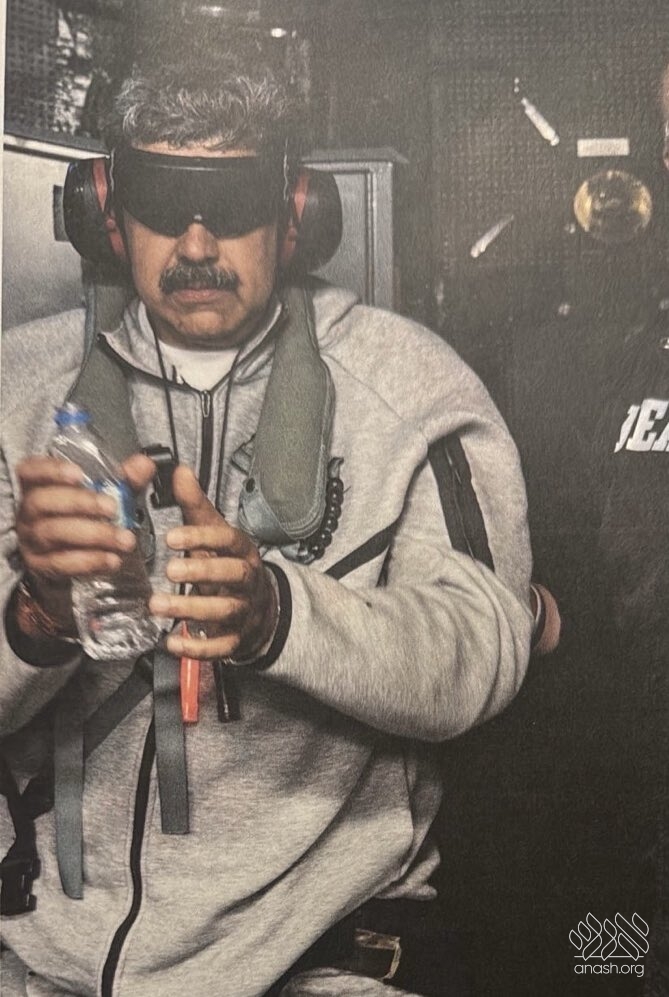
US President Donald Trump announced on Shabbos that American forces captured Venezuelan dictator Nicolás Maduro and his wife Cilia Flores following overnight strikes in and around Caracas, ending the strongman’s oppressive 13-year rule that devastated the oil-rich nation and drove millions into exile.
In his full statement on Truth Social, Trump wrote:
“The United States of America has successfully carried out a large scale strike against Venezuela and its leader, President Nicolas Maduro, who has been, along with his wife, captured and flown out of the Country. This operation was done in conjunction with U.S. Law Enforcement. Details to follow. There will be a News Conference today at 11 A.M., at Mar-a-Lago. Thank you for your attention to this matter! President DONALD J. TRUMP”
Elite US special forces stormed Maduro’s residence on a military base during the predawn operation, pulling the dictator and his wife from their bedroom before flying them out of Venezuela. The couple were transported to the warship USS Iwo Jima and are now en route to New York to face federal narco-terrorism charges.
Speaking at Mar-a-Lago, Trump said the US would “run the country” until what he called a “safe, proper and judicious transition,” and suggested he was open to putting “boots on the ground.” He declared that this “extremely successful operation should serve as a warning to anyone who would threaten American sovereignty or endanger American lives.”
The president framed the action as part of what he termed the “Donroe Doctrine” – a play on the Monroe Doctrine – stating that “American dominance in the western hemisphere will never be questioned again.”
Early Shabbos morning, multiple explosions – at least seven major blasts – rang out across Caracas as low-flying aircraft swept through the Venezuelan capital. The attack lasted less than 30 minutes but sent shockwaves through the city, including its Jewish neighborhoods.
“We heard extremely loud blasts and woke up in the middle of the night,” Jewish residents told Ynet from Caracas. Some strike sites were located dangerously close to Jewish neighborhoods, home to the majority of Venezuela’s approximately 4,000 Jews.
Parts of Caracas lost electricity during the operation, with smoke seen rising from military installations including Fort Tiuna, Venezuela’s largest military complex. Video verified by news agencies showed tracers and smoke clouding the landscape as explosions illuminated the night sky.
Despite the frightening wake-up call, the Jewish community’s reaction has been overwhelmingly positive. “The Jews here are very, very happy about what’s happening. Many waited for Maduro to fall and prayed for this day,” said Ze’ev Kirtchuk in conversation with Ynet, who is a former representative of Keren Hayesod in Venezuela and a liaison for the Venezuelan Jewish community in Israel.
Venezuela’s Jewish population once numbered around 30,000 but has steadily declined since communist tyrant Hugo Chávez came to power in 1999. Though Venezuela under Maduro was not openly antisemitic, the Jewish community viewed the authoritarian regime as deeply hostile.
“The Jews left Venezuela with joy,” Kirtchuk explained. “Those who remain are highly organized. There are 18 synagogues, Jewish schools, separate Ashkenazi and Sephardic communal councils and also a joint council. The community is well-structured and has strong ties to Israel, even though Israel does not have an embassy in the country.”
He added that the timing coincided with Venezuela’s vacation period: “Schools are out, and many who could afford it went on holiday to Miami or Aruba.”
Maduro and other regime officials were initially indicted in 2020 on narco-terrorism conspiracy charges. On Shabbos, the Justice Department released a new indictment against Maduro and Flores, accusing them of ongoing roles in narco-terrorism conspiracy, cocaine importation, and weapons offenses.
US Attorney General Pam Bondi vowed on X (formerly Twitter) that the couple would “soon face the full wrath of American justice on American soil in American courts.” Maduro is expected to make his first court appearance in Manhattan on Monday, marking an extraordinary moment in modern Latin American history – a sitting head of state captured by foreign military forces and brought to trial in another country.
Maduro, a former bus driver and union leader, succeeded Chávez in 2013 after the latter’s death from cancer. He narrowly won a disputed special election and has since ruled Venezuela with an iron fist, systematically dismantling democratic institutions and crushing political opposition.
The dictator’s grip on power was maintained through rigged elections, control of the judiciary and military, and brutal repression of dissent. In July 2024, Maduro claimed victory in a presidential election that international observers and the Venezuelan opposition say was massively fraudulent. Opposition candidate Edmundo González Urrutia, who fled into exile under threat of arrest, is believed to have won by a landslide based on independently verified vote tallies. The United States recognized González as president-elect in August 2024.
Under Maduro‘s catastrophic misrule, Venezuela – despite sitting atop the world’s largest proven oil reserves – descended into economic collapse. Hyperinflation devastated savings, basic goods became scarce, and over seven million Venezuelans fled the country. The regime has been accused of operating a narco-state with deep ties to drug cartels including the notorious Tren de Aragua gang.
The operation has immediate implications for global energy markets. Reuters reported that Venezuela’s oil exports were effectively paralyzed amid the turmoil, with loaded tankers unable to receive clearance to depart and operations tightening at key ports.
Venezuela possesses approximately 303 billion barrels of proven oil reserves – roughly 20% of the world’s total – but production has collapsed to around one million barrels per day due to decades of mismanagement, corruption, and US sanctions.
Trump indicated that American oil companies will play a major role in rebuilding Venezuela’s shattered petroleum infrastructure. “US oil companies would go in, spend billions of dollars, fix the badly broken infrastructure, the oil infrastructure, and start making money for the country,” the president said, noting that Venezuela’s pipelines have gone unchanged for 50 years and require an estimated $58 billion in investment.
He suggested that any US involvement “won’t cost us a penny” as it would be reimbursed from Venezuela’s oil revenue. Energy analysts estimate it could take five to ten years to restore Venezuelan oil production to previous levels, though US Gulf Coast refineries are particularly suited to process Venezuela’s heavy crude.
The military operation caps a months-long pressure campaign by the Trump administration. After returning to the White House in January 2025, Trump pursued an increasingly aggressive policy, beginning with designating Venezuelan-linked criminal organizations including Tren de Aragua as foreign terrorist organizations.
By August 2025, the US had deployed significant naval forces off Venezuela’s coast. Between September and December, American forces conducted at least 35 strikes on boats allegedly carrying Venezuelan drugs, killing over 115 people – actions that drew criticism from Democrats and international human rights organizations.
The CIA conducted its first direct strike on Venezuelan soil on December 30, 2025, targeting a docking area believed to be used by drug cartels. Throughout this period, Trump repeatedly warned that Maduro’s “days were numbered.”
The situation in Venezuela remains fluid. Venezuelan Vice President Delcy Rodríguez condemned the action as a “kidnapping” and demanded Maduro‘s release, though Trump claimed she indicated willingness to cooperate with a US-led transition. Reports suggest Rodríguez may be in Russia.
Opposition leaders María Corina Machado – who won the 2025 Nobel Peace Prize – and González Urrutia have called for González to be recognized as Venezuela’s legitimate president. However, Trump said Machado “lacks support” inside Venezuela.
Israeli Prime Minister Benjamin Netanyahu applauded the capture: “Congratulations, President Donald Trump for your bold and historic leadership on behalf of freedom and justice. I salute your decisive resolve and the brilliant action of your brave soldiers.”
President Isaac Herzog also thanked the American president: “Thank you, President Donald Trump, for your decisive leadership in making the world a safer place. Thank you for leading the crucial global battle against brutal, rogue, and destabilizing regimes, and against the dangers of narco-trafficking.”
 COMMENTS


https://youtube.com/watch?v=5OgpEifaEyQ