




י״ד ניסן ה׳תשפ״ו | March 31, 2026
Tzfas Rabbi Produces Guide to Seder Under Sirens
The unsettling reality that many in Eretz Yisroel are living through – the sudden sounding of emergency sirens that require immediate entry into a bomb shelter – led Rabbi Yaakov Goldstein to compile a halachic guide on how to continue afterwards.
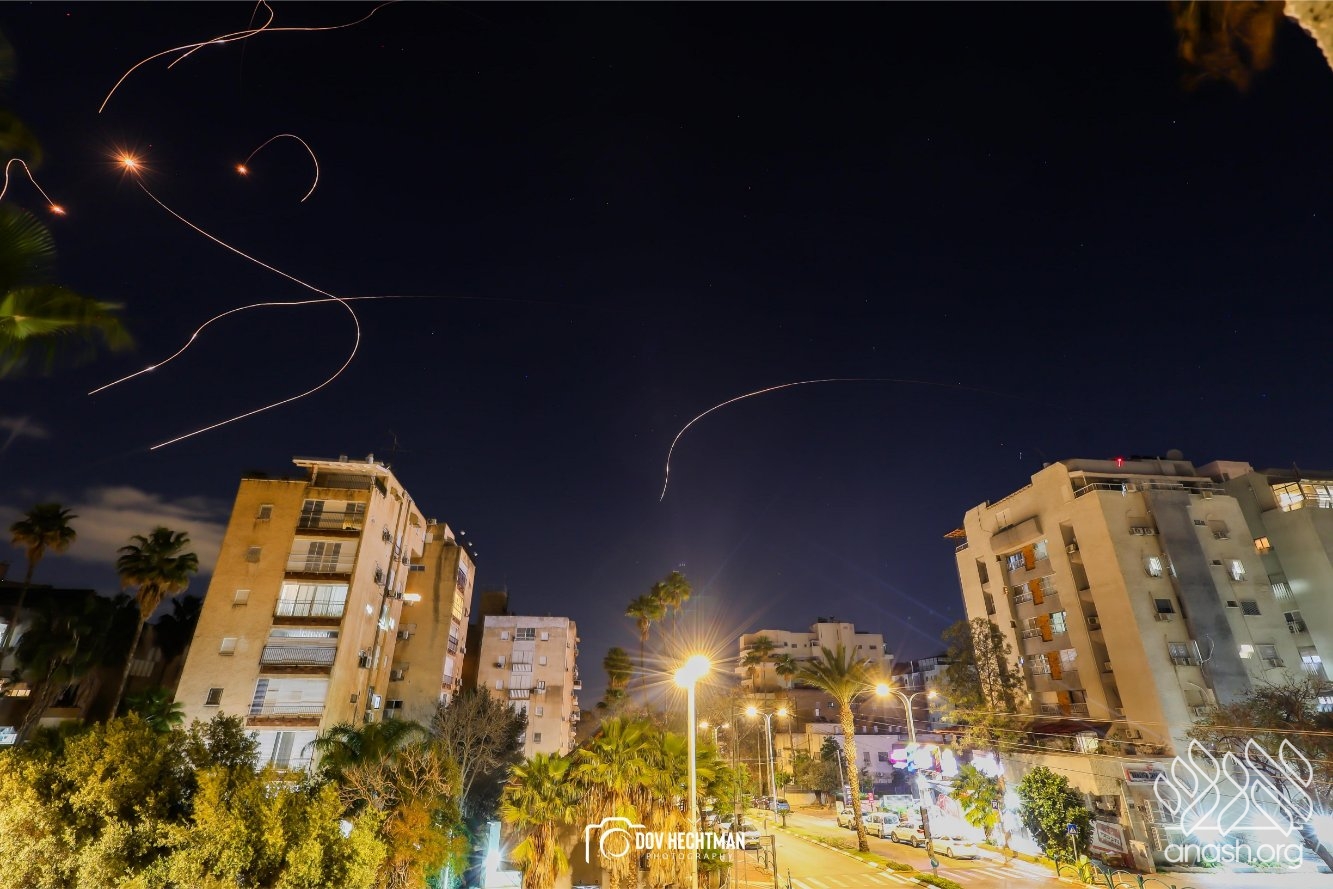 Photo: Dovber Hechtman
By Rabbi Yaakov Goldstein
The stark and unsettling reality that many residents are now living through—the sudden sounding of emergency sirens that require immediate entry into a bomb shelter—has transformed what were once abstract halachic discussions into urgent, real‑time questions of daily life. Never in recent history have people been so regularly forced, without warning or preparation, to abandon their location and seek shelter elsewhere within seconds, with no ability to choose the timing, duration, or destination of that interruption. These sirens are not a mere inconvenience; they are a matter of pikuach nefesh, obligating one to stop everything he is doing in order to preserve life.
This new reality gives rise to a host of complex and sensitive halachic questions, particularly when such interruptions occur during the preparations for Pesach and during the Seder itself—a night governed by a precise structure, carefully ordered mitzvos, and tightly defined halachic frameworks. Does it make a difference whether one retreats to a shelter within his home, a shelter elsewhere in the building, or a public shelter down the street? How does a forced change of location affect the validity of blessings already recited? When does silence suffice to avoid a hefsek, and when does speech—or even movement alone—create an interruption that requires repetition?
These questions arise already before the Seder begins. What happens if a siren sounds during Bedikas Chametz? What if it occurs moments before sof zman biur chametz, leaving one trapped in a shelter past the final deadline, with no opportunity to destroy or dispose of the chametz in time? Does bitul alone suffice? May chametz still be burned upon return, or must it be treated as sold or ownerless? These scenarios—once virtually unthinkable—are now painfully real, forcing us to confront the intersection of absolute halachic time limits with circumstances entirely beyond human control.
The questions continue throughout the Seder itself. What if a siren interrupts Kadesh, or occurs between the blessing and drinking the wine? What if it happens during Urchatz or Karpas? During Maggid, which may or may not be bound to a fixed location? What are the ramifications if the interruption occurs during the eating of matzah or maror—before a kezayis has been completed, or after? How does one proceed if a siren sounds in the middle of eating the Afikoman, especially with chatzot approaching? Must one return to the original table to recite Birkat Hamazon, or may it be completed in the shelter? And finally, how should one conduct the remaining cups of wine, Hallel, and the conclusion of the Seder under such circumstances?
Each of these situations raises practical, high‑stakes questions: When must a blessing be repeated, and when does it remain valid? When may the Seder be continued in a second location, and when must one wait to return? How do the principles of kiddush b’makom seudah, hefsek, hesech hada’as, the required order of the Four Cups, and the obligation to eat certain mitzvot within defined timeframes intersect with the overriding mandate of pikuach nefesh?
This publication seeks to address these unprecedented and emotionally charged questions with both sensitivity and precision—faithful to halachic principles, attentive to real‑world constraints, and grounded in the recognition that preserving life comes first, even as we strive to fulfill the mitzvos of Pesach and the Seder in the best possible manner under extraordinarily challenging conditions.
 COMMENTS


We appreciate your feedback. If you have any additional information to contribute to this article, it will be added below.