




י׳ שבט ה׳תשפ״ו | January 28, 2026
‘The Younger Son-in-Law Will Be the Rebbe’
An early “American Chassid,” Rabbi Binyomin Mentz AH, shares memories from 5710–5711, the Frierdiker Rebbe’s histalkus and the Rebbe’s daily routines and farbrengens, providing vivid and personal insights into life in 770 during this pivotal period.
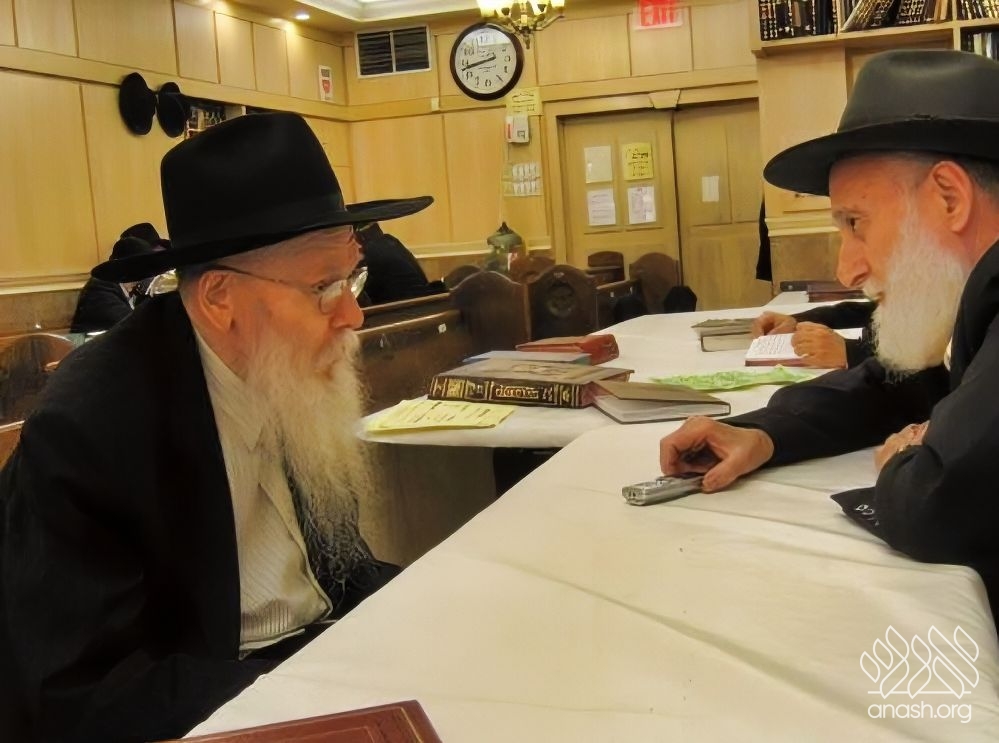
Rabbi Binyomin Mentz AH, one of the first “American Chassidim” and a fixture in 770 for many decades, shares his memories from the years 5710–5711. His recollections include a vivid description of the Frierdiker Rebbe’s passing, the final months of the Frierdiker Rebbe, the firm belief among the Chassidim that the Rebbe would succeed, and the daily Shabbos routine and farbrengens of the Rebbe in those years.
Rabbi Mentz was born in Pittsburgh and was one of the first students of Rabbi Shalom Posner in the 1940s. It was there that he was introduced to Chabad, and with great mesirus nefesh, he moved to New York to become a Chossid of the Frierdiker Rebbe. There, he became known as an exemplary student, earning the nickname “Binyomin Hatzadik.” He passed away on 27 Adar I 5776.
*
One of my memories is of the final Sukkos, Shabbos Chol HaMoed 5710, when I was on the first floor of 770 and heard singing from the Rebbe Rayatz’s sukka on the second floor. Someone told me that the Rebbe was farbrenging in his sukkah.
I went up to the second floor and saw that the door was open. I went in until I reached the yechidus room. I saw a large desk and large pots full of water for netilas yadayim. The entrance to the sukka was through that room, so I walked in and went to the sukka.
I saw the Rebbe Rayatz sitting facing Eastern Parkway and Ramash sitting and facing Kingston. Those present – a handful of Chassidim – sang, and now and then the Rebbe Rayatz spoke.
At that point, it was very hard to understand the Rebbe since his speech was impaired. I saw a spot in a corner of the sukka and sat down quietly. Between sichos, I took mashke and said l’chaim to the Rebbe. Then I went out, and as I was already in the room heading out, I heard the people stop singing, and the Rebbe began talking.
Although what he said was almost entirely not understandable, I suddenly heard him say clearly, ‘Wine is a precious thing and every drop must lead to a benefit in avoda.’ I remember being taken aback by how clearly this was said.
*
That bitter day of Yud Shvat 5710, the day of the histalkus, is etched in my memory.
The previous Friday, after I finished eating at my hosts, the Kestenbaums, I went to 770 and found Rashag sitting and learning the maamer ‘Basi L’Gani’ that the Rebbe Rayatz had prepared before Shabbos.
The next day, Shabbos morning, when I arrived for Shacharis, I saw Zalman Posner running from 770. I asked him where he was running, and he replied obliquely, ‘I’m going to Brownsville.’ At that time, there were many shuls there, and thousands of Jews lived in the area.
I continued to the beis midrash for davening when I suddenly noticed R’ Nachum Novokov standing near the window and sobbing. He owned a store on Montgomery. I still didn’t know what had happened and thought he was crying over some personal matter.
Then I noticed Ramash enter the beis midrash with some other people, and when he saw that they had already begun to daven, he entered the ‘second room,’ went before the amud, and began davening very quickly until he reached the point that they were up to in the main minyan in the large room. Then the two minyanim joined and davened together.
I also heard someone crying during the Torah reading, but I still did not attribute any significance to this.
After the davening, as I got ready to go eat the Shabbos meal, a bachur older than me came over and said, ‘Perhaps you’ll go up to say Tehillim.’ I innocently asked him why, but he said, ‘Don’t ask questions, just go up.’ When I went up, I understood everything. I sat down to say Tehillim near the Rebbe’s bedroom. The door was slightly ajar, and I saw the Rebbe’s bed in the corner, while the other bed was moved to the side. The bed was covered with a sheet.
Rashag walked here and there in a frenzy. Ramash, on the other hand, was restrained and dealt with everything that needed to be done, telling each one what to do. It was easy to discern the difference between them. Other bachurim came up to say Tehillim, and I left for the Shabbos meal. When I arrived at my host’s house, I found that they already knew of the Rebbe’s passing.
My host wasn’t a Lubavitcher, but he traveled on business to various countries, including Russia. Each time the Rebbe Rayatz asked him to take Jewish religious items with him, saying, ‘It’s dangerous, but you have an American passport.’ A few times when he came for the Rebbe’s blessing and offered to take some items, the Rebbe declined, saying, ‘Now is not the right time for that.’
As I stood there next to the yechidus room, I couldn’t help but remember the t’fillos that took place with the Rebbe as he sat there and the congregation davened in the minyan in the next room, his mother’s room. The Rebbe would listen to the minyan through the partially open door. I could sometimes see the Rebbe sitting near the table, wrapped in his tallis, with only wisps of his beard visible.
Sunday morning, we went down to the beis midrash and davened Shacharis while the chevra kadisha closed the door to the room and made the preparations for the funeral. When we went back upstairs, the Rebbe was in the aron they built out of his shtender. It was lying on the chairs, covered by his tallis. Downstairs, all the bachurim had already done kria.
They took the Rebbe downstairs for the funeral, where a large crowd waited. The aron left 770, and the bachurim turned left until Brooklyn Avenue, then right where the cars were waiting. The chevra kadisha’s car took the aron to the yeshiva on Bedford and Dean, from where they continued to Atlantic Avenue and turned right toward the cemetery on Springfield Boulevard.
When we arrived, they told us not to enter through the main gate but to walk left until the grave. It was a long detour, and when we got there, the burial had already taken place. Someone told us to take some dirt and place it on the grave. As I stood there, I saw Ramash standing on the right side of the grave and Rashag on the left, gazing silently.
By the time we left the cemetery, the buses had already departed for 770. As mourners do, we sat for a short while on the pavement on the side of the road, then took a city bus back to 770.
*
We bachurim knew that if something happened to the Rebbe, Ramash would succeed him. I remember that one time, when I ate at the Kestenbaums, they were discussing what would happen after the Rebbe Rayatz’s 120 years. I said, ‘Nothing will happen because he’ll be the Rebbe until Moshiach comes,’ but they insisted on asking. I said, ‘Then the younger son-in-law will be the Rebbe.’
He was very unassuming, like an ordinary person, but we could all see that he was superior to all. Throughout the year, minyanim were held in the Rebbe Rayatz’s room, and the two sons-in-law said Kaddish. Rashag davened in the first minyan at nine, and the Rebbe davened in the second minyan that began at ten.
On Lag B’Omer, the Rebbe said he wanted to go to the gravesite together with a minyan. Since we did not have a regular yeshiva schedule that day, I decided to go along. When we arrived at the Ohel, the Rebbe stood at the foot of the grave, facing the gravestone, while the rest of us stood all around.
Each of us said the Maaneh Lashon, and when we finished, we went out and waited for the Rebbe outside the cemetery near the bus. After the Rebbe finished his avoda, he came out.
Rabbi Shlomo Aharon Kazarnovsky, Rabbi Yisroel Jacobson, and some other older Chassidim arrived. R’ Kazarnovsky showed the Rebbe the plans they had prepared for a stone wall around the grave. The initial plan was that the inner stone wall would be a little larger than the grave.
When the Rebbe saw the plan, he said, ‘Why was so little space left?’ They said they wanted the space to be as small as possible to give people room to stand. To their surprise, the Rebbe said, ‘And who said that the Rebbe [Rayatz] is here?’ pointing at the grave. ‘Maybe the Rebbe is here, more to the left?’
They were all flabbergasted by this and did as the Rebbe said. The inner wall was constructed more to the northern side. This was on Lag B’Omer, just three months after the passing of the Rebbe Rayatz, and long before the Rebbe accepted the nesius. Even then, the older Chassidim had utter bittul to the Rebbe, for they knew that the Rebbe was head and shoulders above them all.
*
In general, the yeshiva davened in the small zal on the first floor every Shabbos. Ramash (later to be the Rebbe) would come from his home, enter the room for a few minutes, then come out, walk into the long corridor, enter the ‘second room,’ and from there go to the zal and sit in his place next to the far entrance. (After accepting the nesius, he would enter the zal from the main door opposite his room.)
His place was on the bench with everyone else, with a shtender near the wall. Sometimes I sat next to him during davening.
I noticed that Ramash would start from ‘Ma Tovu’ and daven at his own pace. When the minyan finished the Shabbos davening, he would be up to ‘Boruch Sh’Omar.’ During the Torah reading, the Rebbe Rayatz’s two sons-in-law were given an aliya: Rashag got shlishi, and Ramash got shishi. After the minyan finished davening, Ramash returned to his room, and nobody knew what he did there.
On special days like 12 Tammuz or 19 Kislev, there were two farbrengens: the first night, Rashag farbrenged in the small room downstairs. On the second night, Ramash would farbreng in the beis midrash. More people attended Ramash’s farbrengens.
Ramash would also farbreng every Shabbos Mevarchim. After the davening, the people would set up two tables, and Ramash – who, as I said, hadn’t yet started ‘Boruch Sh’Omar’ – would sit at the head of the table and farbreng for about forty minutes. We bachurim would come from the yeshiva on Bedford to attend this farbrengen.
We often saw him on Erev Shabbos when I sat in the zal and reviewed the parsha. He would enter the zal wearing a gray suit and hat. On Shabbos, of course, he wore a sirtuk and a black hat.
 COMMENTS


Reb Benyomin Mintz was truly a Bainunu !!!!