The Untold Story of Chabad’s First Shluchim Down Under
Who was the first Chabad chasid in Australia? Ask any Australian Lubavitcher this question, and you will be told—R. Moshe Feiglin. But while the Feiglins did certainly lay the foundations for contemporary Chabad in Australia, there is also a fascinating pre-history of Chabad shadarim and residents in Australia, dating all the way back to 1856 (5616). In honor of Australia Day this Monday, From the Margins of Chabad History tells the stories of these colorful pioneers.
On Monday, Australians will celebrate Australia Day, marking the anniversary of the 1788 landing of the First Fleet at Sydney Cove, a small bay on the southern shore of Sydney Harbour. As the day commemorating the first European settlement of Australia, Australia Day has become controversial in recent years, with many of the indigenous people of Australia seeing it as an erasure of their thousands of years of history in the land.
From a Jewish perspective, Australia Day is indeed the beginning of Jewish history in Australia, as a number of the convicts arriving on the First Fleet were Jewish. But what about the Chabad perspective? When did Chabad history in Australia begin?
Chabad history in Australia is usually traced back to the arrival of R. Moshe Zalman Feiglin (1875-1957), who settled in Australia in 1912 (5672). This is correct, as R. Moshe and his family laid the foundations for Chabad in Australia, helping bring the six chasidim sent by the Frierdiker Rebbe and establishing the local mosdos. The Fegilin story is related in detail in the book Avraham Avinu of Australia, written by his grandson R. Uri Kaploun.
R. Moshe Zalman Feiglin, seated on the left, with the hanahalah of Yeshivas Tomchei Temimim Hamerkazis during his 1956 (5716) visit to New York. Rashag is seated in the center, and to his right sits R. Dovid Feiglin, R. Moshe’s son. Standing in the back row on the right is Harav Yitzchak Dovid Groner, later the Rebbe’s shliach to Melbourne. Library of Agudas Chassidei Chabad.
But there were Chabad chasidim who reached Australia decades prior to R. Moshe Feiglin, both visiting shadarim and permanent residents. Since they didn’t directly contribute to the establishment of Chabad as a movement in Australia, they can be considered as belonging to the “pre-history” of Chabad in Australia.
It is the story of these prehistoric pioneers From the Margins of Chabad History that we wish to relate here. The present column will be Part 1, relating the story of visiting Chabad shadarim, and Part 2 will appear next month, relating the story of the first permanent Chabad residents in Australia.
Australian Jewry, and the Chabad community in particular, are still reeling from the Bondi Chanukah terrorist attack, with many questioning their place in the country. We hope they will find this exploration of the deep Chabad roots in Australia and the mesiras nefesh of those who planted them meaningful.
*
Early Australian Jewish History—An Overview
While there have been Jews in Australia since the First Fleet in 1788, it took several decades for actual communities to form. By the 1830s and 1840s, several hundred Jews were living in Melbourne, Sydney, Tasmania, and Adelaide, and shuls were established in these cities. Most of these Jews were immigrants from Western Europe: England, Germany, and the Netherlands.
Digging for gold in the Mount Alexander district of Victoria in 1852, by Samuel Thomas Gill.
In 1851, Edward Hargraves struck gold near Bathurst, New South Wales, and the Australian gold rush began. With major gold discoveries made across the colonies of Victoria and New South Wales, hundreds of thousands of immigrants flocked to the country seeking their fortune. Over the course of this decade, the Australian population exploded from 430,000 to 1,170,000, and the continent was changed forever.
Thousands of Jews were among the immigrants—from 1,887 counted in the 1851 census, their number reached 5,486 in 1861. Most of these immigrants were Eastern European-born, although many of them had spent a few years in England before traveling to Australia. Victoria was the main destination of these fortune seekers, with a significant community forming in the mining town of Ballarat.
The legendary shadar and adventurer R. Yaakov Sapir visited Australia in 1861 and wrote a fascinating, detailed account of his journey (Even Sapir, ch. 47-51). He describes the Australian gold rush and the Jews who joined it (p. 131):
R. Yaakov Sapir (1822-1885; 5582-5645)
The earth opened its mouth and revealed its secrets, and the treasures of gold hidden deep within it near the town of Bathurst were uncovered in 1850. Since then, people from all corners of the earth have flocked there, filling their sacks with gold. Our Jewish brethren were also drawn by the allure of gold and treasure that all people desire, and they too came to seek gold. Commercial activity also grew throughout the country, for all these people needed bread, clothing, and houses to live in. Money was of no concern; gold was being thrown in the streets.
The Jews, for the most part, did not mine the earth to extract gold from its bowels. Rather, they became the providers of all the supplies necessary for the sustenance of the miners, and they also bought the gold from the miners. Their profit was greater than that of the miners.
Therefore, most of the Jews settled in the larger cities, where commerce thrived, and they grew and prospered there. Most of those who came to Australia did not bring with them money or gold. Some of them grew prosperous and successful, attaining wealth, property, and honor; and others make a comfortable living from the labor of their hands and the toil of their bodies, for work and crafts are very costly here. Poverty is rare here, and only a very small number, such as the elderly and the sick, depend on charity from others.
The state of Yiddishkeit in the Australian colonies during this period was very poor. The immigrants with an Eastern European background tended to be more traditional than the Western European immigrants, but the large majority of both groups had little Torah knowledge, and the level of shemiras Torah umitzvos was accordingly low. With an imbalance in the ratio of male to female immigrants, intermarriage was rife.
The handful of rabbis in the colonies were sent by the English Chief Rabbinate and were not classic talmidei chachamim. Typically, they didn’t even have semichah, bearing only an authorization from the Chief Rabbi to serve as “reverends,” conducting tefillos and filling basic functions in the shul.
It was during these heady days that the first Chabad chasid set foot in Australia—the shadar R. Chaim Tzvi Schneersohn.
The Yishuv in Eretz Yisrael–Background
R. Chaim Tzvi was born in Lubavitch in 5594 (1834) to R. Nochum Yosef and Rebbetzin Sarah Rivkah. Rebbetzin Sarah Rivkah was the daughter of Harav Moshe, the Alter Rebbe’s youngest son. When R. Chaim Tzvi was 10 years old, the family moved to Eretz Yisrael. They initially settled in Chevron, before moving to Yerushalayim a few years later.
Hebron, 18th March 1839, from Volume II of The Holy Land; engraved by Louis Haghe, published in London, 1842.
The Jewish yishuv in Eretz Yisrael during this period had no economy. They hadn’t come to the Holy Land to work and make a parnasah, but to spend their entire time in holy pursuits, learning and davening. This lifestyle was supported for hundreds of years by the “kollel” system. Every country had a kollel fund that raised money from its region to support the residents of their country who moved to Eretz Yisrael to devote themselves full-time to avodas Hashem.
There was Kollel HoD for the Jews of Holland and Germany (Duetschland), Kollel Vohlin for the Jews of the Vohlin region (now western Ukraine and Eastern Poland), Kollel Ungaren for the Jews of Hungary, Kollel Prushim for the Jews of Lithuania, and so on. The Sefardi kehillos also operated similar funds.
The Chasidim of Reisin (White Russia), where Chabad was based, originally shared a kollel. After the split between Harav Avraham Kalisker and the Alter Rebbe, the kollel was divided into Kollel Reisin for the chasidim of Karlin, Slonim, and other associated groups, and Kollel Chabad for Chabad chasidim.
Jews in these communities would set aside money for tzedakah for Eretz Yisrael, and local gabbaim would collect the money periodically and send it to their brethren in Eretz Yisrael. The gabbaim of the kollel in Eretz Yisrael would then distribute the money among the members of their kollel based on their agreed-upon criteria. Special messengers, known as shadarim, would be sent from Eretz Yisrael periodically to bolster the local fundraising efforts.
Shaar Yaffo, Yerushalayim c. 1850 (5510)
The idea was that the Jews of each region would support those from their community who had chosen to move to Eretz Yisrael, but in practice, this was often not enough. The yishuv in Eretz Yisrael was in a constant state of poverty, and periodic events such as famine, war, or financial emergencies in their countries of origin could push them over the edge to literal starvation.
The constant state of need forced the kollelim in Eretz Yisrael to get creative and seek new streams of income. As Jews began to spread out across the world into countries without historical local communities, shadarim of the various kollelim began to visit them to collect for their needy brethren. In the 19th century, shadarim reached distant lands such as America, India, China—and Australia.
*
Part 1—R. Chaim Tzvi Schneersohn
The 1856 Tour of Australia
R. Chaim Tzvi Schneersohn’s career as a shadar began in 1852 (5612) when he was just 18 years old, with a mission from Kollel Chabad to Syria and Egypt. Four years later, in 1856 (5616), he embarked on a more audacious journey to Persia, India, China, and Australia.
Later in his life, R. Chaim Tzvi’s activism took a different turn, and he began promoting new ideas of Jewish economic self-sufficiency in Eretz Yisrael, and proto-Zionist ideas of achieving geulah through gradual man-made steps of yishuv haaretz. His novel ideas and tactics made him famous, and are the subject of a biography by Israeli historian Yosef Klausner, Rabbi Chaim Tzvi Schneersohn: Mimevasrei Medinat Yisrael.
But in 1856, R. Chaim Tzvi was a standard shadar of Kollel Chabad, and his activities on this trip to Australia are part of Chabad history. The first section of this article will relate the story of this pioneering journey for the first time.
The first record of R. Chaim Tzvi Schneersohn’s trip to Australia is provided in The Argus, the leading newspaper in Melbourne at the time. An advertisement in the September 18, 1856 (18 Elul 5616) issue informed the public of the arrival of “Rabbi Hyam Zevee,” and the purpose of his mission, explaining that Jews of the Holy Land are suffering from a famine triggered by the recently concluded Crimean War between Russia and the Ottoman Empire:
JERUSALEM. — Rabbi Hyam Zevee, the messenger sent out from Jerusalem and Hebron, has arrived in Melbourne. He brings with him petitions from the poor and needy of those ancient cities, humbly soliciting from the inhabitants of this favored colony some succor and support under their present trying circumstances, in consequence of the severity of the present famine in the Holy Land.
The petitioners declare, however reluctantly, they have been compelled to adopt this course in order to save those who might yet be spared from a death so terrible as starvation.
The cause of this grievous famine, though mainly to be attributed to the awful calamities generally consequent upon war, has been aggravated to an alarming degree, since it has also pleased Providence to lay his hand of chastisement heavily upon them by a general scarcity prevailing in the land.
It is truly distressing to hear the cries of the famishing and starving throughout those cities; old and young, men, women, and children, crying for bread, but none is forthcoming.
In their behalf Rabbi Hyam Zevee entreats the benevolent inhabitants of Victoria, and of the Australian Colonies generally, to have mercy on the suffering humanity of Jerusalem, and the other ancient cities of the Holy Land. Those who can assist, let them assist, be it with ever so humble a donation.
In order that the public may be satisfied that the documents in possession of Rabbi Hyam Zevee are genuine, he begs to state that they bear the signature and seal of his Excellency James Finn, Esq., Her Britannic Majesty’s Consul for Jerusalem, &c. All donations left with Edward Cohen, Esq., or with the Reverend M. Rintel, will be thankfully received. Already collected by E. Cohen, Esq., and the Rev. M. Rintel, £75 1s. 6d.
R. Moshe (Moses) Rintel
Over the next four months, R. Chaim Tzvi traveled across the country for his cause, and many local newspapers carried reports on his activities. The first two months of his visit were spent in Melbourne, and the local The Argus and The Age newspapers continued to report on the cause and encourage their readers—Jews and non-Jews—to contribute.
“Reverend M. Rintel,” named as one of the local representatives, is R. Moshe (Moses) Rintel (1823-1880). He was born in Edinburgh, Scotland, where his Krakow, Poland-born father, R. Meir, was a shochet and mohel. He moved to Australia in 1844, and at the time of R. Chaim Tzvi’s visit, was the rabbi of Melbourne’s only shul, the Melbourne Hebrew Congregation on Bourke Street.
In an advertisement placed in The Argus on November 4, R. Chaim Tzvi thanks the public for their contributions as he prepares to continue on to his next destination:
JERUSALEM. – Rabbi Hyam Zeree, previous to his leaving Melbourne, begs to tender his warmest thanks to those who kindly contributed towards the assistance of the poor and famishing Jews of the Holy Land. For the information of his kind supporters, he begs to announce that up to date the amount of £183 2s. 6d. has been subscribed. EDWARD COHEN, Esq., B. BENJAMIN, Esq., and the Rev. M. RINTEL have consented to take charge of any further donations and forward the same to their destination.
Congregation Sheeris Yisrael—the Melbourne Hebrew Congregation—on 472 Bourke Street, 186. Built in 1847 and reconstructed in 1855, this was the first shul in Melbourne. The congregation moved in 1930 to Toorak Shul, where it remains until today. The original building on Bourke Street was destroyed, with only part of the façade remaining today.
R. Chaim Tzvi’s next stop was the colony of Tasmania, an island south of Melbourne, where he arrived at the Launceston port on November 16. The local The Cornwall Chronicle reported on his arrival, impressed by his young age and exotic clothes:
Amongst the arrivals by this steamer on Sunday were . . . the Rabbi Hyam Zivee from Jerusalem, on a mission to collect subscriptions in aid of the famishing Jews in the Holy Land; a subscription list lies for Signature with J. Cohen, Esq. The Rabbi appears a very young man to bear so venerable a title. He was dressed in full Oriental costume on his arrival here, and consequently attracted much attention.
Wearing Oriental clothing, complete with a colorful turban, was standard practice for all shadarim from Eretz Yisrael in this period. Eretz Yisrael was under Turkish rule, and there was a popular Western fascination with Oriental culture at the time. Ashkenazi shadarim would dress up in Oriental costume to help advertise their cause, a tactic that proved very successful. R. Chaim Tzvi adopted this style of dress on all of his trips around the world.
Joseph Cohen (1826-1893) was the son of Henry Cohen, a tailor from London sent to Australia as a convict. Joseph served as a judge and politician in Launceston and as president of the Launceston Synagogue.
After a brief stay in Launceston, R. Chaim Tzvi continued on to the nearby city of Hobart, Tasmania. On Shabbos Mevorchim Kislev 5617, he spoke at the Hobart Synagogue and went chazan for musaf, as reported in the local The Courier newspaper:
Jerusalem.- On Saturday last the Rabbi Hyam Zevee, the Messenger from Jerusalem and Hebron, made an eloquent and earnest appeal to his brethren in their place of worship, Argyle-street, on behalf of the suffering Jews in the Holy Land, now literally starving in consequence of the severity of the famine there, and at the conclusion officiated in reading the additional morning service of the day. The reverend gentleman will remain in Hobart Town for a few days longer, and we trust his mission here will be successful in obtaining that aid on behalf of his suffering brethren which a liberal public like this is so readily disposed at all times to render to the afflicted and indigent.
The Hobarton Mercury newspaper (November 28) examined R. Chaim Tzvi’s credentials and endorsed him to their readers. They counselled Christians to contribute to the cause as well, pointing out that Christians also consider Eretz Yisrael a holy land, and that the local Jews have always been generous to Christians in need:
Rabbi Hyam Zevee.—We have seen the addresses, testimonials, certificates, &c, brought to this country by this eminent Jewish rabbi. They are his credentials to the congregations in the various colonies, and contain, as well, a most feeling and earnest appeal to the charitable sympathies of all—whether Christian or Jew—for relief under the painfully distressing circumstances in which the congregations at Jerusalem, Zion, and Hebron are afflicted by the famine which has prevailed in the East. The documents are principally in Hebrew; and bear the seals of the several congregations from whom they emanate, as well as the official seal of the British Consul at Jerusalem and Palestine.
The address to the President of the Hebrew Congregation here (Samuel Moses Esq.) is at one simple, earnest, and trusting, nor can it be perused by any one without awakening a feeling of sympathy with those who are thus calling for aid under such distressing circumstances, and from a land too, which is reverenced alike by the Jew and the Christian.
We need scarcely urge upon the Colonists of Tasmania the duty as well as the privilege of responding to this appeal—they have, on so many occasions evidenced their liberality, that to do not them now would be an act of injustice. On every occasion of a similar nature the Hebrew portion of this community have been most liberal in their donations: and we feel assured that the Rabbi Hyam Zevee will be able to carry back with him to the Holy Land, a substantial and tangible proof of the practical sympathy felt towards the Jews in Palestine by the Christians in Tasmania.
On November 24, we find a report of R. Chaim Tzvi collecting in the gold mining town of Ballarat, and on January 22, he was back in Melbourne, preparing to return home to Eretz Yisrael after a four-month visit. The Age newspaper, still a popular Melbourne daily, relayed R. Chaim Tzvi’s thanks to the donors and reported the sums raised in each city.
The Hobart Synagogue at 59 Argyle Street was built in 1845 and is the oldest surviving shul in Australia.
Interestingly, while the earlier reports all presented R. Chaim Tzvi as the representative of “the Jews in Hebron and Jerusalem,” this report is the first to specify that he was the representative of the Chabad community specifically. If you are ever asked the trivia question “when was the first time Chabad was mentioned in the Australian media,” the answer is The Age, January 22, 1857:
The Hebrew Congregation of Hebron and Jerusalem.—Rabbi Hyam Levee, the messenger from the Chabad congregation of Hebron and Jerusalem, previous to his leaving Melbourne, begs to tender his best and heartfelt thanks to those benevolent ladies and gentlemen who so liberally contributed towards the assistance of the needy and distressed members of the above congregations, and for their information begs to state that the agents, Messrs. Mackay, Baines, and Co., have kindly given him a passage in the steamer Oneida direct to Suez, for a comparatively trifling amount.
The result of the collections have been as follows, viz.: — Melbourne, £200; Geelong, £43; Sandhurst, £13; Ballarat, £32; Hobart Town, V. D. L., £80; Launceston, £22; for which the recipients will ever pray for the long life, health, and happiness of the donors.
Melbourne, Jan. 21, 1857.
The Chabad Becher
After arriving back home in Eretz Yisrael, R. Chaim Tzvi sent a unique gift to each of the three leaders of the Hobart Jewish community who had assisted him on his visit: Samuel Moses, Phillip Levy, and Julian Harris. The gift was a becher fashioned from stone, decorated with carvings of the mekomos hakedoshim and landmarks of Eretz Yisrael.
The recipients were clearly very excited about their gifts, as they each submitted reports to the local newspapers about their special cups. The report from Julius Harris in The Hobart Town Daily Mercury (12 February) quotes the full letter he received from R. Chaim Tzvi:
A hard bench in the back of the Hobart Synagogue, built for use by convicts who were brought to the synagogue under armed guard.
Letter from Jerusalem.—The following is a free translation of a letter received by Mr Julius Harris, of this city, from the Rabbi Hyam Zebi, at Jerusalem. It will, we have no doubt, be perused with interest.
Jerusalem, the 15th Thr (May) 5617. All joy and gladness be to my esteemed friend Julius, the son of Harris. May heaven grant that we see each other, “on the return of the captives to Zion.”
I come to acquaint and inform you that I, thank G-d, returned safe to Jerusalem on the 2nd of the present month and have found all well. We have sent from here authority to our friend Samuel Moses, Esq., to be the Treasurer for the Holy Land, also yourself and Mr Phillip Levy. We are only waiting for the sanction of the same, for Sir Moses Montefiore, if he does not sign it, we shall then know that he is on the Sephardim side (Portuguese Jews,) we shall then write to the Revd. Dr. Adler for his sanction.
Friend! when I went to the place where our holy Temple stood to pour forth holy supplication to the Omnipotent, I remembered you in my prayers; also when I walked on the grave of our Mother Rachel, I engraved your very name on the tombstone. O may she awaken the G-d of mercy and plead for us.
Accept the Three Cups; they are made from the stone of Jerusalem. The engraving are representations of places in Jerusalem. They are presents and remembrances from me to you. One to yourself, one to your worthy President, Samuel Moses, one to Mr Phillip Levy. You will receive them from Rev. Rentil, of Melbourne, as I have sent them to him.
I pray you answer me to the above, and let me know how you are. Remind your President of the poor and needy among us. I must now shorten my writing, as I am about going to receive Sir Moses Montefiore, he is coming to the city. Should there be any news here I will let you know all particulars.
Friend! Be strong and firm in the cause of our nation, and for the indigent of our people. Remember me kindly to your President and Treasurer, and to all who inquire after me.
Greeting from me to you, my friend, whom I esteem as a brother.
Rabbi Hyam Zebi, from Jerusalem and Hebron.
Another report in the Hobart press, evidently submitted by Samuel Moses, gives a fuller description of the becher itself. Most interestingly, after quoting the word “Habad” from the inscription on the cup, it explains to the readers that Chabad is an acronym for “wisdom, knowledge, and understanding.”
This report originally appeared in The Hobart Town Daily Mercury and was republished in other newspapers, including the Sydney Morning Herald and the Nelson, New Zealand-based The Colonist newspaper. Thus, the meaning of Chabad was reported to non-Jewish readers across the continent.
Here is the full article from the Sydney Morning Herald (February 24):
Samuel Moses (1807-1873). Arriving in Australia in 1840, Samuel Moses was a founder and president of the Hobart Synagogue and a judge in the city. Initially the only certified mohelin Australia, he also filled rabbinic functions in the community when necessary.
CURIOUS AND INTERESTING RELIC. It will be recollected that, some time ago, the Rabbi Hyam Zebi, a missionary from the Holy Land, visited this colony for the purpose of obtaining contributions in aid of the distressed Jews in Jerusalem.
Letters have been received here, announcing the safe return of the Rabbi to the Holy City, accompanied by a most interesting and valuable antique relic in the form of a cup, carved from a portion of the western wall of Jerusalem, obtained from a spot near the only existing remains of that great and grand structure—the Temple of Solomon.
The cup, which is beautifully polished, has been presented to Samuel Moses, Esq., as the head of the synagogue here, and round the rim is an inscription in Hebrew, which has been thus translated:—“A present of remembrance, the love of Zion, and respect to Samuel Moses, Esquire.” The following inscription is, also, engraved on the stand:—“From us, the leaders of the congregation, Habad; the citizens of Jerusalem, and from Rabbi Hyam Zebi.” The word Habad, we may observe, is composed of three Hebrew letters, signifying “wisdom, knowledge, and understanding.”
The cup, we have already said, is beautifully polished, and carved; the carving represents the following objects, which must be highly interesting, from their solemn antiquity, to the ancient people: the Tower of David; the College of the Western Wall; the Palace of David; the Grave of Zachariah the Prophet, and Rachel our Mother.
As a work of art, and having been entirely manufactured at Jerusalem, and from materials so ancient and sacred, it is perfectly unique, and indeed invaluable, constituting a most interesting addition to the already recherché collection of the fortunate possessor. We may add, that the liberality of the contributors in Hobart Town is highly appreciated by their brethren in the Holy City.
One of R. Chaim Tzvi’s cups is still extant, preserved in Melbourne’s Jewish Museum of Australia:
Jewish Museum of Australia, accession number 13776
Later Activities
After his first trip to Australia, R. Chaim Tzvi Schneersohn’s activism took a turn, as he began to advocate Jewish economic self-sufficiency in Eretz Yisrael, and advance the proto-Zionist idea that the geulah of the Jewish people would be achieved through gradual man-made steps of yishuv haaretz.
The defining moment of his new direction was when he traveled to Australia for a second time, spending 18 months in the country between 1861 and 1863 (5622-5623). This mission was on behalf of Kollel HoD and the Sefardi Rishon Letzion of Yerushalayim, Harav Chaim David Chazan, who had launched the Batei Machseh project to provide housing for poor talmidei chachamim.
While R. Chaim Tzvi and other shadarim for Eretz Yisrael had always welcomed donations from generous Christians, their fundraising focus had always been on the Jewish community, with Christian contributions considered a bonus. Now R. Chaim Tzvi changed tactics, focusing his fundraising efforts on the Christian community.
The appeal he made to Christians was that the arrival of the awaited redemption hinged on Jewish settlement of Eretz Yisrael, and that by contributing to this project, they would be hastening the coming of Mashiach. He presented this argument at a speech he gave in Melbourne in Hebrew, with R. Moshe Rintel translating. This speech was published as a pamphlet under the title The Salvation of Israel.
Batei Machse square today, in Yerushalayim’s Old City.
This was, of course, a controversial approach, as Christians have their own hopes and dreams in mind when they speak of redemption. At any rate, R. Chaim Tzvi was an incredibly charismatic figure and achieved great success in Australia. The head of the Anglican Church in Melbourne, Hussey Macartney, was an enthusiastic supporter, as was Sir William Foster Stawell, the Chief Justice of the Supreme Court of Victoria, for whom the town of Stawell and the Stawell Gift are named. R. Chaim Tzvi’s activities and ideas were widely reported in the Australian and international press.
R. Chaim Tzvi’s activities and adventures on this trip and his subsequent trips across Europe and the United States are related in detail in Klausner’s biography of him. While there is much additional fascinating material about R. Chaim Tzvi’s second Australia trip that Klausner didn’t have access to, this material belongs more to religious Zionist history than to Chabad history.
It is, however, worthy of mentioning that R. Chaim Tzvi actually made a third trip to Australia in 1878-1879 (5638-5639), seeking to raise funds for his personal needs and the publication of a collection of his speeches. Unfortunately, he fell ill upon arrival and was hospitalized for the duration of his stay. Unable to fundraise himself, R. Chaim Tzvi’s Christian friends collected on his behalf until he was able to return to Eretz Yisrael. This trip was unknown to Klausner and others who have written about R. Chaim Tzvi.
It should also be noted that in 1865 (5625), R. Chaim Tzvi travelled to Lubavitch to visit his family. Unfortunately, we don’t have any details about what happened during this four-month visit during the lifetime of the Tzemach Tzedek, and its occurrence is only known from a brief mention in a letter he wrote later to the Hacarmel newspaper. R. Chaim Tzvi passed away in 1882 (5642), while on a trip to South Africa.
*
Part 2—Harav Yonah Zev Mendelson
Early Years
The next section of our article is devoted to a chasid who has been left out of the Chabad historical record until now. Harav Yonah Zev Mendelson was born in Mohilov, White Russia, in 1827 (5587) to his parents, R. Menachem Mendel and Gnesha. Family tradition relates that Gnesha was a descendant of the Alter Rebbe’s brother, Harav Yehudah Leib (Maharil) of Yanovitch, but it is unclear whether she was a daughter or granddaughter.
When R. Yonah Zev was a young man, the family moved to Eretz Yisrael, settling in Chevron. We don’t know much about his life, but his name appears frequently and prominently in the pinkas of the Chevra Kadisha of Chevron, sometimes with the appellation “dayan.”
A page from the pinkas of the Chevra Kadisha in Chevron. In the list of officers appointed on 1 Cheshvan 5617, “R. Yonah Zev of Mohilov” is listed as a neeman, under the gabbai rishon R. Shimon Menashe Chaikin, the longtime rovof Chevron, and gabbai sheni R. Yehudah Leib Slonim, the son of Rebbetzin Menuchah Rachel. The signature of R. Yonah Zev’s father, R. Menachem Mendel ben R. Zechariah of Mohilov, appears on the third line from the bottom. Library of Agudas Chassidei Chabad, ms. 2331, p. 20.
Harav Shlomo Leib Eliezerov, who knew R. Yonah Zev well from Chevron, told his descendant R. Yosef Shmuel Hershler that R. Yonah Zev was the greatest amkan in Chasidus in Chevron.
R. Chananiah Yosef Halperin of Yerushalayim related a story about R. Yonah Zev: The great Chozeh of Lublin once told his talmid Harav Moshe Aharon of Brod, “Be careful with R. Zalman [the Alter Rebbe] and his Torah.” After moving to Eretz Yisrael, Harav Moshe Aharon looked for the best candidate to teach him the Alter Rebbe’s Torah. He found none better than R. Yonah Zev Mendelson, and established a shiur with him (Aspaklarya, erev Pesach 5772).
The first shadar mission of R. Yonah Zev that we know about was to the central Russian cities of Moscow and Petersburg in 1875 (5635), on behalf of Kollel Chabad. However, no details have yet surfaced about this journey.
Arriving in Australia
In November of 1877 (5638), R. Yonah Zev arrived in Melbourne, Australia, as a shadar collecting for the Jews of Chevron. Melbourne’s Herald newspaper (now known as the Herald Sun) reported that he had arrived on a joint mission on behalf of all of the communities in Chevron and translated the letter he brought from the leaders of the communities.
The letter explains that the Russo-Turkish war raging at the time had cut off the supply of funds from the Jews of both empires, and led to extreme famine and hunger. The journalist expresses confidence that the generous people of Australia will come to the assistance of the Jews of Chevron. Here is the report (November 19):
R. Yonah Zev Mendelson, pictured in Adelaide, Australia.
Distress in Canaan.
There is now on a visit to Melbourne the Rabbi Jonas Woolf Mendelshon, an accredited messenger from the congregations of Sephardim and Ashkenazim of Hebron. The object of the rabbi’s visit to Australia is to enlist the sympathy and assistance of the people here for the congregations in question, the members of which are suffering great distress and poverty.
The letter brought by him, and signed by the chiefs and leaders of the congregations in question, states, among other things, that
“the chiefs and leaders of the Sephardim and Ashkenazim Congregations of Hebron, the holiest city in the land of Canaan, though not ignorant of the charity and kindness you always show to the poor of the Holy Land and of your love to the land of the L-rd, did not up to the present implore you either by writing or by a message, to set apart some of your distributions for the poor of our congregation, the aged, the sick, widows, and orphans who daily increase in our city.
We have not asked your assistance for schools or education of the helpless young, or for repairing the decayed colleges and synagogues. As long as we had a fair amount of charity from our native countries, everyone of our congregation was contented with a trifle, from which he also distributed to his next as is well known that hospitality is heritable to us from our father Abraham.
We rejoiced in our share if there was only bread enough, since that our and our fathers’ only desire in coming to dwell in this holy place is to spend our last days in prayer, and study upon the plot of ground that was beloved by our ancestors, where they sojourned when alive and even after death did not depart from it.
The holiness of the place has brought us here, and we thought the Almighty will assist us to meet the demands of our congregation without making public our troubles, but alas our expectations turned out otherwise, for various troubles and misfortunes pass over us in the current days which are insurmountable.
By the wish of the Supreme Ruler the “fear of sword outside and of death inside” is applied to us. Extreme starvation prevails in the land, and the price of victuals [food] is tenfold, while the trumpet of war between the Eastern and Southern Emperors broke our hearts, and robbed us of subsistence since the amount of charity from the benevolent men in Turkey and Europe has ceased since they themselves drink now of the cup of fury, and by their misfortunes, we suffer extremely, and no one sympathizes with us.
Woe is daily heard in the streets from old and young who cry for bread, since poverty, want and famine are terrible burdens upon them. It is beyond the power of men to describe the sorrows of our heart on seeing the deplorable lot of our congregation and their bad condition and yet unable to help or assist them even for a while since all sources of help and channels of pecuniary assistance from the East and South are stopped.”
The letter is duly attested by the British and United States Consuls in Palestine who also endorse the statements as to the misery existing. It is to be regretted that the Rabbi has come on this mission so soon after the noble response of the people of the colony to the appeal on behalf of the sufferers by the Indian famine, but no doubt out of the wealth of the colony a substantial sum will be forthcoming to assist the sufferers in the Holy Land.
An illustration of the consecration ceremony for the East Melbourne Hebrew Congregation’s Albert Street shul, held in September 1877, a few months before R. Yonah Zev’s visit.
One of the local leaders of the appeal in Melbourne was R. Moshe Rintel, who by this time had split off in 1857 from the Melbourne Hebrew Congregation with a group of more traditionalist Jews of Eastern European extraction and established the East Melbourne Hebrew Congregation.
At the end of the month, R. Yonah Zev was in the gold mining town of Ballarat, where he was enthusiastically assisted by the aptly named Reverend Israel Morris Goldreich. During his stay in Ballarat, considered the most frum community in Australia at the time, a humorous description of him was written in a Ballarat newspaper and reprinted in various other regional newspapers. The description follows, as published in the Hamilton Spectator (December 6):
The façade of the East Melbourne Synagogue.
There has been about the city lately an Oriental gentleman wearing a brown gaberdine, and a cap which seemed to be a cross between a fez and a Scotch bonnet. He is Rabbi Mendelsohn, from Hebron, in Palestine, is about fifty years old, and does not wear the traditional Jewish features.
His mission is to get money for his co-religionists at Hebron, who, as the Jewish minister here tells me, do nothing but study the law. So it seems they do not fare better than some of our briefless men, who get no law to study, or no clients to utilise it upon. The Hebron lawyers study “Holy law,” and were fed by money from Russia and other places, which are now too busy in “Holy war” to look after the Hebron students, and so they are half-starved and have sent forth beggars to beg among the Gentiles. If I had half or quarter the wealth of Jew Rothschild, I would fund every blessed and holy Rabbi in Hebron the year round, and till their Messiah arrives.
R. Israel Morris Goldreich (1834–1905). Born in Poland, he served as a rabbi in Hobart and at the Macquarie Street Synagogue in Sydney, before being appointed rabbi in Ballarat in 1876.
Rabbi Mendelsohn is a most placid man, or seems so to me—but then, I saw him in repose—for he only talks Hebrew and Arabic, and in his silence is as still as the land where it is ever afternoon. He looks as if the sands of the Libyan Desert had slept upon his gaberdine, and the torrid sun that smiles upon the Sphynx had kissed his cheeks in a burning embrace and made him dreamy. I fancy he is fond of lotus-eating, and how his Hebrew friends most despise the bustle and vulgar work of the prosaic Saxon!
Yet I should be sorry to conclude that Rabbi Mendelsohn would be quite of the philosophic turn or the Arab Sheik, to whom Nineveh Layard applied for local statistics, and who point-blank refused to be bothered, saying, “I praise G-d that I seek not that which I require not. Will much knowledge create the trouble of belly-ache? Wilt thou seek Paradise with thine eye?”
The Adelaide Visit and Non-Jewish Assistance
At the end of December, R. Yonah Zev arrived in Adelaide. During his stay in the city, a prominent local Christian politician named Charles Simeon Hare wrote a series of letters to the editors of various local newspapers presenting the suffering of the Jews of Chevron and explaining to the Christian readers why they should contribute generously to people of a different religion in a faraway land. We will quote some of the highlights from these beautiful letters.
The Ballarat Synagogue, dedicated in 1861, is the oldest original shul building on mainland Australia.
The first letter was published in the South Australian Register on December 31:
The old year closes with records of our doings of the Indian famine; the new year opens with a claim upon our charities for a new famine in a fresh place. There is famine in the land of Hebron, in the Holy Land; and I think we stand committed to new duties, fresh sympathies and activities. Thank G-d, the area of suffering is smaller, the numbers less, so that indeed one-tenth perhaps of our past exertions may suffice; but still it has to be done, and it can only be done on an intelligent basis and a full understanding of the facts of the case.
The City of Hebron is to all Israel a sacred city—the place of the law. It is to all Jews as sacred as Mecca to the Mussulmans, as Benares to the Hindoo; but it is more intelligently sacred, it claims the love and reverence of all scholars. What Oxford has been to England for 500 years, Hebron has been to the world for 2,000 years. Its inhabitants consist of learned men, “whose delight is in the law of the L-rd,” and whose occupation consists in teaching its truth, in illustrating its beauties, and enforcing its doctrines for all civilizations.
Hitherto the grave and learned Rabbis and their flocks of students have been kept by the pious gratuities of their own people; but now the frightful war in the East, with the Turkish and Russian ill-doing to the Jews there, has cut off their supply of bread-getting means, so that their loaf is ten times its ordinary price, and they starve.
This image, captured in c. 1871, shows the old Adelaide shul constructed on Rundle Street in 1850 on the right, and its larger 1870 replacement on the left. The man standing in front may be R. Abraham Tobias Boas (1842-1923), rabbi of the congregation from 1869.
A few days later, on January 5, 1878, Hare wrote another letter to the editor, published in The Express and Telegraph and other local newspapers, singing the praises of the Jewish people. Here are some of the highlights:
Why should we do it? 1st. Because they are starving human beings; 2nd, because they are Jews who so starve—Jews, the G-d-selected, G-d-perpetuated, the inextinguishable race. . . .
Nor has Egyptian or Roman, Spaniard or Turk, and a multitude of foes all the world through been able to destroy them. Scattered and parted, pillaged and massacred, they yet still live in every land, the depositories and safe-keepers of G-d’s law. . . We English as a people are under if not infinite yet indefinite obligations to the “chosen people” for all the foundations of our greatness. Our religion, our philosophy, our law, and our literature—all alike come from The Volume which for 2,000 years they have guarded and preserved unadulterated in the sacred city of Hebron. . . .
Charles Simeon Hare (1808-1882)
One principal motive in writing what I have written is, that I may say for the Jews in our midst what they cannot say for themselves, that they are better than us in some particulars of a good life, inasmuch as they provide for their own poor out of their own means; that I never remember on the Bench punishing a Jew for drunkenness; and more important still, that as far as I know the ranks of the social evil are not recruited from the Synagogue.
I am very desirous from all the preceding, and much more which I could add, that all Christian teachers should meet and publicly express their love for the ancient race, and exhibit their sympathy with the sufferers in Israel, and that the money collected by Christians should be given as a love-offering to them. I have said very little; it is not enough; I want you to speak to the people; your voice will penetrate in every home, in every district, like spring which leaves no corner of the land untouched.
Yours, &c., C. S. HARE. Pirie-street, January 1, 1878.
From the reports in the Adelaide press, it seems R. Yonah Zev found a particularly receptive ear in this city. The mayor of the city also hosted one of the fundraising meetings. The local committee eventually decided to broaden the scope of the appeal to include the Jews in the rest of Eretz Yisrael and Jews in other countries suffering from famine. The Jews of Chevron were given the largest share, with smaller sums set aside for the other two groups.
The Great Synagogue on Elizabeth Street in Sydney was dedicated in March 1878, weeks before R. Yonah’s visit to the city. The above picture was taken in 1879.
R. Yonah Zev’s striking picture was taken in Adelaide, dressed up in Oriental garb per the custom of shadarim. During his visit, he also sat on a local beis din to perform a geirus.
From mid-January until the end of March, the newspapers fall silent about R. Yonah Zev and his activities. We then read of his visit to the city of Auckland in the neighboring country of New Zealand, where he was assisted by the local Reverend Moses Elkin. April saw R. Yonah Zev in Sydney, until his departure from Australia in May.
London and America
To complete the picture of R. Yonah Zev Mendelson, we will also survey his activities after his return from Australia. Just a short few months after returning from his long journey around the world, R. Yonah Zev published a notice in the Yerushalayim-based Hachavatzelet newspaper, announcing that he was preparing to depart for a mission to America. However, it seems this journey didn’t eventuate due to a scheduling conflict with shadarim already in America on behalf of the Jews of Yerushalayim.
R. Alexander Barnard Davis (1828-1913) moved to Sydney in 1862 and served as the rabbi of the Great Synagogue.
In 1881 (5641), R. Yonah Zev embarked on another journey as a shadar, this time to England. Once again working on behalf of the Chevron community, the cause this time was obtaining funding to pay for a full-time resident doctor and clinic to serve the community.
The London-based Jewish Chronicle newspaper carried a brief report on August 26:
Hebron.—A messenger from Hebron—Rabbi Jona Mendelson—is now in London to collect subscriptions towards the support of a dispensary at Hebron which is about eight hours ride from Jerusalem, the nearest place where any qualified medical man can be consulted. Mr. Samuel Montagu recognising the necessity of a resident doctor paid the salary of one for two years, but owing to local circumstances the medical gentleman retired from the position. Hebron has about 800 Jews, mostly indigent and many suffering from chronic disease. The Chief Rabbi has written earnestly commending Rabbi Mendelson’s mission to the benevolent. Dr. Adler, Mr. Lionel Cohen and others have given subscriptions.
Samuel Montagu (1832-1911), British banker and philanthropist.
1884 (5644) saw R. Yonah Zev on the road again. We learn the details from a letter sent by the leaders of the Chabad community in Chevron—the longtime rov Harav Shimon Menashe Chaikin; Harav Shneur Zalman Fondaminsky, a descendant of the Alter Rebbe; and Harav Levi Yitzchak Slonim, the son of Rebbetzin Menuchah Rachel—to the leaders of the Vaad Hapekidim Veha’amarkalim of Amsterdam, a committee that played a key role in collecting and transferring money to the Jews of Eretz Yisrael.
The letter, dated 12 Tishrei 5645 (1884), explains that they had dispatched “the wise sage, distinguished in Torah knowledge,” R. Yonah Zev Mendelson, to raise funds for the Jews of Chevron in America. They had sent him with sufficient money to pay his fare, but now in Paris, he had informed them that he needed to show that he had 500 francs in order to be allowed to board the boat. The Chevron rabbonim ask the Amsterdam committee to kindly lend R. Yonah Zev the required sum, assuring them that he will send it back after he has secured passage. A few lines in R. Yonah Zev’s handwriting at the bottom of the document confirm that he was indeed granted the loan.
The letter from the Chabad rabbonim to the committee in Amsterdam.
R. Yonah Zev spent over two years in America. The American newspaper record of his travels is not as rich as the Australian, but we have been able to locate a few articles.
One of R. Yonah Zev’s first stops in America was in Philadelphia, where he was welcomed by Rabbi Sabato Morais of the Sefardi Mikveh Israel congregation. The Sefardim of Philadelphia had never seen a chasid daven beavodah with his talis thrown over his head, and were quite bewildered by the sight. The Philadelphia Inquirer reported on January 12, 1885:
A rabbi from Hebron, Palestine, attended service at Mikhve Israel, Seventh and Cherry, and attracted attention by his native costume and his manner of covering his face with his robe during prayer. He proved to be on a collecting tour for his brethren. Rev. Mr. Morais received him kindly.
Another article in The Jewish Messenger newspaper of August 21, 1885, reports on his upcoming visit to Baltimore:
The Mikveh Israel synagogue on 117 N 7th Street.
Last year, Rabbi Jonah Mendelson came to America to collect funds for the proposed Jewish hospital in Hebron, whose Jewish population has largely increased, and the need for a hospital is severely felt. In England, he was fairly successful in his collections and received warm support from Rev. Dr. Adler and others.
During his stay in America, he has succeeded in having already sent to Hebron about $250. He personally does not collect money, but it is forwarded through trustworthy channels direct to Hebron. It is his intention to visit Baltimore, and we bespeak for him the kind offices of friends of Zion who can spare a little out of their abundance. Contributions may be sent to Rabbi Mendelson, care of this office, and they will be duly acknowledged and forwarded to Palestine.
The next article we have about R. Yonah Zev is the final one—a report about his passing in New York, so far from his home and family. The article in the New York-based Yidishe Gazeten newspaper of January 28, 1887, records R. Yonah Zev’s passing on 27 Shvat 5687, reports on his funeral and the hespedim delivered, and describes his pious and learned character. The article follows, in translation:
Rabbi Sabato Morais (1823-1897)
On Sunday night of last week, Harav Yonah ben R. Menachem Mendelsohn of the holy city of Chevron passed away here. The niftar was 58 years old. He was born in Mohilov, Russia, and in his youth, his father brought him to the Holy Land and raised him on Torah.
Rabbi Yonah took on the holy shlichus on behalf of the city of Chevron, to collect funds for the local Bikur Cholim. He arrived here two years ago, and he spent his days in poverty and suffering. He would, nebach, sleep on the floor, and sustain himself on bread and water. All of his efforts were solely for the sake of the Bikur Cholim.
Harav Meir Yehoshua Peikes (1865-1929); a rov, darshan, and businessman in New York.
Three weeks ago, he fell ill and was brought to Mount Sinai Hospital. The doctors toiled hard to heal him, but without success. On Monday afternoon, he was brought to kevurah in the cemetery of the Beis HaMidrash HaGadol. There he was eulogized by Harav Yosef Papier and by the outstanding young magid, R. Meir Yehoshua Peikes of Derter Street. The crowd wept many tears.
I recognized in the deceased a pure conscience and genuine holy frumkeit, and a refined character in his dealings with people. He was also an exceptional scholar and baki in Shas.
Harav Avraham Yosef Ash (1813-1888), one of the first Easter European rabbonim in America.
The following individuals concerned themselves for the niftar and visited him in the hospital: Harav Hagaon R. Avraham Yosef Ash, Rav of the Beis HaMidrash HaGadol; the esteemed and honored Mr. Asher Lemel Germanski; the gvir R. Yehoshua Rothstein and his wife; R. Nechemiah Braun; R. Mandel; Mr. Moshe Tiktin; and R. Menachem Mendel of Eretz Yisrael.
Whoever wishes to donate on behalf of the widow of R. Yonah, z”l, and whoever has outstanding contributions to the Bikur Cholim hospital of Chevron, should send it to Harav Hagaon R. Yosef Ash, rov of the Beis HaMidrash here, or to R. A. L. Germanski, 88 Hester Street. Im yirtzeh Hashem, the money will be forwarded promptly to the gabbai there, and donors will receive receipts for their contributions.
Hirsh Volf Borstein
Beth Hamedrash Hagodol on Norfolk Street, on the Lower East Side of Manhattan was purchased to serve as a shul in 1885. The abandoned building burned down in 2017.
On Sunday at 4:00 PM, Harav Yonah will be eulogized in the Beis Hamidrash HaGadol, and the renowned chazan R. Michalowski will recite hazkaras neshamos. The respected public is invited to attend the hesped in Beis HaMidrash HaGadol.
Many of R. Yonah Zev’s descendants are Lubavitcher chasidim today, including the large Mendelson family from Yerushalayim.
The second installment of this series, about the first Chabad chasidim to settle in Australia, will appear on 5 Adar, beezras Hashem.
In the preparation of this series, we were greatly assisted by an article written by the Australian Lubavitcher genealogist R. Shmuel Gorr, “Holy Land Lubavitchers in Nineteenth Century Australia,” published in Chabad Houses of Australia’s The Chabad Magazine, vol. 1, no. 2 (February 1988).
Credit is due to R. Yaakov Rosenfeld of Williamsburg for bringing his ancestor R. Yonah Zev Mendelson to our attention and providing us with documents and family traditions about him. Readers who possess further information about R. Yonah Zev can contact him at [email protected].
To view all installments of From the Margins of Chabad History, click here.
For additional exclusive content, follow the column on X: x.com/ChabadMargins
COMMENTS
We appreciate your feedback. If you have any additional information to contribute to this article, it will be added below.
Such a well written & researched article. Thoroughly enjoyed reading this history on our ‘Australia Day’. It is difficult to imagine these shadarim leaving Israel by boat to collect money around the world, especially to Australia. Even more amazing to is to read that Australians at that time, both Jew & non-Jew alike, would reach into their pockets for Jews living in the Holy Land. It’s fabulous.
The Untold Story of Chabad’s First Shluchim Down Under
Who was the first Chabad chasid in Australia? Ask any Australian Lubavitcher this question, and you will be told—R. Moshe Feiglin. But while the Feiglins did certainly lay the foundations for contemporary Chabad in Australia, there is also a fascinating pre-history of Chabad shadarim and residents in Australia, dating all the way back to 1856 (5616). In honor of Australia Day this Monday, From the Margins of Chabad History tells the stories of these colorful pioneers.
By Anash
On Monday, Australians will celebrate Australia Day, marking the anniversary of the 1788 landing of the First Fleet at Sydney Cove, a small bay on the southern shore of Sydney Harbour. As the day commemorating the first European settlement of Australia, Australia Day has become controversial in recent years, with many of the indigenous people of Australia seeing it as an erasure of their thousands of years of history in the land.
From a Jewish perspective, Australia Day is indeed the beginning of Jewish history in Australia, as a number of the convicts arriving on the First Fleet were Jewish. But what about the Chabad perspective? When did Chabad history in Australia begin?
Chabad history in Australia is usually traced back to the arrival of R. Moshe Zalman Feiglin (1875-1957), who settled in Australia in 1912 (5672). This is correct, as R. Moshe and his family laid the foundations for Chabad in Australia, helping bring the six chasidim sent by the Frierdiker Rebbe and establishing the local mosdos. The Fegilin story is related in detail in the book Avraham Avinu of Australia, written by his grandson R. Uri Kaploun.
R. Moshe Zalman Feiglin, seated on the left, with the hanahalah of Yeshivas Tomchei Temimim Hamerkazis during his 1956 (5716) visit to New York. Rashag is seated in the center, and to his right sits R. Dovid Feiglin, R. Moshe’s son. Standing in the back row on the right is Harav Yitzchak Dovid Groner, later the Rebbe’s shliach to Melbourne. Library of Agudas Chassidei Chabad.
But there were Chabad chasidim who reached Australia decades prior to R. Moshe Feiglin, both visiting shadarim and permanent residents. Since they didn’t directly contribute to the establishment of Chabad as a movement in Australia, they can be considered as belonging to the “pre-history” of Chabad in Australia.
It is the story of these prehistoric pioneers From the Margins of Chabad History that we wish to relate here. The present column will be Part 1, relating the story of visiting Chabad shadarim, and Part 2 will appear next month, relating the story of the first permanent Chabad residents in Australia.
Australian Jewry, and the Chabad community in particular, are still reeling from the Bondi Chanukah terrorist attack, with many questioning their place in the country. We hope they will find this exploration of the deep Chabad roots in Australia and the mesiras nefesh of those who planted them meaningful.
*
Early Australian Jewish History—An Overview
While there have been Jews in Australia since the First Fleet in 1788, it took several decades for actual communities to form. By the 1830s and 1840s, several hundred Jews were living in Melbourne, Sydney, Tasmania, and Adelaide, and shuls were established in these cities. Most of these Jews were immigrants from Western Europe: England, Germany, and the Netherlands.
Digging for gold in the Mount Alexander district of Victoria in 1852, by Samuel Thomas Gill.
In 1851, Edward Hargraves struck gold near Bathurst, New South Wales, and the Australian gold rush began. With major gold discoveries made across the colonies of Victoria and New South Wales, hundreds of thousands of immigrants flocked to the country seeking their fortune. Over the course of this decade, the Australian population exploded from 430,000 to 1,170,000, and the continent was changed forever.
Thousands of Jews were among the immigrants—from 1,887 counted in the 1851 census, their number reached 5,486 in 1861. Most of these immigrants were Eastern European-born, although many of them had spent a few years in England before traveling to Australia. Victoria was the main destination of these fortune seekers, with a significant community forming in the mining town of Ballarat.
The legendary shadar and adventurer R. Yaakov Sapir visited Australia in 1861 and wrote a fascinating, detailed account of his journey (Even Sapir, ch. 47-51). He describes the Australian gold rush and the Jews who joined it (p. 131):
R. Yaakov Sapir (1822-1885; 5582-5645)
The earth opened its mouth and revealed its secrets, and the treasures of gold hidden deep within it near the town of Bathurst were uncovered in 1850. Since then, people from all corners of the earth have flocked there, filling their sacks with gold. Our Jewish brethren were also drawn by the allure of gold and treasure that all people desire, and they too came to seek gold. Commercial activity also grew throughout the country, for all these people needed bread, clothing, and houses to live in. Money was of no concern; gold was being thrown in the streets.
The Jews, for the most part, did not mine the earth to extract gold from its bowels. Rather, they became the providers of all the supplies necessary for the sustenance of the miners, and they also bought the gold from the miners. Their profit was greater than that of the miners.
Therefore, most of the Jews settled in the larger cities, where commerce thrived, and they grew and prospered there. Most of those who came to Australia did not bring with them money or gold. Some of them grew prosperous and successful, attaining wealth, property, and honor; and others make a comfortable living from the labor of their hands and the toil of their bodies, for work and crafts are very costly here. Poverty is rare here, and only a very small number, such as the elderly and the sick, depend on charity from others.
The state of Yiddishkeit in the Australian colonies during this period was very poor. The immigrants with an Eastern European background tended to be more traditional than the Western European immigrants, but the large majority of both groups had little Torah knowledge, and the level of shemiras Torah umitzvos was accordingly low. With an imbalance in the ratio of male to female immigrants, intermarriage was rife.
The handful of rabbis in the colonies were sent by the English Chief Rabbinate and were not classic talmidei chachamim. Typically, they didn’t even have semichah, bearing only an authorization from the Chief Rabbi to serve as “reverends,” conducting tefillos and filling basic functions in the shul.
It was during these heady days that the first Chabad chasid set foot in Australia—the shadar R. Chaim Tzvi Schneersohn.
The Yishuv in Eretz Yisrael–Background
R. Chaim Tzvi was born in Lubavitch in 5594 (1834) to R. Nochum Yosef and Rebbetzin Sarah Rivkah. Rebbetzin Sarah Rivkah was the daughter of Harav Moshe, the Alter Rebbe’s youngest son. When R. Chaim Tzvi was 10 years old, the family moved to Eretz Yisrael. They initially settled in Chevron, before moving to Yerushalayim a few years later.
Hebron, 18th March 1839, from Volume II of The Holy Land; engraved by Louis Haghe, published in London, 1842.
The Jewish yishuv in Eretz Yisrael during this period had no economy. They hadn’t come to the Holy Land to work and make a parnasah, but to spend their entire time in holy pursuits, learning and davening. This lifestyle was supported for hundreds of years by the “kollel” system. Every country had a kollel fund that raised money from its region to support the residents of their country who moved to Eretz Yisrael to devote themselves full-time to avodas Hashem.
There was Kollel HoD for the Jews of Holland and Germany (Duetschland), Kollel Vohlin for the Jews of the Vohlin region (now western Ukraine and Eastern Poland), Kollel Ungaren for the Jews of Hungary, Kollel Prushim for the Jews of Lithuania, and so on. The Sefardi kehillos also operated similar funds.
The Chasidim of Reisin (White Russia), where Chabad was based, originally shared a kollel. After the split between Harav Avraham Kalisker and the Alter Rebbe, the kollel was divided into Kollel Reisin for the chasidim of Karlin, Slonim, and other associated groups, and Kollel Chabad for Chabad chasidim.
Jews in these communities would set aside money for tzedakah for Eretz Yisrael, and local gabbaim would collect the money periodically and send it to their brethren in Eretz Yisrael. The gabbaim of the kollel in Eretz Yisrael would then distribute the money among the members of their kollel based on their agreed-upon criteria. Special messengers, known as shadarim, would be sent from Eretz Yisrael periodically to bolster the local fundraising efforts.
Shaar Yaffo, Yerushalayim c. 1850 (5510)
The idea was that the Jews of each region would support those from their community who had chosen to move to Eretz Yisrael, but in practice, this was often not enough. The yishuv in Eretz Yisrael was in a constant state of poverty, and periodic events such as famine, war, or financial emergencies in their countries of origin could push them over the edge to literal starvation.
The constant state of need forced the kollelim in Eretz Yisrael to get creative and seek new streams of income. As Jews began to spread out across the world into countries without historical local communities, shadarim of the various kollelim began to visit them to collect for their needy brethren. In the 19th century, shadarim reached distant lands such as America, India, China—and Australia.
*
Part 1—R. Chaim Tzvi Schneersohn
The 1856 Tour of Australia
R. Chaim Tzvi Schneersohn’s career as a shadar began in 1852 (5612) when he was just 18 years old, with a mission from Kollel Chabad to Syria and Egypt. Four years later, in 1856 (5616), he embarked on a more audacious journey to Persia, India, China, and Australia.
Later in his life, R. Chaim Tzvi’s activism took a different turn, and he began promoting new ideas of Jewish economic self-sufficiency in Eretz Yisrael, and proto-Zionist ideas of achieving geulah through gradual man-made steps of yishuv haaretz. His novel ideas and tactics made him famous, and are the subject of a biography by Israeli historian Yosef Klausner, Rabbi Chaim Tzvi Schneersohn: Mimevasrei Medinat Yisrael.
But in 1856, R. Chaim Tzvi was a standard shadar of Kollel Chabad, and his activities on this trip to Australia are part of Chabad history. The first section of this article will relate the story of this pioneering journey for the first time.
The first record of R. Chaim Tzvi Schneersohn’s trip to Australia is provided in The Argus, the leading newspaper in Melbourne at the time. An advertisement in the September 18, 1856 (18 Elul 5616) issue informed the public of the arrival of “Rabbi Hyam Zevee,” and the purpose of his mission, explaining that Jews of the Holy Land are suffering from a famine triggered by the recently concluded Crimean War between Russia and the Ottoman Empire:
JERUSALEM. — Rabbi Hyam Zevee, the messenger sent out from Jerusalem and Hebron, has arrived in Melbourne. He brings with him petitions from the poor and needy of those ancient cities, humbly soliciting from the inhabitants of this favored colony some succor and support under their present trying circumstances, in consequence of the severity of the present famine in the Holy Land.
The petitioners declare, however reluctantly, they have been compelled to adopt this course in order to save those who might yet be spared from a death so terrible as starvation.
The cause of this grievous famine, though mainly to be attributed to the awful calamities generally consequent upon war, has been aggravated to an alarming degree, since it has also pleased Providence to lay his hand of chastisement heavily upon them by a general scarcity prevailing in the land.
It is truly distressing to hear the cries of the famishing and starving throughout those cities; old and young, men, women, and children, crying for bread, but none is forthcoming.
In their behalf Rabbi Hyam Zevee entreats the benevolent inhabitants of Victoria, and of the Australian Colonies generally, to have mercy on the suffering humanity of Jerusalem, and the other ancient cities of the Holy Land. Those who can assist, let them assist, be it with ever so humble a donation.
In order that the public may be satisfied that the documents in possession of Rabbi Hyam Zevee are genuine, he begs to state that they bear the signature and seal of his Excellency James Finn, Esq., Her Britannic Majesty’s Consul for Jerusalem, &c. All donations left with Edward Cohen, Esq., or with the Reverend M. Rintel, will be thankfully received. Already collected by E. Cohen, Esq., and the Rev. M. Rintel, £75 1s. 6d.
R. Moshe (Moses) Rintel
Over the next four months, R. Chaim Tzvi traveled across the country for his cause, and many local newspapers carried reports on his activities. The first two months of his visit were spent in Melbourne, and the local The Argus and The Age newspapers continued to report on the cause and encourage their readers—Jews and non-Jews—to contribute.
“Reverend M. Rintel,” named as one of the local representatives, is R. Moshe (Moses) Rintel (1823-1880). He was born in Edinburgh, Scotland, where his Krakow, Poland-born father, R. Meir, was a shochet and mohel. He moved to Australia in 1844, and at the time of R. Chaim Tzvi’s visit, was the rabbi of Melbourne’s only shul, the Melbourne Hebrew Congregation on Bourke Street.
In an advertisement placed in The Argus on November 4, R. Chaim Tzvi thanks the public for their contributions as he prepares to continue on to his next destination:
JERUSALEM. – Rabbi Hyam Zeree, previous to his leaving Melbourne, begs to tender his warmest thanks to those who kindly contributed towards the assistance of the poor and famishing Jews of the Holy Land. For the information of his kind supporters, he begs to announce that up to date the amount of £183 2s. 6d. has been subscribed. EDWARD COHEN, Esq., B. BENJAMIN, Esq., and the Rev. M. RINTEL have consented to take charge of any further donations and forward the same to their destination.
Congregation Sheeris Yisrael—the Melbourne Hebrew Congregation—on 472 Bourke Street, 186. Built in 1847 and reconstructed in 1855, this was the first shul in Melbourne. The congregation moved in 1930 to Toorak Shul, where it remains until today. The original building on Bourke Street was destroyed, with only part of the façade remaining today.
R. Chaim Tzvi’s next stop was the colony of Tasmania, an island south of Melbourne, where he arrived at the Launceston port on November 16. The local The Cornwall Chronicle reported on his arrival, impressed by his young age and exotic clothes:
Amongst the arrivals by this steamer on Sunday were . . . the Rabbi Hyam Zivee from Jerusalem, on a mission to collect subscriptions in aid of the famishing Jews in the Holy Land; a subscription list lies for Signature with J. Cohen, Esq. The Rabbi appears a very young man to bear so venerable a title. He was dressed in full Oriental costume on his arrival here, and consequently attracted much attention.
Wearing Oriental clothing, complete with a colorful turban, was standard practice for all shadarim from Eretz Yisrael in this period. Eretz Yisrael was under Turkish rule, and there was a popular Western fascination with Oriental culture at the time. Ashkenazi shadarim would dress up in Oriental costume to help advertise their cause, a tactic that proved very successful. R. Chaim Tzvi adopted this style of dress on all of his trips around the world.
Joseph Cohen (1826-1893) was the son of Henry Cohen, a tailor from London sent to Australia as a convict. Joseph served as a judge and politician in Launceston and as president of the Launceston Synagogue.
After a brief stay in Launceston, R. Chaim Tzvi continued on to the nearby city of Hobart, Tasmania. On Shabbos Mevorchim Kislev 5617, he spoke at the Hobart Synagogue and went chazan for musaf, as reported in the local The Courier newspaper:
Jerusalem.- On Saturday last the Rabbi Hyam Zevee, the Messenger from Jerusalem and Hebron, made an eloquent and earnest appeal to his brethren in their place of worship, Argyle-street, on behalf of the suffering Jews in the Holy Land, now literally starving in consequence of the severity of the famine there, and at the conclusion officiated in reading the additional morning service of the day. The reverend gentleman will remain in Hobart Town for a few days longer, and we trust his mission here will be successful in obtaining that aid on behalf of his suffering brethren which a liberal public like this is so readily disposed at all times to render to the afflicted and indigent.
The Hobarton Mercury newspaper (November 28) examined R. Chaim Tzvi’s credentials and endorsed him to their readers. They counselled Christians to contribute to the cause as well, pointing out that Christians also consider Eretz Yisrael a holy land, and that the local Jews have always been generous to Christians in need:
Rabbi Hyam Zevee.—We have seen the addresses, testimonials, certificates, &c, brought to this country by this eminent Jewish rabbi. They are his credentials to the congregations in the various colonies, and contain, as well, a most feeling and earnest appeal to the charitable sympathies of all—whether Christian or Jew—for relief under the painfully distressing circumstances in which the congregations at Jerusalem, Zion, and Hebron are afflicted by the famine which has prevailed in the East. The documents are principally in Hebrew; and bear the seals of the several congregations from whom they emanate, as well as the official seal of the British Consul at Jerusalem and Palestine.
The address to the President of the Hebrew Congregation here (Samuel Moses Esq.) is at one simple, earnest, and trusting, nor can it be perused by any one without awakening a feeling of sympathy with those who are thus calling for aid under such distressing circumstances, and from a land too, which is reverenced alike by the Jew and the Christian.
We need scarcely urge upon the Colonists of Tasmania the duty as well as the privilege of responding to this appeal—they have, on so many occasions evidenced their liberality, that to do not them now would be an act of injustice. On every occasion of a similar nature the Hebrew portion of this community have been most liberal in their donations: and we feel assured that the Rabbi Hyam Zevee will be able to carry back with him to the Holy Land, a substantial and tangible proof of the practical sympathy felt towards the Jews in Palestine by the Christians in Tasmania.
On November 24, we find a report of R. Chaim Tzvi collecting in the gold mining town of Ballarat, and on January 22, he was back in Melbourne, preparing to return home to Eretz Yisrael after a four-month visit. The Age newspaper, still a popular Melbourne daily, relayed R. Chaim Tzvi’s thanks to the donors and reported the sums raised in each city.
The Hobart Synagogue at 59 Argyle Street was built in 1845 and is the oldest surviving shul in Australia.
Interestingly, while the earlier reports all presented R. Chaim Tzvi as the representative of “the Jews in Hebron and Jerusalem,” this report is the first to specify that he was the representative of the Chabad community specifically. If you are ever asked the trivia question “when was the first time Chabad was mentioned in the Australian media,” the answer is The Age, January 22, 1857:
The Hebrew Congregation of Hebron and Jerusalem.—Rabbi Hyam Levee, the messenger from the Chabad congregation of Hebron and Jerusalem, previous to his leaving Melbourne, begs to tender his best and heartfelt thanks to those benevolent ladies and gentlemen who so liberally contributed towards the assistance of the needy and distressed members of the above congregations, and for their information begs to state that the agents, Messrs. Mackay, Baines, and Co., have kindly given him a passage in the steamer Oneida direct to Suez, for a comparatively trifling amount.
The result of the collections have been as follows, viz.: — Melbourne, £200; Geelong, £43; Sandhurst, £13; Ballarat, £32; Hobart Town, V. D. L., £80; Launceston, £22; for which the recipients will ever pray for the long life, health, and happiness of the donors.
Melbourne, Jan. 21, 1857.
The Chabad Becher
After arriving back home in Eretz Yisrael, R. Chaim Tzvi sent a unique gift to each of the three leaders of the Hobart Jewish community who had assisted him on his visit: Samuel Moses, Phillip Levy, and Julian Harris. The gift was a becher fashioned from stone, decorated with carvings of the mekomos hakedoshim and landmarks of Eretz Yisrael.
The recipients were clearly very excited about their gifts, as they each submitted reports to the local newspapers about their special cups. The report from Julius Harris in The Hobart Town Daily Mercury (12 February) quotes the full letter he received from R. Chaim Tzvi:
A hard bench in the back of the Hobart Synagogue, built for use by convicts who were brought to the synagogue under armed guard.
Letter from Jerusalem.—The following is a free translation of a letter received by Mr Julius Harris, of this city, from the Rabbi Hyam Zebi, at Jerusalem. It will, we have no doubt, be perused with interest.
Jerusalem, the 15th Thr (May) 5617. All joy and gladness be to my esteemed friend Julius, the son of Harris. May heaven grant that we see each other, “on the return of the captives to Zion.”
I come to acquaint and inform you that I, thank G-d, returned safe to Jerusalem on the 2nd of the present month and have found all well. We have sent from here authority to our friend Samuel Moses, Esq., to be the Treasurer for the Holy Land, also yourself and Mr Phillip Levy. We are only waiting for the sanction of the same, for Sir Moses Montefiore, if he does not sign it, we shall then know that he is on the Sephardim side (Portuguese Jews,) we shall then write to the Revd. Dr. Adler for his sanction.
Friend! when I went to the place where our holy Temple stood to pour forth holy supplication to the Omnipotent, I remembered you in my prayers; also when I walked on the grave of our Mother Rachel, I engraved your very name on the tombstone. O may she awaken the G-d of mercy and plead for us.
Accept the Three Cups; they are made from the stone of Jerusalem. The engraving are representations of places in Jerusalem. They are presents and remembrances from me to you. One to yourself, one to your worthy President, Samuel Moses, one to Mr Phillip Levy. You will receive them from Rev. Rentil, of Melbourne, as I have sent them to him.
I pray you answer me to the above, and let me know how you are. Remind your President of the poor and needy among us. I must now shorten my writing, as I am about going to receive Sir Moses Montefiore, he is coming to the city. Should there be any news here I will let you know all particulars.
Friend! Be strong and firm in the cause of our nation, and for the indigent of our people. Remember me kindly to your President and Treasurer, and to all who inquire after me.
Greeting from me to you, my friend, whom I esteem as a brother.
Rabbi Hyam Zebi, from Jerusalem and Hebron.
Another report in the Hobart press, evidently submitted by Samuel Moses, gives a fuller description of the becher itself. Most interestingly, after quoting the word “Habad” from the inscription on the cup, it explains to the readers that Chabad is an acronym for “wisdom, knowledge, and understanding.”
This report originally appeared in The Hobart Town Daily Mercury and was republished in other newspapers, including the Sydney Morning Herald and the Nelson, New Zealand-based The Colonist newspaper. Thus, the meaning of Chabad was reported to non-Jewish readers across the continent.
Here is the full article from the Sydney Morning Herald (February 24):
Samuel Moses (1807-1873). Arriving in Australia in 1840, Samuel Moses was a founder and president of the Hobart Synagogue and a judge in the city. Initially the only certified mohelin Australia, he also filled rabbinic functions in the community when necessary.
CURIOUS AND INTERESTING RELIC. It will be recollected that, some time ago, the Rabbi Hyam Zebi, a missionary from the Holy Land, visited this colony for the purpose of obtaining contributions in aid of the distressed Jews in Jerusalem.
Letters have been received here, announcing the safe return of the Rabbi to the Holy City, accompanied by a most interesting and valuable antique relic in the form of a cup, carved from a portion of the western wall of Jerusalem, obtained from a spot near the only existing remains of that great and grand structure—the Temple of Solomon.
The cup, which is beautifully polished, has been presented to Samuel Moses, Esq., as the head of the synagogue here, and round the rim is an inscription in Hebrew, which has been thus translated:—“A present of remembrance, the love of Zion, and respect to Samuel Moses, Esquire.” The following inscription is, also, engraved on the stand:—“From us, the leaders of the congregation, Habad; the citizens of Jerusalem, and from Rabbi Hyam Zebi.” The word Habad, we may observe, is composed of three Hebrew letters, signifying “wisdom, knowledge, and understanding.”
The cup, we have already said, is beautifully polished, and carved; the carving represents the following objects, which must be highly interesting, from their solemn antiquity, to the ancient people: the Tower of David; the College of the Western Wall; the Palace of David; the Grave of Zachariah the Prophet, and Rachel our Mother.
As a work of art, and having been entirely manufactured at Jerusalem, and from materials so ancient and sacred, it is perfectly unique, and indeed invaluable, constituting a most interesting addition to the already recherché collection of the fortunate possessor. We may add, that the liberality of the contributors in Hobart Town is highly appreciated by their brethren in the Holy City.
One of R. Chaim Tzvi’s cups is still extant, preserved in Melbourne’s Jewish Museum of Australia:
Jewish Museum of Australia, accession number 13776
Later Activities
After his first trip to Australia, R. Chaim Tzvi Schneersohn’s activism took a turn, as he began to advocate Jewish economic self-sufficiency in Eretz Yisrael, and advance the proto-Zionist idea that the geulah of the Jewish people would be achieved through gradual man-made steps of yishuv haaretz.
The defining moment of his new direction was when he traveled to Australia for a second time, spending 18 months in the country between 1861 and 1863 (5622-5623). This mission was on behalf of Kollel HoD and the Sefardi Rishon Letzion of Yerushalayim, Harav Chaim David Chazan, who had launched the Batei Machseh project to provide housing for poor talmidei chachamim.
While R. Chaim Tzvi and other shadarim for Eretz Yisrael had always welcomed donations from generous Christians, their fundraising focus had always been on the Jewish community, with Christian contributions considered a bonus. Now R. Chaim Tzvi changed tactics, focusing his fundraising efforts on the Christian community.
The appeal he made to Christians was that the arrival of the awaited redemption hinged on Jewish settlement of Eretz Yisrael, and that by contributing to this project, they would be hastening the coming of Mashiach. He presented this argument at a speech he gave in Melbourne in Hebrew, with R. Moshe Rintel translating. This speech was published as a pamphlet under the title The Salvation of Israel.
Batei Machse square today, in Yerushalayim’s Old City.
This was, of course, a controversial approach, as Christians have their own hopes and dreams in mind when they speak of redemption. At any rate, R. Chaim Tzvi was an incredibly charismatic figure and achieved great success in Australia. The head of the Anglican Church in Melbourne, Hussey Macartney, was an enthusiastic supporter, as was Sir William Foster Stawell, the Chief Justice of the Supreme Court of Victoria, for whom the town of Stawell and the Stawell Gift are named. R. Chaim Tzvi’s activities and ideas were widely reported in the Australian and international press.
R. Chaim Tzvi’s activities and adventures on this trip and his subsequent trips across Europe and the United States are related in detail in Klausner’s biography of him. While there is much additional fascinating material about R. Chaim Tzvi’s second Australia trip that Klausner didn’t have access to, this material belongs more to religious Zionist history than to Chabad history.
It is, however, worthy of mentioning that R. Chaim Tzvi actually made a third trip to Australia in 1878-1879 (5638-5639), seeking to raise funds for his personal needs and the publication of a collection of his speeches. Unfortunately, he fell ill upon arrival and was hospitalized for the duration of his stay. Unable to fundraise himself, R. Chaim Tzvi’s Christian friends collected on his behalf until he was able to return to Eretz Yisrael. This trip was unknown to Klausner and others who have written about R. Chaim Tzvi.
It should also be noted that in 1865 (5625), R. Chaim Tzvi travelled to Lubavitch to visit his family. Unfortunately, we don’t have any details about what happened during this four-month visit during the lifetime of the Tzemach Tzedek, and its occurrence is only known from a brief mention in a letter he wrote later to the Hacarmel newspaper. R. Chaim Tzvi passed away in 1882 (5642), while on a trip to South Africa.
*
Part 2—Harav Yonah Zev Mendelson
Early Years
The next section of our article is devoted to a chasid who has been left out of the Chabad historical record until now. Harav Yonah Zev Mendelson was born in Mohilov, White Russia, in 1827 (5587) to his parents, R. Menachem Mendel and Gnesha. Family tradition relates that Gnesha was a descendant of the Alter Rebbe’s brother, Harav Yehudah Leib (Maharil) of Yanovitch, but it is unclear whether she was a daughter or granddaughter.
When R. Yonah Zev was a young man, the family moved to Eretz Yisrael, settling in Chevron. We don’t know much about his life, but his name appears frequently and prominently in the pinkas of the Chevra Kadisha of Chevron, sometimes with the appellation “dayan.”
A page from the pinkas of the Chevra Kadisha in Chevron. In the list of officers appointed on 1 Cheshvan 5617, “R. Yonah Zev of Mohilov” is listed as a neeman, under the gabbai rishon R. Shimon Menashe Chaikin, the longtime rovof Chevron, and gabbai sheni R. Yehudah Leib Slonim, the son of Rebbetzin Menuchah Rachel. The signature of R. Yonah Zev’s father, R. Menachem Mendel ben R. Zechariah of Mohilov, appears on the third line from the bottom. Library of Agudas Chassidei Chabad, ms. 2331, p. 20.
Harav Shlomo Leib Eliezerov, who knew R. Yonah Zev well from Chevron, told his descendant R. Yosef Shmuel Hershler that R. Yonah Zev was the greatest amkan in Chasidus in Chevron.
R. Chananiah Yosef Halperin of Yerushalayim related a story about R. Yonah Zev: The great Chozeh of Lublin once told his talmid Harav Moshe Aharon of Brod, “Be careful with R. Zalman [the Alter Rebbe] and his Torah.” After moving to Eretz Yisrael, Harav Moshe Aharon looked for the best candidate to teach him the Alter Rebbe’s Torah. He found none better than R. Yonah Zev Mendelson, and established a shiur with him (Aspaklarya, erev Pesach 5772).
The first shadar mission of R. Yonah Zev that we know about was to the central Russian cities of Moscow and Petersburg in 1875 (5635), on behalf of Kollel Chabad. However, no details have yet surfaced about this journey.
Arriving in Australia
In November of 1877 (5638), R. Yonah Zev arrived in Melbourne, Australia, as a shadar collecting for the Jews of Chevron. Melbourne’s Herald newspaper (now known as the Herald Sun) reported that he had arrived on a joint mission on behalf of all of the communities in Chevron and translated the letter he brought from the leaders of the communities.
The letter explains that the Russo-Turkish war raging at the time had cut off the supply of funds from the Jews of both empires, and led to extreme famine and hunger. The journalist expresses confidence that the generous people of Australia will come to the assistance of the Jews of Chevron. Here is the report (November 19):
R. Yonah Zev Mendelson, pictured in Adelaide, Australia.
Distress in Canaan.
There is now on a visit to Melbourne the Rabbi Jonas Woolf Mendelshon, an accredited messenger from the congregations of Sephardim and Ashkenazim of Hebron. The object of the rabbi’s visit to Australia is to enlist the sympathy and assistance of the people here for the congregations in question, the members of which are suffering great distress and poverty.
The letter brought by him, and signed by the chiefs and leaders of the congregations in question, states, among other things, that
“the chiefs and leaders of the Sephardim and Ashkenazim Congregations of Hebron, the holiest city in the land of Canaan, though not ignorant of the charity and kindness you always show to the poor of the Holy Land and of your love to the land of the L-rd, did not up to the present implore you either by writing or by a message, to set apart some of your distributions for the poor of our congregation, the aged, the sick, widows, and orphans who daily increase in our city.
We have not asked your assistance for schools or education of the helpless young, or for repairing the decayed colleges and synagogues. As long as we had a fair amount of charity from our native countries, everyone of our congregation was contented with a trifle, from which he also distributed to his next as is well known that hospitality is heritable to us from our father Abraham.
We rejoiced in our share if there was only bread enough, since that our and our fathers’ only desire in coming to dwell in this holy place is to spend our last days in prayer, and study upon the plot of ground that was beloved by our ancestors, where they sojourned when alive and even after death did not depart from it.
The holiness of the place has brought us here, and we thought the Almighty will assist us to meet the demands of our congregation without making public our troubles, but alas our expectations turned out otherwise, for various troubles and misfortunes pass over us in the current days which are insurmountable.
By the wish of the Supreme Ruler the “fear of sword outside and of death inside” is applied to us. Extreme starvation prevails in the land, and the price of victuals [food] is tenfold, while the trumpet of war between the Eastern and Southern Emperors broke our hearts, and robbed us of subsistence since the amount of charity from the benevolent men in Turkey and Europe has ceased since they themselves drink now of the cup of fury, and by their misfortunes, we suffer extremely, and no one sympathizes with us.
Woe is daily heard in the streets from old and young who cry for bread, since poverty, want and famine are terrible burdens upon them. It is beyond the power of men to describe the sorrows of our heart on seeing the deplorable lot of our congregation and their bad condition and yet unable to help or assist them even for a while since all sources of help and channels of pecuniary assistance from the East and South are stopped.”
The letter is duly attested by the British and United States Consuls in Palestine who also endorse the statements as to the misery existing. It is to be regretted that the Rabbi has come on this mission so soon after the noble response of the people of the colony to the appeal on behalf of the sufferers by the Indian famine, but no doubt out of the wealth of the colony a substantial sum will be forthcoming to assist the sufferers in the Holy Land.
An illustration of the consecration ceremony for the East Melbourne Hebrew Congregation’s Albert Street shul, held in September 1877, a few months before R. Yonah Zev’s visit.
One of the local leaders of the appeal in Melbourne was R. Moshe Rintel, who by this time had split off in 1857 from the Melbourne Hebrew Congregation with a group of more traditionalist Jews of Eastern European extraction and established the East Melbourne Hebrew Congregation.
At the end of the month, R. Yonah Zev was in the gold mining town of Ballarat, where he was enthusiastically assisted by the aptly named Reverend Israel Morris Goldreich. During his stay in Ballarat, considered the most frum community in Australia at the time, a humorous description of him was written in a Ballarat newspaper and reprinted in various other regional newspapers. The description follows, as published in the Hamilton Spectator (December 6):
The façade of the East Melbourne Synagogue.
There has been about the city lately an Oriental gentleman wearing a brown gaberdine, and a cap which seemed to be a cross between a fez and a Scotch bonnet. He is Rabbi Mendelsohn, from Hebron, in Palestine, is about fifty years old, and does not wear the traditional Jewish features.
His mission is to get money for his co-religionists at Hebron, who, as the Jewish minister here tells me, do nothing but study the law. So it seems they do not fare better than some of our briefless men, who get no law to study, or no clients to utilise it upon. The Hebron lawyers study “Holy law,” and were fed by money from Russia and other places, which are now too busy in “Holy war” to look after the Hebron students, and so they are half-starved and have sent forth beggars to beg among the Gentiles. If I had half or quarter the wealth of Jew Rothschild, I would fund every blessed and holy Rabbi in Hebron the year round, and till their Messiah arrives.
R. Israel Morris Goldreich (1834–1905). Born in Poland, he served as a rabbi in Hobart and at the Macquarie Street Synagogue in Sydney, before being appointed rabbi in Ballarat in 1876.
Rabbi Mendelsohn is a most placid man, or seems so to me—but then, I saw him in repose—for he only talks Hebrew and Arabic, and in his silence is as still as the land where it is ever afternoon. He looks as if the sands of the Libyan Desert had slept upon his gaberdine, and the torrid sun that smiles upon the Sphynx had kissed his cheeks in a burning embrace and made him dreamy. I fancy he is fond of lotus-eating, and how his Hebrew friends most despise the bustle and vulgar work of the prosaic Saxon!
Yet I should be sorry to conclude that Rabbi Mendelsohn would be quite of the philosophic turn or the Arab Sheik, to whom Nineveh Layard applied for local statistics, and who point-blank refused to be bothered, saying, “I praise G-d that I seek not that which I require not. Will much knowledge create the trouble of belly-ache? Wilt thou seek Paradise with thine eye?”
The Adelaide Visit and Non-Jewish Assistance
At the end of December, R. Yonah Zev arrived in Adelaide. During his stay in the city, a prominent local Christian politician named Charles Simeon Hare wrote a series of letters to the editors of various local newspapers presenting the suffering of the Jews of Chevron and explaining to the Christian readers why they should contribute generously to people of a different religion in a faraway land. We will quote some of the highlights from these beautiful letters.
The Ballarat Synagogue, dedicated in 1861, is the oldest original shul building on mainland Australia.
The first letter was published in the South Australian Register on December 31:
The old year closes with records of our doings of the Indian famine; the new year opens with a claim upon our charities for a new famine in a fresh place. There is famine in the land of Hebron, in the Holy Land; and I think we stand committed to new duties, fresh sympathies and activities. Thank G-d, the area of suffering is smaller, the numbers less, so that indeed one-tenth perhaps of our past exertions may suffice; but still it has to be done, and it can only be done on an intelligent basis and a full understanding of the facts of the case.
The City of Hebron is to all Israel a sacred city—the place of the law. It is to all Jews as sacred as Mecca to the Mussulmans, as Benares to the Hindoo; but it is more intelligently sacred, it claims the love and reverence of all scholars. What Oxford has been to England for 500 years, Hebron has been to the world for 2,000 years. Its inhabitants consist of learned men, “whose delight is in the law of the L-rd,” and whose occupation consists in teaching its truth, in illustrating its beauties, and enforcing its doctrines for all civilizations.
Hitherto the grave and learned Rabbis and their flocks of students have been kept by the pious gratuities of their own people; but now the frightful war in the East, with the Turkish and Russian ill-doing to the Jews there, has cut off their supply of bread-getting means, so that their loaf is ten times its ordinary price, and they starve.
This image, captured in c. 1871, shows the old Adelaide shul constructed on Rundle Street in 1850 on the right, and its larger 1870 replacement on the left. The man standing in front may be R. Abraham Tobias Boas (1842-1923), rabbi of the congregation from 1869.
A few days later, on January 5, 1878, Hare wrote another letter to the editor, published in The Express and Telegraph and other local newspapers, singing the praises of the Jewish people. Here are some of the highlights:
Why should we do it? 1st. Because they are starving human beings; 2nd, because they are Jews who so starve—Jews, the G-d-selected, G-d-perpetuated, the inextinguishable race. . . .
Nor has Egyptian or Roman, Spaniard or Turk, and a multitude of foes all the world through been able to destroy them. Scattered and parted, pillaged and massacred, they yet still live in every land, the depositories and safe-keepers of G-d’s law. . . We English as a people are under if not infinite yet indefinite obligations to the “chosen people” for all the foundations of our greatness. Our religion, our philosophy, our law, and our literature—all alike come from The Volume which for 2,000 years they have guarded and preserved unadulterated in the sacred city of Hebron. . . .
Charles Simeon Hare (1808-1882)
One principal motive in writing what I have written is, that I may say for the Jews in our midst what they cannot say for themselves, that they are better than us in some particulars of a good life, inasmuch as they provide for their own poor out of their own means; that I never remember on the Bench punishing a Jew for drunkenness; and more important still, that as far as I know the ranks of the social evil are not recruited from the Synagogue.
I am very desirous from all the preceding, and much more which I could add, that all Christian teachers should meet and publicly express their love for the ancient race, and exhibit their sympathy with the sufferers in Israel, and that the money collected by Christians should be given as a love-offering to them. I have said very little; it is not enough; I want you to speak to the people; your voice will penetrate in every home, in every district, like spring which leaves no corner of the land untouched.
Yours, &c., C. S. HARE. Pirie-street, January 1, 1878.
From the reports in the Adelaide press, it seems R. Yonah Zev found a particularly receptive ear in this city. The mayor of the city also hosted one of the fundraising meetings. The local committee eventually decided to broaden the scope of the appeal to include the Jews in the rest of Eretz Yisrael and Jews in other countries suffering from famine. The Jews of Chevron were given the largest share, with smaller sums set aside for the other two groups.
The Great Synagogue on Elizabeth Street in Sydney was dedicated in March 1878, weeks before R. Yonah’s visit to the city. The above picture was taken in 1879.
R. Yonah Zev’s striking picture was taken in Adelaide, dressed up in Oriental garb per the custom of shadarim. During his visit, he also sat on a local beis din to perform a geirus.
From mid-January until the end of March, the newspapers fall silent about R. Yonah Zev and his activities. We then read of his visit to the city of Auckland in the neighboring country of New Zealand, where he was assisted by the local Reverend Moses Elkin. April saw R. Yonah Zev in Sydney, until his departure from Australia in May.
London and America
To complete the picture of R. Yonah Zev Mendelson, we will also survey his activities after his return from Australia. Just a short few months after returning from his long journey around the world, R. Yonah Zev published a notice in the Yerushalayim-based Hachavatzelet newspaper, announcing that he was preparing to depart for a mission to America. However, it seems this journey didn’t eventuate due to a scheduling conflict with shadarim already in America on behalf of the Jews of Yerushalayim.
R. Alexander Barnard Davis (1828-1913) moved to Sydney in 1862 and served as the rabbi of the Great Synagogue.
In 1881 (5641), R. Yonah Zev embarked on another journey as a shadar, this time to England. Once again working on behalf of the Chevron community, the cause this time was obtaining funding to pay for a full-time resident doctor and clinic to serve the community.
The London-based Jewish Chronicle newspaper carried a brief report on August 26:
Hebron.—A messenger from Hebron—Rabbi Jona Mendelson—is now in London to collect subscriptions towards the support of a dispensary at Hebron which is about eight hours ride from Jerusalem, the nearest place where any qualified medical man can be consulted. Mr. Samuel Montagu recognising the necessity of a resident doctor paid the salary of one for two years, but owing to local circumstances the medical gentleman retired from the position. Hebron has about 800 Jews, mostly indigent and many suffering from chronic disease. The Chief Rabbi has written earnestly commending Rabbi Mendelson’s mission to the benevolent. Dr. Adler, Mr. Lionel Cohen and others have given subscriptions.
Samuel Montagu (1832-1911), British banker and philanthropist.
1884 (5644) saw R. Yonah Zev on the road again. We learn the details from a letter sent by the leaders of the Chabad community in Chevron—the longtime rov Harav Shimon Menashe Chaikin; Harav Shneur Zalman Fondaminsky, a descendant of the Alter Rebbe; and Harav Levi Yitzchak Slonim, the son of Rebbetzin Menuchah Rachel—to the leaders of the Vaad Hapekidim Veha’amarkalim of Amsterdam, a committee that played a key role in collecting and transferring money to the Jews of Eretz Yisrael.
The letter, dated 12 Tishrei 5645 (1884), explains that they had dispatched “the wise sage, distinguished in Torah knowledge,” R. Yonah Zev Mendelson, to raise funds for the Jews of Chevron in America. They had sent him with sufficient money to pay his fare, but now in Paris, he had informed them that he needed to show that he had 500 francs in order to be allowed to board the boat. The Chevron rabbonim ask the Amsterdam committee to kindly lend R. Yonah Zev the required sum, assuring them that he will send it back after he has secured passage. A few lines in R. Yonah Zev’s handwriting at the bottom of the document confirm that he was indeed granted the loan.
The letter from the Chabad rabbonim to the committee in Amsterdam.
R. Yonah Zev spent over two years in America. The American newspaper record of his travels is not as rich as the Australian, but we have been able to locate a few articles.
One of R. Yonah Zev’s first stops in America was in Philadelphia, where he was welcomed by Rabbi Sabato Morais of the Sefardi Mikveh Israel congregation. The Sefardim of Philadelphia had never seen a chasid daven beavodah with his talis thrown over his head, and were quite bewildered by the sight. The Philadelphia Inquirer reported on January 12, 1885:
A rabbi from Hebron, Palestine, attended service at Mikhve Israel, Seventh and Cherry, and attracted attention by his native costume and his manner of covering his face with his robe during prayer. He proved to be on a collecting tour for his brethren. Rev. Mr. Morais received him kindly.
Another article in The Jewish Messenger newspaper of August 21, 1885, reports on his upcoming visit to Baltimore:
The Mikveh Israel synagogue on 117 N 7th Street.
Last year, Rabbi Jonah Mendelson came to America to collect funds for the proposed Jewish hospital in Hebron, whose Jewish population has largely increased, and the need for a hospital is severely felt. In England, he was fairly successful in his collections and received warm support from Rev. Dr. Adler and others.
During his stay in America, he has succeeded in having already sent to Hebron about $250. He personally does not collect money, but it is forwarded through trustworthy channels direct to Hebron. It is his intention to visit Baltimore, and we bespeak for him the kind offices of friends of Zion who can spare a little out of their abundance. Contributions may be sent to Rabbi Mendelson, care of this office, and they will be duly acknowledged and forwarded to Palestine.
The next article we have about R. Yonah Zev is the final one—a report about his passing in New York, so far from his home and family. The article in the New York-based Yidishe Gazeten newspaper of January 28, 1887, records R. Yonah Zev’s passing on 27 Shvat 5687, reports on his funeral and the hespedim delivered, and describes his pious and learned character. The article follows, in translation:
Rabbi Sabato Morais (1823-1897)
On Sunday night of last week, Harav Yonah ben R. Menachem Mendelsohn of the holy city of Chevron passed away here. The niftar was 58 years old. He was born in Mohilov, Russia, and in his youth, his father brought him to the Holy Land and raised him on Torah.
Rabbi Yonah took on the holy shlichus on behalf of the city of Chevron, to collect funds for the local Bikur Cholim. He arrived here two years ago, and he spent his days in poverty and suffering. He would, nebach, sleep on the floor, and sustain himself on bread and water. All of his efforts were solely for the sake of the Bikur Cholim.
Harav Meir Yehoshua Peikes (1865-1929); a rov, darshan, and businessman in New York.
Three weeks ago, he fell ill and was brought to Mount Sinai Hospital. The doctors toiled hard to heal him, but without success. On Monday afternoon, he was brought to kevurah in the cemetery of the Beis HaMidrash HaGadol. There he was eulogized by Harav Yosef Papier and by the outstanding young magid, R. Meir Yehoshua Peikes of Derter Street. The crowd wept many tears.
I recognized in the deceased a pure conscience and genuine holy frumkeit, and a refined character in his dealings with people. He was also an exceptional scholar and baki in Shas.
Harav Avraham Yosef Ash (1813-1888), one of the first Easter European rabbonim in America.
The following individuals concerned themselves for the niftar and visited him in the hospital: Harav Hagaon R. Avraham Yosef Ash, Rav of the Beis HaMidrash HaGadol; the esteemed and honored Mr. Asher Lemel Germanski; the gvir R. Yehoshua Rothstein and his wife; R. Nechemiah Braun; R. Mandel; Mr. Moshe Tiktin; and R. Menachem Mendel of Eretz Yisrael.
Whoever wishes to donate on behalf of the widow of R. Yonah, z”l, and whoever has outstanding contributions to the Bikur Cholim hospital of Chevron, should send it to Harav Hagaon R. Yosef Ash, rov of the Beis HaMidrash here, or to R. A. L. Germanski, 88 Hester Street. Im yirtzeh Hashem, the money will be forwarded promptly to the gabbai there, and donors will receive receipts for their contributions.
Hirsh Volf Borstein
Beth Hamedrash Hagodol on Norfolk Street, on the Lower East Side of Manhattan was purchased to serve as a shul in 1885. The abandoned building burned down in 2017.
On Sunday at 4:00 PM, Harav Yonah will be eulogized in the Beis Hamidrash HaGadol, and the renowned chazan R. Michalowski will recite hazkaras neshamos. The respected public is invited to attend the hesped in Beis HaMidrash HaGadol.
Many of R. Yonah Zev’s descendants are Lubavitcher chasidim today, including the large Mendelson family from Yerushalayim.
The second installment of this series, about the first Chabad chasidim to settle in Australia, will appear on 5 Adar, beezras Hashem.
In the preparation of this series, we were greatly assisted by an article written by the Australian Lubavitcher genealogist R. Shmuel Gorr, “Holy Land Lubavitchers in Nineteenth Century Australia,” published in Chabad Houses of Australia’s The Chabad Magazine, vol. 1, no. 2 (February 1988).
Credit is due to R. Yaakov Rosenfeld of Williamsburg for bringing his ancestor R. Yonah Zev Mendelson to our attention and providing us with documents and family traditions about him. Readers who possess further information about R. Yonah Zev can contact him at [email protected].
To view all installments of From the Margins of Chabad History, click here.
For additional exclusive content, follow the column on X: x.com/ChabadMargins




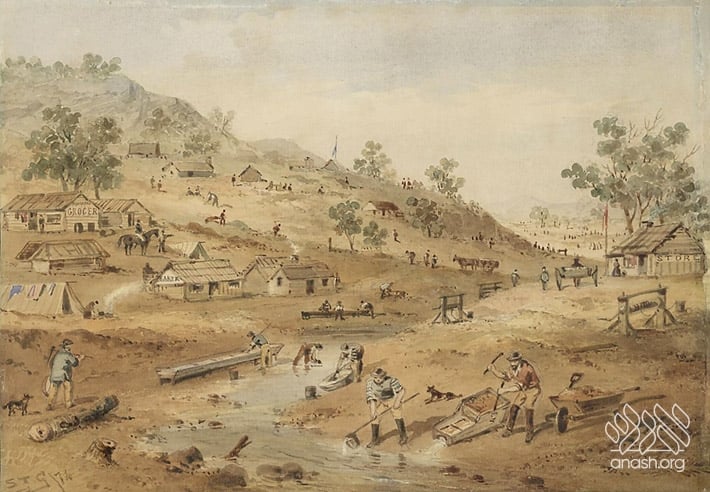


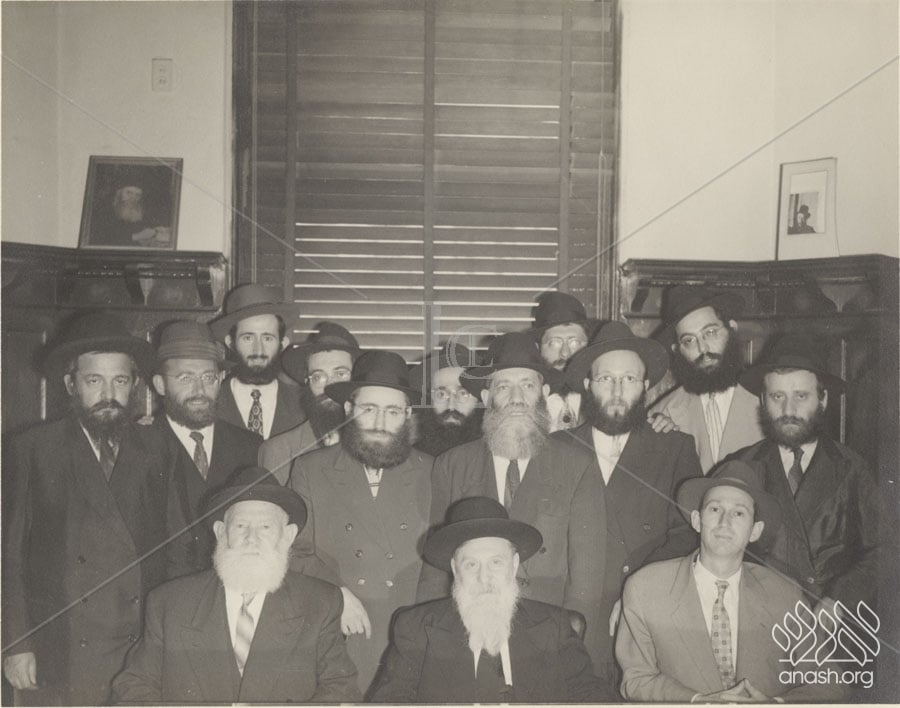
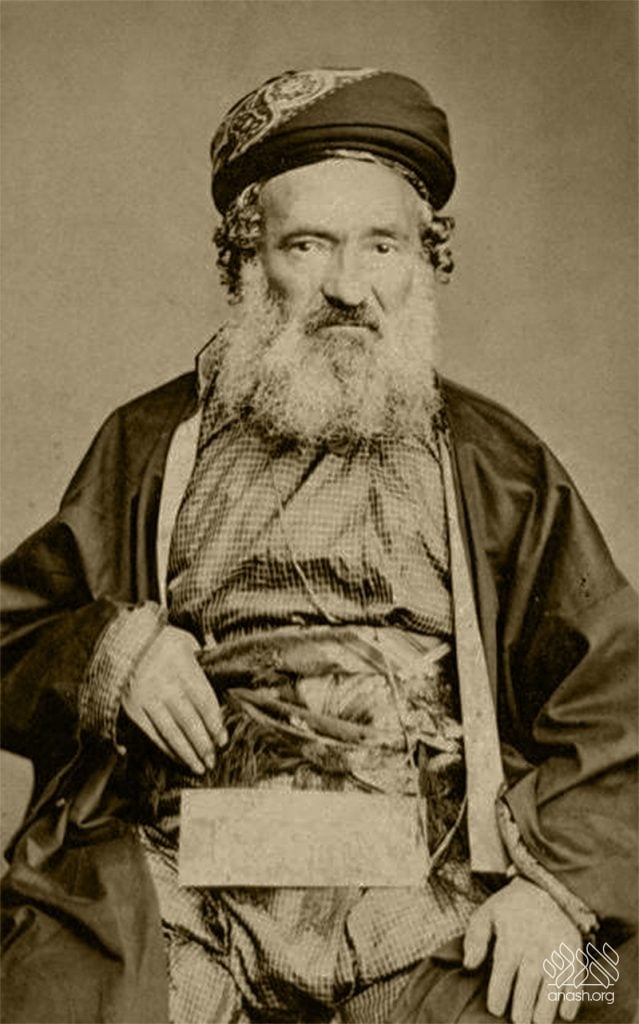
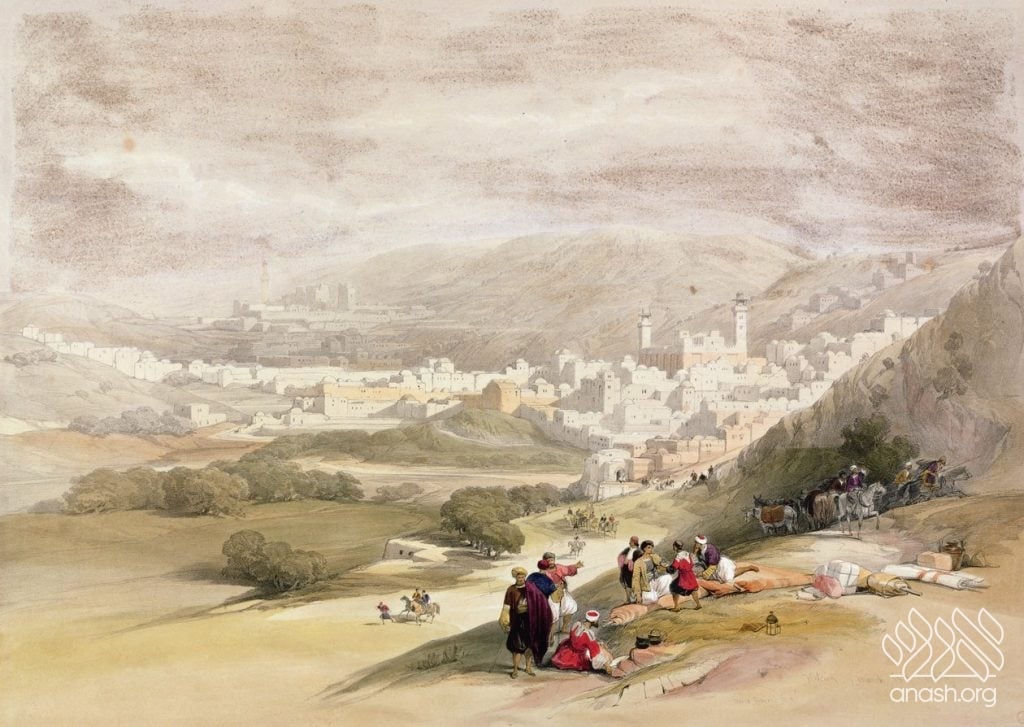
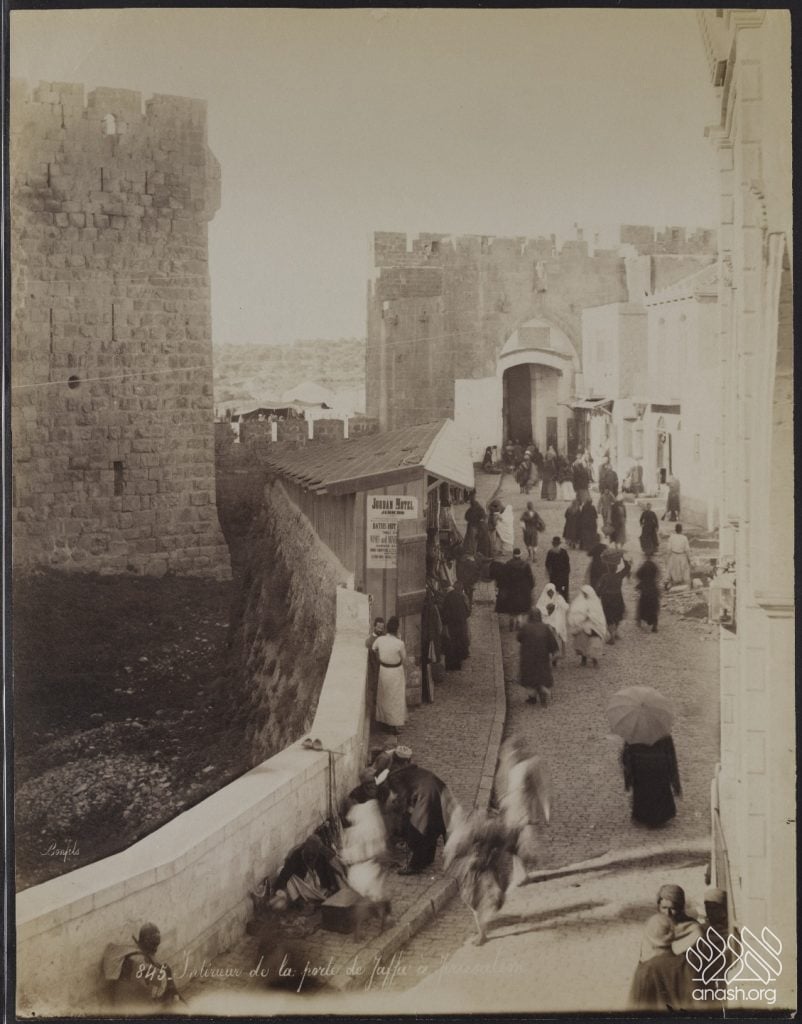
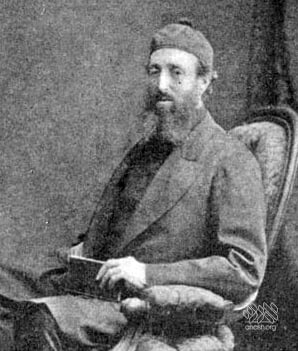
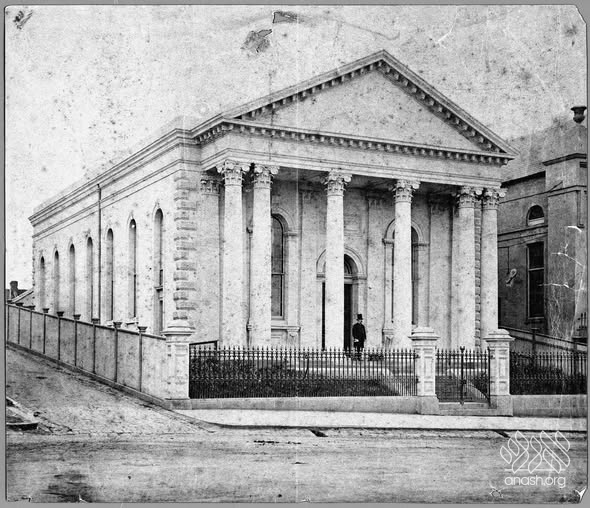
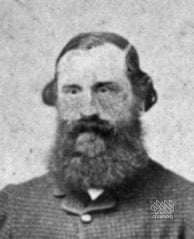
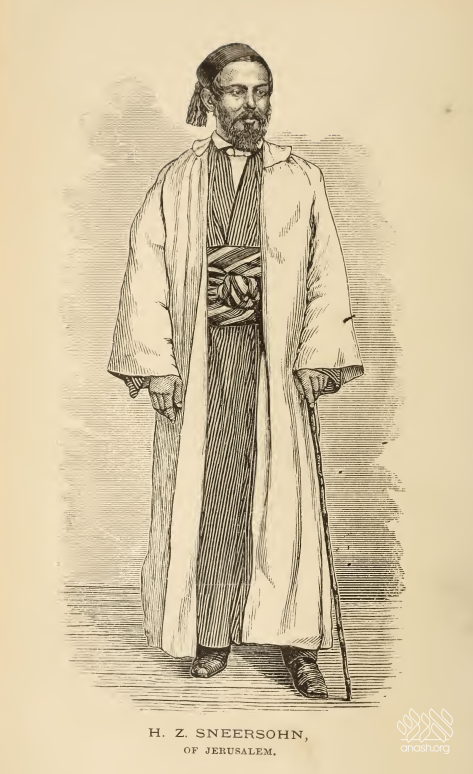
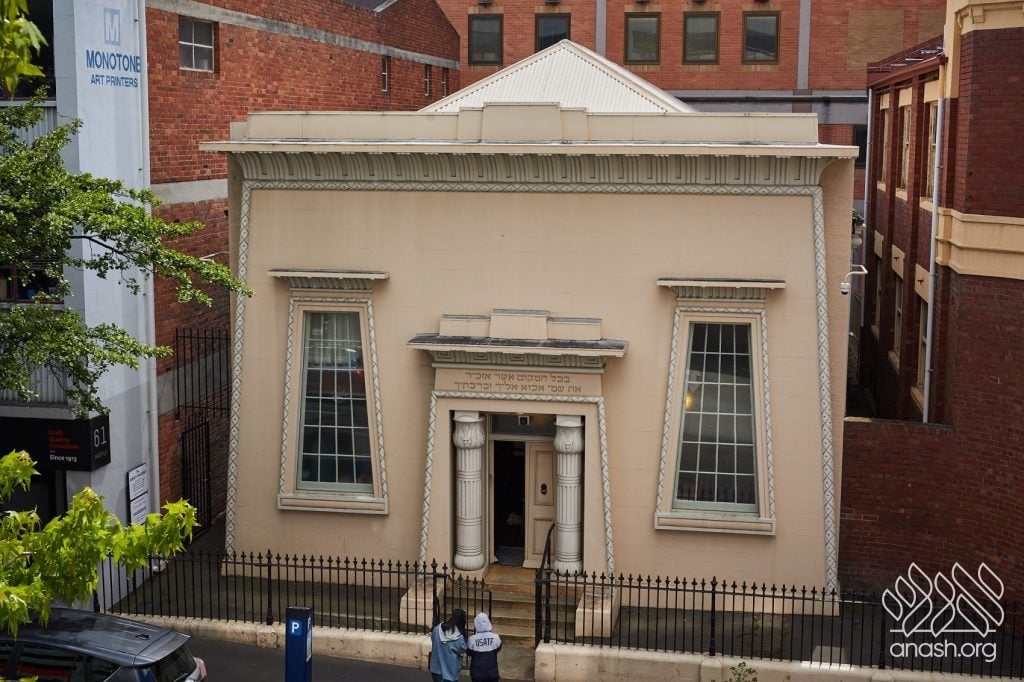
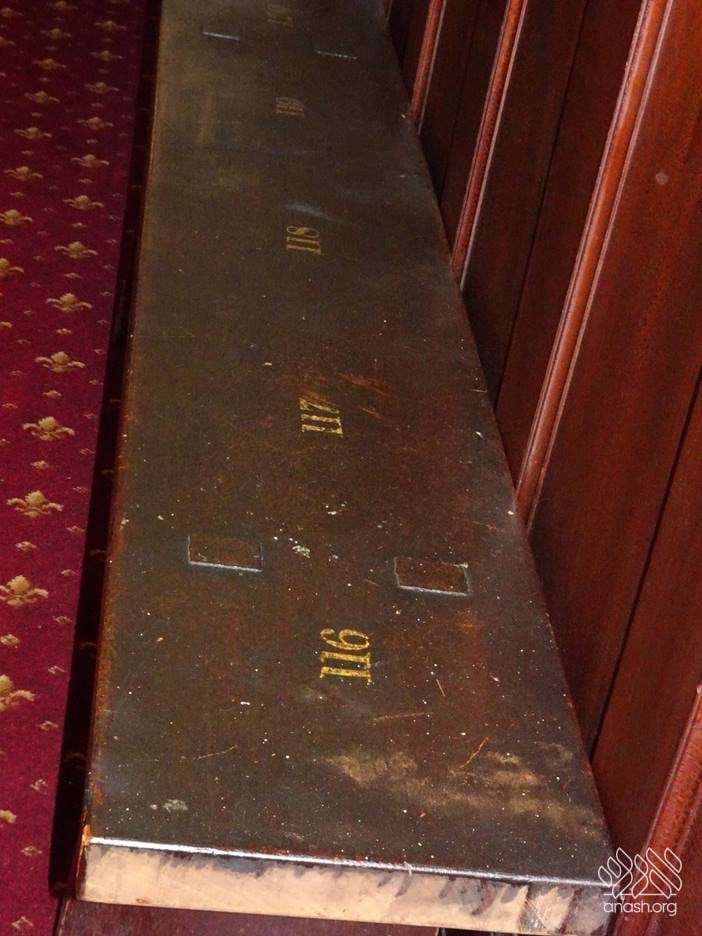
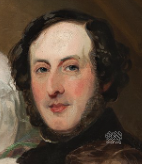
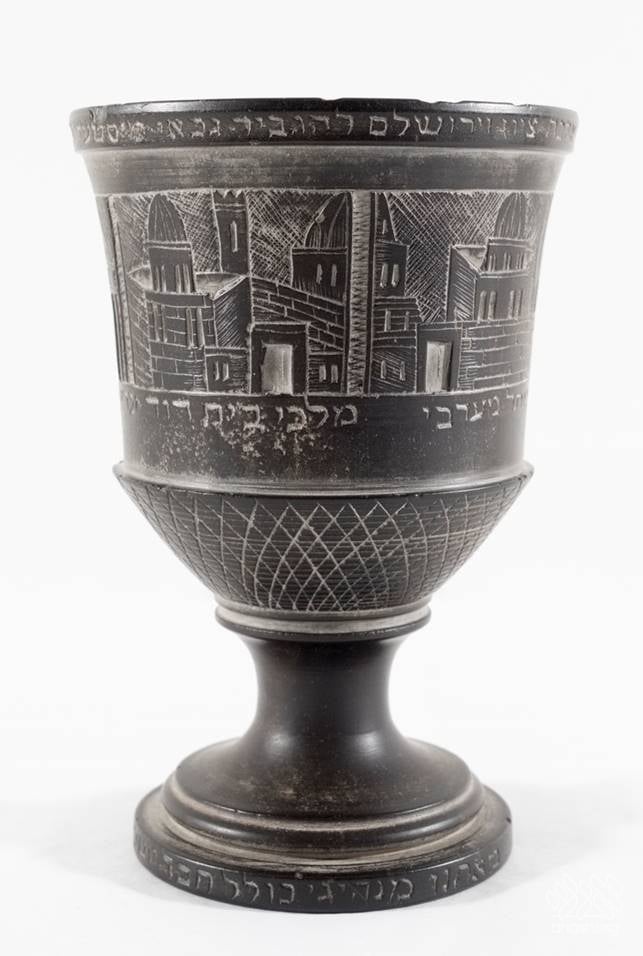
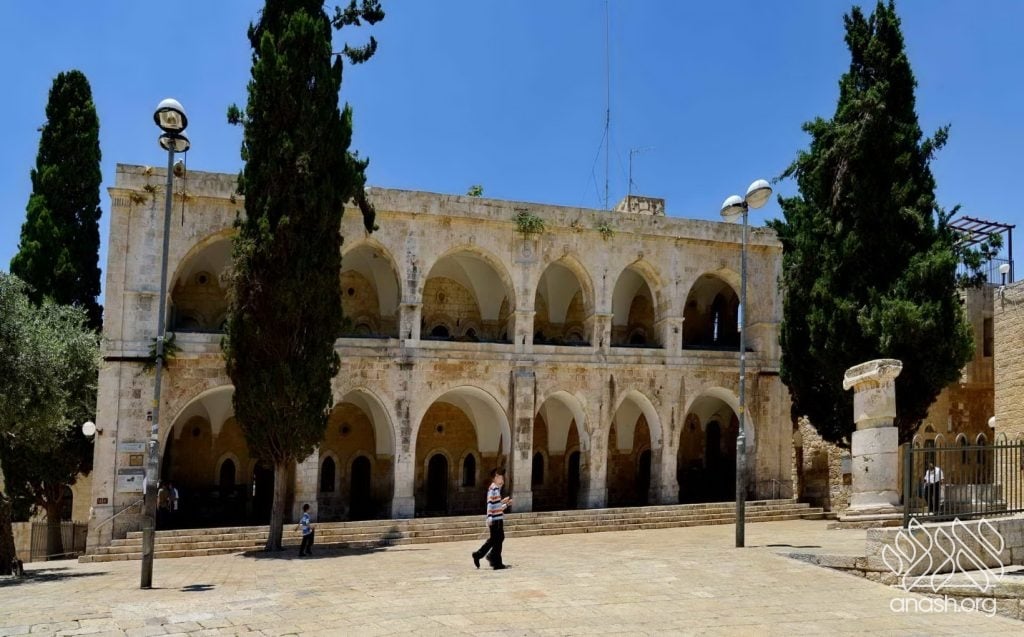
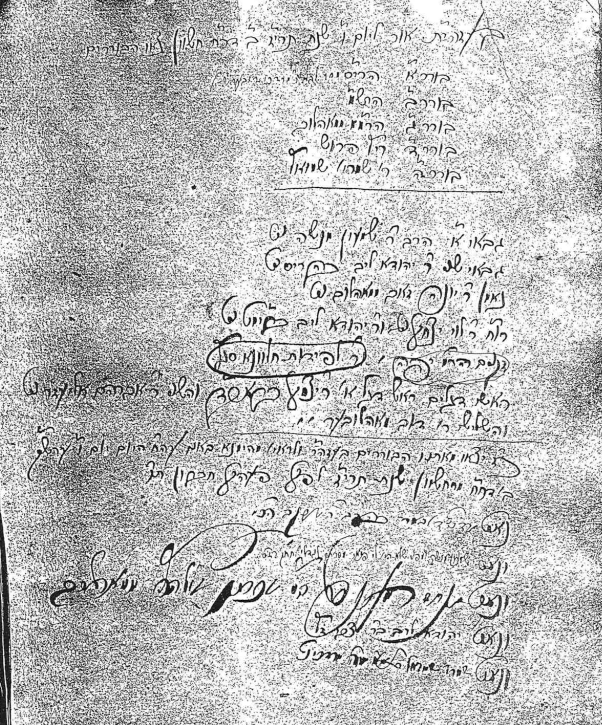
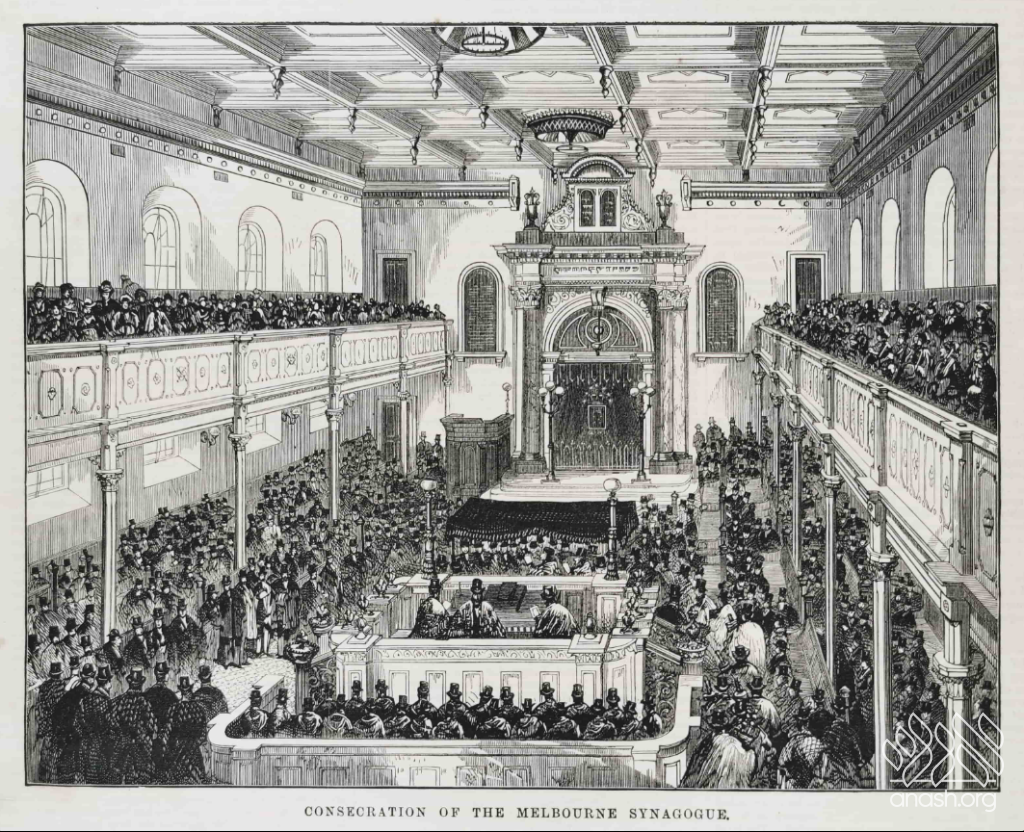
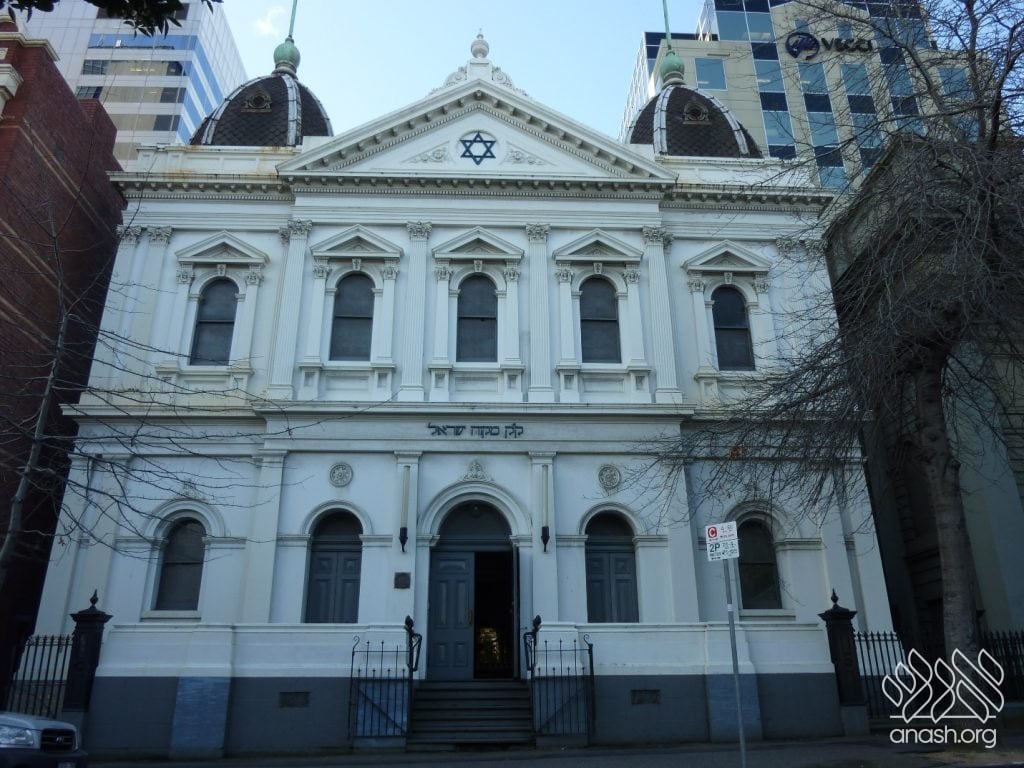
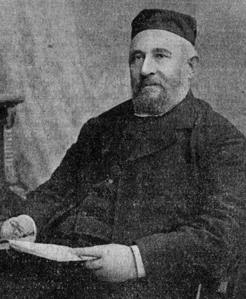
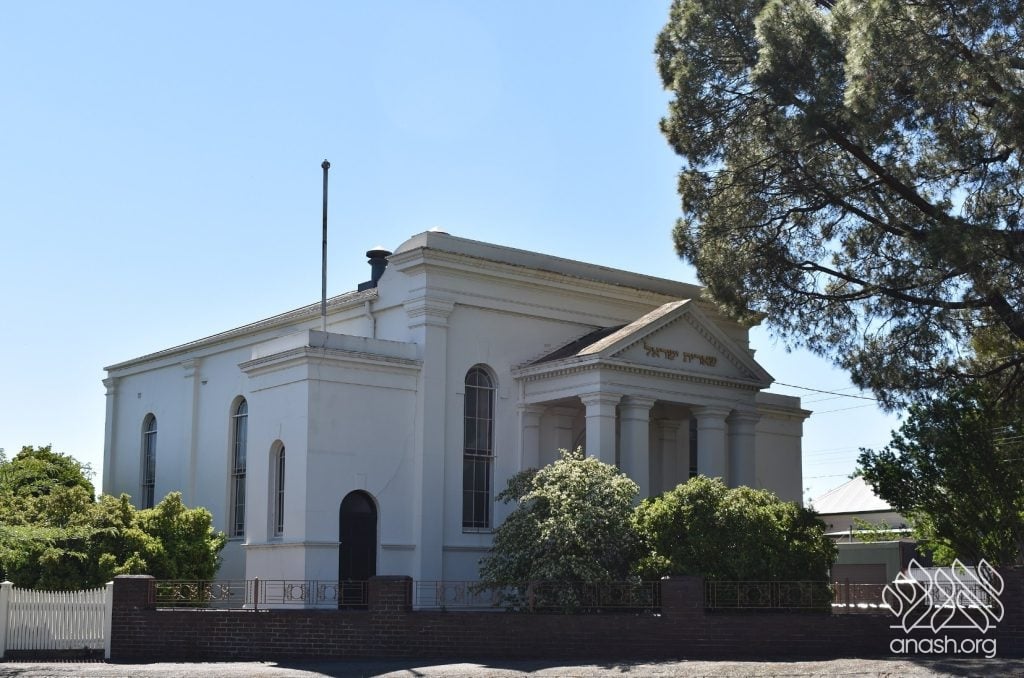
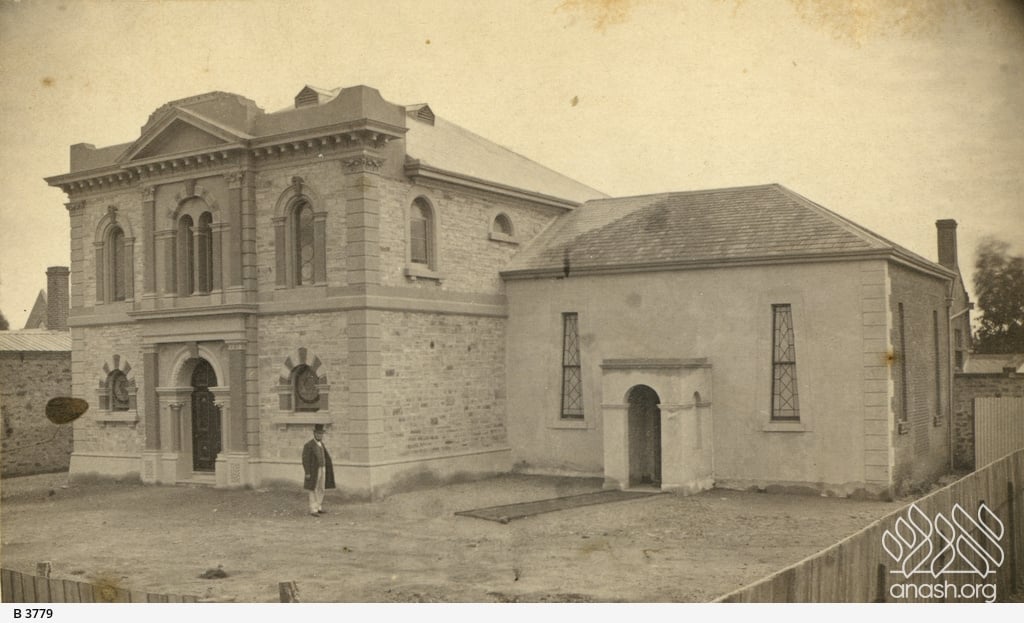
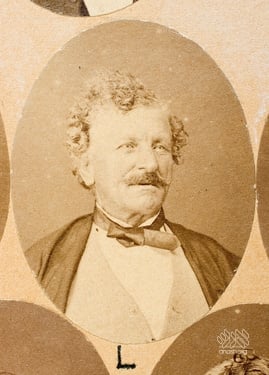
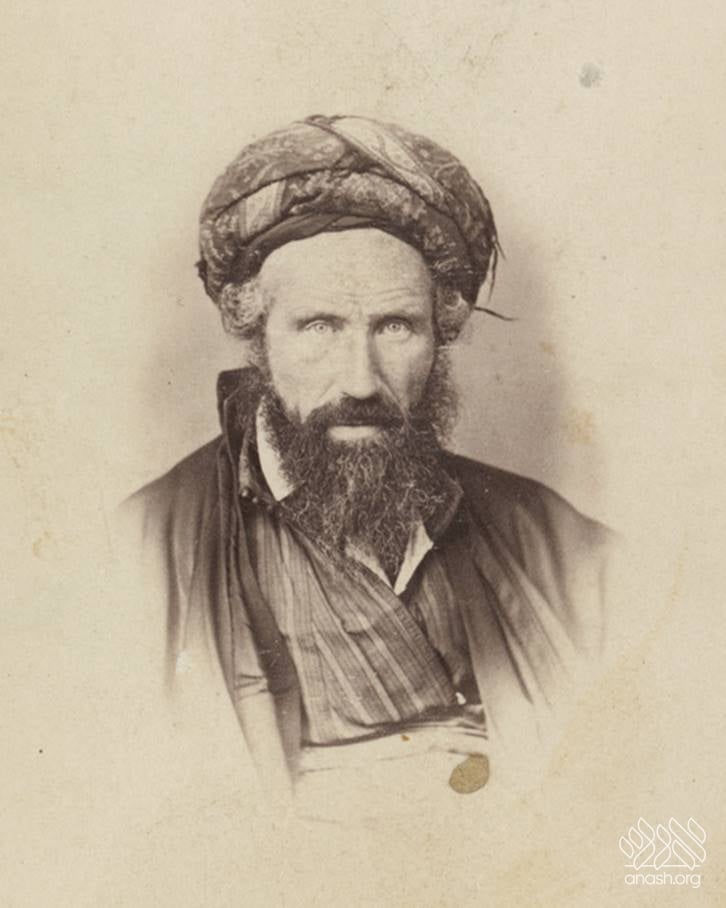
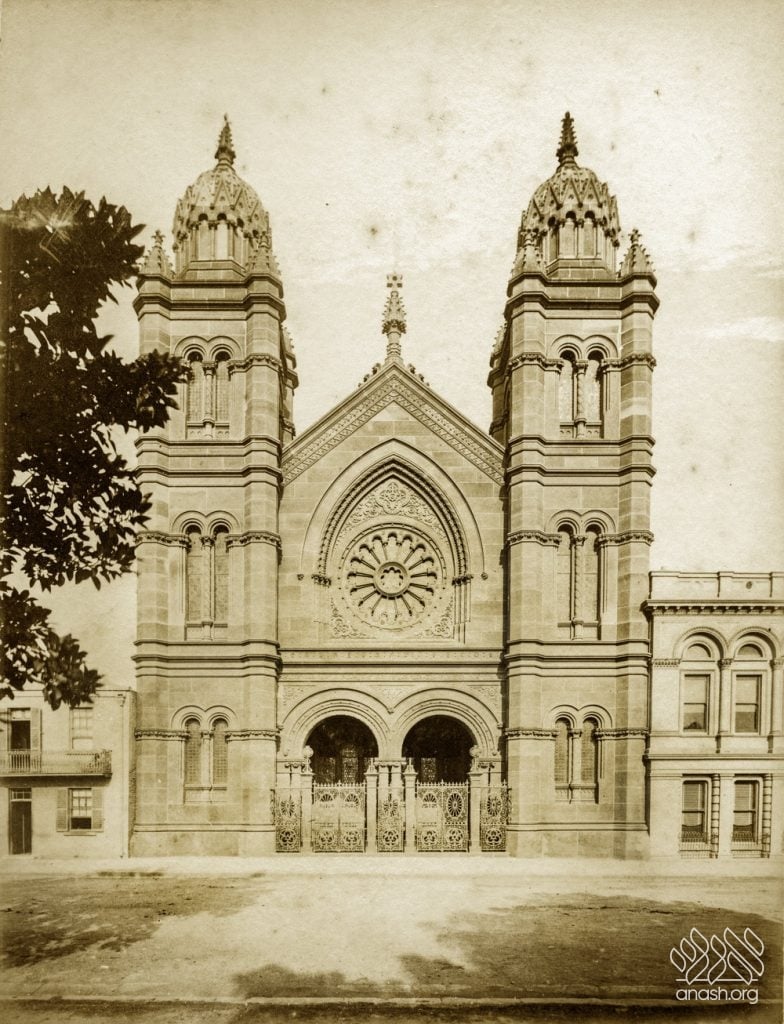
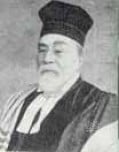
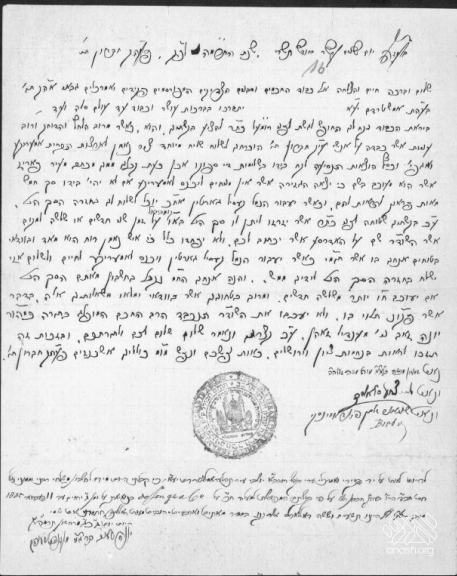
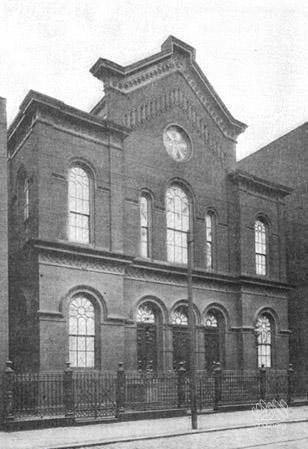
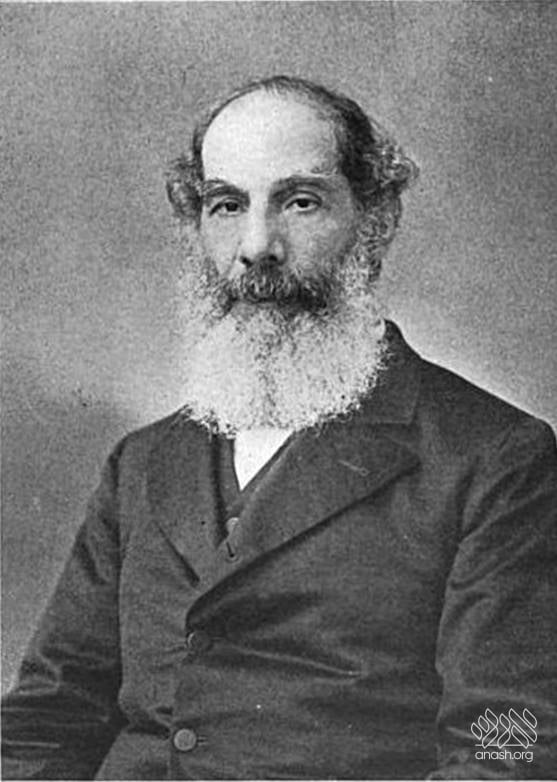
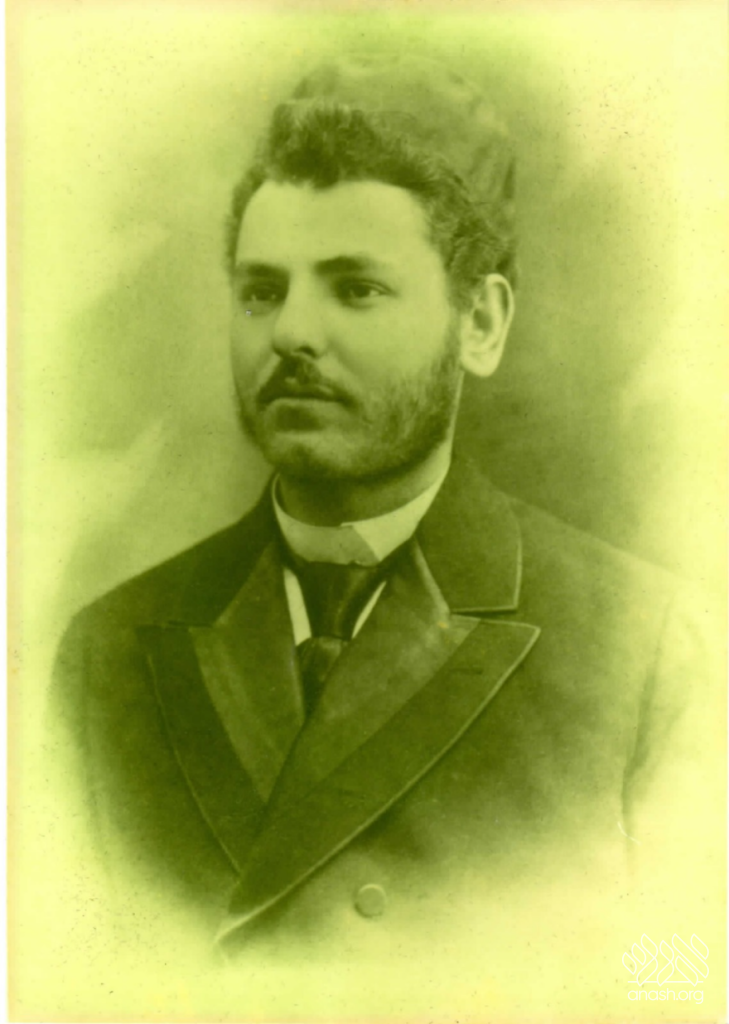
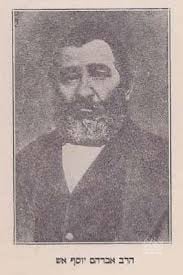
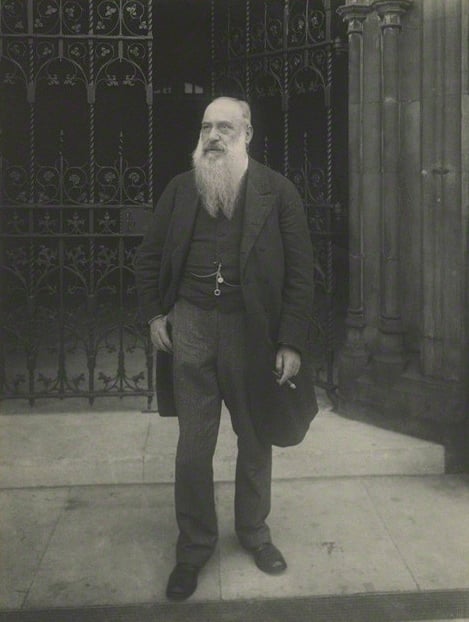
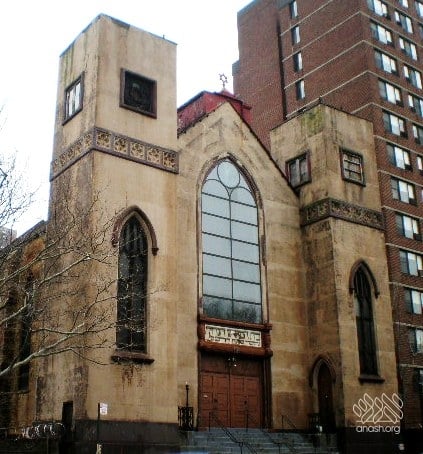
 COMMENTS


B”H.
Once again this article strikes “gold”.
Thank you
כמו תמיד – מעניין מאד ומרתק.
אלישיב קפלון
נין של ר’ משה זלמן פייגלין…
His kever is in Pinelands cemetery in Cape Town South Africa in the old section
Klausner writes that according to British authorities and his brother Pinchas, he was buried in EY.
As written. To kevuras yisroel
Not eretz yisroel
English Wikipedia page mistakenly says: “According to British authorities and his brother Pinchas, he was buried in Israel.”
Such a well written & researched article. Thoroughly enjoyed reading this history on our ‘Australia Day’. It is difficult to imagine these shadarim leaving Israel by boat to collect money around the world, especially to Australia. Even more amazing to is to read that Australians at that time, both Jew & non-Jew alike, would reach into their pockets for Jews living in the Holy Land. It’s fabulous.