




י״ד ניסן ה׳תשפ״ו | March 31, 2026
The Rebbe’s Concern for a Young Couple’s Midnight Tea
During yechidus before their departure on shlichus, the Rebbe pressed Rabbi Asher and Sema Zeilingold about a seemingly minor detail – how they would manage a cup of tea in the middle of the night – expressing his concern for the young couple.
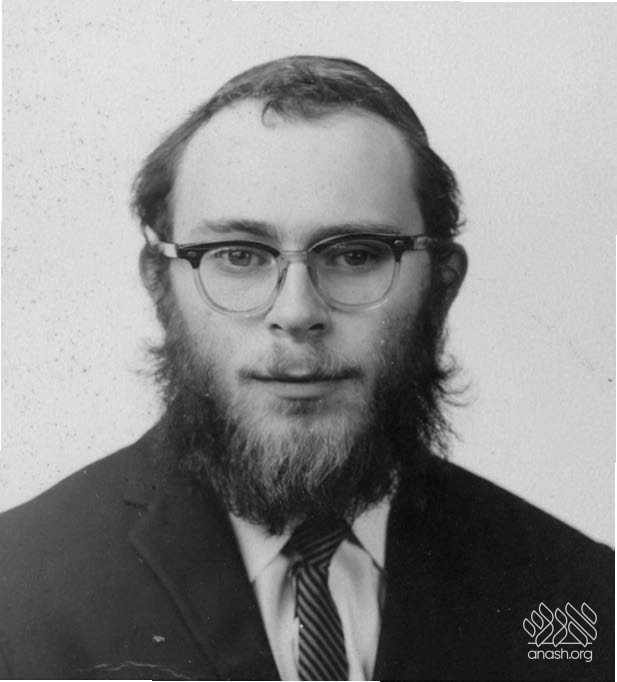
Rabbi Asher Zeilingold has led the Adath Israel Congregation of S. Paul, Minnesota, since 1966. He recently published a two-volume book, Clear Vision, about his interactions with the Rebbe. He was interviewed in February 2011.
Shortly after we got engaged, my wife Sema and I wrote a letter to the Rebbe. We told him that we were looking forward to our life together, and we wanted to go out and become his emissaries. With that, we asked for the Rebbe to choose the place where we would spend the rest of our lives.
The Rebbe told me to first spend two years studying Torah, and then to come to him with a few proposals that he would choose from. So, after two years, in 1966, we wrote to the Rebbe again, with a list of ideas and job offers — and then, the very next morning, I received another proposal from my friend Rabbi Moshe Feller, who had been sent to Minnesota as the Chabad representative there some three years before. There was a synagogue in S. Paul that needed a rabbi and had appointed Rabbi Feller to find candidates. As it turned out, this was the proposal the Rebbe chose, and he even did what he could to help me get the position.
Eventually, the president of the shul wrote a letter to me, asking if I would agree to become the rabbi. However, he added, since the congregation had very little money in the bank, what they were offering to pay me for the first year was considerably lower than a rabbi could expect to receive for a full-time position. I sent this letter to the Rebbe, too.
Whenever I had written to the Rebbe about this position, I usually received an answer within a few hours, and so I was surprised when there was no immediate answer. Eventually, after a few days, Rabbi Hodakov, the Rebbe’s secretary, showed me that the Rebbe had written out an answer that I could give to the shul in Minnesota: “I’ve visited S. Paul, and I see a field that can be planted with many beautiful trees, with fruit to come,” it began.
“You asked about the wage you are offering me,” the Rebbe then continued in my name, “and indeed it is a lower wage than could be expected. I understand your situation and agree to this wage, but on the condition that when things get better, the wage will be increased.”
And so I was asked to become the rabbi of the Adath Israel Synagogue of S. Paul.
We were set to go on the Friday before Passover of 1966. In those days, the custom was that a young couple going out on shlichut would first visit the Rebbe to receive a blessing, so a couple of weeks beforehand, I asked Rabbi Hodakov if we could have an audience. At first, we were told that, since it was just before Passover, that would be difficult, but then the Rebbe said that we should come in.
In a note I prepared earlier, I wrote that we had come for the Rebbe’s blessing, and we were also asking for his specific instructions in relation to our shlichus. In the audience, I handed my letter to the Rebbe.
“What arrangements have you made for Passover?” he asked.
Since we were arriving just before Passover, I told the Rebbe that we would be eating all of our holiday meals together with Rabbi and Mrs. Feller. However, at that time, the Fellers lived in a very small apartment, so we would be sleeping in the home of an elderly couple. The couple was observant, but we didn’t know their level of kashrut observance, and Chabad traditionally maintains an especially high standard for food on Passover, so we didn’t plan on eating anything in their home.
The Rebbe looked at me after I said all of this. “And what are you going to do if you want to have a glass of tea in the middle of the night?”
Rebbe, please, I thought, I don’t want to waste your precious time discussing whether I will or won’t be able to drink tea!
But the Rebbe had asked me a question, and I had to give an answer. “I don’t know,” I replied simply.
“I want you to buy a teapot, to make sure that you can make tea.”
“As soon as I get to Minnesota,” I said, “I will buy a teapot.”
The Rebbe wasn’t satisfied. “You’re going on a Friday; the next day is Shabbat HaGadol.” On the Shabbos before Passover, known as Shabbat HaGadol, rabbis traditionally deliver a special sermon, and so he went on: “You’re going to be thinking about your sermon, and you may forget to buy the teapot.”
“I’ll buy it here,” I offered.
“Buy it here, and after you buy it, send me a note that you have bought it.”
At the end of the audience, the Rebbe gave a Tanya, the classic work of Chabad philosophy, to myself, and a prayer book to Sema. Finally, he turned to the last item in our note.
“As for your request for specific instructions,” he said, “I am instructing you to travel in good health, that you should have tremendous success, and that you continually write with good and happy tidings.” Thank G-d, we’ve been able to do that, and we continue to do so.
The next morning, I bought a teapot and decided to use it if I ever wanted to have tea in the middle of the night — although I never did have the urge.
We would always take every word the Rebbe said seriously, but when he told it to us in the days before Passover — when every second was so precious, and when we weren’t really supposed to have an audience at all — the Rebbe’s insistence that we should be able to drink tea at night became even more important.
I have thought this peculiar story over and over, and the more I think about it, I recognize in it the Rebbe’s concern for others, for the Jewish people, and especially for the young couples he sent out as his emissaries. He wanted them to not only have everything they need, but also the enjoyments of life — a cup of tea in the middle of the night, if they may want it, because such luxuries can make it easier for us to continue our work.
Thinking about this story also reminds me of another story that once happened when I was in 770, late at night. It was quiet, and the Rebbe was receiving people for private audiences in his room. But all of us who were there in the lobby, outside the Rebbe’s room, could hear that the Rebbe seemed to have had a bad cough.
So I suggested to Rabbi Groner, another secretary, that we should offer the Rebbe some tea to soothe his throat. There was none available in 770 at that time, so I went out to prepare a glass for the Rebbe, and when I returned, Rabbi Groner told the people waiting for their audience that before the next person in line entered the Rebbe’s room, he would go in to offer it to the Rebbe.
When Rabbi Groner walked into the Rebbe’s room, a few seconds passed, and then he walked out again with the glass. Evidently, the Rebbe had not taken the tea.
“What did the Rebbe say when you offered him the tea?” we asked.
“The Rebbe said, ‘Do you think I’m going to sit here and drink tea while people are waiting outside to talk to me?!’”
 COMMENTS


We appreciate your feedback. If you have any additional information to contribute to this article, it will be added below.