




ט״ז אב ה׳תשפ״ה | August 9, 2025
The Innovative Chasid Who Laid the Foundations for Kehos
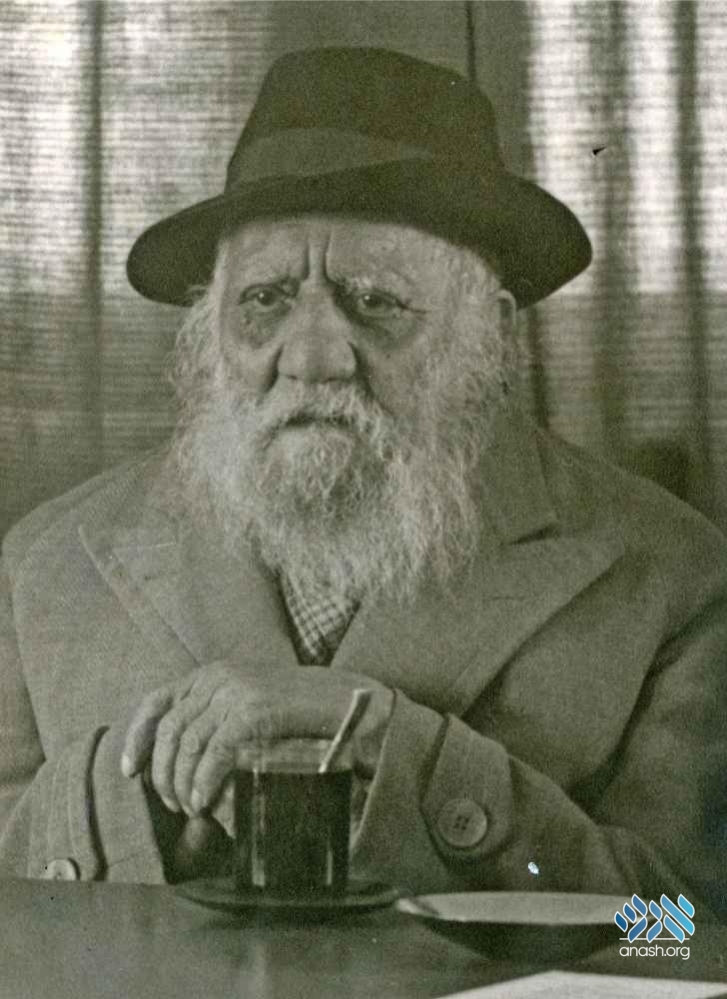
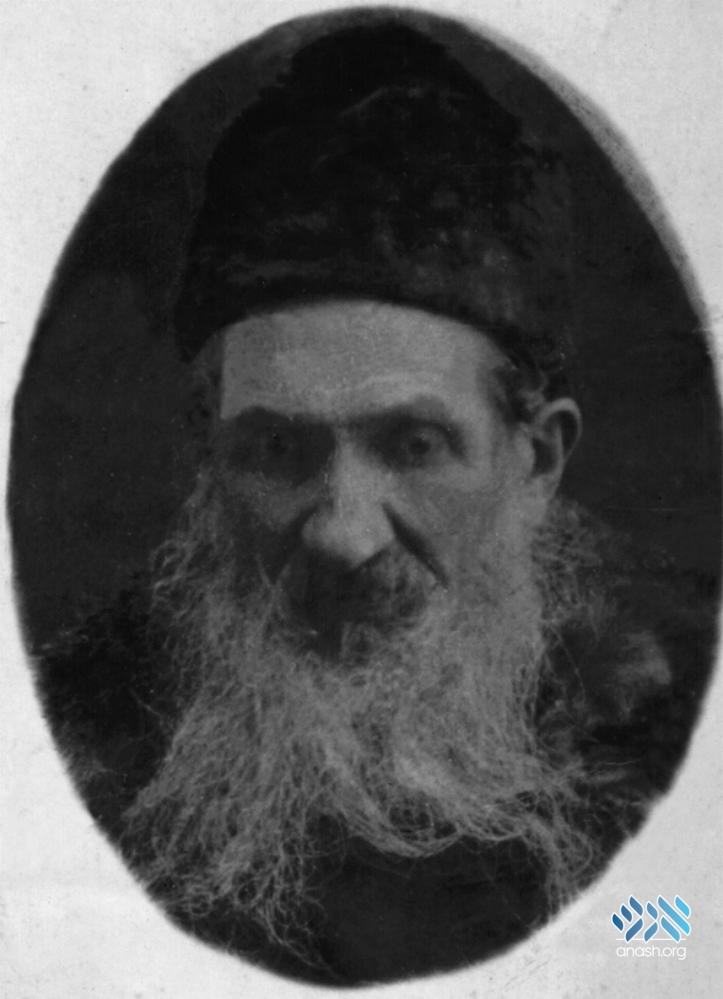
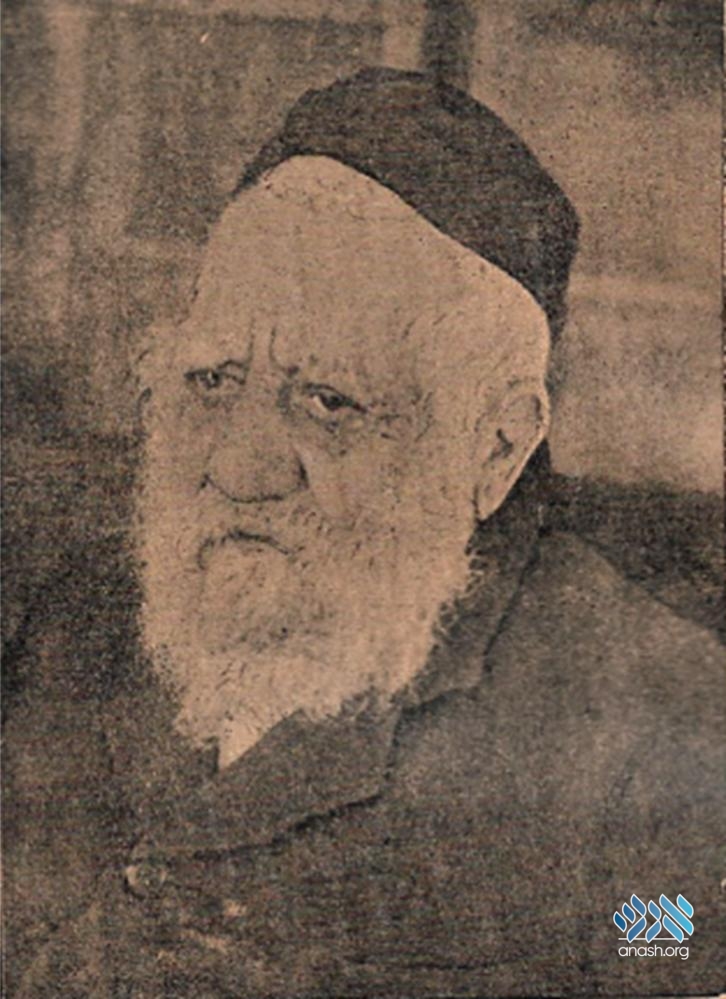
In honor of the 101st yahrtzeit of the Chabad gaon, original thinker, and publisher R. Chaim Eliezer Bichovsky, ‘From the Margins of Chabad History’ presents newspaper articles about him written by people who knew him, along with a biographical sketch of his life and legacy.
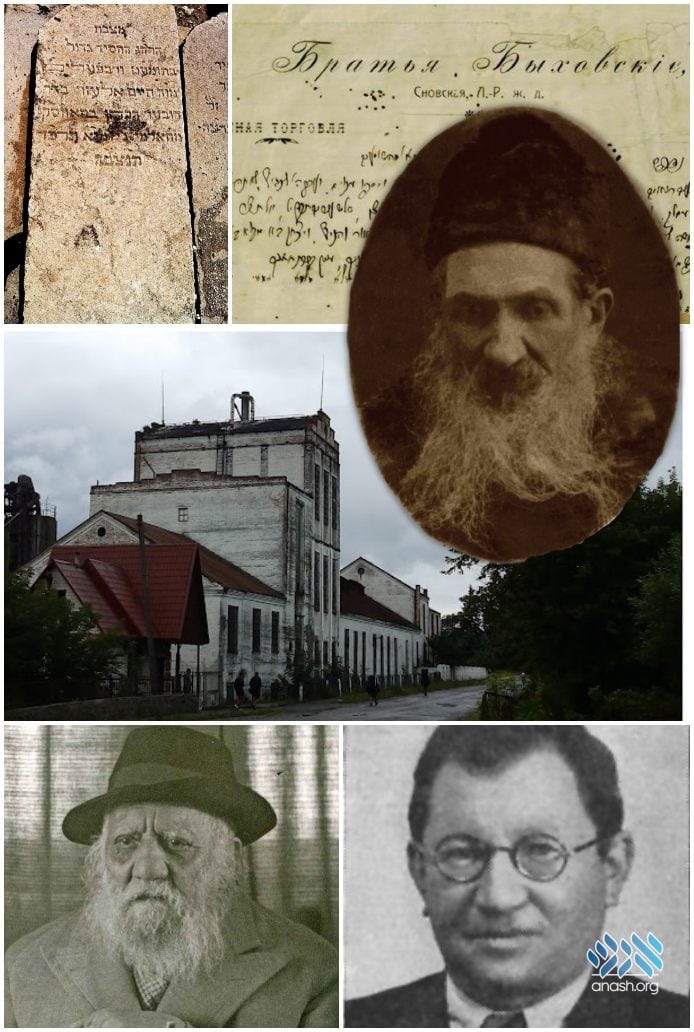
In honor of the 101st yahrtzeit of the Chabad gaon, original thinker, and publisher R. Chaim Eliezer Bichovsky, ‘From the Margins of Chabad History’ presents newspaper articles about him written by people who knew him, along with a biographical sketch of his life and legacy.
By Shmuel Super
Biography
Monday, 17 Menachem Av, will mark the 101st yahrtzeit of Harav Chaim Eliezer Bichovsky. While his name is known in Chabad circles, his scholarship and enduring contributions to Chabad history remain underappreciated. In this article, we will present first-person accounts about R. Bichovsky and members of his family, and also attempt to highlight some aspects of his personality and influence.
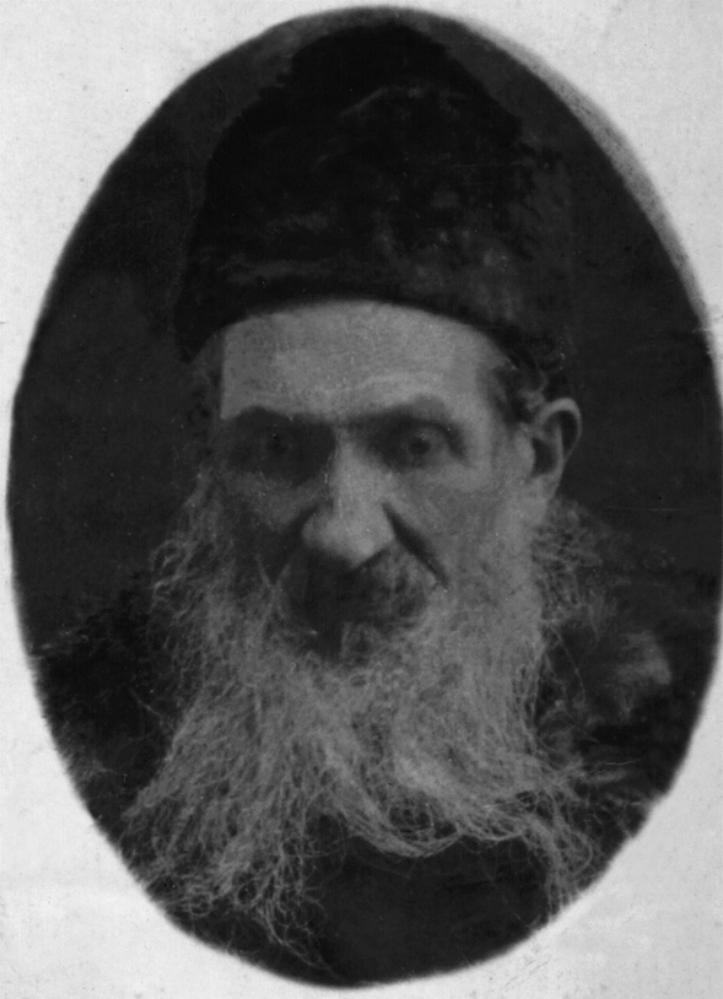
Biographical information about R. Chaim Eliezer Bichovsky is quite sparse. He was probably born in around the year 5615, into a family of prominent gevirim and chasidim. R. Chaim Eliezer grew up in the period following the histalkus of the Tzemach Tzedek, and he was a chasid of the Rebbes of Liadi, Harav Chaim Shneur Zalman and Harav Yitzchak Dovber, and, after their passing, Harav Shmaryahu Noach of Bobroisk.
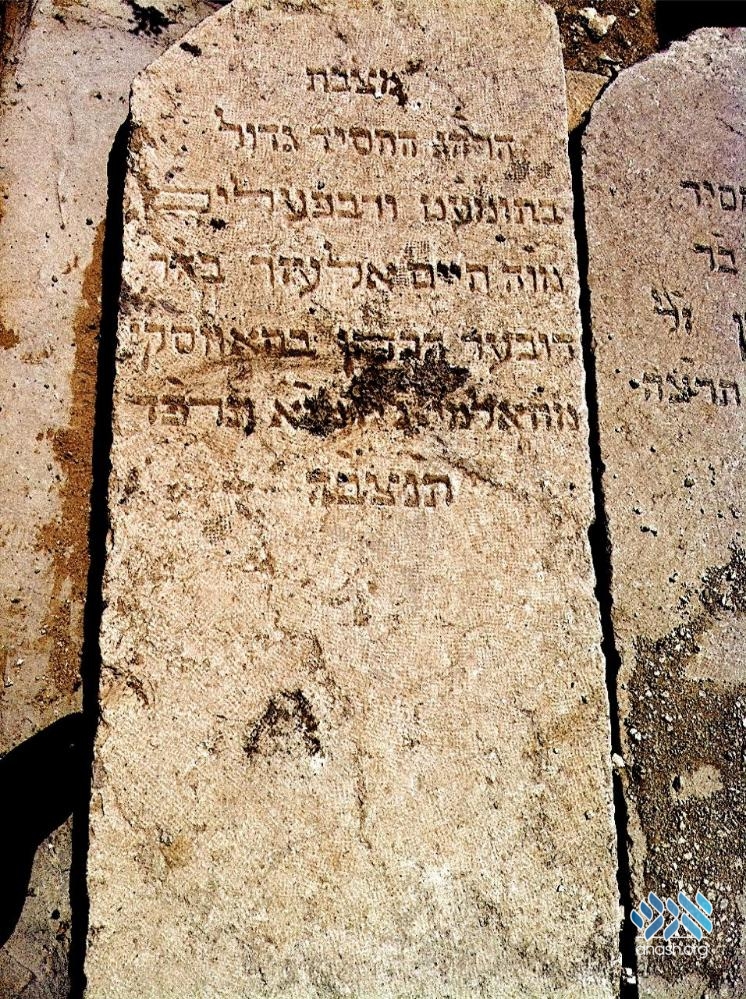
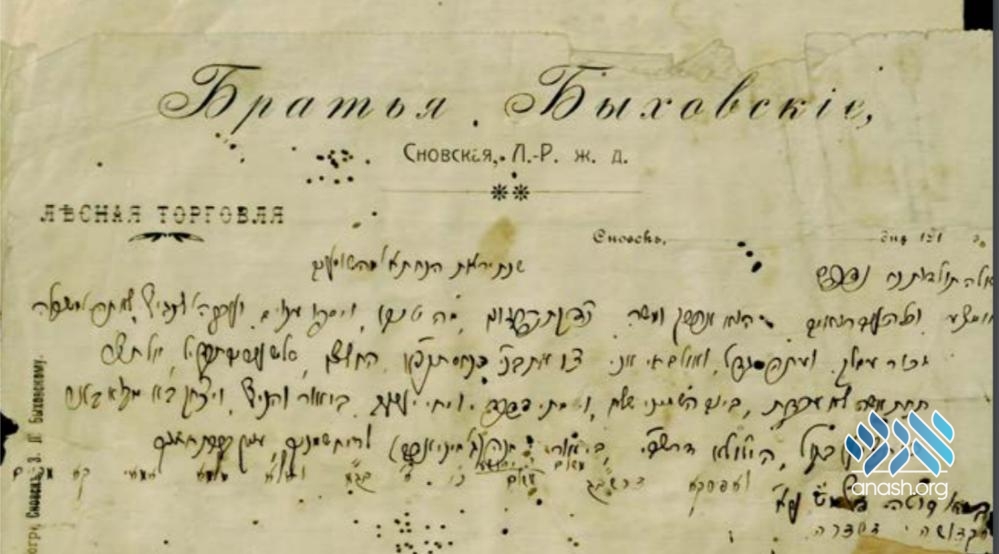
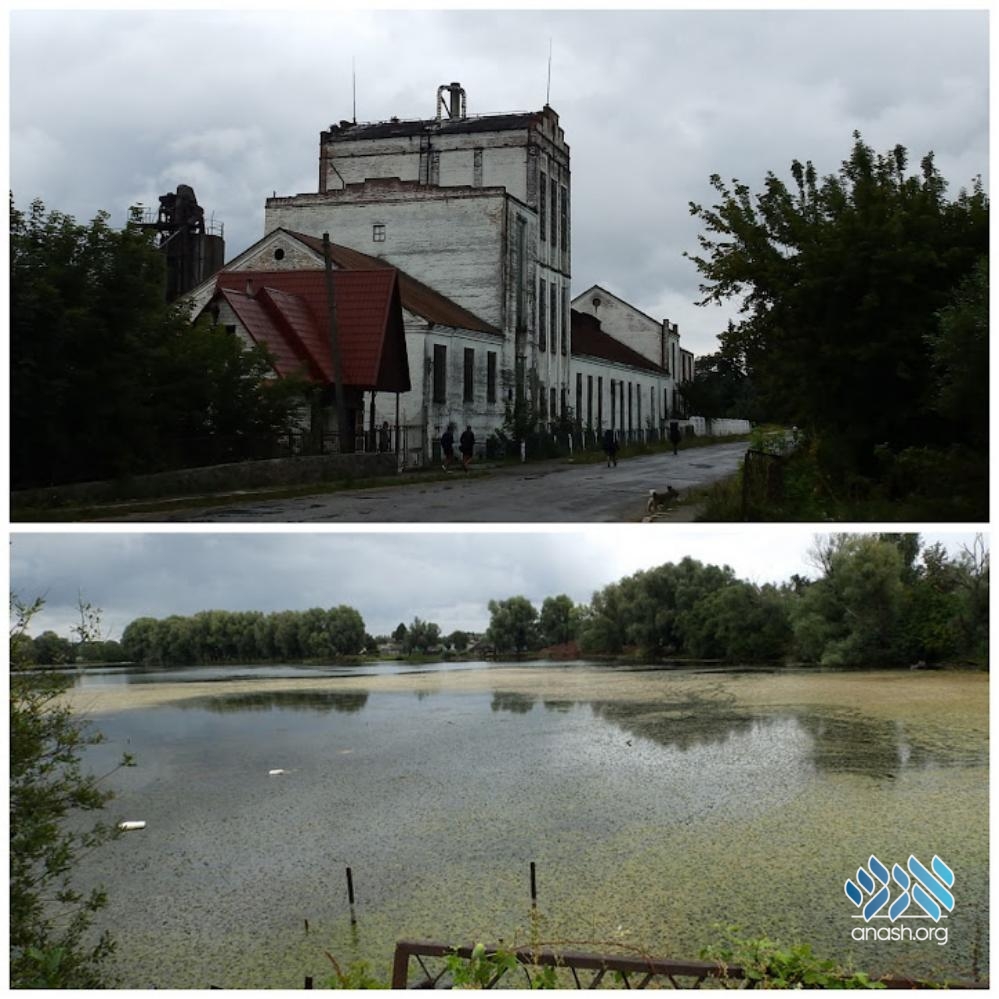
R. Chaim Eliezer was the son-in-law of the prominent gvir and askan R. Shmuel Yehudah Leib Epstein, and he lived on his father-in-law’s estate in the town of Cholmi, in the Chernigov region, for many years. Following the family tradition, R. Chaim Eliezer was also a wealthy businessman, and devoted to askanus on behalf of the community and individuals in need. In his later years he served for a period of time as the Rosh Yeshivah of the Bobroisker Rebbe’s yeshivah in Bobroisk, and also lived in the town of Snovsk. He spent his final years in Yerushalayim, where he passed away and is buried.
It is no secret that R. Bichovsky was involved in a machlokes with the Rebbe Rashab regarding the administration of Colel Chabad, which provided financial support to Chabad Chasidim in Eretz Yisrael. R. Chaim Eliezer was an accountant for Colel Chabad and a member of the administration for many years, and he eventually established a splinter fund under the control of Bobroisk. As a result, R. Chaim Eliezer was considered persona non grata by many Lubavitcher chasidim.
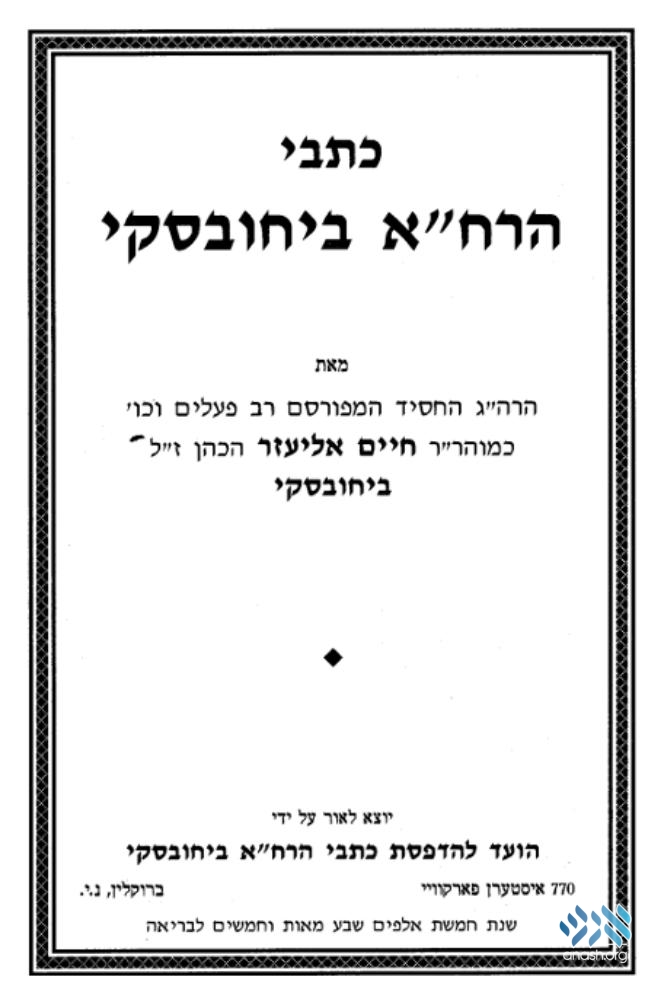
But in our generation, the Rebbe “rehabilitated” R. Chaim Eliezer, and spoke highly of him. The Rebbe even instructed that his surviving writings of chidushei Torah be published, and the volume of Kisvei Harav Chaim Eliezer Bichovsky was published in 5750. Due to the past machlokes, the sefer did not bear the official logo of Kehos, and the publisher is stated as the “Vaad Lehadpasas Kisvei Chaim Eliezer Bichovsky.” But with the address of 770 Eastern Parkway on the title page, it was always clear whose initiative this was (for the story behind the publication of this sefer, see R. Shalom Ber Levine’s Avodas Hakodesh, p. 141).
Kisvei Harav Chaim Eliezer Bichovsky reveals to us an extraordinary gaon in nigleh, Kabbalah, and Chasidus. His writings show how he viewed and processed everything in the world, from Torah matters to current events, through the lens of Kabbalah, including intricate remazim and gematriyos. He was also a treasury of authentic ancient chasidishe traditions and stories, which he weaves into his writings.
Due to their density and predilection to remazim, R. Chaim Eliezer’s writings are seen by many as idiosyncratic and obscure. But a closer read also reveals depth, insight, and consistent themes that remain underexplored and underappreciated.
Printing
R. Chaim Eliezer’s lasting legacy is the many sifrei Chasidus he published. From the year 5671 until his passing, he operated as a one-man publishing house. He collected dozens of manuscripts, meticulously edited them, arranged the typesetting, and trimmed the printed sheets to size. His publishing efforts yielded 15 titles, most of which have been republished by Kehos.
Today, when all of the chasidus of the Rebbeim has been published in hundreds of volumes and all is readily available to the public to buy, it is difficult to grasp how revolutionary R. Chaim Eliezer was. But in those days, only a few basic sifrei Chasidus, such as Tanya and Likutei Torah, were available in print. Generations earlier, the Mitteler Rebbe had directed an effort to print sifrei Chasidus, but since that time, very little had been done in this area, and Chasidus was primarily learned from private manuscript copies.
The seforim R. Chaim Eliezer published for the first time from manuscript include the Tzemach Tzedek’s seforim Derech Mitzvosecha, Sefer Hachakirah, Yahel Or on Tehillim, and the first volume of Or Hatorah. Other important works include Meah Shearim and Boneh Yerushalayim—collections of igros and maamarim of the first three Rebbeim.
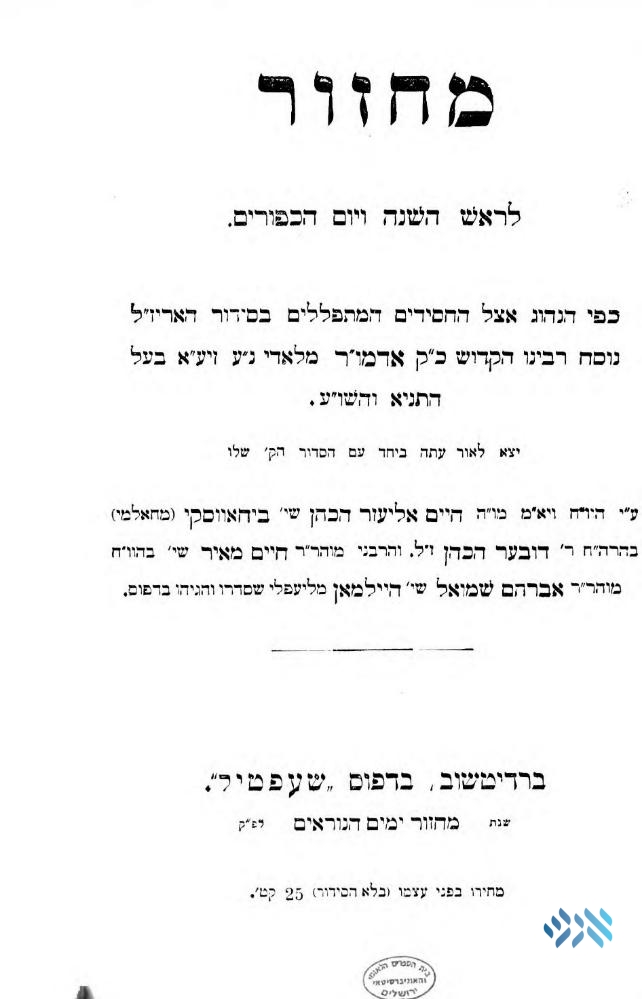
Another contribution R. Chaim Eliezer made to Chabad is the machzor we all daven from on Rosh Hashanah and Yom Kipur—which is in fact a reprint of the very first Chabad machzor, published by R. Chaim Eliezer.
As he explains in his introduction, it was known among Chabad chasidim that our minhag is to minimize the amount of piyutim said in the davening, but in the absence of a published nusach for the machzor much confusion developed about what we skip and what we say. R. Chaim Eliezer established the proper nusach based on his tradition, and it achieved universal acceptance in Chabad when the Rebbe reprinted it through Kehos, making minor corrections and additions.
For R. Chaim Eliezer Bichovsky nothing was merely technical, so printing was not just a practical means of making Chasidus publicly available. He had a deep philosophy behind printing, which he elaborates on in a number of places in his published writings.
Drawing on sources from the Zohar, Pardes, and Tanya about the meaning of hiskashrus with tzadikim who have passed, R. Chaim Eliezer develops the idea that to enable full hiskashrus with tzadikim who have been nistalek their works must be published. Printing makes their Torah widely available to the public, and when their teachings are studied, “their lips move in the grave.” Thus, mass study of their Torah renders the tzadik active in the physical world like a living person, enabling us to achieve full hiskashrus with them (Kisvei Harav Chaim Eliezer Bichovsky, p. 120).
Based on this idea, R. Chaim Eliezer explains the famous words of the Rebbe Rashab before his histalkus: ich gei in Himmel, di ksavim loz ich aich—“I am going to Heaven; the manuscripts I am leaving for you.” As R. Chaim Eliezer explains it, this means that the way we can bring the Rebbe out of the heavens and back down into this world is through studying his writings—which is enabled on a large scale by printing (ibid, p. 149).
In another place in his writings, R. Chaim Eliezer describes the thoughts that entered his mind while he was hard at work in the printshop late at night, cutting printed sheets down to size. Employing a characteristically broad array of sources, liberally sprinkled with remazim of roshei teivos, he developed the idea that the manual labor he was engaged in is a form of shimush talmidei chachamim. Excited by his discovery, he pronounced a hineni muchan umezuman for the fulfillment of the mitzvah of shimush talmidei chachamim. Later that night, he merited a dream in which Harav Chaim Shneur Zalman of Liadi communicated to him his father the Tzemach Tzedek’s approval of the mitzvah he was doing by printing Chasidus (ibid, p. 209).
The Father and the Son
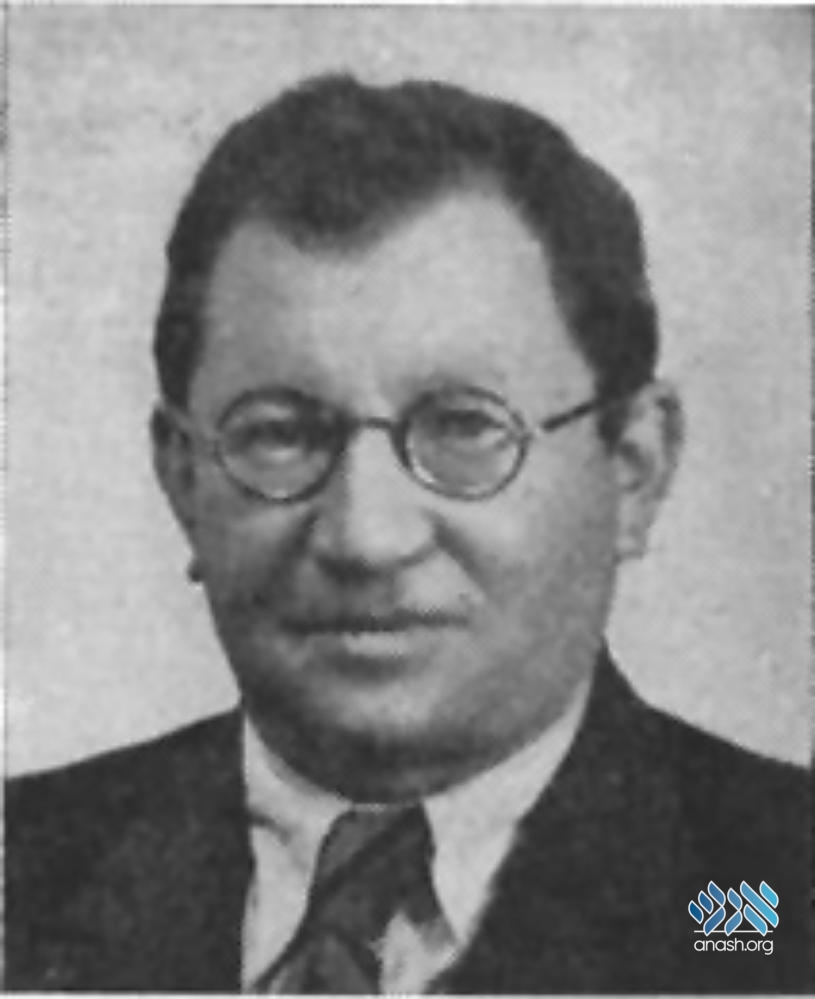
The first contemporary account of R. Chaim Eliezer we will present was written by David Zakai (5647-5738), a columnist for the left-wing Israeli Davar newspaper. Zakai (Zuchovitch) was from a Chabad background, and even after moving away from his frum roots, he remained traditional and continued to learn Torah.
In his “Ketzarot” column of 15 Teves 5695 (December 21, 1934), Zakai writes about his thoughts after recently seeing a notice reporting the death in Eretz Yisrael of a carpenter named Dov Bichovsky.
A Glimpse of the Revolution and the Changing Times
“Dov Bichovsky, a carpenter, passed away last night in Hadassah Hospital after several months of illness with typhus. He made aliyah to Eretz Yisrael nine years ago from Russia. He was forty years old and left behind a wife and child.”
I didn’t know him personally, but the notice mentioned “the son of Harav Chaim Eliezer,” and I understood: The Carpentry Workers Union had announced the passing of the son of R. Chaim Eliezer HaKohen Bichovsky. This very report expresses something about the history of our generation, a reflection of the upheaval among Jews.
I remember—a distinguished and large family, Torah and leadership, estates and forests, wealth in all forms of assets and real estate. A respected gvir, an outstanding chasid, and a great talmid chacham. A Chabad chasid whose soul was so refined you could have easily placed him two or three generations earlier. He held tightly onto the mizbeach of kedushah with all his strength and passion, lest, chas veshalom, anything move even an inch. He raised his children to follow in his path.
Steadfast and devoted, he toils to gather the manuscripts of his Rebbeim—“the tzadikim, nishmasam eden” from the Schneerson family—and publishes sefer after sefer, with the harchavah of a gvir, on fine paper and in a beautiful print. A man of action, who labors faithfully and devotedly on behalf of Colel Chabad, and visits Eretz Yisrael before the war to deal with complex Colel affairs.
“At the end of the War,” Kol Yaakov relates in his praise, “he ended up in Moscow, where he met the gaon and tzadik, the Chafetz Chaim, during his time in exile there. He forged a bond of love and friendship with him, and as kohanim, they established a regular kevius together to learn Seder Kodshim and the halachos pertaining to kohanim.
“Indeed, it is said of him that on the day he arrived in Eretz Yisrael, he didn’t miss a single shul in Tel Aviv-Yafo—he went from one shul to the next, ascending to the duchan, to bless the Jewish people in Eretz Yisrael.
“In a dark alcove in Meah Shearim, Yerushalayim, he was niftar—just after completing, in the year 5684, amid poverty and utter deprivation, the preparation for print of the sefer Ginzei Nistaros.
“The title page describes it: ‘It branches into three lights: Or Yisrael, Or Ne’erav, and Or Rav—holy letters from the times of the Baal Shem Tov, from the time of the great Magid, and from the period when the Alter Rebbe accepted the rabbonus until the year 5572. The proceeds of this book, and of all the books that will follow it beezras Hashem, are dedicated—bli neder—after deducting expenses, to a fund for the publication of the manuscripts of our Rebbeim of Chabad, their students, and their students’ students, may their merit protect us and all of the Jewish people.’”
Dov Bichovsky the carpenter, the son of R. Chaim Eliezer HaKohen. תנצב”ה.
***
The Kol Yaakov publication that Zakai mentions was a frum journal published in Yerushalayim, which is unfortunately not available online. This article mentions R. Chaim Eliezer’s relationship with the Chafetz Chaim but mistakenly locates them in Moscow. In fact, this relationship developed when the Chafetz Chaim was living in Snovsk during the period of the First World War.
R. Chaim Eliezer records several divrei Torah he heard from the Chafetz Chaim—directly or in his name—during this period (see Kisvei Harav Chaim Eliezer Bichovsky, p. 122, 180, 200). Details about their relationship are related by Harav Shmuel David Walkin, a talmid of the Chafetz Chaim who later served as a rov in Crown Heights (see Kisvei Aba Mari, pp. 250-251; Taharas Nisan, pp. 141-142).
Interestingly, the description at the end of the article about the elderly R. Chaim Eliezer hard at work in a tiny room is echoed by the Rebbe’s description of him in a conversation with his brother-in-law, the Rashag: “Even after moving to Eretz Yisrael at an advanced age he continued to work on collecting manuscripts of maamarei chasidus and editing them by moonlight or candlelight” (Menachem Tziyon, vol. 2, p. 375).
The Humble Chasid
Our second article about R. Chaim Eliezer was written by the famous Hebrew writer Alexander Ziskind Rabinovitch, known by the acronym of his name as “Azar.” Azar (5614-5705) grew up in Liadi, where he frequented the chatzer of Harav Chaim Shneur Zalman.
In his youth, Azar became a maskil, and he went on to write many books and articles in Hebrew. For a period of time he abandoned shemiras mitzvos, but during the later decades of his life in Eretz Yisrael he was shomer Torah umitzvos. Respected as the elder Hebrew writer of the generation, he toiled to promote Torah among the secular circles in Eretz Yisrael.
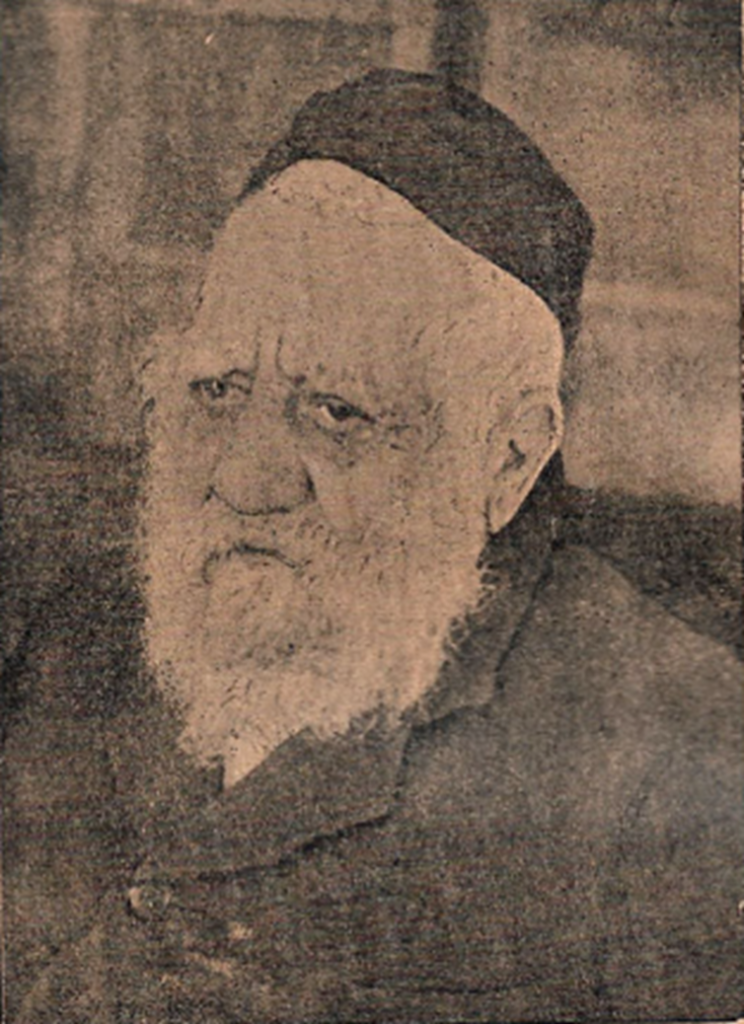
Azar wrote several articles about his memories of the rebbes and chasidim of Liadi and other branches of Chabad. His writings express a deep understanding and appreciation for Chabad Chasidus and chasidim, and we will have the opportunity to quote from other articles of his in the future. The following article was published in Ketuvim, 12 Teves 5687 (December 17, 1926):
A Tribute to a Truly Unique Publisher
About fifty years ago, I used to see the wealthy chasid, the young R. Chaim Eliezer Bichovsky, coming to Liadi to spend Rosh Hashanah with his Rebbe—the Rebbe R. Shneur, z”l, son of the Rebbe R. Menachem Mendel of Lubavitch, the Baal HaTzemach Tzedek.
The joy among the chasidim at that time was tremendous—not only because R. Chaim Eliezer was a wealthy man who generously gave gifts to the Rebbe, his attendants, and needy chasidim—but especially because he was a true chasid; he held the teachings of Chabad chasidus dear and immersed himself deeply in its study.
His bond with the other chasidim was heartfelt, a brotherly connection in the fullest sense. He brought the joy of Yom Tov to his friends through his words, his warmth, and his humor. When I think back on that precious quality that was prevalent among Chasidim—at least those of one rebbe—I can’t help but think: if only we would merit to see such a thing among the Chovevei Tzion.
He, R. Chaim Eliezer, didn’t hold himself above the other chasidim in any way. The trait of gaavah was entirely foreign to him.
There were two traits that genuine chasidim despised: foolishness and gaavah. The two are internally linked—one cannot exist without the other, as is known to those familiar with the secrets of Chasidus.
Only a small measure of honor was shown to him in the zal designated for davening and for saying chasidus. A place was reserved for him at the mizrach wall, in the corner where the Rebbe, R. Shneur Zalman would stand and daven, alongside his son, brothers, and grandsons. There they reserved a place for R. Chaim Eliezer as well.
He was a lumber merchant, a leaseholder of estates, and constantly involved in business dealings with the great noblemen. But in his heart, he was soaring in different worlds—memaleh kol almin, sovev kol almin, the realms of malachim and neshamos…
So life went on—until the Russian Revolution. All of his material wealth was lost. But not his spiritual wealth. He moved to Eretz Yisrael and devoted himself completely to publishing the many manuscripts of Chasidus that he had collected throughout his life. In Yerushalayim, he lived in a cramped apartment, barely eking out a living, but none of that concerned him. One worry consumed his mind: how to bring those manuscripts to print—writings that, in his view, held the key to the spiritual geulah of Klal Yisrael.
Two years ago, he published Ginzei Nistaros, a collection of letters from the Baal Shem Tov and other Rebbes. He also prepared the sefer Boneh Yerushalayim for publication, and in the midst of that work, he passed away. The sefer was eventually brought to print by others, who contributed their efforts and funds to the cause.
This sefer contains a pisgam, which, to my mind, is the very foundation of the entire Toras HaChasidus:
“Da mei’ayin basa u’le’an ata holech.
From where have you come?—From the One.
And where are you going?—To the One.”
Oneness. Achdus, achdus, and again achdus. This quality must fill the entire soul—and when it does, a person can overcome anything, even the yetzer hara, who constantly accompanies a person and lures him into foolishness.
There are many lofty ideas in this sefer. Perhaps we’ll speak about them another time.
—A. Z. Rabinovitch
R. Shmuel Leib Epstein
We mentioned earlier R. Chaim Eliezer’s father-in-law, R. Shmuel Leib Epstein of Cholmi.
R. Shmuel Leib was a chasid of the Tzemach Tzedek, and later a very close chasid of the Rebbes of Liadi. He was a wealthy lumber merchant, and he used his money and influence on behalf of Klal Yisrael. His personality and communal work are described in detail in R. Yaakov Lifshitz’s Zichron Yaakov, vol. 3, ch. 44. R. Shmuel Leib worked closely with the Rebbe Rashab on communal matters (see the references for his name in the index of vol. 5 of Igros Kodesh).
The following article, also by Azar, describes R. Shmuel Leib’s chasidishe personality. It was written following the passing of his son Zalman Epstein, a Zionist activist in Russia. Zalman was more modern, but he was frum and retained a certain form of identity as a Chabad chasid. This article was published in Haaretz newspaper, on 3 Nisan, 5681 (April 11, 1921).
On A Fresh Grave
Last week, Mr. Zalman Epstein was admitted to a Jerusalem hospital. They performed surgery on him, and three days later he was buried on the Mount of Olives…
A few months back, I ran into him in Tel Aviv, walking with Dr. G.’s little girls. His refined, noble face caught my attention. I approached him, greeted him with “Shalom Aleichem,” and asked his name.
“I’m Zalman Epstein—not the writer,” he replied.
“And who are you, sir?” he asked.
I told him my name.
“In that case,” he said, “we know each other since way back. My father, of blessed memory, used to take me often to your hometown, Liadi, to visit the Rebbe, R. Zalman Schneerson. Later, we would also go to the Rebbe’s son, R. Ber.”
I remembered. Something like that is impossible to forget—when his father, Shmuel Leib, would come to Liadi, the town would take on a festive air. “Epstein is here!” And he would not come alone. He would bring with him his young son, Zalman, so that he would be raised in the spirit of Chasidus. He also brought along a dozen or so poor Chasidim who traveled with him at his expense.
Despite Mr. Epstein senior’s extensive dealings in lumber, estates, and large contracts, he was immersed in Chassidus with the full depth of his noble soul, truly and sincerely. This was one of the wonders of Jewish life: that despite all the external material circumstances, so distant from ruchniyus, he was still able to preserve the sacred fire that burned deep within his soul. He engaged in Torah, avodah, and gemilas chasadim, and he considered these spiritual pursuits the essence and meaning of life. As for the rest—well, one can’t do without it, but it was all secondary. . . .
The son followed in his father’s footsteps—even though he was already an enlightened man. He was a Jew—he loved Judaism with all his soul and was devoted to his people and all of their heritage. His father left him a great fortune, yet wealth never made him haughty. His home was always open to the poor, especially to men of spirit and intellect.
Even in more recent years, when the Russian ruble was still worth something, he once gave a donation of thirty thousand rubles to support cultural activities in Moscow. For every worthy cause, he was the first to give. He had a great library, filled with books of every genre, and he would set aside time to study them.
But when the Bolsheviks came, they confiscated all his property, and he escaped from their hands by the skin of his teeth. Here, he traveled throughout the Land—the Land he had always seen in his dreams while still in exile—and after returning from the Galilee, he returned his precious, delicate soul to G-d who had given it.
At the very least, my friend, you found a grave in our Land and were not devoured in Russia by those beasts in human form. That is our consolation—oh, such a consolation.
—A. Z. Rabinowitz
***
To view all installments of From the Margins of Chabad History, click here.
 COMMENTS


Thank you for all these interesting articles!
It’s important to point out that it wasn’t technically a “one man team” . For most of the Seforim he put out, he was assisted by R’ Chaim Meir Heilman – the “Beis Rebbi” – as seen on the Shaar Bletter of these seforim.
R. Chaim Meir Heilman indeed worked with R. Bichovsky on many of the seforim. He was an employee who worked on the typesetting and printing because he lived in Berditchov where it was easier to get permits for Hebrew printing. There were other people that did work on some of the other seforim as well. However, these were employees. The initiative and driving force was one man – not a mosad. This is the intention of the article.
Those interested in more about R’ Bichovsky, read my chapter about him & his work including his fundraising work in Habad Portraits II.