



ט״ו טבת ה׳תשפ״ו | January 3, 2026
The Austrian Chossid Whose Silence Spoke Volumes
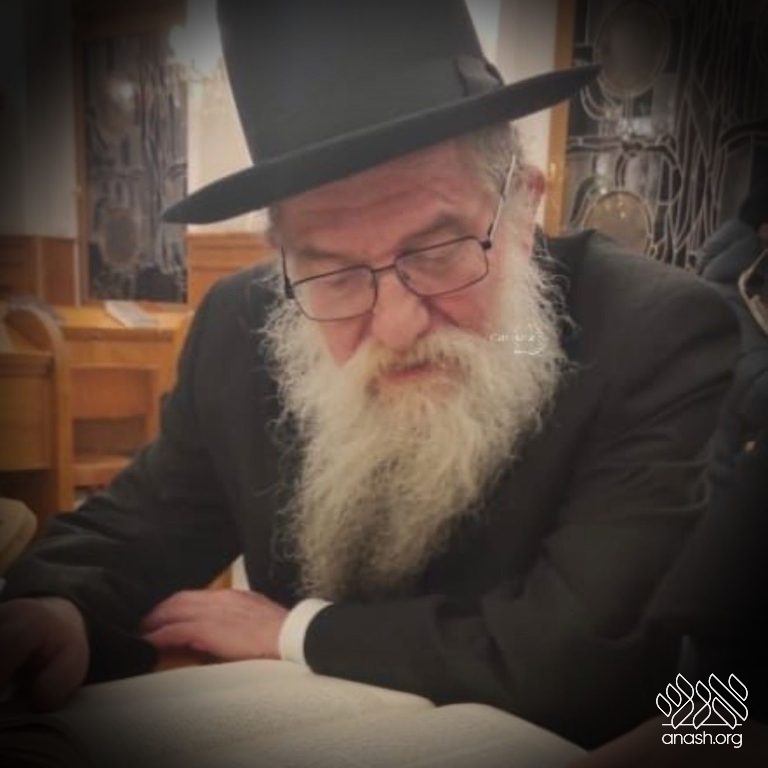
Following the passing of Rabbi Yaakov Yehuda Weiser, a founding member of the Lubavitch community in Vienna, Austrian head shliach Rabbi Yaakov Yitzchak Biderman reflects on the loss of Reb Yankel, whose quiet presence and lifelong dedication shaped Chabad life in Vienna and impacted thousands.

Following the passing of Rabbi Yaakov Yehuda Weiser, a chassidishe shochet, founding member of the Lubavitch community in Vienna, and patriarch of a large Lubavitch family, the head shliach to Austria, Rabbi Yakov Yitzchak Biderman, reflected on the loss of Reb Yankel.
Referring to him as “a close friend and companion, like a brother to me,” Rabbi Biderman mourned the chossid, whose quiet personality, inner depth, and lifelong dedication helped shape Chabad life in Vienna for decades.
Reb Yankel passed away on Tuesday, Asara B’Teves, following an extended illness, leaving behind a community mourning his loss.
*
This morning chokes my throat and stabs my heart, as I’m at the airport on my way to accompany a friend I did not want to accompany. Tears blur my vision, and my thoughts are clouded.
I will measure my words, for what Reb Yankel would have found hard to endure were exaggerations, superlatives, and unnecessary words.
At farbrengens, we would sit, and Yankel would remain silent for hours. If he didn’t grasp something fully, if he didn’t carry it out himself, if he didn’t work on it and allow at least something of it to permeate him, the words simply did not come out of his mouth.
He would say l’chaim again and again, and yet remain silent. He would repeat l’chaim once more, and then again, or he would sing a niggun, and again a niggun, and all the while the commotion swirled around him, but Yankel remained silent.
Or he would recount something from the past, from the Rebbe, or from chassidim like Reb Saadia or Reb Shlomo Chaim. But essentially, he was silent, for Yankel was inward by nature, and meaningless chatter held no place for him. I loved to take shelter in the shadow of his silence.
What should I say? Vienna was fortunate to have a mashpia who influenced through his very being, through who he was. He was also a man of extraordinary talent and sharp intellect. Only a little of this leaked outward, in occasional illuminating flashes.
His conduct embodied eidelkeit. He radiated sensitivity. He had a charm of modesty, with a smile of good-heartedness. He was the adornment and beauty of Vienna, a treasure lost. I would not write these glowing words if it were not the obvious truth. I look out the window. The sun has risen, but for me, darkness descends.
Yankel was the son of Rabbi Shlomo Yosef Weiser, the Av Beis Din of the Shomrei HaDas community in Antwerp, raised in a Belz chassidishe home. In his youth, in his hometown, he attended Likkutei Torah shiurim from Reb Saadia Liberov and saw before him a chossid upon whom Chassidus had deeply affected, a fire burning in his heart. He was drawn to him and became a frequent visitor to his home.
When the time came, Yankel was sent to learn in the Belz yeshiva in Eretz Yisroel, yet his neshama was elsewhere. One day, he packed his belongings on his own, and without assistance, companion, or relative, traveled to Kfar Chabad. When he arrived, it was Erev Shabbos, and he sat in the center of the village on his suitcase. The mashpia, Reb Shlomo Chaim Kesslman, met him and invited him to his home, where he stayed for some time. Reb Shlomo Chaim loved him deeply, nurtured and cared for him.
I heard that once, at a farbrengen, he asked, “Where is Yankel?” And when he heard that he had traveled that Shabbos, he got up and concluded the farbrengen. Indeed, the spirit of Reb Shlomo Chaim was engraved in him, and in whatever he did, it was evident that he was his student.
Yet the happiest days of his life were when he spent several years at 770, which he would always recount with longing. He would describe the first sicha he heard from the Rebbe upon his arrival, and the dear friends he made there. One Shabbos, when he was at his uncle’s home in Boro Park, he suddenly heard voices calling his name from the street. After Shacharis, it was announced that the Rebbe would have an unexpected farbrengen that Shabbos, and his devoted friends walked over an hour to fetch him, knowing that if he missed the farbrengen, he would regret it.
He spoke at times of his yechidus’n with the Rebbe, particularly the one before his wedding, before traveling to Vienna. At its conclusion, as he was leaving the room, the Rebbe lifted his eyes again and called him by name, saying in a strong voice, “Yankel, the main thing is to be b’simcha!”
Yankel married Chana, the daughter of the Rav and Av Beis Din of Vienna, Rabbi Chaim Yechiel Greenfeld. For his wedding, five of his friends from 770 came with the Rebbe’s bracha.
From the day he arrived in Vienna in 1975, the light of Chabad shone in the city. A city where, before the Holocaust, the Rebbeim had stayed – the Rebbe Maharash, the Rebbe Rashab, the Frierdiker Rebbe, and even our Rebbe. The Rebbeim held farbrengens in this city, wrote maamarim, received chassidim for yechidus, and influenced many fine people.
But after the Holocaust, when the community was destroyed and its members killed or exiled, it took time as Yiddishkeit gradually, little by little, began to return to Vienna.
Reb Yankel brought the warmth of Chabad into Vienna. The city’s youth loved him and learned from him what Chabad and Chassidus are. Through various ways, he influenced many. With the help of his father-in-law, he organized a magnificent Yud-Tes Kislev celebration in the community for many years, attended by many. He also oversaw, with great dedication, the printing of a beautiful edition of the Tanya in Vienna already in 1978.
For years, Reb Yankel taught in the Talmud Torah, while his wife served as a kindergarten teacher. Together, they brought up many students. Later, when the city needed a yirei Shamayim to serve as the shochet, the community leaders entrusted him with the role, with the Rebbe’s consent.
From the day he arrived in Vienna, his sole desire was to bring another shliach to the city, and he wrote often to the Rebbe with this request. I suspect that when, in 1980, my wife and I were summoned to the Rebbe’s mazkirus with the proposal to travel to Vienna, it was a result of Reb Yankel’s pleas to the Rebbe. He also approached Rabbi Gershon Mendel Garelik, the shliach in nearby Italy, who was very involved in organizing that we should come.
Reb Yankel received us at the airport warmly and lovingly, a warmth that never left him until the last time I saw him, on Yud-Tes Kislev. As he lay on his sickbed, exhausted by suffering, with his last remaining strength, he whispered only two words: “Be successful.”
We lived in his home during the first period after we came, while his wife took care of all our needs. He also arranged financial assistance for us in those days, arranging that my wife could teach the girls in Beis Yaakov in his father-in-law’s community. Throughout the years, he also brought significant sums to support us personally.
For all the years, his home was a gathering place for chassidim, where we farbrenged often. He also gave many shiurim and had chavrusos in Chassidus at his home as well as in the shul.
Ay, Yankel, how much we will miss you. Your lofty figure who remains on the side; who never raised his voice; who knew how to speak piercing truth, subtly, with immense gentleness, with a smile, and with love.
Yankel, ask for the Rebbe!
 COMMENTS


ווי גוט עס איז צו זעהן אזעלכע ווארעמע ווערטער פון דער ארטיגער שליח
חבל על דאבדין