



כ״ז תמוז ה׳תשפ״ה | July 22, 2025
Chabad’s Attempt to Work with ‘UNRRA’
Newly uncovered documents reveal a fascinating connection between the Frierdiker Rebbe and UNRRA – the United Nations Relief and Rehabilitation Administration – detailing Chabad’s tireless efforts navigating international channels to secure official approval to assist Jewish survivors in postwar Europe.
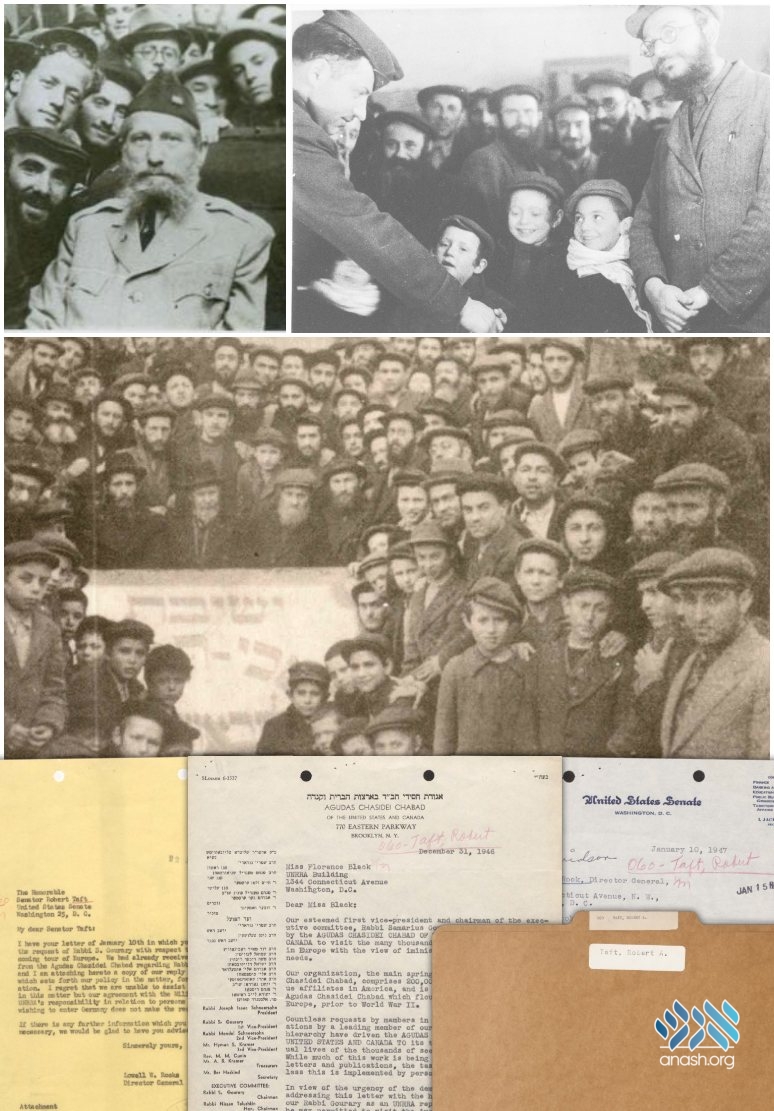
Newly uncovered documents reveal a fascinating connection between the Frierdiker Rebbe and UNRRA – the United Nations Relief and Rehabilitation Administration – detailing Chabad’s tireless efforts navigating international channels to secure official approval to assist Jewish survivors in postwar Europe.
By Anash.org writer
In the years immediately following World War II, the situation of the Jewish survivors in Europe – including those in the American-occupied zone – was one of deep physical and spiritual need. Hundreds of thousands of Jews, including many Chabad Chassidim, were living in impoverished conditions in Displaced Persons (DP) camps, struggling to rebuild their lives after the horrors of the Holocaust.
Access to these areas was tightly controlled by the Allied military authorities and international aid organizations. One of the most active agencies at the time was UNRRA – the United Nations Relief and Rehabilitation Administration. In order to visit the American-occupied zone in an official capacity, even for religious or communal purposes, one needed UNRRA authorization.
Faced with this reality, the Frierdiker Rebbe turned to UNRRA to request official accreditation – approval as a UNRRA representative – for his son-in-law, Rabbi Shmaryahu Gurary (the Rashag), to travel to Europe on behalf of Agudas Chassidei Chabad and bring help to Chabad Chassidim and other survivors.
Anash.org presents a file of newly uncovered historical documents – correspondence between Chabad, UNRRA, and various government figures – that sheds new light on this episode. Special thanks to Mendel Berkowitz and Shmuel Super for uncovering these documents.
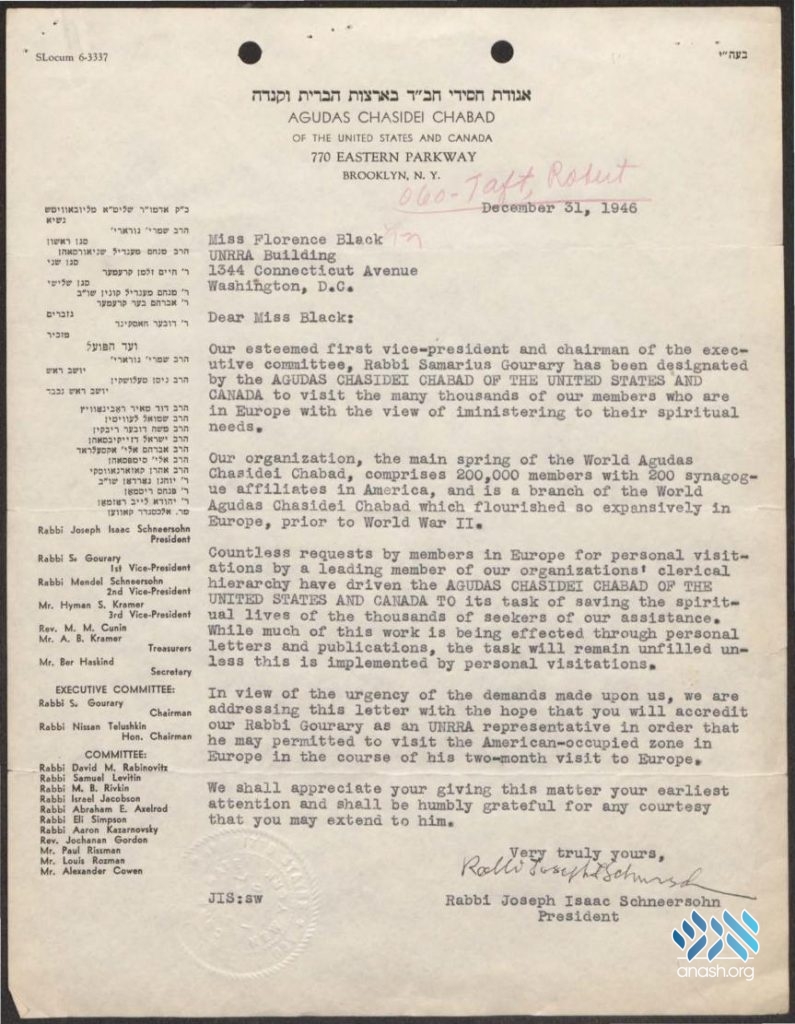
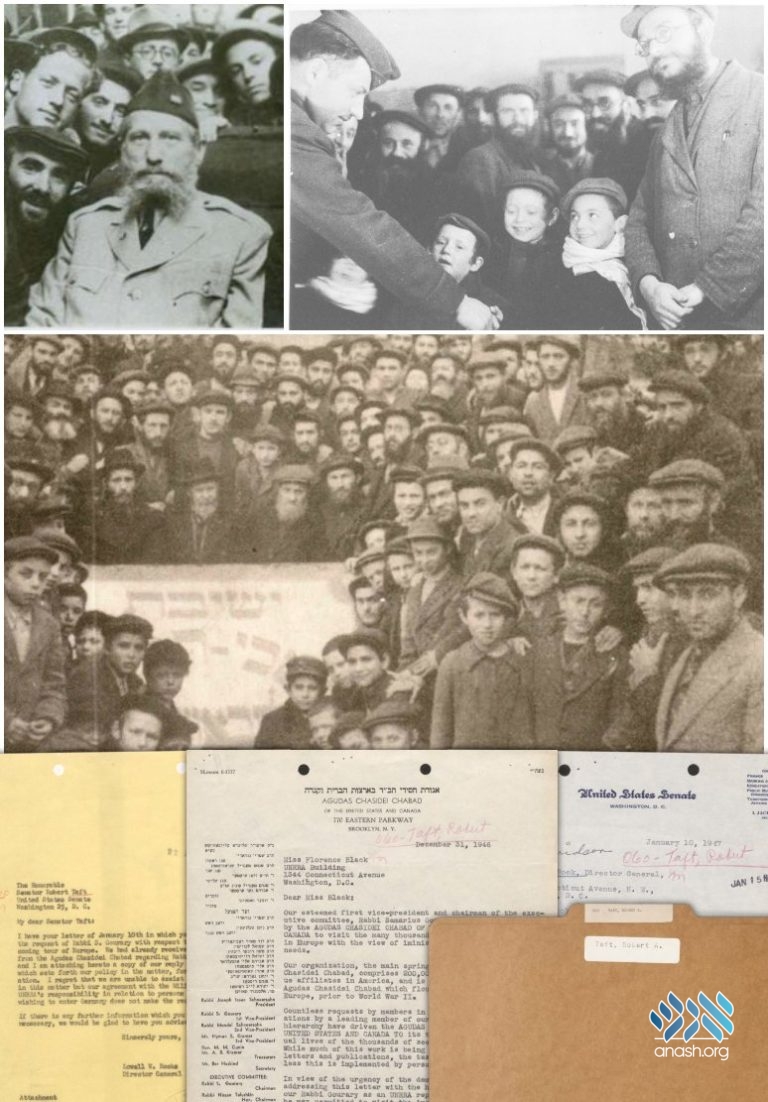
On 9 Teves 5707 (December 31, 1946), the Frierdiker Rebbe, in his capacity as president of Agudas Chassidei Chabad of the United States and Canada, sent a letter to Miss Florence Black of the United Nations Relief and Rehabilitation Administration (UNRRA) in Washington, D.C. In it, he requested that his son-in-law, the Rashag, be granted authorization to enter the American-occupied zone of Europe as a representative of UNRRA, in order to cater to the needs of many Chabad Chassidim and other Jews in the Displaced Persons (DP) camps.
“Our esteemed first vice-president and chairman of the executive committee, Rabbi Samarius Gourary has been designated by the AGUDAS CHASIDEI CHABAD OF THE UNITED STATES AND CANADA to visit the many thousands of our members who are in Europe with the view of ministering to their spiritual needs.
“Our organization, the mainspring of the World Agudas Chasidei Chabad, comprises 200,000 members with 200 synagogue affiliates in America, and is a branch of the World Agudas Chasidei Chabad which flourished so expansively in Europe, prior to World War II.
“Countless requests by members in Europe for personal visitations by a leading member of our organization’s clerical hierarchy have driven the AGUDAS CHASIDEI CHABAD OF THE UNITED STATES AND CANADA to its task of saving the spiritual lives of the thousands of seekers of our assistance.
“While much of this work is being effected through personal letters and publications, the task will remain unfulfilled unless this is implemented by personal visitations.
“In view of the urgency of the demands made upon us, we are addressing this letter with the hope that you will accredit our Rabbi Gourary as an UNRRA representative in order that he may be permitted to visit the American-occupied zone in Europe in the course of his two-month visit to Europe.
“We shall appreciate your giving this matter your earliest attention and shall be humbly grateful for any courtesy that you may extend to him.”
The letter, written on official Agudas Chassidei Chabad letterhead, was personally signed by the Frierdiker Rebbe. It lists the Frierdiker Rebbe as President, the Rashag as First Vice President and Executive Committee Chairman, and the Rebbe as Second Vice President. This likely helped confirm the Rashag’s official role in the organization, strengthening the legitimacy of the UNRRA request.
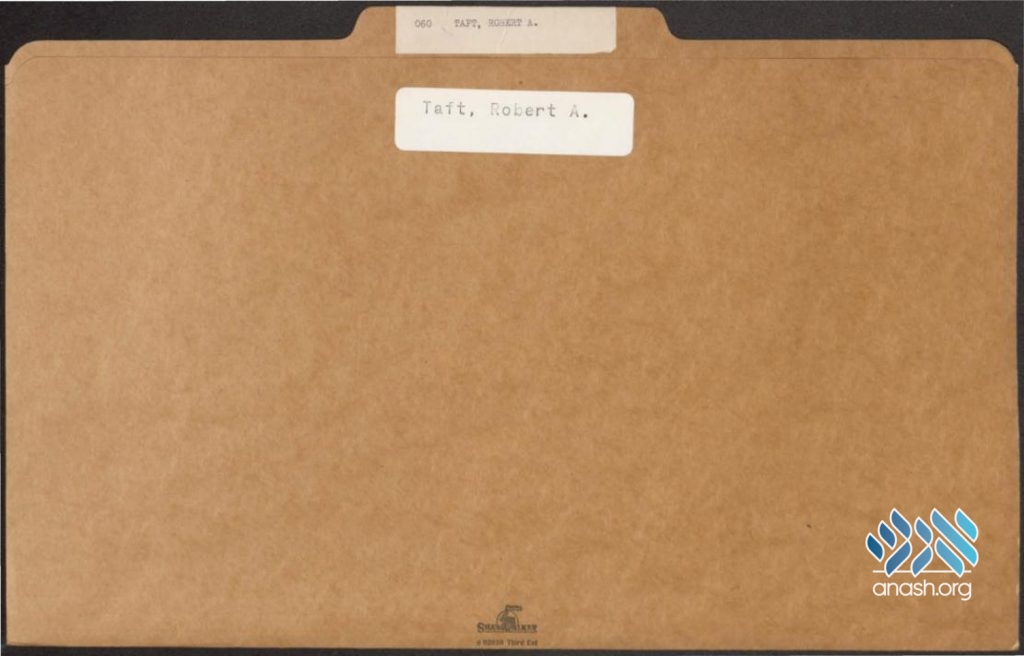
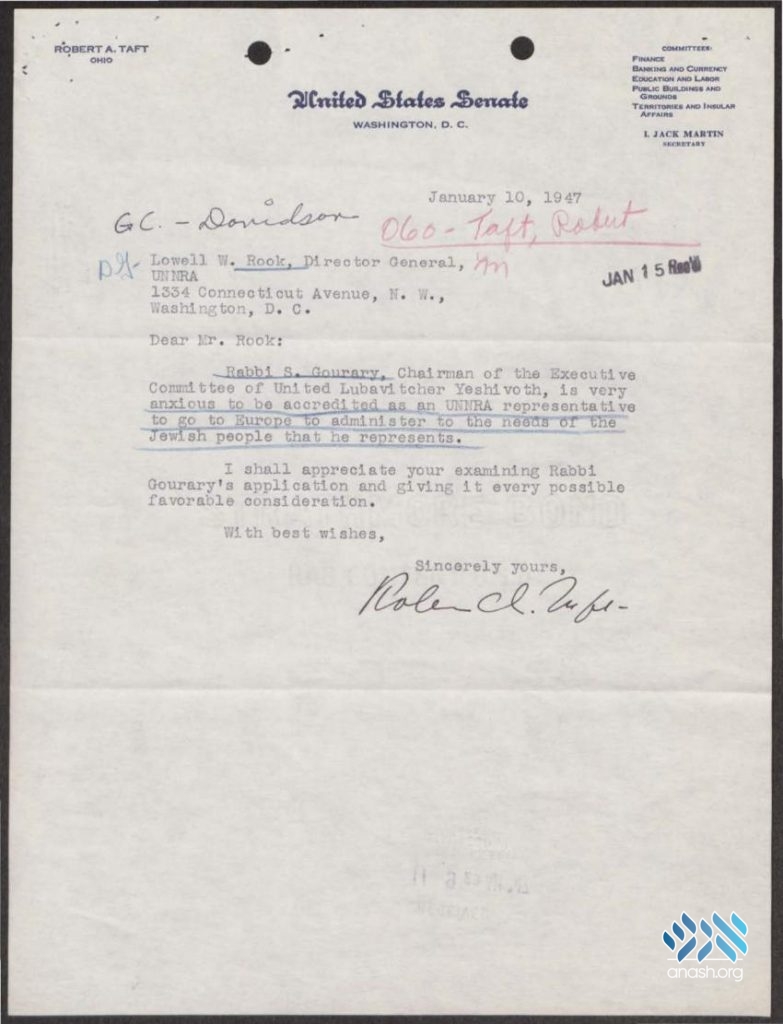
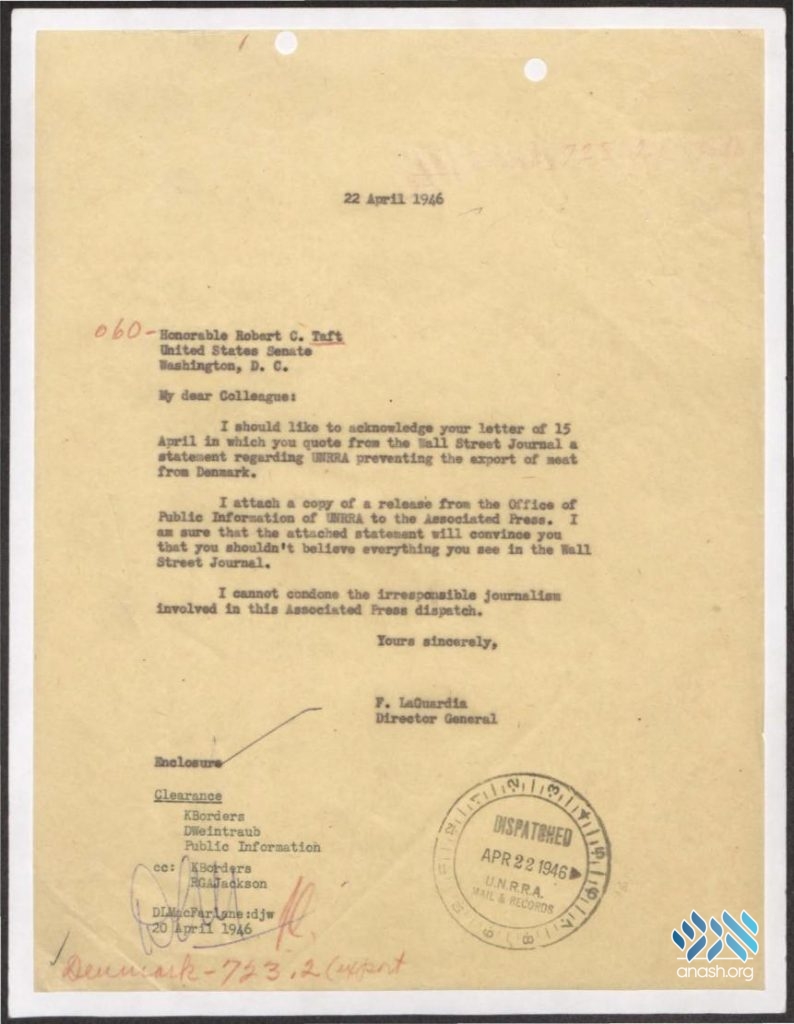
To assist the request, it appears that Chabad enlisted the help of Senator Robert A. Taft of Ohio, who sent a letter to the UNRRA Director General on January 10, 1947, stating: “I shall appreciate your examining Rabbi Gourary’s application and giving it every possible favorable consideration.”
Senator Taft’s letter is written on official Senate stationery and references Rashag’s mission as part of the Executive Committee of United States Chabad.
The documents show how UNRRA handled the request.
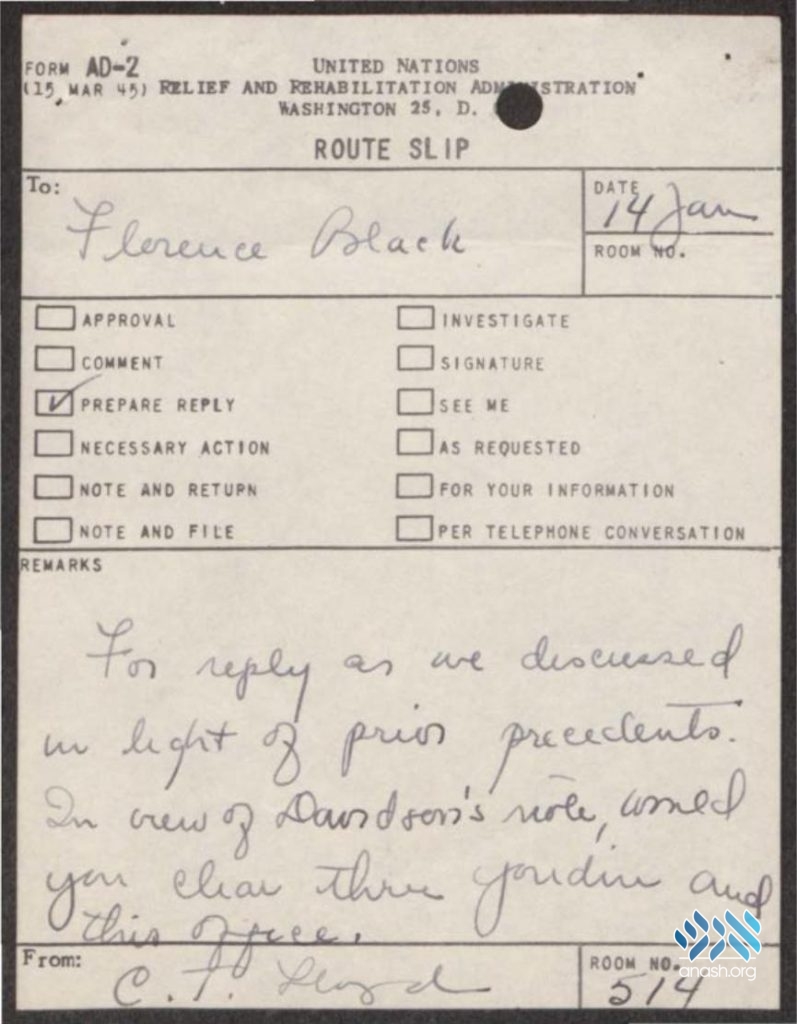
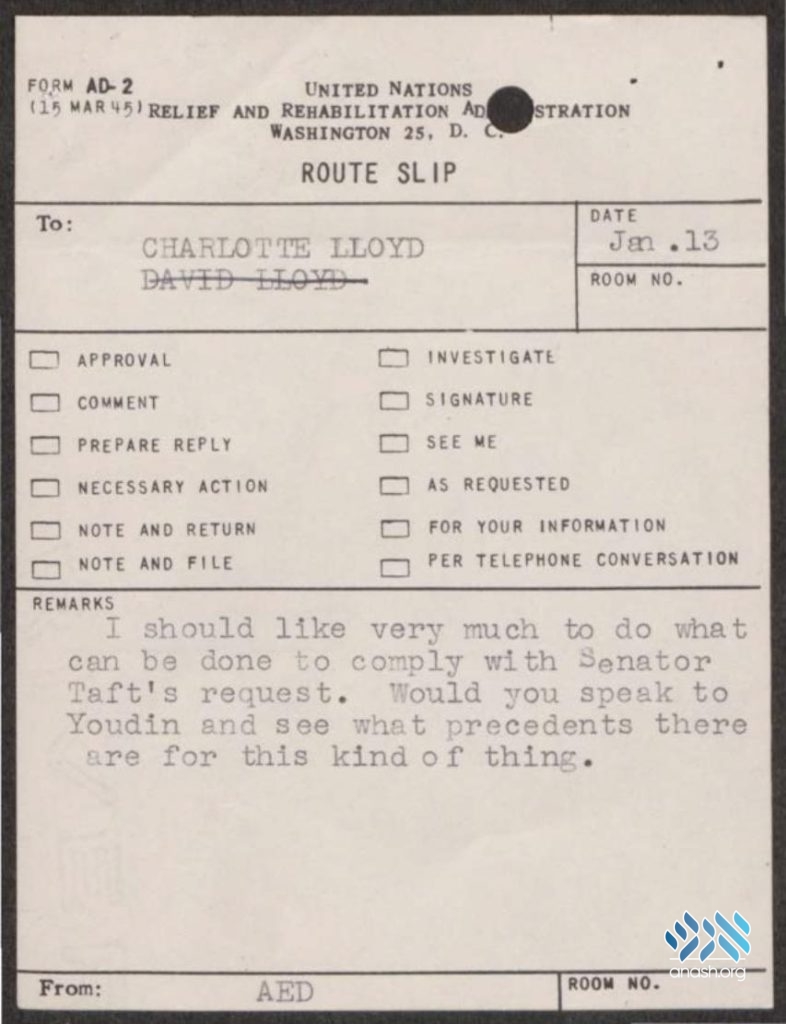
A route slip (Form AD-2), dated January 13, was circulated internally. It includes a handwritten note from an official: “I should like very much to do what can be done to comply with Senator Taft’s request. Would you speak to Youdin and see what precedents there are for this kind of thing.”
Internal documents show that UNRRA staff were actively trying to determine whether there was any precedent for approving religious figures to travel under their authority. UNRRA was treating the request seriously and examining whether similar approvals had been granted in the past.
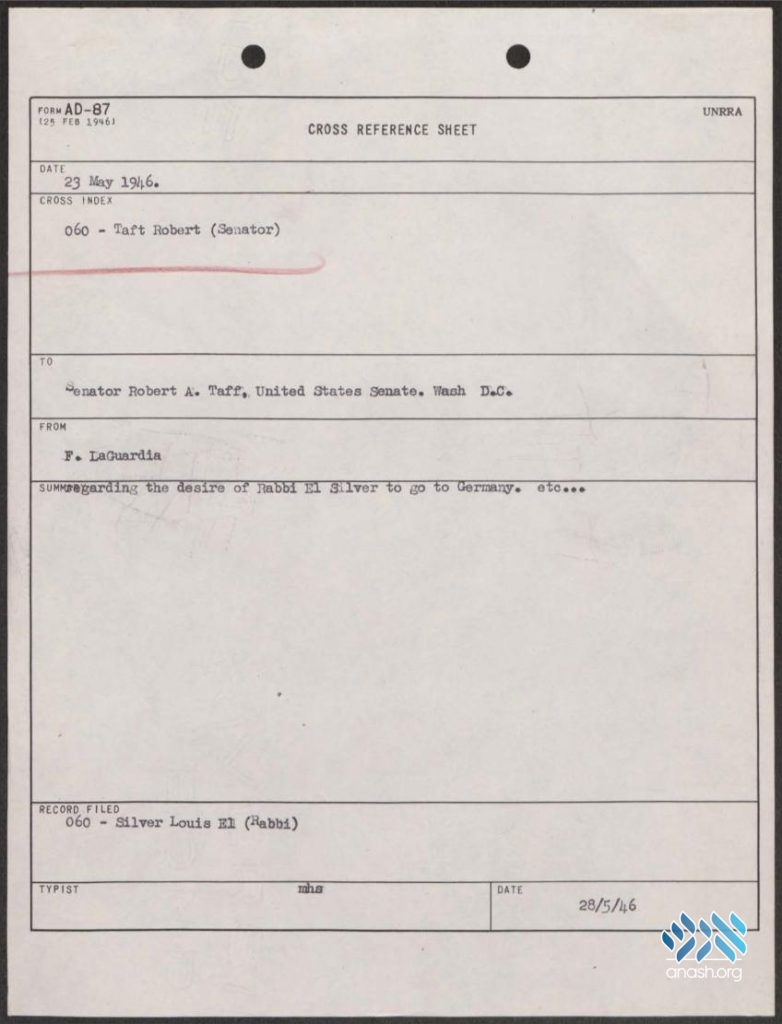
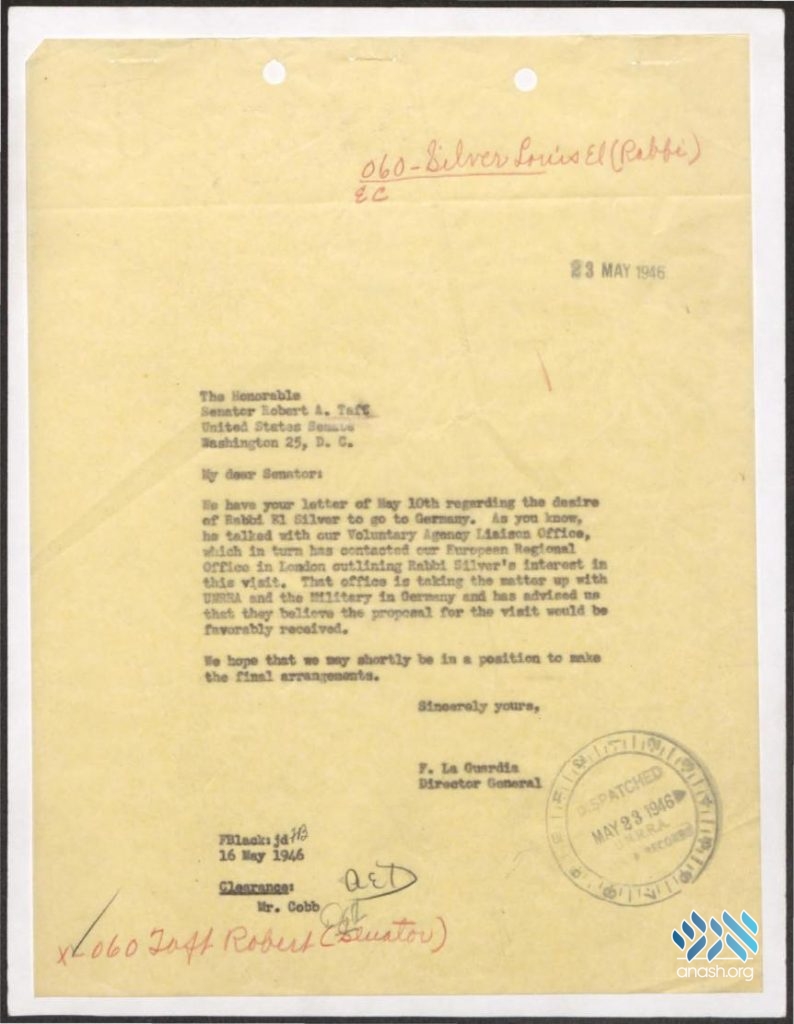
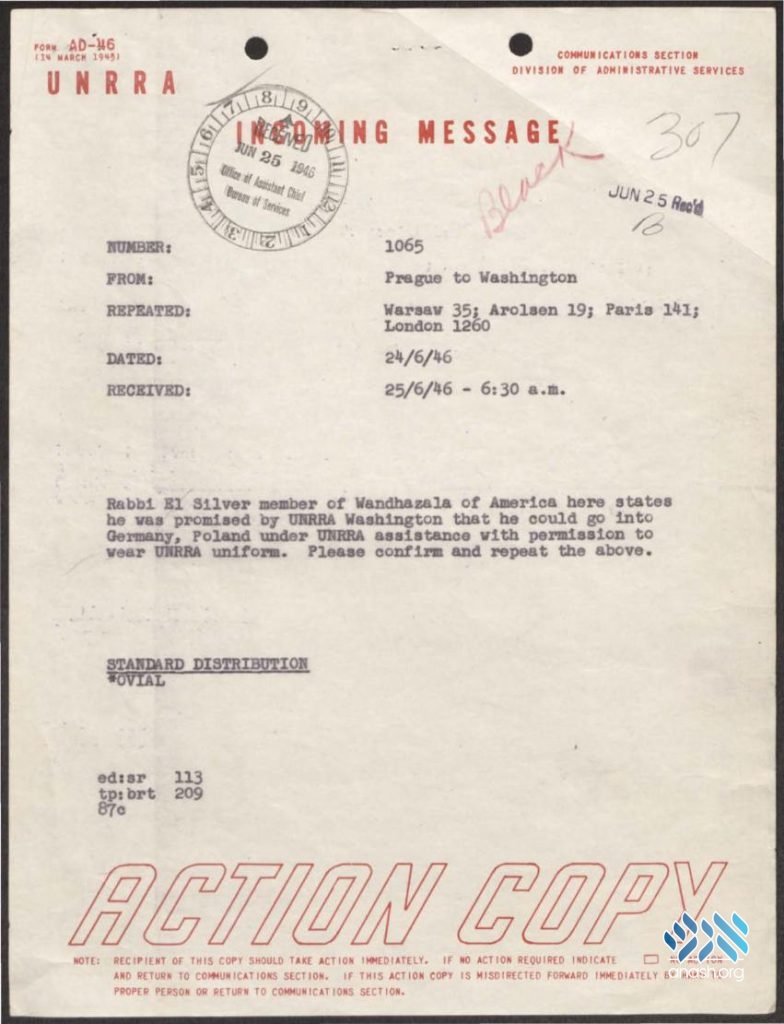
For example, a May 23, 1946 internal memo refers to an earlier case involving Rabbi Eliezer Silver, president of Agudas Harabonim of the U.S. and Canada, stating: “Regarding the desire of Rabbi El Silver to go to Germany.”
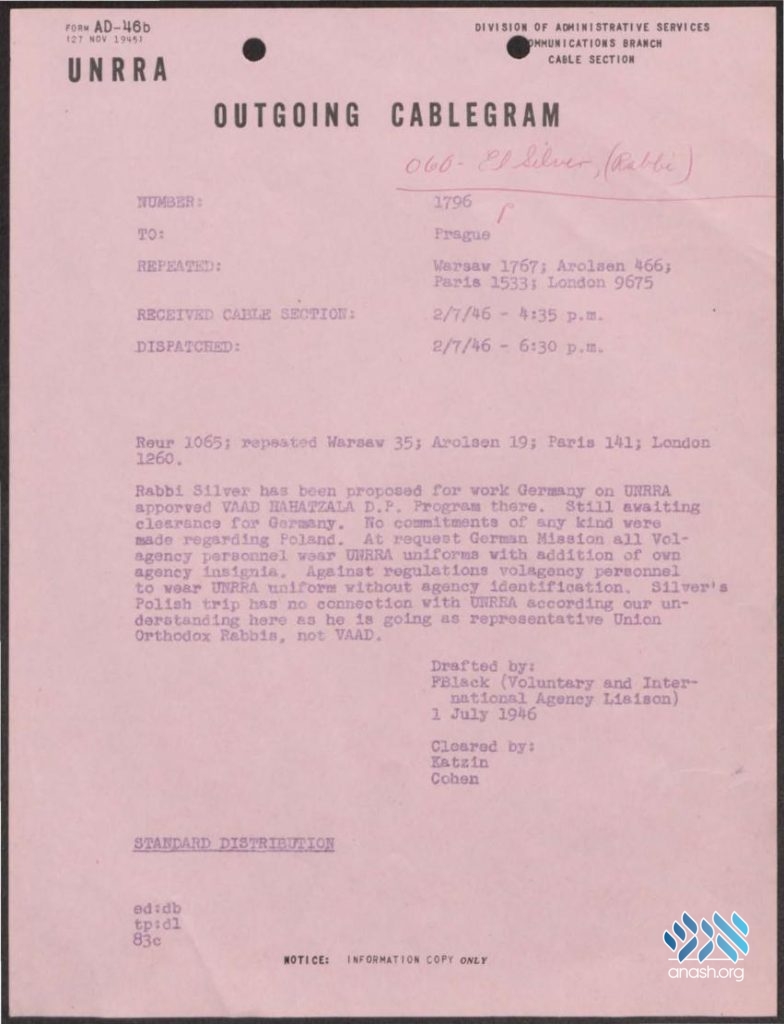
Other documents in the file detail UNRRA’s prior handling of Rabbi Eliezer Silver’s travel and relief efforts, further supporting the idea that religious figures had been authorized before.
A cross-reference sheet links Rashag’s case to other UNRRA files concerning religious visits and relief shipments, showing that it was formally tracked. Several additional forms and route slips suggest his case was part of an ongoing system for handling such requests.
Also included in the file are several cross-reference forms (Form AD-87), indexing communications relating to religious figures, relief supplies, and visits to DP camps.
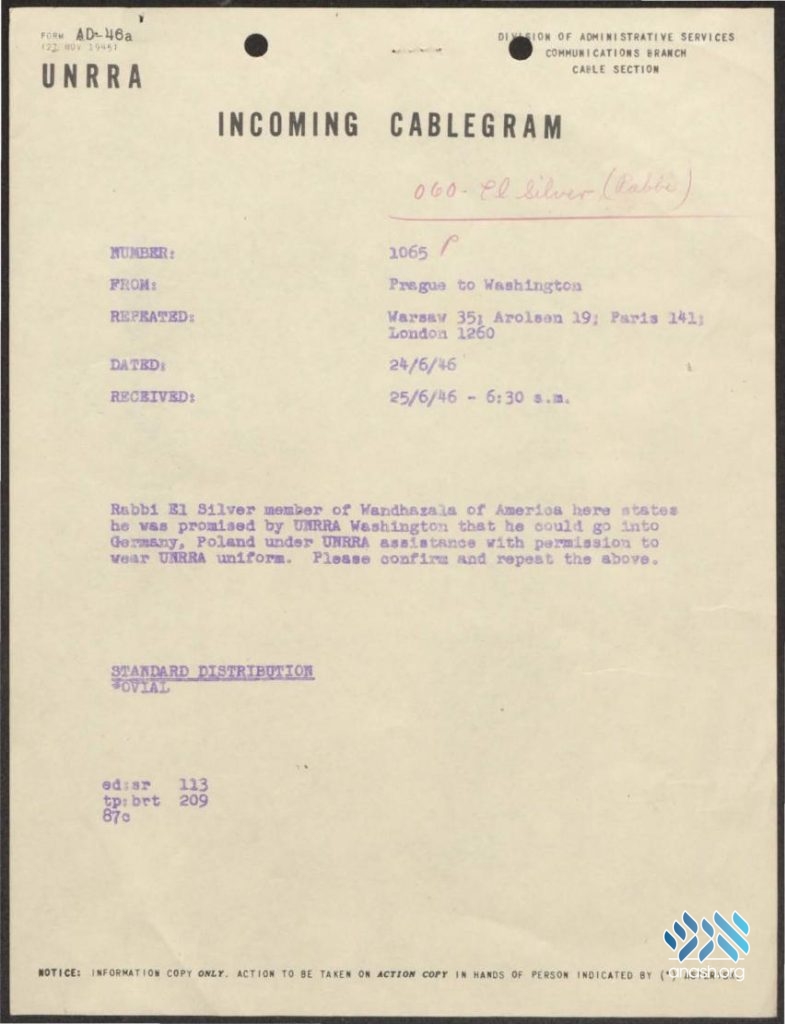
An UNRRA clearance memo, signed off by legal and senior administrative staff, and a cablegram from the Prague office dated June 24, 1946 – before the Frierdiker Rebbe’s formal request for Rashag – show discussion and approval of religious figures assisting in postwar relief efforts. The cablegram notably requests “that he could go into assistance with permission to be confirmed and request the above.” These documents were part of discussions establishing such precedents.
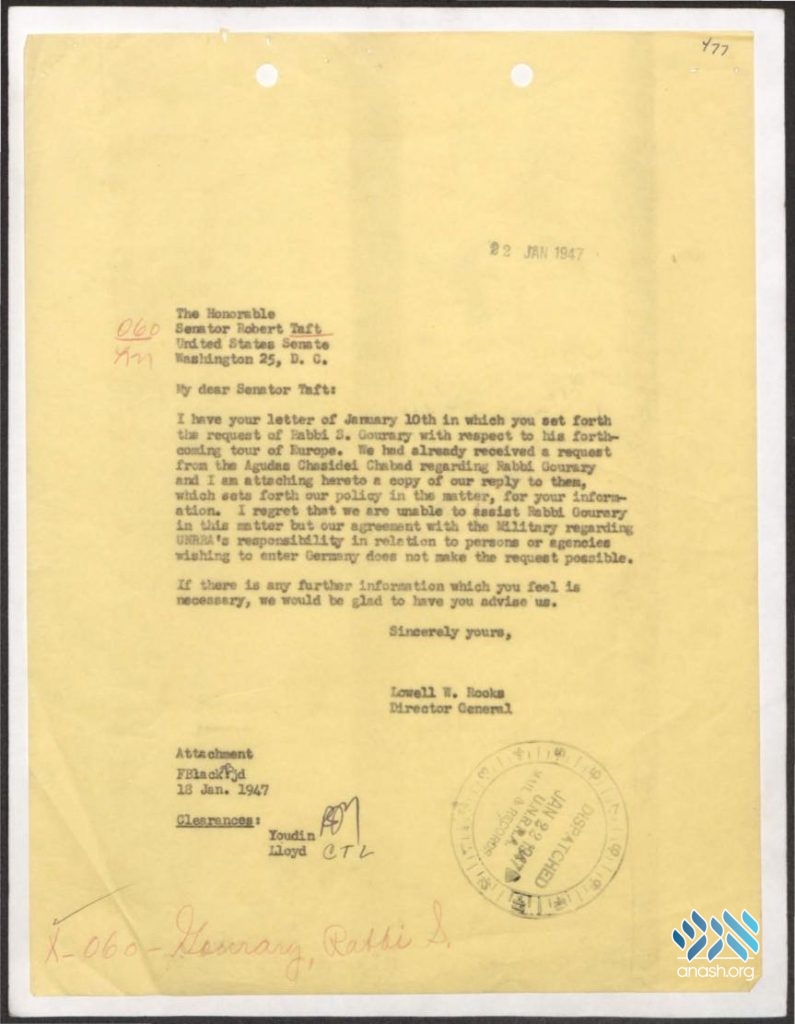
Yet, in a letter to Senator Taft, dated January 22, 1947, UNRRA Director General Lowell W. Rooks writes: “I regret that we are unable to assist Rabbi Gourary in this matter but our agreement with the Military regarding UNRRA’s responsibility in relation to persons or agencies wishing to enter Germany does not make the request possible.”
While it remains unclear whether Rashag ultimately traveled under formal UNRRA accreditation, as originally requested by the Frierdiker Rebbe in Teves 5707, we find confirmation that he did in fact travel to Europe to assist Holocaust survivors, and that his mission was active and ongoing in early 5707 (1947).
In a letter from the Frierdiker Rebbe, dated Monday, Vav Adar 5707 (February 17, 1947), addressed to “Anash, the students of Tomchei Temimim, and those connected to them,” the Frierdiker Rebbe writes that the Rashag is departing that very day for this purpose:
“I hereby inform you that my son-in-law, Rabbi Shmaryahu Gurary, is, with G-d’s help, departing today successfully from New York to the countries of Europe, in my name and in the name of Agudas Chassidei Chabad and Merkaz HaYeshivos Tomchei Temimim, to visit the refugees of Anash, the students of Tomchei Temimim, and all those connected with them, who are residing in the countries of Europe. His purpose is to personally observe their situation, physically and spiritually, and – with Hashem’s help – to work on arranging for their immigration and settlement in various countries, both in physical and spiritual matters. I have asked my son-in-law, the Rashag, to inquire about your wellbeing – my beloved and close to my heart – and to convey to you my blessing in both material and spiritual matters. As a sign of love and friendship, I am sending with him for you a kuntres of ma’amorim.”
The Frierdiker Rebbe concludes:
“And I pray that the Hashem, in His great kindness, should bless my son-in-law, the Rashag, and watch over him and grant him success in his great mission – both materially and spiritually.”
Additionally, in another letter dated Tuesday, 3 Iyar 5707 (April 22, 1947), addressed to Rabbi Yechezkel Abramsky, the Frierdiker Rebbe again refers to this mission, writing:
“My son-in-law, Rabbi Shmaryahu Gurary, is presently in Europe, in my name and in the name of Agudas Chassidei Chabad and Merkaz HaYeshivos Tomchei Temimim, to visit the refugees of Anash, the students of Tomchei Temimim, and all those connected with them, and – with Hashem’s help – to assist with their immigration and resettlement in various countries, both physically and spiritually.”
He adds that the Rashag will soon be arriving in London and asks Rabbi Abramsky to assist him in every way possible, beyond what was already stated in a telegram previously sent.
Though it remains unclear whether the Rashag’s mission was officially recognized by UNRRA, the documents reveal the Frierdiker Rebbe’s concern and efforts through the halls of power after the war.
 COMMENTS


The F”r also sent 2 other Shluchim – Rabbi Mendel Baumgarten and Rabbi Zalman Posner in 5708 to visit the DP, Camps, were there any requests regarding them too?