



כ׳ מרחשון ה׳תשפ״ו | November 11, 2025
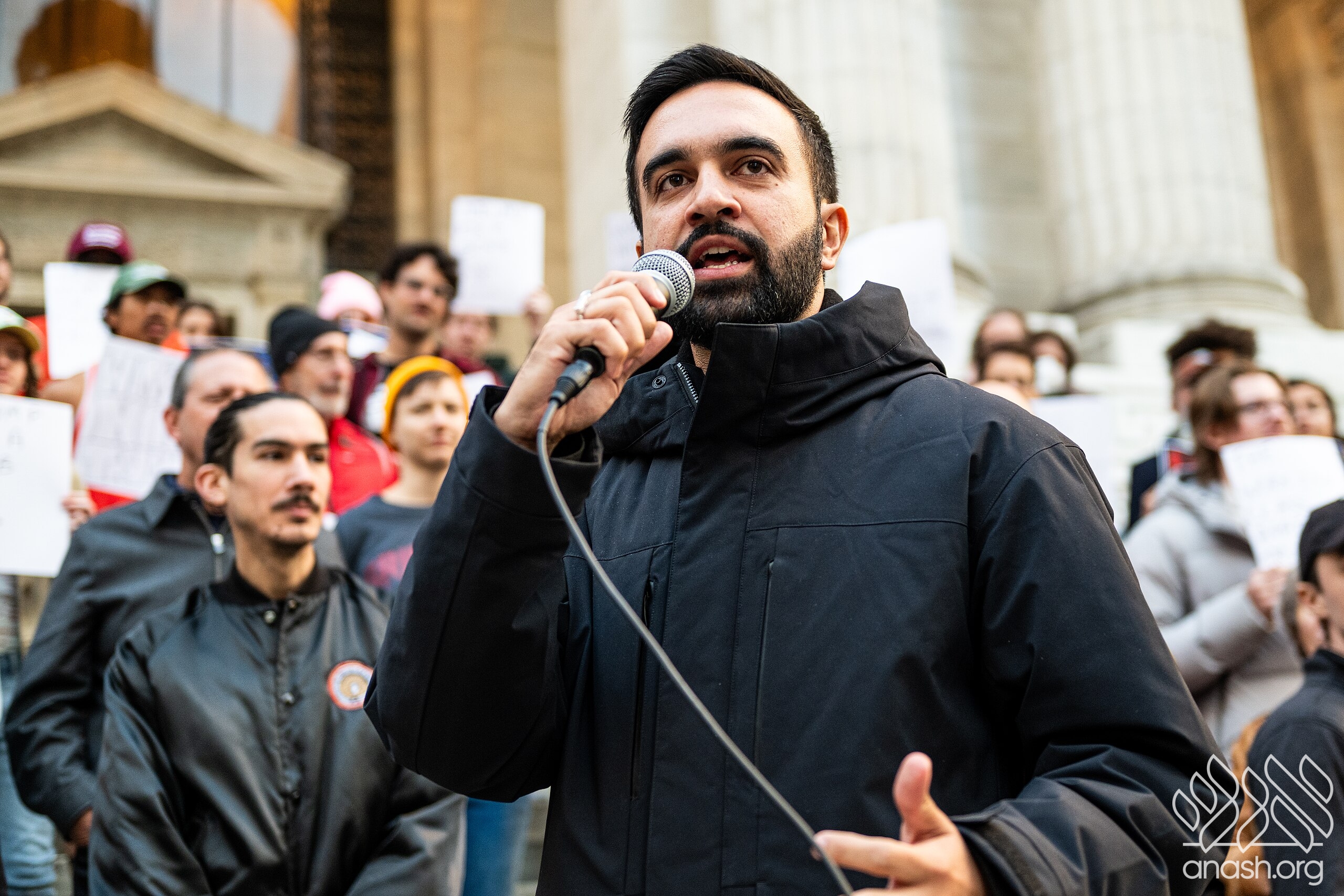
Mamdani Won, What Do We Do Now?
Are we doomed? The election results have left many wondering. Rabbi Yosef Braun asserts that we’ve done our part — now is the time to place our full trust in Hashem and remember Who truly runs the world.
From a talk by Harav Yosef Braun
A lot of people are talking about the results of the elections we just had in New York City. The big question now is, “What do we do next?”
Interestingly, this week’s parsha gives us a parallel. Avraham Avinu also ran a sort of campaign – he campaigned for the people of Sedom.
He tried one approach after another: fifty, forty, thirty… every possible “campaign” strategy and every kind of appeal. He spoke to the highest authority – Hashem Himself – trying to influence the outcome. And in the end, Avraham failed in all his campaigning and “voting.”
What does the Torah say? Vayashav Avraham l’mkomo – Avraham went back to his place. He went back to doing what he was supposed to do. He said, “I did my job. I made my effort. Now I continue on.”
That’s the message. There’s hishtadlus, there’s emunah, and there’s bitachon. Before the elections, it’s time for hishtadlus – to go out and vote. When you’re voting, that’s emunah – trusting that whatever result comes is exactly what Hashem wants and therefore what’s best. And bitachon is what comes afterward – accepting with full confidence that whatever the result, Hashem will make it good for us.
I’m not a politician. I don’t claim to be one. I don’t know what’s “good for us” or “bad for us” – that’s not my area. But today, in the information age, everyone feels like a rav, a doctor, and certainly a politician – just because they read the news. So I’ll leave that to the askanim.
But we do have a clear Torah principle: Lev melachim b’yad Hashem. The heart of kings – and leaders, ministers, and all those in power – is in the hands of Hashem. Some even discuss whether leaders have free choice at all, because once someone is in a position of rulership, everything they do is directed by Hashem.
I’ve heard people say, “Don’t worry, it’s all in Hashem’s hands,” and then others respond cynically, “Oh really? Was that true about Hitler, yimach shemo?” That’s a terrible thing to say. It borders on kefirah. Of course, lev melachim b’yad Hashem was true then, too. Whatever happened, as terrible as it was, happened because that’s what Hashem allowed. We may not understand it, and it certainly wasn’t b’tovah v’hanigleh, but it was still from Hashem.
We know the rule: Ein adam nokeif etzba’o milmata, ela im ken machrizin alav milmala. A person can’t even stub his finger down here unless it’s decreed from Above. So if something bad happens to me, it’s from Hashem.
Then why does the person who hurt me get punished? Because he chose to be the one to carry out Hashem’s will. The fact that it had to happen to me is from Heaven – but he didn’t have to be the one to do it. Harbeh shluchim laMakom. Hashem has plenty of messengers and many ways to accomplish His plan.
That’s why we say kol ha’ko’eis k’ilu oved avodah zarah. When someone gets angry about what happens, it’s as if they’re serving idols – because they’re ascribing power to something other than Hashem.
They say in the name of Reb Yisrael Salanter and it’s quoted in many circles, Chassidic and otherwise: M’darf ton, nisht ufton. M’darf ton, nisht opton. M’darf ton, nisht nachton. In other words: our job is to do. Not to accomplish, not to get it over with, and not to copy others.
When it comes to elections, our job is to vote. That’s our hishtadlus, our responsibility. Once we’ve done that, we’ve already achieved success. Whether it “worked” or not isn’t our department.
There’s a similar vort they say about Moshe Rabbeinu. In Parshas Va’eira, Moshe complains to Hashem: Me’az basi l’daber el Paroh, heira la’am hazeh – “Since I came to speak to Pharaoh, things got worse.” Hashem sent him to “campaign,” and instead of progress, it backfired. Hashem’s response was, in effect, “That’s not your business.” Your job was to speak to them.
Later, at Mei Merivah, Moshe is told he won’t enter Eretz Yisrael. The reason is the same: his job was to do, not to ensure results. Hashem told him to speak to the rock. Whether or not it would give water – that wasn’t his concern. Hitting it to force an outcome wasn’t his role.
When they asked the Chofetz Chaim to give his approval for teaching secular studies in the chadorim in Eretz Yisrael – so the yeshivos could survive – he said, “Is it my job to make sure yeshivos survive? My job is to do what Hashem wants, not to make sure it works.”
In Parshas Toldos, the pasuk tells us that Yaakov and Eisav were both in the womb, and Yaakov was holding on – yado ochezes b’akeiv Eisav. He held Eisav’s heel, trying to be the first one out, to be the bechor. But why did Yaakov hold onto the heel? It wasn’t going to make him come out first.
When the Lelover Rebbe’s children came to visit the Rebbe in 5744 (1984), they shared a vort from their father, Reb Moshe Mordechai of Lelov. The Lelover explained that Yaakov didn’t want Eisav to have rulership, so he did his part – he held on. “I’ll do what I can,” he thought. Whether it would actually make a difference – that wasn’t his cheshbon. His job was to act. What happens after that is up to Hashem.
They shared this vort in response to a comment the Rebbe made about bedikas chametz. The Rebbe had spoken about how, in life, our job is to do – not necessarily to see results. There’s a minhag to put out ten small pieces before the search, so the bracha shouldn’t be l’vatalah. But the Rema and other poskim explain that even if you don’t find any chametz, it’s not a wasted bracha. The mitzvah is to search – al biur chametz means to look and make sure it’s gone, not necessarily to find and destroy.
Some people are like editors or censors – they feel they must find something wrong, and if they don’t, they’re not satisfied. But the mitzvah is kucken, zuchen – to look and to search. Even if you don’t find, it’s not for nothing.
The Rebbe explained that in life, too, we have to know that our job is to do – not to control the outcome. We don’t have to “find the chametz.” To this, the Lelover’s children brought their father’s vort: just as Yaakov held onto Eisav’s heel because that was his role, so too our job is to do what’s right. Whether it achieves results or not – that’s not our inyan.
Another example: Basya, the daughter of Pharaoh, saw baby Moshe floating in the river. She stretched out her hand, even though she couldn’t possibly reach. And Hashem made a miracle – her arm stretched all the way to the basket. What was she thinking? She didn’t calculate. She just did what she could. The rest was up to Hashem.
Rabbi Chanina ben Dosa once wanted to bring a gift to the Beis Hamikdash. He was poor and found a stone. He carved and polished it beautifully, but he couldn’t carry it. He asked some workers to help, but they demanded an exorbitant amount of money. Suddenly, five malachim appeared and said, “We’ll help – but you must put your finger under the stone.” What could one small finger do? It didn’t matter. His job was to do his part – to lift a finger. Hashem wants our Etzba Ketano.
There’s also the story of the chossid who needed money. He davened to Hashem: “Help me win the raffle.” Then he thought, “No, that’s not good – raffles are a halachic problem – when you buy a raffle it’s called “asmachta” and there’s a question if maybe it really is not yours..” So he said, “im going to walk down the street and maybe I’ll find a lost object.” Then he realized that would hurt the one who lost it. After a few ideas he said, “Ribono shel Olam, do I have to give You advice? You know how to help me better than I do.”
That’s the point. The world today is shaking. We have no idea what tomorrow will bring – politics, Eretz Yisrael, America, New York – everything is shifting constantly. And often people like to be doom predictors and it’s easy to get anxious or overwhelmed, but we have to remember that the world is in Hashem’s hands.
On a practical note: The Rebbe often spoke about the pasuk in Daniel: Yimalet kol ha’am hanimtza kasuv basefer – those who are written in the book will be saved. Chazal say this refers to those written in a Sefer Torah. That’s why the Rebbe encouraged Sefer Torah HaKlali’im – Torahs written for the unity of all Klal Yisrael, where every Jew has one letter in the sefer Torah. There are several sifrei torah written already, and each one has over 300,000 yidden in it already, and whoever is “in the Sefer” is protected.
May Hashem help that we soon see the Sefer Torah in the Beis Hamikdash Hashlishi – the Sefer Torah of Moshiach – bimheira b’yameinu mamash.
*
The weekly Emunah and Bitachon shiur for women and girls by Harav Yosef Braun of the Crown Heights Beis Din takes place every Thursday morning at 10:00 AM.
To join the live 10-minute class (with Torah, Tefillah, and Tzedakah), call 1 (605) 472-5717 and enter PIN 5615748.
The shiur is given as a zechus for a speedy refuah shleimah for Rochel Miriam bas Sheindel.
 COMMENTS


Today is כ חשון, the Rebbe Rashab’s birthday. The famous story at the rabbis conference where the Rebbe Rashab fainted, and later said to Reb Chaim Brisker (who said similar to what this article is saying – oh we did what we could now its up to Hashem) – “אבער דער ענין איז נישט דורכגעגאנגען!”
Why do Yiddishe websites show the face of this Rasha?
Especially since even young kids go on these websites. Do they need to see the faces of Reshayim? I personally find it beyond unpleasant, to put it nicely, to see the faces of Reshayim like him. Same for Hamas terrorists or nazis.
Your story was actually addressed, I believe, in the previous bitachon shiur. And is somewhat in contrast to the chofetz chayim approached mentioned here. But, that is about ruchniyus matters.
When dealing with gashmiyus matters, after we made hishtadlus, we trust Hashem and don’t kvetch and say “but the inyan wasn’t accomplished”.
I think the distinction is obvious. Perhaps the rabbi can give a a shiur just on this.