



י״ח ניסן ה׳תשפ״ו | April 4, 2026
How Chabad’s Public Sedorim Became a Global Phenomenon
From major American cities to remote outposts in the Far East, thousands of Chabad emissaries, reinforced each year by hundreds of volunteer yeshivah students, set up seders wherever Jews might find themselves on the first nights of Passover.

Come March each year, two reminders arrive like clockwork: your accountant tells you it’s time to file your taxes, and your local Chabad center lets you know that there’s a seat waiting for you at their communal Passover seder.
Public seders organized by the Chabad-Lubavitch movement have become a fixture in thousands of localities worldwide. From major American cities to remote outposts in the Far East, thousands of Chabad emissaries, reinforced each year by hundreds of volunteer yeshivah students, set up seders wherever Jews might find themselves on the first nights of Passover.
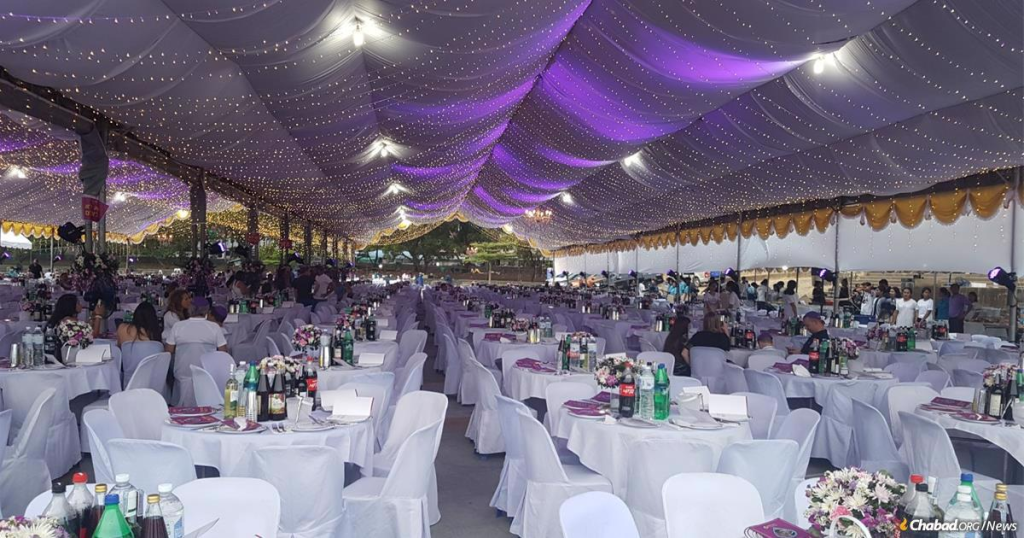
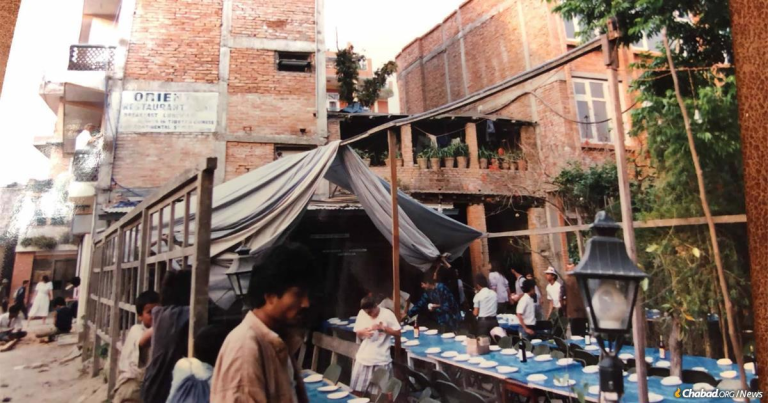
Some are remarkable for their sheer scale. The seder in Nepal, dubbed “the world’s largest,” draws some 2,000 participants and requires 1,500 pounds of matzah and 1,000 bottles of wine. Elsewhere, the scope is just as striking: In Moscow alone, more than 150 seders are held each year. And then there are the countless smaller public seders that hardly make headlines, yet leave a lasting imprint on individuals who might otherwise have missed the experience entirely.
These seders are all a natural extension of the mitzvah campaigns launched by the Rebbe, Rabbi Menachem M. Schneerson, of righteous memory. Beginning in the 1950s, the Rebbe encouraged anyone who would listen to reach out and help fellow Jews connect with their heritage through Torah and mitzvahs. He would over the years place special emphasis on particular mitzvahs, for example tefillin and lighting Shabbat candles, but among the first was the Matzah Campaign, to encourage the distribution of handmade shmurah matzah, which the Rebbe introduced in 1954.
Yet the need for public Passover seders is a relatively new one. Not too many years ago, every Jew celebrated Passover at home, with their family. Those who did not have a seder of their own could find one to join, whether at the home of their rabbi or someone in else their community. That began to change in the 20th century, as Soviet Jewish refugees began arriving in the West, Israeli backpackers headed for the Far East and other exotic locales, and other reasons of modern life. With the Rebbe’s framework of mitzvah campaigns already in place, Chabad was ready to meet the need.
Not the Default
The earliest Chabad shluchim (emissaries) in America date back to the 1940s, in the years following the arrival of the Rebbe’s father-in-law the Sixth Rebbe, Rabbi Yosef Yitzchak Schneersohn, of righteous memory, on American shores. The Rebbe succeeded him in 1950, and building on the foundation laid out by his predecessor expanded the Chabad emissary project across the United States and abroad.
Many of them founded day schools, took up positions in existing synagogues, or filled other necessary Jewish communal roles. In that setting, most Jews they encountered already had a Passover seder to attend, often in their own homes or within their community.
An area that required particular attention was the availability of traditional round shmurah matzah, which had all but gone extinct in the United States. The Rebbe launched the Matzah Campaign in 1954 in response, ensuring that as many Jews as possible could obtain authentic, hand-baked shmurah matzah for Passover.
It was only toward the end of the 1960s, however, that the need for large-scale public seders began to emerge. In 1969, Rabbi Shlomo Cunin established a new Chabad center at the University of California, Los Angeles (UCLA), the first Chabad center focused on students. With the Rebbe’s blessings, he dubbed it “Chabad House.” Whereas Chabad emissaries had previously focused their energies on strengthening existing Jewish communities in need of help, the Chabad House at UCLA expanded the model: With the dawn of the counterculture and with it the loosening of traditional communal bonds, especially among young people, Chabad emissaries were now bringing Jewish life to the front lines of society.
These new Chabad centers set out to engage Jews with little or no communal affiliation, offering them accessible entry points to Jewish life and mitzvahs. The broad cultural changes meant that for many attending a Passover seder was no longer a given, but a choice, and one they often did not make. Naturally, Chabad at UCLA began arranging a Passover seder, as did other Chabad centers on university campuses.

That did not mean the old model of family-based seders was to be disposed of. Indeed, in situations where participants were likely to attend a seder of their own, the Rebbe expressed his preference that they do so. At the same time, in a situation where that was unlikely, the Rebbe encouraged public seders to be arranged.
One early example was the Soviet Jewish immigrants who began arriving in the United States in the early 1970s. Having endured decades of Soviet religious repression, many had never experienced a seder and had little or no Jewish education to draw upon. Public seders offered them, often for the first time, the opportunity to participate in the mitzvahs and rituals of Passover.
Chabad began holding such Passover seders in the 1970s in Crown Heights, where it was hosted by Friends of Refugees of Eastern Europe (F.R.E.E.), and also in other centers of Soviet Jewish immigration, like Boston. For several years, the Rebbe himself visited F.R.E.E.’s Crown Heights seder, offering his blessing before it began.
Soon it became clear that it was not just Russian-Jewish refugees who could benefit from a public seder; indeed, there were many Jews of all demographics and backgrounds who were for various reasons unfamiliar with the ins and outs of Passover. And so, in the late 1970s, and accelerating through the 1980s, Chabad centers across the United States began hosting public seders. What had begun on campus and as a service for immigrants was now a wide need.
A 1982 advertisement in the LA Weekly captures the spirit of those early efforts, inviting “any Jew that moves” to public Passover seders led by Rabbis Shlomo Cunin and Shlomo Schwartz. In the language of the era, it promises a vibrant experience: “Enjoy a sumptuous Freedom Feast with all the traditional delicacies: handbaked whole wheat Matzoh, sweet and dry Israeli wines, fresh ground horseradish, ‘Charoset’ Trail Mix, Beet Borscht, All-Natural ‘Tzimes,’ Down-Home Chicken Soup, Fresh Squozen [sic] O.J., etc., etc. All in unlimited quantities.”
All Four Sons
By 1986, the Rebbe felt that it was not enough for public Passovers to be held only in the United States. That year the Rebbe met with Israel’s Chief Rabbis, Ashkenazi Chief Rabbi Avraham Shapiro and Sephardic Chief Rabbi Mordechai Eliyahu and raised the issue of public seders in the Holy Land.
After emphasizing that Passover is fundamentally an educational experience, and that the seder explicitly embraces all “four sons,” from the wise child to the one who does not know how to ask, the Rebbe turned to the practical:
“Efforts should be made to ensure that on the night of the seder, all ‘four sons’ are seated at the seder table, that is, even those who throughout the year remain distant from Jewish life, Torah and mitzvot should also take part in the seder,” he told them. “The practical approach, it would seem, is for rabbis in every locale, city rabbis, community rabbis, and neighborhood rabbis, to organize public seders in each place, and to invite all local residents, especially the children, to come and participate.”
When Rabbi Shapiro suggested that, to his knowledge, even non-religious Jews in Israel generally held seders, the Rebbe responded candidly:
“If only that this were already the case by the coming Passover. However, I am aware of the reality, for example, in New York, where tens of thousands of Jewish children do not take part in a seder; more than that, they are not even aware that such a seder exists. And from reports about the situation in Israel as well, it emerges that on Passover last year there were many children, in various settlements and kibbutzim, as well as in neighborhoods and larger towns, who, for one reason or another, did not participate in a seder.”
The Ashkenazi Chief Rabbi noted that many communal seders were already being held, but the Rebbe responded that the truth was that many were embarrassed to admit they had nowhere to go. He therefore urged that, rather than organizing community events, each rabbi open his own personal seder to the public, and publicize it widely, so that anyone could join easily and with dignity.
The Rebbe also addressed the practical question of cost. Acknowledging that such seders would require significant funding, he pledged to participate in the expenses himself, and added that there were many philanthropists in New York who would readily join in supporting the effort.
The Chief Rabbis agreed in principle, but the Rebbe did not leave it at that.
Rabbi Yaakov Shapiro, the son of the Ashkenazi Chief Rabbi who accompanied his father to the meeting, later recalled: “Although the meeting ended at a late hour, we were surprised—as we left our hotel for prayers very early the next morning—to be greeted by a man who said, ‘I was sent by the Rebbe,’ and who handed us a check, the Rebbe’s first contribution toward these open seders.”
Italy to the Far East
At the same time, the first cracks that had appeared in the Iron Curtain in the ’70s began to expand, and the trickle of Russian Jews coming to the U.S., Israel and Europe turned into a flood.
A Jewish Telegraphic Agency daily bulletin from 1989 reported: “10,000 Soviet Jews in Italy Expected at Lubavitch seders.” It continued:
Some 10,000 Soviet Jews waiting in Italy will sit down this week to what is for most of them their first Pesach seder ever. The Chabad-Lubavitch organization is making the seders and has sent in rabbinic student volunteers from New York and Israel to lead them.
Like the Hasidic tale of the Jew who still remembered the tree in the forest, but no longer remembered the prayer, for most of these Soviet Jews, ‘it was a tradition to remember the matzah, but not all the halachot,’ said Rabbi Yitzhak Chazan, the Lubavitcher rebbe’s emissary in Rome, who is overseeing the giant operation.
Chazan, in a telephone interview from Rome, said “80 percent might know the details of Pesach” and “some maybe remembered to get matzah, but not to keep kosher for Pesach.”
But of all the 9,600 Soviet Jews now in Ladispoli and surrounding Italian towns, only “about 1 to 2 percent” have ever experienced a Pesach seder. Chazan estimated.
That is how many Jews are now registered in the transit center in Rome, he said, but Jewish agencies are expecting a full 10,000 will be gathered in the Italian towns by Wednesday night, when Passover begins. “Each day, there are 100 arrivals,” Chazan said.
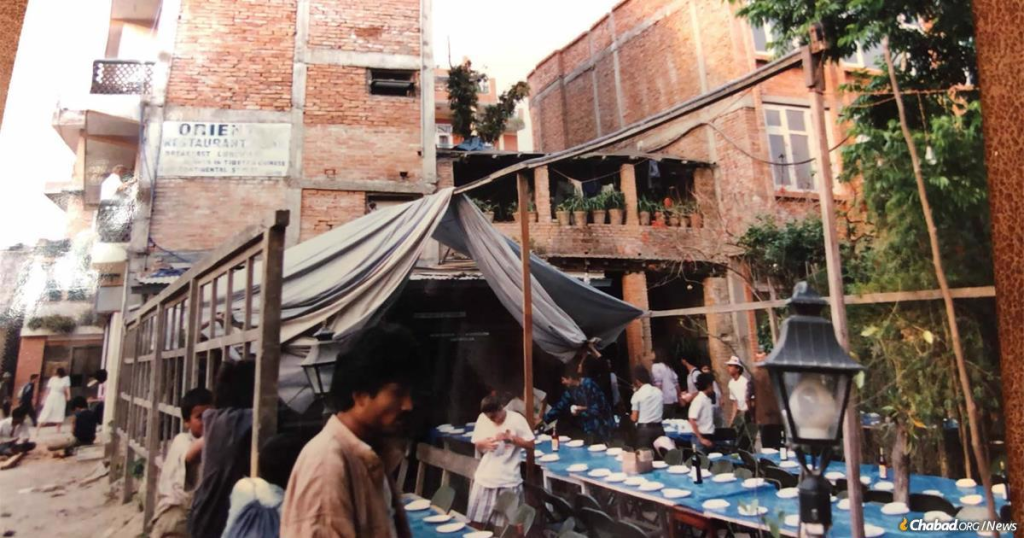
Some 4,000 miles away, another Passover story was unfolding, in Nepal, to which young Israeli backpackers had recently begun flocking. The Israeli Ambassador to Nepal, Shmuel Moyal, thought it would make sense to organize a public seder at the embassy in Kathmandu. Expecting a turnout of perhaps 30 to 40 backpackers, he posted a sign-up sheet at a popular restaurant. But within three weeks, nearly 90 people had already registered. Realizing the scope was growing beyond his capacity, he turned to the Rebbe.
“I sent a telegram to Rabbi Schneerson, who I knew from when I was a consul in New York,” Moyal told Chabad.org in 2011. “He said not to worry, that he’ll send three rabbinical students to help. And three came: one from Australia, one from New York and one from Canada.”
The Chabad yeshivah students came equipped with handmade shmurah matzah, wine and kosher meat, preparing for roughly 100 participants. In the end, some 500 backpackers showed up.
“There wasn’t any time to get more food shipped,” said Rabbi Mendy Kastel, one of the students who traveled to Nepal that year, “so we had to work with the food we had. I’m a Brooklyn boy, and I never understood what it meant to be in a Third World country.”
The following year, another group of students came. Then another the year after. What began as an improvised effort grew steadily, eventually becoming the world’s largest seder, held in Kathmandu by Rabbi Chezky and Chanie Lifshitz, who established a permanent Chabad center in Nepal in 2000. Additional seders would later be established in other parts of the country as well.
These seders had a profound impression on the attendees, even those who hailed from Israel. “[The seder] was a real eye-opener for me,” Irit Goren told Lubavitch News Service in 1991. The Tel Aviv native had come to Nepal to study Eastern religions. “This is the first time Judaism had any meaning for me,” she said. “I never knew that Judaism was so spiritual.”
The Nepal seder became a catalyst for similar initiatives across Southeast Asia, eventually contributing to the growth of a wider network of permanent Chabad centers throughout the region.
Throughout this period, the Rebbe remained closely involved, offering both encouragement and practical guidance. When organizers of large seders in Europe proposed charging a nominal fee to offset costs, the Rebbe rejected the idea, insisting that the seders remain free of charge. On another occasion, he urged that public seders should be held on both nights of Passover, not only the first.
In 1989, when Shaul Spigler of Australia reported to the Rebbe that a public seder would be held in Tokyo, the Rebbe responded: “The main thing is to advertise early on that there will be a public seder [in Tokyo]. There are visitors who will come a day or two before Passover and it is important they should know that there is a place where they can have a kosher meal and a kosher Passover.”
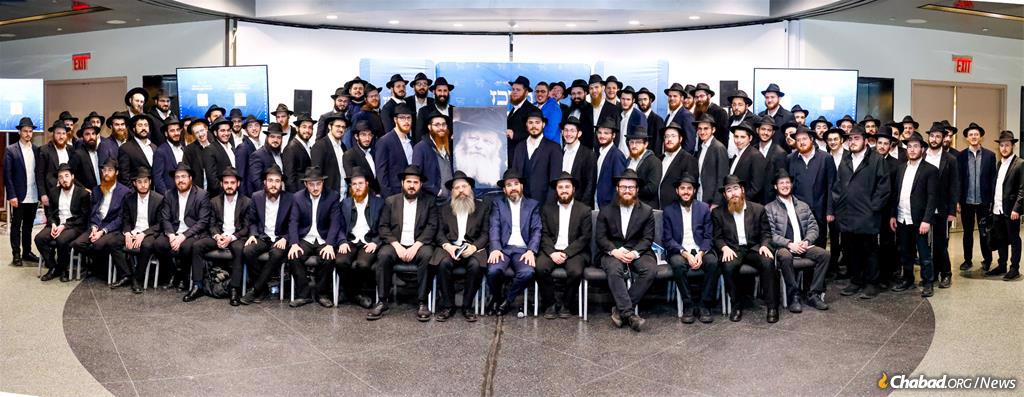
Chabad public seders spread to every country where Chabad operates—today, more than 100—and even to places where no permanent Chabad presence yet exists, facilitated by groups of yeshivah students dispatched through the Roving Rabbis program.
In 2000, in honor of 50 years since the Rebbe assumed leadership, 500 Seders were organized in Russia and Ukraine, greatly broadening the scope of what had by now become a global phenomenon.
A 2017 news report captures the scope of the operation: “If spring break or other travel takes you away from home during Passover, the Jewish outreach organization Chabad-Lubavitch hosts communal seders in cities, on college campuses and in vacation destinations around the world.
“A legendary seder takes place each year in Kathmandu, Nepal, drawing more than 1,500 Israelis and other travelers each year. Other seders are planned in Nepal in Pokhara, near the famous Annapurna trail and in Manang, which at an altitude of 11,545 feet may be the world’s highest seder. Supplies for the Manang event are transported by helicopter, motorcycle or horseback, depending on the conditions…Chabad also holds seders in popular spring break destinations like the Cayman Islands, Jamaica, Orlando, Florida, and Cancun and Playa del Carmen, Mexico.”
When extraordinary circumstances arise—such as the war in Ukraine or missile attacks in Israel—special arrangements are made to ensure that public seders can still take place safely, while accommodating as many participants as possible.
And the number of public seders continues to grow each year. In the past week alone, nearly 700 yeshivah students were dispatched across the globe to assist Chabad emissaries or to lead seders of their own, reaching hundreds of thousands of participants.
There, they will celebrate, fulfill the mitzvahs of the night, and pray that just as G‑d redeemed the Jewish people from Egypt, so, too, may He redeem the Jewish people from all those who seek to harm them in our own time.
 COMMENTS


We appreciate your feedback. If you have any additional information to contribute to this article, it will be added below.