



כ״ד כסלו ה׳תשפ״ו | December 13, 2025
Harav Heller Inspires at Annual Kolel Farbrengen
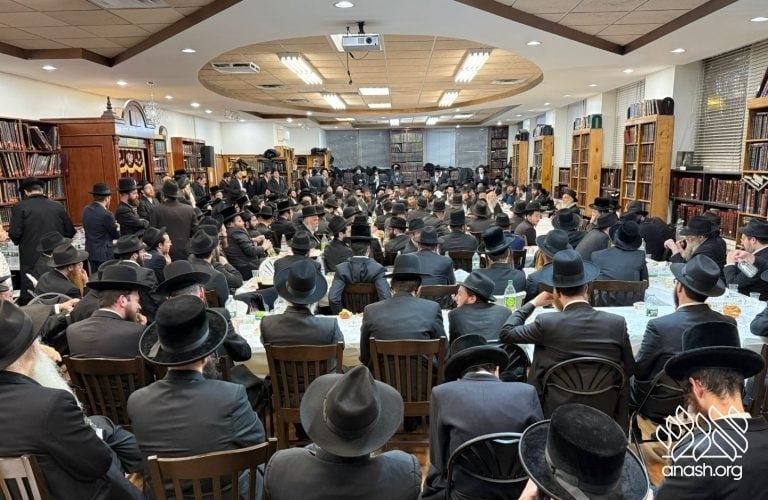
In yearly tradition, senior Crown Heights rov and rosh kolel Harav Yosef Heller fabrenged in the Rebbe’s Kolel for yungeleit and alumni, covering issues of avodas Hashem and living as a chossid. Download and print a transcript.
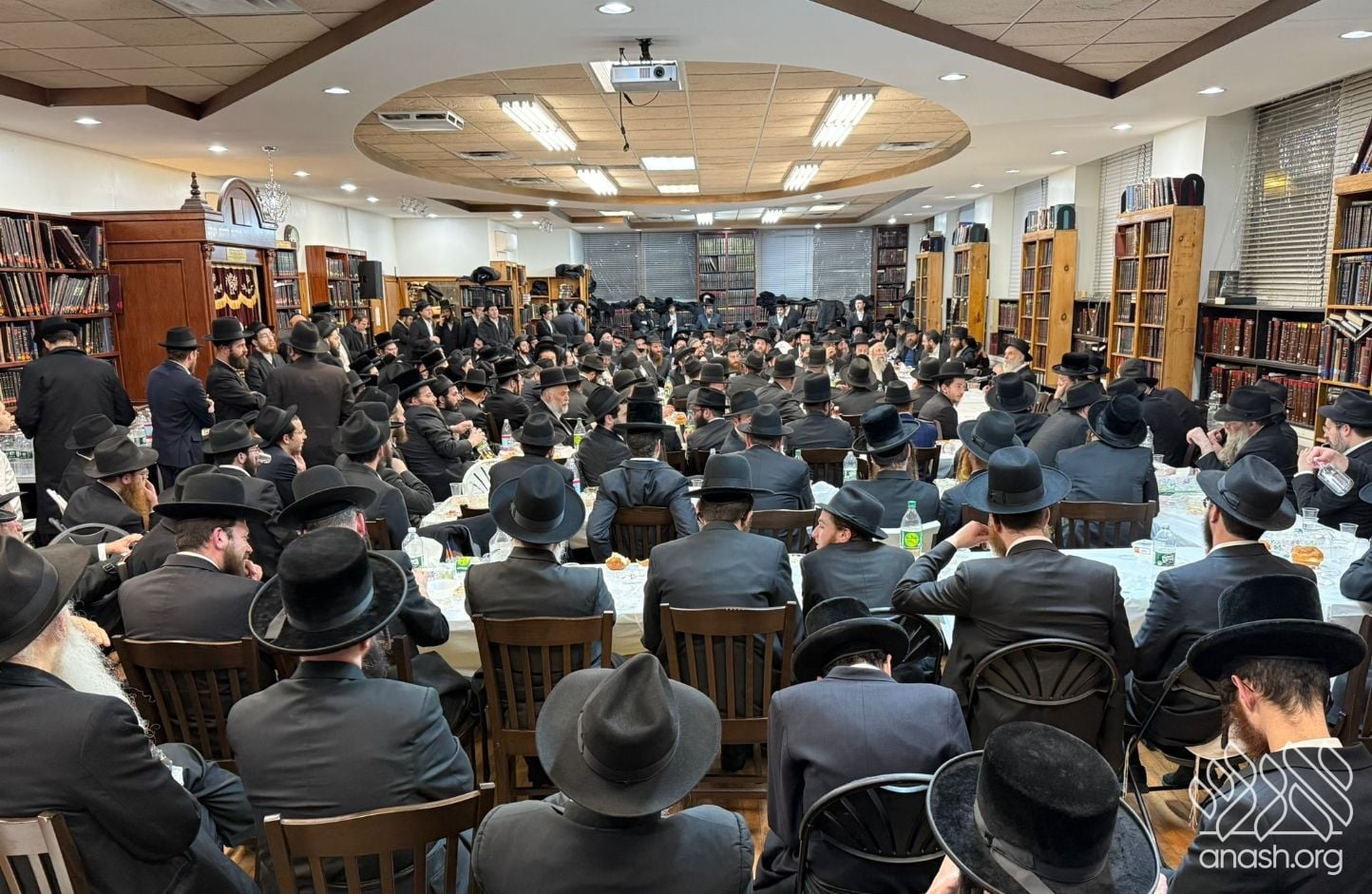
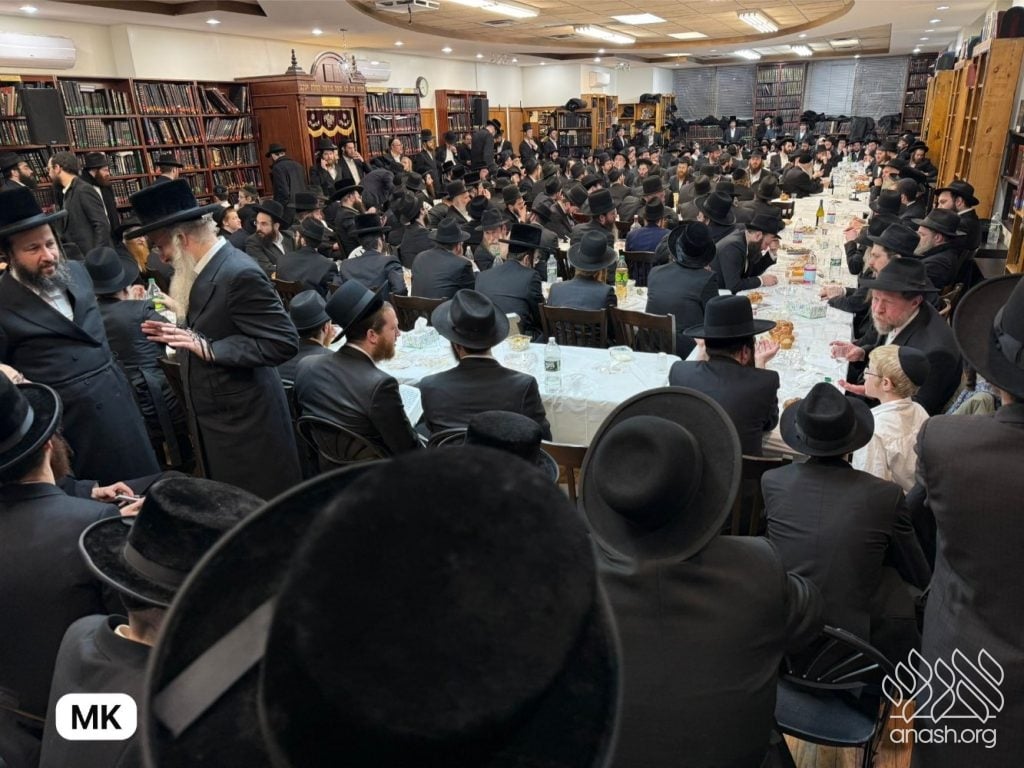
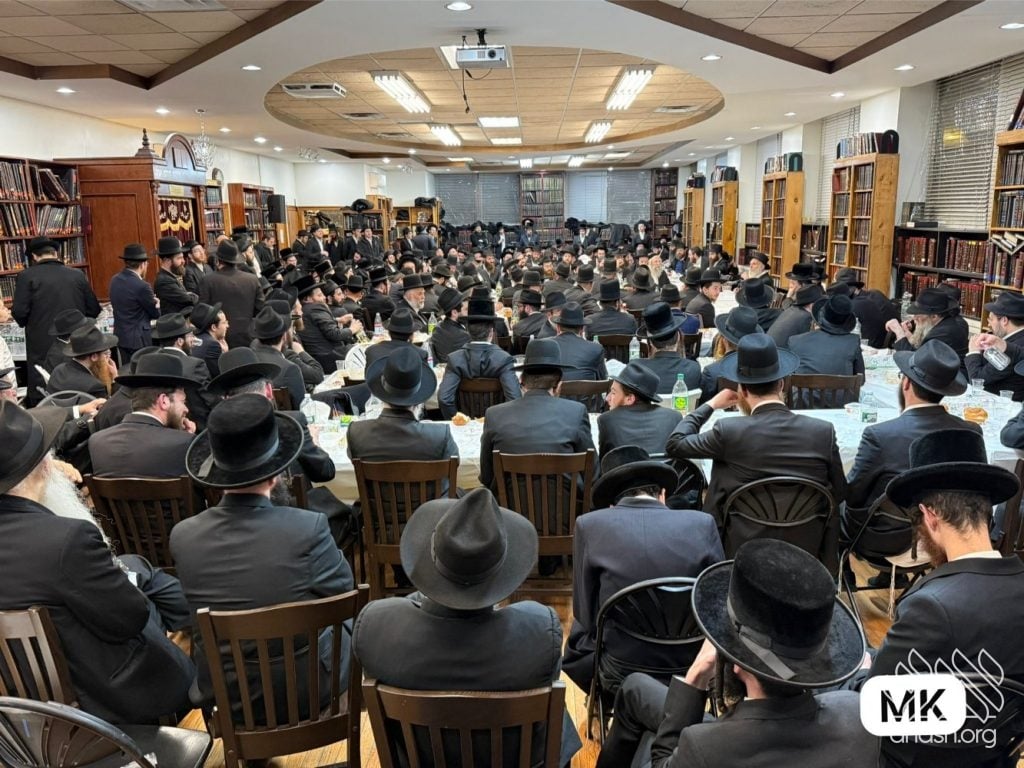
In yearly tradition, Harav Yosef Heller, senior Crown Heights rov and rosh kolel of the Rebbe’s Kolel, fabrenged for Yud Tes Kislev. The farbrengen, attended by Kolel yungeleit, as well as Kolel alumni, lasted for many hours and covered important topics related to avodas Hashem and living as a chossid. In his usual style, towards the end of the farbrengen, Harav Heller took questions from the crowd.
Anash.org received a transcript of nuggets from the farbrengen, and we are pleased to share here an edited version of it.
With thanks to Asher Vorst.
***
Rising Higher
Davening is called “chayei sha’ah” (transient life). Chassidus explains that sha’ah means to turn. You turn away from the entire world and forget everything. Preparing before davening is a halacha, no different than heating the first oven for matzah. It requires the same mesirus nefesh.
Reb Itche der Masmid used to say that when you walk in the street, you should feel broken inside, because you see the world as a metzius. The Ofanim are in Olam Ha’asiyah, and they scream with tremendous noise because they see human beings who think the world is the main thing.
Reb Nissan Nemenov once said that his son Moshe wasn’t affected by the “American air.” There are others who think they aren’t influenced, but in truth they are. We must work on taharas ha’avir.
There’s a mabul in the world, and people are trying to save themselves with leaky boats. Take someone else into your boat with you.
Avodas Hashem
But what if someone truly isn’t in the mood? The solution is to recognize that it’s not “you” who wants to do mitzvos in the first place. The world was created for Yidden and Torah. Before creation, Hashem desired “Ana Emloch” (to rule). That desire is reflected in every Yid. If it’s about your own desire, then sometimes you want and sometimes you don’t. But if it’s about Hashem’s will that is expressed in you, you do what’s needed automatically.
Prikas ol malchus Shomayim (casting off the yoke of Heaven) is worse than eating non-kosher food. Buying items that are only meant to be eaten b’shaas hadchak when perfectly kosher food is available is prikas ol.
Zevulun isn’t second-class. It’s a different kind of avodah, and just as precious.
If you don’t learn Torah, you become fargrebt (dull, insensitive), no matter how many good things you do. Children sense it and absorb it, regardless of what you tell them.
Don’t tell a child “the Rebbe said” because he doesn’t know what Rebbe is. First explain that a Rebbe is dvar Hashem in our generation, and that his words are meant to guide our lives.
At the Seder we don’t say viduy, but we do teshuva. Going from darkness to light is the greatest teshuva, turning away from our own darkness.
In Kotzk there were people who claimed to see the ushpizin. The Kotzker Rebbe said he didn’t see them, but he believed they were there, and emuna is even loftier.
The Power of Chassidus
Yud Tes Kislev is the Rosh Hashana of Chassidus, not only for Chabad but for Chagas as well. The Russians wanted to arrest all the talmidim of the Maggid, but the Alter Rebbe told them that he represents the Baal Shem Tov and took the matter upon himself.
If Chassidus is only clothing and customs, then it’s not such a tragedy if it’s missing. But if Chassidus is Elokus, then its absence is a very big deal.
Chassidishe Rebbes differ from Misnagdishe lamdonim in that Rebbes can lower themselves to simple people. That comes from being connected to Hashem, for Whom there is no big or small.
My son, the Mohel, was once called to a bris where the father refused to participate. The father was an Israeli whose grandfather had been close to Ben Gurion and ate treif on Yom Kippur. The grandson was brilliant, wealthy, and arrogant, and he was writing a book to “prove” there’s no Creator. My son suggested he learn Tanya before publishing. He learned a perek a week, moved closer to a shul, and today he is frum. This is the power of Chassidus.
Only learning about Hashem genuinely uplifts a person. Mussar seforim warning of punishment don’t affect someone who doesn’t believe in punishment. These days, everyone quotes Chassidus; it’s the only thing that works.
There’s no such thing as “Chassidim and Misnagdim.” Every person has a misnaged inside that must be uprooted, and a Chossid inside that wants Elokus.
Chassidus is the Neshama
Comfortable frum community life isn’t Chassidus. That existed before the Baal Shem Tov. Chassidus must come with a price: sacrifice. Without sacrifice, there is no Chassidus.
During a farbrengen with Reb Shlomo Chaim, a Russian Yid described how he put on Tefillin in a bathroom because he had no other choice; otherwise, he would lose his job. Reb Shlomo Chaim was very moved. A non-Chassid who was there protested that it’s against halacha. Reb Shlomo Chaim shot back: “And if you have a toilet in your head, are you allowed to put on Tefillin there?…”
In Shu”t MiMa’amakim by Rav Oshri about shailos from the Holocaust, he brings the following story:
There was no Daled Minim in town. But on the first day of Sukkos, which fell out on Shabbos, word came that there was a Yid with a set at the train station. A debate broke out over whether to shake them under the circumstances or not because it is Shabbos. One Chossid seized them, made a bracha, and said, “I’ll go to Gehinnom, but Sukkos without a lulav I won’t have!”
He may have been wrong according to the rules, but Moshiach won’t come for the people who are “right.” He will come for those who live devoted to Hashem l’mailah mi’taam vodaas.
Living for Hashem
We must learn to act without self-interest. If you don’t keep Shabbos, you’ll lose your job as a teacher – that’s self-interest. Doing a favor for someone outside your circle is chesed chinam. Talking to a close friend isn’t ahavas chinam. Doing a mitzvah because you desire Elokus isn’t lishmah.
Learning must be lishmah. Learning to become a “great Rosh Yeshiva” is a direct path to sh’ol tachtis.
A tzadik once said that even if they gave Gehinnom as a “reward” for mitzvos, he would still run to do them. That is lishmah.
Someone came after 120 with mountains of Torah and mitzvos, yet they wouldn’t admit him to Gan Eden. “Go take a reward from the one you really worked for,” they told him. “You worked for your own standing in the community, not l’shem Shamayim.”
If you naturally enjoy learning, that’s your pleasure. But if you give up your learning time to do gemilus chasadim, that’s lishmah.
Release Time happens on Wednesday afternoon, right in the middle of learning. If you’re truly absorbed in learning and then close the Gemara to teach a child, that’s the ultimate.
Teaching another Yid is more important than your own chidushim and your own learning lishmah. There are others who can write chidushim, but very few who will teach the next child. And that is the highest lishmah.
People talk about a “shidduch crisis.” The real crisis is between us and Hashem.
Giving Up of Yourself for Others
How does a person stay happy these days? Close the newspaper (even one with “five hechsherim” ensuring no lashon hara) and go help another Yid. That’s the tikun for all aveiros.
The Frierdiker Rebbe once asked someone in Otvotzk why he never tried convincing the local store owner to close on Shabbos. If it doesn’t bother you, it means that you are lacking in Shabbos observance yourself.
Every child must have a living Rebbe — not one you visit before Rosh Hashana to sing a nigun and hand in a kvittel, but a Rebbe you give yourself over to. Today you see many who devote their whole selves to the Rebbe’s instructions with mivtzoim and shlichus.
It’s not that you “can’t” do mitzvos with pniyos (selfish motives). You can do everything with pniyos — even walk into the Kodesh HaKodashim. But there are things where pniyos come naturally, and things where you must fight to bring them in. By nature, you go on mivtzoim without pniyos.
It’s Not About You
Someone once asked what to do about being a baal gaavah. The answer: become very aware that you’re a rotten baal gaavah. That awareness itself breaks the ego.
Men darf nisht dayn davenen, men darf nisht dayn lernen. Men darf dayn tzubruchenkait farvos du kenst nisht davenen un lernen. Hashem doesn’t need your davening or learning. He needs your broken-heartedness over why you can’t daven or learn.
Someone once asked the Rebbe how he could come straight from the mountains to Selichos. The Rebbe explained that this is exactly when “Lecha Hashem hatzedakah” happens. When you think you deserve it, you’re not ready for Selichos.
A little is also a lot, but a lot is little. If you learn five minutes when you don’t feel like learning at all, that’s a lot. But if you learn for five hours and feel proud, what’s that out of twenty-four?
Many questions came in: “What’s wrong with being better? What about fixing my issues?” Stop thinking about yourself. Stop analyzing yourself. Reb Itche der Masmid would say: It’s either me or Him. Hashem doesn’t want a partnership. Either you’re thinking about yourself, or you’re thinking about Him. And why bother thinking about someone as foolish as yourself?
VIDEO
 COMMENTS


We appreciate your feedback. If you have any additional information to contribute to this article, it will be added below.