



כ״ו אדר ה׳תשפ״ו | March 14, 2026
Inspiring a Love for Torah: A Conversation with Melbourne’s Rosh Yeshiva
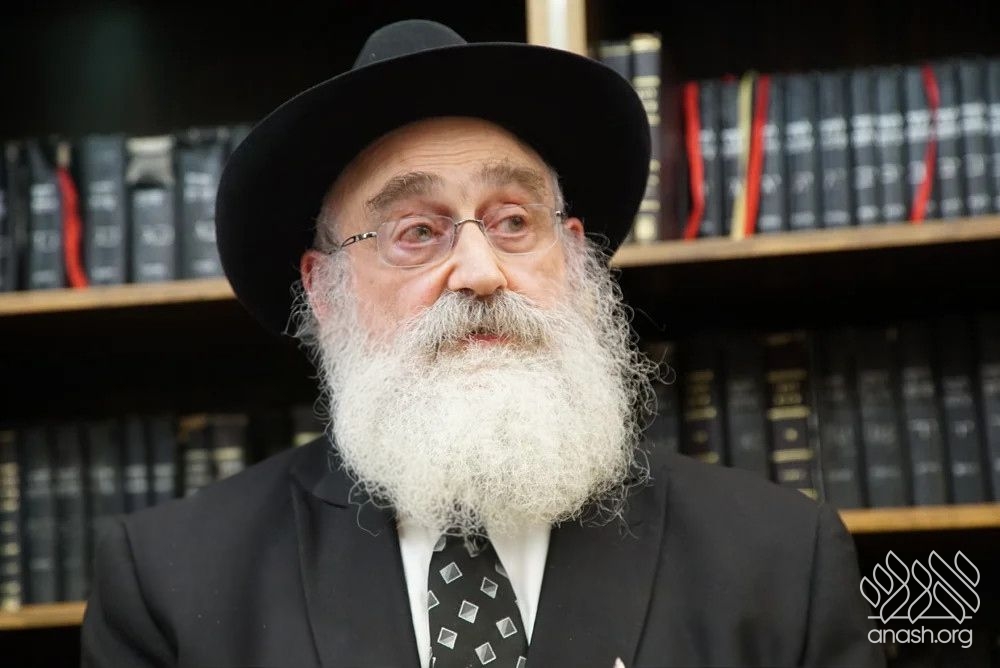
In a riveting interview, Rabbi Binyamin Gavriel Cohen, Rosh Yeshiva of Melbourne’s Yeshiva Gedolah for over fifty years, shares his fascinating life story of connecting to the Rebbe and Chassidus, and his approach to inspiring a love for Torah in today’s bochurim.
One of the yeshivos that merited special affection from the Rebbe is the Yeshiva Gedola in Melbourne, Australia. Established in 5726 (1966), it was established from a genuine need to provide a structured framework for the students of the small yeshiva that had been operating in the city for several years.
Just a few months after its founding, in 5727 (1967), the Rebbe sent a group of talmidim hashluchim to strengthen the yeshiva and serve as a “dugma chaya” for the bochurim, and even for the broader Jewish community of Melbourne. Since then, every two years, the Rebbe continued this practice, sending new groups of talmidim hashluchim, receiving them for yechidus during which he guided them, and accompanying their work in Australia with letters and Brachos.
Indeed, the yeshiva’s success has been remarkable. Its student body grew steadily, and it has produced many outstanding individuals – lamdonim, devoted Chassidim, and dedicated shluchim.
The one appointed by the Rebbe to head the yeshiva is Rabbi Binyamin Cohen, a position he has held for over fifty years. Rabbi Cohen is widely recognized as one of the most exceptional talmidei chachomin, a Chossid of profound inner depth whose seriousness and integrity provide a constant educational example and inspiration to his students.
We had the privilege of speaking with Rabbi Cohen, learning about his fascinating life journey, the way he came to connect to the Rebbe and Chabad Chassidus, and his broad, clear perspective on cultivating a love of Torah in bochurim as well as in yungerlait in our time.
From Gateshead to ‘Tomchei Tmimim’
Rabbi Cohen was born in England on the 6th of Adar, 5705 (1945). His father’s family came from Riga, and his mother’s from Kopyczynce. Both of his parents were born in England and married during World War II.
He studied at the Avigdor Jewish School, continued his studies in high school, and at the age of 17, he went to the famous Gateshead Yeshiva in England. There, he stood out among the bochurim and was admired by the roshei yeshiva.
Rabbi Cohen’s family was frum in the “English style,” but in London, there were also Chassidim and shluchim of the Rebbe living and working in the city, and the young man was drawn to them and inspired by their light.
“Three houses away from my parents’ home lived the shliach Rabbi Feivish Vogel AH, and on the same street lived the famous Chassid Reb Mendel Futerfas. Naturally, we would meet each other, but it seems they made sure these encounters were deliberate, not just coincidental.”
However, his connection to Chabad developed gradually.
“It didn’t happen overnight. In 5723 (1963), the 150th year since the passing of the Alter Rebbe, I heard a speech from Rabbi Feivish Vogel at Beis Lubavitch in London. After that, I began visiting Beis Lubavitch.
“Later, when I studied in Gateshead, Reb Mendel Futerfas would come to the city to raise funds for the Ezras Achim organization, which supported Jews behind the Iron Curtain in Russia. That’s when I first met him. Even before Rabbi Feivish and Reb Mendel arrived in London, the chassid Reb Bentzion Shemtov, a”h, lived there. Just seeing such a Yid had a profound effect on me.”
The Chabad influence on his life came in two parallel ways. “In Rabbi Vogel, I saw a captivating Chassidic figure with a remarkable ability to influence the city’s Jews and bring them closer to Torah and mitzvos, while Reb Mendel’s influence was pnimiyusdik – a deep, authentic Chassidic guidance. In the summer, when I returned home from Gateshead, I regularly studied Chassidus with Reb Mendel, which had a tremendous impact on me.”
After two years at Gateshead, Rabbi Cohen decided to move to the Lubavitch Yeshiva.
“Had I stayed in Gateshead, like many graduates, I would have pursued a profession such as law or accounting in London. I realized I wanted a different life, and on Reb Mendel Futerfas’s advice, I traveled to the yeshiva in Kfar Chabad.
“Reb Mendel wanted me to study under the mashpia Reb Shlomo Chaim Kesselman, a”h. I don’t know if Reb Shlomo Chaim and Reb Mendel saw everything the same way – they probably weren’t from the same school of thought – but Reb Mendel understood that this was where I could receive a strong chassidishe foundation. On his advice, I traveled to Kfar Chabad with my friend Rabbi Daniel Goldberg.”
Before making the move, Rabbi Cohen wrote to the Rebbe to request his consent and blessing. The Rebbe responded positively, calling the journey to Kfar Chabad “his good decision.”
During his studies in Kfar Chabad, Rabbi Cohen received guidance in avodas Hashem and darkei haChassidus from Reb Shlomo Chaim.
“During my time there, the Six-Day War broke out. The fear that gripped the country and Jews worldwide was immense. Many foreign students studying in Israel were filling Lod Airport on their way out, creating an atmosphere of anxiety and low morale. Several students at the Toras Emes yeshiva in Yerushalayim, born abroad, received urgent notices from the American Embassy to leave immediately. They sent a telegram to the Rebbe asking how to act.
“On the 13th of Iyar, the Rebbe replied: ‘In response to your telegram – study with diligence and perseverance, and all the students, and certainly the Guardian of Israel will neither slumber nor sleep, and bring good news.’
“This telegram from the Rebbe inspired us with hope and confidence. We decided to stay. Then I received a letter from my parents, not urging me to return to England, but simply providing an address of a travel agency on Hayarkon Street in Tel Aviv and instructing me to go there to pick up a plane ticket. I replied that I would remain in Eretz Yisrael to study, fearing their reaction. To my surprise, they responded warmly, expressing satisfaction that I would stay – it was the kindest letter I had ever received from them.”
Later, on Lag B’Omer, the Rebbe said a sicha that resonated throughout Eretz Yisrael and the world, speaking about the miracles and wonders to come. Fear and uncertainty were supplanted with confidence and peace of mind.
Rabbi Cohen recalls an incident where a bochur came to Reb Shlomo Chaim, worried that his parents wanted him to return home. Reb Shlomo Chaim said to him sharply, ‘If so, go ask…,’ mentioning the name of a certain Chassidishe Rebbe, thereby making it clear that the Rebbe’s guidance was definitive and there was no reason to worry.
“There’s no need to elaborate on the incredible outcome of the war, which everyone had feared would be disastrous,” Rabbi Cohen reflects.
The First Yechidus
In 5728 (1968), Rabbi Cohen traveled for the first time to the Rebbe as part of the kvutza from the Yeshiva in Kfar Chabad, which would travel annually to study at the Yeshiva in 770. (In those years, the kvutza began in Nissan and stayed until the following Nissan.)
After several weeks in London, on the 8th of Nissan, 5728, Rabbi Cohen arrived at 770 and saw the Rebbe. “The first thing I noticed,” he recalls, “was that during Shmoneh Esrei, when bowing, the Rebbe would first straighten his head and then his body. This follows the Alter Rebbe’s instruction in Shulchan Aruch, but I had rarely seen anyone actually do so. Observing the Rebbe, every action seemed to teach a din in Shulchan Aruch.”
“The Rebbe behaved with tremendous simplicity,” Rabbi Cohen continues. “Without any conspicuousness, without external displays, the way he entered and left the zal during davening was completely unassuming. During chazaras hashatz, the Rebbe would sit with his forehead resting on his holy hand, following the words from the siddur, entirely focused, without any outward gestures. One thing stood out – his seriousness and absolute devotion. This was what I would call ‘conspicuous inwardness.’”
In Tammuz of 5728 (1968), Rabbi Cohen merited to enter yechidus for the first time.
“The custom was to have yechidus once a year, on one’s birthday, but I arrived after my birthday, in Adar, and so I merited a yechidus at another time. Immediately upon my arrival, even before the Rebbe looked at the note I had submitted, he asked me about the custom in Kfar Chabad regarding birchas kohanim: ‘Tzi m’hot geduchen’t yeder tog tzi nisht?’ [Do they do birchas kohanim every day or not?] I replied that in the yeshiva they did it every day, but not in the shul.”
Rabbi Cohen received another instruction from the Rebbe.
“During my visit to England, before traveling to the Rebbe, I went to Gateshead Yeshiva for a day or two and studied with the roshei yeshiva. I mentioned this in my letter, and the Rebbe instructed me to continue corresponding with them on learning topics.
“It was important to the Rebbe that I maintain this connection. On each of my trips to England in those years, I would study with the roshei yeshiva and then report back to the Rebbe.”
Later, in 5730 (1970), when Rabbi Cohen’s parents traveled to the U.S. for his wedding, they also merited a yechidus. During it, the Rebbe mentioned that he had instructed Rabbi Cohen to correspond with the great talmidei chachamim in England.
Another matter the Rebbe emphasized was the writing of chidushei Torah.
“In yechidus, the Rebbe instructed me to participate in writing chidushei Torah and have them printed in one of the two Torah collections published in the U.S. at that time – HaMaor and HaPardes. The Rebbe even indicated that he intended to make a big deal over the publication of haoros. In the end, only two or three years later, the Rebbe publicly encouraged the publication of such works.”
“Worthy of a Special ‘Yasher Koach'”
The center of life by the Rebbe, Rabbi Cohen shares, was the farbrengen.
“Everyone took the farbrengen in their own way and according to their neshama,” he says. “For me, the Farbrengen was mainly learning. The Rebbe simply taught Torah, and we had to concentrate, listen carefully to the words, understand, and learn – to understand the question, to understand the answer, and to understand if there was a question on the answer. In those years, the Rebbe would rebuke the chassidim for not dealing with answering the questions or posing questions on the sichos.
“In fact, the farbrengen was only the first stage. In the moment, you couldn’t grasp the depth of the words, and afterward we had to listen to the chazara, and then learn the words after they were printed – to contemplate and, according to our ability, to grasp their depth. This is not only a thing of the past. One must listen to the sichos, or at least learn them as they were printed, contemplate well, and re-experience the experience of learning from the Rebbe.”
From the 5700’s, and until today, the bochurim of the yeshiva in 770 would use the summer days – when many other yeshiva bochurim go on vacation – to go out on a shlichus for Merkos L’inyanei Chinuch to various towns, to meet Jews, to give them the opportunity to do mitzvos, and to form a connection with them.
“In 5728 (1968), we also asked for the z’chus to go out on this mission, but when we approached Rabbi Chadakov, he made it clear that bochurim for whom this was their first year of learning in 770 should sit and study, and not deal with other things.
“The next year, 5729 (1969), R’ Daniel Goldberg and I went for three weeks to Toronto and the towns in the area of southern Ontario in Canada. Upon our return, R’ Daniel sat down to write a very detailed report on all that we had experienced. He didn’t miss a thing. He detailed the state of Yiddishkeit in every city and town, and he also elaborated on the content of our conversations with all the people we met.
“We submitted the duch, and we were fortunate to receive the following response from the Rebbe: ‘A duch as an example [for others to learn from]. And they are worthy of a special Yasher Koach for this – together with my wonder that they apparently were very brief in their back-and-forth discussions with rabbonim and the like in chidushei Torah – despite the instruction on this.’
“A few weeks earlier, the Rebbe had spoken at a farbrengen about the conditions of going on Merkos Shlichus and made it clear that to go, one would need to be tested by the yeshiva’s hanhala on their studies, and he also instructed that during the shlichus, they should speak in Torah with the Jews they met.
“In the duch, Rabbi Goldberg noted that the information written there could be used by the bochurim who would travel to those towns the following year, since the information and background on the place could save a lot of time. The Rebbe circled the entire paragraph and wrote: ‘Extremely necessary.’”
“Priority to Melbourne”
In 5730 (1970), Rabbi Cohen was suggested a shidduch with his wife, Mrs. Rivka, the daughter of Rabbi Zusha Rivkin from Crown Heights. After they received the Rebbe’s consent and bracha, they became engaged, and they married on the 2nd of Tammuz that year.
When he asked the Rebbe what he should do after the wedding, the Rebbe instructed him to study in Kollel. “Every year we had the zechus to enter Yechidus,” Rabbi Cohen says. “I asked the Rebbe what kind of job I should look for, and the Rebbe said: ‘M’darf zayn b’ohela shel Torah, un vos mer Torah – mer bracha’ [One must be in the tent of Torah, and the more Torah — the more bracha].”
Several years earlier, in 5727 (1967), the Rebbe sent for the first time a group of talmidim hashluchim to the new Yeshiva Gedolah that was established in Melbourne, Australia. One of the shluchim was Rabbi Aryeh Leib Kaplan, a”h, who was later chosen by the Rebbe and sent to Tzfas. While he was in Australia, Rabbi Kaplan was asked by the Chossid Reb Zalman Serebryanski, a”h, the director of the yeshiva, to find a candidate for the position of Rosh Yeshiva. After the wedding, we studied together in the Kollel of the Rebbe’s Mazkirus, and Rabbi Kaplan suggested in a letter to Rabbi Serebryanski that I should serve in the position.
Rabbi Chaim Gutnick a”h from Australia, also approached me to speak about the matter, but I had received an instruction from the Rebbe to study in Kollel, and I therefore did not want to hear about other offers.
At the same time, I was asked by Rabbi Yisrael Jacobson, a”h, to serve as a Magid Shiur for Chassidus at the Hadar HaTorah Yeshiva in Crown Heights every morning and evening, alongside my Kollel learning.
After three years of studying in Kollel, I asked the Rebbe again what I should do. I wrote down all four offers that had come my way until that time, and when I entered the yechidus, the Rebbe marked the order of priority for each of the options. The first priority – next to which the Rebbe marked the number 1 – was the position of Rosh Yeshiva in Melbourne, while next to the position at the Hadar HaTorah Yeshiva, the Rebbe marked the number 4. The Rebbe told me: “Din kadima tzu Melborn Australye” [Priority to Melbourne, Australia].
And so, in the month of Menachem Av, 5734 (1974), Rabbi Cohen and his wife arrived on Australian soil, and he has headed the Yeshiva Gedolah since that day – for over fifty years.
*
The Yeshiva is the Bochurim!
What is the role of a Rosh Yeshiva? What was required of you upon your arrival in Melbourne?
That’s a good question. Reb Zalman Serebryanski, who directed the yeshiva, once told me: this is a new term – ‘Rosh Yeshiva.’ I don’t know what ‘Rosh Yeshiva’ is; we didn’t know of such a concept. We knew one thing: a teacher, a melamed bar poi’el (an active teacher). The main role is to cause and help the bochurim to learn. Open a Gemara, open a Shulchan Aruch, and sit down and learn with them!
Rabbi Zalman was a quintessential chassidishe Yid, very clever, and a man with a clear vision. He was no longer young and not in good health, but I received a lot from him. He would say: What is a yeshiva? – The walls? The roof? The yeshiva is the bochurim! Even the hanhala is not the yeshiva! Where are the bochurim holding? What’s happening with them? – That’s the yeshiva!
This is something which, over time, those involved in yeshivos can forget. The purpose of the hanhala is for the bochurim’s sake, not the other way around. The bochurim are not meant to sustain the yeshiva; the yeshiva is meant to educate and raise them, to give to them.
Rabbi Zalman was a pnimiusdiker Yid, devoid of fakery, chitzoniyus, and bluff. He was completely devoted to the bochurim – for their physical well-being, and all the more so for their spiritual well-being. This was his life’s aspiration and what he was engaged in.
His approach to running a yeshiva is a guiding light for us. If there is a farbrengen in the yeshiva, is it possible that the next day there will not be a morning seder?! How could that be? After a farbrengen, we should learn even more! What did the farbrengen accomplish if, as a result, we learns less?
Not everyone holds this view, and of course, disagreements on these issues are legitimate, but the approach and the feeling behind it is what should drive us to think about the truth of things.
Another example: After Pesach, it is customary in all yeshivas to start the new zman on the first day of the month of Iyar. With Rabbi Zalman, there was no such thing! What will the bochurim do for a whole week from the last day of Pesach until the first day of Iyar? Of course, it is easier for the hanhala to start on the first day of Iyar, but it is not good for the bochurim – even if they don’t understand it… How can you let them waste their time?
This is one example of his approach. He didn’t look for shortcuts. The bochurim came to the yeshiva to be educated, and we must educate.
The Most Important Foundation
What is most important for a yeshiva to instill in its talmidim?
Not all students are blessed with talents, and not all of them are great iluyim. Yet we must not accept a situation where that percentage of bochurim who are not so smart will lack the essential foundation.
We see that there are many yeshivos in which even students who struggle with learning, who do not have talent, are nevertheless imbued with the idea that learning is life. They come to the realization and feeling that it is impossible not to engage in learning – it is necessary to be passionate about learning. Studying Gemara is life!
The first foundation that a bochur must receive in a yeshiva is that this is Yiddishkeit. If there is no connection to studying a page of Gemara, an essential foundation of Yiddishkeit is missing. I even see in Australia married yungerlait from various circles who, despite not being considered very smart, nevertheless have their Yiddishkeit standing on the study of Torah. They have a connection to learning, and this is a foundation in their lives.
Our yeshivas definitely instill in all their bochurim – even those who are not talmidei chachomim – Chassidic principles, a feeling for kedusha, a feeling for another Jew, and so on. But it is also very important to ensure that the foundation of a Jew’s life – the Torah – is not missed.
Every Rosh Yeshiva, Mashpia, and Magid Shiur must ask himself: a bochur learned in your yeshiva for three years – how is it possible that he will not feel that the Torah is his life?!
When a bochur is not a baal mochin and does not connect enough to learning, there is not sufficient drive for him to still make the effort to learn. He doesn’t feel that he is missing a foundation. He is told that it is important, but they don’t push him for it. He is supposed to feel that without learning, he has no oxygen. One must give over the feeling, the drive, and the sensation that it is impossible without it.”
How do you work on this issue?
“My small part in this is that when we sit down to learn with bochurim, they should feel that this is the whole world. We don’t learn ‘to get it over with.’ There is no such thing as a shiur being canceled because I am busy with other things. There is nothing more important than the shiur, nothing more important than learning, and this is an inviolable law. Every day I give a shiur in the yeshiva, and the bochurim know that the shiur is the most important thing to me, and that learning is the most important thing.
“When a student sees such an attitude, when he understands that at least to you learning is so important, one can hope that he will also develop a sense of importance and preciousness for the study of Torah. But if the Magid Shiur finds – even once a year – an excuse not to give a shiur, it harms the student’s attitude.
“In our yeshiva in Melbourne, the chinuch is that nothing can interfere with, cancel, or shorten “seder” – it is the most important thing.”
The Chassidic Approach to Learning
You spoke about the foundation that the yeshiva is required to instill in everyone – that the Torah is life. After this foundation – what is the correct approach to learning that should be instilled in the bochurim?
“In Australia, due to the nature of the population and the purpose of the yeshiva, some students arrive without the ability to learn a page of Gemara with Rashi and Tosafos on their own. The work is first and foremost to turn the student into someone who can indeed learn independently.
“But even for a bochur with abilities, experience, and a knack for learning, they need to be educated that learning must be fundamental, without shortcuts or taking the easy way out. There should be no concept of giving up on striving for the foundation of the reasoning or being satisfied with a superficial understanding. Rabbi Zalman Serebransky once told me about bochurim: ‘Zei zogn verter!‘ – they are [just] saying words.
“The vast majority of the Tosafos give an answer, but they don’t detail what the question is that the answer addresses. Only in a minority of cases do the Tosafos explicitly note the question. A bochur might be satisfied with repeating the words of the Tosafos without understanding what the question is. How can you truly learn an answer without knowing the question? This is not learning.
“We saw how the Rebbe learned Rashi – the main discussion was what Rashi’s question was, what led him to explain as he did. This is the proper approach to learning: clarify the question, understand the problem, identify the difficulty, and only then learn the answer and the approach that solves the question.
“Our role is to instill chayus, geshmak, effort, and depth in learning. Much more important than finishing an entire masechta is learning a few pages properly. A person is by nature intellectual; his mind asks questions, and if it asks, it seeks answers. This is the essence of a person – and this is what it means to ‘kochen zich in lernen’ (to be immersed in learning). Learning is when you ask a question and then understand something that resolves it.
“I try to instill in every bochur, according to his abilities, the ability to learn according to the true meaning of learning. After a bochur has understood the simple explanation of the Gemara, he then thinks carefully about Rashi, then understands what Tosafos are questioning and answering regarding Rashi. The litmus test for truly understanding Rashi and Tosafos is when he opens the Maharsha and grasps what he is asking. If you don’t understand the Maharsha’s question, it indicates you didn’t fully understand Rashi and Tosafos either. The same applies to other commentators. One must proceed step by step, with complete thoroughness.”
As Chassidim, what is different and unique about our approach to studying the Torah?
“The study of Torah is not a value in itself – separate from Hashem, r”l. There are those who might act as if the entire Yidishkeit is based on learning alone. But it is clear from both Torah shebiksav and Torah shebaal peh that there is something even deeper than Torah: the neshamos of the Yidden. The Torah is only a means to reach the goal, the main thing: the neshamos of the Yidden.
“The Torah reveals the neshamos’ connection with Hashem, and therefore the whole approach to Torah is different!
“We also have the study of Chassidus, in which we invest a lot of effort. The Mishnah says: ‘L’fum gamla shichna’ – loosely translated as ‘the demands and tasks are according to the abilities and strengths.’ And if the Rebbe asks us to invest the maximum effort in both the study of Nigleh and Chassidus, then we have the strengths for it. However, one must invest and devote oneself to it, and this is required of both the bochurim and the hanhalah.
“The time dedicated to Nigleh in our yeshivas is more limited than in other yeshivas. Three hours of the day are dedicated to learning Chassidus. But we have a promise that ‘their mind and heart will become pure a thousand times more!’ If one values the learning and has an attitude of importance towards it, if one does not waste time and uses every moment, one succeeds in reaching the truth of the Torah and gains clarity in learning. The Rebbe did not ‘tolerate’ wasting time, and the foundation of everything is using time wisely.
“When one invests, devotes oneself, strives for depth, and values the learning, one merits that the Torah is preserved because ‘it is our life.’
“I Am Entitled to a Matchmaker’s Fee”
From Rabbi Cohen’s perspective, he was suggested a shidduch, the Rebbe gave his consent and bracha, and things moved forward. He did not know at that time what was happening on the other side.
And so his wife tells the story:
“When I reached the age for marriage, I was looking for a suitable shidduch for me. Although I grew up in a Chassidic family, it was important to me that besides being a lamdan, my husband would also be knowledgeable in general subjects. I met with various young men, but I was not at peace with them, and the failures began to instill doubts and fears in me. When I entered yechidus, I expressed my fears, but the Rebbe calmed me by saying: ‘Ir zolt nit fargesn aynladn tzu der chasene’ [You should not forget to invite me to the wedding]. I understood that it was going to happen soon.
“One day, my brother came home and said that a new bochur was studying in the yeshiva, a native of England, a great lamdan who also had a general education, and he asked if I would like to meet him. I agreed, and my father went to speak with the young man’s Mashpia, Reb Mendel Futerfas – but Reb Mendel made it clear that the young man was not yet at the stage of shidduchim, as he was currently totally immersed in learning. ‘And in any case,’ he added, ‘there is already a line of families who are interested in him.’ ‘Okay,’ my father replied with a smile, ‘we’ll join the line too.’
“About a year later, a friend approached me and suggested a shidduch for me – a young man named Binyamin Cohen. I remembered that this was the young man my brother had recommended to me, and I expressed my consent to meet.
“After three meetings, my husband was ready to move forward with the engagement, but I needed more time. One evening, I went to a shiur and returned home quite late. I went up the stairs quietly so as not to wake everyone else at home, but I was surprised to find that my parents and brothers were still awake and sitting around the kitchen table. I asked what had happened, and my mother told me: ‘Rabbi Chadakov called, Rabbi Klein called, and Rabbi Groner called. They all said they wanted to speak with you. What did you do?’
“I didn’t know what it was about, and I said that the next morning I would call and find out, but they insisted that the mazkirim had said I should call as soon as I returned home, no matter what time it was. So I did, and Rabbi Chadakov answered the phone and said that the Rebbe wanted to know what was happening with the shidduch. I said that I had met with Binyamin Cohen but I couldn’t make a decision, and I took the opportunity to ask for the Rebbe’s opinion. The next day, Rabbi Chadakov called me back and said that he had spoken with the Rebbe and the Rebbe had instructed me to continue with this proposal.
“We continued to meet, and we agreed to become engaged. Then, I received another phone call from Rabbi Chadakov, who conveyed the Rebbe’s words: ‘According to my understanding of what you are looking for – this proposal is the right one.’
“A short time after Purim, we became engaged. The date set for the wedding was the 2nd of Tammuz. The wedding took place, of course, after sunset, on the night of the 3rd of Tammuz. It is interesting that the date the Rebbe noted in the letter he sent for the wedding was the 2nd–3rd of Tammuz.
“In those days, it was customary for the chosson and kallah to go into yechidus with their parents before the wedding to receive the Rebbe’s bracha. In most cases, they would also hand a wedding invitation to the Rebbe’s mazkirus, but since the Rebbe had told me not to forget to invite him to the wedding, I decided to hand the invitation to the Rebbe myself during the yechidus.
“When I entered the room, the Rebbe said with a smile: ‘Es kumt doch mir shidchanus’ [I am, after all, entitled to a matchmaker’s fee].
“When I handed the invitation to the Rebbe, he said: ‘Ikar hashitafus iz doch b’ruchniyus’ [The main participation is, after all, in a spiritual sense]. I understood that the intention was that the Rebbe’s presence at the wedding was not dependent on his physical arrival but on a spiritual level – in his thought of us and the brachos he was giving us.
“Later, in 5754 (1994), our eldest son became engaged, and the wedding was set for the 3rd of Tammuz. On that day, the most terrible thing happened… We didn’t know what to do. On the advice of a rav, we sat shiva for half an hour and held the wedding without music.
“My husband remembered at that time the Rebbe’s words in the yechidus: ‘The main participation is in a spiritual sense,’ words that comforted and clarified the whole situation, even when there was confusion and many were wondering what would happen to Lubavitch.”
‘Bava Kamma’ in the ‘Ohel’
Rabbi Cohen:
On Yud Shevat 5732 (1972), for various reasons, I could not go to the Ohel of the Frierdiker Rebbe in the morning, so I went in the afternoon. When I arrived at the Ohel, the sun had already begun to set.
The car stopped at the side gate of the cemetery, and I got out into the freezing cold of the peak of winter. When one travels to the Ohel, there are more important things to think about than the weather, and therefore I immediately turned to the gate to enter the Ohel.
To my surprise, the gate was locked. I was sure it was a mistake, and I began to push and shake the gates in an attempt to open them.
While I was standing there, another car stopped, and the famous gaon Harav Pinchas Hirschprung, the Av Beis Din of Montreal, got out. He would come several times a year for the Rebbe’s Farbrengens, and on that day too, he had come to participate in the Farbrengen that was scheduled to take place in the evening, after first coming to the Ohel.
Harav Hirschprung stood next to me while I tried to use my strength to open the gate, and suddenly the cemetery guard arrived and asked me why I was shaking the gate. I replied that we wanted to enter the Ohel, and he explained that the cemetery is locked every day at five o’clock. It was a few minutes after five, and I begged him to please open the gate for us and allow us to enter the Ohel for just a few minutes. He refused sternly and even began to threaten us.
The feeling was heavy. I had missed reading my ‘Pan’ at the Ohel on Yud Shevat. I had wasted two hours on a useless trip, and now – I also felt the freezing cold on my skin. The young man who had driven me to the Ohel in his car had expected me to stay there for at least half an hour, and in the meantime, he had driven to another place. The feelings were very unpleasant.
Suddenly, Harav Hirschprung turned to me and asked: “Vos lernstu?” [What are you learning?].
I was surprised that Harav Hirschprung did not find more suitable conditions for a conversation on this topic, but I replied: “Bava Kamma, daf yud alef.” His eyes lit up: “Bava Kamma, yud alef!” and he began to repeat every word on that page out loud, explaining the words of the Gemara according to the meforshim.
It was known to everyone that Harav Hirschprung was an expert in the entire Shas, down to its letters, and he could quote them as if he were reading from a book. But what amazed me was the sight of an elderly rabbi standing in a desolate and dark street, with the weather freezing and the wind hitting our faces with force, completely immersed in the geshmak and enthusiasm of Torah, as if he was not aware of anything else.
The snow was falling on him, but it seemed that he did not notice it at all. His feet were certainly frozen like blocks of ice, but it seemed that he did not feel any discomfort. When you looked at his happy face and listened to his enthusiastic voice, you could think that he was standing in a large and crowded zal, giving a shiur to hundreds of attentive listeners who were eagerly absorbing every word.
When one witnesses such clear enthusiasm, it is difficult to remain indifferent. Under the influence of unlimited energy, it is impossible to sink into the shell of depression and despair. Vigor, warmth, and excitement are contagious and dispel coolness and darkness. When I saw Harav Hirschprung’s enthusiasm, I also became infected, and my gloom dissipated.
My friend’s car arrived at the place, and I entered it in a very elevated mood. Yud Shevat became the holy and ruchniyusdike day it was meant to be.
Harav Hirschprung used to ask people constantly: “What are you learning?” and not: “Are you learning?” Such a question could cause the person being asked to feel humiliated, hurt, or judged. In contrast, the question “What are you learning?” is free of these feelings. On the contrary – it conveys that it is clear to the questioner that you are indeed learning.
The Mitteler Rebbe said that he wishes for himself that when two Chassidim walk together on the street, they will talk between themselves about ‘Yichuda Ila’ah’ and ‘Yichuda Tata’ah.’ If for some reason we are not capable of this, let’s at least not abandon the message completely and talk with each other about Torah!
‘A Living Being That Carries Itself’
The goal for which the Rebbe sent a group of talmidim hashluchim to Australia was to establish and sustain the yeshiva. The Rebbe also sent such groups to establish yeshivas in other places such as Miami, Los Angeles, Seattle, Venezuela, Morocco, and more.
However, after about ten years in which the Rebbe sent groups of shluchim, the Rebbe asked to stop the groups of shluchim, saying that the yeshiva should be in the category of “a living thing that carries itself [on its own].” The purpose of sending the shluchim was only to create the groundwork on which the yeshiva could exist and stand on its own strength. The content of the Rebbe’s words (in a letter to the yeshiva’s hanhola) was: Is it possible for an institution to be dependent on what is sent from another place?
In the end, the members of the hanhola, led by Harav Chaim Gutnick, wrote to the Rebbe and detailed the influence of the shluchim on the entire city, and the great and wonderful things that were happening as a result of their presence and the Rebbe continued to send the shluchim.
However, the Rebbe’s words remain as relevant as ever: a mosad should be able to stand on its own strength.
When the Rebbe Raised His Holy Hand
When Rabbi Cohen mentions the shliach Rabbi Feivish Vogel, he recalls an event that occurred years later. This happened apparently in 5732 (1972). We were standing and talking on Kingston Avenue, near Raskin’s fish store, and suddenly the Rebbe’s car passed by, as he was on his way to the holy Ohel.
“With my own eyes, I saw that the Rebbe was looking out of the car window, and when he saw Reb Feivish, he raised his holy hand. We did not see other events like this, but a Chossid like Reb Feivish was zoche to this.”
 COMMENTS


Rabbi Cohen of YG is an extraordinary Rosh Yeshiva! No monkey business or fuzzy words, but the bochurim loved him.