




כ״ג ניסן ה׳תשפ״ו | April 9, 2026
Discredited Seller Returns with Flood of Fake Chabad Artifacts
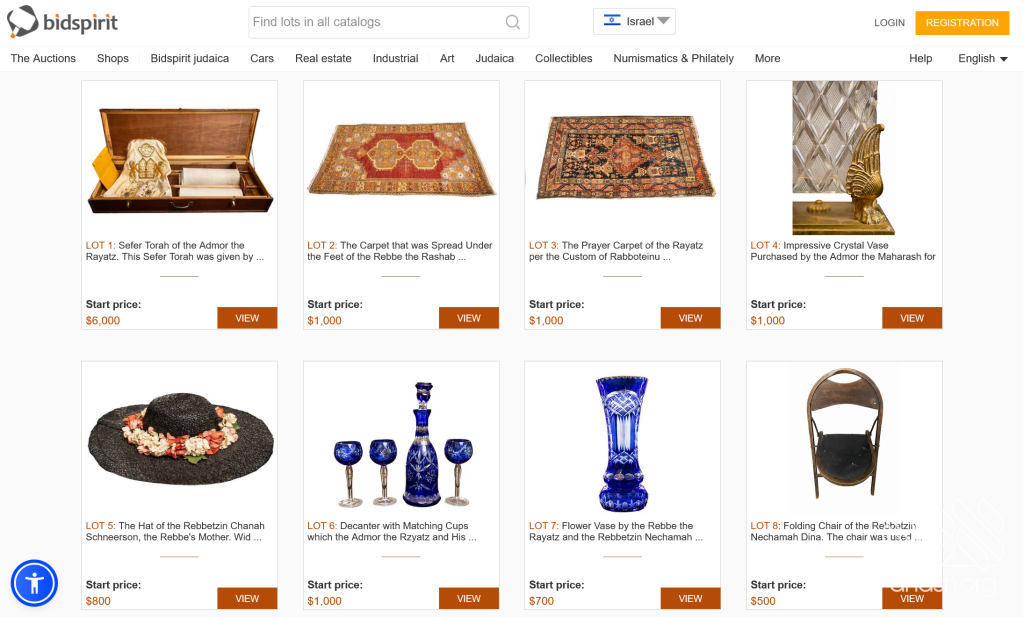
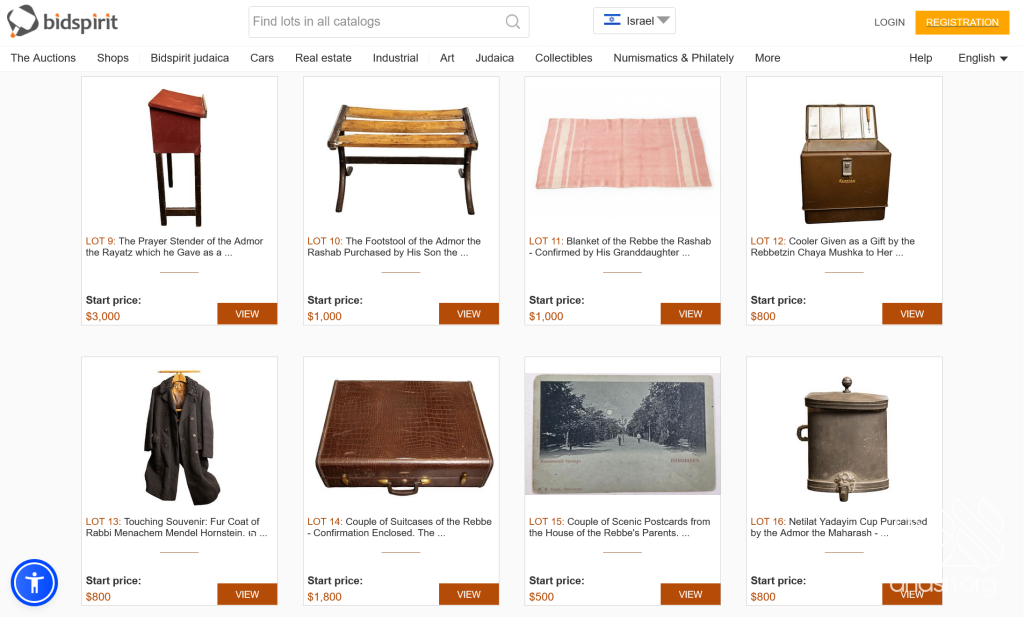
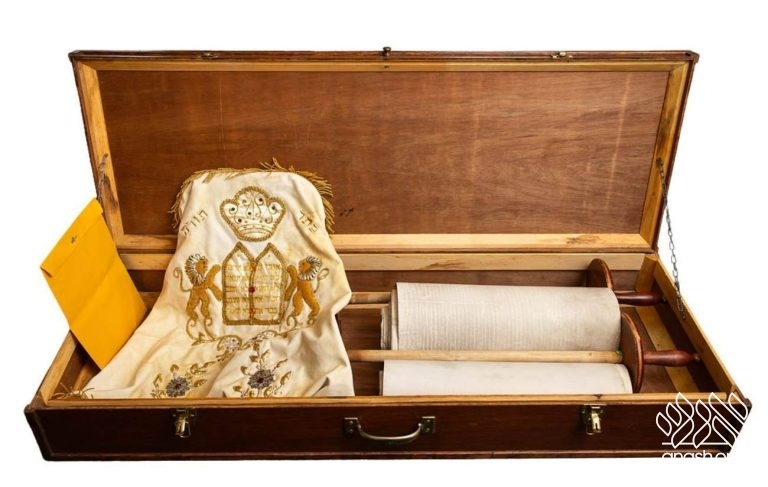
Despite clear evidence of forgery and fraud, a new auction has surfaced from the same seller with dozens of brazen claims, including a supposed Sefer Torah of the Frierdiker Rebbe, a hat of Rebbetzin Chanah, carpets and shtenders of the Rebbeim, household items, personal clothing of beis harav, and dozens more fabrications.

After a short period of respite, and despite clear evidence of forgery and fraud, the auction market has once again been flooded with a seemingly endless stream of artifacts purportedly related to the Rebbeim and their family, capturing the attention of Chabad chassidim and Judaica collectors around the globe.
With each successful auction, the seller has grown increasingly brazen. In the current auction he has put forward dozens of jaw-dropping claims, asserting that an extraordinary range of items belonged to one of the Rebbeim or their family members.
As in the past, all these items originate from a single source, whom we shall identify as S.D., who claims to have received them from members of the Frierdiker Rebbe’s family. He provides proof for each item in the same manner: a signed letter from the family members who gifted it to him, detailing the item’s provenance and confirming that they were giving it to S.D.
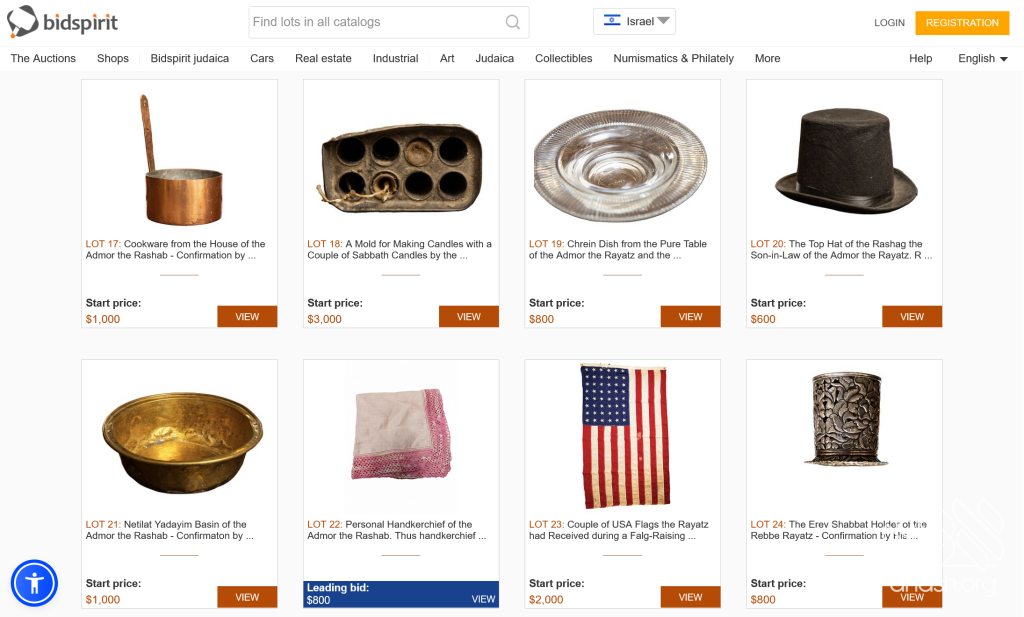
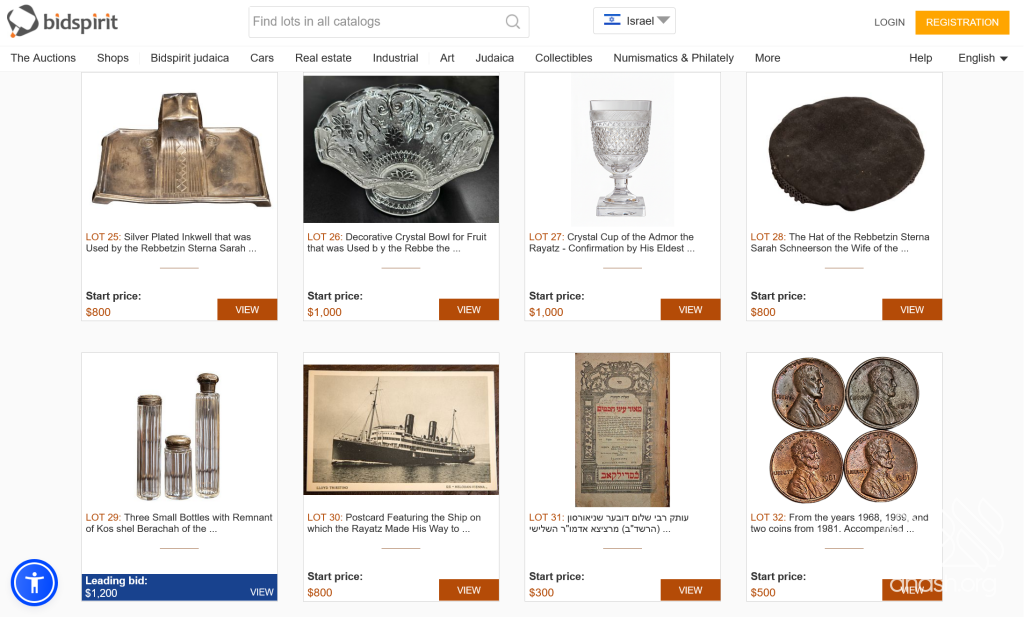
The current auction features a bizarre array of claims, from a supposed Sefer Torah of the Frierdiker Rebbe and a hat belonging to Rebbetzin Chanah, to shtenders, carpets of the Rashab and the Frierdiker Rebbe, a candle mold with Shabbos candles, and an assortment of household items, including a footstool, blanket, cookware, decanter, crystal vases and cups, a silver-plated inkwell, and a negel vassr basin, all purportedly from the Rebbeim.
The list goes on to include coins and dollar bills allegedly distributed by the Rebbe, American flags supposedly received by the Frierdiker Rebbe in the 1940s, personal clothing of Beis Harav, including hats and a fur coat, a pair of suitcases, a handkerchief, and dozens more items that are brazen fabrications.
With markups so considerable, it is self-understood that there are those who would seize the opportunity to pass off an item as a historic artifact and collect a sizable payout. With the recent explosion in the Judaica auction market, buyers are relying more and more on auction houses to properly authenticate what they sell.
As previously reported by Anash.org, a months-long investigation held by Anash.org, revealed that at least one prominent Judaica auction house turned a blind eye to serious allegations of fraud, choosing to continue selling items under question while raking in tens of thousands of dollars.
The Anash investigation proved with incontrovertible evidence that at least one of the authentication documents is a complete forgery – though given the bizarre nature of the entire collection and the seller himself, few would argue the rest are any different.
It is beyond the scope of this article to debunk each outlandish claim individually – though any member of Anash who glances at the list should be able to see it for the hallucination it is.
The seller’s hallucinations and forgeries aren’t limited to Chabad items, claiming to have found a wheel from Paraoh’s chariot in the Yam Suf, among other fantasies. But the Chabad market seems to be lucrative, with many faithful chassidim looking to own a treasured item from the Rebbeim.
The items are currently being sold through “Kiflayim Letushiya,” a relatively obscure auction house operating on the Bidspirit platform, with no significant public profile or track record in Judaica auctions.
Notably, the house’s own terms and conditions explicitly disclaim any responsibility for the accuracy or authenticity of item descriptions, stating that all information comes directly from the sellers themselves, and that once funds are transferred, the auction house bears no further liability – leaving buyers with virtually no recourse.
Remarkably, the seller has the audacity to emphasize the unique segulah and blessing of owning the holy possessions of the Rebbeim, contrasting it with “the matter that shook the Rebbe’s soul, leading him to cry out against keeping them in one’s home as a ‘ticking time bomb’ … the books that were stolen from the Library” – all while the primary evidence and authentication documents for these very items come from the very individuals of that same seforim case.
 COMMENTS


We appreciate your feedback. If you have any additional information to contribute to this article, it will be added below.