




כ״ו שבט ה׳תשפ״ו | February 12, 2026
‘Da! Da! He’s Going to Be Let Out Soon’
As a young immigrant in Los Angeles, Esther Roth was sent cross-country to learn in Beis Rivkah. During her yechidus before marriage, she asked the Rebbe whether her sister should wait for her fiance trapped in the USSR. She couldn’t believe the Rebbe’s reply.

Mrs. Esther Roth is a mother of fifteen children, as well as a grandmother and a great-grandmother. She was interviewed together with her husband Mr. Zalman Roth in January 2025.
I was born in the Carpathian mountain region — which was a part of the Soviet-controlled Czechoslovakia and is now part of Ukraine — to a religious Jewish family that had managed to survive the Holocaust. Although my parents could have emigrated right after the war because they had relatives in America, they stayed out of loyalty to an ailing aunt, and they missed their chance to leave. After that, the border was closed and getting out became impossible. Only in 1972, after my uncle pressed officials he knew to lobby the Nixon administration, were we finally able to emigrate. By then, I had already graduated college.
When we arrived in America — in Los Angeles — my father saw that his relatives here were not Torah observant, and he was very concerned. Despite great obstacles, our family had kept Shabbat and kosher in Czechoslovakia. “I didn’t come here for this,” he said. “I want my kids to grow up religious.”
This was especially important to him because, while he was incarcerated in a Nazi concentration camp, he made a promise to G-d that if He got him out alive, he would always keep the Torah and would make sure his children did as well. He was not about to renege on that promise, not after G-d also liberated him from what he called “Soviet hell.”
He confided his concerns in Rabbi Naftali Estulin, the Chabad emissary to the Russian community in LA, who promised him that he would arrange for me and my siblings to be sent to New York to spend time in a religious environment there.
True to his word, Rabbi Estulin put us all — me, my siblings and my cousins — on a bus, which belonged to the Chabad House, for the cross-country trek from Los Angeles to New York. But in Arizona the bus broke down. Dismayed, some of my cousins weren’t willing to continue; they just wanted to turn around and go back home. Unsure what to do, Rabbi Estulin called the Rebbe who told him to send us on a plane; Chabad would pay for the tickets.
That is how I came to attend Chabad’s Camp Emunah — not as a camper, but as a helper — and, after the summer was over, I enrolled in the Chabad school, Bais Rivka in Crown Heights.
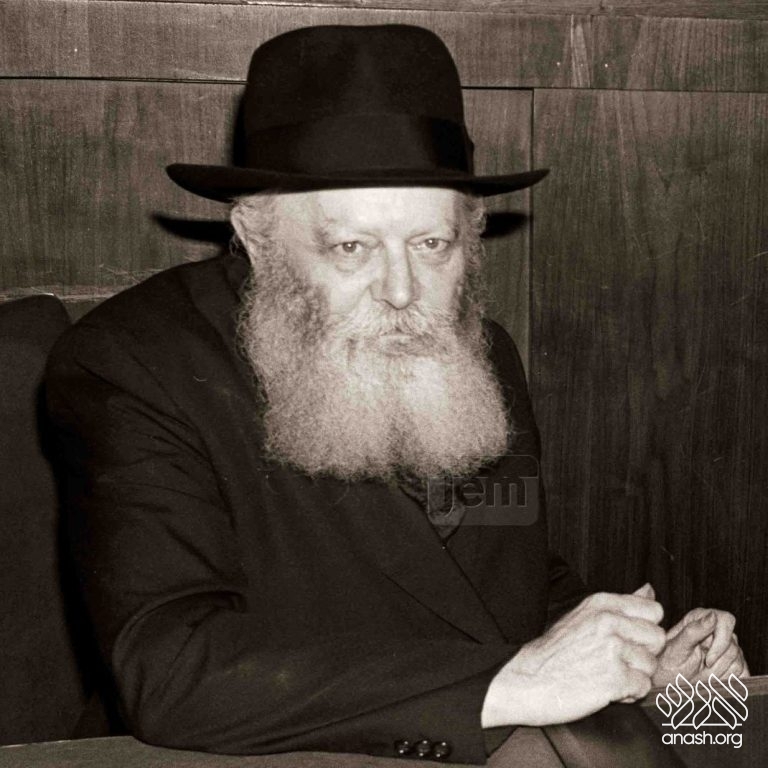
When I first applied to Bais Rivka, I was brought to meet the Rebbe. I didn’t understand who he was — I thought he was just another rabbi. Even when I first spoke with him, I saw him as a grandfather figure, because I never knew any of my grandparents, all of whom had perished in the war. In fact, none of my friends had grandparents; they were all gone. And so that is who he seemed to me — the grandfather I never had.
It was only when I got older that I realized that the Rebbe was much more than a grandfather — he was a holy soul — and then I was in awe of him. But not so when I first met him.
At that meeting, the Rebbe asked me about my plans. I didn’t yet have my green card which would have enabled me to work in the United States, but this did not matter to me because I preferred to continue studying and I told him that. “Do you truly want to learn,” he asked, “or do you want to stay in school because you have nothing better to do?
“I truly want to learn,” I replied. He was pleased with that and wished me much success. I then mentioned my concern about the cost of room and board, but he just said, “Don’t worry.” And that’s how I went off to study at Bais Rivka.
While studying there, I met my darling husband, Zalman, and before the wedding — which took place in 1973 — we were able to get a blessing from the Rebbe.
Zalman and I were a perfect match. We shared a similar background and outlook. Although he was born in California, his parents were Czech Jews who had survived the Holocaust and who had settled in the same neighborhood as we did in Los Angeles. While we both gravitated toward Yiddishkeit and gained a great deal by learning in Chabad schools in New York, neither of us liked the city much.
But before either of us mentioned a word about that, the Rebbe told us, “You should know that Chabad is expanding on the West Coast, and it would be good for you to be there.” Zalman was particularly thrilled about that, and it turned out well for us — we were able to be quite successful in Jewish outreach in LA.
Then the Rebbe started talking with me in Russian about my younger sister Luba. Before the audience, I had written him a note telling him that, before we emigrated, Luba had received a marriage proposal from a young man — Eliya Kleiman — who also planned to emigrate, but so far had been unable to get permission. She really wanted to marry him, but feared he might never be allowed to leave, so she didn’t know what to do — should she wait for him or end the relationship?
The Rebbe replied that Luba should wait because this young man would come out soon — he’d be able to immigrate to Israel, and they would be able to get married.
I wanted to make sure that I heard correctly, so the Rebbe repeated himself, speaking Russian: “Da, Da. He is going to be let out soon. Don’t worry, and everything will be okay.”
When I told my sister what the Rebbe had said, she got very excited. And after just a few months, he made it out. Exactly a year after Zalman and I got married — on the very same day, twelve months later — Luba and Elya got married in Israel. It all happened just like the Rebbe said it would.
 COMMENTS


We appreciate your feedback. If you have any additional information to contribute to this article, it will be added below.