



י״ד אדר ה׳תשפ״ו | March 2, 2026
700 Shluchim Built a Megillah App in 10 Days
Less than two weeks before Purim, Rabbi Mendy Elishevitz, Shliach in Karmiel, Eretz Yisroel, dropped a link into the AI for Shluchim WhatsApp group, nearly 700 Shluchim who swap AI tips and experiments daily.

Less than two weeks before Purim, Rabbi Mendy Elishevitz, Shliach in Karmiel, Eretz Yisroel, dropped a link into the AI for Shluchim WhatsApp group, nearly 700 Shluchim who swap AI tips and experiments daily. The link: megillah.app
Within minutes, the requests started flying.
“Add translation, English, Russian, French, Spanish.”
“35-minute default is too long.”
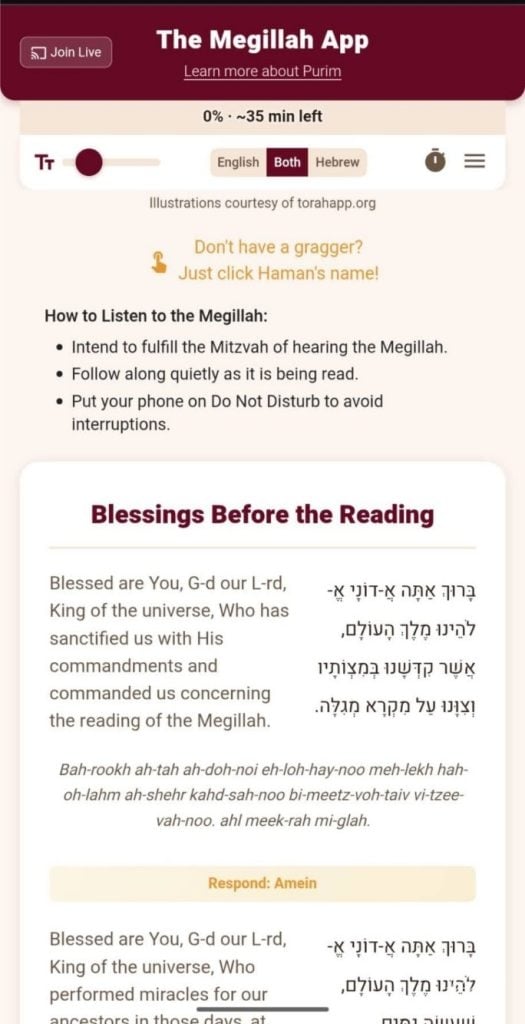
“Have a button that triggers the grogger instead of just highlighting Haman’s name.”
“Maybe everyone joins with a code, and one person controls the scroll for the whole room. If you’re dreaming, dream big.”
Rayi Stern, head of AI at Merkos 302, suggested sharing the code on GitHub so everyone could collaborate.
One Shliach summed it up: “Beyond how cool this is, is how cool to witness live collaboration and innovation.”
“The Rebbe always emphasized the unique power of Shluchim working together and the importance of utilizing technology to spread Yiddishkeit,” said Rabbi Mendy Kotlarsky, Executive Director of Merkos 302 and Director of the International Kinus Hashluchim, at the AI meetup at this year’s Kinus. “Today we can combine both to create collaborative projects that reach new frontiers of Shlichus we never could have imagined until now.”
Ten days later, megillah.app had features no single developer could have designed alone.
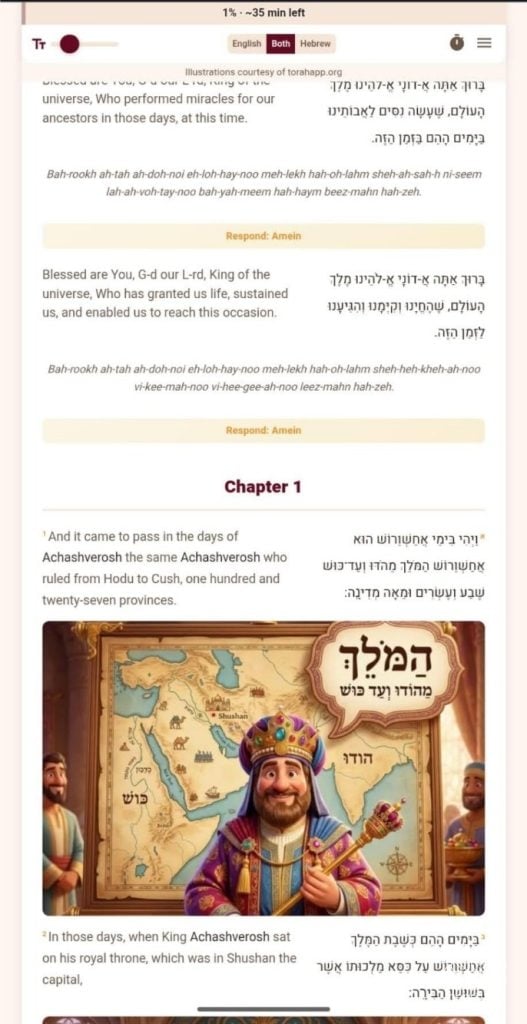
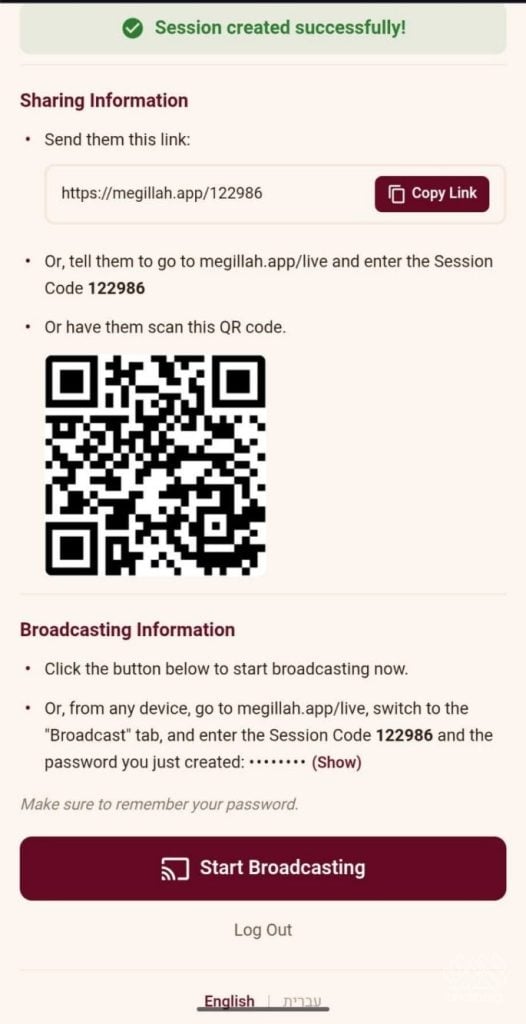
Live synchronized reading was the most-requested feature. The reader generates a link or code. Everyone opens it on their phone. One person, the gabbai, the Shliach, a child, controls the scroll for every screen in the room. No one gets lost. The whole community reads together in real time.
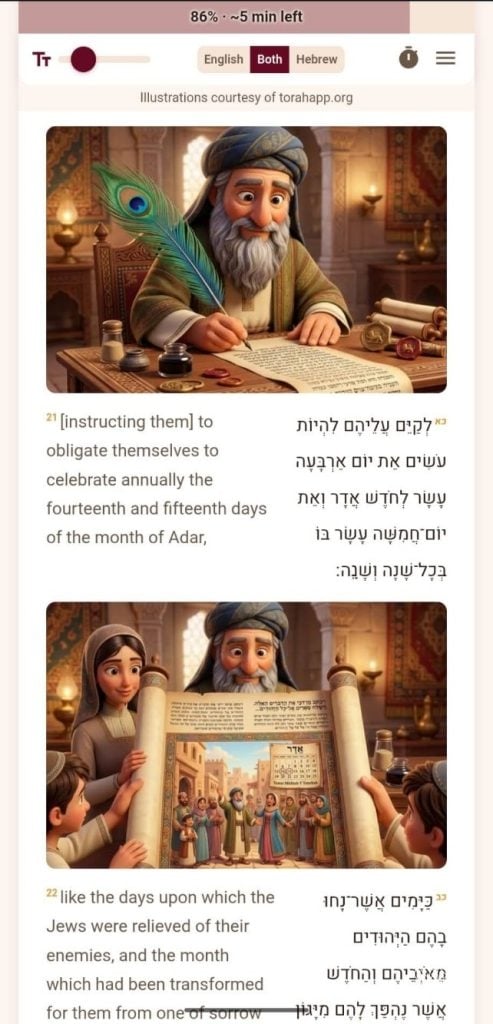
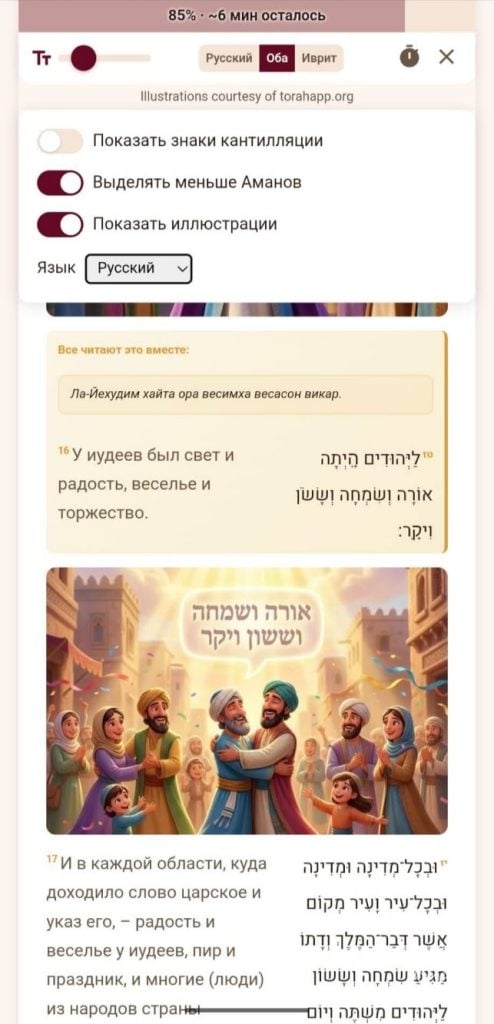
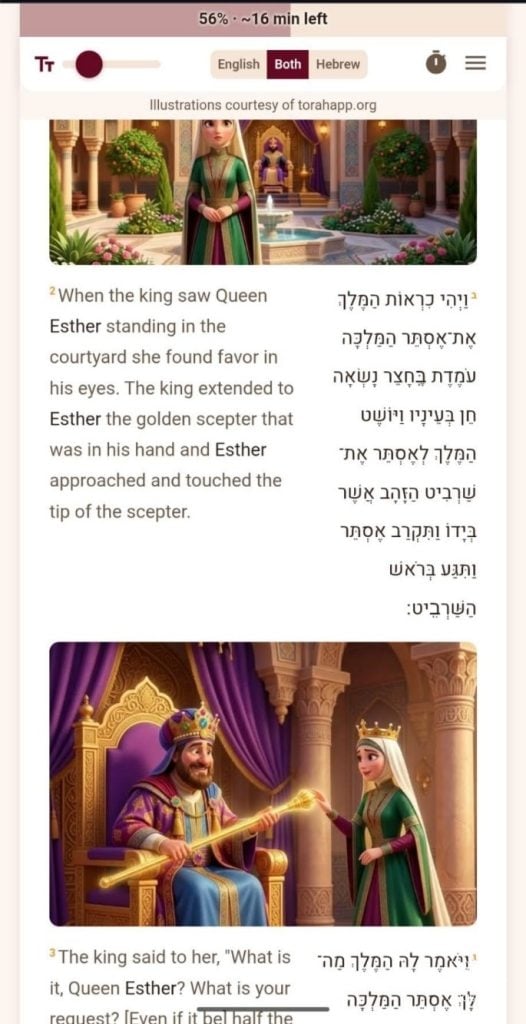
AI-generated illustrations from TorahApp.org bring the Purim story to life alongside the text. Reading time estimates help Shluchim plan their events. Translations in nine languages. A grogger button. Shake-to-grogger. Haman’s name highlighted in, as one shliach put it, “a less honorable way.”
All of it built by Shluchim, for Shluchim.
AI provided speed, and the group of Shluchim provided on-the-ground experience, the kind that only comes from running a Megillah reading in a Chabad house at 11 pm with hundreds of people and children swinging groggers.
When you multiply that kind of on-the-ground wisdom across hundreds of Shluchim contributing simultaneously, something starts to happen. Each feature sharpens the next. Each improvement inspires another idea. The community teaches the tool, and the tool serves the community better. Which brings more Shluchim in, which produces better ideas.
One Shliach put it, “This is the perfect example of what can be built with AI, and the power of collaboration.”
Purim 5786, Shluchim around the world read the Megillah with an app built by Shluchim, for Shluchim, and for anyone else who wants to use it, in just ten days.
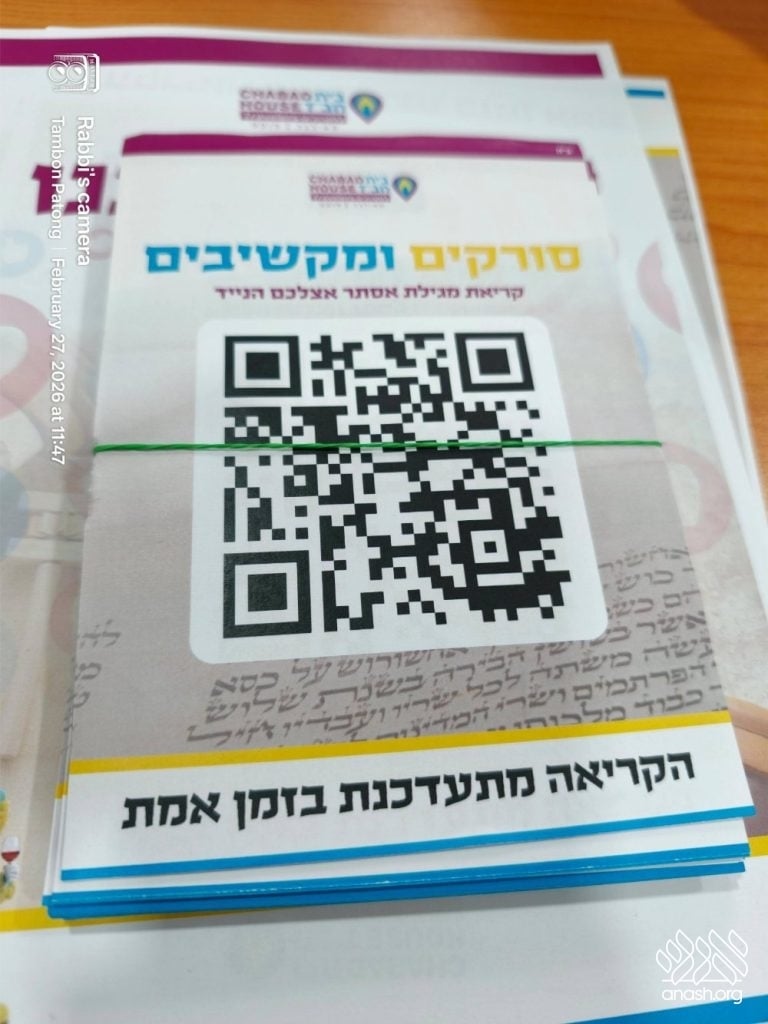
megillah.app is free for everyone. No download, no account. Just open it and share the link.
Full updates at megillah.app/updates. Special recognition to Rabbi Mendy Elishevitz, Rabbi Mendy Shishler from Sandton, Johannesburg, South Africa, Rayi Stern, TorahApp.org, Kehot Publication Society for the text, and all the Shluchim who participated.
 COMMENTS


all due respect for using out the newest technologies for hafatza.
want to just point out that when using ai, much care must be taken to make sure that everything is according to torah values. just scrolling through these pictures, i noticed a non-tzniusdike scene in one of them, vdal.
keep up the good work
That’s what happens when something is rushed to be made in 10 days.
Everything made with AI needs to be looked over.