




כ״ה אב ה׳תשפ״ה | August 18, 2025
Why I Won’t Be Judging Your Chof Av
From the Anash.org Inbox: A recent article criticized the recent uptick in travel to Alma Ata, and labeled it as “misplaced” and a “trend” pushed by “some of the more affluent.” Respectfully, this op-ed is completely out of place.
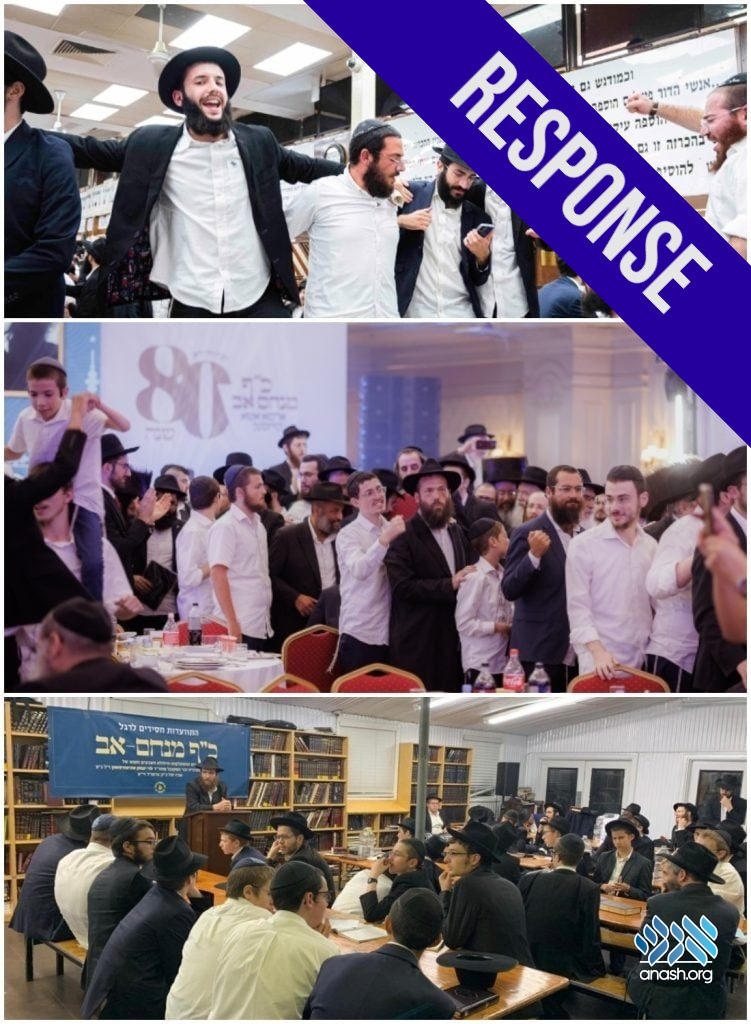
From the Anash.org Inbox: A recent article criticized the recent uptick in travel to Alma Ata, and labeled it as “misplaced” and a “trend” pushed by “some of the more affluent.” Respectfully, this op-ed is completely out of place.
By Shmuel I. Silverstein
The recent article Why I Won’t be Going to Alma Ata for Chof Av published on Anash.org generated a lot of interest and conversation, and the author made some valid points.
The author cited the Rebbe’s words about about visiting the Ohel before traveling to the kevarim of other Rebbeim, and concluded that the most appropriate place to be on this auspicious day is at the Ohel of the Rebbe himself, labeling the recent uptick in travel to Alma Ata as “misplaced” and a “trend” pushed by “some of the more affluent.”
Respectfully, this op-ed is completely out of place.
First and foremost, the author wrote that his remarks were not “criticism chas v’shalom” and that it was “far from his place to judge.” Yet he went on to do exactly that – judging others’ motives and suggesting they were simply following a trend.
Whatever valid point one wants to bring up, it should absolutely not be at the expense of digging into other people’s personal lives and questioning their motives. As the author himself wrote, “it is far from his place to judge” – indeed, it is far from his place, or anyone’s place, to judge.
It’s one thing to think these thoughts to yourself, another to share them with friends, and another whole level to write about it publicly and put others down.
I must confess – I actually agree with the author’s point that a chossid has no need to fly across the world for hiskashrus. But, that’s my personal hergesh. For others, their hergesh may lead them to pursue a different avenue of hiskashrus.
Of course, that doesn’t mean that you can just do whatever you want and call it hiskashrus. Yet, there are many valid activities which if done for the right reason can allow someone to be inspired and connected.
This point applies not just to Alma Ata, but to kevorim of the other Rebbeim, as well as many other situations. Often, when we see someone doing something good, positive, and holy, we feel it could be done “in a better way.” And instead of encouraging them, we attack or criticize whatever it is they are doing.
But if someone is doing something good and positive with a geshmak for Yiddishkeit – why attack them? We should encourage and strengthen them!
This is especially true with today’s children and youth. Unfortunately, many of our best and finest children have strayed, r”l, from the path, and often, it starts with being belittled while doing something good since it’s not the “right way.”
Maybe it was a certain subject in Torah that they enjoyed learning – the only thing they could focus on – but a teacher or mechanech, without realizing, wouldn’t allow them to deviate from the rigid structure. Or they had a certain chayus in something good and holy, aligned with Torah values and Chassidus, but just not “mainstream,” and people told them off for it, trying to mold them into a perfect vision without focusing on the child’s individual needs and passions.
Do we not realize that if a child or teen is koching in something good, we must encourage it? Yes, it might be a little different than we imagined. Yes, it could probably be done better. But do we know how hard things might be for him? If he’s finally enjoying and has a passion for a Yiddishe thing, then by all means encourage him – and definitely don’t put it down or critique.
Our children are extremely vulnerable – and in truth, we all are very vulnerable. We all need that chizuk from our friends and colleagues, even when we are doing something maybe slightly different.
I once asked a certain well-known mashpia about a friend of mine who, as a bochur, had a shtick to copy the Rebbe, which I felt was inappropriate. He told me, “Do you know what thousands his age are doing?” and he went on to list things like drugs, etc. “So if he has a chayus in something good, positive, and holy – it’s beautiful. Yes, it might be misplaced, but don’t discourage him. With time, he will be guided to the correct path. A passion for kedusha should never be discouraged.”
So whether or not you go to Alma Ata, the Ohel, or 770, please be mindful of others. Recognize that their path of hiskashrus may be different. And definitely don’t discourage their chayus and passion for something good and positive.
Who knows – maybe it’s these “misplaced” acts of hiskashrus that bring the greatest nachas of all.
 COMMENTS


Very good!
To add: When dealing with yungeleit, the system was always personalized, Reb Hillel Paritcher would entrust each newly-arrived yungerman to different approaches based on their individual needs. The whole point of Chassidus is recognizing that hiskashrus takes different forms for different chassidim.
A whole Chossidis life and derech avodah isn’t made up themselves, it’s following what the Rebbe does.
The Rebbe would fast before going to the Ohel and surely would fast if going to his father’s kever. Yet, no one does it. You know why? Because it’s a rich people summer fine dining and concert experience, making some people money, and not as a genuine form of Avodah
מסתם ווייסט איר די מנהגים ווי מ’פירט זיך ווען מ’גייט אויפן בית החיים אויף קברי אבות, זיין אין וואסער בו ביום, טרינקען פארן גיין, אבער ניט עסן, וכו’.
confirming the idea that fasting isnt unique for the Ohel, its for any kivrei avos, reagrdless of “holiness”
Hence, the Rebbe encouraged us to at least drink, not to mimic the goyim c”v
the goyim would fast before going to a cemetery and doing their kishuf etc. which is why fasting is darchei haemori
lehavdil, in zohar (thats said in maane loshon) it talks about the difference the way yidden go to a beis hachayim vs goyim, and one of the things it mentions is fasting.
we therefore look for ways to fulfill the zohar and fast, without compromising on the darchei haemori issue, and we do that by not eating but yes drinking.
The Rebbe once asked a Bochur if he fasted before he went to the Ohel and the Bochur said no. the Rebbe said “Hashem should have Rachmanus on you”
Funny enough, the mashpia story you brought actually backs up the other side. The mashpia called the bochur’s shtick “misplaced” and said with time he’ll be guided to the right path. That’s exactly what the first article did with Alma Ata – it said the practice is misplaced, but without chas v’shalom throwing stones at the people. You spun the story into a license for “do whatever you feel” and called that Chassidus.
It’s one thing if someone is saying that a person shouldn’t spend money they don’t have on a trip to Almata or that people don’t go for the right reasons, but to have a good time etc. But how can someone say that going to R’ Levi Yitzchak is “doing whatever you feel” and not a valid way in hiskashrus? Would the Rebbe not have nachas from Chassidim visiting his father? Especially since he himself was not able to go? This is not like other kevorim. The Rebbe wanted to connect us to his father’s Torah, and if one has the opportunity, it is certainly a big zechus to visit the Ohel in Almata. The Rebbe was very appreciative when Chassidim went to RYAL’s kever in Tzfas.
The Rebbe was happy when people visited R’ Yisroel Aryeh Leib in Tzfas but would the Rebbe be happy when Yeshivos spend a full day going and go make it a ‘trend’?
I’m not so convinced. (Nt coming from a place of justification for not going, I did go this past yortzeit)
The author is missing a crucial point.
The issue is that it’s becoming a trend. The definition of a trend is “a general direction in which something is developing or changing”. That is not an individual hergesh, it’s something that in the authors mashal the mashpia would have to deal with head on. More importantly, a trend means it’s not the persons hergesh, he’s following the fashion, which leads to social pressures and it becoming the norm of what a chssid does. Isn’t it amazing that in the last 5 years so many chassidim woke up one day with the same hergesh! Or is a trend being developed?
On a different note, the premise of this article – that when a person does something misguided but connected to Kedusha then only encourage etc is very questionable. I sometimes think it’s the reason we loose so many youth. Nothing is real and true, it’s all Shtik and people see through it. Yes we need to encourage and praise etc but we also need to guide.
ב”ה
In the name of tolerance…
Perhaps we should allow for all expressions of hiskashrus including one that does guide with a clear voice what is or is not appropriate.
Could clear guidance also possibly be related to hiskashrus?
even if there those who may not agree with everything being said?
The Rebbe didn’t go because the Rebbe was busy running the whole world. However, going to kvorim of tzadikim is a big thing that should never be frowned upon but rather only encouraged. When the Frierdike couldn’t go back into Russia he went to kivrey avos etc.. in Israel instead.
Moreover, in the middle of the summer ben haznanim if an individual or a group for that matter are planning a vacation trip and device to go to such holy places that’s truly wonderful!
The Rebbe didn’t go because it was behind the iron curtain and not possible.
Besides for it being extremely difficult to travel that far even nowadays.
The Rebbe also did not leave NY.
also there is a Halacha that if one did not go to the kever of a parent for seven years they may no longer go.
That is besides the fact that the Rebbe sent Shluchim there throughout the years even when it was a long journey from the place of the original Shlichus.
In 5751 the Kinus hashluchim of that region visited ohalim of the Rabbeim in Lubavitch and Rostov and the Rebbe told them to end it on chof av with a visit to the ohel in Almaty.