




כ״ט מרחשון ה׳תשפ״ו | November 20, 2025
We Need to Address the Bullying in Our Schools
A survivor of bullying who teaches in a Chabad yeshiva speaks up about the bullying that he sees and the need for schools to put their foot down for zero tolerance.
Written by a survivor of bullying who teaches in a Chabad yeshiva
As a young man who teaches in our community’s schools, I have the privilege of seeing up close the beauty of our children – their innocence, their curiosity, and their sincere desire to grow in Torah and middos.
I also see, at times, the challenges they face socially.
I get to see the dedication of our mechanchim, mechanchos, and moros, who invest a tremendous amount in their students.
With that said, I want to point something out. With all the emphasis we place on strong curriculum and high academic standards, I feel it is important – now more than ever – to speak openly and honestly about a critical issue in our schools: bullying.
This is not about criticism. This is not about pointing fingers. This is about protecting our children – emotionally, socially, and spiritually. Because if there is one thing I have learned as a teacher, it is this: A child who is not safe cannot learn. A child who is afraid cannot grow. And a child who feels alone cannot thrive in Torah.
In our frum schools, we pride ourselves on rigorous learning – hours of Gemara, Chumash, Halacha, Navi, and general studies. But sometimes we must pause and remind ourselves: before a child can succeed academically, they must feel safe socially and emotionally.
“V’nishmartem me’od lenafshoseichem” obligates us to protect life and to guard a child’s inner world – their confidence and their emotional stability. When a child enters a classroom with fear or shame because of bullying, no curriculum – no matter how exceptional – can overcome that pain.
One of the most painful realities I’ve seen is how many adults in our community – people I personally know – are still suffering from wounds that began in their school years. These are adults who look put together on the outside, yet inside they carry fear, insecurity, and memories that continue to affect them decades later.
A broken leg is easy to notice. Emotional suffering is not. But the hurt that people carry in their minds and hearts can be far more damaging than any physical injury. You won’t see it, but they will feel it – sometimes every day, sometimes for years.
The fact that emotional wounds are invisible does not make them less real. In many cases, they are deeper, more lasting, and harder to heal. This is why addressing bullying is not optional. The effects do not vanish. They grow with the child and can last a lifetime.
Bullying takes many forms even in Torah-focused environments: verbal teasing or insults, social exclusion or embarrassment, rumors, and physical aggression such as pushing or damaging belongings.
Teachers and rabbeim work extremely hard and care deeply, and we are greatly indebted to them, but sometimes certain behaviors get misunderstood, often unintentionally. “They’re just playing.” But if one child is scared or humiliated, it’s not mutual play. “Kids should work it out themselves.” Conflicts can be resolved between equals; bullying involves imbalance.
“If it were serious, the child would tell me.” Most don’t; they fear retaliation or being dismissed. “He didn’t mean it that way.” Intent may be innocent; impact may not be. “This is normal growing up.” Bullying is not a normal milestone.
“We can’t get involved in every small issue.” Bullying is not small. “Bystanders should take care of it; it’s not the teacher’s job.” Children can help each other, but the responsibility lies with adults.
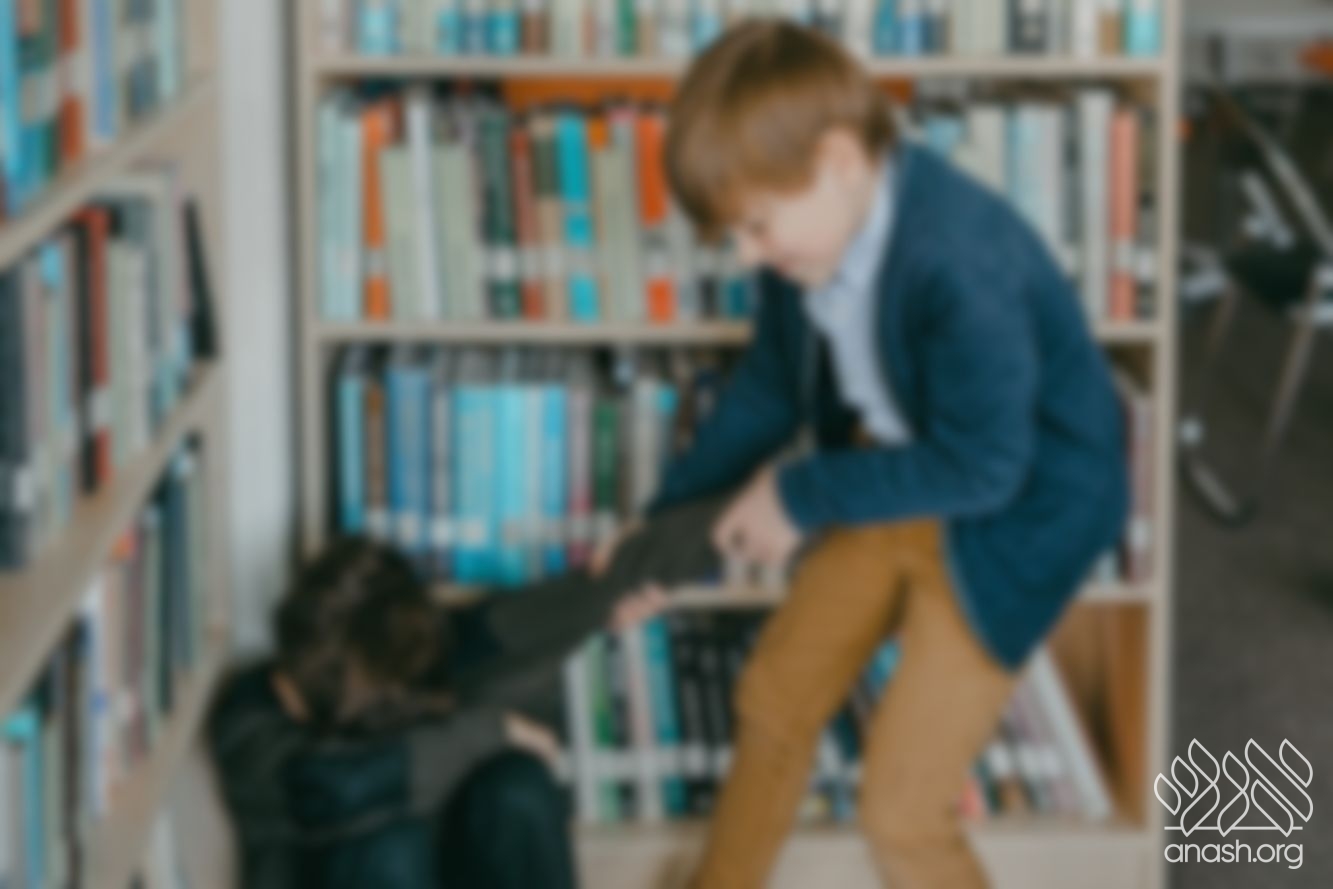
I once saw a boy punching and stepping on another boy. I asked, “Why are you doing this?” He said, “He doesn’t mind.” I asked the boy lying on the floor if this was true. He said, “I’m ok with it.” Friends, even if a boy allows himself to be mocked and hurt, we must still not let it happen.
Unchecked bullying can lead to anxiety, depression, loss of confidence, academic struggles, fear of school or peers, damage to trust in adults, and long-term emotional wounds. The cost is far greater than what we see on the surface.
If every teacher and staff member connected to the child knows what is happening, as well as the bully’s parents, it is no longer a secret. From my experience, this alone often leads to the bullying stopping quickly.
Teach empathy. Explain to the child who is bullying the pain their actions are causing. Children need to understand the real impact of their behavior. We must also simply speak up. We have become immune to bullying and sometimes just keep smiling as if nothing happened, even when a child is suffering deeply.
Stopping bullying is not rocket science – simply speaking up shows that it is not acceptable. It also teaches the victim that they do not have to accept bullying, and that their dignity is far greater than the harm someone else may try to inflict.
Our schools are places where neshamas are shaped. When we protect a child from bullying, we protect their present and future – emotionally, spiritually, and socially.
Curriculum matters. Learning matters. But nothing is more important than a child’s safety. Let us create schools where every child feels secure, respected, and valued… schools where Torah and kindness walk together… schools where every neshamah can truly shine.
To all our teachers and staff, thank you for your dedication, your mesiras nefesh, and your devotion to our children. Teaching is not easy – financially or emotionally – and your efforts do not go unnoticed. May Hashem bless you with strength, health, and siyata d’Shmaya in all that you do.
May we all be zocheh to greet Moshiach very soon, when all pain and suffering will heal. May it be right now.
 COMMENTS


Bullying is a very uncomfortable issue. It is no fun for the person who does it. It should be if a child is bullied they need to go to the teacher as well as tthe principal. The Teachers should handle the situation very delicately.
“It is no fun for the person who does it….”
Wrong….they do it for pleasure and nothing will be done even after a suicide.
Unfortunately it is very common amd most schools do nothing about it. I’ve learned it’s really up to the ones on site that have to step in to do something. If bdarkei Noam doesn’t help, sometimes one needs to take the really tough approach to weed out the bully. Sometimes keeping the children in the same class it in the same place is not conducive and unless someone is keeping a diligent eye constantly, the bully will continue taunting and the cold never has a safe place to recover and gain trust again.
Rabbi Rietti gave a fascinating class once on bullying about how the onus is on the observers and the crowd. Not the child being bullied who doesn’t have the confidence always or power to overcome it. If everyone around wouldn’t tolerate it, and the bully knew no one is joining or backing or looking up to him his power dwindles.
Bullying can emotionally and mentally wreck a kid and the damage can be so deep and take years to undo if the adults don’t step in to stop it. Awareness doesn’t help if there’s no consequences. Getting into nitty gritty if each incidence was bullying or not without looking at the bigger picture and pattern as you mentioned tells the kids your instincts aren’t true and maybe you’re just overly sensitive/ making up things when there’s a really ongoing negative situation present.
I’ve seen it from all different angles and know how important an actual zero tolerance policy with real steps and consequences are needed. Not Just saying it. And it all begins with the teachers and principals themselves not being bullies and have the confidence to take real steps to put a stop to it, and keep an eye on it from year to year .
of bullies are also not exempt. They either need tools to learn how to discipline or need to become role models and work seriously on their own Middos! It’s not what you say, it’s what you do! Parents and teachers need to work together with respect to make a difference.
If you see something, say something. Don’t be a silent bystander.