




י״ח תמוז ה׳תשפ״ה | July 14, 2025
War Day 642: IDF Seizes Syrian Bases, Hamas Hideouts Found
War Summary, Day 642: Stalemate in ceasefire negotiations, controversy in Israel over ceasefire polls transparency, battle of Beit Hanoun, difficulties evacuating Gaza City, many senior Hamas terrorists eliminated, Trump is ok with Israel attacking Iran again, if they resume nuclear project, Germany files for snapback sanctions against Iran, and operations in Syria.
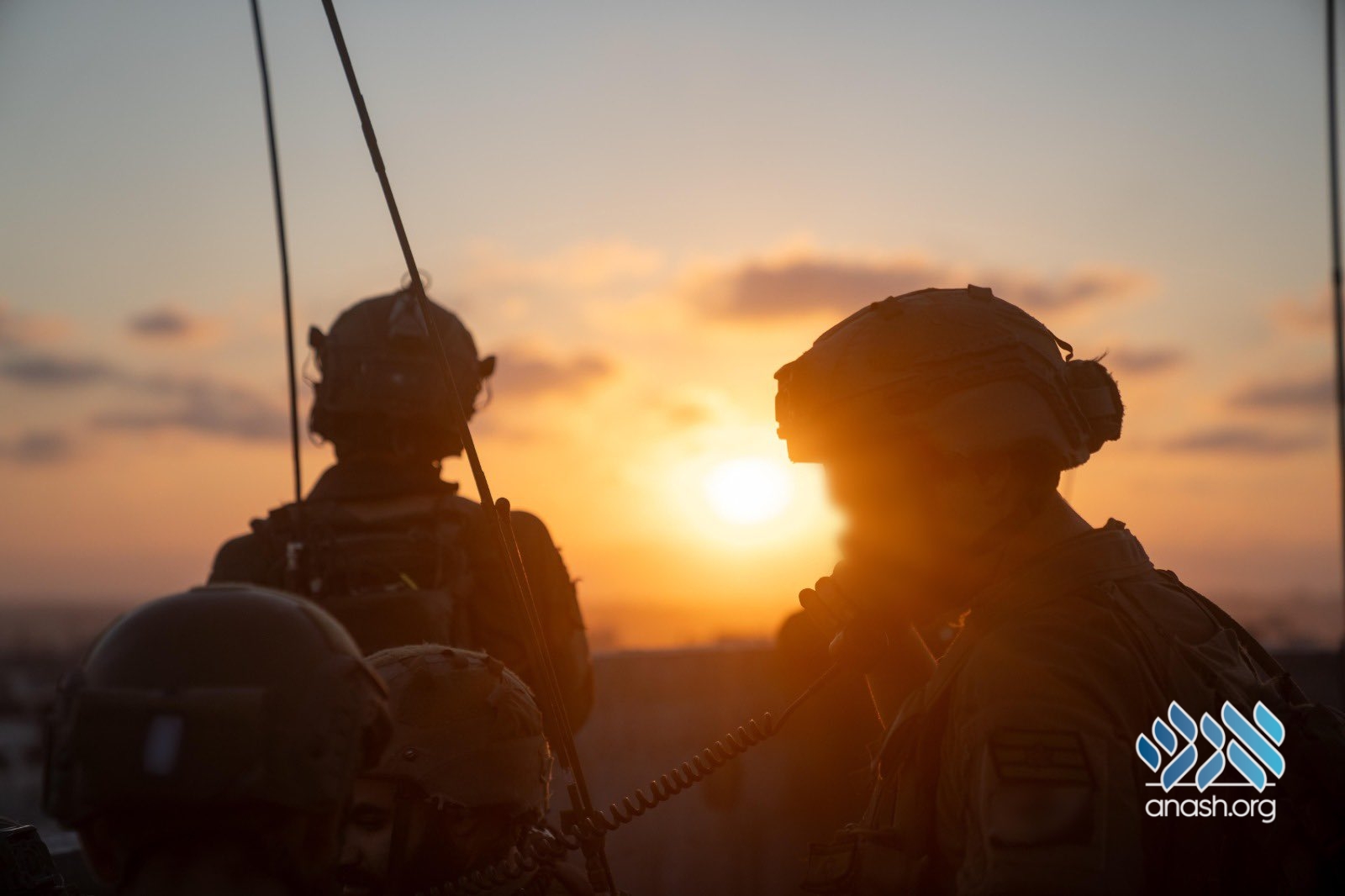
War Summary, Day 642: Stalemate in ceasefire negotiations, controversy in Israel over ceasefire polls transparency, battle of Beit Hanoun, difficulties evacuating Gaza City, many senior Hamas terrorists eliminated, Trump is ok with Israel attacking Iran again, if they resume nuclear project, Germany files for snapback sanctions against Iran, and operations in Syria.
By Mrs. Bruria Efune
50 held captive in Gaza.
28 hostages confirmed murdered held in Gaza.
148 living hostages rescued.
57 hostage bodies rescued.
1,906 Israelis killed.
451 fallen soldiers and police in the battle in Gaza.
88 fallen soldiers in Northern Israel.
18 fallen soldiers and police in Judea & Samaria.
32,350 estimated projectiles fired at Israel.
5,000 Israelis estimated remain displaced from their homes.
1 Jewish nation united in prayer, charity, and good deeds.
Top Headlines:
Stalemate in ceasefire negotiations
Controversy in Israel over ceasefire polls transparency
Battle of Beit Hanoun
Difficulties evacuating Gaza City
Many senior Hamas terrorists eliminated
Trump is ok with Israel attacking Iran again, if they resume nuclear project
Germany files for snapback sanctions against Iran
Operations in Syria
Hostages:
Negotiations for a 60-day hostage-ceasefire deal are at a stalemate—though U.S. President Trump still thinks something may be possible within the next week.
After Hamas rejected the Witkoff proposal (which Israel accepted), Qatar introduced a new proposal, which ceded to some of Hamas’s demands. Israel accepted the new proposal, but Hamas rejected it.
The main point of contention at this point, is withdrawal lines.
Hamas wants Israel to return to the ceasefire lines drawn in the January 2025 proposal, for the previous ceasefire deal—meaning to evacuate troops from all of Gaza, except for the 1 kilometer perimeter. On top of that, Hamas wants guarantees that the 60-day ceasefire will lead to a complete ceasefire, in which Israel will completely withdraw from Gaza—including from the Philadelphi Corridor. This means that Hamas would have full control over the Gaza border with Egypt.
Prime Minister Netanyahu promised that Israel will not leave Gaza, and will not allow Hamas to regroup.
Netanyahu did compromise on some withdrawal lines for the 60-day ceasefire, but will not give up on all areas. Most important to Netanyahu now is the Morag Corridor, which cuts off Rafah from the rest of Gaza. Netanyahu wants to use the ceasefire time to build a massive humanitarian zone for Gazans to live outside of Hamas control. The ideal place to build this is over the ruins of Rafah, which is near the border with Egypt.
According to Ynet, the IDF warned the Israel government that given a 60-day ceasefire, Hamas will take the time to plant hundreds of explosive traps all over Gaza, and rearrange Hamas commanders and thousands of new terror recruits around Gaza. This will create a significant threat to IDF soldiers after the ceasefire ends.
The IDF also warned that Hamas will use the ceasefire to fight back against clans in Gaza which have been leading an uprising against Hamas. The IDF has been providing protection to these clans, and even armed some of them, so that they can weaken Hamas’s power. Given a ceasefire, Hamas may be able to completely squash the rebellion, and scare everyone away from IDF cooperation in the future.
**
In the last ceasefire deal, 30 living hostages were freed. Since then, 38 IDF soldiers were killed in Gaza—almost all of them in areas which were already captured by the IDF in the past, and most by explosive traps planted by Hamas.
The IDF has not yet regained all areas evacuated in the previous ceasefire deal—most notably the coastal side of the Netzarim Corridor remains open. There are over 800,000 Gazans in Gaza City, after they returned during the ceasefire deal. They are now refusing to evacuate, and acting as human shields for Hamas, endangering IDF troops.
The ceasefire deal method of freeing hostages has demonstrated that even in the short term, it sacrifices more lives of IDF soldiers than hostages freed.
**
Channel 12 published a poll which raised a major controversy. In the poll, 74% of selected that they support a deal for Gaza in which “all the hostages will be released and the war will end.”
However, the poll didn’t explain that this magical option doesn’t exist without allowing Hamas complete freedom to rebuild.
One of Israel’s most popular Telegram channels, “Abu Ali-Express,” ran a series of polls with his 500,000 followers, providing more context to the choices.
In Abu’s poll, the audience was presented with the current option: a deal in which all the hostages are released, along with a total end to the war, full IDF withdrawal, reconstruction of Gaza, and release of thousands of terrorists from prison. 81% responded that Israel must reject such a deal. (Note: Even in this scenario, Hamas insists on holding onto the last hostages as guarantors for up to seven years.)
Gaza:
On Friday, the IDf announced the name of a hero who fell in battle in Gaza:
Cpt. Reei Biran, 21, from Shorashim
Reei was killed in Khan Younis, while working to destroy buildings which were booby-trapped by Hamas.
**
The Air Force struck an average of 200 terror targets in Gaza per day, over the last few days, most in support of ground forces. Targets included terrorists, booby-trapped buildings, weapons storage facilities, anti-tank and sniper positions, areas rigged with explosives, and other terror infrastructure.
Five IDF divisions are active in Gaza: Divisions 99 and 162 are in Beit Hanoun, Division 98 is in Gaza City, Division 36 is in Gaza City, and The Gaza Division is in Rafah and the buffer zone.
**
The most significant battle at the moment is taking place in Beit Hanoun, where Hamas’s worst terrorists embedded themselves, and still have many tunnels to hide in. Before troops advanced into the city, the Air Force struck dozens of targets, including 35 strikes in one hour on Shabbat. Inside Beit Hanoun, troops have been eliminating terrorists, and destroying weapons, rocket launchers, and tunnels.
Troops in Beit Hanoun are finding many Hamas “foxholes,” which are basically small tunnels packed with food and ammunition to sustain them for long periods of time. They also find many ambushes set up by the terrorists, designed to abduct soldiers. Young commanders were replaced with experienced ones at the frontlines in Beit Hanoun, to make the difficult choices: rush in to assist trapped soldiers and prevent their kidnapping, or secure the area first to avoid more casualties.
An additional challenge in Beit Hanoun, is that the terrorists hid tiny cameras throughout the rubble and garbage piles. The cameras are extremely difficult to find, even with canines and drones. The terrorists use these camera to monitor troops movement, and trigger explosives.
Despite the immense challenges, thank G-d, the last three days in Beit Hanoun have been successful, without IDF fatalities.
**
In Gaza City, Division 98 has been working through the Shejaiya, Zaytoun, and Daraj & Tuffah neighborhoods of Gaza City. They eliminated more terrorists, and destroyed more tunnels and other Hamas infrastructure. These neighborhoods are all on the outer edges of Gaza City. The troops are waiting for the signal to move deeper into neighborhoods like Sabra and Shati, which the IDF is threatening to do if hostage negotiations collapse.
Despite immense destruction, Gaza City is full of people—an estimated 800,000—all of whom are ignoring IDF evacuation warnings and act as human shields for Hamas. The IDF warned the population with leaflets, text messages, and even warning shots, but they have little to no effect. The IDF now estimates that the people will only leave once the IDF begins a strong and full-scale maneuver. The Gazans likely see no reason to evacuate, assuming Israel will soon agree to a ceasefire and withdraw from the city anyway.
Division 36 continues to operate in Khan Younis, where they aren’t advancing so much, but work on further cleaning terrorists out of areas already captured.
The Gaza Division (143) remains in Rafah, where they continue to destroy the last remnants of Hamas in the fallen city.
**
Over the past two weeks, the IDF carried out targeted airstrikes against a series of key commanders within the military branches of Hamas and the PIJ. These commanders were involved in efforts to rebuild the terror groups’ military strength, including weapons production and military intelligence operations.
The IDF listed 9 such senior terrorists who were eliminated in the last two weeks:
- Mundhir Salami: Production Site Commander in Hamas’ Weapons Production Headquarters
- Tayseer Shareem: Section Commander in Hamas’ Weapons Production Headquarters
- Bilal Abu Shikha: Section Commander in Hamas’ Weapons Production Headquarters
- Muhammad Abu Awwad: Senior terrorist in the Projects and Development Department in Hamas’ Weapons Production Headquarters
- Muhammad Al-Bayouk: Senior terrorist in Islamic Jihad’s Weapons Production Apparatus
- Mustafa Dababesh: Deputy Head of Department in Hamas’ Weapons Production Headquarters
- Ahmad Abu Shamala: Squad Commander in Hamas’ Military Intelligence Unit
- Rabi‘ Mustafa Rabi‘ Sukhweil: Financial Operative in Hamas’ Military Wing
- Bilal Musallam: Section Commander in Hamas’ Military Intelligence Unit
**
News 14 reports arguments between senior IDF officials and Netanyahu, over the construction of a humanitarian city in Rafah. According to the report, the military thinks it could take a year to build the tent city and fill it up. Netanyahu finds this unacceptable, and demanded a better proposal.
The humanitarian city in Rafah is seen as a key to removing Hamas from power, and removing their human shields.
Humanitarian Aid:
Today, the IDF facilitated the delivery of 100 tons of baby formula, donated by UNICEF, into Gaza.
The Gaza Humanitarian Foundation (GHF) distributed over 1 million meals today, for a total of 73 million meals since the 27th of May (48 days ago).
The GHF reported a successful trial partnership with the Al-Amal Gazan charity. The charity was given meals to distribute to specific residents of Central Gaza who are unable to reach the distribution zones. The GHF cross-checks that each meal is delivered to a civilians, and not Hamas. The partnership successfully distributed over 20,000 boxes of food aid in its first week.
**
On Shabbat, Hamas claimed that the IDF fired at civilians who were approaching aid sites. The UN repeated this as though fact. An IDF investigation found no casualties from IDF fire near the distribution sites.
Iran:
Ms. Leah Mosquera, a 49-year-old Filipina caregiver, passed away due to the severe injuries she sustained when an Iranian missile struck her apartment in Rehovot on June 15, during Operation Rising Lion. She is the 29th victim of the Iranian attack against Israeli civilians.
**
According to the Wall Street Journal, Trump gave Netanyahu the green light to strike Iran again, if Iran resumes their nuclear project. Trump made it clear that he prefers a diplomatic solution—but he didn’t object to Israel’s plan.
**
Iran’s Foreign Minister, Abbas Araghchi, said in a speech on Shabbat that Iran would be willing to return to negotiations with the U.S., but only with guarantees that there be no more strikes against Iran. In the past, he’s said that Iran will not agree to shut down their nuclear ambitions, claiming that they were for “civilian use.”
**
Germany submitted a formal request
Germany has officially asked the United Nations to trigger the “snapback” mechanism against Iran on July 15, just two days from now, Chancellor Scholz confirmed this evening.
The snapback mechanism is a clause in a UN Security Council resolution tied to the 2015 Iran nuclear deal (JCPOA). It allows any of the original signatories — including Germany — to automatically reinstate all international sanctions on Iran if Iran is found to be seriously violating the agreement.
If the UN accepts the request (which is expected), all sanctions that were lifted under the nuclear deal will come back into force. This includes:
- A ban on arms sales to and from Iran
- Economic sanctions
- Restrictions on Iran’s space and missile programs
- Limits on access to international banking and finance
In short, Iran would lose all the benefits it gained from the 2015 deal — restoring full international pressure.
**
Iranian media annouced the death of Ali Taeb, a former representative of Iran’s Supreme Leader in the command center responsible for suppressing protests.
Ali Taeb died under suspicious circumstances—just one day after the mysterious Chitgar tower explosion in Tehran.
Lebanon:
On Shabbat the IDF eliminated a terrorist from Hezbollah’s tank array. The terrorist was actively rebuilding Hezbollah’s capabilities southern Lebanon, in violation of the ceasefire agreement.
Syria:
During the last week, the IDF’s Mountain Brigade operated in the Syrian-Lebanese side of the Hermon Mountains. The forces located several central commando headquarters belonging to the old Syrian regime.
During the raid, the forces located military equipment and more than three tons of weapons, including: anti-tank mines, dozens of explosive devices and rockets. All of the findings were confiscated by the forces. These searches in the Syria-Lebanon border area were intended to prevent attempted smuggling of weapons between the countries, with the aim of protecting the security of the citizens of Israel and the residents of the Golan Heights.
Sponsored anonymously for a Refuah Shleima and successful procedure for Hinda Malka bas Yacha Reizel. And in merit of the safety of our brave IDF soldiers.
WATCH:
 COMMENTS


We appreciate your feedback. If you have any additional information to contribute to this article, it will be added below.