




י״ג תמוז ה׳תשפ״ה | July 9, 2025
War Day 641: China Ships Missiles to Iran, Iraq Terror Plot Foiled
War summary, day 641: IDF strikes senior Hamas terrorists, eliminates terror cells in southern Lebanon and Syria, Netanyahu mulling renewed strike on Iran, Trump pressing for conditional ceasefire, Houthis resume ship attacks in Red Sea, Syria-Israel security agreement may begin in September, IDF planning humanitarian camp in Rafah, Smotrich reveals Iran-backed infiltration plot through Iraq, and Netanyahu meets Trump twice in Washington.
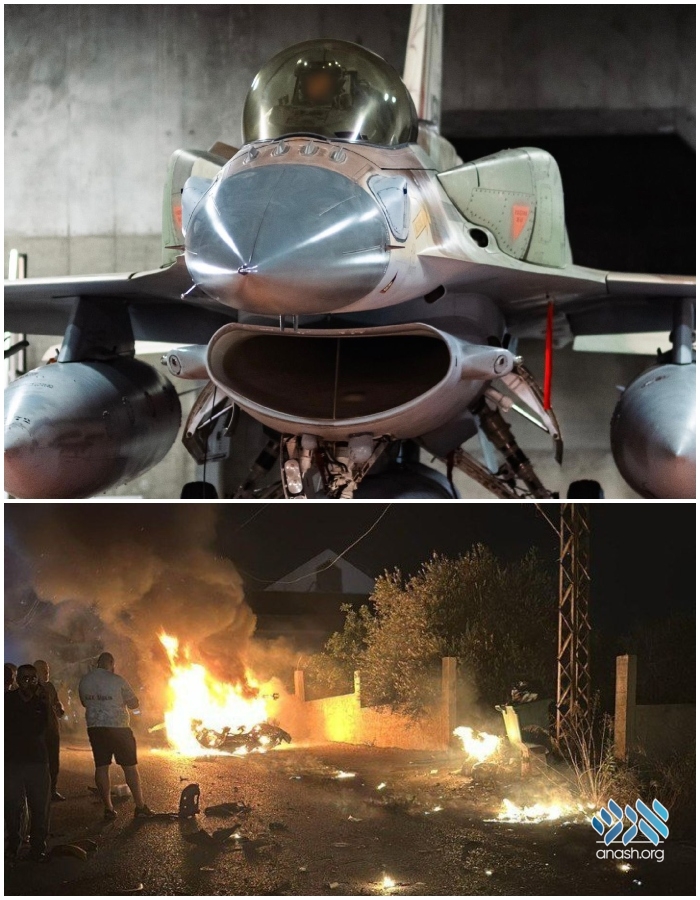
War summary, day 641: IDF strikes senior Hamas terrorists, eliminates terror cells in southern Lebanon and Syria, Netanyahu mulling renewed strike on Iran, Trump pressing for conditional ceasefire, Houthis resume ship attacks in Red Sea, Syria-Israel security agreement may begin in September, IDF planning humanitarian camp in Rafah, Smotrich reveals Iran-backed infiltration plot through Iraq, and Netanyahu meets Trump twice in Washington.
By Mrs. Bruria Efune
50 held captive in Gaza.
28 hostages confirmed murdered held in Gaza.
148 living hostages rescued.
57 hostage bodies rescued.
1,903 Israelis killed.
449 fallen soldiers and police in the battle in Gaza.
88 fallen soldiers in Northern Israel.
18 fallen soldiers and police in Judea & Samaria.
32,350 estimated projectiles fired at Israel.
5,000 Israelis estimated remain displaced from their homes.
1 Jewish nation united in prayer, charity, and good deeds.
Top Headlines:
– Netanyahu emphasizes full defeat of Hamas
– Little progress in hostage negotiations
– Five fallen heroes in tragic Gaza incident
– The problem with Beit Hanoun
– Top Hamas terrorists eliminated
– IDF preparing humanitarian camp in Rafah
– Netanyahu mulling renewed attack on Iran
– Houthis sinking ships again
– IDF eliminates significant terrorists in southern Lebanon
– IDF takes out terror cell in southern Syria
– Security agreement with Syria may begin in September
– Prime Minister Netanyahu is in Washington, where he met with significant American officials, and President Trump twice. Reports from the visit will be pulled throughout today’s update.
Hostages:
Intense negotiations for a hostage release and ceasefire deal are ongoing in Qatar, with representatives from Israel, the U.S., Qatar, Egypt, and Hamas. Before diving into the reports about how the negotiations are going, take into context statements from Prime Minister Netanyahu today.
In a post on social media, Netanyahu stressed that Israel must achieve three objectives in the war in Gaza:
- To release all of our hostages,
- to eliminate Hamas’s military and governing capabilities, and
- to ensure that Gaza will not constitute a threat to Israel.
Netanyahu emphasized: “This means – there will be no Hamas. This must be understood. This is not just something that we are saying, nor will it be. This entails a certain strategy, which I will not detail here.”
Netanyahu added that “we have yet to finish the work.”
In a statement from Washington, Netanyahu referenced the Witkoff proposal, and said that he and Trump are focused on the result. Netanyahu mentioned strong cooperation between the two administrations: “We have learned that when Israel and the US stand together, great things happen, and it has never been like this. In 77 years, there has never been such trust and cooperation as today.”
According to Kan News, Netanyahu is ready to end the war in Gaza—but only on terms that will not allow Hamas to operate any longer.
**
None of the above statements are compatible with Hamas’s current demands for a ceasefire. There are reports of small progress in negotiations, but it does not seem significant enough. Based on reports from Israel Hayom, here are the main issues of contention, and where progress has or hasn’t been made:
- Hamas wants hundreds of trucks of humanitarian aid to be delivered in Gaza each day—by UN organizations. They do not want the Gaza Humanitarian Foundation (GHF) operating in Gaza during the ceasefire.
The progress: The UN has agreed to store the humanitarian aid in their own warehouses in Gaza (rather than Hamas’s). Hamas committed to “guarding” the trucks on the way to the UN warehouses (the opposite of a solution). Hamas still insists that the GHF be shut down. - Hamas wants Israel to withdraw from the Morag Corridor if a ceasefire is announced. This includes the entire flattened city of Rafah, which borders Egypt. Israel wants to hold onto this area and use the ceasefire time to build a humanitarian tent city in it, so that Gazans can evacuate areas under control by Hamas.
- Hamas wants Israel to completely evacuate Gaza. Israel insists on staying in the security buffer zone and Morag Corridor, so that Hamas can’t attack civilians again, or smuggle weapons from Egypt.
- Hamas wants a written guarantee that even after the initial 60-days, the ceasefire will continue so long as negotiations continue. The current Witkoff proposal says that the ceasefire will continue so long as negotiations continue in “good faith.” Hamas wants the “good faith” clause removed so that they can drag on the ceasefire as long as they pretend to negotiate.
Sky News reports that American mediator Bishara Bahbah delivered a personal commitment from Trump to Hamas that fighting would not resume after the 60 days. Hamas wants a written agreement. - Hamas wants the Rafah crossing to Egypt to be opened to two-way traffic. Israel will only allow Gaza’s to leave, but no one and no thing to come in from Egypt.
Other issues, such as the number and identities of terrorists to be freed from prison, are yet to be found out about.
While the American team, led by Steve Witkoff, is showing strong beliefs that a deal will be made in the coming days, everyone else is skeptical.
Al-Sharq (Saudi channel) reported this evening that the 5th round of talks, which took place today, ended with no progress.
Lahav Harkov quoted a senior Israeli official who admitted that Israel might cave on a few issues, but ultimately, Israel will be getting ‘80-90%’ of what it wants from a temporary ceasefire—but that it will likely only be temporary, since Hamas is so far unwilling to take the steps needed to end the war.
Many media channels report that Trump is heavily pressuring Netanyahu to end the war. However, reports from today’s meetings imply that this is only If Hamas agrees to conditions. According to Israel Hayom, discussions between Netanyahu and Trump focused heavily on “the day after” the end of the war, and what it will look like in Gaza.
Gaza:
In devastating news, the IDF announced the names of five heroes who fell in battle in Gaza:
Staff Sgt. Moshe Shmuel Noll, 21, from Beit Shemesh
Staff Sgt. Meir Shimon Amar, 20, from Jerusalem
Sgt. Moshe Nissim Frech, 20, from Jerusalem
Staff Sgt. Noam Aharon Musgadian, 20, from Jerusalem
Sgt. First Class (res.) Benyamin Asulin, 28, from Haifa
The first four were from the Netzach Yehuda battalion. Asulin was from the Gaza Division’s Northern Brigade. All five were killed in the same incident in Beit Hanoun, Northern Gaza.
Beit Hanoun has long been the biggest challenge to the IDF. Troops already entered and fought there twice since October 7th, but did not hold onto it. Many IDF soldiers have been killed in Beit Hanoun. Over the last month, the IDF has held a siege around the city, and only recently began to push into it.
Beit Hanoun has a significant tunnel network, where many Hamas terrorists have been hiding for a long time. The tunnels appear to still be full of supplies and food. Many of the buildings in Beit Hanoun have been bombed, but not totally destroyed, and dense alleys still remain. All this means that the remaining terrorist army of around 50, has many places to hide, and the ability to ambush IDF soldiers.
On Monday night, troops of Netzach Yehuda were directed to walk down a road along the outskirts of Beit Hanoun. This road had been captured three days earlier, and the commander considered it to be safe.
While on the road, the soldiers were hit by three roadside explosives, which were detonated remotely—one immediately after the other. When the first bomb detonated and hit a group of soldiers, troops ran to help them, and were hit by the second bomb, and then the third. Then, Hamas terrorists fired bullets at the rescue forces. Five soldiers were killed in the bombs, and 14 were injured.
While rescue forces operated, the IDF lit up the sky with flares, and dispatched helicopters and fighter jets in order to prevent Hamas from trying to abduct the injured soldiers. The fallen and injured soldiers were all rescued within an hour and a half.
It is unclear why the IDF hasn’t yet flattened Beit Hanoun from the sky—something which would be extremely expensive to do, but worth the IDF lives it would have saved. It’s also unclear why the young Netzach Yehuda company was sent to the worst area, and not a special forces unit with full use of surveillance equipment, which would have spotted the explosives in advance. (To begin with, it’s unlikely that a more senior company would have agreed to walk down that road outside of an armored vehicle, and without a D9 bulldozer clearing the path.)
The IDF will need to clear out and flatten Beit Hanoun before any ceasefire agreement goes into affect. The terrorist city is just 2.5 kilometers from Sderot, and poses a serious threat to Israeli civilians.
**
The IDF confirmed that on July 1st, terrorist Taha Abu Ayada, who served as the commander of Hamas’s elite and cruel Nukhba unit, was eliminated. On October 7th, Ayada led the attack and massacre in a busy gas station near Kibbutz Magen. Since then, he led many attacks against IDF soldiers in Gaza. He was eliminated in the Khan Younis area, by the Gaza Division (143).
**
Defense Minister Israel Katz told reporters today that the IDF and Defense Ministry are preparing plans to establish a humanitarian city in southern Gaza, on the ruins of Rafah.
In the first stage, the area would accommodate around 600,000 Gazans from the Mawasi humanitarian zone on the coast of Gaza (where many Hamas terrorists are hiding, and likely also holding hostages). Gazans will need to go through a screening to enter in order to keep Hamas out. Upon entering, no one will be allowed to leave the zone—at least not until Hamas is defeated.
The humanitarian zone will be secured from the outside by the IDF, but operated by international bodies, just as the GHF (or maybe the UAE).
Emptying out Mawasi, and then other remaining areas in Gaza, will allow the IDF to hit Hamas’s last pockets.
Humanitarian Aid:
Hamas and UNRWA continue to claim that GHF food distribution sites are “death traps.” Yet the only video evidence they have managed to produce, is of their own terrorists attacking civilians and aid workers.
The GHF has delivered over 66 million views since its launch a month ago—without allowing Hamas to hijack and profit off any of it.
Iran:
A “senior source close to Netanyahu” told the Reuters network that Netanyahu is considering launching a broader and more powerful strike against Iran.
The source says that Netanyahu believes that the window of opportunity for military action against Iran is still open for now: Iran has not yet recovered from the last strikes, and their air defenses are still down. This could change very quickly, as there are already reports of new HQ-9B long-range air defense systems arriving from China.
Netanyahu is not entirely satisfied with the results from the initial campaign. Iran was beat and battered, but still has enough legs that with time, they could pick up and continue the nuclear production, and production of more missiles and launchers to attack Israel.
My own sources indicate that there still remains a large bank of regime targets that the IAF is prepared to hit.
Minister Ron Dermer visited Washington last week, and according to Channel 12, he prepared the Trump administration to give a green light for Israel to strike Iran again, at any sign that the Iranians are working to restore their uranium enrichment program.
According to Israel Hayom, this was the main topic of Netanyahu’s second meeting with Trump today: steps to ensure that Iran doesn’t renew its nuclear program, and to prevent then from rebuilding their ballistic missiles arsenal.
Iran might be catching on to this. After weeks of denial, today Iran’s Foreign Minister, Abbas Araghchi, said that Iran remains interested in diplomacy, and is ready for talks next week. He claimed that Iran and the U.S. had been “on the cusp of a historic breakthrough” in negotiations right before Israel ruined it by bombing them.
However, the regime also continues to insist that they will never give up their nuclear program, and keeps calling for “death to America” and Trump in particular. Just this week, during Friday prayers in Tehran, Ayatollah Ahmad Khatami told the congregation: “according to sharia law, Trump must be executed.”
**
On Monday, Finance Minister Betzalel Smotrich (who is in the security cabinet) revealed that 35,000 terrorists of Iranian-backed militia in Iraq had planned to infiltrate Israel through Jordan, as part of Iran’s plan to destroy Israel.
Yemen:
The Iranian-backed Houthis in Yemen continue to launch once-daily missiles and UAVs towards Israel—but most either fail and fall short, or are intercepted by Israeli air defenses before reaching Israeli airspace. The last siren from a Houthi attack was on Monday, before 4am.
In addition to attacks on Israel, the Houthis are back at attacking vessels in the Red Sea. This week they sunk a Liberian-flagged Greek-owned bulk carrier, and then attacked another Liberian-Greek cargo ship today. At least 4 civilian workers were killed.
Reminder: Early Monday morning, after many attacks on Israeli civilians, and shortly after a Houthi attack on a boat in the Red Sea, the IAF bombed Houthi targets in Yemen with a heavy focus on its ports (from where missile parts are imported) and radar systems. Nobody else appress to be defending the Red Sea at the moment.
Judea & Samaria:
Security forces operated in Salem, in Samaria, where they arrested a terrorist who served as a central weapons dealer for local terrorists.
Lebanon:
In the last couple days, the IDF eliminated three senior terrorists in Lebanon:
- Ali Abd al-Hassan Haidar: A commander in Hezbollah’s elite Radwan force, was eliminated in an airstrike in Deir Kifa, southern Lebanon. He was involved in planning attacks on Israeli civilians and rebuilding Hezbollah’s terror infrastructure, including the “plan to conquer the Galilee.”
- Another Hezbollah terrorist was killed about two hours later in the Beit Lif area of southern Lebanon.
- Mahran Mustafa Ba’jour, a top Hamas commander in Lebanon, was eliminated in Tripoli. He directed attacks on Israeli cities and played a central role in building Hamas’ military presence in Lebanon, including arms acquisition and cooperation with other terror groups.
In an interview, Hezbollah’s Secretary-General, Naim Qassem, proudly admitted that the terror group is working on recovering and rebuilding attack capabilities.
In a public statement, the terror leader even went so far as to threaten Israel, and declare: “The ongoing aggression and expansion of Israel, under American patronage, are part of the pressures on us, but we cannot remain silent. We have declared that we will confront and not surrender. We have only two options: victory or martyrdom. We have no option called surrender. That is not an option.”
Syria:
IDF forces in southern Syria recently carried out a second operation to arrest a terror cell in Tel Kudna, near Israel’s border. The terror cell was operated by the Iranian Quds force, with intention to attack Israel.
According to i24 News, Prime Minister Netanyahu and Syrian President al-Jolani are expected to meet in the White House ahead of the UN General Assembly in September. During the meeting, they will sign a security agreement, under the auspices of President Trump. This agreement will be the first step towards a normalization and peace agreement between Israel and Syria.
In addition to Trump, the UAE (with Saudi backing) is putting significant effort into this happening.
One of the main obstacles remaining, is Syria’s demand that Israel withdraw from the Syrian side of the Golan Heights, which Israel entered after Assad’s fall. Israel is concerned that al-Jolani has not yet secured full control over the terror militias in Syria, and therefore insists on the IDF remaining in the buffer zone to protect Israeli civilians until Syria has it terror group problem under control.
Sponsored in the honor of the liberation of the Frierdiker Rebbe. May Hashem free the hostages and watch over our precious and brave soldiers.
WATCH:
 COMMENTS


We appreciate your feedback. If you have any additional information to contribute to this article, it will be added below.