



כ״ג ניסן ה׳תשפ״ו | April 9, 2026
US, Israel, and Iran Agree to Two-Week Ceasefire
A two-week ceasefire between the US, Israel, and Iran took effect Tuesday evening – Shvi’i shel Pesach – brokered by Pakistan in the final hours before Trump’s deadline, with Ben Gurion resuming full flights shortly after.

A two-week ceasefire between the United States, Israel, and Iran took effect Tuesday evening, April 8, following roughly six weeks of direct American and Israeli military strikes against Iran.
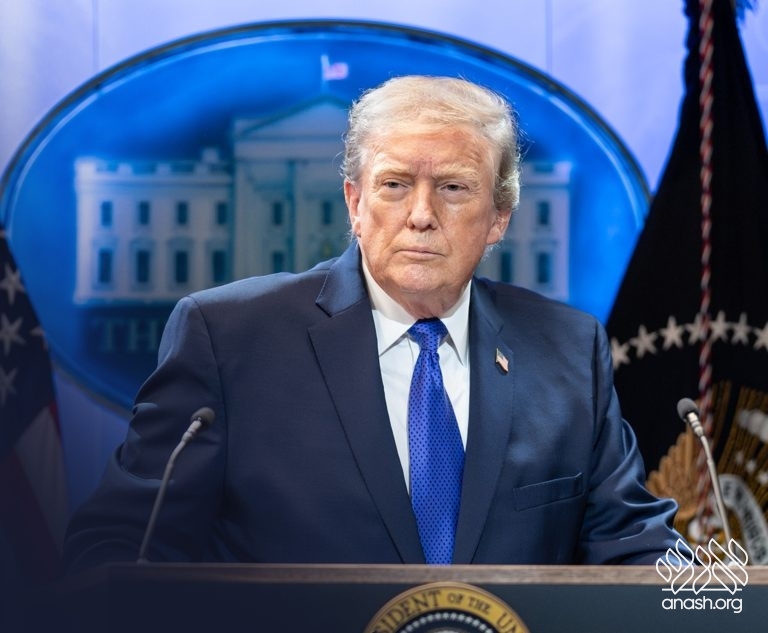
Donald Trump announced the agreement on Truth Social on Tuesday – roughly 90 minutes before his self-imposed deadline to dramatically escalate strikes against Iran. In the lead-up, Trump had issued stark warnings to Tehran, threatening to unleash a level of military force that would end Iran as a functioning civilization if it did not comply with his demands.
“Based on conversations with Prime Minister Shehbaz Sharif and Field Marshal Asim Munir, of Pakistan, and wherein they requested that I hold off the destructive force being sent tonight to Iran, and subject to the Islamic Republic of Iran agreeing to the COMPLETE, IMMEDIATE, and SAFE OPENING of the Strait of Hormuz, I agree to suspend the bombing and attack of Iran for a period of two weeks,” Trump wrote. “This will be a double sided CEASEFIRE!”
The ceasefire officially took effect at 8 p.m. Eastern Time, though Iran launched a limited volley of missiles toward Israel and Gulf states shortly afterward before fire on their end ceased.
At the center of the deal is the Strait of Hormuz, through which roughly 25 percent of the world’s seaborne oil trade passes – some 20.9 million barrels per day. Iran is expected to reopen the waterway fully, though Iranian officials have indicated they intend to continue levying transit fees, framing some payments as war reparations.
The ceasefire runs for two weeks, until approximately April 22, with the possibility of a short extension if talks show progress. Direct negotiations between the US and Iran are set to begin Friday in Islamabad, Pakistan.
Trump called Iran’s 10-point counter-proposal a workable basis for talks, though several of Tehran’s demands remain deeply at odds with American positions – including payment of war reparations and continued uranium enrichment. “It was agreed, a long time ago, and despite all of the fake rhetoric to the contrary – NO NUCLEAR WEAPONS and, the Strait of Hormuz WILL BE OPEN & SAFE,” Trump posted.
Prime Minister Benjamin Netanyahu endorsed the agreement. In an official statement, his office said: “Israel supports President Trump‘s decision to suspend strikes against Iran for two weeks, subject to Iran immediately opening the straits and stopping all attacks on the US, Israel and countries in the region.”
However, Israel was equally clear that the deal does not apply to its campaign against Hezbollah in Lebanon, which has continued with full force. Netanyahu stated that Israel will achieve its goals “either by agreement or by renewing the fighting.”
Trump, for his part, made no secret that the pause is conditional. “If for any reason it is not complied with, which is highly unlikely, then the ‘Shootin’ Starts,’ bigger, and better, and stronger than anyone has ever seen before,” he wrote.
With the ceasefire now holding, Ben Gurion Airport has resumed full flight operations – bringing relief to thousands of travelers who had been stranded both in and out of Israel throughout the weeks of conflict. The Kosel has similarly reopened to the full public.
 COMMENTS


We appreciate your feedback. If you have any additional information to contribute to this article, it will be added below.