




ט׳ טבת ה׳תשפ״ו | December 28, 2025
Unfiltered Shtetl Life from a Chabad Chossid and Master Storyteller
Now on Sale: Set in shtetls nearly 200 years ago, this two-volume autobiography tells the story of a chossid of the Tzemach Tzedek. Folksy, funny, and streetwise, he vividly recounts his life as a traditional Jew in Ukraine, offering unfiltered, raw detail without nostalgia – a masterful, immersive portrait of shtetl life.
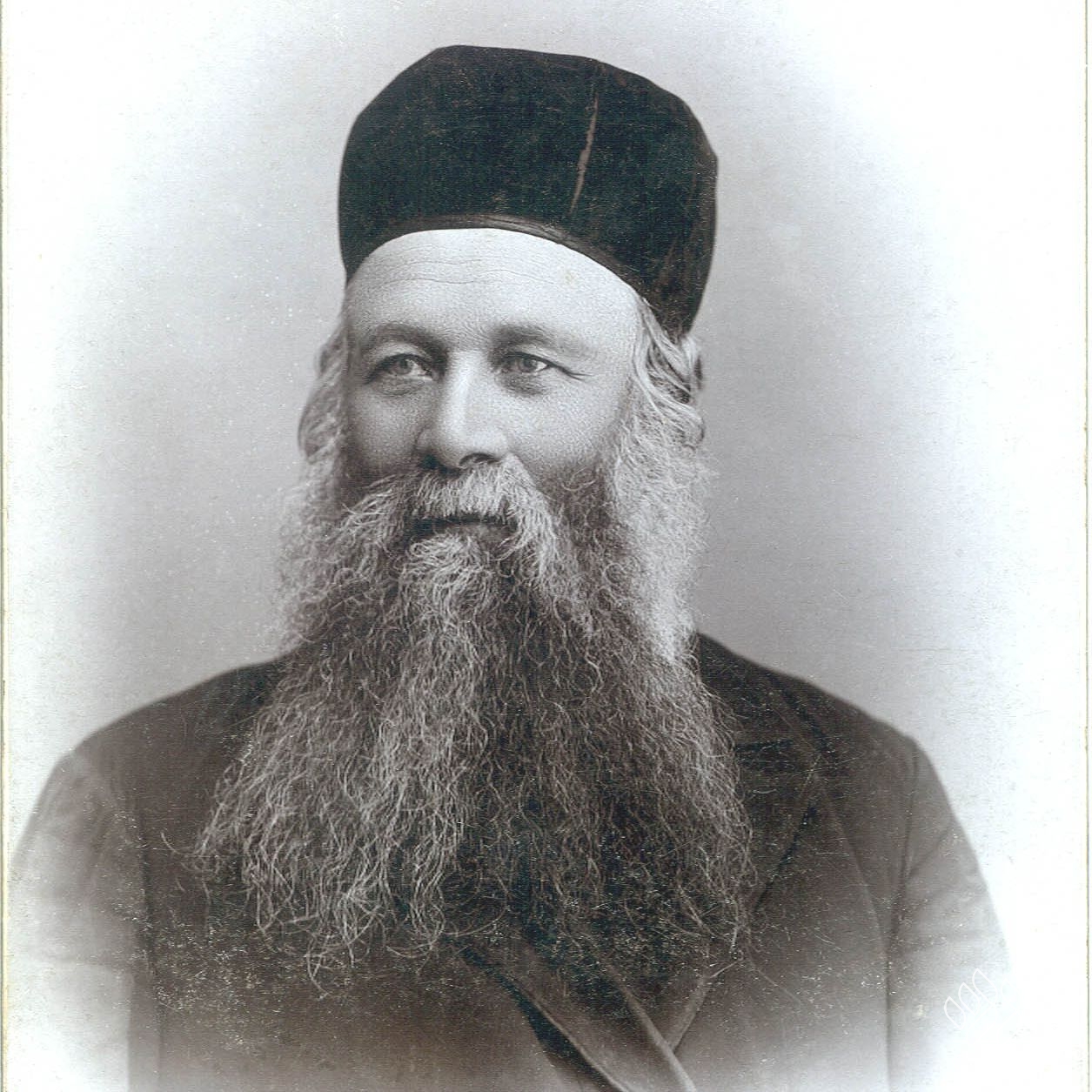
Set in the shtetls of nearly 200 years ago, this unique two-volume autobiography offers a fascinating and detailed picture of Jewish life in Tsarist Russia and Eretz Yisroel, told by a master storyteller.
A captivating memoir by a chossid of the Tzemach Tzedek tells the story of a traditional Jew who was orphaned as a young boy. Folksy, funny, streetwise, and self-confident, he was a keen observer of his surroundings. His accounts are vivid and readable, sometimes stunning in their intensity, and tell in raw detail about his life in Ukraine without nostalgia or whitewashing – unfiltered, pure shtetl life.
For the first time, the memoir has been translated into English.
We don’t have to wonder what life was like in the shtetl or rely on stories we heard as children. While Orthodox Jews did not traditionally write memoirs in past generations, Pinkhes Dov Goldenshteyn (1848–1930), a talmid chacham and a shochet, tells us in raw detail about his life as a poor orphan in Ukraine.
A lifelong Lubavitcher chasid, Goldenshteyn wrote his Yiddish memoirs to strengthen the belief in Hashem and hashgacha pratis of his children and grandchildren in America and elsewhere, some of whom were wavering in their religious commitment. With the translation of those memoirs into English, a new generation can also feel that wave of complete faith while seeing the difficulty of life in nineteenth-century Ukraine.
Many Jews then were entrenched in poverty, fearful of forced enlistment in the Czarist army, and surrounded by family and community members who struggled daily to survive. Despite all these challenges, life was full of faith, love, shared joy, and a profound sense of Hashem’s presence.
In the first of the two volumes, which traces the years from his orphanhood — when he was raised by his doting sisters — through his maturation into a Torah scholar and shochet, Goldenshteyn endures tremendous hunger, suffering, and humiliation. Readers see what life was like in the shtetl: the cold, the hunger, and the difficulty of travel. They encounter both good and bad marriages, family members who give away their last piece of bread to a loved one and others who have more but refuse to help, the hierarchy of suitable candidates for shidduchim, and the corruption caused by the pursuit of money and honor.
Despite these hard truths, Goldenshteyn’s story uplifts readers. His faith carries him through his difficult times. His struggles bring him into personal contact with the Tzemach Tzedek of Lubavitch, less than a year before the Rebbe’s passing, who advised him when to marry and in which town and yeshiva to study. He later met with the Tzemach Tzedek’s son, Reb Boruch Shalom (the Rebbe’s great-great-grandfather), to seek clarification of the Rebbe’s guidance. His search for parnassah also brings him to the Malbim, who receives him with honor.
Goldenshteyn later visited the Rebbe Maharash, who gave him specific instructions which, had he followed them fully, would have secured him a prominent position as a shochet. Sadly, he did not follow the instructions completely and only later realized what he had lost. His quest for a bracha and guidance leads wealthy laymen to give him the unusual role of a minor celebrity, entrusting him with a cherished esrog to bring to the Lyever Rebbe. His faith and personal integrity ensure that his life is filled with blessing, even as he chronically lacks food and money.
The second volume continues Goldenshteyn’s life story and broadens the picture of Jewish existence in Eastern Europe and beyond. It begins in 1873, when he obtains his first position as a shochet in Slobodze, and follows him to the Crimea, where he endures some 35 years of challenges. Though part of Russia, the Crimea was overwhelmingly populated by Tatar-speaking Muslims, as well as Karaites and Krymchaks.
Across both volumes, the memoir is brimming with information. Goldenshteyn’s experiences shed light on communal life, persecution, family relationships, religious practices and beliefs, social classes, local politics, interactions between Jews and other religious communities, epidemics, poverty, competition for resources, migration, war, technology, modernity, and secularization. In chronicling his own life, he inadvertently tells a larger story — that of a small, oppressed people struggling to survive within the massive Russian Empire and later in the Land of Israel.
The story of Pinkhes Dov Goldenshteyn’s life is enhanced by his literary skill. He writes like a professional storyteller, building suspense and offering subtle foreshadowing that draws the reader forward. Ultimately, the pieces of his life come together like a puzzle, revealing a plan that seems to have been waiting all along. Hashem emerges as the true protagonist of this nineteenth-century shtetl story. Wealth fades, social status shifts, but strength of character, loyalty, honesty, piety, and generosity endure. Through Goldenshteyn’s unvarnished account, readers encounter the legendary shtetl of a world that no longer exists.
Clearly, enormous effort was invested in making this work accessible to the public. Until now, only a small circle of Yiddish-speaking scholars had access to this significant primary source. The translator and presenter, Michoel Rotenfeld, associate director of libraries for Touro University, devoted decades to researching and translating the memoir, traveling to Ukraine, Crimea, and Israel to explore archives and interview the last remaining individuals who knew Goldenshteyn.
“A fitting conclusion to a well-researched and meticulously edited memoir translation,” Kirkus Reviews writes.
“You have to read this book… It’s not like anything you read before.” – Tablet Magazine
The result is evident in the concise and illuminating footnotes that provide readers with a deep understanding of Jewish life in that era.
Both volumes are now available in Jewish bookstores and on Amazon.
Buy it on sale now at Kehos:
Vol. 1 – https://store.kehotonline.com/prodinfo.asp?number=EH-SHOC1
Vol. 2: – https://store.kehotonline.com/prodinfo.asp?number=EH-SHOC2
Amazon:
 COMMENTS


We appreciate your feedback. If you have any additional information to contribute to this article, it will be added below.