




י״ח תמוז ה׳תשפ״ה | July 14, 2025
TSA Ends Long-Standing ‘Shoes-Off’ Rule at U.S. Airports
Over 20 years ago, British terrorist Richard Reid (the “shoe bomber”) tried to ignite explosives hidden in his sneakers on a flight from Paris to Miami. Despite his failure, the TSA instituted a widespread rule for shoe removal before boarding. In a welcome change, travelers will no longer need to take off their shoes at domestic airports.
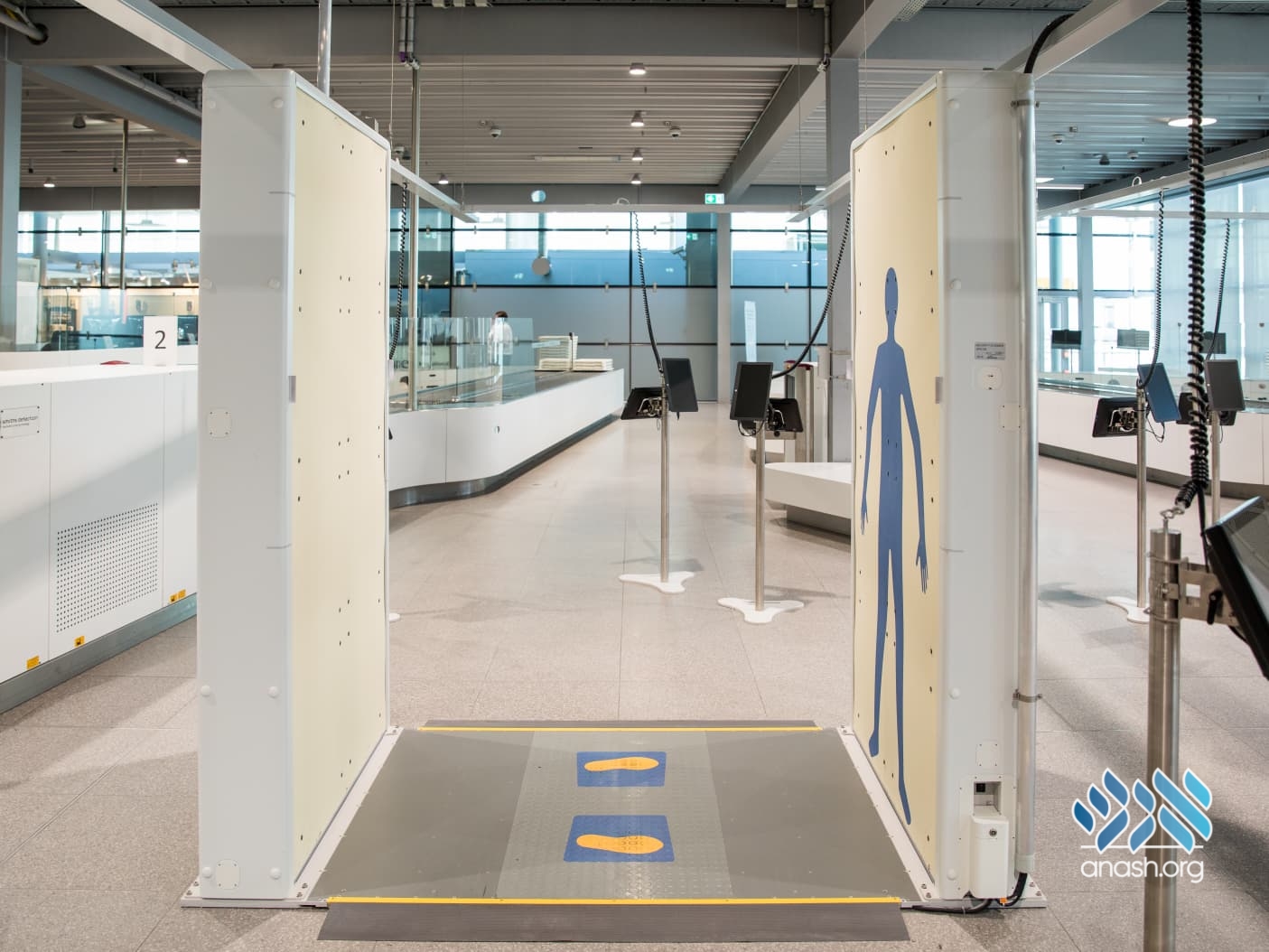
Over 20 years ago, British terrorist Richard Reid (the “shoe bomber”) tried to ignite explosives hidden in his sneakers on a flight from Paris to Miami. Despite his failure, the TSA instituted a widespread rule for shoe removal before boarding. In a welcome change, travelers will no longer need to take off their shoes at domestic airports.
Homeland Security Secretary Kristi Noem announced on July 8, 2025 that travelers will no longer be required to remove their shoes during TSA security screenings at domestic airports. The new policy takes effect immediately and applies nationwide.
Noem said the change is part of a broader effort to modernize airport security and improve the traveler experience. “We expect this change will drastically decrease passenger wait times at our TSA checkpoints, leading to a more pleasant and efficient passenger experience,” she said.
The Department of Homeland Security confirmed that the revised rule covers all U.S. airports, including major hubs (for example, travelers at Los Angeles International and New York’s LaGuardia have already reported being waved through with their shoes on).
Noem emphasized that security remains the top priority under the new screening process. She noted that TSA officers retain the authority to ask individual passengers to remove shoes if scanners flag a potential threat. “There will be individuals at times that will be asked to remove their shoes… if we think there is additional layers of screening that is necessary,” Noem said at a Washington, D.C. news conference. In practice, DHS officials explained that travelers will still pass through all the usual identity checks and vetting (such as Secure Flight registration). Noem pointed out that TSA’s “layered security” – including extra officers, advanced screening machines and even the new REAL ID enforcement – gives confidence that allowing shoes on will not degrade safety. TSA’s statement to the media likewise noted that the agency “is always exploring new and innovative ways to enhance the passenger experience and our strong security posture” during checkpoints.
The policy shift is enabled by next-generation imaging technology. DHS’s Science and Technology directorate has been developing high-definition millimeter-wave scanners (HD‑AIT) and other devices that can detect threats through clothing and footwear. According to DHS research, these scanners use harmless radio waves to create 3D images of passengers without a human having to view the raw images. In fact, DHS notes that integrating HD‑AIT into regular screening lanes could allow travelers to keep light jackets, sweaters – and even their shoes on – while the machine scans them for concealed items.
TSA is also testing a specialized shoe scanner prototype. In this device, a passenger steps onto a pad and millimeter waves penetrate the sole of the shoe. The machine builds a 3D image in about two seconds and flags any anomalies. In trials, such scanners have successfully identified hidden objects in footwear without requiring travelers to remove shoes. DHS says the shoe‑scanner (developed in partnership with the Pacific Northwest National Laboratory) is already winning innovation awards and may be deployed in coming years. Together, the new AIT systems and shoe imaging devices give TSA the technical ability to screen footwear in place of the old manual removal method.
The requirement to remove shoes dates back nearly two decades. In December 2001, British terrorist Richard Reid (the “shoe bomber”) attempted to ignite explosives hidden in his sneakers aboard a flight from Paris to Miami. Although Reid’s bomb failed, the incident led TSA to impose stricter screening. By August 2006, a rule was in place requiring all passengers (except those already cleared through PreCheck) to take off their shoes for X-ray inspection. Since then, most flyers have come to expect that step at security. TSA PreCheck members have never needed to remove shoes, however – as has long been true for young children and older adults – and now the agency is extending the same convenience to the general public.
The sunset of the old rule reflects both technical advances and changing priorities. Noem noted that TSA’s evolving equipment and procedures (including widespread use of REAL ID and credentialing) helped make the shift possible. Some industry observers also see it as part of broader moves to streamline security: Noem said TSA is even reviewing other long-standing requirements like removing laptops or belts, signaling that further easing of screening protocols may follow.
For air passengers, the change means one less hassle at security lines. With shoes on, travelers can simply walk through the new scanners much as they do in PreCheck lanes. Officials expect this will speed up checkpoints and reduce bottlenecks. DHS cited Transportation Dept. statistics showing over 1 billion passengers flew U.S. routes in FY2023, highlighting how even small time savings per traveler add up. Airline and traveler groups have largely praised the move. In a joint statement, industry leaders said the update will “facilitate smooth, seamless and secure travel” for millions of flyers daily.
Passengers should note, however, that some standard security rules still apply. Even with shoes on, travelers must place belongings on the X-ray belt, remove laptops and liquids per the 3-1-1 rule, and comply with identity checks. Some older protocols (like removing belts or light jackets) remain unless a person has PreCheck status. Sec. Noem specifically pointed out that TSA PreCheck still offers extra convenience: with PreCheck travelers do not have to remove belts, light coats or electronics, so frequent flyers will continue to value it. And importantly, TSA officers can still select any passenger for additional screening. If the scanners indicate a potential threat (for instance, an unclear image of footwear), the agent may still ask for the shoes to be taken off and inspected.
 COMMENTS


We appreciate your feedback. If you have any additional information to contribute to this article, it will be added below.