



י״ח שבט ה׳תשפ״ו | February 4, 2026
The Story of the Very First Siyum HaRambam in History
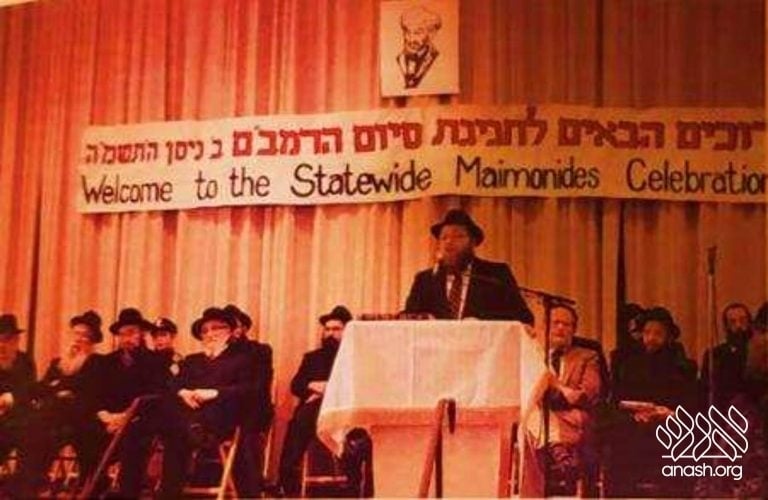
The very first Siyum HaRambam ever celebrated took place in Buffalo, New York, on Beis Nissan, 5745 (1985), with the attendance of Gedolei Yisroel, and was arranged by the Rebbe’s shliach, Rabbi Nosson Gurary. The historic Siyum received special and unique attention from the Rebbe.
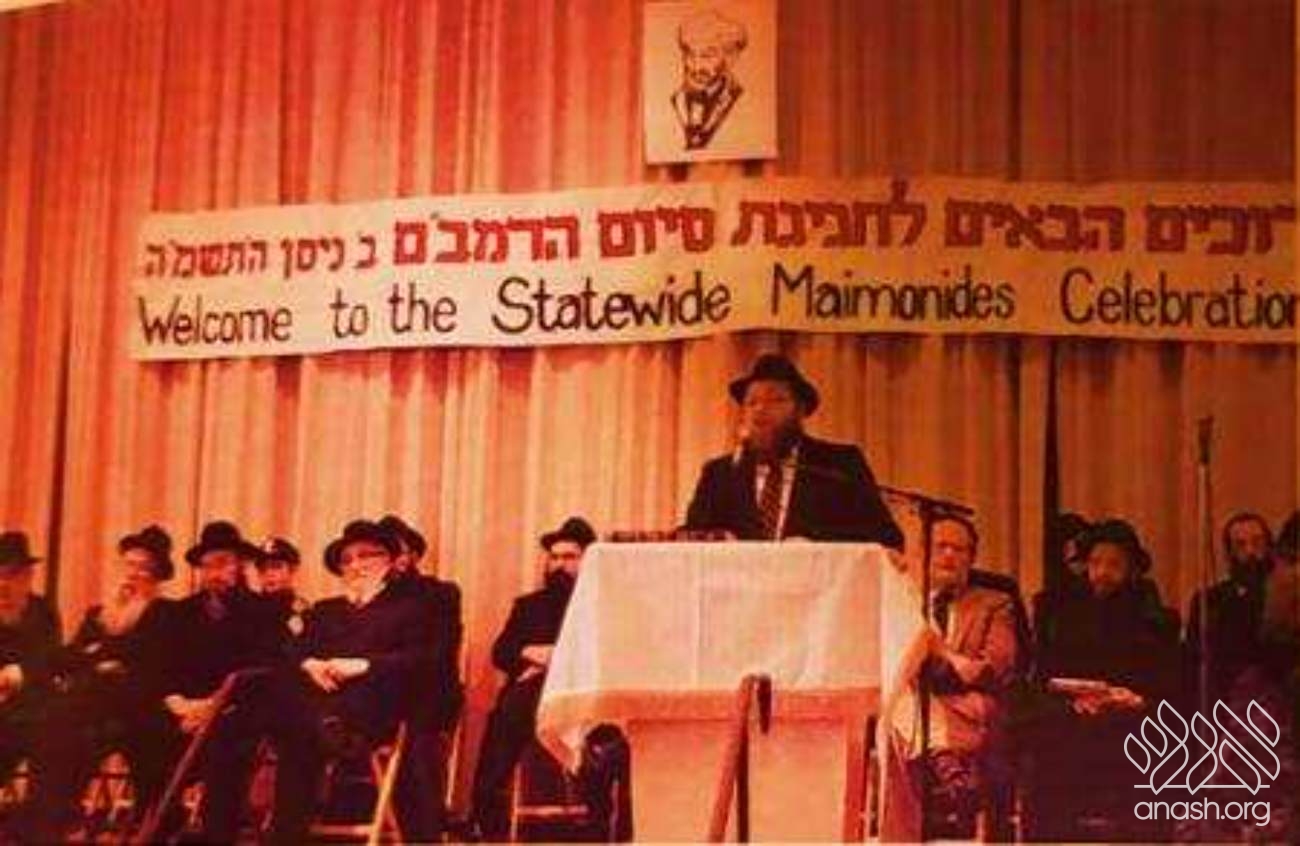
The very first Siyum HaRambam ever celebrated took place in Buffalo, New York, on Beis Nissan, 5745 (1985), with the attendance of Gedolei Yisroel, and was arranged by the Rebbe’s shliach, Rabbi Nosson Gurary. The historic Siyum received special and unique attention from the Rebbe.
On Acharon Shel Pesach of 5744 (1984), the Rebbe established the daily study of Rambam, and in 5745 (1985), for the first time, thousands around the world completed the entire Mishneh Torah.
The Rebbe strongly encouraged grand Siyumim to be held in every community, emphasizing their importance and broad participation. The first to arrange a Siyum on the entire Rambam was Buffalo, under the leadership of Rabbi Nosson Gurary, who brought together many prominent rabbis and community members in a dignified event to celebrate this historic milestone.
“For eight hundred years we have had the Rambam, yet never was the Rambam publicly concluded by tens of thousands from across the globe,” Rabbi Simcha Elberg, chairman of Agudas Harabanim of USA & Canada, said at the Siyum.
“This is the first time in history! And who got this z’chus?—Buffalo! There is special meaning to the fact that Buffalo is the first to celebrate a Siyum Harambam in eight hundred years.”
In connection with the Siyum, the Buffalo Chabad House published a Torah journal, Meginei Melech, marking the occasion. In an unusual and unique act, the Rebbe specifically instructed that an adaptation of a Sicha on Parshas Yisro of that year explaining the beginning and end of Rambam be prepared in a Yeshiva-style format for inclusion in the journal.
The Sicha was later printed in Likutei Sichos (Vol. 26, p. 114). The Rebbe personally reviewed and edited this adaptation, giving the Buffalo Siyum special attention.
During the farbrengen of Shabbos Parshas Vayikra, Rosh Chodesh Nissan, the Rebbe praised the Buffalo Siyum happening the following day, saying: “Fortunate is their lot, and may they be blessed for their z’rizus in this matter!” (Hisvaaduyos 5745, Vol. 3, p. 5, 14–16).
The Rebbe then handed Rabbi Gurary a bottle of mashke for the celebration, further emphasizing its significance.
Later, on the eve of Yud-Alef Nissan, before delivering his third Sicha that night, the Rebbe took out an enlarged copy of the Buffalo printed Siyum text from his siddur and studied it. The Rebbe then publicly conducted the Siyum and the beginning of the next Rambam cycle, using the very page printed by Chabad of Buffalo.
*
Below is a translation of the forward to the Meginei Melech journal, printed in honor of the Siyum, which includes a brief description of the first Siyum held here in Buffalo:
With G-d’s help.
“In the name of Hashem, G-d of the world” – thus the Rambam began each of the books of the Yad HaChazakah. This is also how he began his other works: Commentary on the Mishnah, Sefer HaMitzvos, Moreh Nevuchim (and each of its sections separately). In the same manner, we open our compilation –Meginei Melech – on the Rambam’s Mishneh Torah, and we thank Hashem for granting us the merit to publish this collection, which contains Torah insights from the great sages of Israel and their students on the Rambam’s Mishneh Torah.
These Torah insights were spoken or sent in honor of the first completion cycle of the Rambam’s study, which took place in the Great Shul of Lubavitch, Buffalo, New York, on the 2nd of Nissan, 5745 (1985). Thousands and tens of thousands of our Jewish brethren united through the study of three chapters a day in the Rambam’s Mishneh Torah.
This study cycle began on the 27th of Nissan, 5744 (1984), at the initiative of the Lubavitcher Rebbe Shlita. The benefit of this study was explained at the time by the Rebbe, and we will bring here its essence.
First, there is an obligation upon every Jew to study the entire Torah. Through the study of Mishneh Torah, this obligation can be fulfilled, for, as the Rambam himself testifies:
“In summary, so that a person will not need any other composition in the world regarding any of the laws of Israel, but rather this composition will encompass the entire Oral Torah… Therefore, I have called this work Mishneh Torah, for a person should first read the Written Torah and then read this, and he will thereby know the entire Oral Torah and will not need to read any other book between them”
(Introduction to the Rambam’s Mishneh Torah).
Another reason and benefit of this study is the unity of all those learning Rambam through the study of Halachic rulings specifically. The greatness of studying the Rambam and the unique unity that this study brings about were elaborated upon at length in the Rebbe’s sichos (Acharon Shel Pesach, and in the subsequent farbrengens of 5744).
As established in the Moreh Shiur, the time set for the completion of the first cycle was scheduled near the 14th of Nissan, the eve of Pesach – the Rambam’s birthday. Throughout the world, celebrations were held, or were being prepared, in honor of the completion of the Mishneh Torah – “in a multitude of people is the glory of the King.”
The city of Buffalo, New York, was privileged to host the first completion celebration on a most auspicious day – the 2nd of Nissan, the yahrzeit of the Rebbe Rashab. At the grand and majestic completion celebration, several of the great Torah scholars of our generation were present, along with rabbis, halachic authorities, and emissaries of the Lubavitcher Rebbe Shlita from across New York State and beyond.
The highlight of the celebration and the seudas mitzvah in honor of completing the Torah was the kinus Torah that followed the completion of the Rambam’s study. This kinus Torah was attended by dozens of rabbis, Torah scholars, and yeshivah students who eagerly absorbed the words of hadran and Torah insights delivered by the great and distinguished scholars.
Many of the prominent rabbis who were unable to personally attend and participate in the completion celebration sent their blessings and Torah insights in honor of this occasion. Particularly cherished are the words of blessing and encouragement sent especially by the Posek HaDor, the great and revered Gaon, Rabbi Moshe Feinstein Shlita, president of the Union of Orthodox Rabbis of the United States and Canada, and Rosh Yeshiva of Tiferes Yerushalayim, despite his frailty – may Hashem grant him a complete and speedy recovery.
We bring his words here as relayed to us by his distinguished son-in-law, Rabbi Dr. Moshe Tendler Shlita:
“My Torah blessing is extended to all participants in the first completion of the Rambam’s Mishneh Torah study cycle. The Lubavitcher Rebbe has merited and has enabled many to fulfill the mitzvah of Torah study for its own sake, which is equal to all the mitzvos. May it be Hashem’s will that He grant him long life and years so that his wellsprings may spread outward, to disseminate Torah to the public until the coming of the righteous Moshiach.”
The recitation of the final halachah of the Mishneh Torah and introductory words to it were delivered at the completion celebration by the Gaon Rabbi Simcha Elberg Shlita, chairman of the executive committee of the Union of Orthodox Rabbis of the United States and Canada. We will briefly quote his main points:
“…We are now in America, we are in Buffalo. What is the significance of this day? For eight hundred years, we have had the Rambam – a long and rich period of decline and revival – and never before has Klal Yisroel celebrated a completion of the Rambam. Perhaps individuals completed it, but thousands and tens of thousands of Jews from all corners of the world – Australia, Eretz Yisroel, America, and Europe – are now completing the Rambam together.
“This is the first time in history! And who merited this? Buffalo! Surely, there is significance in the fact that Buffalo was granted this privilege, that here we are celebrating the first-ever completion of the Rambam in eight hundred years.
“What aspect of the Rambam are we celebrating? The Rambam was universal – a master of sciences and wisdoms; he was a great philosopher, a great physician. The Rambam laid the foundations for the deepest knowledge that Klal Yisroel possesses.
“But we are not celebrating the Rambam the philosopher or mathematician – we are celebrating the fundamental Rambam who established the foundations of halachah, who taught us how to live according to halachah. And if the Rambam engaged in other wisdoms, it was because they have a basis and source in halachah.
“Why specifically the Rambam? There were many Rishonim. However, codifying halachah set forth the principle that halachah is what determines, and halachah is the foundation of Klal Yisroel. There are aspects of yiddishkeit built on emotion and longing, but halachah is built on the foundation of reason – the reasoning of Torah. Halachah is not measured by contemporary values or circumstances.
“Chazal said, ‘Shlomo and a thousand like him may be nullified, but not even a single letter of the Torah.’ Let us envision: Who was Shlomo? I am not speaking only of ‘Shlomo, the wisest of all men’ – we are speaking of the Shlomo of Shir HaShirim, the expression of the Shechinah. Shlomo – not Dovid – was the one who built the Beis HaMikdash. But ‘Shlomo and a thousand like him may be nullified’ if, Chas v’shalom, even a single letter of halachah is altered.
“Since Lubavitch was given the mission of being ‘guardian of halachah,’ and Lubavitch speaks of ‘geirus kehalachah’ – Lubavitch understood how to instill the study of the Rambam throughout Klal Yisroel, not just as the possession of individuals, but as the collective treasure of the entire Jewish people.
“…The Rambam lives with us and is reborn each day anew. We always say, ‘the Rambam says’ and not ‘the Rambam said’ – ‘Giver of the Torah,’ not ‘Gave the Torah.’ And this Rambam we are celebrating.”
May it be Hashem’s will that through this collection, which is founded on understanding the Rambam’s words, thousands and tens of thousands more Jews will join the second cycle of Rambam study, and may the prophecy with which the Rambam concluded his Mishneh Torah be fulfilled:
“At that time, there will be no hunger or war, no jealousy or competition, for goodness will be abundant, and all delicacies will be as plentiful as dust. The entire world will be engaged solely in knowing Hashem. Therefore, the Jews will be great sages and will know hidden matters, comprehending their Creator according to human ability, as it is stated: ‘For the earth will be filled with the knowledge of Hashem as the waters cover the sea.’”
The Editorial Team
11 Nissan 5745, Buffalo, New York
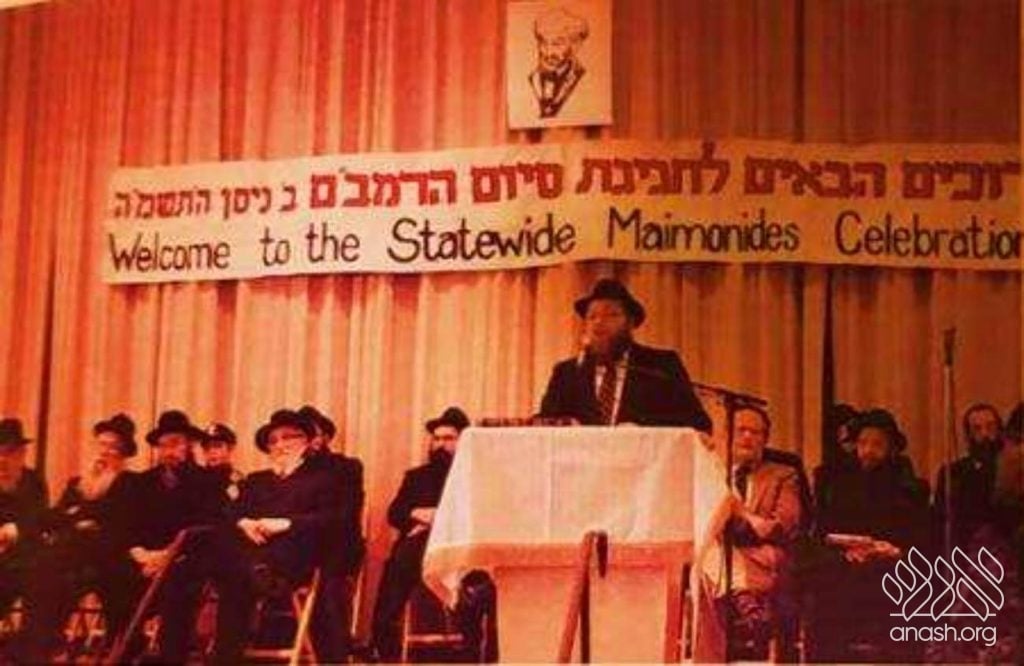
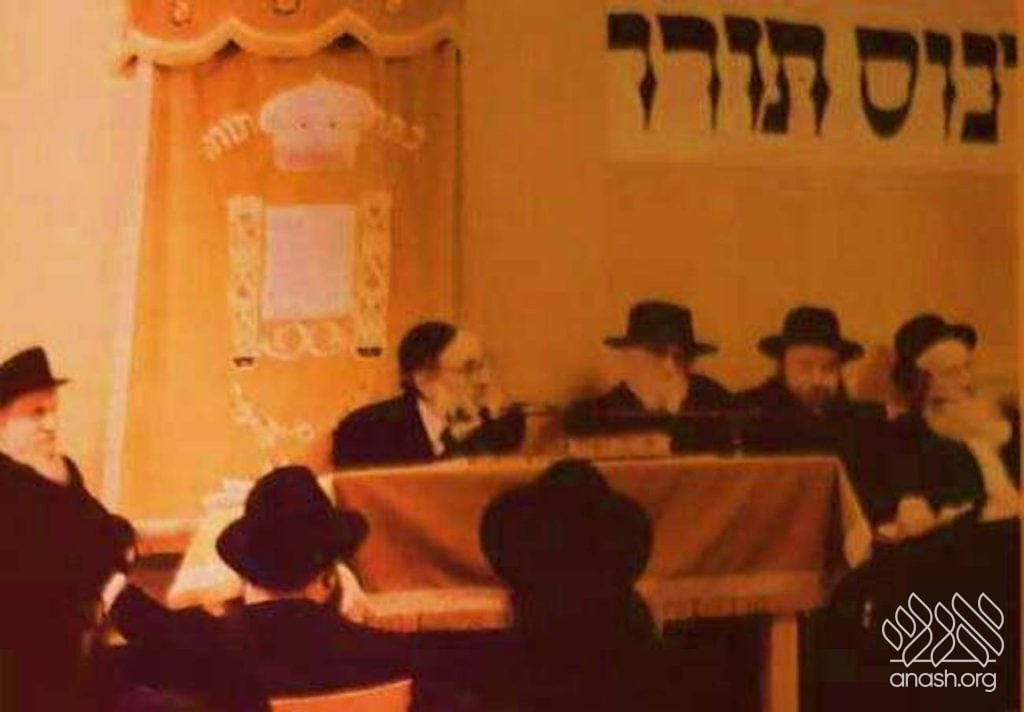
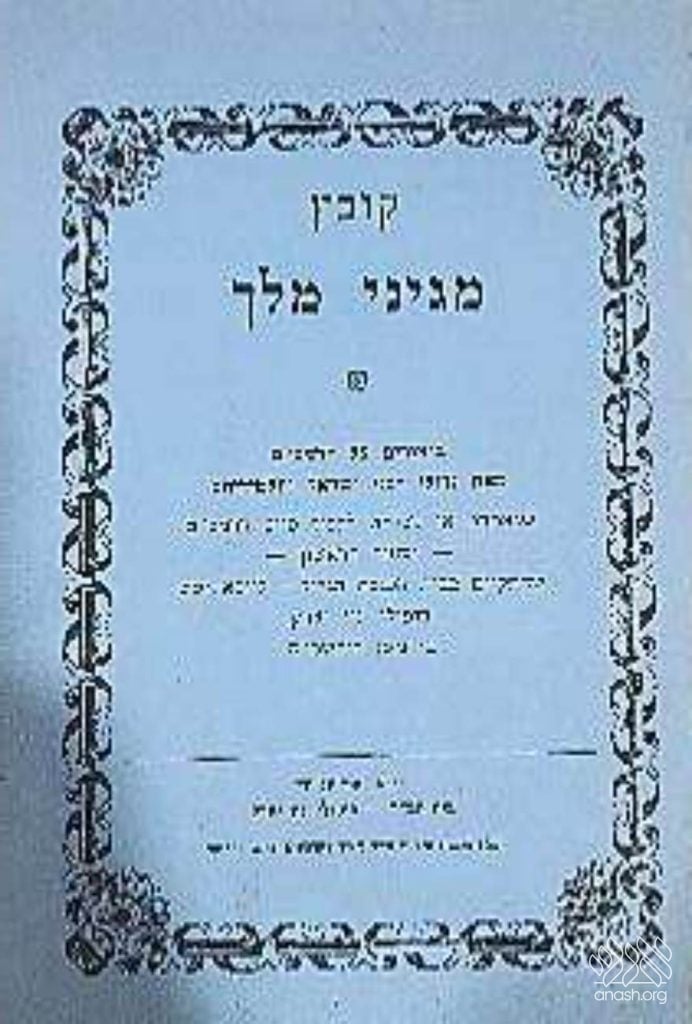
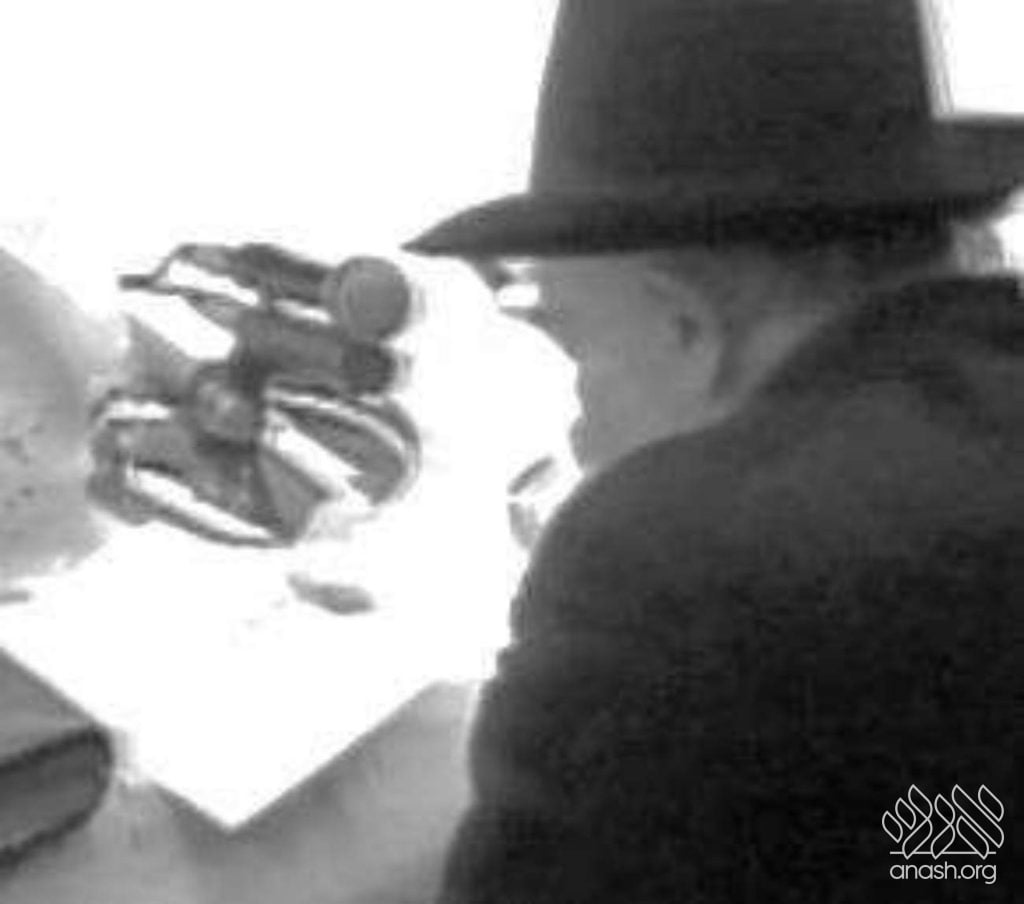
The Rebbe uses the paper from the Buffalo Siyum to make the Siyum Haramabm at the Farbrengen of 11 Nissan 5745
 COMMENTS


We appreciate your feedback. If you have any additional information to contribute to this article, it will be added below.